


 English
 عربى


Instant Setup Inflatable Camping Tent: A Heavy-Duty Air-Beam Shelter for Modern Outdoor Living
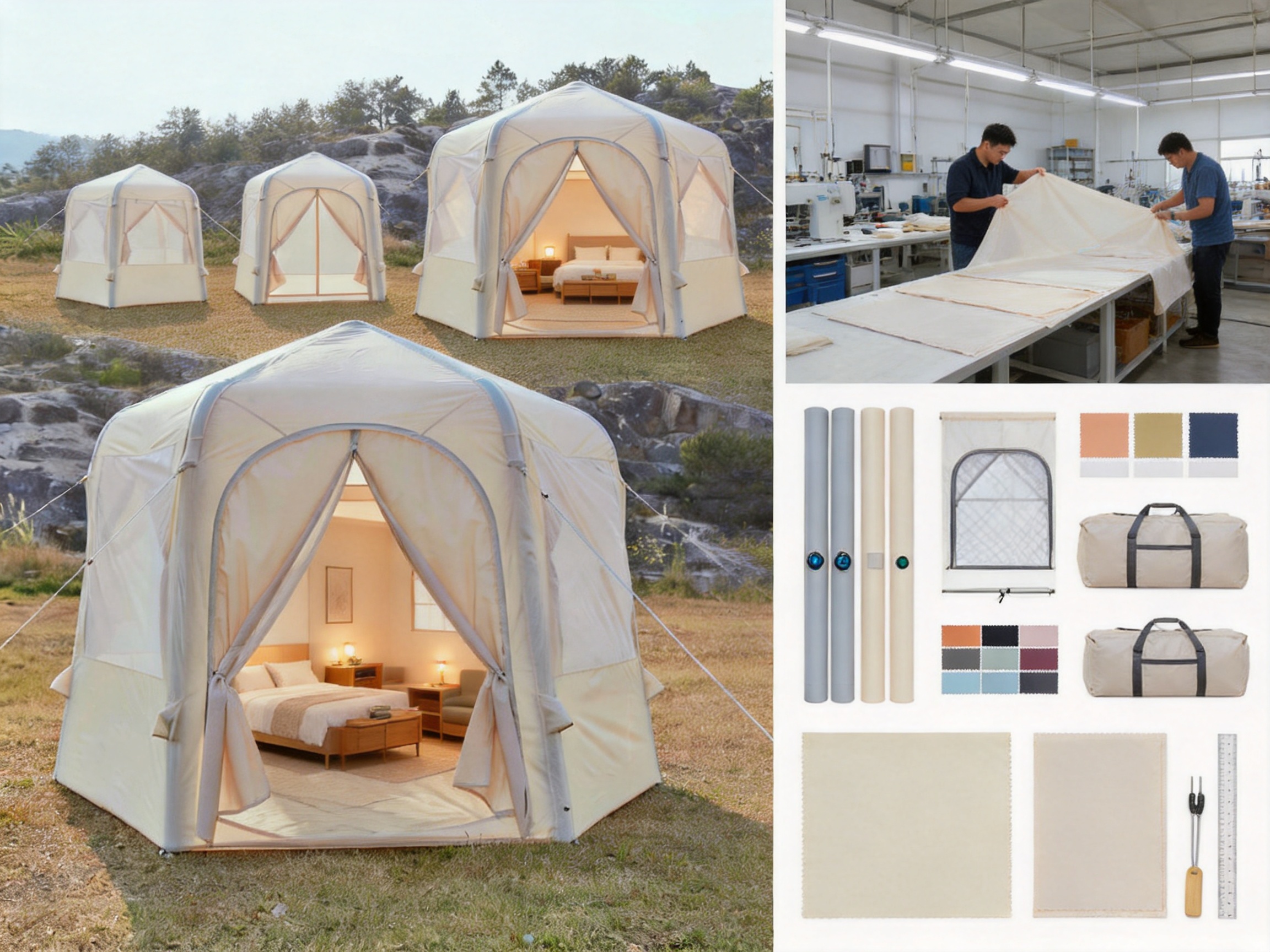
Outdoor travelers increasingly want more from a tent than basic weather coverage. They need a shelter that can be transported efficiently, assembled without complicated pole systems, organized for comfortable living, and trusted through changing seasonal conditions. The Instant Setup Inflatable Camping Tent Heavy Duty Air Beam Shelter is designed around these priorities. Combining an inflatable structural frame, high-density fabric, a residential-style interior layout, and practical ventilation, it offers a modern alternative to conventional pole-supported camping tents.
This shelter is suitable for family camping, extended outdoor stays, resort accommodation, garden use, mobile glamping operations, and other outdoor activities where comfort and setup efficiency matter. Instead of asking users to connect numerous metal poles and repeatedly adjust a frame, the tent uses air beams to create its primary support structure. Once inflated with the matching pump, the beams form a stable cabin-like framework that provides useful headroom and a spacious interior.
The product is available in several size options, including 4 by 4 meters, 5 by 5 meters, and 6 by 6 meters. Its one-bedroom-and-one-living-room configuration gives it a clear advantage over many compact dome tents, which often provide sleeping space but little room for changing clothes, storing equipment, relaxing, or moving around during poor weather.
A New Approach to Tent Structure and Setup
Traditional family tents generally depend on a collection of rigid poles. These poles can be strong, but they add weight, require assembly, and may be difficult to organize during windy or rainy conditions. A user must identify each pole, match it to the correct sleeve or connector, insert it through the canopy, and tension the fabric correctly. For larger tents, the process often requires two or more people.
The inflatable camping tent replaces much of this mechanical complexity with a pneumatic frame. High-pressure air beams act as the primary supports, allowing the tent to be erected with fewer separate components. This zero-pole or reduced-pole architecture simplifies the installation process and creates a clean interior without numerous rods crossing the living area.
The air-beam system is particularly useful for families, first-time campers, event operators, and hospitality providers. Children or inexperienced users do not need to learn a complicated pole arrangement, while experienced campers can spend less time on setup and more time enjoying the destination. The structure is also easier to pack because the flexible air tubes can be deflated and folded into a compact package.
Product information indicates a rapid setup concept, with the promotional design target being a full setup in under 120 seconds under suitable conditions. The detailed usage guidance also states that the luxury inflatable tent may require approximately 15 minutes for installation, depending on the size, ground conditions, inflation process, pegging, and final adjustment. These figures should be understood as different setup stages or use scenarios rather than a guarantee for every installation. Inflation speed, user familiarity, pump performance, and weather can all affect the final time.
Regardless of the exact setup duration, the main structural advantage remains clear: the user avoids the heavy and cumbersome pole assembly associated with many large family tents. The air-beam configuration makes the installation process more approachable while maintaining the upright cabin form required for comfortable residential-style camping.
Product Overview and Core Specifications
The tent is positioned as a four-season camping shelter with a one-bedroom-and-one-living-room layout. It is designed for outdoor activities and can be customized for different dimensions, materials, branding requirements, and project applications through OEM and ODM services.
| Product category | Inflatable and air tents |
| Product type | Heavy-duty inflatable camping cabin |
| Model number | DYI-192 |
| Available sizes | 4 by 4 meters, 5 by 5 meters, and 6 by 6 meters |
| Season rating | Four-season tent |
| Interior structure | One bedroom and one living room |
| Frame design | Inflatable air-beam support system |
| Primary fabric | 600D high-density Oxford cloth and waterproof fabric components |
| Floor construction | Full PVC waterproof bottom |
| Air-column construction | Upgraded PVC air columns with protective netting |
| Ventilation | High-density mesh windows and accessible doors |
| Functional characteristics | Water resistance, wear resistance, wind resistance, UV resistance, snow resistance, and insect resistance |
| Packaging size | Approximately 85 by 40 by 45 centimeters |
| Gross weight | Approximately 35 kilograms per single unit |
| Customization | OEM and ODM customization available |
Specifications may vary according to the selected size, fabric configuration, accessories, color, reinforcement level, and customization requirements. Buyers should confirm the final technical configuration before placing a bulk or project order.
Heavy-Duty Fabric for Outdoor Use
The outer structure uses high-density fabric intended to balance durability, weather protection, portability, and comfort. The supplied product information identifies 600D Oxford cloth as a key material. A 600-denier fabric is substantially more robust than many lightweight backpacking materials and is appropriate for a large shelter that must withstand repeated handling, packing, unfolding, and outdoor exposure.
The fabric is described as waterproof, wear-resistant, wind-resistant, UV-resistant, snow-resistant, and insect-resistant. The full PVC waterproof floor creates an additional barrier between the living area and wet ground. A sealed or extended floor design is especially valuable in a family tent because it helps reduce moisture entry, protects sleeping equipment, and limits drafts around the lower perimeter.
Outdoor performance depends on correct installation as well as fabric quality. The tent should be placed on suitable ground, fully pegged, tensioned evenly, and kept away from sharp rocks, branches, and abrasive surfaces. The waterproof rating and weather performance can also vary by seam construction, zipper condition, installation angle, exposure duration, and maintenance. The supplied guidance recommends using the tent in good weather conditions, so users should not interpret the four-season description as permission to use the shelter in every extreme environment.
The combination of a strong woven outer material and an inflatable frame offers a practical compromise between traditional expedition shelters and lightweight recreational tents. Compared with thin pop-up shelters, the material is better suited to extended family use. Compared with large rigid-frame cabins, the inflatable design is easier to transport, fold, and redeploy.
Air-Beam Engineering and Frame Stability
The central feature of the tent is its inflatable frame. The air columns are made from upgraded PVC components and are supported by protective netting. When inflated with the matching pump, the columns become firm supports for the canopy. Safety-lock valves help retain pressure and make it easier to control inflation and deflation.
Air-beam technology provides several important benefits. First, it reduces the number of hard components that need to be carried. Second, it minimizes the risk of bent poles, broken connectors, or incorrectly matched frame sections. Third, it creates a more flexible structure that can absorb some movement rather than transmitting every force through a rigid pole junction.
The multi-layer, puncture-resistant tube concept is intended to improve reliability during regular outdoor use. However, inflatable structures still require careful handling. Users should avoid dragging the tent over sharp ground, placing hot objects near the air columns, or exceeding the recommended inflation pressure. Puncture repair kits and maintenance instructions should be kept with the tent during travel.
Correct inflation is essential. The product guidance specifically advises users to use the matching pump and not to overinflate the air columns or use unsuitable inflation tools. Excessive pressure can place unnecessary stress on seams, valves, and tube materials. The correct procedure is to inflate each structural section gradually, check its shape and pressure, secure the tent with pegs and guy lines, and inspect the completed structure before occupancy.
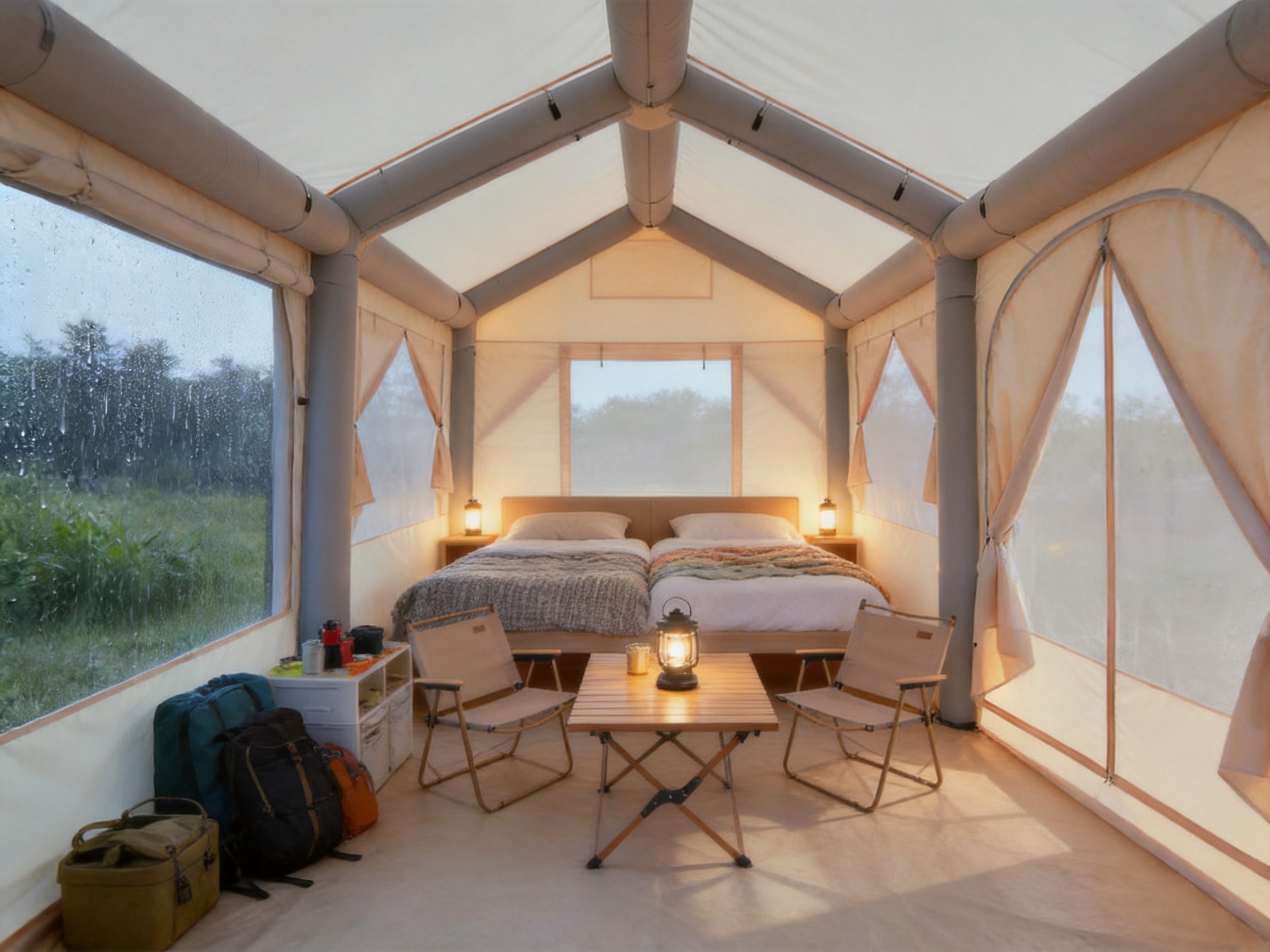
The frame design also improves interior usability. Because there are fewer rigid poles crossing the living space, the floor area can be arranged more efficiently. Furniture, bedding, storage boxes, and family luggage can be positioned against the walls without the same degree of interference found in some pole tents.
Residential-Style Interior for Family Camping
Many small tents are designed primarily for sleeping. They may be easy to carry, but they offer limited space for standing, changing, cooking preparation, socializing, or storing large bags. The inflatable cabin is designed to function more like a temporary outdoor room. Its arched ceiling increases usable vertical clearance and gives the interior a more open feeling.
The one-bedroom-and-one-living-room arrangement separates sleeping space from common space. This division can provide greater privacy for parents and children, improve organization, and make longer stays more comfortable. The living area can be used for seating, equipment storage, reading, changing clothes, or taking shelter during a short rain shower.
A spacious interior is also useful for resort and glamping operators. Guests often expect a tent to provide more than a sleeping compartment. They may want room for luggage, decorative furniture, bedside tables, lighting, and personal accessories. The large format options allow buyers to select a footprint that matches their land area, guest capacity, and intended furniture layout.
Integrated storage systems and organized interior zones help reduce clutter. Although the exact storage configuration may vary by customization, the design concept supports a cleaner living environment by keeping gear off the floor and creating dedicated locations for small items. Better organization can also reduce tripping hazards and make it easier to find equipment in low light.
The shelter is suitable for families who value comfort but do not want to transport a permanent cabin. It is also suitable for outdoor educators, seasonal camps, event organizers, and hospitality businesses that need accommodation that can be installed, removed, and relocated more efficiently than fixed buildings.

Instant Setup Inflatable Camping Tent Heavy Duty Air Beam Shelter
Ventilation, Privacy, and Seasonal Comfort
Ventilation is one of the most important factors in a large camping shelter. A spacious tent can become warm and humid when several people occupy it, particularly during summer afternoons or after cooking and outdoor activity. The product includes high-density mesh windows designed to encourage air movement while helping prevent insects from entering.
The windows support cross-ventilation by allowing fresh air to enter from one side and warm, humid air to escape through another opening. Door placement can also improve air circulation. When conditions permit, opening multiple doors creates a stronger airflow and makes the interior feel less enclosed.
Mesh panels provide a useful balance between ventilation and privacy. They allow daylight and air to pass through while reducing direct visibility from outside. Insect-resistant mesh is especially valuable near lakes, forests, wetlands, and warm-weather campsites where mosquitoes and other insects may be active.
Ventilation should be managed according to the weather. In cold conditions, the doors and windows can be closed to preserve warmth, while in hot conditions they can be opened or partially unzipped. Condensation may still occur when warm, moist air meets a cooler fabric surface, so users should maintain appropriate ventilation whenever possible and avoid placing wet equipment inside the sleeping area.
The tent is described as suitable for spring, summer, autumn, and winter use. Its fabric and structure offer useful protection from light rain, wind, snow, ultraviolet exposure, and insects. Nevertheless, seasonal suitability does not eliminate the need for responsible site selection. Heavy snowfall, severe storms, hurricanes, extreme winds, and prolonged exposure to intense precipitation can exceed the operating conditions of any portable recreational tent.
Weather Protection and Responsible Use
The shelter is promoted as a strong and dependable structure for changing outdoor conditions. Its waterproof fabric, full PVC floor, secured air beams, and reinforced construction contribute to weather resistance. When properly installed, the tent can protect occupants from ordinary rain, light snow, wind, sun, and ground moisture.
Water resistance depends on more than the fabric itself. Seams, zippers, floor edges, ventilation openings, and connection points all influence the final result. The tent should be pitched with adequate tension so that water can run away from the roof rather than collecting in low areas. Doors should be closed correctly, and the floor perimeter should not be positioned in a natural drainage channel.
Wind performance is improved by using all supplied pegs and guy lines. The frame should be inflated evenly, and the structure should not be left unsecured. A large tent has a larger surface area than a small backpacking shelter, which means it can receive greater wind force. Users should monitor forecasts and dismantle the tent when severe weather is approaching.
The term heavy-duty refers to the material, construction concept, and intended use level. It does not mean the shelter is indestructible. Sharp objects, fire, excessive pressure, improper storage, chemical contamination, and severe weather can damage the canopy or air columns. Safe use requires the same care expected of any large outdoor shelter.
For winter use, snow should not be allowed to accumulate excessively on the roof. The structure should be checked regularly, and accumulated snow should be removed using a soft tool that will not cut or abrade the fabric. Cooking and heating equipment should be used only with adequate ventilation and in accordance with fire-safety requirements. Open flames should never contact the tent fabric.
Advantages Compared with Conventional Pole Tents
The inflatable design offers a distinct set of benefits when compared with conventional family tents. The most immediate advantage is setup simplicity. Rather than assembling a long series of poles, users inflate the air beams, connect the fabric as instructed, and secure the shelter to the ground.
Another advantage is packing efficiency. Metal poles are rigid and can create long, awkward packages. Air beams become flexible after deflation, allowing the tent to be folded into a more manageable form. The stated package size of approximately 85 by 40 by 45 centimeters is suitable for transport in a vehicle, storage room, warehouse, or seasonal equipment area.
The absence of numerous internal poles can also increase comfort. The interior is easier to arrange, and there are fewer rigid obstacles at shoulder height or around doorways. The smooth cabin-style shape gives occupants more practical living space than a low-profile dome with the same general footprint.
Inflatable frames may also be more approachable for users who struggle with rigid components. There is less risk of selecting the wrong pole length or forcing a pole through a sleeve. This makes the shelter attractive to families, older campers, rental businesses, and organizations that need repeatable installation procedures.
Compared with basic pop-up tents, the product provides a larger interior, a more structured layout, heavier fabric, stronger floor protection, and greater potential for extended use. Pop-up tents remain useful for short trips and quick shade, but they often lack the bedroom-and-living-room arrangement and full-height comfort offered by this inflatable cabin.
Compared with lightweight backpacking tents, this product is not intended to compete primarily on minimum weight. Its approximately 35-kilogram gross weight reflects the larger dimensions, heavier materials, full floor, and residential-style interior. Its advantage is living comfort and structural scale rather than carrying it over long mountain routes.
Advantages Compared with Fixed or Rigid Shelters
At the other end of the market, fixed cabins and rigid glamping structures can provide excellent comfort, but they require permanent land preparation, construction, and significant investment. The inflatable camping tent offers a more flexible alternative for operators who want to test a location, create seasonal accommodation, or move facilities according to demand.
The tent can be installed in different outdoor locations without the same construction process associated with a permanent building. It can support temporary resorts, festival accommodation, garden retreats, corporate outdoor events, and mobile hospitality projects. When the season ends, the structure can be deflated, packed, and stored.
Its portability also reduces commitment. A business can begin with a small number of units, evaluate customer feedback, and expand gradually. Different sizes can be selected for different sites or customer categories. The 4-by-4-meter option may suit compact family use, while the 5-by-5-meter and 6-by-6-meter options provide greater flexibility for furniture, beds, and hospitality layouts.
Although a portable tent cannot provide the same permanence as a building, it can offer a practical combination of comfort, mobility, and cost control. This makes it valuable for buyers who need adaptable outdoor accommodation rather than a fixed structure.
Manufacturing Strengths and Product Development Capability
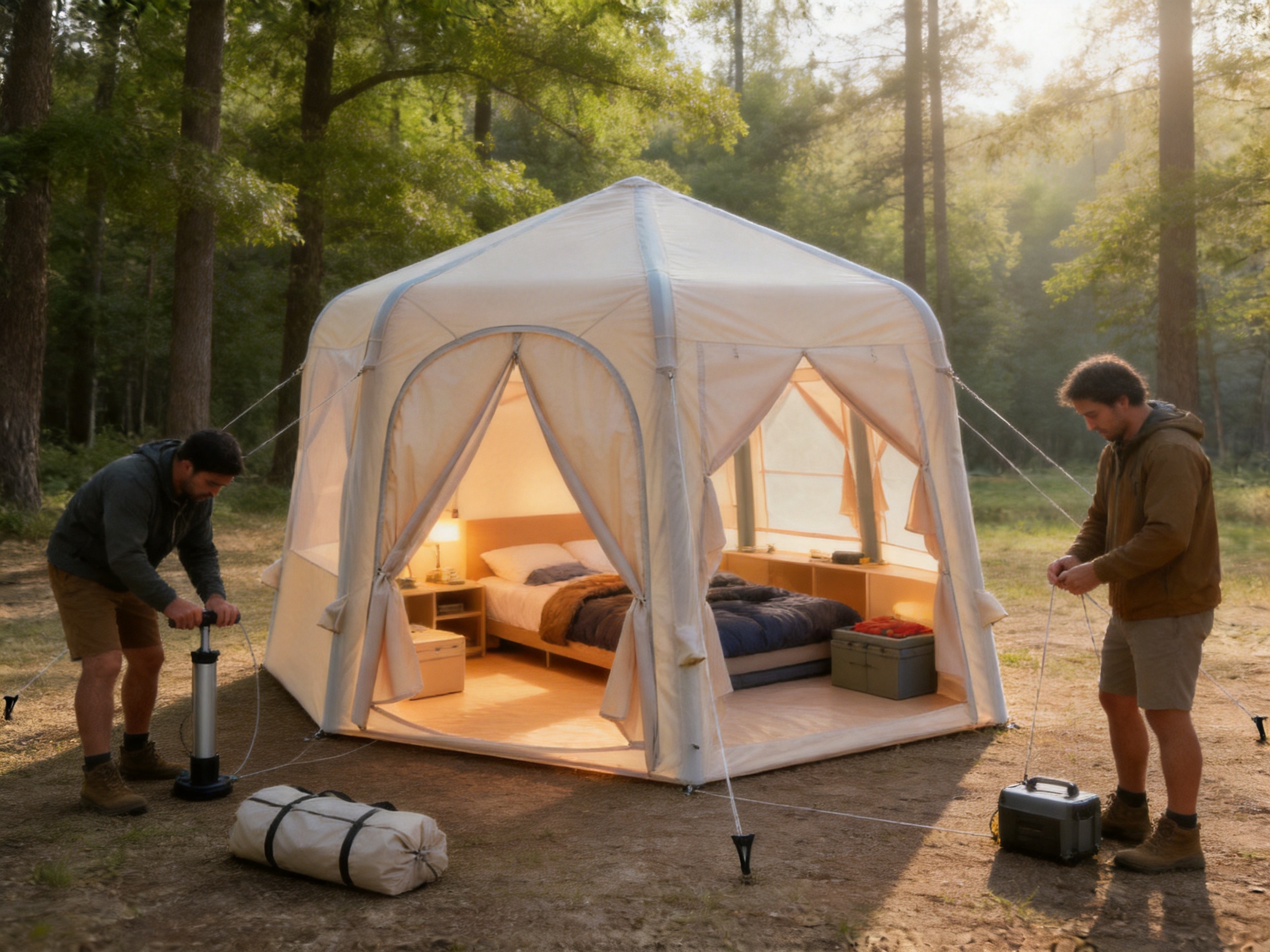
The product is manufactured by Ningbo Zhenhai Tiansai Leisure Products Co., Ltd., a tent-focused enterprise based in Ningbo, Zhejiang Province, China. The company specializes in the design, production, and sales of tents and related outdoor products. Its factory covers more than 13,000 square meters, providing space for material handling, production, assembly, inspection, packing, and product development.
Ningbo is an important port city with strong access to international logistics networks. This location supports the company’s export activity and helps it serve customers in North America, Europe, Asia, and other regions. For wholesale buyers, importers, outdoor brands, and resort operators, the combination of manufacturing capacity and port access can contribute to more efficient supply-chain planning.
The company’s manufacturing strengths include experience with tent fabrics, structural systems, inflatable components, finishing, and product customization. A specialized factory can coordinate multiple stages of production more effectively than a general trading business. This is important for inflatable tents because the final product depends on the relationship between fabric panels, air columns, valves, seams, floors, windows, doors, and accessories.
Product development is supported by a professional design team. The company reports that it develops products from the perspectives of practicality and comfort, tests designs with outdoor professionals and enthusiasts, and improves products according to customer feedback. This user-oriented approach is particularly relevant to family tents, where small design decisions can influence ventilation, storage, door access, setup, cleaning, and long-term durability.
The company has also designed products associated with appearance patents and utility model patents. Intellectual property does not automatically guarantee performance, but it demonstrates an effort to develop differentiated structures and product details rather than simply copying standard tent formats. For business customers seeking private-label or customized products, an established design capability can make it easier to convert a concept into a manufacturable product.
Quality management is another stated priority. The company reports that it implements a quality management system and aims to ensure that products meet international standards. For this inflatable tent, quality control should include fabric inspection, color and coating consistency, seam strength, air-column sealing, valve installation, zipper operation, floor integrity, dimensional accuracy, water resistance checks, and final packing inspection.
Quality assurance is especially important for inflatable structures. A small problem at a seam, valve, or connection point can affect the entire user experience. Production controls should therefore examine the air-holding performance of the tubes, verify the correct inflation accessories, and confirm that the canopy and air frame fit together properly. Consistent folding and packing also reduce the risk of damage before the product reaches the customer.
The company’s core team includes outdoor-product specialists with more than 10 years of experience in research and development, production, and overseas operations. This combination of technical and international experience can help customers navigate product selection, customization, packaging, documentation, and export coordination.
OEM and ODM Customization for Commercial Buyers
The tent is available for OEM and ODM customization. OEM services allow a customer to order products under its own brand or specification. ODM services can involve adapting an existing design or developing a more customized product according to a buyer’s application, market, or project requirements.
Potential customization areas include fabric color, logo placement, printed graphics, interior arrangement, door configuration, window layout, floor specification, air-beam details, packaging, accessories, and dimensions. A resort operator may request colors that match its visual identity, while an outdoor retailer may need packaging and labeling suitable for a particular sales channel.
Commercial users should provide clear information about the intended application. Important details include expected occupancy, climate, installation frequency, storage conditions, target price, transport limitations, branding rules, fire-safety requirements, and local regulations. Early technical communication reduces the risk of selecting a material or feature that does not match the final use.
Customization can also support humanitarian and institutional applications, although any such use should involve a separate technical assessment. Emergency shelters, field accommodation, medical support spaces, and temporary workspaces may require different ventilation, fire-retardancy, insulation, access, floor, and sanitation specifications than recreational camping tents.
Before mass production, buyers should request drawings, material samples, color references, prototype approval, packaging details, and inspection criteria. A documented approval process helps align the factory and the customer on dimensions, appearance, performance expectations, and acceptable tolerances.
Installation Procedure for Best Performance
The first step is site selection. Choose ground that is relatively level, well drained, and free from sharp stones, roots, branches, and debris. Avoid depressions where rainwater may collect. Clear the area carefully without placing the fabric directly on abrasive surfaces.
Unpack the tent and identify the canopy, air-beam sections, pump, valves, pegs, guy lines, repair materials, and instructions. Lay the tent in the intended orientation before inflation. Positioning the door correctly at the beginning is much easier than rotating a large inflated structure later.
Connect the matching pump to the appropriate inflation valve. Inflate the air beams gradually and evenly. Do not overinflate, use an unsuitable tool, or leave the pump connected without supervision. As the frame rises, check that the fabric is not twisted and that the air columns are seated correctly in their protective sleeves or structural channels.
Once the frame is upright, attach or adjust the remaining components according to the product instructions. Close the safety-lock valves, inspect the tube shape, and confirm that the canopy is evenly tensioned. Drive the pegs into stable ground and connect the guy lines. The tent should be secure before furniture or occupants are brought inside.
Open the ventilation panels briefly to inspect the interior and confirm that zippers, mesh windows, doors, and storage areas operate correctly. If the tent will be used in rain, check the roof, seams, floor perimeter, and door closures. If any area appears loose or incorrectly installed, correct it before occupancy.
Care, Cleaning, and Storage
Regular care extends the working life of the shelter. After each trip, remove soil, leaves, sand, and moisture from the fabric and floor. Use a soft cloth, clean water, and a mild cleaning solution when necessary. Strong solvents, abrasive brushes, and harsh chemicals may damage coatings, colors, zippers, or waterproof finishes.
The tent should be completely dry before long-term storage. Folding wet fabric can encourage mildew, odor, discoloration, and coating deterioration. If weather prevents full drying at the campsite, unpack the tent and dry it at the earliest safe opportunity.
Inspect the air columns, valves, protective sleeves, seams, zippers, windows, floor, pegs, and guy lines before storage. Small cuts or leaks should be repaired promptly using suitable repair materials. Do not store the tent with sharp accessories inside the folded canopy.
Store the packed shelter in a cool, dry location away from direct sunlight, heat sources, rodents, and chemicals. Avoid placing heavy objects on top of the package for extended periods. The pump and repair kit should be stored with the tent so that essential equipment is available during the next installation.
Who Should Choose This Inflatable Camping Tent?
This product is a strong choice for families who want a comfortable basecamp without the complexity of a large pole tent. The bedroom-and-living-room structure creates better separation between sleeping and social areas, while the high ceiling makes the tent more practical for changing clothes and moving around.
It is also suitable for glamping businesses and resorts that need attractive, relocatable accommodation. The cabin shape provides a stronger residential impression than a basic dome, and the available sizes allow operators to create different guest configurations.
Outdoor retailers and private-label brands may benefit from the manufacturer’s OEM and ODM capabilities. The tent can be adapted for regional preferences, branding programs, seasonal promotions, and project-specific requirements.
Event organizers can use the shelter for temporary lounges, family areas, staff rest spaces, hospitality zones, and seasonal installations. Its packable format is useful when the site must be cleared after an event.
The product is less suitable for ultralight backpackers who prioritize minimum carrying weight or for expeditions where every item must be transported over long distances on foot. At approximately 35 kilograms gross weight, it is better suited to car camping, resort deployment, organized outdoor activities, and basecamp use.
Buying Considerations for Wholesale and Project Orders
Buyers should begin by selecting the appropriate size. A 4-by-4-meter tent may provide a practical balance of space and transportability for family use. Larger 5-by-5-meter and 6-by-6-meter models can accommodate more furniture, equipment, and occupants, but they also require more installation space and may experience greater wind loading.
Next, confirm the exact fabric and floor specifications. The standard material description includes 600D Oxford cloth, waterproof fabric, a full PVC floor, and PVC air columns with netting. Buyers should request final technical data for the specific model and intended production batch.
Ask about included accessories, pump type, repair materials, pegs, guy lines, carry bags, instructions, spare valves, and packaging. These details influence the actual customer experience and the total landed cost.
For commercial orders, clarify sample approval, minimum order quantity, production schedule, inspection arrangements, carton markings, shipping documentation, warranty terms, and replacement-part availability. A clear contract should distinguish manufacturing defects from damage caused by misuse, severe weather, improper inflation, poor storage, or unauthorized modification.
Buyers should also consider the destination market. Local requirements may apply to materials, labeling, fire performance, electrical accessories, consumer safety, or packaging. The factory and buyer should review these requirements before production rather than attempting to correct them after shipment.
Frequently Asked Questions
How quickly can the inflatable tent be installed?
The product is designed for rapid installation using an air-beam system, and promotional information describes a potential full setup in under 120 seconds in suitable conditions. The detailed product guidance also indicates that a complete installation may take approximately 15 minutes, depending on inflation, pegging, adjustment, and user experience. Actual performance varies with tent size, pump type, ground conditions, and weather.
Does the tent require metal poles?
The primary support structure uses inflatable air beams rather than a conventional set of heavy metal poles. Some accessories or minor components may vary by configuration, so buyers should confirm the final structure with the supplier before ordering.
What pump should be used?
Users should use the matching pump supplied or recommended for the tent. The product instructions specifically caution against overinflation and against using unsuitable inflation tools. Correct pressure helps protect seams, valves, and air columns.
Is the tent waterproof?
The tent uses waterproof fabric components and a full PVC waterproof bottom. It is designed to resist ordinary outdoor moisture, light rain, and wet ground when correctly installed. Waterproof performance depends on seams, zippers, tension, site drainage, maintenance, and weather severity.
Can the tent be used in winter?
The product is described as a four-season tent and is intended for spring, summer, autumn, and winter use. It offers resistance to light snow, wind, moisture, ultraviolet exposure, and insects. Users should remove accumulated snow, monitor forecasts, and avoid extreme weather beyond the shelter’s intended recreational conditions.
Is it suitable for severe storms or hurricanes?
No portable recreational tent should be treated as a guaranteed hurricane shelter. The tent has a reinforced air-beam structure and can provide useful wind resistance when properly secured, but users should evacuate or dismantle it when severe storms, hurricanes, extreme winds, or dangerous weather are expected.
How many people can sleep inside?
Capacity depends on the selected size, interior layout, bed style, furniture, and desired comfort level. The available dimensions range from 4 by 4 meters to 6 by 6 meters, with a one-bedroom-and-one-living-room configuration. Buyers should confirm the recommended occupancy for their selected model.
Can the tent be customized?
Yes. OEM and ODM customization are available. Possible options may include color, branding, dimensions, interior arrangement, fabric selection, doors, windows, packaging, and accessories. Final customization depends on order quantity, technical feasibility, and production requirements.
How should the tent be stored?
Clean and completely dry the tent before folding it. Inspect the canopy, floor, air columns, valves, zippers, pegs, and guy lines. Store the packed tent in a cool, dry place away from direct sunlight, sharp objects, heat, and chemicals.
What makes this tent different from a pop-up tent?
The inflatable cabin is larger, more structured, and more suitable for extended living. It provides a bedroom-and-living-room layout, heavier fabric, a full PVC floor, air-beam support, better interior height, and stronger customization potential. A basic pop-up tent may be faster for short recreational use but generally offers less living space and fewer commercial configuration options.
What makes this tent different from a backpacking tent?
A backpacking tent is designed for low weight and compact carrying over long distances. This inflatable tent is designed for family comfort, car camping, glamping, and basecamp use. Its approximately 35-kilogram gross weight reflects its larger size and heavier construction.
Conclusion
The Instant Setup Inflatable Camping Tent Heavy Duty Air Beam Shelter provides a practical response to the changing expectations of outdoor accommodation. It combines the convenience of air-beam installation with the space and organization of a cabin-style shelter. Its one-bedroom-and-one-living-room design, high-density Oxford fabric, full PVC floor, mesh ventilation, and available 4-by-4-meter, 5-by-5-meter, and 6-by-6-meter sizes make it suitable for a wide range of recreational and commercial applications.
Its main advantages over conventional tents are simplified setup, fewer rigid components, improved interior freedom, flexible packing, and a more residential living experience. Compared with fixed structures, it provides portability, seasonal flexibility, and easier relocation. Compared with lightweight backpacking shelters, it prioritizes comfort, durability, and family-scale space.
The manufacturing background of Ningbo Zhenhai Tiansai Leisure Products Co., Ltd. further strengthens the product proposition. The company operates a large tent factory, maintains a product design team, supports OEM and ODM development, serves international markets, and emphasizes quality management, product testing, material improvement, and customer-oriented design. These capabilities are valuable for both individual users and professional buyers seeking a reliable supply partner.
As with all outdoor shelters, performance depends on correct inflation, anchoring, site selection, cleaning, storage, and responsible weather judgment. When used within its intended conditions and maintained properly, this inflatable camping tent can serve as a comfortable, adaptable, and efficient basecamp for families, outdoor brands, resorts, events, and seasonal accommodation projects.
References
1. Product specification sheet for Model DYI-192 inflatable camping tent.
2. Manufacturer-provided material and packaging information for the heavy-duty inflatable camping shelter.
3. Manufacturer product development and quality-management statement for Ningbo Zhenhai Tiansai Leisure Products Co., Ltd.
4. General outdoor shelter installation, inflation, anchoring, cleaning, and storage principles.
5. General guidance for responsible recreational tent use in rain, wind, snow, ultraviolet exposure, and changing seasonal conditions.
Product: Instant Setup Inflatable Camping Tent Heavy Duty Air Beam Shelter

Message Us Right Now!
-
Mp: +86-18858091910
E-mail: sales@tenplaytent.com
ADD: No. 529, Guangyuan Road, Xiepu Town, Zhenhai District, Ningbo City, Zhejiang Province, China
-
Quick Links
Home Products About Us Advantage News Contact Us -
Product
Inflatable & Air Tents Glamping & Resort Tents Backpacking & Trekking Tents Automatic & Pop-Up Tents Family & Camping Tents Specialty Tents & Shelters Kids Tents Pet Tents Humanitarian & Large Tents Hammock -
Get Connected
 Camping Tent Manufacturer in China