


 English
  عربى
عربى 

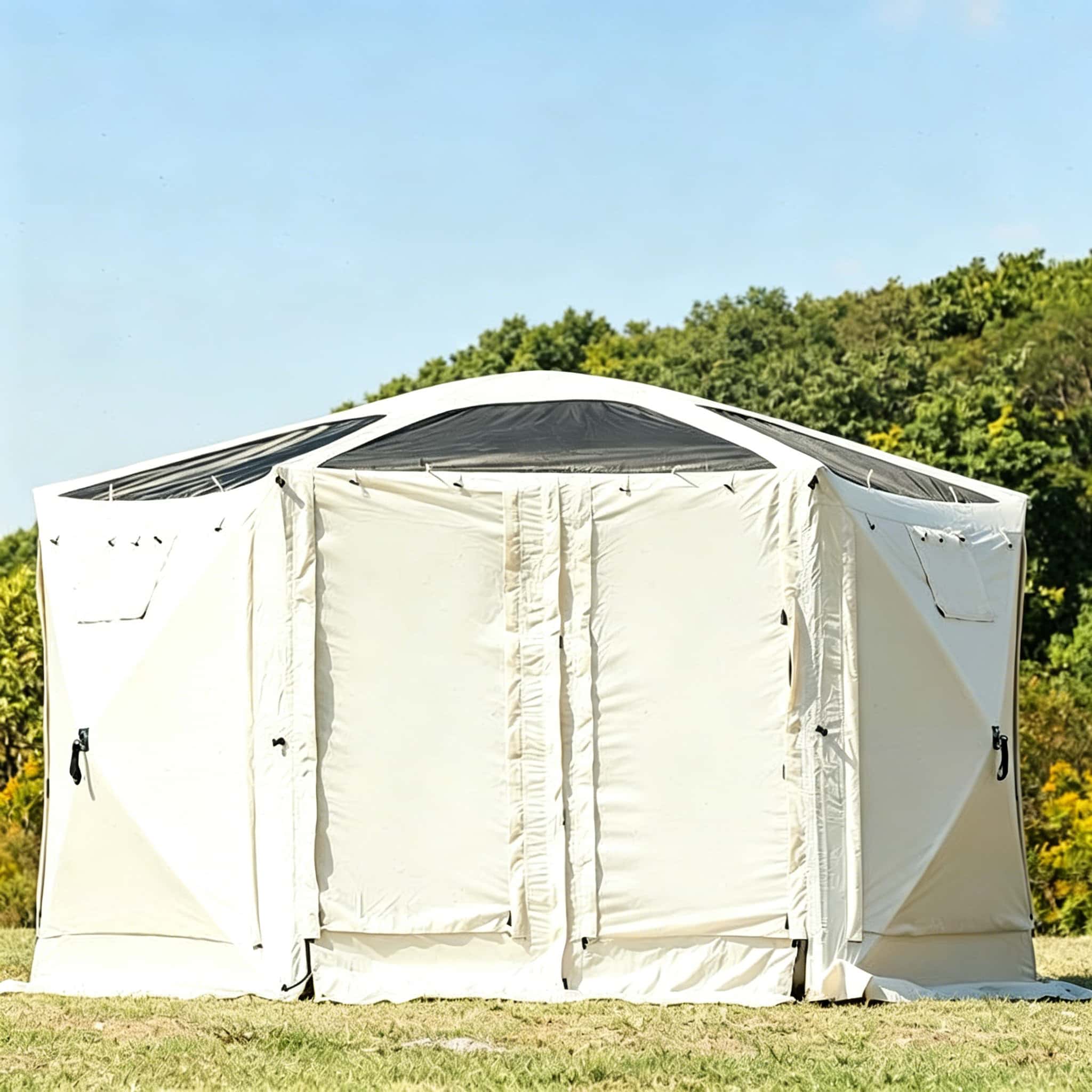




Screen House Tent: Structural Design for Outdoor Bug Protection, Ventilation, and Shade
A screen house tent takes a different approach to outdoor shelter, built for family camping, backyard downtime, picnics, campsite dining setups, festival grounds, parks, beaches, and garden gatherings. Where a standard camping tent exists mainly to get people through the night, a screen house is all about daytime comfort — keeping bugs out, letting air move freely, providing shade, and essentially stretching your usable outdoor space further than a bare patch of grass ever could. By pairing a shaded roof with fine mesh walls, it creates an open, breathable zone perfect for meals, relaxing, catching up with people, or letting kids run around without constant bug-swatting interruptions. For outdoor brands, product managers, camping gear teams, and patio product developers, understanding the structure, mesh quality, frame system, and manufacturing details behind screen houses makes it much easier to gauge fit across camping, backyard, picnic, and bug-protection markets.
What Is a Screen House Tent?
A screen house tent is an outdoor shelter built specifically around shade, airflow, bug protection, and open activity space. The typical build includes a canopy roof, large mesh sidewalls, a support frame, zippered doors, guylines, and ground stakes — set up easily at campsites, in gardens, at parks, on beaches, by lakes, or anywhere people want a temporary outdoor hangout spot.
What sets a screen house apart from a fully enclosed sleeping tent is exactly that — it's not enclosed. Think of it more as a portable screened-in room you can take anywhere. The fine mesh walls keep mosquitoes, flies, and other insects out while keeping the space feeling open and airy rather than closed off. Toss in a dining table, some folding chairs, a portable stove, kids' toys, or camping gear, and it functions as a genuine outdoor living room.
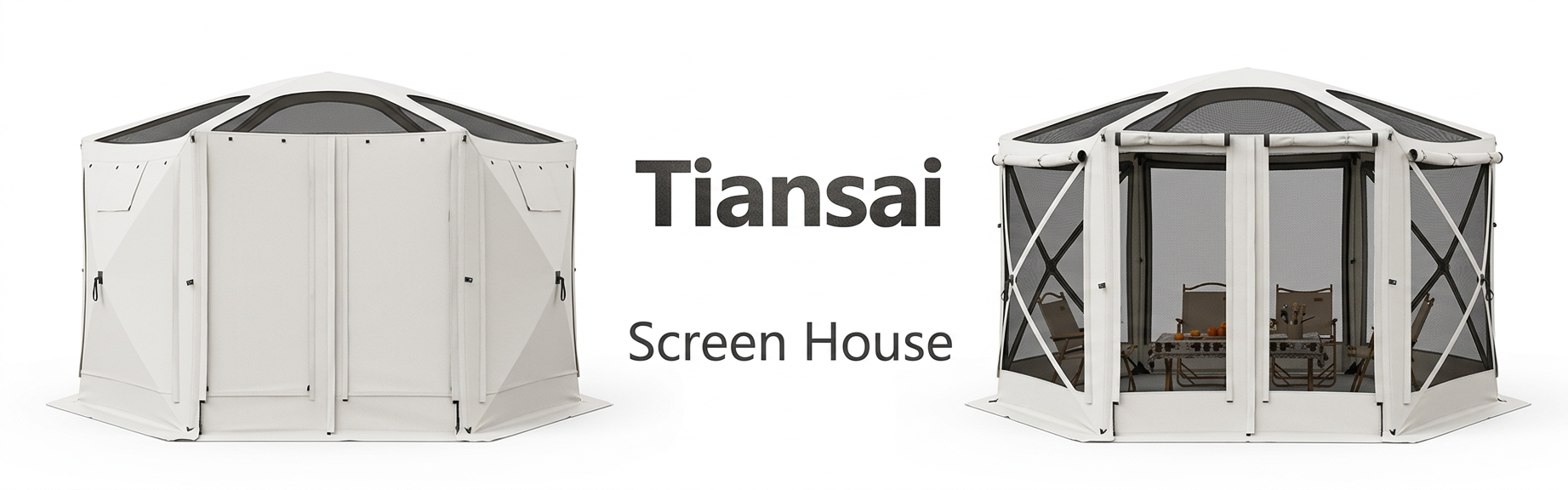
Across the industry, these show up under a handful of names — mesh screen tent, camping screen house, patio screen shelter, mesh canopy tent, screen gazebo tent, and automatic hexagonal screen house gazebo tent. The footprint shape and setup method might vary between them, but they all chase the same goal: a more comfortable outdoor space built around shade, airflow, and keeping bugs at bay.
From a manufacturing standpoint, a screen house is genuinely more than just a tent with mesh bolted onto the sides. Mesh density, yarn strength, roof fabric, frame stability, door layout, zipper routing, how well the bottom edge seals against the ground, and overall packing structure all shape how it actually performs. Getting the design right means balancing bug protection, ventilation, shade, structural strength, and portability all at once — not favoring one at the expense of the rest.
Where Is a Screen House Suitable for Outdoor Use?
Family camping is probably the most familiar setting for a screen house. At a typical campsite, the sleeping tent handles the night, while the screen house takes over as the dining spot, a place to relax, a play zone for kids, or somewhere to keep gear organized. During mosquito season especially, having a screened space transforms how comfortable those daytime and evening hours actually feel.
Backyards and patios represent another strong use case for what's often called a patio screen shelter. It gives gardens, lawns, decks, or patios a temporary shaded, bug-free space without the commitment of a permanent gazebo — and unlike a fixed structure, a screen house is far easier to move, pack away, and bring out only when the season calls for it.
Picnics, park outings, and festival days tend to demand fast setup, solid airflow, and gear that packs down easily. People generally need a shaded, breathable spot up and running quickly, which is exactly where a pop-up screen house or automatic frame system earns its keep for shorter outdoor stays.
Different settings bring different priorities, too. Campsite dining areas, beach relaxation spots, lakeside fishing rest zones, and kids' play areas each need something slightly different — beach setups lean on shade and wind anchoring, lakeside and fishing spots prioritize bug protection above almost everything else, and children's play spaces need easy entry points and enough room to move around safely.
Screen House Tent vs. Regular Camping Tent
The core difference between a screen house and a regular camping tent comes down to purpose. A screen house is built for daytime activity, airflow, bug protection, visibility, and shared outdoor space. A camping tent is built for sleeping, staying dry, blocking wind, insulating from the ground, and offering some privacy.
Screen houses typically rely on large mesh panels to keep sightlines open, working well as an outdoor dining spot, a social gathering area, a kids' activity zone, or simply a shaded place to sit. Camping tents need a more enclosed build entirely — a floor, a weatherproof rainfly, and doors that close fully for overnight use and real weather protection.
Camping tents put far more weight on waterproof floors, rainflies, and full closure because they need to handle overnight dampness, actual rain, and privacy through the night. Screen houses generally aren't engineered as fully sealed, waterproof shelters — their real value lies in airflow, bug protection, and creating a genuinely pleasant activity space.
For family camping and backyard setups, these two product types tend to work best side by side rather than in competition. The camping tent covers sleeping, while the screen house handles daytime dining or relaxing — together forming a much more complete outdoor living setup than either could manage alone.
| Comparison Point | Screen House Tent | Camping Tent |
|---|---|---|
| Main Function | Bug protection, ventilation, shade, activity space | Sleeping, rain protection, wind shielding, privacy |
| Structure | Mesh walls, open shelter, canopy roof | Flysheet, inner tent, floor, enclosed body |
| Best Use Time | Daytime and evening leisure | Overnight shelter and weather protection |
| Typical Use | Patio, picnic, campsite dining, backyard gathering | Camping, hiking camps, overnight stays |
| Design Focus | Mesh quality, door access, airflow, shade | Waterproofing, floor, warmth, wind protection |
This functional split matters for development purposes too — a screen house shouldn't be designed by simply borrowing the logic of a sleeping tent. It needs its own approach, built specifically around open leisure use, effective bug protection, airflow, and comfortable multi-person activity.
Advantages of a Hexagonal Screen House Structure
The automatic hexagonal screen house gazebo tent makes remarkably efficient use of space. A hexagonal footprint creates a genuinely comfortable central activity zone without needing a huge overall footprint — plenty of room for a round table, folding chairs, a portable kitchen setup, kids' toys, or several people resting comfortably at once.
Having mesh walls on multiple sides significantly improves both airflow and visibility. Air can move in and out from several directions at once, which cuts down the risk of one side feeling stuffy while the rest stays breezy. That's a real advantage for summer garden setups, lakeside fishing days, grassy picnic spots, and campsite dining areas alike.
The symmetrical shape also helps spread structural force evenly and keeps the frame balanced. Six-direction support can create genuinely even tension across the roof and sidewalls — but only if every panel size, frame length, and connection point matches up precisely. Get one panel even slightly off, and the pitched shelter ends up looking twisted, loose, or lopsided.
Automatic setup mechanisms need extra attention paid to folding joints, flexible frame sections, and connection nodes specifically. The whole point is opening quickly while still holding its shape reliably — and after repeated use, the frame shouldn't start sagging or warping out of alignment.
For manufacturers, sample testing should cover opening tests, folding tests, mesh tension checks, zipper function, and a full visual review once fully pitched. Hexagonal designs in particular depend heavily on every panel matching dimensions precisely across the board.
How Fabric, Mesh, and Frame Affect Product Performance
The roof fabric on a screen house largely determines how well it shades, resists light rain, and handles general weather exposure. Common choices include polyester, Oxford fabric, PU-coated fabric, and silver-coated fabric for stronger sun-blocking needs. Polyester holds its shape reliably, Oxford fabric feels tougher and resists abrasion better, and silver-coated fabric adds meaningful UV protection on top.
Common Material, Mesh, and Frame Elements
Sidewall mesh is what actually determines bug protection, airflow, and how open the space feels visually. Good mesh fabric balances opening size, weight, yarn strength, and flexibility together. Finer mesh suits mosquito-heavy environments especially well, while tear-resistant mesh holds up better under frequent use, family gatherings, and busy campsite dining setups.
The frame system shapes setup speed, overall stability, and how long the product lasts. Fiberglass poles offer flexibility and suit lighter recreational builds well. Steel frames deliver stronger support for larger screen shelters, though that strength comes with extra packed weight. Aluminum frames land somewhere in between, offering a genuinely useful balance of weight and strength.
A water-resistant roof handles light moisture or a brief drizzle just fine, but it's worth being clear — a screen house isn't meant to match a fully waterproof camping tent. If the intended use involves more consistent wet weather, roof slope, fabric coating, seam construction, and eave coverage all need to be strengthened accordingly.
Accessories shape the everyday experience more than people expect. Guylines and ground stakes keep the structure anchored outdoors. Zippered doors affect how easily people move in and out while keeping bugs at bay. Storage bags, repair patches, optional floor mats, and hanging hooks round out the product and improve how it holds up over repeated use.
Balancing Shade, Light Rain Resistance, and Airflow
A screen house has to juggle shade coverage, light rain resistance, and airflow all at once. A bigger roof means better shade, but it also catches more wind — which matters a lot in open fields, beaches, and lakeside spots where a large canopy needs guylines placed carefully and stakes that actually hold.
More mesh generally means better airflow and a more open feel, but it comes at the cost of privacy, and large mesh panels behave differently once wind picks up or rain starts coming in sideways. That's exactly why a screen house should be positioned clearly as a shade and bug-protection shelter for open leisure use — not marketed as a substitute for a fully enclosed, waterproof tent.
Roof slope determines how well rainwater actually runs off. Too flat a roof, and water starts pooling on top instead of draining away. The right angle helps light rain move off to the sides rather than collecting in the center, and thoughtful eave design cuts down how much side rain gets through the mesh walls in the first place.
Bug protection and airflow both come down to mesh density, how well doors close, and how tightly the bottom edge meets the ground. Even genuinely fine mesh won't keep insects out if the doors don't seal properly or the bottom edge leaves noticeable gaps. Zipper ends, overlapping door flaps, and how well the base contacts the ground all deserve close inspection during sample evaluation.
A well-designed UV protection screen house also needs to account for sun direction and how openings are arranged. Shade performance isn't just about the roof fabric — it also depends on roof size, how much the sides cover, which way the entrance faces, and how tall the overall structure stands.
Tiansai's Professional Capabilities in Screen House Tent Manufacturing
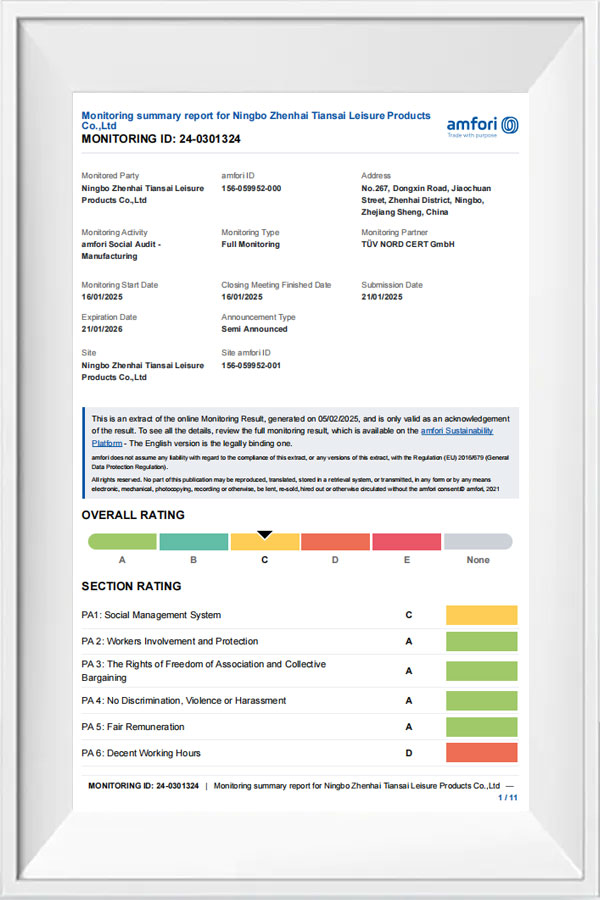
Ningbo Zhenhai Tiansai Leisure Products Co., Ltd., operating under Tiansai Leisure / Tenplay, is based in Ningbo, China — a port city with well-established supply chain access and export logistics that support efficient coordination across outdoor shelter materials, production planning, packaging, and shipment.
Tiansai Leisure / Tenplay focuses on designing and producing outdoor tents and leisure outdoor products. Across a factory footprint of more than 13,000 square meters, the company covers the full development process — structure planning, sample building, material matching, stable production, quality inspection, and export support.
Within this category, Tiansai supports development across screen house tents, mesh screen tents, camping screen houses, patio screen shelters, mesh canopy tents, and automatic hexagonal screen house gazebo tents. Different models call for different combinations of roof fabric, mesh specification, frame system, door layout, anchoring method, and packaging format.
Manufacturing screen house tents demands careful control over mesh cutting, panel consistency, sewing tension, zipper installation, frame matching, roof shaping, bottom edge construction, guyline attachment, and how well the finished product pitches. For automatic structures specifically, folding joints and repeated-use performance need thorough verification too.
Tiansai Leisure / Tenplay can adjust size, footprint shape, mesh specification, roof fabric, UV treatment, door structure, color, packaging, and functional details based on specific project needs. Backed by consistent sample validation and quality inspection, the company works to keep products reliable and well-suited across a range of market needs.
A screen house tent earns its place by creating a breathable, shaded, bug-free outdoor activity space — something genuinely different from a camping tent with mesh sides bolted on. It's a purpose-built open shelter for family camping, patio downtime, picnics, campsite dining, festivals, beaches, and backyard gatherings, and its real performance comes down to mesh quality, roof fabric, frame structure, door design, anchoring, and how consistently it's manufactured.
Screen house development going forward will likely keep pushing toward better airflow efficiency, more reliable bug protection, easier setup, lighter structures, more comfortable outdoor spaces, and increasingly refined manufacturing. For manufacturers, getting this right means bringing material selection, mesh specification, frame engineering, sewing quality, sample testing, accessory matching, and final inspection together as one connected process rather than treating each piece separately.
