


 English
  عربى
عربى 

Beach Shade & Shelters: Sun Protection, Portability, and Structural Design for Beach Shelters
Beach shade and shelters occupy their own niche among lightweight outdoor shade products, built for beaches, lakesides, parks, family outings, outdoor events, seasonal recreation, and casual camping. Unlike a traditional camping tent, a beach shelter cares far more about blocking sun, cutting UV exposure, keeping air moving, setting up in seconds, packing down small, and staying put in coastal wind gusts. For outdoor brands, product managers, and teams developing beach or camping gear, understanding the materials, structure, anchoring approach, and manufacturing logic behind a beach shade shelter makes it much easier to gauge whether a design actually fits family leisure, seaside holiday, or general outdoor shade markets.
What Is a Beach Shade & Shelter?
Beach shade and shelters describe outdoor shade structures built for beaches, lakesides, parks, backyards, and general outdoor activity spaces. Their job is straightforward — deliver shade, cut UV exposure, keep air flowing, and offer some resistance to light wind, so people can actually stay comfortable in bright, sunny conditions without hiding indoors.
Products in this space go by several names — beach shade shelter, beach sun shelter, beach tent, sun shelter, portable sun shelter, family beach shelter. None of these function quite like a regular camping tent, since they're built around daytime shade and casual leisure rather than overnight sleeping or standing up to heavy rain.
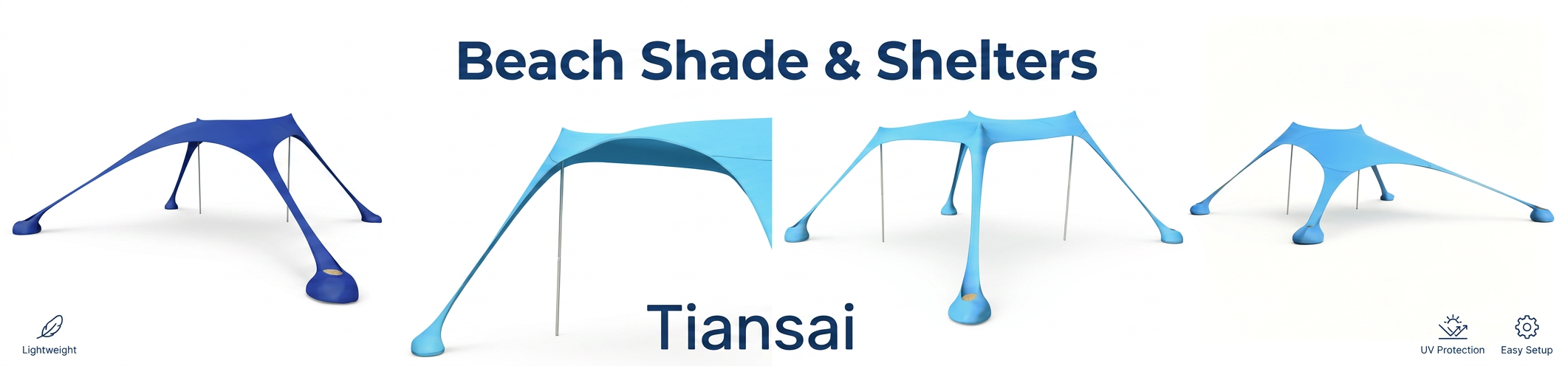
A genuinely well-designed beach shelter balances shade coverage, UV-resistant fabric, airflow, anchoring stability, and how compactly it packs down. Beach environments throw a lot at gear — intense sunlight, sea breeze, sand everywhere, humidity, and constant movement from one spot to another — so the product needs to stay both portable and structurally dependable at the same time.
From a manufacturing standpoint, beach shade products demand careful attention to fabric choice, pole strength, sandbag design, guyline placement, sewing precision, elastic fabric tension, frame joints, and how the carry bag is put together. Different structures suit different situations, which is exactly why development should start from the target environment rather than chasing one universal design that tries to do everything.
Where Are Beach Shade & Shelters Used?
Beach days and seaside trips represent the classic use case for beach shade shelters. People generally want something that goes up fast, delivers a genuinely comfortable shaded spot, keeps air circulating, and folds away easily once the day winds down. For family outings specifically, shade coverage, a space that works for kids, and somewhere to stash gear all matter enormously.
Parent-child outings demand even more attention to comfort and ease of use. A family beach shelter typically needs a bigger shaded footprint, easy entry, solid anchoring, and reliable airflow. Kids tend to spend long stretches on the sand, so shade coverage and ventilation end up shaping the entire experience directly.
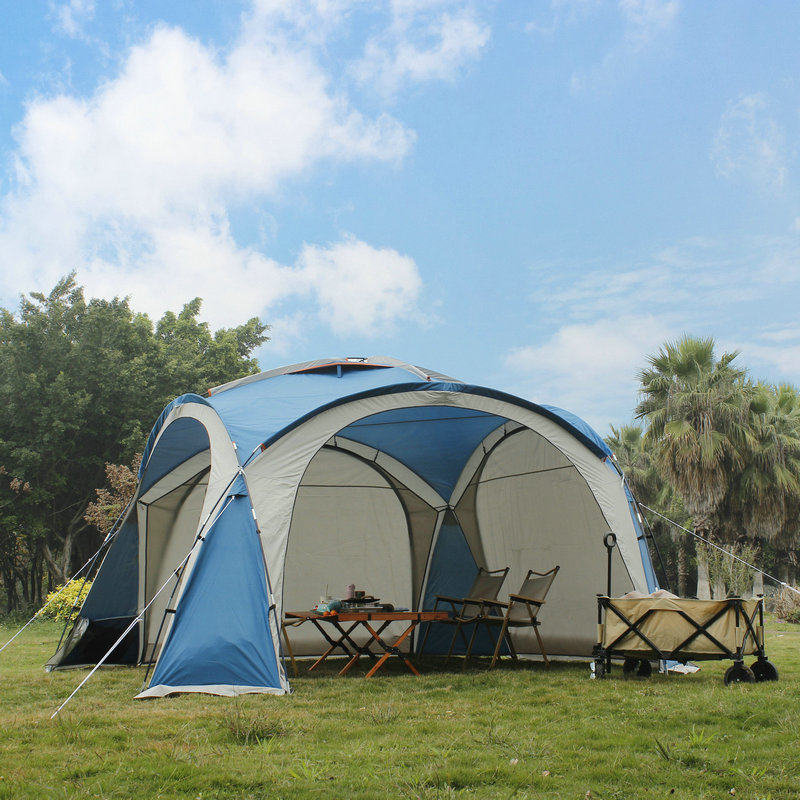
Outdoor events, casual camping, and park picnics suit a portable sun shelter just as well. These situations call for something lightweight, quick to set up, and effective at blocking strong sun temporarily. Compared to a fixed gazebo, a portable shelter moves easily between spots as the day's plans shift.
Backyard gatherings and seasonal outdoor spaces tend to prioritize appearance, shade comfort, and how convenient the product is for repeated use. Some beach sun shelter designs work just as well in gardens, on lawns, patios, or open grass — covering family get-togethers, kids playing, pets resting, or short breaks during outdoor work.
Different settings bring different priorities to the table. Beach use leans hard on UV protection and wind anchoring. Park use leans on portability and quick setup. Family leisure leans on shade comfort and interior room. Outdoor events might call for a distinct look, compact transport, and dependable placement once set up.
Sun-Protection Fabrics and Ventilation Design
Everything about a beach shelter's performance starts with fabric choice. UV-resistant fabric cuts down UV exposure and forms the material backbone of any genuine UV protection beach tent. UV protection rating, fabric density, coating quality, and even color all factor into how much shade comfort the product actually delivers.
Common Fabric and Ventilation Elements
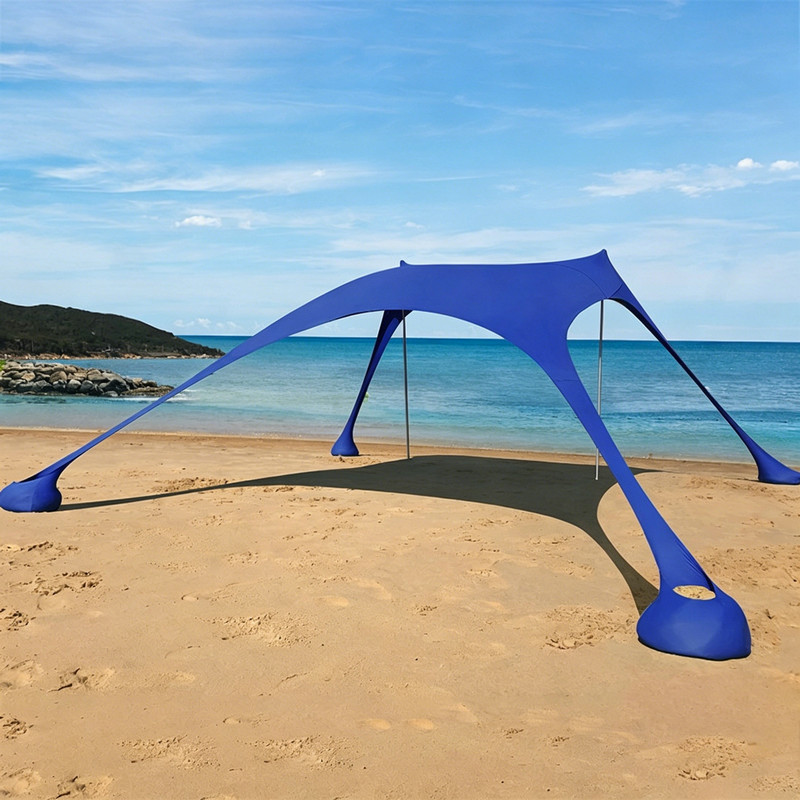
Lycra stretch fabric shows up constantly in beach shade canopies. It stretches taut across support poles and sandbag anchors to form a tensioned sunshade surface — lightweight, easy to pack, and good for airflow, though it needs reinforced seams and careful attention at stress points to hold up.
Silver-coated fabric often gets used to boost light blocking and reflect sunlight away. It fits naturally into beach sun shelter designs built for intense sun exposure. The coating improves shade quality, but coating adhesion and how it holds up under repeated folding both need real evaluation during development.
Polyester fabric dominates beach tent and sun shelter products broadly, thanks to its dimensional stability and how predictably it responds to coating treatments. Paired with PU coating or water-resistant treatment, it can handle light drizzle or humid conditions reasonably well, even if it's not built for serious rain.
Breathable fabric and mesh panels matter just as much for comfort. Beach settings run hot and bright, and a shelter with poor airflow can feel stifling even with plenty of shade overhead. Mesh windows, open sides, side vents, and semi-open structures all help keep heat from building up inside.
Sun protection isn't just about blocking light, though. Fabric that's too heavy or too thickly coated can choke airflow or bulk up the packed size unnecessarily. A genuinely mature product balances UV protection, breathability, shade quality, durability, weight, and how easily it packs away — not just one of these at the expense of the rest.
Wind Resistance and Structural Stability
Coastal conditions shift constantly, which makes wind-resistant beach shelter design a real priority rather than an afterthought. A beach shelter can't lean on lightweight fabric alone for stability — that stability needs to come from the pole structure, sandbags, stakes, guylines, elastic tension, frame nodes, and how evenly load gets distributed across the whole thing.
Key Stability Components
Pole strength shapes canopy shape and wind performance directly. Aluminum, fiberglass, and steel poles each bring something different to the table. Aluminum offers a solid strength-to-weight balance, fiberglass brings flexibility, and steel delivers stronger support at the cost of extra weight.
Sandbag anchoring proves genuinely practical in beach settings. Regular ground stakes often can't grip loose sand well, so sandbags step in to add weight and keep the shelter stable. Sandbag size, where it attaches, and how strong that connection is all shape real-world performance.
Ground stakes and guylines still earn their place on grass, packed soil, or mixed terrain. For a portable sun shelter meant to work across beaches, parks, and campsites alike, offering several fixing options improves how adaptable the product actually is — the anchoring system just needs to match whatever ground conditions show up.
For Lycra canopy designs specifically, elastic fabric tension sits at the center of stability. Too little tension, and the canopy flaps around and loses its shape. Too much, and seams, pole pockets, and anchor points end up under more stress than they were built to handle. Getting the pattern engineering and reinforcement right takes real care.
Frame nodes and connection parts deserve careful testing too. Pop-up frames, folding joints, pole sleeves, clips, and corner reinforcements often decide how reliable the product stays over the long haul. A genuinely stable beach shelter comes down to the entire structure working together — not just good fabric or good poles in isolation.
Portability, Packing, and User Convenience
Portability defines beach shade and shelters as much as anything else about them. People carry these across sand, through parking lots, across parks, and into campsites, which means packed weight, bag shape, shoulder straps, and overall storage size all directly shape how usable the product feels in practice.
A portable sun shelter needs to pack away easily once the day is done. If the folding process gets too complicated, people struggle with it in windy beach conditions exactly when they least want to. Clear folding steps, a durable storage bag, and well-organized accessories all make a real difference to how the product actually feels to own.
An instant pop-up beach tent cuts setup time dramatically, which families and casual users genuinely appreciate. That speed shouldn't come at the cost of poor folding durability, though — repeated folding tests are what actually confirm whether the frame and fabric stay properly aligned over time.
For family-oriented shelters, interior space and how easy entry is matter just as much as how small the thing packs down. A family beach shelter needs enough shade to cover people, towels, bags, coolers, and kids' belongings without turning into something too bulky to actually transport.
How accessories get organized matters too. Sandbags, stakes, guylines, repair patches, poles, and instructions all need a clean, logical place inside the carry bag. A well-thought-out packing system supports genuinely better use over the long run, rather than becoming a source of frustration every single trip.
Tiansai's Capabilities in Beach Shade & Shelters Manufacturing
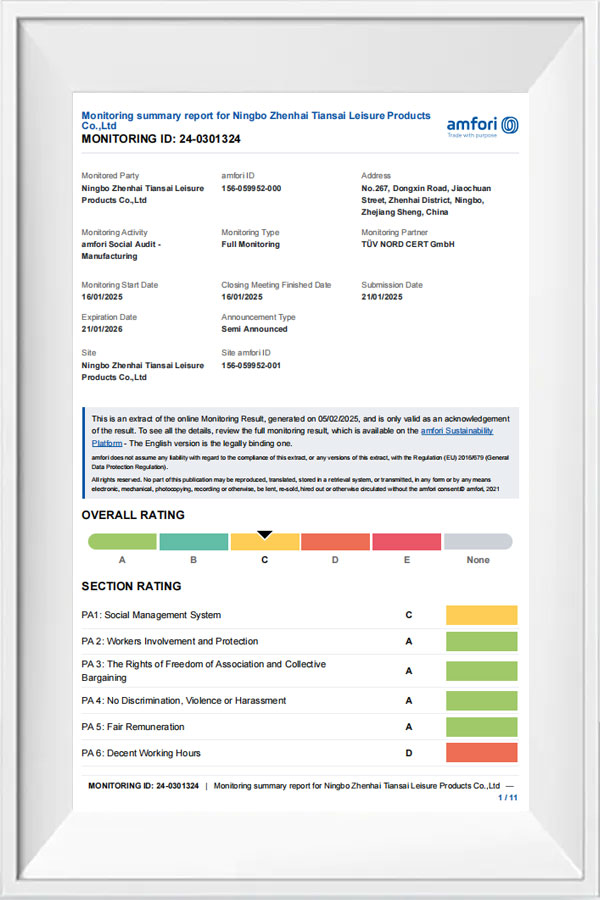
Ningbo Zhenhai Tiansai Leisure Products Co., Ltd., operating under Tiansai Leisure / Tenplay, is based in Ningbo, Zhejiang Province, China. The factory sits roughly 28 kilometers from Ningbo Beilun Port, supporting smooth export logistics and efficient supply chain coordination for outdoor shelter products.
Tiansai Leisure / Tenplay brings more than 12 years of experience to the outdoor tent industry. Across a factory footprint of more than 13,000 square meters and an annual production capacity exceeding 200,000 tents, the company delivers stable manufacturing for beach shelters, camping tents, shade products, and outdoor leisure gear generally.
An in-house R&D engineering team supports structure design, material selection, sample development, and ongoing product refinement. That coordination matters enormously for beach shade and shelters specifically, since shade coverage, UV protection, wind stability, ventilation, and packing convenience all need to function as one connected system rather than separate concerns.
Tiansai also runs its own hardware processing facility and fabric processing facility, supporting close coordination between poles, connectors, fabric panels, reinforcements, sandbag attachments, and final assembly. For beach shelter products, frame accuracy and consistent fabric tension shape user experience directly and immediately.
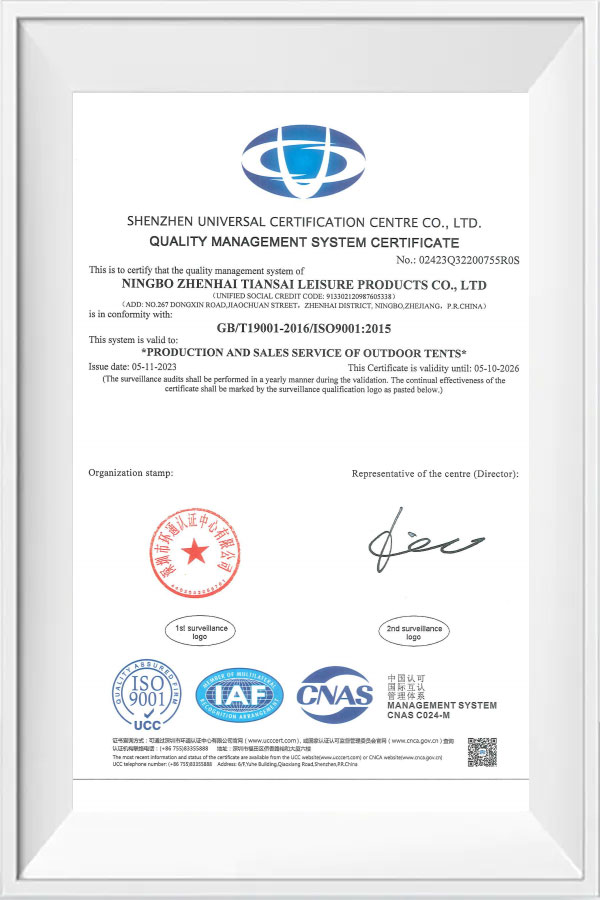
The factory maintains laboratory resources and testing equipment to support development and quality control — covering material testing, coating inspection, seam strength review, frame matching, setup testing, folding checks, and full product evaluation. Products are developed with relevant standards like CE and ISO 9001 in mind.
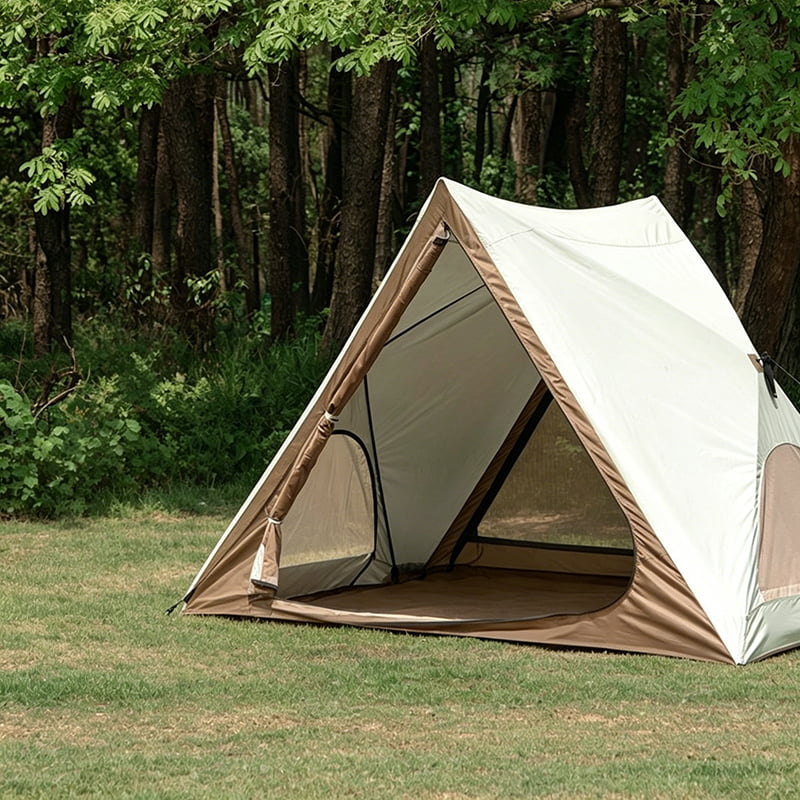
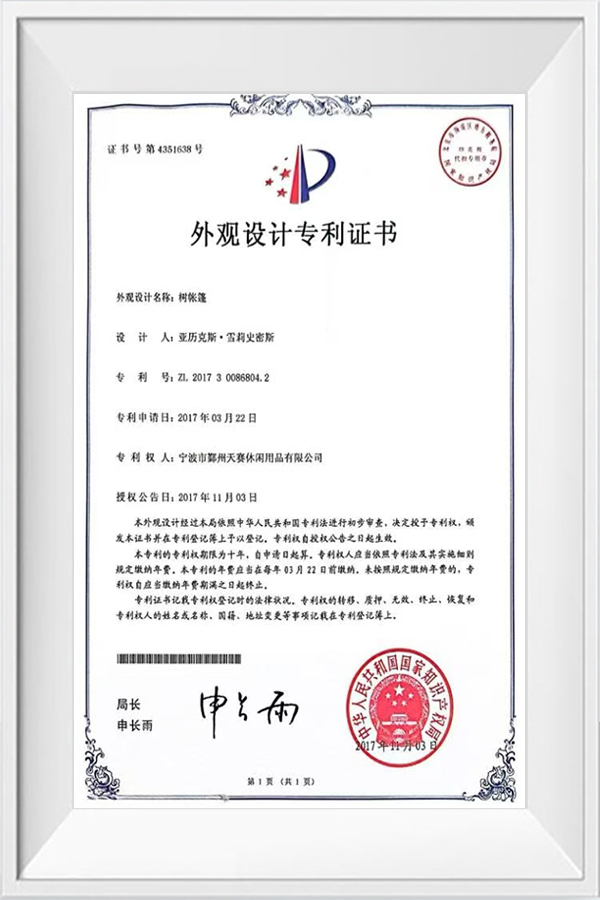
As an experienced beach shelter manufacturer, Tiansai Leisure / Tenplay supports development across beach shade shelters, beach tents, sun shelters, pop-up beach tents, Lycra beach canopies, triangle beach tents, family beach shelters, UV protection beach tents, and wind-resistant beach shelters. Customization can draw from drawings, samples, dimensions, structure, materials, colors, printed branding, and specific functional needs.
Beach shade and shelters exist to build genuinely comfortable shaded spaces across beaches, parks, lakesides, backyards, outdoor events, and family leisure time. Real performance here comes down to UV-resistant fabric, breathable structure, lightweight packing, dependable anchoring, wind-conscious design, and consistent manufacturing control throughout.
Where this category heads next will likely keep pushing toward stronger sun protection, lighter structures, more reliable wind resistance, better ventilation, faster setup, and increasingly refined manufacturing. Getting product development right ultimately comes down to coordinating fabric selection, structural engineering, the anchoring system, sewing quality, sample testing, packaging design, and consistent production — all working together rather than treated as isolated pieces of the puzzle.
