

 English
 عربى


12m² Cotton Inflatable Tent for 6–8 People: A Comprehensive Guide for Family Camping, Glamping, and Commercial Outdoor Use
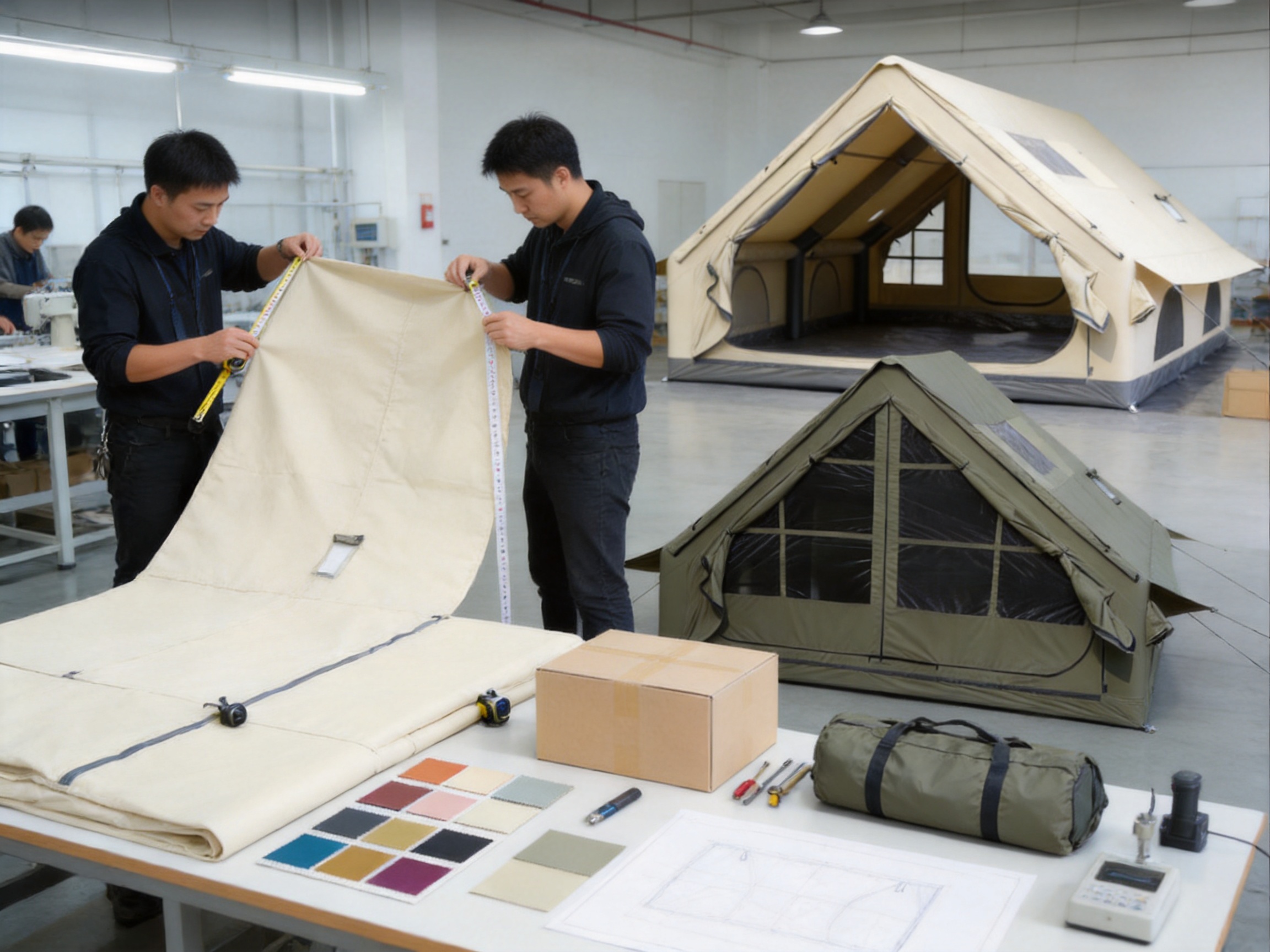
The 12m² Cotton Inflatable Tent for 6–8 People is designed for buyers who need more than a basic weekend shelter. It combines spacious accommodation, rapid air-frame installation, cotton canvas comfort, a durable PE floor, and flexible customization options in one commercially practical package. With an unfolded size of 400 × 300 × 210 cm, the tent provides generous interior space while remaining compact enough to transport in a packed size of 80 × 50 × 37 cm.
This model is suitable for large family car-camping trips, glamping resorts, outdoor festivals, fishing trips, backyard leisure, and professional tent rental operations. Its PVC air column structure eliminates the need for a conventional network of rigid poles, while the 150gsm cotton fabric shell gives the shelter a warmer, more natural appearance than many synthetic camping tents.
For wholesale buyers, resort operators, outdoor brands, and rental companies, the product also offers OEM and ODM development support. Logo, color, size, structure, fabric specifications, and performance requirements can be adapted according to project needs. The standard minimum order quantity is 100 sets, making this tent particularly relevant to businesses purchasing for hospitality, retail, or organized outdoor programs.
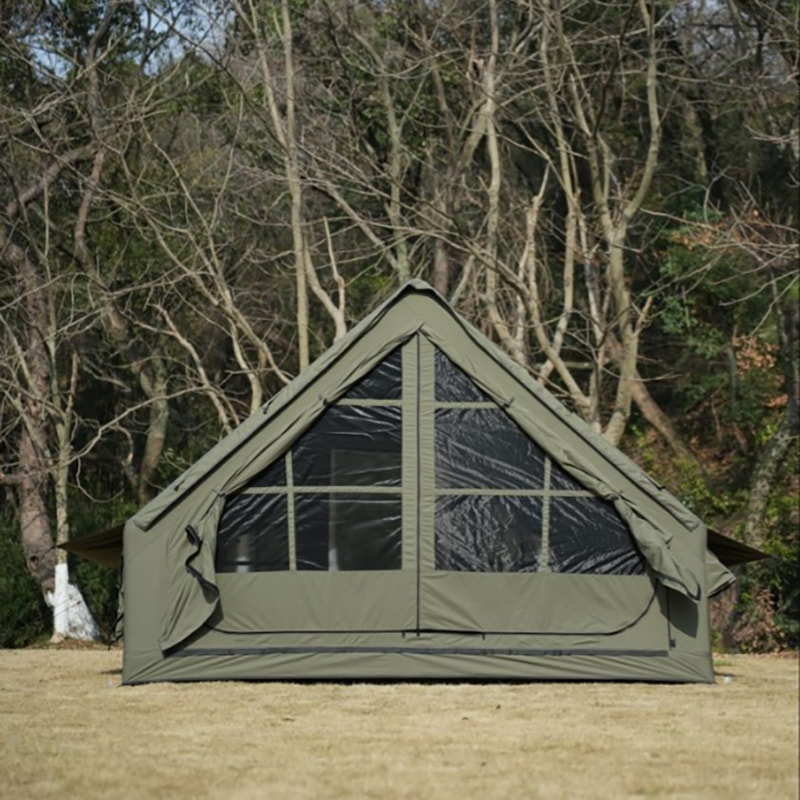
12m² Cotton Inflatable Tent for 6-8 People
Product Overview
The tent measures 400 cm long, 300 cm wide, and 210 cm high when fully unfolded. This creates a floor area of approximately 12 square meters, offering sleeping capacity for six to eight people depending on bed layout, luggage volume, furniture, and the level of comfort expected by users.
At 210 cm high, the interior provides enough headroom for most adults to stand and move around comfortably. This is an important advantage over many low-profile family tents, which can feel restrictive during extended stays or poor weather. A higher central living area also makes the tent more suitable for glamping environments, where guests expect a room-like experience rather than a minimal shelter.
The packed dimensions are 80 × 50 × 37 cm, and the product weighs approximately 26 kg. Although it is not intended for lightweight backpacking, its packed format is practical for vehicle-based camping, resort logistics, and rental fleets. The tent can be transported in the trunk or cargo area of many large passenger vehicles, vans, trailers, and service vehicles.
The main shell uses 150gsm cotton fabric. Cotton canvas is valued for its natural appearance, pleasant hand feel, breathability, and ability to create a more comfortable atmosphere than standard thin polyester. The floor is constructed from 180g PE, providing a sturdy barrier between occupants and the ground. The support structure consists of PVC air columns, which are inflated to form the primary frame.
The stated wind-resistance performance is Level 6, while the listed waterproof rating is 300 mm. These specifications should be considered together with proper anchoring, correct inflation, suitable site selection, and appropriate weather conditions. As with every fabric shelter, performance depends on installation quality, maintenance, and the environment in which the tent is used.
Key Specifications
| Specification | Details |
|---|---|
| Product type | Cotton inflatable family and glamping tent |
| Capacity | 6–8 people |
| Unfolded size | 400 × 300 × 210 cm |
| Approximate floor area | 12 m² |
| Packed size | 80 × 50 × 37 cm |
| Product weight | 26 kg |
| Shell fabric | 150gsm cotton |
| Floor material | 180g PE |
| Support structure | PVC air columns |
| Wind resistance | Level 6 |
| Waterproof rating | 300 mm |
| UV protection | Customizable |
| Seasonal use | Four-season design |
| Packaging | Outer bag and carton packaging |
| Packing quantity | One set per carton |
| Standard MOQ | 100 sets |
| Production lead time | 30–45 days |
| Sample lead time | 15–20 days |
Why the Inflatable Structure Matters
The use of PVC air columns is one of the most distinctive features of this shelter. Traditional large tents commonly rely on multiple aluminum, fiberglass, or steel poles. Although pole systems can be effective, they often require several people to assemble, and the poles can be misplaced, bent, or damaged during repeated commercial use.
An inflatable frame reduces the number of rigid components required for installation. Once the tent fabric is laid out and the air columns are inflated, the structure rises into position without the need to connect a complex series of pole sections. This can shorten setup time and make the tent easier for families, event staff, resort employees, and rental customers to handle.
The air-column system also provides a degree of flexibility in changing conditions. Rather than depending entirely on rigid pole intersections, the structure distributes support through inflated chambers integrated with the tent design. When correctly inflated and anchored, the frame can provide a stable and comfortable shelter for camping and hospitality applications.
For a tent rental business, simplified installation can translate into lower labor requirements. Staff can prepare more units within a fixed operating window, while customers can receive clearer instructions. For a glamping resort, inflatable construction can also help simplify seasonal installation, relocation, storage, and replacement procedures.
The inflatable system does not remove the need for careful setup. Users must inflate the air columns to the recommended pressure, inspect valves and seams, secure the tent with appropriate guy lines and stakes, and avoid placing the shelter on sharp or abrasive surfaces. These basic practices are essential for maintaining frame stability and long-term product life.
Advantages of Cotton Fabric
The 150gsm cotton shell gives this tent a visual and tactile identity that differs from many mass-market synthetic shelters. Cotton fabric has a natural texture and a softer appearance, which are particularly attractive for glamping resorts, boutique campsites, wedding venues, photography locations, and lifestyle-oriented outdoor brands.
Compared with lightweight polyester tents, cotton can create a more substantial interior atmosphere. It may help moderate the feel of the shelter by allowing a degree of breathability, and it often produces less of the shiny technical appearance associated with coated synthetic fabrics. This makes the tent more suitable for buyers who want a combination of outdoor function and hospitality aesthetics.
The cotton construction also complements the tent’s generous dimensions. A large tent can easily look industrial if it uses only highly technical materials. The cotton exterior creates a warmer, more welcoming appearance that can help businesses develop a consistent visual identity across cabins, guest areas, reception spaces, and outdoor accommodation units.
However, cotton requires responsible care. The shell should be dried fully before storage, protected from prolonged unnecessary moisture, and cleaned according to the fabric supplier’s instructions. Users should not fold and store a damp cotton tent, because trapped moisture can encourage mildew and create unpleasant odors. Commercial operators should establish inspection and drying procedures after every rental or guest stay.
Through fabric customization, buyers can request adjustments to waterproof and UV-resistant performance. This allows the standard design to be adapted for different climates, operating seasons, and market positioning. For example, a resort in a high-sun environment may prioritize enhanced UV protection, while a brand serving wet climates may request a different fabric treatment or coating specification.
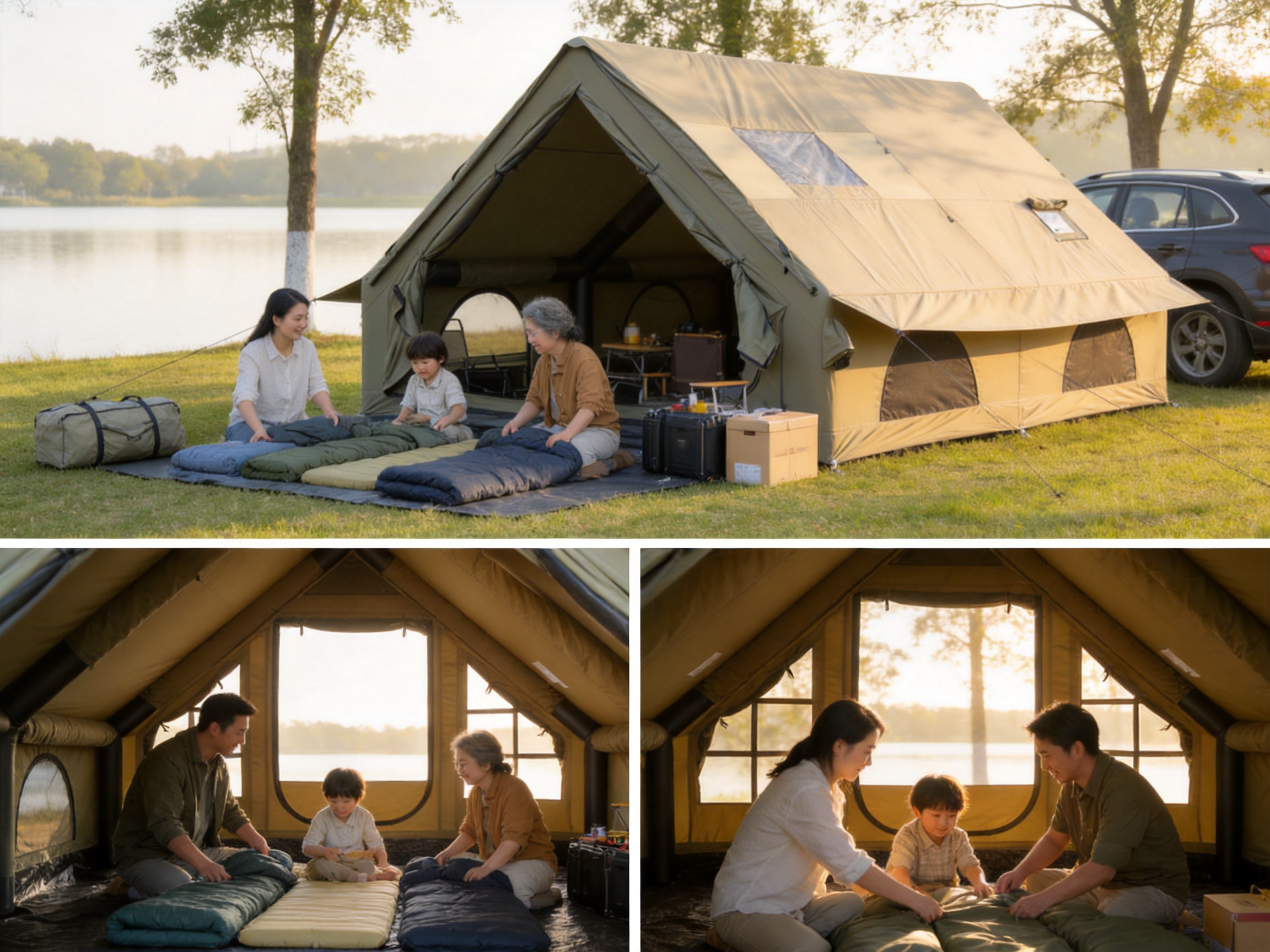
Spacious Accommodation for Six to Eight People
The 12m² layout is large enough for group accommodation while remaining more manageable than oversized expedition or event structures. It can be arranged with sleeping mats, air mattresses, folding beds, or compact camp furniture. For a family, the interior can separate sleeping areas from a central walkway or small living zone. For a glamping operation, the space may accommodate a double bed, side tables, lighting, luggage, and decorative accessories.
Capacity claims should always be interpreted according to the intended use. Six to eight people may fit in a dense sleeping arrangement using mats or sleeping bags. If the tent is furnished with beds and furniture, a lower occupancy may provide a more comfortable guest experience. This flexibility allows buyers to position the same product for different segments, from economical group camping to premium outdoor accommodation.
The 210 cm height contributes to the perception of space. Users can change clothes, organize luggage, and move around without constantly crouching. For families with children, the greater interior volume can make bad-weather periods easier to manage. For commercial operators, a comfortable interior can support longer stays and improve customer satisfaction.
The floor material also plays an important role in the living experience. The 180g PE groundsheet provides a durable, cleanable surface that separates occupants from wet soil, grass, sand, and minor ground moisture. When the site is properly prepared, the groundsheet helps protect equipment and personal belongings while making the shelter easier to maintain between uses.
Performance in Different Outdoor Applications
Family Car-Camping
For large families, vehicle-based camping is often a balance between comfort, storage, and installation time. This tent provides a room-sized interior without requiring the transportation of a large rigid cabin structure. Its packed dimensions allow it to be carried with other camping equipment, while the inflatable frame can simplify setup at the campsite.
The capacity supports family travel with children, shared group trips, and extended weekends. The high ceiling makes the shelter practical for meals, clothing changes, and indoor activities during rain. Families should select a level, well-drained site and use all supplied anchoring points, particularly when the tent is exposed to open fields or coastal conditions.
Glamping Resorts
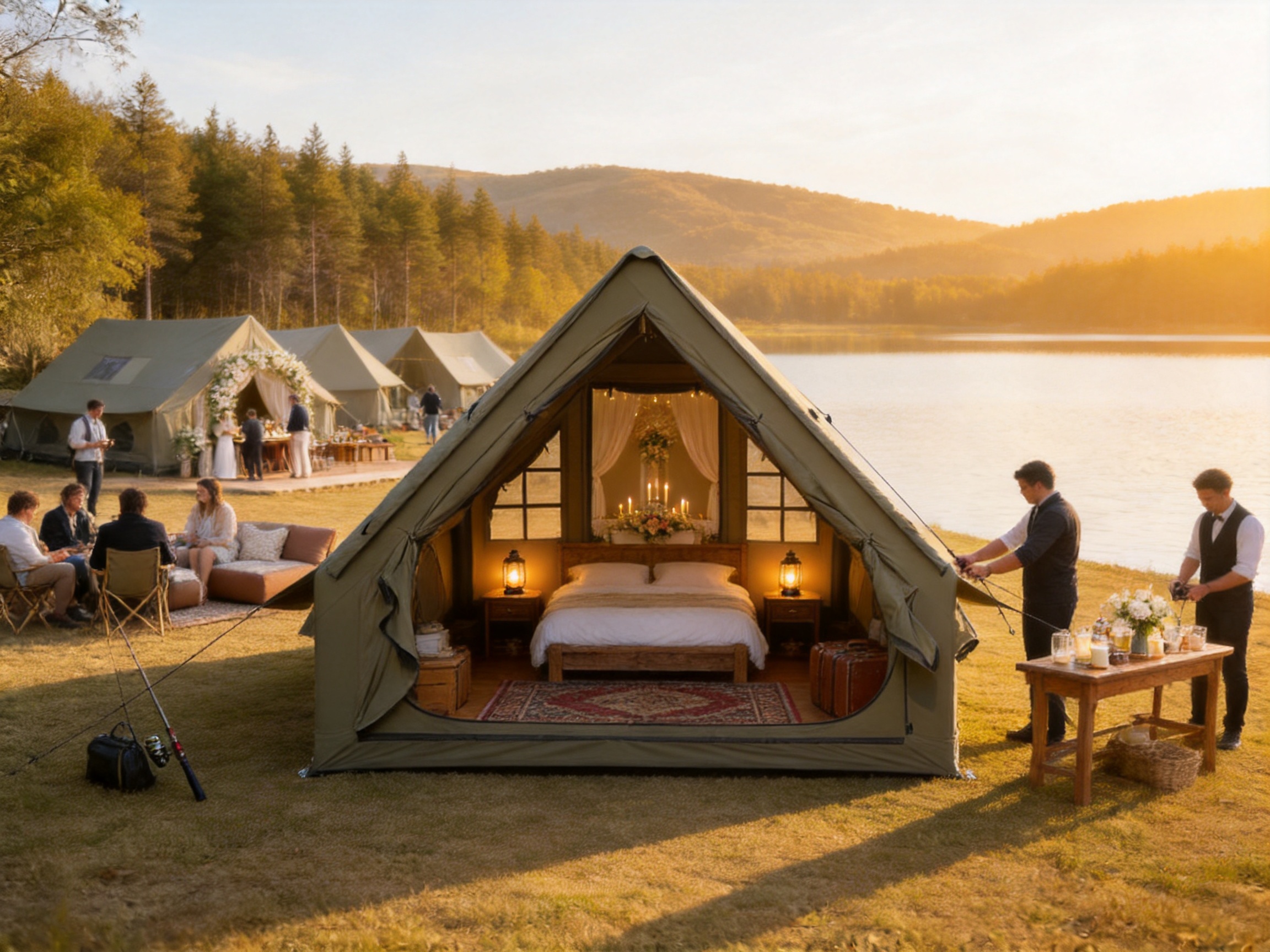
Glamping operators often need tents that look attractive in photographs while remaining practical for repeated guest use. The cotton exterior fits naturally into rustic, luxury, and nature-based design concepts. The 12m² interior can be styled with beds, rugs, lighting, storage, and simple furniture to create a distinctive guest room.
The tent’s customizable UV protection, colors, size, structure, and fabric specifications allow operators to develop a coherent accommodation collection. A resort can select colors that match its landscape or brand identity, apply logos to selected components, and specify changes for different site layouts.
Inflatable construction may also support operational efficiency. Staff can install or move units without handling a large collection of long rigid poles. This is valuable for seasonal sites, temporary resort expansions, festival accommodation, and test locations where the layout may change over time.
Outdoor Fishing and Festival Camping
The roomy interior is suitable for fishing groups and festival visitors who need more space for equipment, clothing, and shared sleeping arrangements. The floor helps separate gear from the ground, while the cotton shell gives the shelter a more comfortable social environment than a compact personal tent.
For festivals and temporary events, operators should carefully review local weather forecasts, site rules, emergency access requirements, and fire-safety regulations. The tent should be installed with adequate spacing from cooking equipment, heaters, generators, and other ignition sources.
Backyard Leisure
Some buyers want a temporary outdoor room for family gatherings, children’s activities, guest accommodation, or seasonal relaxation. In a backyard, the tent can function as a shaded lounge, play area, sleepover space, or entertainment shelter. Its relatively compact packed size makes seasonal storage easier than with permanent structures.
Tent Rental Businesses
Rental companies benefit from products that are recognizable, repeatable, and straightforward to inspect. A standardized inflatable tent can be supplied to customers with a consistent installation guide and packing method. One set per carton simplifies inventory counting and warehouse organization.
The 100-set MOQ may suit companies building a new rental fleet or adding a dedicated cotton glamping range. The business can also request customized branding, colors, and structures to create a recognizable rental identity. Before deployment, rental operators should create procedures for checking air-column valves, fabric seams, groundsheet condition, stakes, guy lines, zippers, and packaging.
Comparison with Conventional Competitor Designs
When compared with ordinary family tents, the product’s primary advantage is its combination of capacity and interior height. Many entry-level family tents offer sleeping space but limited headroom, making them less comfortable for long stays. This model is designed more like a spacious outdoor room, which makes it appropriate for both family use and hospitality applications.
Compared with conventional pole tents, the inflatable structure can reduce assembly complexity. A pole tent may require users to identify and connect numerous components before the shell can be tensioned correctly. The air-frame approach can make the installation process more intuitive, particularly for customers who do not frequently camp.
Compared with lightweight backpacking tents, this product is not intended to compete on minimum weight. At 26 kg, it is a vehicle-supported shelter for groups, families, and businesses. Its competitive advantages are space, comfort, appearance, customization, and commercial versatility rather than ultralight portability.
Compared with purely synthetic glamping tents, the cotton shell offers a more natural aesthetic and a different interior atmosphere. The result is especially attractive to operators who want their accommodations to feel connected to nature rather than resemble temporary technical shelters.
Compared with highly specialized permanent cabins, the tent offers lower logistical commitment. It can be packed, transported, stored, replaced, or rearranged. This provides flexibility for seasonal businesses, pop-up resorts, event organizers, and landowners who do not want to construct fixed buildings.
| Comparison factor | 12m² cotton inflatable tent | Typical small family tent | Typical rigid-pole glamping tent |
|---|---|---|---|
| Interior space | Approximately 12m² for 6–8 people | Often more limited and lower | Usually spacious, depending on model |
| Frame system | PVC air columns | Fiberglass or aluminum poles | Usually rigid poles or metal frames |
| Installation emphasis | Inflation and anchoring | Pole assembly and tensioning | Frame construction and fabric fitting |
| Visual character | Natural cotton, family and resort oriented | Technical or recreational | Often premium and architectural |
| Transport | 80 × 50 × 37 cm packed | Generally compact | May require larger logistics |
| Commercial customization | Logo, color, size, structure, and fabric options | Often limited | May involve higher development cost |
| Best use | Family camping, glamping, rentals, events | Short recreational trips | Longer-term premium accommodation |
Manufacturing Strengths and Production Capabilities
The manufacturer, Ningbo Zhenhai Tiansai Leisure Products Co., Ltd., specializes in the design, production, and sales of tents and outdoor products. Its factory covers more than 13,000 square meters in Zhenhai District, Ningbo, Zhejiang Province. This scale supports coordinated development across product design, material preparation, sewing, assembly, quality inspection, packaging, and export handling.
Ningbo’s position as a major port city provides a logistical advantage for international supply. Finished goods can be prepared for export through established freight channels, helping support wholesale programs for customers in North America, Europe, Asia, and other regions. For overseas buyers, production capability is important, but reliable export coordination is equally valuable when managing scheduled resort openings or seasonal inventory.
The company has experience serving international outdoor brands and has acted as a designated global supplier for the British company TENTSILE. It has also designed products associated with appearance patents and utility model patents. These credentials indicate an emphasis on product development, design protection, and engineering solutions rather than simple commodity production.
Its professional design team develops products with attention to practicality and comfort. Product concepts are refined through collaboration with professionals, outdoor-user testing, and customer feedback. This development approach is particularly relevant to inflatable tents, where comfort depends on the relationship between air-column geometry, fabric tension, room layout, entry design, anchoring points, and packing requirements.
For buyers seeking private-label products, the ability to modify multiple elements is a significant strength. The company supports logo customization when artwork is provided, color selection by Pantone number, size adjustments, structure changes, and fabric customization. This enables customers to develop a product that is more closely aligned with their market instead of selecting an unchanged catalog model.
Material and Sewing Considerations
A large cotton inflatable tent requires consistent fabric cutting, accurate panel matching, reinforced connection areas, and careful sewing around openings and structural attachment points. The manufacturer’s production process must coordinate the outer shell with the PVC air-column system so that the frame inflates evenly and supports the intended shape.
Groundsheet construction also requires attention to seam quality, edge finishing, and the relationship between the floor and upper shell. The 180g PE floor is expected to withstand repeated contact with campsite surfaces, luggage, footwear, and normal movement. In commercial applications, inspection of floor seams and corner reinforcements is an important part of quality control.
Air-Column Integration
Inflatable tents depend on reliable air retention. Air columns, valves, connection points, and protective sleeves must be integrated accurately. Manufacturing controls should include visual checks, dimensional checks, valve inspections, and inflation testing. A quality-oriented production workflow helps identify air leakage, uneven inflation, stitching defects, or incorrect component placement before products are packed.
The factory’s experience in outdoor product development supports the practical integration of air structures with fabric shells. This is an area where a low-cost imitation may appear similar but perform differently due to weaker attachment points, inconsistent seam allowances, or poor alignment between the frame and the outer cover.
Quality Management and International Supply
The company states that it strictly implements a quality management system to help ensure that products meet international standards. For buyers, this means the purchasing process can be supported by defined specifications, sample approval, production schedules, inspection procedures, and packaging requirements.
Commercial customers should confirm the exact quality documents, testing reports, inspection scope, and applicable market requirements during procurement. Product performance can vary according to requested materials and custom modifications, so approval should be based on the final production specification rather than only on a general catalog description.
OEM and ODM Customization Options
The tent is available for both OEM and ODM cooperation, with a standard MOQ of 100 sets. OEM projects can apply a buyer’s logo and selected visual specifications to an existing design. ODM projects can involve deeper changes to the product’s form, layout, structure, materials, or use case.
Logo Customization
Buyers can provide logo artwork for application to suitable areas of the product or packaging. Before mass production, the artwork should be supplied in an appropriate digital format, and the buyer should approve the size, position, color, and application method through a sample or production proof.
Color Customization
Color selection can be based on Pantone numbers. This helps brands maintain consistency across tents, flags, uniforms, signage, packaging, and other outdoor equipment. Actual fabric appearance can vary slightly according to weave, coating, lighting, and screen settings, so physical color samples are recommended for large orders.
Size and Structure Changes
The listed size is 400 × 300 × 210 cm, but the structure and dimensions can be customized according to project requirements. Buyers may request revised layouts, different room proportions, alternative entrances, additional windows, or changes intended for particular campsite plots. Any structural adjustment should be reviewed for air-column placement, stability, fabric tension, packed volume, and production cost.
Fabric Performance
The fabric specification can be adapted to support different waterproof and UV-resistant ratings. Buyers should define their target market, intended season, local climate, cleaning requirements, and expected service life before choosing a material. A fabric suitable for occasional family camping may not be identical to one intended for continuous resort operation.
Installation and Operating Guidance
Before installation, select a firm, level, and well-drained site free from sharp stones, branches, glass, roots, and other objects that could damage the floor or air columns. Lay a protective groundsheet beneath the tent when appropriate, while ensuring that water cannot collect between the protective layer and the tent floor.
Unpack the tent carefully and identify the air valves, guy lines, stakes, and accessories. Spread the shell in the correct orientation before inflation. Check that doors and windows are not trapped beneath folds and that the air-column sleeves are positioned naturally.
Inflate the PVC air columns according to the supplied instructions. Do not use excessive pressure, and do not leave the tent unattended during initial inflation. Once the structure has reached its intended shape, attach guy lines and secure all corners. The tent should be tensioned evenly without pulling one side so tightly that the frame becomes distorted.
After installation, inspect the seams, valves, zippers, floor edges, and anchor points. Confirm that ventilation openings are usable and that water drainage paths around the tent remain clear. In changing weather, check the tent periodically and adjust guy lines if the ground becomes softer or the fabric changes tension.
When packing, remove dirt and debris, release air according to the recommended procedure, and fold the fabric without forcing sharp creases into valves or windows. The tent must be completely dry before long-term storage. Pack all components together in the outer bag and carton to reduce the risk of missing accessories during future use.
Maintenance for Long-Term Value
Regular maintenance can extend the usable life of the product and reduce total ownership costs. After each use, inspect the cotton shell for stains, abrasion, mildew, loose threads, and damage around attachment areas. Minor issues should be recorded and repaired before the next rental or camping trip.
Clean the fabric with methods approved for cotton canvas. Avoid harsh chemicals, abrasive brushes, and unapproved waterproofing products, because these may change the appearance or performance of the material. If the tent becomes wet, open it fully in a ventilated area and allow it to dry naturally.
Air columns should be checked for slow leaks, valve damage, or unusual loss of pressure. Rental companies should consider maintaining a repair kit and recording the results of each inspection. If a structural issue is found, the tent should be removed from service until it has been properly assessed and repaired.
The PE floor should be swept or wiped after use. Small tears or punctures should be addressed promptly so they do not expand during future setup. Storage areas should be dry, cool, clean, and protected from rodents, sharp tools, fuel, and direct sunlight.
Commercial Procurement Considerations
Businesses should define their intended application before placing an order. A resort may prioritize appearance, guest comfort, UV protection, and repeated seasonal deployment. A rental business may prioritize abrasion resistance, easy inspection, replaceable components, and standardized packaging. A retailer may focus on color, carton presentation, product instructions, and consumer-friendly installation.
The standard production lead time is 30–45 days, while the sample lead time is listed as 15–20 days. OEM and ODM sample development is stated as approximately two to three weeks. Buyers should confirm the schedule in writing, especially when orders are linked to a fixed event, resort opening, holiday season, or shipping deadline.
The MOQ is 100 sets for standard OEM and ODM cooperation. At this volume, buyers should prepare clear artwork, approved color information, final dimensions, material specifications, packaging instructions, labeling requirements, and inspection standards before production begins. Clear documentation reduces the likelihood of changes or misunderstandings after manufacturing has started.
Packaging consists of an outer bag and carton, with one set packed per carton. This format supports warehouse organization and helps reduce component mixing. For international shipping, customers should confirm carton dimensions, gross weight, loading quantity, pallet requirements, shipping marks, and destination-country documentation.
Environmental and Practical Considerations
Outdoor products should be selected and operated with attention to their full service life. A durable tent that can be repaired, reused, transported, and redeployed may provide better resource efficiency than a short-life shelter that must be frequently replaced. The inflatable design can support repeated use in different locations when maintained correctly.
Cotton is a natural fiber, but the complete product also includes PVC air columns, PE flooring, coatings, thread, hardware, and packaging. Buyers seeking environmental claims should request specific material and production information rather than relying on general descriptions. They should also consider repairability, replacement parts, packaging reduction, and end-of-life handling.
For commercial operators, a maintenance plan can reduce waste. Cleaning, drying, repair, and proper storage help preserve the original product, while standardized spare parts and accessories may prevent an otherwise usable tent from being discarded because of a small component failure.
Frequently Asked Questions
How many people can sleep in the tent?
The stated capacity is six to eight people. This capacity is most suitable for sleeping mats, sleeping bags, or compact bedding. If the tent includes large beds, tables, luggage, and decorative furniture, a lower occupancy may provide a more comfortable glamping arrangement.
Is the tent suitable for all four seasons?
The product is listed as a four-season tent. Actual suitability depends on the climate, site conditions, user preparation, anchoring, ventilation, and local weather. Buyers should confirm any additional requirements for snow, extreme cold, heavy rainfall, or severe wind before deployment.
What does Level 6 wind resistance mean?
Level 6 is the stated wind-resistance classification for the product. Performance depends on correct inflation, full anchoring, proper guy-line tension, fabric condition, and site exposure. The tent should not be used beyond the manufacturer’s stated operating conditions.
Is the 300 mm waterproof rating suitable for rain?
The listed waterproof rating is 300 mm. This specification should be evaluated alongside seam construction, fabric treatment, installation, ground drainage, and rainfall intensity. For projects in very wet climates, buyers can discuss customized fabric and waterproof-performance requirements with the manufacturer.
Does the tent require poles?
The primary support structure is a PVC air-column frame. It is designed to be inflated rather than assembled with a conventional network of rigid poles. Users still need to install stakes and guy lines to secure the tent properly.
Is this tent suitable for backpacking?
It is not designed as an ultralight backpacking tent. The product weighs approximately 26 kg and is intended for car-camping, glamping, events, rentals, fishing, festivals, and other vehicle-supported uses.
Can the color be changed?
Yes. Color customization is available through Pantone color selection. Buyers should request physical samples or production proofs when exact brand-color consistency is important.
Can the dimensions or layout be changed?
Yes. Size and structure customization are available according to project requirements. Changes should be reviewed for stability, air-column configuration, packing size, material consumption, and production cost.
What is the minimum order quantity?
The standard MOQ for OEM and ODM projects is 100 sets. Buyers should confirm whether a specific customization requires a different quantity or development arrangement.
How long does production take?
The listed production lead time is 30–45 days. Sample development is generally listed as 15–20 days, while OEM and ODM samples are described as taking approximately two to three weeks. The final schedule should be confirmed after specifications and artwork are approved.
How should the cotton tent be stored?
Store the tent completely dry in a clean, dry, ventilated location. Keep it away from direct sunlight, sharp objects, fuel, chemicals, and pests. Do not store cotton fabric while damp or tightly compressed for an extended period.
Who is the manufacturer?
The product is manufactured by Ningbo Zhenhai Tiansai Leisure Products Co., Ltd., an outdoor-product company based in Ningbo, Zhejiang, China. The company specializes in tent design, production, sales, OEM, and ODM services.
Conclusion
The 12m² Cotton Inflatable Tent for 6–8 People offers a balanced solution for buyers who need generous space, a welcoming appearance, practical transport, and simplified installation. Its 400 × 300 × 210 cm unfolded dimensions create a comfortable room for families, guests, and groups, while the 80 × 50 × 37 cm packed size supports vehicle-based transport and commercial storage.
The combination of a 150gsm cotton shell, 180g PE floor, PVC air columns, and customizable performance options gives the tent a broader application range than a basic recreational shelter. It can serve family campers, glamping resorts, outdoor event organizers, fishing groups, backyard users, and professional rental companies.
Its key advantages over many competing products include the natural cotton aesthetic, spacious standing-height interior, inflatable frame, flexible commercial customization, and suitability for repeated deployment. The manufacturer further supports the product through a large Ningbo production facility, international supply experience, product development capabilities, testing-oriented design, and OEM/ODM services.
For the best result, buyers should match the product specification to their climate, operating model, guest expectations, and maintenance resources. With proper installation, drying, inspection, and storage, this tent can become a versatile part of a family camping collection, resort accommodation program, or professional outdoor rental fleet.
References
1. Product specification sheet for the 12m² Cotton Inflatable Tent for 6–8 People.
2. Manufacturer-provided information on materials, dimensions, applications, packaging, customization, and lead times.
3. General principles of tent setup, anchoring, fabric care, air-frame maintenance, and outdoor shelter storage.
4. General guidance for commercial outdoor accommodation, rental-fleet inspection, and seasonal camping equipment management.
5. Manufacturer background information concerning product design, factory capabilities, international supply, and outdoor-product development.
Product: 12m² Cotton Inflatable Tent for 6-8 People

Message Us Right Now!
-
Mp: +86-18858091910
E-mail: sales@tenplaytent.com
ADD: No. 529, Guangyuan Road, Xiepu Town, Zhenhai District, Ningbo City, Zhejiang Province, China
-
Quick Links
Home Products About Us Advantage News Contact Us -
Product
Inflatable & Air Tents Glamping & Resort Tents Backpacking & Trekking Tents Automatic & Pop-Up Tents Family & Camping Tents Specialty Tents & Shelters Kids Tents Pet Tents Humanitarian & Large Tents Hammock -
Get Connected
 Camping Tent Manufacturer in China