


 English
 عربى


Freestanding 2-Person Ultralight Hiking Tent for Mountaineering and Trekking
For hikers, trekkers, mountaineers, and outdoor travelers, choosing a tent is a decision about far more than sleeping space. A shelter must protect its occupants from rain, wind, damp ground, condensation, and changing temperatures while remaining light enough to carry over long distances. It must also be practical to pitch, sufficiently durable for repeated use, and compact enough to fit comfortably inside a backpack.
The freestanding 2-person ultralight hiking tent described in this article is designed around those demands. It combines a double-layer construction, 20D nylon ripstop fabric, a full silicone-coated rainfly, high-density mesh, aluminum poles, two doors, and a compact packable structure. The result is a versatile shelter for multi-day hiking, trekking, mountaineering, wilderness travel, and weekend camping.
Its design also reflects the experience of Ningbo Zhenhai Tiansai Leisure Products Co., Ltd., a China-based tent manufacturer with a factory covering more than 13,000 square meters. Through product development, material selection, practical testing, production management, and overseas supply experience, the company has built capabilities that support both finished outdoor products and OEM cooperation for global brands.
A Shelter Designed for Efficient Backcountry Travel
Every gram matters when a traveler must carry food, water, clothing, navigation equipment, and emergency supplies. Traditional camping tents can offer generous space, but their heavier fabrics, larger frames, and bulky packed dimensions may become a burden on long approaches or multi-day routes. At the other extreme, some minimalist shelters reduce weight by sacrificing protection, convenience, or internal comfort.
This 2-person ultralight hiking tent is positioned between those two extremes. It is designed to provide the practical features expected from a modern backpacking shelter without introducing unnecessary weight or complexity. Its freestanding frame, double-layer structure, dual entrances, mesh ventilation, and compact design address the most common challenges faced by people who spend nights outdoors.
The tent is suitable for two occupants who value portability and access. It can be used by trekking partners, hiking companions, or solo travelers who prefer additional sleeping room and storage space. Although the tent is primarily intended for outdoor accommodation, its adaptable design also makes it suitable for scenic travel, remote exploration, outdoor photography trips, and short recreational getaways.
The central design philosophy is simple: reduce carrying demands while preserving the essential qualities of a dependable shelter. This means choosing lightweight but functional materials, making the structure easy to assemble, allowing air to circulate efficiently, and using a rainfly that provides a protective outer barrier in changing weather.
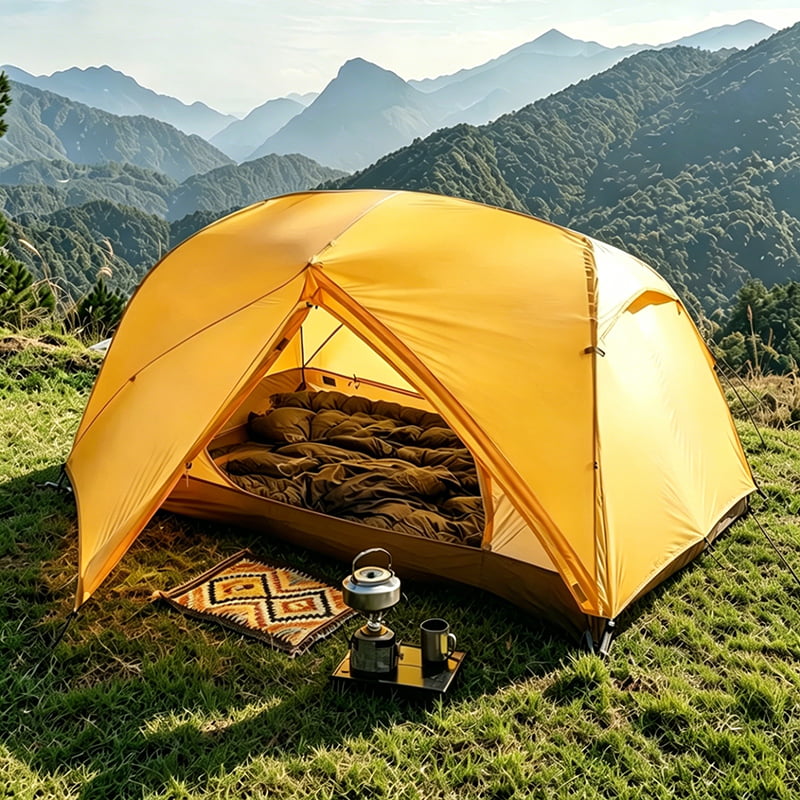
Freestanding 2-Person Ultralight Hiking Tent for Mountaineering and Trekking
Key Product Features at a Glance
| Feature | Design or Material | Practical Benefit |
|---|---|---|
| Occupancy | Two-person layout | Provides shared sleeping space while remaining suitable for solo users seeking extra room |
| Structure | Freestanding frame | Allows flexible pitching on different outdoor surfaces and simplifies setup |
| Outer protection | Full silicone-coated rainfly | Helps shed rain and supports weather protection in wet conditions |
| Fabric | 20D nylon ripstop | Balances low weight, packability, and resistance to ordinary outdoor wear |
| Inner tent | High-density mesh panels | Improves airflow, limits insects, and helps reduce condensation |
| Poles | Lightweight aluminum poles | Creates a practical balance between structural support and carrying efficiency |
| Access | Two doors | Improves entry, exit, ventilation, and convenience for two occupants |
| Intended uses | Hiking, trekking, mountaineering, and camping | Supports a broad range of outdoor travel applications |
Lightweight 20D Nylon Ripstop Construction
The choice of fabric is one of the most important factors in an ultralight tent. A fabric that is too heavy increases the load carried by the user. A fabric that is too thin or poorly engineered may be less suitable for repeated pitching, transport, and exposure to outdoor conditions. The 20D nylon ripstop material used in this tent is selected to provide a practical balance among weight, flexibility, packability, and everyday durability.
Ripstop construction incorporates a reinforced grid within the textile. This structure is intended to help limit the growth of small tears if the fabric is accidentally snagged. It does not make the material indestructible, and careful handling remains important, but it gives the tent fabric a useful level of resistance for backpacking and trekking applications.
Nylon is also valued for its low weight and compact folding characteristics. When compressed into a stuff sack or storage bag, it can occupy significantly less room than many heavier tent fabrics. This makes it easier to organize a backpack and leaves more capacity for clothing, cooking equipment, safety gear, and other essentials.
The fabric’s light character is particularly valuable on routes that include steep climbs, long traverses, or frequent changes of camp. A tent that is easy to carry can help reduce fatigue over the course of a journey. It can also make the shelter more practical for travelers who need to move quickly or who prefer a minimalist equipment system.
At the same time, lightweight materials require responsible use. Users should clear sharp stones, branches, and abrasive objects from the pitching area. They should avoid dragging the tent across rough surfaces and should store it dry whenever possible. These habits help preserve the performance of any ultralight shelter.
Silicone-Coated Rainfly for Wet-Weather Protection
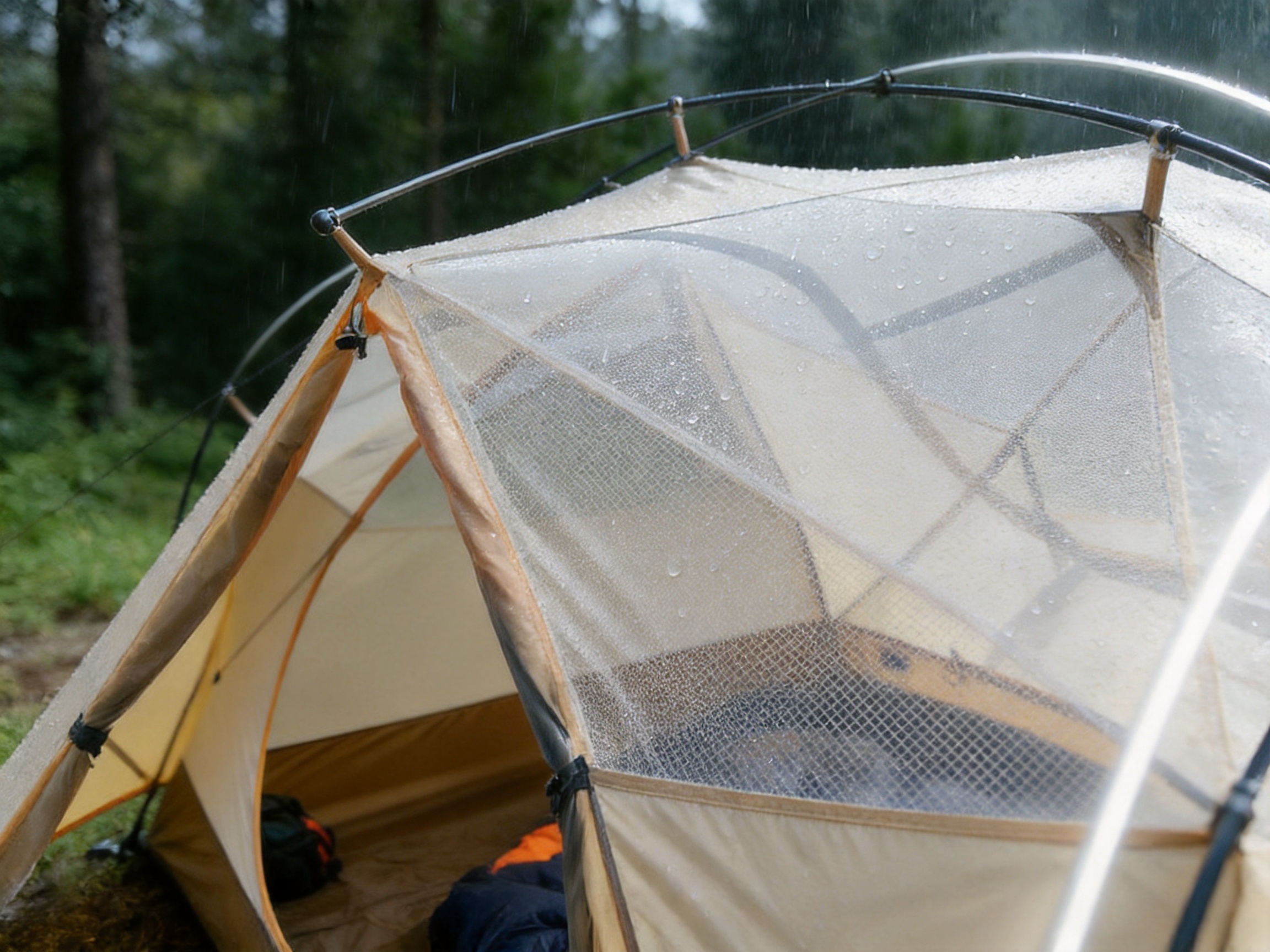
The rainfly forms the primary external barrier between the sleeping area and the weather. This tent uses a full silicone-coated rainfly to help water bead and run away from the surface instead of quickly soaking into the fabric. In practical use, this coating supports the tent’s ability to shed rainfall and maintain a more comfortable interior during wet conditions.
A full rainfly is also useful beyond simple rain protection. It helps create a separation between the inner mesh body and the exterior environment. This double-layer arrangement can improve the overall livability of the shelter by creating a controlled space between the occupants and changing weather conditions.
During heavy rain, the rainfly should be pitched correctly and tensioned evenly. Seams, attachment points, and contact areas should be checked before a trip. The performance of a rainfly depends not only on its coating but also on the quality of the pitch, the direction of the wind, the condition of the ground, and the way the fabric is maintained.
The silicone coating contributes to the tent’s lightweight positioning while supporting weather resistance. Compared with a shelter that relies on a heavier outer fabric, a silicone-coated nylon rainfly can offer a more efficient relationship between protective coverage and packed weight. This is one of the main reasons silicone-treated nylon is widely used in modern trekking and mountaineering equipment.
No compact backpacking tent should be treated as a substitute for a permanent building or an extreme storm shelter. However, for normal hiking, trekking, camping, and mountaineering use, the rainfly provides an important layer of protection against rain and wind. The design is especially useful for travelers who need a dependable shelter without carrying a large, heavy camping structure.
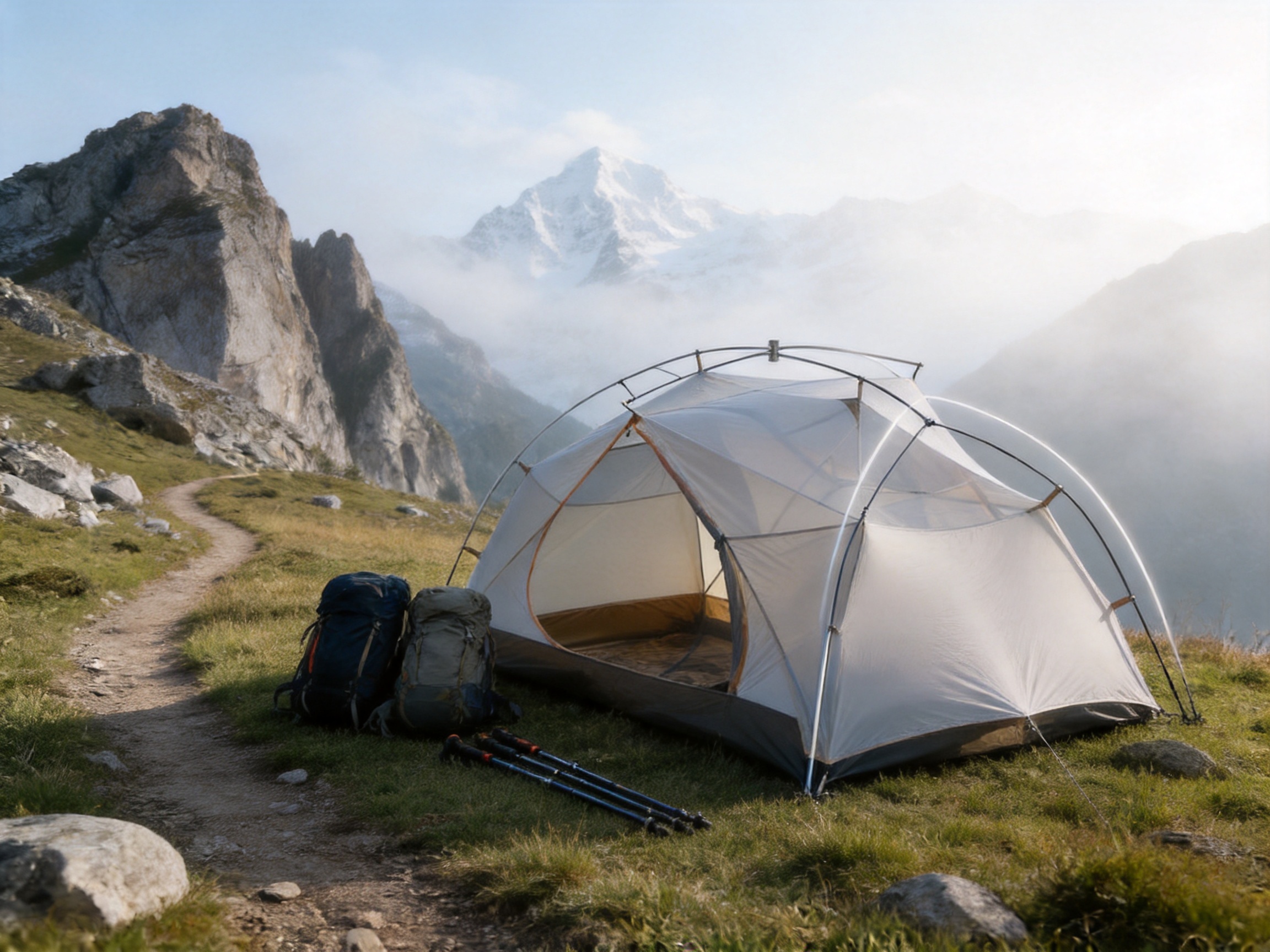
Double-Layer Design for Comfort and Condensation Management
Condensation is a common issue in tents. Warm, humid air produced by breathing, wet clothing, damp ground, and changing outdoor temperatures can cause moisture to collect on cool surfaces. A tent with no separation between the occupants and the exterior may feel damp and uncomfortable, particularly in humid environments or during still nights.
The double-layer construction of this tent addresses that challenge through the combination of an inner tent and an outer rainfly. The inner body provides the sleeping enclosure, while the rainfly creates an external weather barrier. This separation allows air to move through the shelter more effectively than it might in a single-layer design.
The inner tent includes high-density mesh panels. These panels allow air to circulate while helping prevent insects from entering the sleeping area. On warm nights, the mesh can make the interior feel less enclosed. On cooler or wetter nights, the rainfly can be adjusted to provide greater protection while the available ventilation continues to support a fresher interior environment.
Ventilation cannot eliminate condensation in every situation. Air temperature, humidity, ground moisture, occupant breathing, and wind conditions all influence the amount of moisture inside a tent. Nevertheless, a breathable inner structure and properly positioned outer layer can significantly improve comfort when compared with an enclosed shelter that has limited airflow.
Users can further improve ventilation by selecting a well-drained campsite, avoiding depressions where cold air and moisture collect, keeping wet clothing organized, and opening or adjusting the doors when weather permits. Correct pitching is equally important because a rainfly that is pressed tightly against the inner tent may reduce the air gap intended by the double-layer system.
Freestanding Architecture for Flexible Pitching
A freestanding tent is supported by its pole structure rather than relying entirely on stakes to create its basic shape. This design makes setup more convenient and gives users greater flexibility when selecting a campsite. Once the poles are assembled and connected to the tent body, the shelter can stand in place while the user adjusts its position and completes the final staking and guyline work.
This is particularly useful on rocky, compacted, or uneven terrain where driving stakes may be difficult. A freestanding structure can also be lifted and moved short distances during setup, helping the user find a better orientation or avoid an uncomfortable stone beneath the sleeping area.
The aluminum poles are selected for their combination of low weight and structural usefulness. Aluminum has long been used in backpacking tent frames because it can provide dependable support without the bulk associated with heavier frame materials. The pole system also helps the tent maintain its shape when the rainfly is fitted correctly.
Freestanding does not mean that stakes and guylines are unnecessary. In windy or wet conditions, the tent should be fully secured. Stakes help prevent movement, and guylines can improve stability by distributing wind forces away from the main frame. A responsible setup includes checking pole connections, securing the corners, tensioning the rainfly, and orienting the narrower end toward prevailing wind where appropriate.
Compared with many trekking-pole shelters, the freestanding design does not require the user to carry or use trekking poles as structural components. That distinction may be important for travelers who do not use trekking poles, for people who prefer a conventional tent frame, or for situations where trekking poles are needed for walking rather than shelter construction.
Dual Doors for Shared Convenience
Two doors are a valuable feature in a two-person tent. In a single-entry design, one occupant may need to climb over the other to leave the tent, especially when equipment is stored near the entrance. A dual-door structure gives each person a more direct route outside and reduces disruption when one occupant wakes earlier or needs to access equipment.
The doors also offer additional ventilation options. Depending on weather, wind direction, and privacy requirements, one or both entrances can be opened partially to promote airflow. This flexibility is useful during warm evenings, humid conditions, and mornings when condensation needs to disperse.
Two vestibule areas may also be created when the rainfly design and pitching arrangement allow space outside each door. These areas can be used for footwear, backpacks, or other equipment that should remain outside the sleeping compartment. The specific usable space depends on the pitch, terrain, and configuration, so users should organize gear carefully and keep exits clear.
For solo travelers, two doors can make the tent feel especially convenient. One entrance may serve as the primary access point while the second side is used for ventilation, equipment organization, or an alternative exit. The additional access can improve the sense of space without requiring a much larger tent.
Advantages Compared with Heavier Traditional Tents
The most direct advantage of this tent over many traditional camping tents is carrying efficiency. Larger family tents often use heavier fabrics, multiple rooms, thicker poles, and more extensive floor areas. Those features can be appropriate for vehicle camping or stationary campsites, but they are unnecessary for a traveler who must carry the shelter over a mountain trail.
This model focuses its materials and features on two-person backcountry use. The 20D ripstop nylon, lightweight aluminum poles, compact structure, and double-layer design help reduce the overall burden while preserving the basic qualities expected from a protective shelter.
Its smaller packed form also improves storage efficiency. Backpack compartments are limited, and a compact tent can be easier to place alongside a sleeping bag, cooking system, clothing, and food. Efficient packing can help distribute the load more evenly and reduce the need for oversized external attachments.
Another advantage is setup flexibility. A large family tent may require a broad, level area and several people to assemble. The freestanding two-person design is better suited to narrow campsites, mountain platforms, forest clearings, and other locations where available space is limited.
These advantages do not mean that the tent replaces a family shelter. A family camping tent generally offers more headroom, larger living areas, and greater capacity for children and equipment. Instead, the ultralight hiking tent is designed for a different purpose: efficient, mobile shelter for people who prioritize low carrying weight and practical backcountry performance.
Advantages Compared with Single-Layer Minimalist Shelters
Minimalist single-layer shelters can be extremely light, but some users may find that their limited separation between occupant and weather creates compromises in comfort. Moisture from breathing can collect directly on the interior surface, and insects may be more difficult to exclude depending on the design.
The double-layer construction of this tent provides a more traditional sleeping environment. The inner mesh body supports airflow and insect protection, while the full rainfly adds a separate layer against rain. This arrangement gives the traveler greater control over ventilation and weather protection.
The two-door configuration also adds convenience that is not always available in the lightest one-person or single-entry shelters. For two occupants, independent access can make a significant difference during daily use. It reduces disturbance and provides more options for managing gear and airflow.
The freestanding frame is another distinction. A minimalist shelter may depend heavily on precise stake placement, tension, or trekking poles. This model is designed to be more straightforward for users who prefer a conventional frame that can stand during setup before final stabilization.
These features may result in a different weight or packed profile than the most extreme minimalist shelters. However, the design aims to provide a more balanced ownership experience, combining portability with convenience, ventilation, structural independence, and weather protection.
Advantages Compared with Basic Entry-Level Tents
Basic entry-level tents can be suitable for occasional fair-weather camping, but they may not always be optimized for long-distance travel. Their fabrics may be heavier, their frames less refined, and their ventilation systems less effective. Some also provide only one entrance, which can be inconvenient for two people.
This ultralight backpacking model is developed specifically around active outdoor use. Its material selection, ripstop fabric, silicone-coated rainfly, aluminum poles, mesh ventilation, and two-door structure reflect the requirements of hikers and trekkers who may use a shelter repeatedly across different locations.
The product also benefits from a manufacturer whose business is focused on outdoor tents and related equipment rather than general-purpose temporary shelters alone. Product specialization can support better attention to construction details, fabric behavior, pole integration, packing, and the practical needs of outdoor users.
For buyers, the distinction is important. A tent intended for occasional backyard use may prioritize low purchase cost, while a backpacking tent must also consider packed size, transport weight, ventilation, setup time, and performance in changing weather. This model is aimed at the latter requirements.
Suitable Applications for the Tent
Multi-Day Hiking
On multi-day hikes, the shelter is carried every day and repeatedly pitched at the end of each stage. Low weight and compact packing can reduce fatigue, while the freestanding frame and simple two-person layout support efficient camp routines.
Long-Distance Trekking
Long-distance trekking often involves changing terrain, variable weather, and limited opportunities to resupply. A compact tent that combines weather protection with a manageable carrying profile can help travelers maintain a consistent equipment system across the route.
Mountaineering Approaches
During a mountaineering approach, every item must justify its place in the pack. The tent’s low-weight materials, aluminum poles, double-layer structure, and practical access make it suitable as a base shelter for less technical camps and mountain travel where a compact freestanding tent is preferred.
Weekend Camping
The tent is also appropriate for weekend trips. Its performance-oriented design does not require a long expedition to be useful. Hikers can use it for overnight forest trips, regional camping, scenic travel, and short escapes where portability remains important.
Solo Travel with Extra Space
A solo traveler may select a two-person tent to gain more room for sleeping, clothing, equipment organization, and changing clothes. The additional space may be especially valuable when weather forces the traveler to spend more time inside the shelter.
Outdoor Travel and Remote Exploration
Because the tent packs compactly and uses a practical freestanding structure, it can support outdoor photography, nature observation, remote travel, and other activities where the user may need a reliable shelter away from established campgrounds.
Manufacturing Expertise Behind the Product
The performance of a tent is influenced by its design, but dependable production is equally important. Even a well-conceived product requires consistent fabric cutting, accurate sewing, reliable component integration, careful inspection, and appropriate packaging. Ningbo Zhenhai Tiansai Leisure Products Co., Ltd. operates as a specialized tent enterprise with a factory covering more than 13,000 square meters.
The company’s location in Ningbo provides access to an important port city and supports international product movement. Its products are exported to multiple countries and regions, giving the business experience with the requirements of overseas customers, distributors, and outdoor brands.
International supply experience can support more disciplined production planning. Export-oriented manufacturing commonly requires attention to product consistency, packaging protection, documentation, delivery coordination, and communication across different markets. These capabilities are important for buyers seeking repeat orders rather than a single prototype.
The company also develops and sells a broad range of tent products. Its stated product categories include inflatable and air tents, glamping and resort tents, backpacking and trekking tents, automatic and pop-up tents, family and camping tents, kids’ tents, pet tents, humanitarian and large tents, specialty tents and shelters, and hammocks.
This product breadth provides a foundation for understanding different shelter formats. A manufacturer working across lightweight backpacking tents and larger structures can develop experience with various fabrics, frame systems, sewing patterns, load requirements, packaging formats, and end-user expectations.
Product Development and Design Capabilities
Tiansai Leisure has established a professional design team that develops outdoor products from the perspectives of practicality and comfort. For a backpacking tent, those two priorities must work together. A product can be light but inconvenient, or comfortable but too heavy. Effective design seeks a useful balance.
The company states that it collaborates with professionals and invites outdoor enthusiasts to participate in product testing. This type of feedback can reveal practical issues that may not be obvious in a drawing or factory sample. Test users can comment on setup, access, ventilation, storage, fabric handling, packing, and comfort during actual outdoor use.
Continuous optimization based on customer feedback is particularly valuable for tents because their performance depends on real-world interaction. A zipper may function differently when the fabric is tensioned. A pole connection may feel different in cold conditions. An entrance that looks adequate in a technical drawing may become inconvenient when two users are wearing bulky clothing.
By considering these practical details during development, a manufacturer can move beyond appearance and focus on the complete experience of pitching, living in, packing, transporting, and maintaining the product.
The company has also successfully designed products and obtained a number of appearance patents and utility model patents. Such intellectual property reflects attention to original product development and structural solutions. Patents alone do not guarantee that a tent will meet every user’s needs, but they indicate an established interest in creating differentiated outdoor products rather than relying only on generic designs.
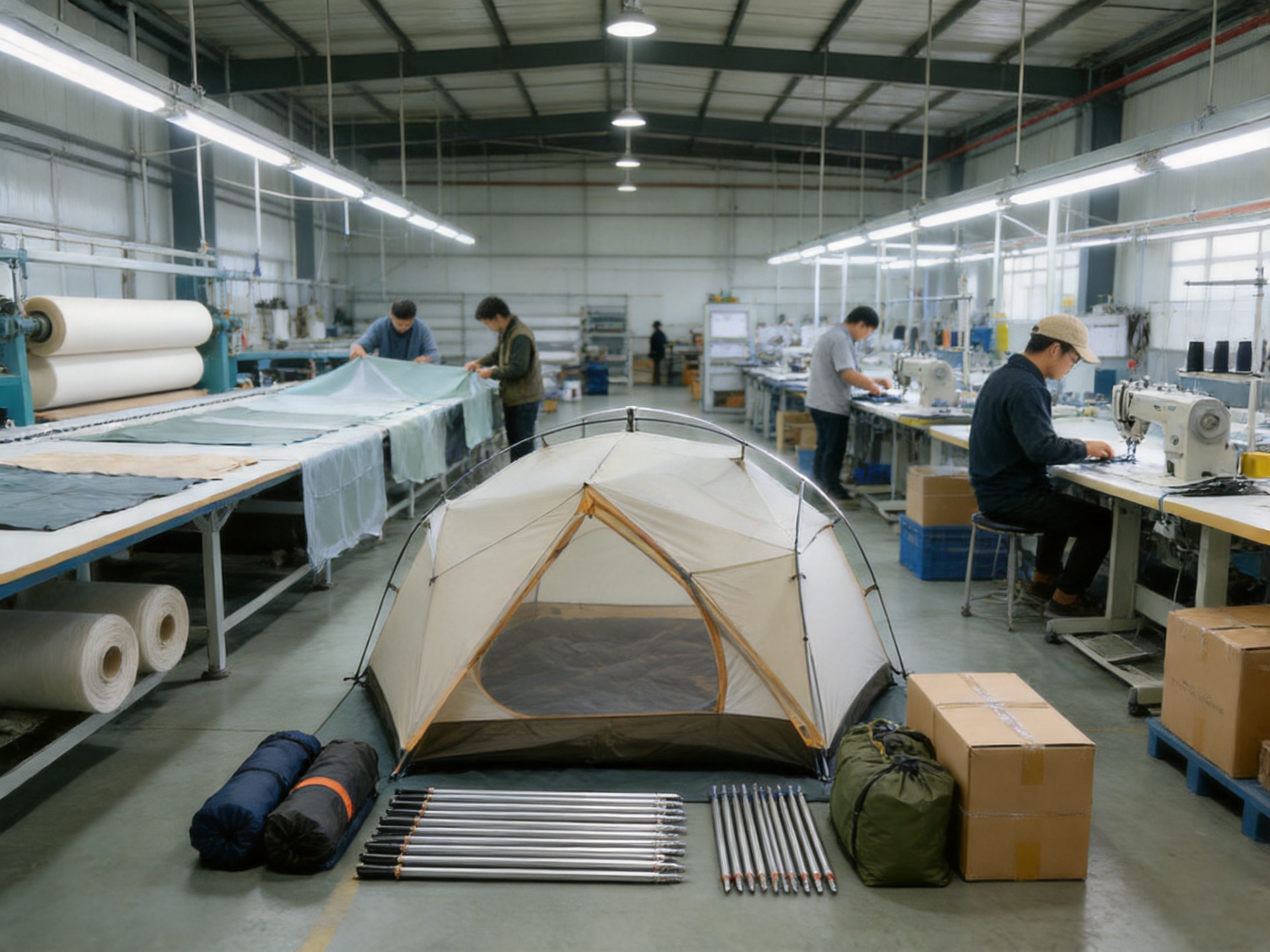
Production Process for a Technical Backpacking Tent
Material Planning and Inspection
Production begins with selecting and preparing the required materials. For this tent, the principal materials include 20D nylon ripstop fabric, silicone-coated rainfly fabric, high-density mesh, aluminum pole components, webbing, cords, hardware, zippers, and related accessories.
Material inspection helps identify issues before cutting and sewing. Depending on the production program, inspection may include checking fabric appearance, color consistency, width, coating condition, mesh integrity, accessory specifications, and packaging requirements. Early control is important because a defect discovered after assembly can create greater waste and delay.
Pattern Development and Cutting
The tent body and rainfly are made from multiple panels that must be cut according to carefully prepared patterns. Accurate cutting supports proper alignment during sewing and helps the finished structure maintain the intended geometry.
Efficient pattern planning also reduces fabric waste. This is especially important for lightweight technical textiles, where material cost and performance requirements must be balanced. Consistent cutting helps ensure that repeated production units have similar dimensions and that attachment points align correctly.
Sewing and Component Integration
Sewing is central to tent manufacturing. The inner tent, mesh panels, doors, sleeves, loops, webbing, and reinforcement areas must be assembled in the correct sequence. Operators need to control stitch quality and fabric handling so that seams remain neat and functional without unnecessary damage to the material.
Rainfly construction requires particular attention to panel alignment, pole attachment points, corner reinforcements, guyline loops, and areas exposed to tension. The silicone-coated fabric must be handled appropriately during production because its surface characteristics differ from those of untreated textile.
Doors and zippers must be positioned accurately so they open and close smoothly. Mesh panels must be securely joined to the surrounding fabric. Reinforcement patches and webbing can distribute loads at corners and attachment points, supporting the tent during normal pitching and use.
Pole and Hardware Matching
The aluminum pole system must match the tent body and rainfly geometry. The correct pole length, segment connection, end fitting, and attachment method help the shelter achieve its intended form. Hardware such as buckles, clips, toggles, rings, and cord locks must be compatible with the fabric and assembly sequence.
Component matching is also important for packing. Pole segments should be organized in a way that allows efficient storage, while accessories should be packed so that they are easy for the user to locate during setup.
Assembly Inspection
After sewing and component integration, the finished tent can be checked for visual and functional consistency. Inspection may include verifying dimensions, checking seams and attachment points, opening and closing doors, connecting poles, fitting the rainfly, and confirming that accessories are included.
For an export-oriented manufacturer, inspection is also connected to order requirements. Different customers may specify colors, labels, packaging, carton markings, instruction materials, or accessory combinations. A controlled inspection process helps ensure that finished goods correspond to the approved sample and production order.
Folding, Packing, and Shipment Preparation
Ultralight tents must be folded and packed carefully. The tent, rainfly, poles, stakes, guylines, and storage components should be organized to protect the fabric and keep the complete set together. Proper packing also affects the product’s final retail presentation and shipping efficiency.
The company’s location near the port infrastructure of Ningbo supports the movement of finished products to international customers. Efficient shipment preparation is important for wholesale and OEM orders, where large quantities must be packed consistently and delivered according to schedule.
Quality Management and Outdoor Reliability
The company states that it strictly implements a quality management system to help ensure that products meet international standards. For tent manufacturing, quality management should cover more than final appearance. It should include material control, production procedures, sample approval, process inspection, finished-product checks, packaging, and recordkeeping.
Outdoor reliability is a system rather than a single feature. The rainfly coating contributes to water shedding, but correct seams and attachment points are also necessary. Lightweight fabric supports portability, but accurate cutting and careful sewing help maintain the intended shape. Aluminum poles provide structural support, but proper connection and fitting are equally important.
A mature quality approach recognizes these relationships. It seeks to reduce variation between production units and identify problems before products reach the customer. This is especially important for international buyers who may reorder the same model or use a product as part of their own brand portfolio.
Quality also includes communication. Clear product specifications, approved samples, packaging instructions, inspection criteria, and delivery expectations help align the factory and buyer. For OEM customers, communication is essential when adapting colors, labels, materials, dimensions, accessories, or packaging.
OEM and Wholesale Cooperation Strengths
Global outdoor brands often require more than a ready-made product. They may need custom branding, packaging, colorways, product adjustments, or coordinated production schedules. A manufacturer with design, production, testing, and export experience can provide a more complete service than a company that only resells generic products.
Tiansai Leisure presents itself as a one-stop partner for global outdoor brands. Its capabilities include product design, production, sales, and overseas operations. This integrated structure can simplify cooperation by allowing customers to communicate with a manufacturer that understands both technical construction and commercial requirements.
The company’s broad tent portfolio can also support product-line development. A buyer may begin with a lightweight backpacking tent and later explore family tents, glamping structures, inflatable shelters, specialty tents, or related outdoor equipment. Working with one experienced supplier can help maintain consistency across materials, color systems, packaging approaches, and brand presentation.
For wholesale buyers, the two-person ultralight tent offers a clear category position. It is suitable for outdoor retailers, trekking equipment distributors, mountaineering suppliers, travel brands, camping marketplaces, and organizations seeking compact shelters for outdoor programs.
For OEM buyers, the existing design provides a starting point for discussion. Depending on project requirements, customers may evaluate material options, visual details, branding elements, packaging, accessories, and order quantities. Any changes should be confirmed through technical specifications and samples before mass production.
Responsible Use and Maintenance
Even a well-made ultralight tent requires proper care. Before pitching, users should inspect the campsite and remove sharp branches, stones, thorns, and other objects that could damage the floor or fabric. A footprint or groundsheet may be used when appropriate, provided it does not extend beyond the tent floor and collect rainwater underneath the shelter.
The poles should be assembled carefully rather than forced. Pole segments should be fully seated, and shock-corded sections should not be allowed to snap together violently. When inserting poles into sleeves or clips, users should avoid pulling aggressively against the fabric.
The rainfly should be tensioned enough to maintain its shape but not so tightly that seams or attachment points are placed under unnecessary strain. In windy weather, all available stakes and guylines should be used. The tent should be oriented thoughtfully in relation to wind and drainage.
After use, the tent should be dried before long-term storage. If it must be packed while wet during a trip, it should be unpacked and dried as soon as conditions allow. Long-term storage in a damp state can encourage mildew and unpleasant odors and may reduce the service life of fabric and coatings.
Cleaning should be gentle. Loose dirt can usually be removed by shaking or brushing carefully. Strong detergents, harsh solvents, abrasive scrubbing, and uncontrolled heat may damage coatings or fabric. Users should follow the care instructions supplied with the specific product.
With careful handling, appropriate pitching, and regular inspection, an ultralight tent can remain a dependable part of an outdoor equipment system for many seasons.
How to Choose This Tent for a Specific Outdoor Program
Travelers should first consider the number of occupants, expected weather, route length, available campsite size, and personal packing preferences. This tent is designed for two people, but sleeping comfort depends on body size, equipment volume, and how much time occupants expect to spend inside during poor weather.
For warm-weather trips, the mesh inner tent and dual doors provide useful airflow options. For wet conditions, the rainfly should be fitted correctly and the site should be selected to avoid standing water. For mountain use, travelers should assess the forecast, elevation, exposure, and season before deciding whether this type of lightweight shelter is appropriate.
Buyers should also distinguish between packed weight and the weight of individual components. When comparing models, it is useful to confirm what is included in the stated product package, such as poles, rainfly, stakes, guylines, storage bags, and repair materials.
For retailers and distributors, the product’s strongest commercial features are its clear two-person positioning, lightweight construction, conventional freestanding structure, dual doors, double-layer protection, and broad outdoor application. These qualities make it straightforward to present to hikers and trekkers who want a compact shelter with more convenience than an extreme minimalist design.
Q&A
Who is this tent designed for?
It is designed for hikers, trekkers, mountaineers, backpackers, outdoor travelers, and campers who want a lightweight two-person shelter with practical weather protection and convenient access.
Can one person use the tent?
Yes. Although it is designed for two occupants, a solo traveler can use it for additional sleeping space, equipment storage, or greater comfort during extended trips.
What makes the tent ultralight?
The lightweight positioning comes from the use of 20D nylon ripstop fabric, a silicone-coated nylon rainfly, lightweight aluminum poles, and a compact two-person structure. The exact packaged weight should be confirmed from the product specification for the intended production version.
What is the advantage of a double-layer tent?
A double-layer tent separates the inner sleeping area from the external rainfly. This arrangement supports weather protection, insect control, airflow, and condensation management while providing a more comfortable interior than many simple single-layer shelters.
Does the silicone-coated rainfly make the tent completely waterproof?
The silicone-coated rainfly is designed to shed rain and support wet-weather protection. However, real performance depends on correct pitching, seam construction, site selection, wind, rain intensity, maintenance, and the condition of the fabric. No lightweight shelter should be considered completely immune to all weather conditions.
Why are two doors useful?
Two doors allow each occupant to enter or exit independently. They also provide more ventilation choices and can make it easier to organize footwear, backpacks, and other equipment near separate entrances.
What does freestanding mean?
Freestanding means that the pole structure can support the basic tent shape without requiring every part of the shelter to be staked before it stands. Stakes and guylines remain important for stability, especially in wind and rain.
How does the mesh help with condensation?
The high-density mesh allows air to move through the inner tent while keeping insects outside. Better airflow can help reduce the buildup of humid air, although condensation also depends on temperature, humidity, ventilation behavior, and campsite conditions.
Are aluminum poles suitable for mountain travel?
Lightweight aluminum poles are widely used in backpacking and trekking tents because they offer a useful balance between low weight and structural support. Users should still select equipment according to the season, forecast, exposure, and specific demands of the route.
How should the tent be maintained?
Users should dry the tent before storage, keep it away from sharp objects, handle poles and zippers carefully, avoid harsh cleaning chemicals, and inspect seams, fabric, poles, and attachment points regularly.
Does the manufacturer offer other types of tents?
Yes. The company’s product categories include inflatable and air tents, glamping and resort tents, backpacking and trekking tents, automatic and pop-up tents, family and camping tents, kids’ tents, pet tents, humanitarian and large tents, specialty tents and shelters, and hammocks.
Can the tent be developed for OEM or wholesale projects?
The manufacturer provides design, production, sales, and overseas support for outdoor brands. Potential OEM or wholesale customers should discuss required materials, colors, branding, packaging, accessories, specifications, order quantities, sampling, inspection, and delivery schedules directly with the production team.
Conclusion
The freestanding 2-person ultralight hiking tent is designed to meet the practical needs of modern outdoor travel. Its 20D nylon ripstop construction, full silicone-coated rainfly, double-layer structure, high-density mesh, aluminum poles, compact form, and two-door layout create a balanced shelter for people who value both portability and comfort.
Compared with heavier traditional camping tents, it is more appropriate for carrying over long distances and pitching in compact backcountry locations. Compared with minimalist single-layer shelters, it offers greater separation from weather, improved insect protection, and more flexible ventilation. Compared with basic entry-level tents, it provides a feature set more closely aligned with hiking, trekking, and repeated outdoor use.
The product is supported by the manufacturing capabilities of Ningbo Zhenhai Tiansai Leisure Products Co., Ltd. The company’s more than 13,000-square-meter factory, professional design team, outdoor testing approach, patent experience, quality management system, export background, and broad tent portfolio provide a foundation for product consistency and OEM cooperation.
For individual adventurers, the tent offers a compact home on the trail. For retailers and outdoor brands, it represents a clearly positioned backpacking product that combines low-weight design, practical access, ventilation, and weather protection. Its value lies not in one isolated feature, but in the way materials, structure, manufacturing knowledge, and real-world usability come together in a single shelter.
References
1. Product specification and descriptive materials for the freestanding 2-person ultralight hiking tent.
2. Manufacturer information for Ningbo Zhenhai Tiansai Leisure Products Co., Ltd.
3. General technical principles of nylon ripstop fabrics used in outdoor equipment.
4. General outdoor equipment guidance concerning tent ventilation and condensation management.
5. General principles of aluminum pole construction for backpacking and trekking shelters.
6. General quality-management practices for textile, sewing, and outdoor-product manufacturing.
Product: Freestanding 2-Person Ultralight Hiking Tent for Mountaineering and Trekking

Message Us Right Now!
-
Mp: +86-18858091910
E-mail: sales@tenplaytent.com
ADD: No. 529, Guangyuan Road, Xiepu Town, Zhenhai District, Ningbo City, Zhejiang Province, China
-
Quick Links
Home Products About Us Advantage News Contact Us -
Product
Inflatable & Air Tents Glamping & Resort Tents Backpacking & Trekking Tents Automatic & Pop-Up Tents Family & Camping Tents Specialty Tents & Shelters Kids Tents Pet Tents Humanitarian & Large Tents Hammock -
Get Connected
 Camping Tent Manufacturer in China