


 English
 عربى


Double-Layer Waterproof Pickup Truck Bed Camping Tent: A Practical Guide to Comfortable Mobile Camping
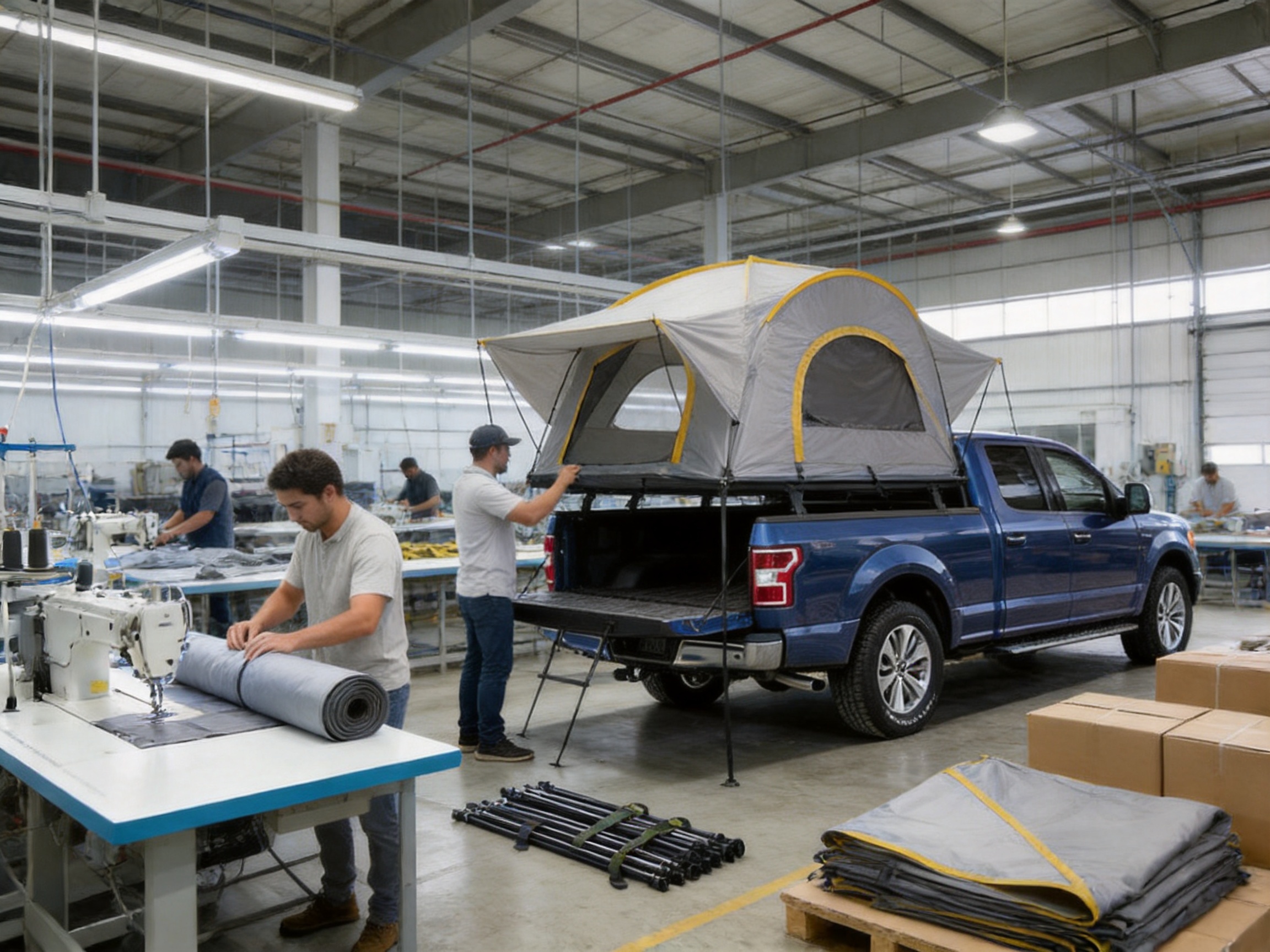
For outdoor enthusiasts who want more comfort than a ground tent can provide, a pickup truck bed camping tent offers a practical and versatile alternative. It turns an unused truck bed into an elevated sleeping shelter while preserving the mobility that makes vehicle-based travel so appealing. The double-layer waterproof pickup truck bed camping tent described in this article is designed for camping trips, fishing weekends, road tours, family adventures, and long-distance travel.
Unlike a conventional standalone tent, this shelter uses the pickup truck as its foundation. The elevated position helps separate campers from wet ground, mud, uneven terrain, and crawling insects. At the same time, the tent remains portable and compact enough to store when the truck is being used for ordinary transportation.
The product combines a waterproof rainfly, a durable inner tent, reinforced structural points, strong poles, and truck-bed attachment features. Together, these elements create a reliable outdoor living space for people who want a more convenient way to sleep on the road.
Why Pickup Truck Camping Continues to Grow
Vehicle-based camping has become increasingly popular because it provides a balance between exploration and convenience. Travelers can reach remote locations without depending on hotels, campsites with permanent facilities, or fixed travel schedules. A pickup truck adds another advantage: its cargo bed can be converted into a dedicated sleeping area without permanently modifying the vehicle.
Traditional ground tents remain useful, but they often require a level and dry campsite. In rainy conditions, water may collect beneath the floor. Rocks, roots, and uneven soil can make sleeping uncomfortable. Ground-level tents may also be more exposed to dirt, insects, and small animals.
A truck bed tent addresses many of these concerns by placing the sleeping area above the ground. The truck bed provides a relatively stable platform, and the tent can be installed in locations where a conventional tent might be inconvenient. This is especially helpful during fishing trips, roadside stops, hunting travel, scenic road tours, and dispersed camping.
The double-layer design also makes the product more adaptable to changing weather. The inner layer creates the primary sleeping enclosure, while the outer rainfly provides an additional barrier against rain, wind, and sunlight. This layered construction is more practical than relying on a single fabric wall for every form of protection.
Product Overview
This portable shelter is designed for use with many standard pickup truck beds. Its purpose is to transform the cargo area into a comfortable mobile campsite while keeping setup and storage manageable for individual travelers, couples, and families seeking a convenient outdoor sleeping solution.
The design centers on several important functions:
- Providing an elevated sleeping area above the ground.
- Creating protection from rain, wind, and ultraviolet exposure.
- Offering a more comfortable alternative to sleeping directly in a truck cab.
- Allowing faster installation than building a separate campsite from multiple pieces of equipment.
- Folding into a compact package for transport and storage.
- Supporting multiple outdoor activities, including camping, fishing, road travel, and weekend recreation.
Although it is made for pickup trucks, the concept is also relevant to vehicle-oriented travelers who want a dedicated shelter that works with their existing transportation. The product is especially attractive to users who already own a pickup and want to expand its usefulness without investing in a camper shell or permanent rooftop camper.
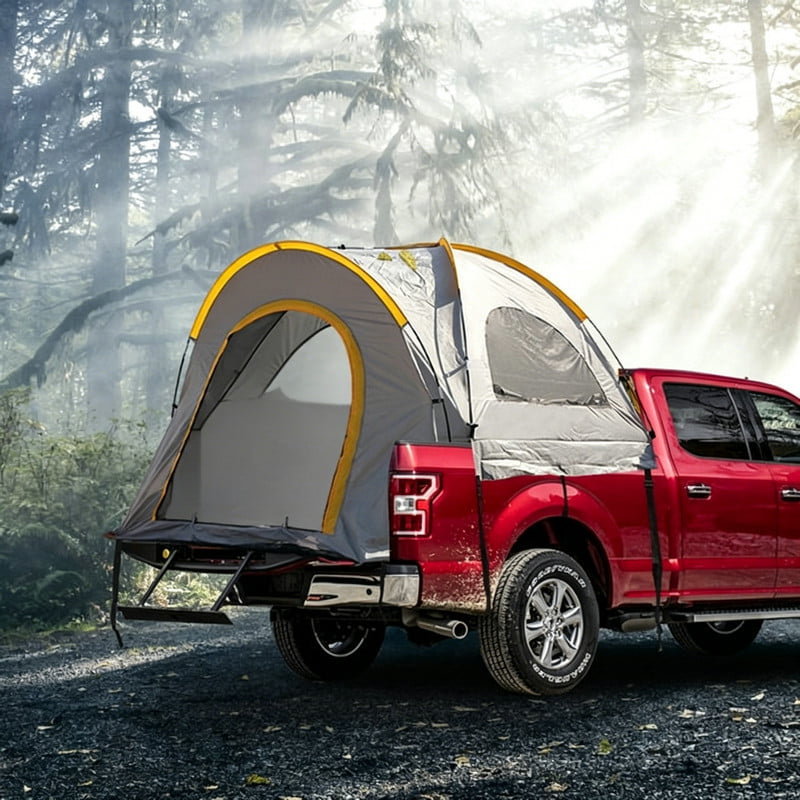
Double Layer Waterproof Pickup Truck Bed Camping Tent Portable SUV Sleeping Shelter
Double-Layer Construction for Improved Weather Protection
One of the product’s most important advantages is its double-layer configuration. A tent with separate inner and outer layers can offer a more balanced combination of breathability, weather resistance, and comfort than a simple single-wall shelter.
Outer Waterproof Rainfly
The rainfly is the first line of defense against changing weather. It helps prevent rain from reaching the inner tent and reduces direct exposure to sunlight. When properly positioned and tensioned, the outer layer can also help shield the sleeping area from wind-driven moisture.
A rainfly is valuable during both planned and unexpected weather events. Outdoor conditions can change quickly, particularly in mountain regions, coastal areas, forests, and open plains. A separate waterproof layer gives campers additional time and protection when rain begins during the night.
The rainfly also creates a gap between the outside environment and the inner shelter. This separation can improve ventilation and reduce the chance of condensation collecting directly over the sleeping area. Proper ventilation remains important, but the layered structure provides a more comfortable starting point for managing moisture.
Inner Sleeping Layer
The inner layer forms the main enclosure around the occupants. It provides privacy, helps block insects, and creates a more comfortable sleeping environment than an exposed truck bed. Depending on the conditions, campers can adjust openings to encourage airflow while maintaining shelter.
The inner tent also contributes to the overall durability of the system. Since the rainfly absorbs much of the direct exposure to precipitation and sunlight, the inner layer can focus on comfort, enclosure, and ventilation. This division of functions is one reason double-layer tents are widely used for outdoor travel.
Protection from Wind and Ultraviolet Exposure
Weather resistance involves more than keeping rain out. Wind can place stress on poles, seams, attachment points, and fabric panels. Sunlight can gradually weaken exposed materials and make the interior uncomfortably warm. The product’s outer layer is designed to help reduce these effects, while reinforced seams and multiple attachment points contribute to structural stability.
Users should always install the tent correctly, secure all attachment points, and avoid using it in conditions beyond the product’s intended design. No portable tent should be treated as a permanent structure or used as a substitute for severe-weather shelter.
Advantages Over Conventional Ground Tents
A pickup truck bed tent does not replace every type of camping shelter, but it offers several clear advantages in situations where the user is traveling by truck.
Elevated Sleeping Position
The elevated truck bed separates campers from wet soil, puddles, mud, and many ground-level insects. This can improve comfort during damp-weather camping. It also reduces the need to search for a perfectly flat patch of land because the truck itself provides the base.
Sleeping above the ground can be particularly useful in areas where the terrain is rocky or covered with roots. Instead of placing a mattress directly over uneven soil, campers can arrange their bedding inside the truck bed and use the tent as a protective enclosure.
Efficient Use of Existing Equipment
Many outdoor travelers already use a pickup truck to transport coolers, cooking equipment, bicycles, fishing gear, or luggage. A truck bed tent makes the vehicle serve a second purpose as a sleeping platform. This can reduce the need to carry a large freestanding tent and a separate sleeping shelter.
Because the tent is designed for direct truck-bed installation, it can be a more integrated solution than setting up a ground tent beside the vehicle. Campers can keep equipment close to the sleeping area while maintaining a dedicated space for rest.
More Convenient Campsite Selection
A conventional ground tent usually requires sufficient space around the tent perimeter for staking and tensioning. A truck bed tent generally needs the truck to be parked securely and positioned on suitable terrain. This can provide greater flexibility at compact campsites, roadside locations, and vehicle-accessible recreational areas.
However, campsite regulations and vehicle-safety requirements should always be followed. The truck must be parked securely, the parking brake should be applied, and the sleeping area should never be used while the vehicle is moving.
Compact Storage
When not in use, the tent packs down for storage. This makes it easier to keep in a garage, truck toolbox, storage compartment, or travel bag. Compact storage is an important advantage for users who want camping equipment available without permanently occupying the truck bed.
Advantages Over Permanent Camper Conversions
Some truck owners install camper shells or hard-sided truck campers. These products can provide additional features, but they are often more expensive, heavier, and less flexible. A portable tent offers a lower-commitment approach to vehicle camping.
A removable truck bed tent does not require a permanent conversion of the vehicle. The truck can continue to carry ordinary cargo when the tent is not installed. This flexibility is useful for owners who use the same pickup for work, errands, recreation, and travel.
The portable design can also simplify ownership. A fabric tent typically requires less storage space than a hard-sided camper and can be removed when the truck bed is needed for large or dirty loads. For occasional campers, this may provide better value than purchasing a full camper system.
Another advantage is ease of replacement or upgrading. If a traveler’s needs change, a portable shelter can be replaced without modifying the entire vehicle. This makes the product suitable for first-time truck campers as well as experienced outdoor users.
Key Design Features
Truck Bed Compatibility
The product is intended to fit many standard pickup truck beds. Because truck dimensions vary by brand, model, cab configuration, and bed length, buyers should confirm measurements before ordering. The most important dimensions include bed length, bed width, wheel-well position, tailgate configuration, and available attachment space.
Compatibility is not determined by vehicle branding alone. Two trucks with similar names may have different bed dimensions. A careful measurement before purchase helps ensure that the tent can be installed correctly and that the inner sleeping space will be suitable for the intended users.
Reinforced Attachment Points
Attachment points transfer tension from the fabric structure to the truck. They must remain secure while the tent is being installed, occupied, and exposed to normal outdoor wind. Multiple attachment locations help distribute force instead of concentrating stress in a single area.
Correct attachment is essential. Loose straps can allow the tent to move, while excessive tightening may place unnecessary stress on the fabric or hardware. Users should follow the installation instructions and inspect straps, buckles, loops, and seams periodically.
Strong Support Poles
The support poles maintain the tent’s shape and create interior headroom. They also help the rainfly remain separated from the inner layer. Pole sections should be connected fully, positioned in the correct sleeves or clips, and checked before the tent is occupied.
Strong poles are particularly important during windy conditions. Nevertheless, pole strength works together with correct anchoring, balanced tension, and sensible campsite selection. The best performance comes from the complete system rather than from one component alone.
Reinforced Seams
Seams are among the most important areas in any fabric shelter. They join separate panels and may experience repeated tension during setup and use. Reinforcement in these areas helps improve service life and reduces the chance of premature separation.
Quality seam construction also contributes to water resistance. A waterproof fabric can still allow moisture through poorly constructed seams. For that reason, fabric selection, stitching accuracy, seam treatment, and final inspection all contribute to the finished product’s performance.
Comfort for Different Types of Outdoor Travel
Weekend Camping
For short weekend trips, convenience is often more important than carrying a large collection of equipment. A truck bed tent can be transported with basic bedding, lighting, cooking supplies, and personal gear. Setup can create a dedicated sleeping area without requiring a complicated campsite layout.
Fishing Trips
Fishing travelers frequently carry rods, tackle boxes, coolers, waders, and other equipment. A pickup truck provides the cargo capacity needed for this gear, while the truck bed tent makes overnight stays more practical. Campers can remain close to a fishing location without paying for conventional accommodation.
Road Tours
Long-distance road travel often involves changing destinations and irregular schedules. A portable shelter gives travelers more options when planning overnight stops. Instead of searching for a hotel in every location, they can select suitable campsites and maintain a consistent sleeping arrangement.
Family Outdoor Trips
Families may appreciate the elevated and enclosed sleeping environment. The product can provide an organized shelter for parents and children when used within its capacity and dimensions. Families should consider the interior size, mattress arrangement, ventilation needs, and personal space requirements before purchasing.
For family use, organization is especially important. Bedding should be arranged before nightfall, frequently used items should remain accessible, and heavy equipment should not be placed where it can damage the tent fabric or interfere with exits.
Long-Distance Travel
Travelers spending extended periods on the road need equipment that is practical to install, remove, clean, and store. A compact truck tent can support a flexible routine by allowing the vehicle to function as both transportation and accommodation.
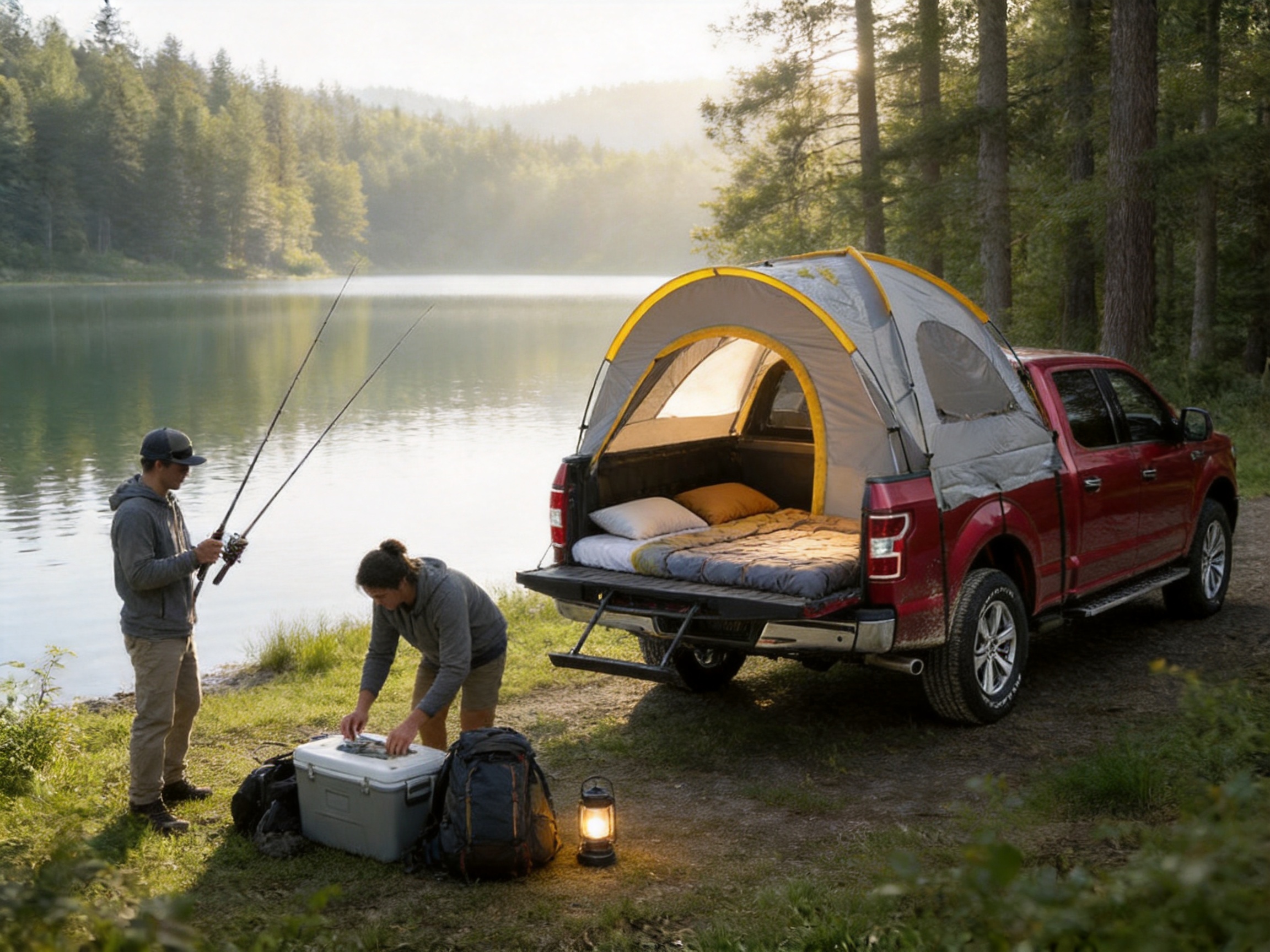
Manufacturing Strengths Behind the Product
The performance of a camping shelter depends not only on its visible design but also on the manufacturing process behind it. The company producing this truck bed tent operates a factory of more than 13,000 square meters in Ningbo, Zhejiang, China. Its location near an important port supports international logistics and the export of outdoor products to numerous markets.
The manufacturer specializes in the design, production, and sales of tents. Its product experience covers outdoor shelters, camping tents, glamping structures, inflatable tents, backpacking tents, and other portable outdoor equipment. This broad product background is valuable because technologies developed for one tent category can inform improvements in another.
Professional Product Development
The company maintains a professional design team that develops products from both practical and comfort-oriented perspectives. For a truck bed tent, this means considering more than appearance. Designers must evaluate installation sequence, fabric tension, access points, sleeping space, ventilation, storage, truck-bed compatibility, and transport size.
Practical product development also involves identifying how customers actually use outdoor equipment. Campers may install a tent at dusk, pack it in limited space, use it during rain, or set it up after a long day of driving. A successful design must remain understandable and manageable under these real-world circumstances.
Prototype Evaluation and Outdoor Testing
The company collaborates with professionals and invites outdoor enthusiasts to participate in product testing. This approach can reveal details that may not be obvious during an initial design review. Test users can comment on setup time, interior comfort, access, stability, storage, and performance during different outdoor activities.
Feedback-based development is especially important for vehicle tents because truck beds vary and user expectations can be different from those of conventional tent campers. A product may need to balance strong attachment with easy removal, compact storage with interior room, and water resistance with ventilation.
Repeated evaluation allows design teams to refine patterns, adjust attachment positions, improve pole geometry, strengthen stress areas, and update user instructions. Continuous optimization is a practical way to improve the product rather than relying only on theoretical design calculations.
Quality Management
The manufacturer states that it strictly implements a quality management system intended to ensure that products meet international standards. In tent production, quality management may involve material inspection, pattern verification, stitching checks, component matching, assembly review, and finished-product inspection.
Consistent quality is particularly important for export products. A tent shipped to another country must be manufactured to a repeatable specification so that customers receive the same expected dimensions, components, and performance characteristics from one production batch to another.
Experience in Outdoor Products
The company’s core team includes outdoor-product specialists with more than ten years of experience in research and development, production, and overseas operations. This combination of technical and commercial experience supports the development of products that are not only functional but also suitable for international distribution.
Outdoor equipment must balance performance, cost, appearance, packaging, shipping efficiency, and customer support. Experience across these areas can help a manufacturer identify problems earlier and coordinate improvements between design, production, quality control, and sales teams.
Design and Utility Patents
The company has successfully designed products associated with a number of appearance patents and utility model patents. Intellectual property development indicates an emphasis on original product design and technical differentiation. For buyers seeking private-label or OEM products, this background can be useful because it demonstrates experience in turning concepts into commercial outdoor equipment.
Patent ownership does not automatically guarantee that every product is superior in every environment. However, it can reflect a structured approach to research, design documentation, and product development.
Production Process for a Truck Bed Tent
Material Selection
Manufacturing begins with the selection of fabrics, webbing, mesh, poles, buckles, zippers, thread, and other components. Each material must be appropriate for its purpose. The rainfly requires weather-resistant fabric, while inner panels may prioritize breathability, comfort, visibility, or insect protection.
Webbing and attachment components must tolerate repeated handling. Pole materials must provide a suitable balance between weight, flexibility, and strength. Zippers should operate smoothly without damaging adjacent fabric. Small components can have a major effect on the daily usability of the finished shelter.
Pattern Design and Cutting
Computer-assisted or carefully controlled pattern development helps ensure that fabric panels are cut to consistent dimensions. Accurate cutting is necessary for proper alignment during sewing. It also influences the final shape, pole tension, rainfly coverage, and overall appearance.
Material efficiency is another consideration. Well-planned patterns can reduce waste and support more consistent production. For an OEM manufacturer, controlled pattern files make it easier to reproduce the same design across multiple production runs.
Industrial Sewing
Industrial sewing joins the primary tent panels and creates sleeves, hems, pockets, loops, and reinforcement zones. Operators must control stitch length, seam allowance, thread tension, and panel alignment. The sewing process requires both machinery and skilled attention because tent fabrics can behave differently from ordinary clothing materials.
High-stress locations may receive additional layers of fabric, bartacks, binding, or reinforced stitching. These areas can include pole ends, strap connections, corner points, zipper zones, and roof intersections.
Rainfly and Seam Treatment
The rainfly is constructed with attention to panel overlap, edge finishing, and water-shedding geometry. Depending on the selected materials and product specification, seams may receive additional treatment to help reduce water penetration.
Testing and inspection should focus on areas where water is most likely to collect or travel, including roof seams, corners, attachment zones, and zipper openings. Correct assembly is essential because even high-quality fabric cannot compensate for poor seam alignment or incomplete finishing.
Component Assembly
After the main fabric structure is sewn, the tent is matched with poles, straps, buckles, storage components, and packaging materials. Each component must correspond to the correct product version. Incorrect pole lengths or missing attachment pieces can affect both installation and performance.
Assembly teams may conduct trial fitting to confirm that the tent opens correctly, poles reach their intended positions, and attachment points align with the truck-bed configuration for which the product was designed.
Finished-Product Inspection
Final inspection can include visual checks, measurement verification, zipper operation, seam review, hardware inspection, folding evaluation, and packaging confirmation. The product may also be set up to verify its shape and identify defects that are not visible when the fabric is folded.
This stage is important because the customer experiences the product as a complete system. A tent with excellent fabric but a missing strap, mismatched pole, or damaged zipper will not meet customer expectations.
Why OEM and Wholesale Buyers May Prefer an Experienced Factory
Retailers, distributors, outdoor brands, and importers often need more than a single finished product. They may require custom labels, packaging adjustments, color options, specification changes, product photography support, or coordinated shipping. A manufacturer experienced in overseas operations can be better positioned to manage these requirements.
The company offers one-stop services for global outdoor brands. Its production background, design capability, and export experience support cooperation on private-label and OEM camping tent projects. A buyer can discuss intended market, target customer, vehicle compatibility, fabric preferences, packaging needs, and expected order volume during the development process.
OEM cooperation can also help brands create a product range instead of offering only one tent. For example, a brand might combine pickup truck tents with ground tents, glamping shelters, inflatable tents, or family camping products. A manufacturer with experience across several categories may help maintain consistent construction quality and visual identity across that range.
Wholesale buyers should still conduct their own due diligence. They should confirm specifications, sample quality, packaging details, production schedule, testing documentation, shipping terms, and after-sales procedures before placing a commercial order.
Comparison Table
| Feature | Double-Layer Pickup Truck Bed Tent | Conventional Ground Tent | Permanent Truck Camper |
|---|---|---|---|
| Installation location | Pickup truck bed | Ground or campsite surface | Mounted on or attached to a vehicle |
| Elevation from ground | Elevated by the truck bed | Ground-level | Usually elevated |
| Portability | Folds for storage and removal | Folds for storage | Usually remains installed or requires specialized removal |
| Vehicle modification | Generally no permanent modification required | No vehicle integration | May require mounting equipment or permanent installation |
| Weather protection | Double-layer rainfly and inner shelter | Varies by model and construction | Usually rigid or semi-rigid protection |
| Storage requirements | Compact when packed | Compact when packed | Requires significant vehicle storage or garage space |
| Best suited for | Pickup owners, road travel, fishing, weekend camping | General camping and backpacking | Extended vehicle-based travel and high-comfort camping |
| Initial commitment | Moderate and removable | Low to moderate | Higher financial and installation commitment |
Installation Guidance
Before installation, choose a safe location with firm ground and enough space to open doors, access the truck bed, and tension the shelter. Park the vehicle securely, apply the parking brake, and ensure the truck is not positioned where water can collect around the tires or under the vehicle.
Open the truck bed and remove sharp objects, loose tools, or cargo that could damage the fabric. Check the bed surface and tailgate area for anything that may interfere with the tent’s floor or attachment points.
Lay out the tent components and identify the inner tent, rainfly, poles, straps, and hardware. Connecting the pole sections before inserting them can make the process easier. Do not force poles through sleeves or bend them sharply.
Attach the inner tent according to the supplied instructions. Position the corners and ensure that the fabric is not twisted. Connect the straps gradually rather than tightening one location completely before securing the others. Balanced tension helps maintain the intended shape.
Install the rainfly over the inner layer and attach all relevant points. Make sure the rainfly covers the inner tent adequately and that it does not press unnecessarily against the inner fabric. Check openings and ventilation areas before entering the tent.
After installation, inspect the complete structure. Verify that poles are seated correctly, straps are secure, zippers operate properly, and the tent does not contact hot exhaust components, sharp truck edges, or moving parts.
Care and Maintenance
Good maintenance can extend the usable life of a camping tent. Before storage, allow the fabric to dry completely. Packing a damp tent can encourage mildew, create odors, and weaken some materials over time.
Remove dirt with a soft brush or gentle cleaning method appropriate for the fabric. Avoid harsh chemicals, abrasive tools, and unnecessary high-pressure washing unless specifically permitted by the product-care instructions.
Inspect the tent after each trip. Look for loose stitching, damaged webbing, bent poles, broken clips, zipper problems, or small holes. Minor issues are easier to address before the next trip than after a failure in bad weather.
Store the tent in a cool, dry area away from direct sunlight, excessive heat, oil, chemicals, and sharp objects. Poles should be stored without unnecessary stress, and the packed tent should not be crushed under heavy equipment.
Safety Considerations
A truck bed tent is designed for camping and should never be used while the vehicle is moving. Occupants must exit the tent before the truck is started or relocated.
Do not use fuel-burning stoves, lanterns, heaters, or open flames inside the tent. Combustion can cause fire, consume oxygen, and produce dangerous carbon monoxide. Cooking equipment should be placed outside in a well-ventilated area and operated according to its instructions.
Keep the tent away from power lines, falling branches, unstable slopes, flood channels, and areas vulnerable to sudden water accumulation. If severe weather develops, move to a safer shelter instead of relying on a portable tent.
Do not exceed the product’s intended occupancy or place excessive weight on the tent fabric, poles, or truck-bed components. Children should be supervised, and exits should remain accessible.
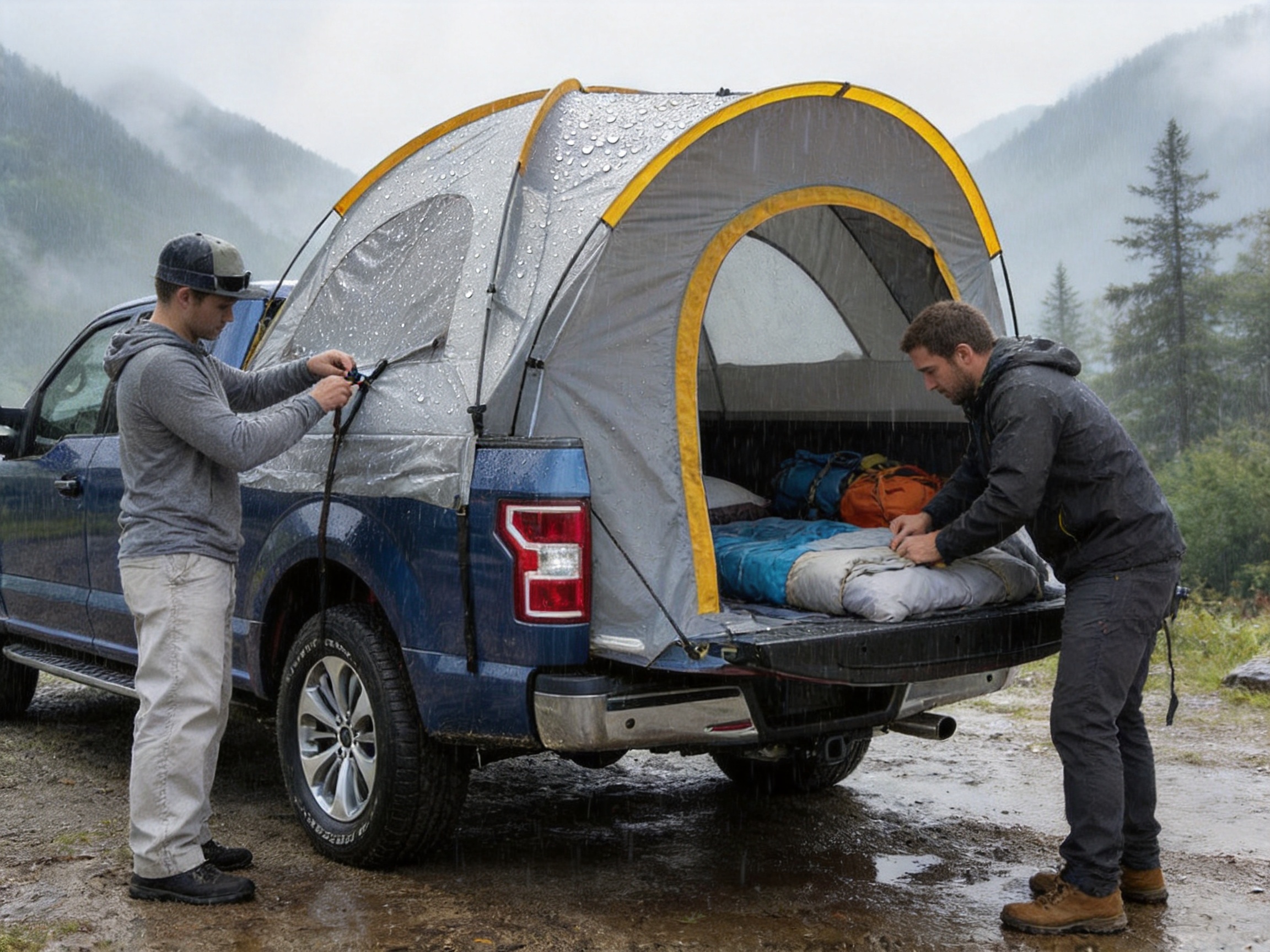
How to Choose the Right Truck Bed Tent
Measure the Truck Bed
Measure the usable length and width of the truck bed. Include the effect of wheel wells, bed liners, toolboxes, tonneau covers, and other accessories. The tailgate position may also influence the available sleeping length.
Consider Sleeping Capacity
Think about how many people will use the shelter and how much space they need for bedding. A product suitable for one or two adults may not provide enough room for a family. Personal comfort preferences, mattress thickness, and interior gear storage should be considered before purchase.
Evaluate Climate and Travel Style
Users who camp in rainy regions may place a higher priority on the rainfly, seam construction, and coverage. Travelers in hot climates may focus more on ventilation and shade. Those who travel frequently may value compact storage, fast setup, and easy cleaning.
Review Accessories
Check whether the package includes poles, straps, storage bags, rainfly components, and other necessary hardware. Buyers should understand which accessories are included and which items must be purchased separately.
Confirm After-Sales Support
For commercial purchases, ask about spare parts, replacement poles, fabric repairs, instructions, packaging, and warranty procedures. Reliable support can be as important as the initial product specification, particularly for retailers and fleet users.
Q&A
What is a pickup truck bed camping tent?
It is a portable tent designed to install over or within a pickup truck bed. It uses the truck bed as an elevated platform and creates an enclosed sleeping shelter for camping, road travel, fishing, and other outdoor activities.
What makes this model different from a simple truck-bed cover?
This product is designed as a complete sleeping shelter rather than a basic cargo cover. It includes a double-layer structure, a waterproof rainfly, an inner tent, support poles, reinforced seams, and multiple attachment points.
Is the tent waterproof?
The product is designed with a waterproof rainfly and weather-resistant construction to help protect occupants from rain. Correct installation, proper tension, closed openings, and suitable campsite selection are necessary for the best performance. No fabric tent should be considered completely impervious to every weather condition.
Will it fit every pickup truck?
No tent should be assumed to fit every truck. Buyers should compare the product dimensions with their truck bed’s length, width, wheel-well arrangement, tailgate, and accessories before ordering.
Can it be used on an SUV?
The product is primarily described as a pickup truck bed tent. Some vehicle configurations may support related uses, but buyers should confirm the exact compatibility with the manufacturer before attempting installation on an SUV or another vehicle type.
How many people can sleep inside?
Capacity depends on the model’s interior dimensions and the size of the occupants. Users should review the official product specification and consider bedding, personal space, ventilation, and emergency access rather than relying only on a general capacity label.
Does the truck need to be modified?
The portable design is intended to install without a permanent camper conversion. However, truck accessories such as bed liners, toolboxes, tonneau covers, and racks may affect compatibility or installation space.
Can the tent remain installed while driving?
No. Occupants must leave the tent before the vehicle moves, and the shelter should be packed or secured according to the product instructions before driving.
Is a double-layer tent better than a single-layer tent?
A double-layer design can offer improved separation between the waterproof outer layer and the inner sleeping area. It may provide better weather management, privacy, and ventilation potential. The best choice still depends on climate, intended use, weight, setup preferences, and budget.
How should the tent be stored after a rainy trip?
Dry the tent completely before long-term storage. Remove loose dirt, inspect the poles and straps, fold the fabric without forcing it into a damaging shape, and store it in a cool, dry place.
Can this product be customized for wholesale orders?
The manufacturer specializes in OEM and wholesale outdoor tent solutions. Buyers should discuss branding, colors, dimensions, materials, packaging, labels, order quantities, and delivery requirements during the quotation and sample-development process.
What kind of company manufactures this tent?
The product is manufactured by an established Ningbo-based outdoor-products company specializing in tent design, production, and sales. Its factory covers more than 13,000 square meters, and its team has experience in product development, manufacturing, international operations, and outdoor equipment.
Conclusion
The double-layer waterproof pickup truck bed camping tent is a practical shelter for travelers who want to combine mobility, comfort, and efficient use of their pickup truck. Its elevated sleeping position helps separate campers from wet and uneven ground, while the waterproof rainfly and inner layer provide a more protective environment than an uncovered truck bed.
Reinforced seams, strong poles, and multiple attachment points support stability, while the compact storage design makes the product suitable for owners who use their trucks for both daily transportation and outdoor recreation. Compared with a permanent camper conversion, it offers a more flexible and removable solution. Compared with a conventional ground tent, it can provide an elevated sleeping experience and a more integrated relationship with the vehicle.
The manufacturing background behind the product is equally important. A factory exceeding 13,000 square meters, a professional design team, outdoor testing, quality-management procedures, patent experience, and international export capabilities provide a strong foundation for consistent production. These strengths are particularly valuable for wholesalers, distributors, and brands seeking reliable OEM camping tent solutions.
For individual buyers, the most important steps are to verify truck-bed compatibility, understand the intended capacity, install the shelter correctly, and maintain it carefully. For commercial buyers, the focus should also include sample approval, material specifications, packaging, quality control, production scheduling, and after-sales support.
When used responsibly and matched with the right vehicle, this truck bed tent can transform a pickup into a comfortable mobile campsite for weekend adventures, fishing trips, family travel, and long-distance exploration.
References
1. Manufacturer-provided product specifications for the double-layer waterproof pickup truck bed camping tent.
2. Manufacturer-provided company information regarding tent design, production, quality management, OEM services, and export experience.
3. General outdoor shelter design principles concerning rainfly construction, ventilation, seam reinforcement, pole systems, and fabric care.
4. General vehicle-based camping safety practices concerning parking, fire prevention, carbon-monoxide awareness, severe weather, and vehicle movement.
5. General textile manufacturing practices concerning fabric inspection, industrial sewing, reinforcement, component assembly, and finished-product quality control.
Product: Double Layer Waterproof Pickup Truck Bed Camping Tent Portable SUV Sleeping Shelter

Message Us Right Now!
-
Mp: +86-18858091910
E-mail: sales@tenplaytent.com
ADD: No. 529, Guangyuan Road, Xiepu Town, Zhenhai District, Ningbo City, Zhejiang Province, China
-
Quick Links
Home Products About Us Advantage News Contact Us -
Product
Inflatable & Air Tents Glamping & Resort Tents Backpacking & Trekking Tents Automatic & Pop-Up Tents Family & Camping Tents Specialty Tents & Shelters Kids Tents Pet Tents Humanitarian & Large Tents Hammock -
Get Connected
 Camping Tent Manufacturer in China