


 English
 عربى


6.3m² Cotton Inflatable Tent for 2–4 People: A Practical Four-Season Camping Solution
Outdoor accommodation is changing. Campers, glamping operators, event organizers, rental businesses, and family travelers increasingly want the comfort of a substantial shelter without the complicated setup associated with traditional framed tents. The 6.3m² cotton inflatable tent for 2–4 people is designed to answer that demand with a combination of generous interior space, an air-supported structure, cotton canvas construction, compact packing, and flexible customization options.
With an unfolded size of 300 × 210 × 200 cm, the tent provides a comfortable living and sleeping area for two to four occupants. When packed, it measures approximately 63 × 45 × 35 cm, making it practical for vehicle-based camping, organized outdoor events, rental fleets, and seasonal accommodation projects. Its 18 kg weight reflects a substantial cotton shell, PVC air-column system, and 180g PE groundsheet rather than an ultra-light backpacking design.
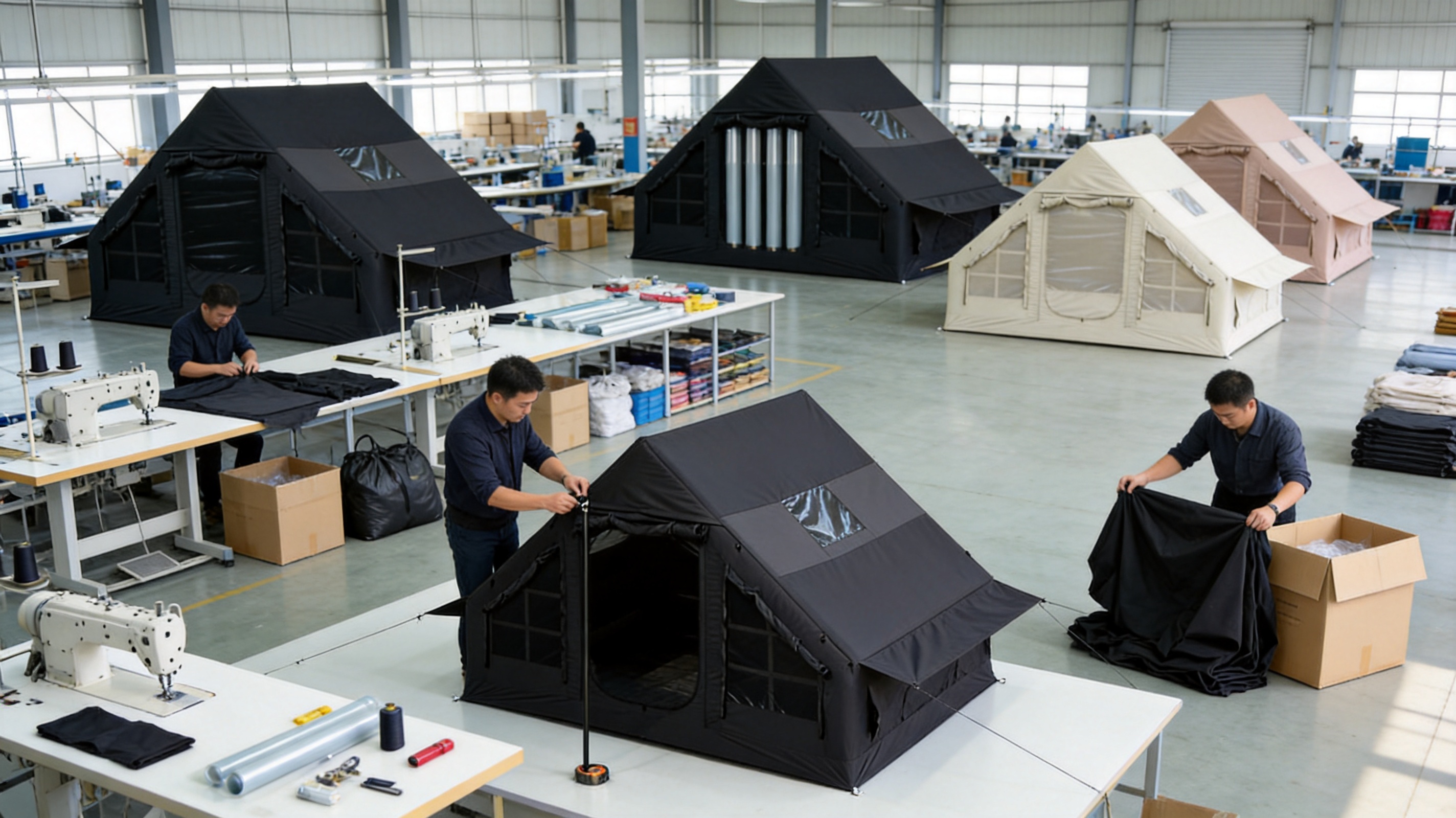
The tent is produced by Ningbo Zhenhai Tiansai Leisure Products Co., Ltd., a China-based outdoor product manufacturer with a factory area of more than 13,000 square meters. The company specializes in tent design, production, customization, and overseas supply. Its experience includes inflatable tents, glamping shelters, camping tents, specialty outdoor structures, and OEM and ODM programs for international customers.
This article examines the tent’s construction, performance characteristics, application possibilities, customization potential, and manufacturing advantages. It also explains how buyers can evaluate the product against conventional tents and how the design may fit different commercial and recreational requirements.
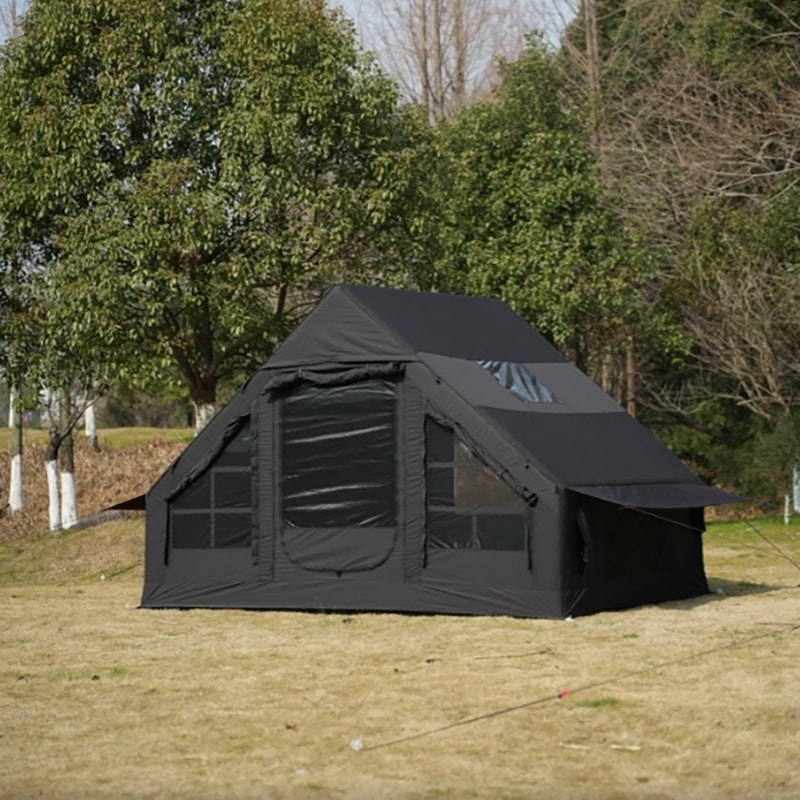
6.3m² Cotton Inflatable Tent for 2-4 People
Product Overview
The 6.3m² cotton inflatable tent is a compact but spacious shelter intended for users who want more comfort than a basic lightweight dome tent can provide. Its 2–4-person capacity makes it suitable for couples, small families, friends, and commercial operators looking for an adaptable accommodation unit.
The primary structure is formed by PVC air columns. Instead of relying on a large set of rigid aluminum or fiberglass poles, the tent uses inflatable support channels that are filled with air during setup. This reduces the number of loose structural components and creates a clean interior layout. The air-supported frame is integrated with the fabric shelter, helping the tent unfold into its full form after inflation and anchoring.
The outer shell uses 150gsm cotton fabric. Cotton canvas is valued in camping and glamping applications because it offers a natural appearance, a comfortable visual atmosphere, and a softer interior feel than many synthetic fabrics. It also gives the tent a more residential and premium character, which is particularly useful for resort accommodation, festival camping, backyard leisure, and rental operations.
Underfoot, the tent uses a rugged 180g PE groundsheet. The groundsheet creates a protective barrier between occupants and the ground while helping reduce the effect of moisture, dirt, abrasion, and uneven outdoor surfaces. In a commercial or family camping environment, a durable floor is especially important because the tent may be used repeatedly and exposed to frequent loading, unloading, and cleaning.
The tent is rated for four-season use and wind resistance at Level 6 according to the provided product specifications. Its listed waterproof rating is 300 mm, while UV protection can be customized. These specifications should be considered together with correct anchoring, site selection, ventilation, maintenance, and local weather conditions. As with any fabric shelter, performance depends not only on the material but also on setup quality and responsible use.
Key Specifications at a Glance
| Specification | Product Information |
|---|---|
| Product Type | Cotton inflatable tent |
| Capacity | 2–4 people |
| Floor Area | Approximately 6.3m² |
| Unfolded Size | 300 × 210 × 200 cm |
| Packed Size | 63 × 45 × 35 cm |
| Weight | 18 kg |
| Shell Material | 150gsm cotton |
| Floor Material | 180g PE |
| Support Structure | PVC air column |
| Wind Resistance | Level 6 |
| Waterproof Rating | 300 mm |
| UV Protection | Customizable |
| Seasonal Use | Four season |
| Packaging | Outer bag and carton packaging |
| Packing Quantity | One set per carton |
| MOQ | 100 sets |
| Production Lead Time | 30–45 days |
| Sample Lead Time | 15–20 days |
Why the Inflatable Structure Matters
One of the most important advantages of this tent is its inflatable support system. Traditional tents often require several poles to be connected in a specific order before the shelter can be erected. This process may be manageable for experienced campers, but it can become inconvenient when the tent is large, the weather is changing, or the user is setting up alone.
An inflatable tent replaces much of that pole assembly with PVC air columns. Once the tent is positioned and secured, the columns are inflated to support the roof and walls. The result is a setup process that can be more intuitive and less dependent on assembling multiple rigid sections. This is especially beneficial for families, glamping guests, rental customers, and event staff who may not have extensive camping experience.
The inflatable structure also creates a more open interior. Rigid poles can occupy useful space, interfere with furniture placement, or create low points where occupants may bump their heads. Air columns are integrated into the tent’s design, allowing the interior to remain more usable for sleeping mats, cots, luggage, small tables, or other camping equipment.
Another advantage is the compactness of the packed structure. A traditional framed tent may require long pole sections that determine the length of the carry bag. By contrast, an air-column tent can be compressed into a smaller package because the support elements do not remain rigid during transport. The packed dimensions of 63 × 45 × 35 cm are therefore practical for car trunks, storage rooms, warehouse shelving, and rental inventory management.
Inflatable construction can also improve the visual appeal of a shelter. Smooth air-supported lines provide a contemporary profile that fits well in glamping resorts, outdoor exhibitions, festivals, and branded hospitality areas. The design offers a balance between the natural character of cotton fabric and the modern convenience of an inflatable frame.
Cotton Canvas for Comfort and Atmosphere
The 150gsm cotton shell is a central feature of the tent. Cotton fabric has long been associated with comfortable camping shelters because of its natural appearance and tactile quality. Compared with thin synthetic materials, cotton canvas can provide a warmer, more substantial visual impression, making the shelter feel closer to a temporary room than a basic emergency enclosure.
This character is particularly valuable in glamping. Guests often choose glamping because they want access to nature without giving up a sense of comfort and style. A cotton tent can support that experience through its texture, color possibilities, and natural aesthetic. It can be furnished with beds, rugs, lighting, low tables, and other accessories to create a welcoming accommodation environment.
Cotton fabric can also contribute to a pleasant internal atmosphere when properly designed and maintained. The material’s breathability is one reason it is widely used for canvas tents. However, breathable fabric does not eliminate the need for ventilation. Users should still keep designed ventilation openings clear and ensure adequate airflow, especially when cooking, using heaters, or accommodating several people.
The fabric weight of 150gsm represents a balance between manageable transportation and a more substantial shell than ultralight tent fabrics. The final feel and performance also depend on the weave, finishing treatment, seams, stitching, coatings, and construction method. Tiansai Leisure can customize fabric waterproof and UV-resistant ratings according to project requirements, allowing buyers to discuss different material specifications for different markets.
For a rental business, the cotton appearance may also help create a recognizable product identity. Instead of offering customers a generic technical shelter, operators can provide a more distinctive accommodation style. Color, logo, size, and structural customization can be combined to support a resort concept, festival theme, outdoor brand, or event identity.
Durable Ground Protection
The groundsheet is often overlooked when buyers compare tents, yet it has a major influence on daily usability. This model uses a 180g PE floor designed to form a sturdy base under the living area. The floor separates occupants and equipment from damp soil, grass, sand, and other outdoor surfaces.
A strong groundsheet is valuable in family camping because children may move frequently inside the tent, luggage may be placed directly on the floor, and the shelter may be used for extended periods. It is equally important in rental operations, where the floor encounters repeated folding, transport, setup, cleaning, and storage.
The floor also supports the overall tent structure by providing a defined footprint. During setup, the operator can position the base before inflating the air columns. This helps establish the correct orientation and reduces the possibility of misalignment. Proper pegging and tensioning remain essential, but the integrated floor gives the shelter a stable starting point.
When used on rough or damp ground, an additional protective ground mat may be appropriate. Users should remove sharp stones, branches, and other objects that could damage the floor. After use, the groundsheet should be cleaned and dried before storage. These simple procedures can extend service life and reduce odor or mildew risks.
Interior Space for Two to Four People
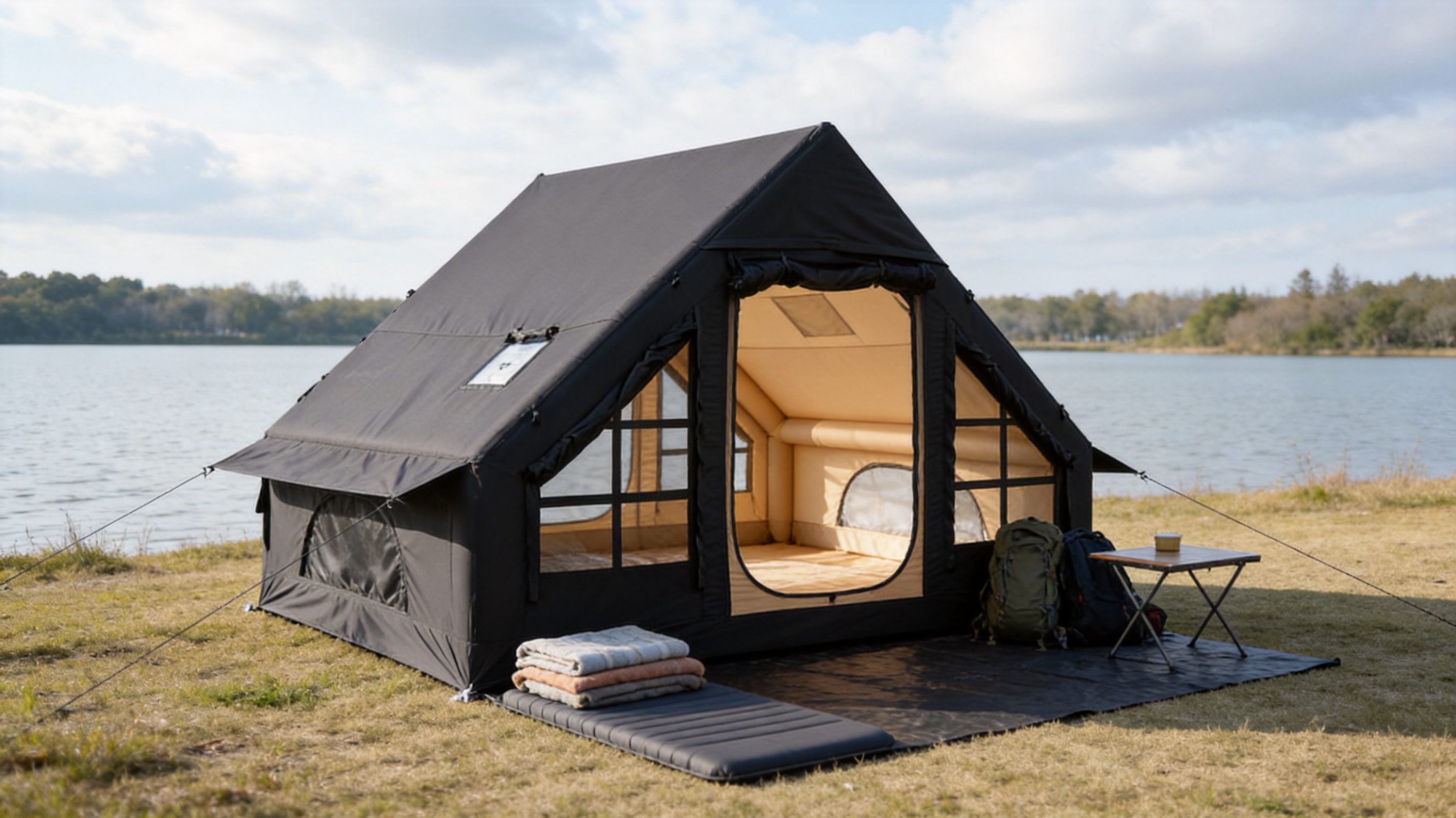
The 300 × 210 × 200 cm unfolded dimensions provide approximately 6.3m² of floor area and a 200 cm peak height. This configuration is appropriate for two adults seeking a comfortable shelter, while also accommodating a small family or group of up to four people depending on the sleeping arrangement and amount of equipment carried.
For two people, the space can support a generous sleeping layout with room for bags, clothing, and camping accessories. For three or four people, efficient organization becomes more important. Sleeping mats or compact cots can be arranged to preserve a central passage and keep personal equipment near the walls.
The 200 cm height is an important comfort feature. Many compact tents require occupants to bend over when entering, changing clothes, or organizing personal items. A taller interior allows most users to stand or move more naturally, which can make a noticeable difference during rainy days, extended stays, or family trips.
The tent’s dimensions also make it suitable for mixed-use applications. It can function as a sleeping shelter, a small lounge, a changing room, a children’s activity space, or a guest accommodation unit. In a glamping installation, the interior can be furnished with a double bed or separate single beds. In a festival or rental environment, the same basic product can be configured according to the operator’s service model.
Because the structure is inflatable, the interior does not need to be planned around a large set of crossing poles. This helps operators arrange furniture more efficiently. Buyers should still consider the usable floor area rather than the maximum external dimensions when selecting beds and furnishings, because wall angles, air columns, doors, storage areas, and ventilation openings may affect the practical layout.
Four-Season Use and Weather Considerations
The tent is specified for four-season use, making it suitable for a broad range of outdoor conditions. Four-season classification generally indicates that the shelter is intended to handle more than mild summer camping, but it does not mean that the tent is suitable for every extreme weather event. Responsible setup, appropriate anchoring, and weather judgment remain essential.
The listed Level 6 wind resistance provides a useful performance reference for buyers. In practice, wind performance depends on the condition and direction of the wind, ground type, anchoring system, fabric tension, inflation pressure, surrounding terrain, and whether doors and windows are properly secured. Operators should follow the manufacturer’s setup recommendations and avoid exposed sites when severe weather is forecast.
The 300 mm waterproof rating is part of the product specification. Buyers should understand that waterproof performance is influenced by seams, zippers, stitching, fabric treatments, ground contact, roof pitch, and maintenance. For markets with heavy rainfall or prolonged wet seasons, it may be advisable to discuss upgraded fabric treatments, seam construction, and higher waterproof requirements during the OEM or ODM process.
UV protection is customizable. This is an important option for resorts, rental companies, and commercial operators that expect frequent outdoor exposure. Enhanced UV resistance may be useful in sunny climates, coastal locations, desert environments, and long-term seasonal installations. The appropriate specification should be selected according to the expected operating environment and service life requirements.
In colder conditions, the cotton shell may provide a more substantial shelter atmosphere than a very thin summer tent, but users should still use appropriate sleeping bags, insulation, ventilation, and safe heating practices. Any heater or cooking appliance must be operated according to safety instructions and kept away from combustible surfaces.
Advantages Over Conventional Pole Tents
The most direct comparison is with conventional pole-supported camping tents. Pole tents can be reliable and familiar, but they may require more assembly steps and more loose components. Their pole sections can also be vulnerable to bending, loss, or incorrect connection during repeated rental use.
The inflatable model reduces the number of rigid structural components that need to be handled during setup. This can simplify inventory management and make the product easier for new users to understand. For a rental company, fewer loose poles may mean fewer parts to inspect, label, replace, or explain to customers.
Inflatable support also enables a more compact packed format relative to the shelter’s living area. The 63 × 45 × 35 cm packed size can be advantageous for transportation and storage, particularly when a business needs to move many units to an event or keep seasonal inventory in a limited warehouse.
Interior usability is another differentiating point. Without a network of rigid poles crossing the living area, users have more freedom to place beds and equipment. This can be especially useful in glamping, where the interior is part of the guest experience and furniture placement affects comfort and appearance.
Compared with very lightweight backpacking tents, this cotton inflatable model is not intended to compete primarily on minimum weight. Its 18 kg weight is higher than that of a small technical trekking tent, but the product offers a different value proposition: greater interior volume, a taller profile, a stronger visual presence, a more substantial floor, and a more convenient setup concept for car camping and commercial applications.
Compared with large framed event shelters, this tent is more compact and suitable for personal or small-group accommodation. It is not intended to replace a large humanitarian tent, warehouse shelter, or high-capacity event structure. Instead, it occupies a practical middle ground between lightweight recreational tents and large commercial shelters.
Applications Across Different Markets
Family Car Camping
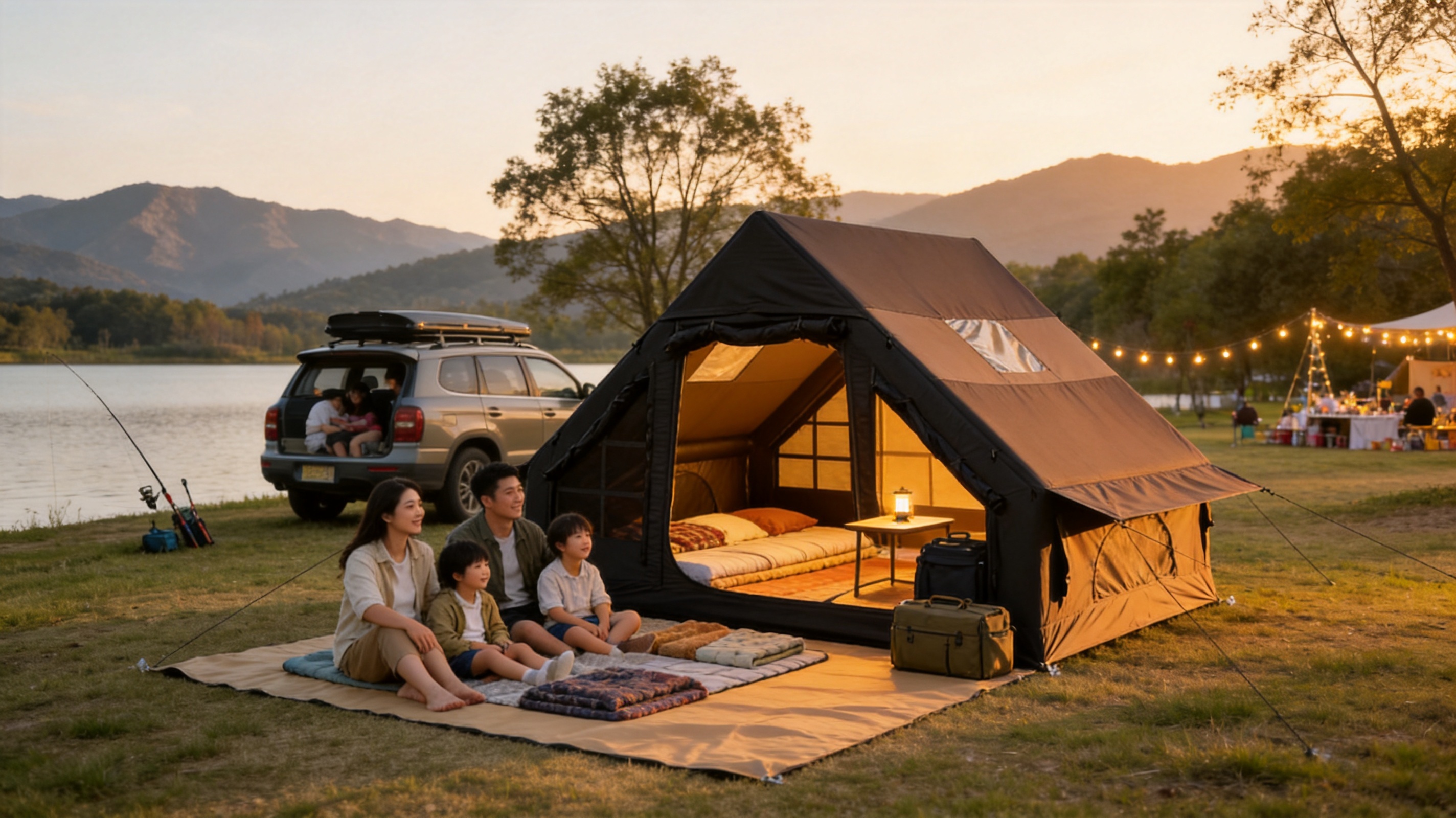
Family car camping is one of the most natural applications for the tent. Since the packed unit can be transported by vehicle and does not require backpacking over long distances, the 18 kg weight is manageable for many users. The interior provides enough room for sleeping, changing clothes, organizing bags, and spending time indoors during poor weather.
The inflatable setup can also reduce tension during family trips. Parents may not need to spend as much time connecting poles or explaining a complicated frame system. Once the base is positioned, anchored, and inflated, the shelter can quickly become a functional family space.
Glamping Resorts
Glamping operators can use the tent as an individual accommodation unit or as part of a larger tent village. The cotton exterior supports a natural and premium visual theme, while the 200 cm height and 6.3m² floor area allow for comfortable furnishings.
For resorts, customization is particularly important. Operators may request specific fabric colors, logos, dimensions, layouts, structural elements, or upgraded weather treatments. A consistent appearance across multiple tents can help strengthen the identity of a property or seasonal accommodation project.
Festival Camping
Festival organizers and specialized camping providers need shelters that are recognizable, practical, and relatively easy to deploy. The inflatable structure may help reduce setup complexity when many units must be installed in a short time. The cotton exterior can also create a visually appealing village atmosphere that is more distinctive than a collection of basic synthetic dome tents.
For festival use, operators should establish clear procedures for anchoring, inspection, cleaning, ventilation, and guest instructions. The tent’s four-person capacity can support couples, small groups, or premium camping packages.
Outdoor Fishing
Outdoor fishing often involves early mornings, changing weather, and the need to store personal equipment close to the sleeping area. The tent provides a tall, enclosed shelter with enough space for two or more users and their essential gear. Its groundsheet helps create a cleaner and more comfortable base near lakes, rivers, or other fishing locations.
Users should take particular care with moisture management in fishing environments. Wet clothing and equipment should be ventilated and dried whenever possible. The cotton shell and floor should be completely dry before long-term storage.
Backyard Leisure
In a backyard, the tent can serve as a guest room, children’s playroom, reading space, relaxation shelter, or temporary outdoor lounge. Its taller design makes it more comfortable than a small recreational tent, while its compact packed size allows the owner to store it when not in use.
Backyard users may also appreciate the opportunity to customize colors and branding. For private customers, color selection can help the tent coordinate with garden furniture, landscaping, or event decoration.
Tent Rental Businesses
Rental businesses require products that can be transported efficiently, set up by different staff members, and used repeatedly by customers with varying levels of outdoor experience. The inflatable structure, carton packaging, 2–4-person capacity, and customizable appearance make this model suitable for a rental fleet strategy.
Rental operators should create a maintenance schedule covering fabric inspection, air-column testing, valve inspection, floor cleaning, zipper checks, drying, and packed-condition review. A well-organized inspection process can help maintain consistent quality across a large inventory.
OEM and ODM Customization
The product is offered with OEM and ODM support at a minimum order quantity of 100 sets. This makes it suitable for established outdoor brands, distributors, resort operators, rental companies, and project buyers that require a consistent product rather than a small number of stock units.
Logo customization is available when the buyer provides suitable artwork. A logo can be applied to selected exterior or interior areas according to the design and production process. Buyers should provide clear vector artwork, preferred dimensions, placement requirements, and color information during the project discussion.
Color customization is based on Pantone numbers. This gives commercial customers a more systematic way to specify brand colors and maintain consistency across production batches. Before mass production, a sample or color confirmation process is recommended, since fabric appearance can vary depending on material texture, lighting, printing method, and finishing treatment.
Size customization is available according to customer requirements. A buyer may request a different floor plan, height, entrance arrangement, sleeping capacity, or furniture orientation. Any size change should be evaluated together with transport dimensions, air-column placement, structural stability, fabric consumption, sewing workload, packaging, and target retail or rental use.
Structure customization can address specific operational requirements. For example, a project may require additional air columns, different door positioning, an alternative window layout, increased ventilation, or a modified internal arrangement. Structural changes should be reviewed by the manufacturer to ensure that the air-supported system remains balanced and practical to manufacture.
Fabric customization includes waterproof and UV-resistant ratings. This allows buyers to choose a specification suited to local climate conditions. A coastal resort, a high-sun destination, and a seasonal European campsite may have different priorities. The right fabric program should balance performance, appearance, weight, cost, and expected product life.
Both OEM and ODM programs list a minimum order quantity of 100 sets and a sample lead time of approximately two to three weeks. For production orders, the stated lead time is 30–45 days. Actual timing should be confirmed according to design complexity, material availability, sample approval, order quantity, and production scheduling.
Manufacturing Strengths
Ningbo Zhenhai Tiansai Leisure Products Co., Ltd. operates from Zhenhai District in Ningbo, Zhejiang Province, China. The company’s factory covers more than 13,000 square meters. This scale supports the development, production, inspection, packing, and shipment of outdoor products for international customers.
Ningbo is an important port city with strong logistics connections. For overseas buyers, a manufacturing location near a major port can support more efficient export planning, container loading, and international supply-chain coordination. Shipping performance still depends on the destination, booking conditions, customs procedures, and freight schedules, but geographic access is a useful operational advantage.
The company has specialized in tent design, production, and sales. Its product experience includes camping tents, inflatable tents, glamping shelters, backpacking products, specialty tents, and other outdoor equipment. This broad category knowledge can be valuable when a buyer needs more than a single standard product or wants to develop a coordinated product range.
Tiansai Leisure reports that it has designed products and obtained multiple appearance patents and utility model patents. It has also served as the sole global designated supplier for the British company TENTSILE. These experiences indicate an established background in product development, manufacturing cooperation, and international supply.
The company maintains a professional design team that develops products from practical and comfort-oriented perspectives. Its stated development approach includes cooperation with professionals, testing by outdoor enthusiasts, and continued improvement based on customer feedback. For OEM and ODM buyers, this type of design capability can help transform a basic concept into a manufacturable outdoor product.
Quality management is another stated focus. The company reports that it implements a quality management system and works to ensure that products meet international standards. For commercial buyers, quality assurance should be discussed in specific terms, including incoming material inspection, fabric testing, sewing inspection, air-column testing, finished-product checks, packing verification, and sample approval procedures.
The company’s core team includes outdoor product specialists with more than ten years of experience in research and development, production, and overseas operations. This combination of technical, manufacturing, and export experience can simplify communication for international customers, especially when projects involve multiple specifications, samples, packaging requirements, and delivery stages.
Production Process for an Inflatable Cotton Tent
Design and Technical Confirmation
Production begins with a confirmed design. The manufacturer reviews the intended dimensions, capacity, floor plan, entrance location, air-column layout, fabric selection, color, logo, accessories, and packaging. For a customized product, drawings and technical details should be approved before material cutting begins.
Material Preparation
Cotton fabric, PE groundsheet material, PVC air-column components, thread, webbing, zippers, buckles, valves, and other accessories are prepared according to the production order. Material inspection may include checking color, width, surface condition, weight, coating, and other agreed requirements.
Pattern Making and Cutting
Patterns are used to cut the roof, walls, doors, windows, floor, reinforcement sections, and air-column components. Accurate cutting is important because small dimensional differences can affect assembly, tension, symmetry, and final appearance. Efficient pattern planning can also help reduce fabric waste.
Sewing and Reinforcement
The cotton shell is assembled through a sequence of sewing operations. Stress points may require reinforced webbing, stronger stitching, or additional fabric layers. Areas around doors, corners, attachment points, and air-column connections deserve particular attention because they experience repeated loading during setup and use.
Air-Column Construction
The PVC air columns are manufactured and integrated into the tent structure according to the approved design. Valves and connection areas must be positioned for convenient inflation and inspection. Air-column construction requires attention to sealing, dimensional accuracy, and compatibility with the outer fabric structure.
Floor Integration
The 180g PE groundsheet is joined to the tent body to create a functional enclosure. The connection must support the intended floor shape while helping reduce unwanted water entry and fabric stress. The floor-to-wall area is also important for long-term durability because it may receive abrasion during packing and unpacking.
Finished Product Inspection
After assembly, the finished tent can be checked for dimensions, stitching, appearance, accessories, air retention, inflation behavior, and packing condition. For customized orders, inspection should also confirm logo placement, color, labels, carton markings, and any buyer-specific requirements.
Folding and Packaging
The tent is packed in an outer bag and carton, with one set per carton according to the listed packaging information. Proper folding protects the fabric and helps achieve consistent carton dimensions. Clear packaging labels can support warehouse handling, batch tracking, and distribution.
Quality and Inspection Considerations for Buyers
Buyers should evaluate more than the appearance of a sample. An inflatable tent is a system, and its performance depends on the interaction of fabric, seams, air columns, valves, floor, anchoring points, and packaging. A professional purchasing process should define inspection criteria before the order is placed.
Fabric checks may include weight, color consistency, surface defects, waterproof treatment, UV requirements, and sewing quality. The cotton shell should be inspected for loose threads, skipped stitches, uneven seams, and damage caused during handling.
Air-column checks may include inflation time, pressure stability, visible deformation, valve function, connection quality, and air retention over an agreed period. The specific testing method should be confirmed with the manufacturer because different air-column designs may use different procedures.
Dimensional checks should verify the unfolded size, floor area, height, door position, and key custom features. Packed dimensions should also be reviewed if transport efficiency is important to the project.
Packaging checks should confirm that every carton contains the correct tent set and accessories. The buyer may also request carton labels, product manuals, repair kits, inflation equipment, or other items according to the intended market. These details are especially important for rental companies and distributors that need a consistent unboxing and setup experience.
Logistics, Storage, and Fleet Management
The packed dimensions of 63 × 45 × 35 cm provide a practical format for warehouse storage. One set per carton simplifies counting and handling. Distributors can organize stock by color, design, production batch, or customer order.
For rental fleets, every tent should be assigned an internal identification number or inventory label. After each rental, staff should check the fabric, floor, air columns, valves, zippers, stakes, ropes, and carrying bag. Any wet tent should be dried fully before it is returned to long-term storage.
Cartons should be stored in a clean, dry environment away from sharp objects, direct sunlight, chemicals, and extreme heat. Heavy items should not be stacked in a way that permanently compresses or deforms the tent package. Storage procedures can influence the service life of cotton fabric and PVC components.
When shipping internationally, buyers should coordinate carton dimensions, total order volume, loading method, shipping marks, export documents, and delivery terms with the supplier. The manufacturer’s location in Ningbo provides access to international logistics channels, while the buyer remains responsible for confirming destination-specific import requirements.
How This Tent Compares with Other Tent Categories
Against backpacking and trekking tents, this product provides substantially more interior comfort but is heavier and less suitable for long-distance carrying. Its intended use is car camping, glamping, festivals, fishing, backyard leisure, and rental accommodation rather than minimalist mountain travel.
Against automatic and pop-up tents, the inflatable model may require an inflation step, but it offers a taller and more substantial accommodation format. It can also provide a different visual identity through its cotton shell and customizable construction.
Against large family camping tents, the 6.3m² size is more compact and easier to transport while still supporting two to four people. It may be a better choice for small families or couples who want comfort without carrying a very large tent.
Against commercial glamping tents, this product is more compact and may be easier to deploy in projects with limited site space. Its 100-set OEM and ODM MOQ also provides an entry point for businesses that want a branded product line without ordering the volumes associated with very large resort structures.
Against humanitarian and large tents, the product is not intended for mass accommodation, emergency distribution, or high-capacity sheltering. Its strength is personal comfort, small-group use, flexible deployment, and a more refined outdoor hospitality experience.
Recommended Buyer Profiles
This tent is suitable for outdoor brands that want to expand into inflatable and cotton camping products. It is also appropriate for distributors seeking a product with a clear capacity, practical packed size, and multiple customization options.
Glamping resorts can use it as a compact guest unit or seasonal accommodation shelter. Festival operators can include it in premium camping packages. Rental companies can use the 2–4-person layout for short-term hire. Retailers can position it as an upgrade from basic family tents for customers who prioritize comfort and appearance.
Private-label buyers should consider the full commercial package rather than only the tent itself. Brand identity may involve color, logo placement, carton design, instruction manuals, accessory selection, warranty terms, spare parts, and after-sales support. These elements should be discussed during the OEM or ODM planning stage.
Setup and Care Recommendations
Select a level site free from sharp stones, branches, standing water, and unstable ground. Place the tent so that doors and ventilation areas remain accessible. Secure the footprint before inflating the air columns, and use the recommended stakes, ropes, and anchoring points.
Inflate the air columns evenly and inspect the shape of the tent as it rises. Avoid forcing the fabric or placing excessive pressure on individual sections. Once the tent is fully formed, check the seams, doors, floor, and anchor points before occupants enter.
Keep cooking equipment, open flames, and heaters away from the cotton shell and other combustible materials. Maintain ventilation whenever people are inside for extended periods. Do not use the tent as a substitute for a permanent building or as protection from conditions beyond its design intent.
After use, remove dirt and debris from the floor and fabric. Allow the tent to dry completely before folding. Store the product in its outer bag and carton in a cool, dry environment. Inspect the air columns and valves periodically, especially before a new camping season or rental cycle.
Conclusion
The 6.3m² cotton inflatable tent for 2–4 people offers a balanced solution for users who want more comfort and character than a basic synthetic tent, without moving to a large and complex commercial shelter. Its 300 × 210 × 200 cm unfolded size creates a practical living area, while the 63 × 45 × 35 cm packed size supports vehicle transport, storage, and fleet management.
The combination of a 150gsm cotton shell, PVC air-column frame, and 180g PE groundsheet gives the tent a distinctive position in the camping market. It is well suited to family car camping, glamping, fishing, festivals, backyard use, and rental operations. Its four-season specification, Level 6 wind-resistance rating, customizable UV protection, and available OEM and ODM programs add flexibility for different climates and business models.
Its most important competitive advantages are the air-supported setup concept, open interior, natural cotton appearance, compact packed format, and customization potential. The product is not designed to be the lightest backpacking tent or the largest event shelter. Instead, it focuses on practical comfort, efficient deployment, and commercial adaptability.
Manufactured by Ningbo Zhenhai Tiansai Leisure Products Co., Ltd., the tent benefits from the capabilities of a company with a large production facility, outdoor product expertise, design experience, international supply history, and OEM and ODM support. With a minimum order quantity of 100 sets, the product can serve growing outdoor brands, glamping projects, distributors, festival providers, and rental businesses seeking a branded inflatable tent solution.
Questions and Answers
What is the capacity of the tent?
The tent is designed for two to four people. Two occupants will have more room for personal equipment, while four occupants can use the space with a more organized sleeping arrangement.
What are the unfolded dimensions?
The unfolded dimensions are 300 × 210 × 200 cm, providing approximately 6.3m² of floor area and a 200 cm height.
What are the packed dimensions?
The packed dimensions are approximately 63 × 45 × 35 cm. The tent is packed in an outer bag and carton, with one set per carton.
How much does the tent weigh?
The listed weight is 18 kg. This weight reflects the cotton shell, inflatable support structure, PE groundsheet, and associated components.
What material is used for the outer fabric?
The outer shell uses 150gsm cotton fabric. The fabric specification can be customized for waterproof and UV-resistant requirements.
What supports the tent?
The tent uses PVC air columns rather than a conventional set of rigid tent poles. The columns are inflated during setup to create the supporting frame.
Is the tent suitable for four-season use?
The product is specified as a four-season tent. Users should still consider local weather conditions, correct anchoring, ventilation, maintenance, and safe operating practices.
What is the waterproof rating?
The listed waterproof rating is 300 mm. Buyers with demanding climate requirements should discuss fabric treatment, seams, and any upgraded waterproof specifications during the customization process.
Can the tent be customized?
Yes. Available customization includes logo, color, size, structure, fabric waterproof performance, and UV-resistant ratings. OEM and ODM programs are available at a minimum order quantity of 100 sets.
What is the sample lead time?
The listed sample lead time is 15–20 days, while the OEM and ODM information indicates approximately two to three weeks. The final schedule depends on the design and approval process.
What is the production lead time for bulk orders?
The stated production lead time is 30–45 days. Buyers should confirm the schedule according to order quantity, customization, material availability, and sample approval.
Is the tent suitable for a rental business?
Yes. The compact packed size, one-set-per-carton packaging, 2–4-person capacity, inflatable structure, and customization options make it suitable for rental fleets. Rental operators should establish regular cleaning, drying, inspection, and repair procedures.
Is it suitable for backpacking?
The tent is better suited to car camping, glamping, fishing, festivals, backyard leisure, and rental use. At 18 kg, it is heavier than a typical lightweight backpacking or trekking tent.
What should buyers provide for logo customization?
Buyers should provide clear logo artwork, preferably in a suitable vector format, together with placement, size, and color requirements. Final artwork should be confirmed before production.
Where is the product manufactured?
The product is manufactured by Ningbo Zhenhai Tiansai Leisure Products Co., Ltd. in Ningbo, Zhejiang Province, China.
References
Product specification sheet for the 6.3m² Cotton Inflatable Tent for 2–4 People.
Manufacturer-provided company profile and outdoor product capability information.
Manufacturer-provided OEM and ODM customization requirements.
General principles of tent fabric care, inflatable structure maintenance, and outdoor shelter setup.
General guidance for camping safety, ventilation, anchoring, drying, and seasonal storage.
Product: 6.3m² Cotton Inflatable Tent for 2-4 People

Message Us Right Now!
-
Mp: +86-18858091910
E-mail: sales@tenplaytent.com
ADD: No. 529, Guangyuan Road, Xiepu Town, Zhenhai District, Ningbo City, Zhejiang Province, China
-
Quick Links
Home Products About Us Advantage News Contact Us -
Product
Inflatable & Air Tents Glamping & Resort Tents Backpacking & Trekking Tents Automatic & Pop-Up Tents Family & Camping Tents Specialty Tents & Shelters Kids Tents Pet Tents Humanitarian & Large Tents Hammock -
Get Connected
 Camping Tent Manufacturer in China