


 English
 عربى


Custom Size Tunnel Tent for Privacy, Changing, and Flexible Outdoor Shelter
Outdoor activities are becoming more diverse, and modern campers increasingly need more than a traditional sleeping tent. A practical outdoor shelter may need to provide privacy for changing clothes, space for a portable shower or toilet, a secure area for storing equipment, or a quiet place for children and pets. The Custom Size Tunnel Tent for Privacy, Changing, and Flexible Outdoor Shelter is designed to answer these needs with a compact, adaptable, and easy-to-transport structure.
Unlike a conventional camping tent that is primarily designed for sleeping, this tunnel-style shelter is intended for multiple practical uses. It can function as a private changing room, camping shower enclosure, temporary bathroom tent, equipment storage room, dressing area, festival shelter, or supplementary space beside a family tent. Its flexible design makes it suitable for camping trips, beach holidays, outdoor events, festivals, resorts, emergency support, and other situations where privacy and convenience are important.
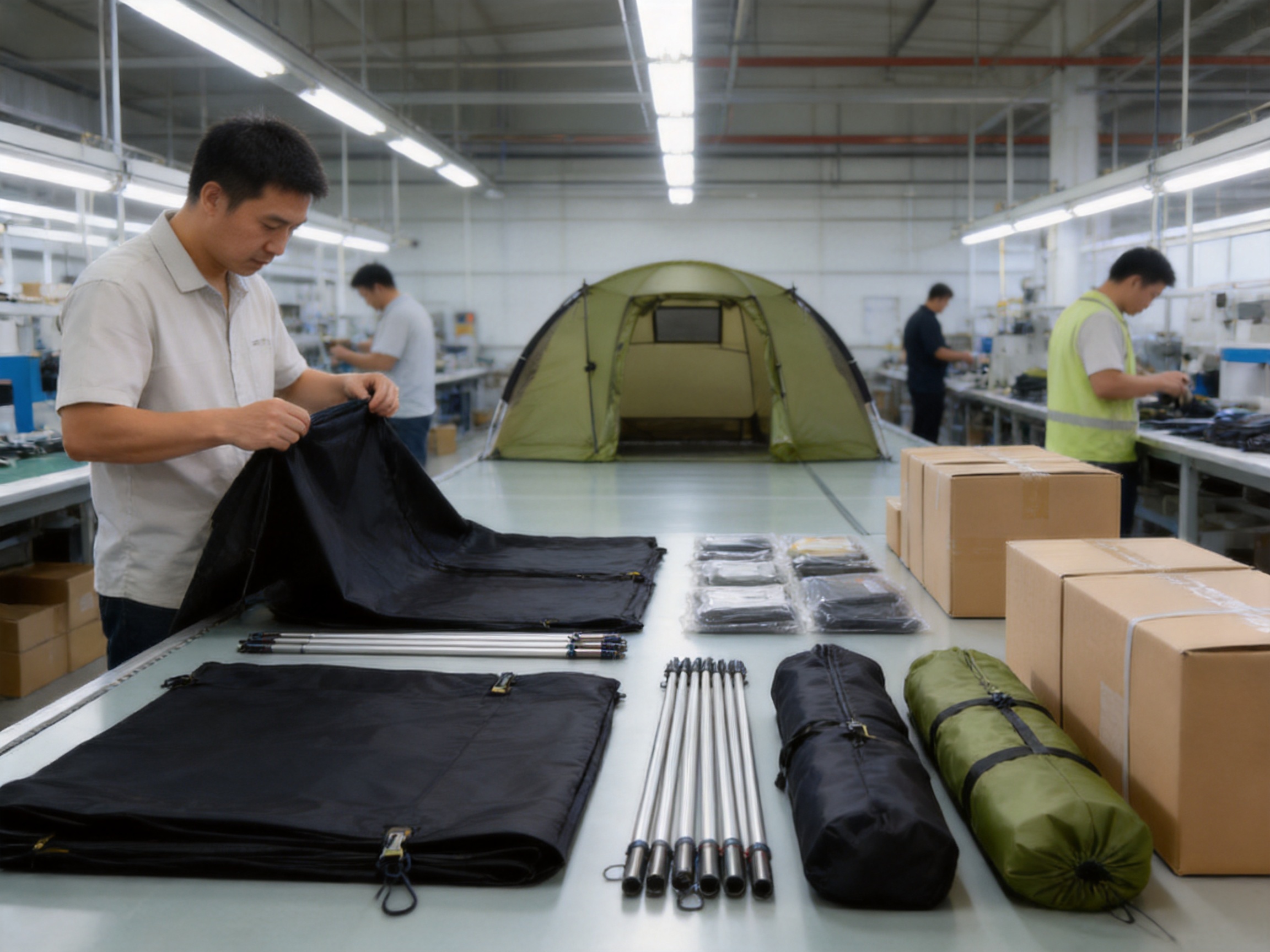
The product is manufactured by Ningbo Zhenhai Tiansai Leisure Products Co., Ltd., a China-based outdoor equipment manufacturer with experience in tent design, production, customization, and international supply. The company operates a factory of more than 13,000 square meters and serves outdoor brands, wholesalers, retailers, and project buyers in multiple global markets.
A Practical Shelter for Modern Outdoor Living
Outdoor users often face a simple but important problem: a sleeping tent does not always provide enough privacy or functional space. Changing clothes inside a crowded family tent can be uncomfortable. Using a portable toilet without an enclosure may be inconvenient. Storing wet clothing or outdoor equipment inside a sleeping area can create moisture and clutter. A separate privacy shelter solves these problems without requiring the user to purchase a large, expensive multi-room camping system.
The Custom Size Tunnel Tent provides a dedicated space that can be positioned beside a primary tent, caravan, motorhome, beach shelter, or outdoor event structure. Because it is designed as a separate functional unit, it allows users to organize their campsite more efficiently. The sleeping area remains cleaner and more comfortable, while changing, showering, and storage can take place in a private and practical environment.
The tunnel configuration offers a useful balance between interior room and structural simplicity. Rather than relying on a complicated network of poles, the shelter uses a straightforward frame arrangement that can be assembled and taken down with minimal effort. This makes it suitable for experienced campers as well as families and occasional outdoor users who want a dependable shelter without a difficult setup process.
Its customizable sizing is another important feature. Outdoor environments vary considerably, and a shelter designed for a beach changing room may not need the same dimensions as a shelter used at a campground, resort, humanitarian site, or commercial event. Custom dimensions allow buyers to select a configuration based on the intended application, available space, number of users, and equipment requirements.
Main Product Advantages
Custom Dimensions for Different Applications
The most distinctive advantage of this product is the ability to develop the size according to customer requirements. The listed reference size is 200 × 140 × 100 centimeters, while the stated area specification is 340 × 240 × 138 centimeters. Since custom production is available, buyers should confirm the final body dimensions, usable interior area, packed size, and frame configuration with the manufacturer before placing a production order.
Custom sizing is particularly useful for professional buyers. A camping retailer may require a compact privacy tent for individual consumers. A resort may need a taller and more spacious changing shelter. An event organizer may request multiple connected units or a specific footprint that fits an exhibition layout. Humanitarian and large-site buyers may need standardized dimensions for field deployment. A customizable production process can accommodate these different requirements more effectively than a fixed-size retail product.
Customization may also involve color, logo, packaging, branding, fabric selection, ventilation arrangements, door placement, and accessory configurations. This gives importers and outdoor brands the opportunity to create a product that matches their market positioning rather than selling a completely generic shelter.
Multiple Uses in One Compact Product
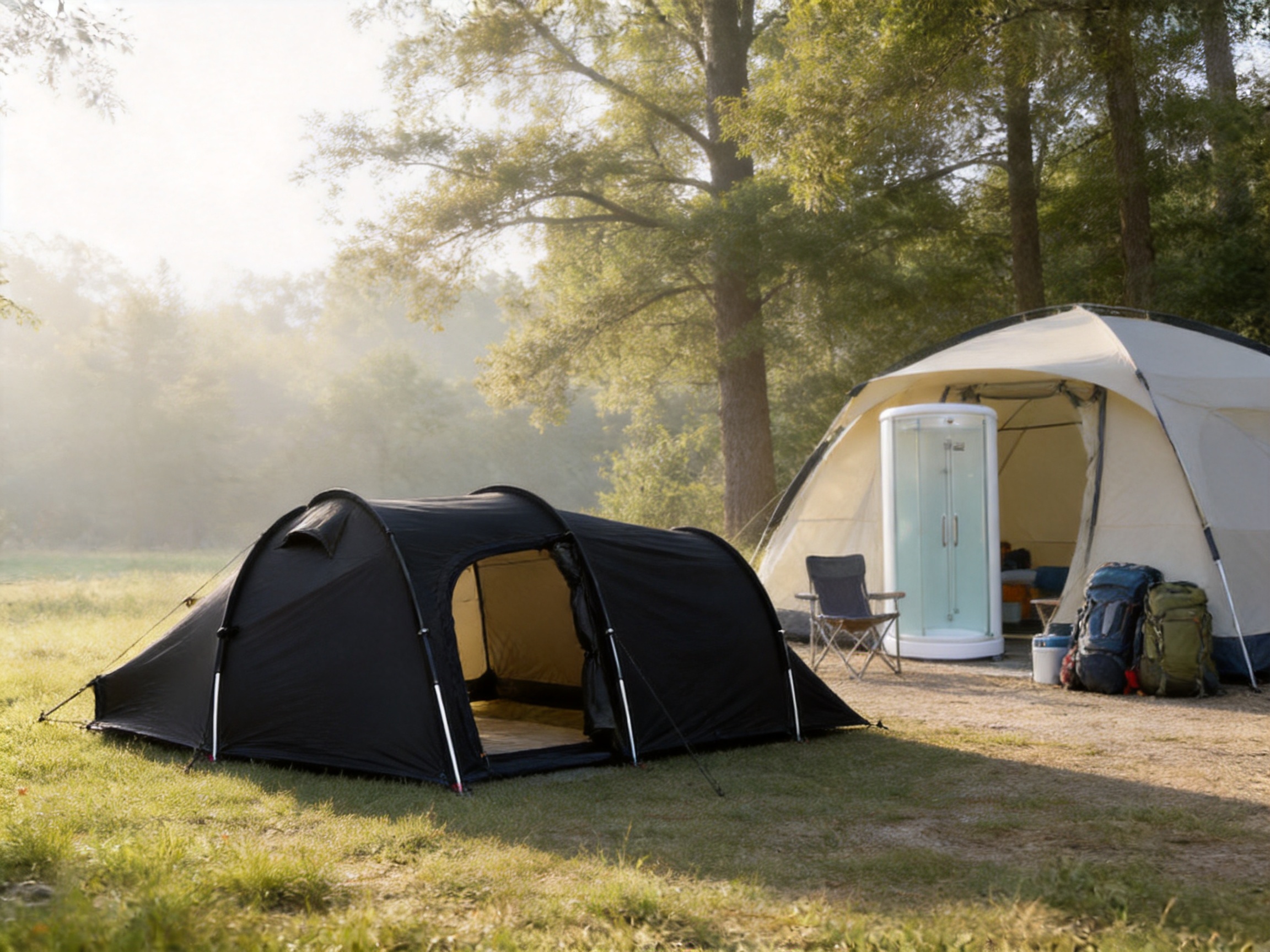
A major benefit over single-purpose shelters is its versatility. The same tunnel tent can be used as a camping shower changing room, private dressing space, temporary toilet enclosure, gear room, or outdoor storage shelter. This multifunctional design improves the value of the product because one item can support several activities during the same trip.
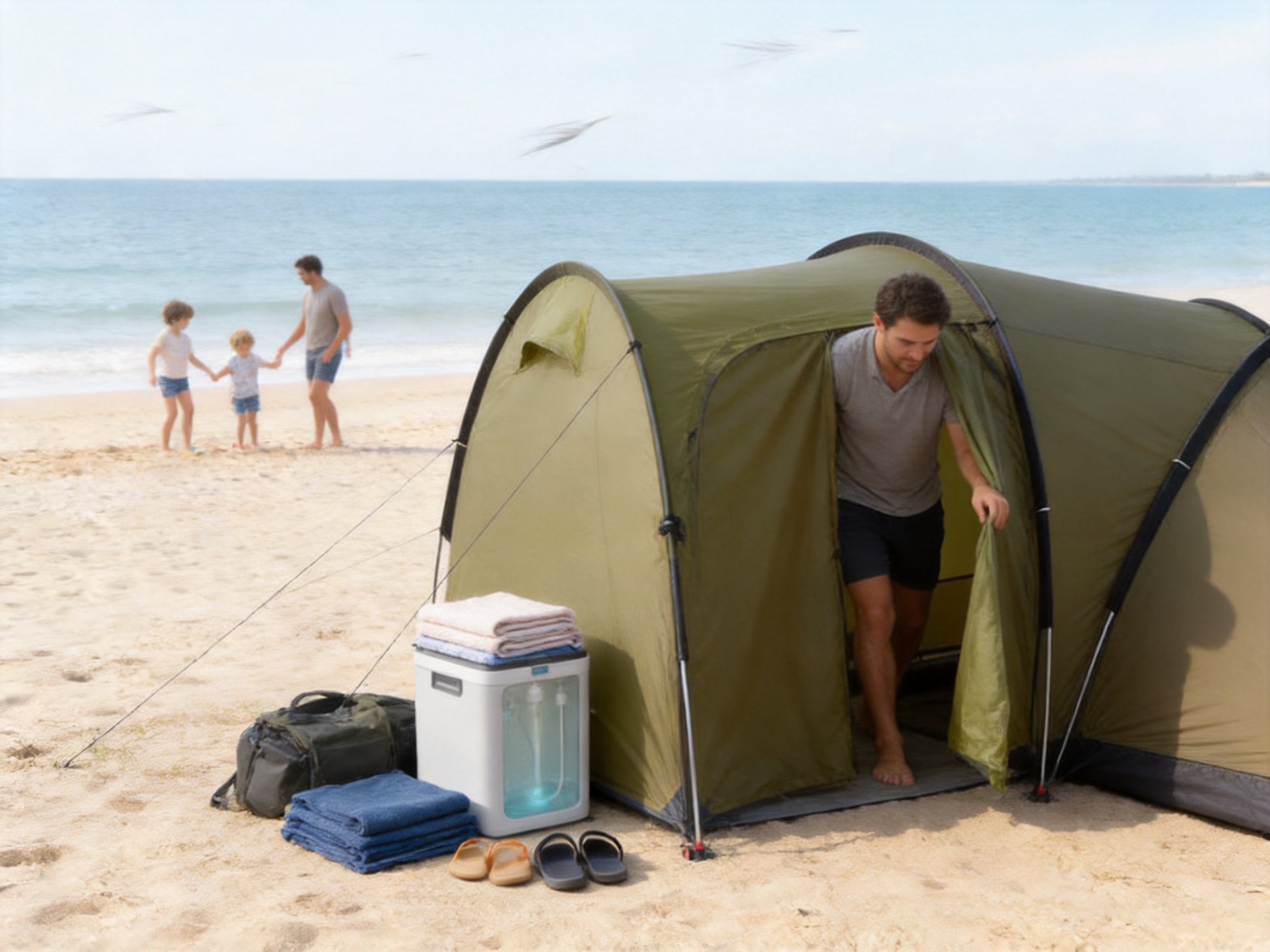
For family camping, it can help parents create a private area for changing clothes or managing children. At the beach, it provides a more comfortable place to change out of wet swimwear. At a festival, it can be used as a personal dressing space or equipment shelter. At a resort, it can support guest privacy near swimming pools, cabins, or outdoor recreation areas. For caravanning and motorhome users, it can expand the usable living area without installing a permanent structure.
This flexibility distinguishes the product from many basic pop-up changing tents that provide only a narrow vertical enclosure. The tunnel structure can offer a more usable interior shape, especially when the buyer selects a customized length or width. It can accommodate a portable toilet, small shower equipment, clothing, bags, and other necessities depending on the selected dimensions.
Privacy Designed for Outdoor Conditions
Privacy is a central function of the shelter. The enclosed structure creates a protected area where users can change clothes, organize personal belongings, or use portable facilities with greater comfort. The black color specified for the reference model can help create a visually discreet environment, although other colors may be available for customized orders.
Privacy is not only important for individual campers. It is also valuable for commercial and institutional buyers. Resorts, outdoor schools, public event organizers, and humanitarian agencies often need temporary private spaces that can be installed quickly and moved when required. A portable privacy shelter can be deployed without the cost, construction time, or planning requirements associated with permanent facilities.
The privacy function should be considered together with ventilation and safe use. For showering or warm-weather applications, buyers should confirm the ventilation design, door structure, mesh panels, and moisture-management features required for their market. The manufacturer can discuss these details during the customization stage.
Water-Resistant Materials and Reinforced Construction
The reference specifications identify polyester fabric, nylon material, double layers, and waterproof ratings of approximately 2,000 to 3,000 millimeters for both the outer tent and bottom. These specifications indicate that the shelter is designed to resist ordinary outdoor moisture, light rain, splashing, and damp ground conditions.
The double-layer construction can provide additional protection compared with a single-layer enclosure. It may also support better separation between the inner living area and external weather conditions. Reinforced seams are important because stress is concentrated at corners, attachment points, door openings, and pole sleeves. A properly manufactured seam structure helps improve durability during repeated assembly, transport, and use.
The shelter is intended for outdoor protection, but users should select the product configuration according to expected weather. A portable privacy tent should not automatically be treated as a substitute for a heavy-duty storm shelter. Wind exposure, snow load, extreme rainfall, ultraviolet radiation, and ground conditions can vary significantly. Correct anchoring and responsible use remain necessary, especially in open areas or severe weather.
Quick Assembly and Easy Removal
Outdoor equipment must be practical not only when it is in use but also when it is being transported and installed. The tunnel tent uses a relatively simple structure and fiberglass poles, allowing the shelter to be assembled in minutes when the components are prepared correctly. Straightforward assembly is especially useful for families, event crews, rental operators, and businesses that need to install several units.
A simple frame reduces the risk of confusion during setup. Users can position the poles, attach the fabric, secure the shelter to the ground, and adjust the tension. The same logical process can be reversed during takedown. Clear instructions and correct storage practices can further improve the service life of the product.
Compared with more complex multi-room camping systems, this type of shelter can reduce setup time and labor. Compared with permanent changing facilities, it can be installed almost anywhere suitable for temporary outdoor use. These practical advantages make it attractive for mobile applications and seasonal operations.
Portable Packing for Transport and Storage
The product has a reference weight of approximately 5 kilograms and is packed in a portable bag with an outer carton. The listed single-package size is approximately 45 × 35 × 30 centimeters, with a gross weight of about 5 kilograms. These specifications make it suitable for shipment, warehouse storage, vehicle transport, and consumer delivery.
A compact packed form is important for campers who have limited trunk or caravan space. It is also important for distributors because smaller cartons can simplify container loading, warehouse organization, and last-mile delivery. Event companies can transport multiple units without requiring specialized vehicles. Rental operators can store the shelters between seasons without using excessive facility space.
For wholesale orders, packaging can be discussed according to the buyer’s distribution model. Retail-ready packaging, customized cartons, instruction labels, barcode placement, logo printing, and protective packing may be considered during product development and order confirmation.
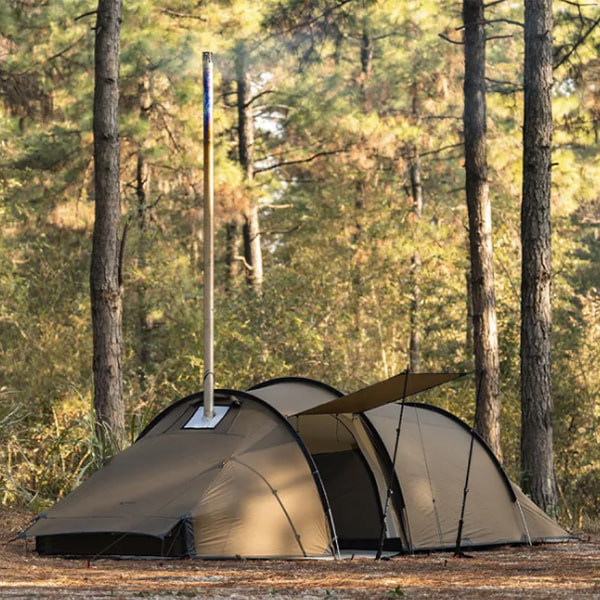
Custom Size Tunnel Tent Privacy Camping Changing Room Outdoor Shelter
Reference Specifications
The following table summarizes the primary specifications supplied for the reference model. Custom orders may differ, so final production details should be confirmed in an approved specification sheet.
| Item | Reference Specification |
|---|---|
| Product Type | Custom-size tunnel privacy tent |
| Primary Uses | Changing room, shower enclosure, portable bathroom shelter, storage area, outdoor shelter |
| Reference Model | LD-725 |
| Reference Size | 200 × 140 × 100 centimeters |
| Area Specification | 340 × 240 × 138 centimeters |
| Fabric | Polyester reference fabric |
| Material Specification | Nylon listed in the product information |
| Layer Construction | Double layer |
| Waterproof Index | Approximately 2,000–3,000 millimeters for outer tent and bottom |
| Pole Material | Fiberglass |
| Color | Black reference color |
| Weight | Approximately 5 kilograms |
| Logo | Customized logo available |
| Minimum Order Quantity | One piece stated for the reference product; production terms should be confirmed for customized orders |
| Packing | Portable bag and outer carton |
| Package Size | Approximately 45 × 35 × 30 centimeters |
| Origin | Jiangsu, China, according to the product specification |
Design Details That Support User Comfort
Tunnel Geometry and Usable Interior Space
The tunnel form is an efficient approach for creating a private enclosure. Its elongated structure can provide more usable floor area than a narrow upright changing pod, while remaining more compact than a full-size room tent. The shape can be adjusted based on the customer’s desired length, width, and height.
For changing purposes, users need enough room to move their arms, place clothing, and maintain balance. For shower or toilet applications, additional space may be needed for equipment and personal items. For storage use, floor dimensions and entry width are often more important than sleeping height. Custom manufacturing makes it possible to prioritize these different requirements.
The buyer should evaluate the interior based on actual use rather than external dimensions alone. Pole placement, fabric slope, door position, bathtub or shower tray size, and ventilation panels all influence usable space. A professional manufacturer can help convert the buyer’s application requirements into a practical construction drawing.
Fiberglass Pole Support
Fiberglass poles are commonly used in portable tents because they offer a useful combination of flexibility, low weight, and corrosion resistance. They can bend into a tunnel profile while maintaining enough spring force to support the fabric. Their relatively low weight also contributes to the portability of the packed shelter.
As with all fiberglass structures, poles should be handled carefully during assembly and storage. Users should avoid forcing a pole into an incorrect sleeve or sharply bending it beyond its intended curve. Replacement pole sections and spare components may be discussed for wholesale, rental, or institutional applications.
Fabric and Weather Protection
Polyester and nylon are widely used in outdoor tent manufacturing because they can be produced in lightweight, coated, and durable forms. The final performance depends on fabric denier, coating type, seam construction, color treatment, stitching quality, and finishing processes. Buyers with specific requirements should request the precise fabric composition and coating details for the final version.
A waterproof index in the 2,000–3,000 millimeter range can provide useful protection for ordinary camping conditions when the shelter is correctly pitched. The bottom rating is also important because ground moisture can enter through the floor if the base fabric, seams, or surrounding ground conditions are not properly managed. A suitable ground surface, correct tension, and appropriate anchoring help protect the shelter during use.
For frequent commercial use, buyers may request additional testing or material documentation. These may include fabric colorfastness, seam strength, water resistance, tear resistance, flame-retardant treatment, and restricted-substance requirements, depending on the destination market and intended application.
Manufacturing Strengths of the Supplier
Integrated Tent Design and Production Experience
Ningbo Zhenhai Tiansai Leisure Products Co., Ltd. specializes in the design, production, and sales of tents and outdoor leisure products. Its experience covers different categories, including camping tents, backpacking tents, glamping tents, inflatable tents, family shelters, and customized outdoor structures.
This product range is valuable because a manufacturer that works across multiple tent categories can apply knowledge from one product type to another. Fabric selection, pole engineering, seam reinforcement, packing optimization, ventilation, waterproofing, and user ergonomics are all connected. Experience with various structures can support more effective development of a specialized privacy tunnel shelter.
The company’s factory covers more than 13,000 square meters, providing space for material handling, sample development, cutting, sewing, assembly, inspection, and packing. An established production environment can help buyers coordinate product development and manufacturing through one supply partner rather than managing separate design and assembly sources.
Professional Product Development
Custom tent manufacturing is more than changing the length of an existing item. A size change can affect pole curvature, fabric tension, door dimensions, stability, packed volume, and overall weight. An experienced development team can evaluate these relationships before production begins.
The company emphasizes a professional design team and a development process that considers practicality and comfort. Product concepts can be reviewed through prototype development, professional collaboration, outdoor testing, and customer feedback. This approach is useful for privacy shelters because small design details can have a major effect on real-world performance.
For example, the height of a door influences ease of entry, while the width of the base affects whether a portable toilet or shower unit can fit comfortably. The location of a ventilation opening influences privacy, airflow, and moisture management. The strength of a pole sleeve affects long-term durability. Product development must consider all of these factors together.
Quality Management and Production Control
Consistent quality is essential when a tent is sold under a retailer’s or outdoor brand’s name. The manufacturer states that it operates a quality management system intended to ensure that products meet international standards. Quality control should cover incoming materials, fabric inspection, cutting accuracy, stitching, frame components, accessory completeness, waterproof performance, and packing.
During production, fabric panels should be cut according to approved patterns to maintain dimensional consistency. Stitching should be checked at stress points and around openings. Pole sections should be examined for visible damage or deformation. Zippers, buckles, webbing, guy lines, and carry bags should be checked for correct quantity and function.
For customized orders, the approved sample is especially important. The sample should establish the final color, logo position, fabric, dimensions, structure, accessories, and packing method. Production inspection can then compare bulk goods against the approved sample and specification sheet.
Patents and Product Innovation
The company has designed products and obtained a number of appearance patents and utility model patents. Intellectual property experience can support the development of differentiated outdoor products rather than relying only on standard market designs.
For buyers, design differentiation may be important when entering a competitive camping market. A customized tunnel privacy shelter can be developed with a distinctive shape, branded color scheme, improved access system, specialized accessories, or a unique packing configuration. These details can help a retailer create a recognizable product family.
Patent ownership and product rights should be reviewed during individual projects when a buyer requests exclusive designs or market exclusivity. Clear agreements regarding artwork, molds, technical drawings, and production rights can help protect both the buyer and the manufacturer.
Advantages Compared with Other Outdoor Shelter Options
Compared with Basic Pop-Up Changing Tents
Basic pop-up changing tents are often valued for their instant deployment and low cost. However, many have limited interior space, restricted storage capacity, and fewer customization options. Their spring-frame construction may also be less convenient for buyers who want a defined tunnel layout or a specific footprint.
The Custom Size Tunnel Tent offers a more adaptable structure. It can be developed around the intended use and can provide a practical balance between privacy, roominess, portability, and weather resistance. Although setup may involve poles rather than a fully automatic mechanism, the tunnel structure remains simple and can be more suitable for repeated organized use.
Compared with Full Multi-Room Family Tents
Large family tents can contain separate sleeping rooms and living areas, but they are often heavier, more expensive, and more time-consuming to install. Purchasing a full family tent solely to obtain a changing or storage room may be inefficient.
A separate tunnel shelter allows users to add functional space only when needed. It can be transported independently, installed beside an existing tent, and packed away when the extra space is no longer required. This modular approach is especially useful for families that already own a primary sleeping tent.
Compared with Permanent Changing Facilities
Permanent facilities require construction, land preparation, maintenance, and long-term investment. They are not practical for temporary events, remote campsites, seasonal resorts, emergency areas, or mobile operations.
A portable tunnel shelter can be deployed wherever a suitable level surface is available. It can be moved, stored, reused, and replaced more easily than a permanent room. This makes it a flexible solution for organizations that need temporary privacy without committing to fixed infrastructure.
Compared with Generic Imported Shelters
Generic shelters may be available in limited sizes and colors, with fixed packaging and little opportunity for technical adjustment. They may not match the buyer’s brand identity or target market requirements.
OEM and customization support provide greater control over the finished product. Buyers can discuss dimensions, logos, colors, packaging, materials, accessory combinations, and application-specific requirements with the manufacturer. This can improve product-market fit and make the shelter more suitable for wholesale distribution.
Manufacturing Process for a Customized Tunnel Tent
Requirement Confirmation
The process begins with a clear understanding of the intended application. The buyer should identify whether the shelter will be used primarily for changing, showering, toilet privacy, storage, resort services, events, or emergency deployment. The number of users, expected weather, frequency of use, transport method, and storage conditions should also be discussed.
At this stage, the buyer should provide target dimensions, preferred color, logo files, packaging expectations, destination market, and any compliance requirements. If the product is intended for a commercial project, drawings or site limitations can help the design team prepare a more suitable proposal.
Technical Design and Sampling
After requirements are confirmed, the design team can develop a structure and prepare a sample. The sample allows the buyer to evaluate the dimensions, interior space, entrance, pole arrangement, fabric appearance, privacy, and overall usability.
For a tunnel shelter, sampling is important because external dimensions do not always reflect practical interior space. The buyer should test whether users can enter comfortably, turn around, place equipment, and close the door without difficulty. If showering is one of the intended uses, the buyer should also assess water drainage, ventilation, and the placement of wet items.
Material Preparation and Cutting
Once the sample is approved, fabric and accessories are prepared for bulk production. Fabric rolls should be inspected for visible defects, color variation, coating irregularities, and width consistency. Cutting patterns are then applied to create body panels, floor sections, doors, sleeves, reinforcement pieces, and storage bags.
Accurate cutting supports consistent assembly and helps prevent unnecessary fabric waste. For branded products, color matching should be checked against the approved sample or color standard before large-scale cutting begins.
Sewing and Reinforcement
Cut panels are joined through sewing operations that must account for fabric direction, seam allowance, load distribution, and waterproofing. High-stress areas such as pole sleeves, guy-line attachment points, door corners, handles, and floor connections may require additional reinforcement.
Door systems should be assembled carefully to ensure smooth operation and appropriate closure. Zippers, hook-and-loop fasteners, webbing, and buckles should be aligned correctly. The carry bag should be sized to accommodate the folded tent, poles, and accessories without excessive compression.
Assembly and Inspection
Finished fabric components are assembled with the pole system and accessories. Inspectors can verify the fit of the poles, the tension of the fabric, the stability of the structure, the completeness of the accessory set, and the appearance of the logo or branding.
Inspection may also include measurement checks, visual examination, folding tests, packing checks, and water-resistance evaluation. For repeat orders, production records and approved samples help maintain consistency between batches.
Packing and Shipment Preparation
After inspection, each unit is folded according to a defined method and placed in its portable bag. The packed unit is then protected in an outer carton suitable for warehouse handling and transportation. Carton markings, product labels, instructions, and quantity information should be confirmed before shipment.
The manufacturer’s location in Ningbo provides access to an important Chinese port city and supports international logistics. This can be beneficial for overseas buyers arranging container shipments, consolidated cargo, or export distribution.
Applications for Different Customer Groups
Families and Individual Campers
Families can use the shelter to create a private changing area away from the sleeping tent. It can also store shoes, wet clothing, backpacks, and outdoor accessories, helping keep the main tent clean and organized.
Individual campers and couples may value the shelter because it combines several functions without requiring a large camping system. It can be used beside a tent, campervan, or vehicle during weekend trips and extended journeys.
Beach and Water-Sports Users
Beach users often need a quick and private place to change between swimming and dry clothing. A water-resistant tunnel shelter can help protect personal items from windblown sand and light splashes. For water-sports groups, the shelter can provide a temporary area for changing wetsuits, organizing equipment, or storing clothing.
Festivals and Outdoor Events
Outdoor events frequently require temporary facilities that can be installed and removed quickly. The tunnel shelter can serve as a dressing room, staff privacy area, equipment room, or temporary support space. Customized colors and logos can help event organizers create a consistent visual identity.
Resorts and Hospitality Businesses
Resorts, campsites, swimming facilities, and outdoor recreation centers can use customized shelters to provide additional guest services. They may be positioned near pools, beaches, activity zones, cabins, or temporary accommodation areas.
For hospitality operators, appearance, durability, cleanability, and brand presentation are important. A customized logo, coordinated color, and robust packing solution can help the shelter become part of a professional guest experience.
Humanitarian and Institutional Uses
Temporary privacy is essential in disaster response, field medical operations, refugee support, military exercises, and remote work sites. A portable changing or sanitation enclosure can be transported and installed more easily than a permanent facility.
Institutional buyers may require larger quantities, standardized specifications, clear packing instructions, replacement parts, and documented inspection procedures. The manufacturer’s OEM capability can support projects that require repeated production and consistent dimensions.
How Buyers Can Develop the Right Custom Version
Define the Main Function
The first decision should be the primary purpose. A changing room may require a large entrance and comfortable standing space. A shower enclosure may require stronger water management and ventilation. A portable toilet shelter may need greater height and a wider base. A storage room may prioritize floor area and access over standing height.
Select Suitable Dimensions
Dimensions should be based on the equipment and number of users rather than general assumptions. Buyers should measure portable toilets, shower trays, folding chairs, storage boxes, and other items that will be placed inside. Sufficient clearance should be allowed for opening doors, moving safely, and storing clothing.
Choose Materials for the Market
Different markets may require different fabric weights, coatings, colors, and performance levels. A lightweight consumer product may prioritize portability, while a resort or rental product may require higher abrasion resistance. The intended climate should also be considered, including sunlight, humidity, rainfall, wind, and temperature.
Confirm Branding and Packaging
Logo placement, print method, color matching, care labels, instruction manuals, retail cartons, and barcode requirements should be confirmed before production. Clear packaging improves the buyer’s ability to sell, distribute, and support the product.
Request a Pre-Production Sample
A pre-production sample allows the buyer to verify the design before bulk manufacturing. It should be tested for setup, takedown, privacy, fit, stitching, zipper operation, packing, and general appearance. Any requested changes should be recorded in writing and reflected in the final specification.
Care, Safety, and Maintenance Guidance
The shelter should be erected on a reasonably level surface that is free of sharp stones, branches, and other objects that could damage the floor. Ground stakes and guy lines should be used when supplied or when conditions require additional stability.
Users should avoid leaving the shelter unattended in severe weather. Strong wind, heavy rain, lightning, and snow can create conditions beyond the design purpose of a lightweight portable enclosure. When weather deteriorates, the safest procedure is to remove the shelter and store it in a protected location.
The tent should be completely dry before folding and packing. Storing damp fabric can lead to mildew, unpleasant odors, coating damage, and reduced service life. If the shelter becomes dirty, it should generally be cleaned with mild soap and water according to the final care instructions. Harsh chemicals, abrasive brushes, and high-temperature drying may damage the fabric or waterproof coating.
Fiberglass poles should be inspected before and after use. Damaged sections should be replaced rather than forced into service. Zippers should be kept free of sand and debris, especially after use at the beach. Carry bags should not be overloaded because excessive compression can damage poles or fabric components.
For commercial rental and hospitality use, an inspection checklist can help staff verify that each unit is clean, dry, complete, and ready for the next customer. Regular maintenance can reduce replacement costs and protect the user experience.
Wholesale and OEM Cooperation
The product is suitable for outdoor retailers, camping brands, importers, distributors, resorts, event companies, rental operators, and project buyers. The stated minimum order quantity for the reference product is one piece, while customized production terms should be confirmed according to the requested design and order volume.
Wholesale buyers can request a combination of standard and customized models. A retailer may begin with the reference black version and later introduce branded colors or additional sizes. A resort may require a consistent product specification across multiple locations. An event supplier may need a large quantity with reinforced packing and replacement components.
OEM cooperation can cover product design, logo application, fabric selection, color development, packaging, documentation, and shipment preparation. The company’s experience in international sales and outdoor product development can help overseas buyers coordinate the full process from concept to delivery.
Successful cooperation depends on accurate communication. Buyers should provide measurable requirements and identify which specifications are mandatory and which are flexible. The manufacturer should confirm the final dimensions, materials, waterproof ratings, pole structure, accessories, production schedule, inspection method, and packing details in a formal order document.
Why Manufacturing Location and Experience Matter
Ningbo is an important port city with established manufacturing and export infrastructure. A supplier located in this region can coordinate material sourcing, production, inspection, warehousing, and international shipment through an experienced supply network.
The company’s long-term involvement in outdoor products also supports practical problem solving. Tent manufacturing requires knowledge of textiles, hardware, frame systems, waterproof construction, packaging, and user behavior. A supplier with experience in these areas can identify potential design problems before they become production issues.
The company has also supplied products to international customers and developed partnerships with recognized outdoor businesses. Its stated experience includes serving markets in North America, Europe, Asia, and other regions. International exposure can help the manufacturer understand different expectations regarding product quality, packaging, documentation, and customer service.
Q&A
What is the primary purpose of this tunnel tent?
Its primary purpose is to provide a private and flexible outdoor enclosure. It can be used as a changing room, camping shower shelter, portable bathroom enclosure, storage area, dressing room, or supplementary outdoor shelter.
Can the dimensions be customized?
Yes. The product is described as a customized-size tunnel tent. Buyers can discuss the required length, width, height, door arrangement, and interior space with the manufacturer. The final dimensions should be confirmed in an approved technical drawing or specification sheet.
What is the reference size?
The listed reference size is 200 × 140 × 100 centimeters. The product information also lists an area specification of 340 × 240 × 138 centimeters. Because these figures may refer to different measurement methods or configurations, buyers should confirm the exact external and usable dimensions before ordering.
Is the tent suitable for showering?
It can be used as a camping shower changing room, provided that the selected configuration is suitable for water management, ventilation, and the shower equipment being used. Buyers should confirm drainage, floor construction, ventilation, and fabric requirements for regular shower use.
Is it suitable for use with a portable toilet?
Yes. The tunnel shelter can provide privacy for a portable toilet when the interior dimensions and entrance are suitable. The buyer should measure the toilet and confirm sufficient clearance for comfortable access and safe use.
Is the fabric waterproof?
The reference specification lists waterproof indexes of approximately 2,000–3,000 millimeters for the outer tent and bottom. This supports protection from ordinary rain and ground moisture. Waterproof performance depends on the final fabric, coating, seams, setup, and weather conditions.
What materials are used?
The product information identifies polyester fabric, nylon material, a double-layer construction, and fiberglass poles. The precise material composition and coating should be confirmed for the customized version because specifications may change according to the buyer’s requirements.
How much does the reference model weigh?
The stated product weight is approximately 5 kilograms, and the single gross package weight is also listed as approximately 5 kilograms. Final weight may vary with dimensions, fabric, frame, accessories, and packaging.
Is the product easy to carry?
Yes. The shelter folds into a portable carry bag and is packed in an outer carton. The reference package size is approximately 45 × 35 × 30 centimeters, making it practical for vehicles, warehouses, shipping, and outdoor travel.
What colors are available?
Black is the listed reference color. Customized colors may be discussed for OEM and wholesale orders, subject to fabric availability, minimum quantities, and color approval.
Can a company logo be added?
Yes. The product information states that a customized logo is available. Buyers should provide suitable artwork and confirm the logo position, printing method, color, and packaging presentation before production.
What type of poles are used?
The reference specification identifies fiberglass poles. Fiberglass provides a flexible and relatively lightweight support system suitable for a portable tunnel structure.
Is the tent a four-season sleeping tent?
The reference information lists a four-season tent classification, but the product is primarily presented as a privacy and utility shelter rather than a conventional sleeping tent. Buyers should evaluate the final configuration according to the intended weather conditions and application.
What is the minimum order quantity?
The reference information states a minimum order quantity of one piece. Customized designs, special materials, private tooling, and branded packaging may have different commercial requirements, so buyers should confirm the applicable minimum order quantity for each project.
Can the manufacturer supply samples?
Sample arrangements can be discussed during the development process. A sample is recommended when the buyer requires custom dimensions, special fabric, branded printing, modified doors, or a new packing format.
Who can purchase this product?
The product is suitable for individual campers, outdoor retailers, camping brands, wholesalers, distributors, resorts, event companies, rental operators, humanitarian organizations, and institutional buyers.
What should be confirmed before placing an order?
Buyers should confirm the final dimensions, fabric composition, coating, waterproof rating, pole material, color, logo, accessories, packing, testing requirements, production schedule, inspection process, and shipping terms. A written specification sheet helps prevent misunderstandings.
Conclusion
The Custom Size Tunnel Tent for Privacy, Changing, and Flexible Outdoor Shelter is a versatile solution for users who need more than a standard sleeping tent. Its tunnel structure, private interior, water-resistant construction, double-layer design, fiberglass poles, compact packing, and customizable dimensions make it suitable for a wide range of outdoor applications.
Its strongest advantage is the combination of practical functionality and manufacturing flexibility. Campers can use it as a changing room, shower enclosure, portable bathroom shelter, or storage area, while professional buyers can adapt the size, branding, color, materials, and packaging to match a particular market or project.
Ningbo Zhenhai Tiansai Leisure Products Co., Ltd. supports this product with dedicated tent manufacturing experience, a factory of more than 13,000 square meters, product development capabilities, international supply experience, quality management procedures, and OEM customization services. For outdoor brands, distributors, resorts, event companies, and project buyers, these capabilities provide a foundation for developing a reliable and market-ready privacy shelter.
With careful specification confirmation, suitable material selection, professional sampling, and responsible outdoor use, this custom tunnel tent can improve privacy, organization, and comfort across many camping and temporary shelter environments.
References
1. Product specification sheet for the Custom Size Tunnel Tent, model LD-725.
2. Manufacturer-provided company profile for Ningbo Zhenhai Tiansai Leisure Products Co., Ltd.
3. Manufacturer-provided information regarding tent design, production, quality management, patents, and international distribution.
4. General principles of textile tent construction, waterproof fabric performance, seam reinforcement, and fiberglass pole systems.
5. General outdoor equipment guidelines concerning tent setup, anchoring, ventilation, drying, storage, and weather-safe use.
Product: Custom Size Tunnel Tent Privacy Camping Changing Room Outdoor Shelter

Message Us Right Now!
-
Mp: +86-18858091910
E-mail: sales@tenplaytent.com
ADD: No. 529, Guangyuan Road, Xiepu Town, Zhenhai District, Ningbo City, Zhejiang Province, China
-
Quick Links
Home Products About Us Advantage News Contact Us -
Product
Inflatable & Air Tents Glamping & Resort Tents Backpacking & Trekking Tents Automatic & Pop-Up Tents Family & Camping Tents Specialty Tents & Shelters Kids Tents Pet Tents Humanitarian & Large Tents Hammock -
Get Connected
 Camping Tent Manufacturer in China