


 English
 عربى


Inflatable Ripstop Canvas Swag Tent: A Durable, Comfortable, and Fast Camping Shelter
Outdoor travelers increasingly want camping equipment that combines the dependability of traditional canvas with the convenience of modern inflatable construction. The inflatable ripstop canvas swag tent is designed to meet that demand. It brings together a tough ripstop canvas shell, waterproof protection, UV resistance, integrated air support, mesh ventilation, and a compact bivvy-style profile in one portable shelter.
Unlike a conventional framed tent that requires multiple poles, joints, and connection points, this air tent uses an inflatable structure that can be deployed with the included pump. The result is a streamlined camping shelter that is quick to pitch, comfortable to use, and practical for backpacking, trekking, road trips, overnight excursions, and relaxed outdoor activities.
The product belongs to the bivvy and swag tent category, but its construction gives it several advantages over many basic swags and traditional small tents. It offers more structural convenience than a simple ground bivvy, more weather protection than many lightweight emergency shelters, and a simpler setup process than a pole-supported tent with a similar level of coverage.
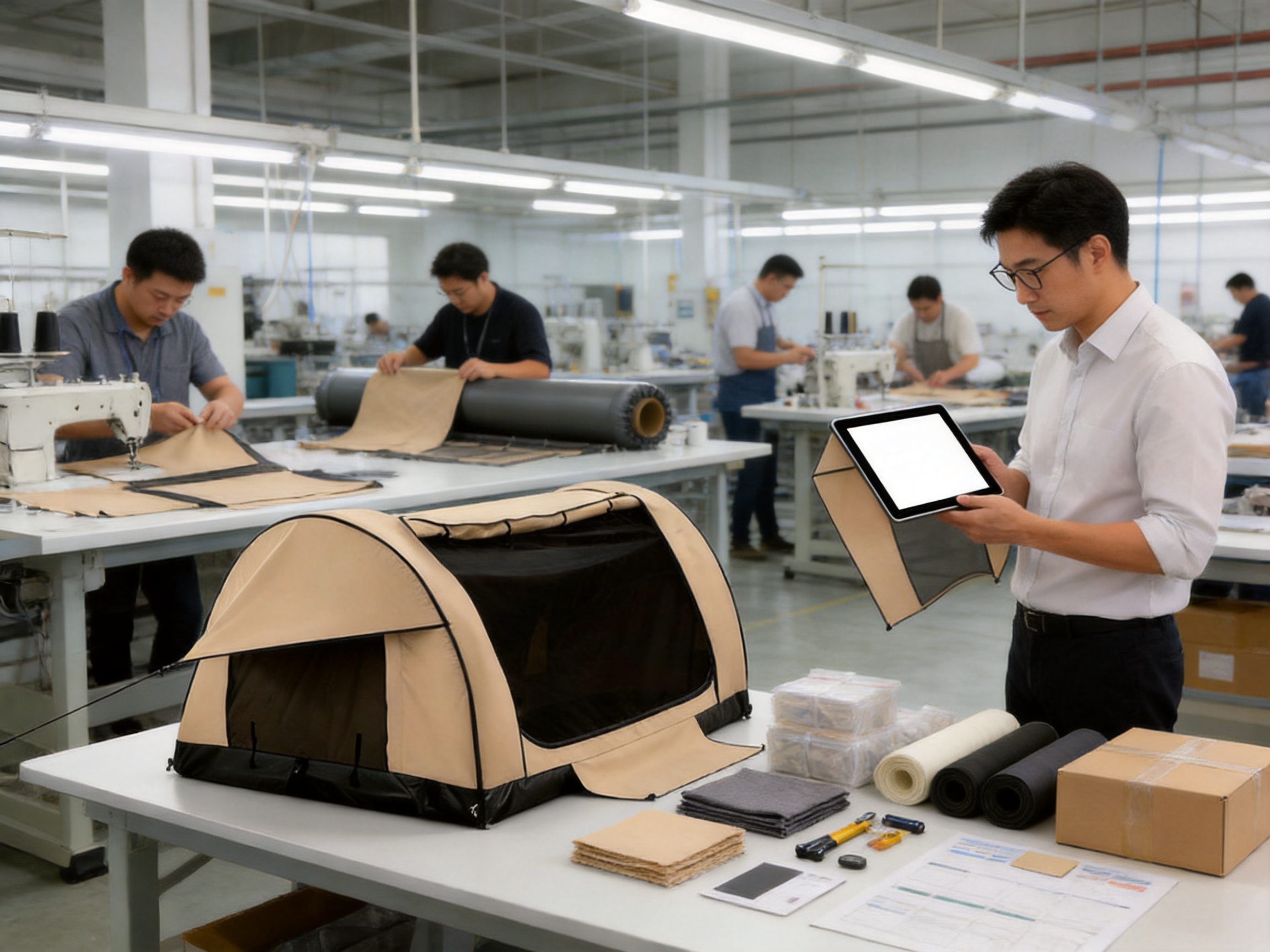
Behind the product is Ningbo Zhenhai Tiansai Leisure Products Co., Ltd., a China-based tent manufacturer and supplier with experience in outdoor equipment design, production, sales, and overseas cooperation. The company operates a factory covering more than 13,000 square meters and serves customers in North America, Europe, Asia, and other international markets. Its manufacturing background supports product development for private-label, wholesale, and OEM customers seeking practical outdoor shelter solutions.
Understanding the Inflatable Swag Tent Concept
A swag tent is a compact sleeping shelter traditionally associated with simple outdoor travel, especially in environments where portability, quick deployment, and low-profile protection are important. A standard swag usually consists of a sleeping compartment, a weather-resistant outer layer, and a supporting system made from flexible poles or integrated structural materials.
This inflatable version follows the same practical philosophy while replacing much of the conventional pole framework with air-supported elements. The user unfolds the packed shelter, positions it on suitable ground, and uses the pump to inflate its structural air tubes. Once inflated, the air frame gives the tent its shape and creates usable interior space for sleeping or resting.
The inflatable format is particularly useful for campers who prefer to avoid complicated assembly. Traditional small tents can require several poles to be threaded through sleeves, clipped into place, and tensioned correctly. In contrast, an air tent reduces the number of rigid components that must be handled at the campsite. This can make setup more approachable for beginners, families, casual campers, and travelers arriving at camp after dark.
The swag profile also keeps the shelter visually and physically streamlined. Its lower shape can reduce unnecessary bulk and help the shelter blend into natural surroundings. This makes it suitable for minimalist camping, solo trips, festivals, garden use, scenic picnics, and weekend travel where a full-size tent may be excessive.
Key Product Advantages
Ripstop Canvas for Enhanced Durability
The tent is constructed from ripstop canvas, a material selected for its balance of strength, durability, and outdoor practicality. Ripstop fabrics are woven with reinforcement threads at regular intervals. If a small puncture or tear occurs, the reinforced grid helps limit the spread of damage compared with many ordinary lightweight fabrics.
This feature is valuable for outdoor shelters because tents are exposed to ground friction, branches, equipment edges, repeated folding, and changing weather. A fabric that resists progressive tearing can provide greater reliability during repeated trips. It also supports longer product service life when the shelter is stored, transported, and used correctly.
Many ultralight tents prioritize minimum packed weight by using very thin synthetic materials. While lightweight fabrics can be useful for long-distance travel, they may feel less substantial and can require more careful handling. Ripstop canvas offers a more reassuring tactile quality and a robust feel, making it attractive to campers who want a portable shelter without sacrificing material confidence.
The product is therefore positioned between extremely minimal bivvy equipment and heavier traditional canvas shelters. It aims to deliver the durability associated with canvas while retaining the convenience required for modern mobile camping.
Waterproof Protection for Unpredictable Weather
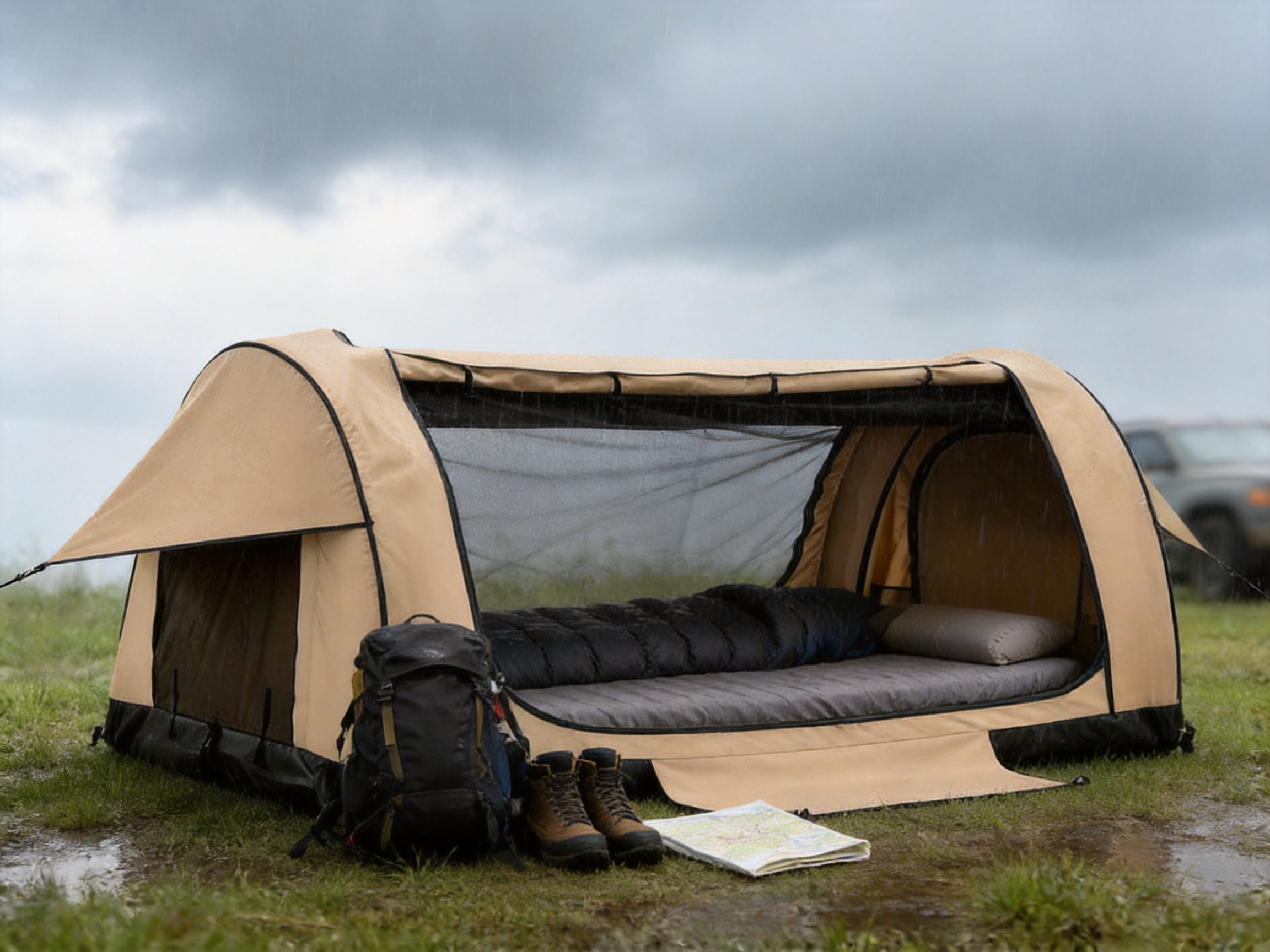
Weather can change quickly during outdoor trips. Sudden rain, overnight moisture, and damp ground can affect sleeping comfort and equipment protection. The waterproof construction of this swag tent is intended to help keep occupants dry during wet conditions when the shelter is correctly assembled, positioned, closed, and maintained.
Waterproof performance is not limited to the fabric alone. It depends on the interaction of the canvas, seams, closures, air-frame construction, ground contact, and overall shelter design. The compact shape reduces unnecessary exposed surfaces, while the outer material forms a protective barrier between the occupant and the weather.
For campers, this means the tent can be considered for a range of uses, from weekend camping to multi-day trekking. It can provide a dependable personal shelter when a larger family tent is not necessary. Its weather-resistant design is also useful for road travelers who want a quick sleeping solution that can be deployed without building a complex campsite.
As with any tent, waterproof performance depends on proper setup and care. The shelter should be pitched on suitable ground, kept away from sharp objects, fully inflated, and packed only when reasonably dry. These basic practices help protect the fabric and reduce the risk of moisture-related problems over time.
UV Protection for Extended Outdoor Use
Outdoor shelters are exposed not only to rain but also to sunlight. Ultraviolet radiation can gradually weaken fabrics, fade colors, and reduce the useful life of materials. This product includes UV protection to help shield the ripstop canvas from harsh sun exposure during extended outdoor use.
UV protection is especially relevant for campers who spend long periods at a campsite, attend outdoor events, travel through sunny regions, or use the tent as a daytime rest shelter. It can help the product maintain its appearance and material integrity when used responsibly.
UV resistance does not mean the tent should be left outdoors indefinitely. When not in use, the shelter should be cleaned, dried, folded appropriately, and stored in a dry place away from continuous sunlight. Even high-quality outdoor fabrics benefit from sensible maintenance and protection from unnecessary exposure.
Inflatable Construction for Fast Setup
The most visible difference between this product and a conventional pole tent is its inflatable support system. The included pump allows users to inflate the structural components without relying on complex pole assembly. This can reduce setup time and make the camping experience more convenient.
Quick setup has practical value in many situations. A traveler may arrive at camp shortly before sunset, encounter changing weather, or need to move between locations during a journey. A shelter that can be deployed in minutes gives users more time to prepare meals, organize sleeping equipment, explore the surroundings, or simply relax.
The inflatable design can also reduce the number of rigid components that need to be packed. Poles can be awkward to store and may become separated from the tent body. An air-supported shelter keeps the structural concept integrated with the tent, while the pump provides the tool needed for inflation.
Another advantage is the smooth appearance of the inflated frame. Without numerous external pole intersections, the shelter can present a clean, uncluttered form. This contributes to the product’s modern look and helps maintain the compact character expected of a swag tent.
Comfortable Space in a Low-Profile Form
A low-profile tent does not need to feel cramped. The design of this product aims to make effective use of its interior volume, giving the occupant a comfortable place to sleep and rest while keeping the exterior compact.
The structure provides more definition than a simple flat bivvy cover. Once inflated, the frame lifts the fabric away from the sleeping area, helping create a more usable interior environment. This separation can improve perceived comfort and reduce the feeling of lying directly beneath a loose fabric layer.
The interior is appropriate for solo camping, trekking, minimalist travel, and short outdoor stays. Users can place a sleeping bag, compact mattress, personal gear, and other essentials inside while maintaining a sheltered sleeping area. The exact usable capacity depends on the selected configuration and the individual’s equipment, so campers should review product dimensions before ordering for a particular sleeping system.
Mesh Panels for Ventilation and Insect Control
Ventilation is essential in a compact tent. Without sufficient airflow, condensation can accumulate as warm, humid air meets cooler fabric surfaces. The tent incorporates mesh panels to support ventilation while helping keep insects outside.
Mesh panels serve several purposes. They promote air movement, allow occupants to enjoy fresh air in suitable conditions, and create a barrier against mosquitoes and other flying insects. This is especially valuable during warm-weather camping, when closing every opening can make a small shelter feel stuffy.
Improved airflow can also contribute to a more comfortable sleeping environment. The mesh design allows users to balance protection and ventilation according to the weather. During dry evenings, openings can support a greater flow of air. During rain or colder conditions, the protective outer layer can be positioned to provide greater coverage.
Ventilation should still be managed correctly. Campers should avoid blocking mesh areas with bedding or equipment, and they should allow damp interiors to dry after use. Good ventilation works best when combined with sensible campsite positioning and regular maintenance.
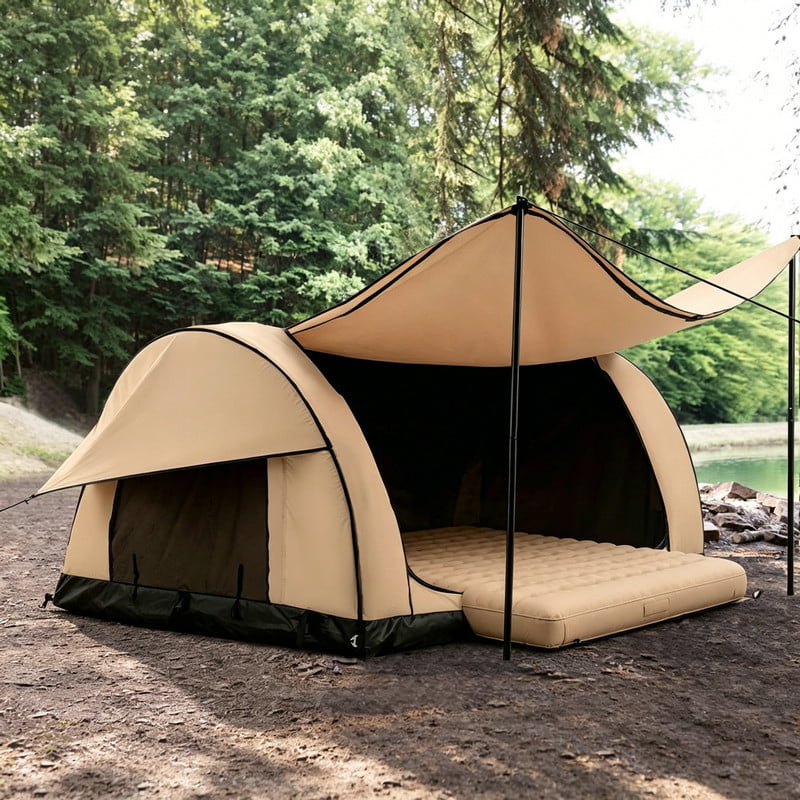
Inflatable Ripstop Canvas Swag Tent Waterproof UV Protected Portable Camping Shelter
Comparison with Common Competitor Shelter Types
The inflatable ripstop canvas swag tent occupies a distinctive position in the outdoor shelter market. Its advantages become clearer when compared with several common alternatives: basic bivvy bags, traditional pole tents, ultralight synthetic tents, and larger canvas camping shelters.
| Shelter Type | Typical Strength | Potential Limitation | Where the Inflatable Swag Tent Differs |
|---|---|---|---|
| Basic bivvy bag | Very compact and lightweight | Limited interior space and structure | Provides a more defined sleeping shelter with inflatable support and greater fabric separation |
| Traditional pole tent | Established structure and broad product availability | More parts and more assembly steps | Uses an air-supported design for quicker, simpler pitching |
| Ultralight synthetic tent | Low packed weight | May require more careful handling and can feel less substantial | Uses ripstop canvas for a durable, robust feel while remaining portable |
| Large canvas tent | Spacious interior and long-stay comfort | Heavier, bulkier, and slower to deploy | Offers a compact personal shelter for mobile travel and short stays |
| Pop-up tent | Convenient automatic opening | Can be bulky when folded and less adaptable to certain transport needs | Uses controlled inflation and a streamlined packed format |
Compared with a basic bivvy bag, this product offers a stronger sense of enclosure and structure. A conventional bivvy can be ideal for experienced minimalist travelers, but some users may find its close-fitting form restrictive. The inflatable swag creates a more defined shelter while preserving a low-profile design.
Compared with a traditional pole tent, the inflatable model focuses on simplified pitching. A pole tent remains a dependable choice for many campers, but it may require greater familiarity with sleeves, clips, pole sections, and tensioning. The air-frame approach can be more accessible for users who value convenience.
Compared with an ultralight synthetic shelter, the ripstop canvas construction emphasizes durability and a substantial feel. This may be particularly attractive to customers who prioritize repeated use, fabric confidence, and a balance between portability and robustness rather than pursuing the lowest possible pack weight.
Compared with a large canvas tent, the swag tent is intentionally more compact. It is not designed to replace a multi-room family shelter or a spacious glamping lodge. Instead, it serves users who need a personal sleeping shelter that can be carried, transported, and deployed efficiently.
Designed for Multiple Outdoor Applications
Backpacking and Trekking
Backpackers often need to manage every item they carry. A shelter must provide protection without creating unnecessary complexity. The compact nature of this air tent makes it suitable for travelers who want a dedicated sleeping shelter with a streamlined form.
The inflatable system can reduce the inconvenience of assembling a pole structure at the end of a long day on the trail. Once a suitable campsite is selected, the user can arrange the tent, inflate the support system, and organize the sleeping area. Its waterproof and UV-protected construction supports use across changing outdoor conditions.
Because backpacking loads vary, users should consider the packed dimensions, total weight, pump format, sleeping equipment, food, and personal supplies before beginning a long-distance route. The product is designed for portability, but responsible planning remains essential for any trekking setup.
Road Trips and Weekend Camping
Road travelers have more flexibility than backpackers but still benefit from rapid setup. The inflatable swag tent can be stored with other travel equipment and deployed at campsites, scenic locations, or overnight stops where a full-size tent is unnecessary.
Its quick-pitch design is convenient for short stays. Travelers can spend less time arranging poles and more time enjoying the destination. The compact shape is also useful when vehicle storage space is limited or when several items must share a luggage area.
For weekend camping, the product provides a comfortable personal shelter that can complement a larger communal canopy or outdoor living arrangement. One person can use it as a private sleeping space while friends or family share a separate cooking and social area.
Minimalist Outdoor Recreation
Not every outdoor activity requires a large camping system. A quiet overnight trip, fishing excursion, photography journey, festival visit, or nature retreat may call for a personal shelter that offers protection without excessive bulk.
The bivvy-style format is well suited to these occasions. It has a focused purpose: provide a weather-resistant place to rest, sleep, or take shelter. The low-profile design can be easier to position in small campsites than a large family tent.
Casual Picnics and Daytime Shelter
Although primarily designed as a sleeping shelter, the product can also be considered for casual outdoor use where shade and weather protection are helpful. During a picnic or day trip, it may provide a private resting area or a place to keep personal items protected from direct exposure.
Users should always follow local site rules and avoid treating the shelter as a permanent structure. Its portable design is intended for temporary outdoor use and easy relocation.
Outdoor Events and Flexible Travel
Campers attending outdoor events often value setup speed and personal space. A compact air tent can be easier to manage in a busy camping area than a large shelter with multiple poles and guy lines. The weather-resistant canvas and ventilated design can help create a more comfortable personal base during a weekend event.
Its flexibility also supports travelers who move between different types of accommodation. It can be used as a primary shelter on a camping trip or as an additional sleeping space when a group campsite becomes crowded.
Material and Construction Considerations
The effectiveness of an outdoor tent depends on the coordinated performance of its materials and construction. The product combines ripstop canvas, inflatable support components, mesh sections, protective openings, and a compact shelter profile. Each element contributes to the overall user experience.
Fabric Selection
Ripstop canvas was selected to provide a durable outer body with a balance between strength and portability. The reinforced weave is intended to reduce the likelihood that small damage will develop into a larger tear. The waterproof treatment helps the material resist rain, while UV protection supports longer outdoor service when the product is used appropriately.
Canvas also has a familiar outdoor character. Many users associate it with reliability and traditional camping equipment. By combining canvas with an inflatable structure, the product updates that familiar material with a more convenient setup method.
Air-Frame Integration
The inflatable support system must be integrated carefully with the tent body. Air tubes need to hold the intended shape, connect securely to the shelter, and distribute support in a stable manner after inflation. Product development therefore involves more than simply adding an air tube to a fabric shell.
Designers must consider how the air structure behaves during inflation, packing, transport, and use. They also need to account for the relationship between the frame, fabric tension, entrances, mesh panels, and ground contact. Proper integration helps ensure that the shelter is practical to pitch and comfortable once erected.
Ventilation Design
Mesh panels are positioned to support air circulation while preserving the protective purpose of the tent. Ventilation design is particularly important in a small sleeping shelter because interior humidity can rise quickly during the night.
Airflow also contributes to temperature management. While mesh cannot replace shade or active cooling, it can improve comfort by allowing fresh air to pass through the sleeping compartment. The design gives campers more control over the balance between insect protection, airflow, and weather coverage.
Compact Packing
Portability depends on more than the weight of the fabric. The tent must also be foldable, packable, and manageable during transport. The inflatable concept allows the structural elements to deflate and fold with the shelter, helping maintain a compact travel format.
Users should follow the recommended folding method and avoid forcing the fabric into an excessively small package. Careful packing reduces stress on seams, valves, and material surfaces and makes future setup easier.
Manufacturing Capabilities and Product Development Strengths
The product is manufactured by Ningbo Zhenhai Tiansai Leisure Products Co., Ltd., a specialized outdoor-product enterprise based in Ningbo, Zhejiang Province, China. The company’s location near an important port supports international shipping and access to global markets. Its factory covers more than 13,000 square meters, providing a substantial base for design, production, inspection, warehousing, and order coordination.
A large manufacturing site is valuable to international buyers because tent production involves multiple stages. These may include material preparation, cutting, printing or labeling where required, sewing, reinforcement, frame integration, inspection, packing, and shipment preparation. Coordinating these activities under an organized production system can help improve consistency and support larger wholesale requirements.
Professional Design and Development
The company maintains a professional design team focused on practicality and comfort. This development approach is important because a successful tent must perform in real outdoor situations rather than only look attractive in product photography.
Design work may consider the user’s sleeping position, entry access, ventilation, fabric tension, packability, setup sequence, and protection from weather. Product development from these different perspectives can help create a shelter that is easier to use and more appropriate for actual camping conditions.
The company also works with professionals and invites outdoor enthusiasts to participate in testing. Feedback from people who use camping equipment in real settings can reveal details that are difficult to identify in a purely office-based design process. Adjustments based on this feedback may improve usability, comfort, handling, and overall product performance.
Patented Design Experience
Tiansai Leisure has designed products associated with appearance patents and utility model patents. Patent experience demonstrates that the company invests in original product development rather than relying only on standard market forms.
For OEM and private-label customers, this design capability can be useful. Buyers may seek a shelter with a distinctive appearance, a modified interior arrangement, a new color scheme, a different branding package, or a revised function. A manufacturer with experience in product development can be better positioned to discuss these requirements and transform a concept into a manufacturable product.
Quality Management Focus
The company states that it strictly implements a quality management system to help ensure that its products meet international standards. A quality-focused production process is essential for inflatable tents because performance depends on several interconnected details.
Important quality considerations include fabric condition, stitching, reinforcement points, air-tube integration, valve performance, zipper operation, mesh attachment, packing quality, and final appearance. Consistent inspection at different stages can help identify problems before finished goods are shipped to customers.
Quality management also supports repeat orders. International buyers need confidence that a later production run will remain consistent with an approved sample. Clear specifications, production records, sample confirmation, inspection procedures, and communication between the factory and buyer all contribute to a more stable supply relationship.
Outdoor Industry Experience
The company’s core team includes outdoor-product professionals with more than ten years of experience in research and development, production, and overseas operations. This experience can support practical communication with international customers and help the factory understand the requirements of different outdoor markets.
Outdoor products must account for diverse climates, user expectations, transport systems, packaging preferences, and retail environments. Experience across these areas can help a manufacturer identify potential issues early and provide more relevant product guidance.
OEM and Wholesale Support
The product can be considered by distributors, retailers, outdoor brands, camping specialists, and importers seeking wholesale tent supply. The company offers outdoor tent categories that include camping tents, backpacking tents, glamping tents, inflatable tents, and custom OEM solutions.
OEM cooperation may involve brand labeling, packaging changes, product color development, logo application, instruction materials, and other project-specific requirements. The precise options, minimum order quantities, development costs, and production schedules should be confirmed directly with the manufacturer for each project.
A one-stop supplier can simplify communication by bringing design, manufacturing, quality coordination, and export support into one business relationship. This is particularly useful for buyers who want to develop a coherent camping product range rather than purchase unrelated items from multiple sources.
How to Set Up the Inflatable Swag Tent
Before setup, select a level campsite free from sharp stones, branches, glass, thorns, and other objects that could damage the ground-facing material or air structure. Clear the area carefully rather than assuming the tent fabric will protect against every hazard.
Unpack the tent and spread it out in the intended direction. Check that entrances, ventilation panels, and inflation points are accessible. Position the shelter so that the most exposed side is not facing directly into strong prevailing wind where possible.
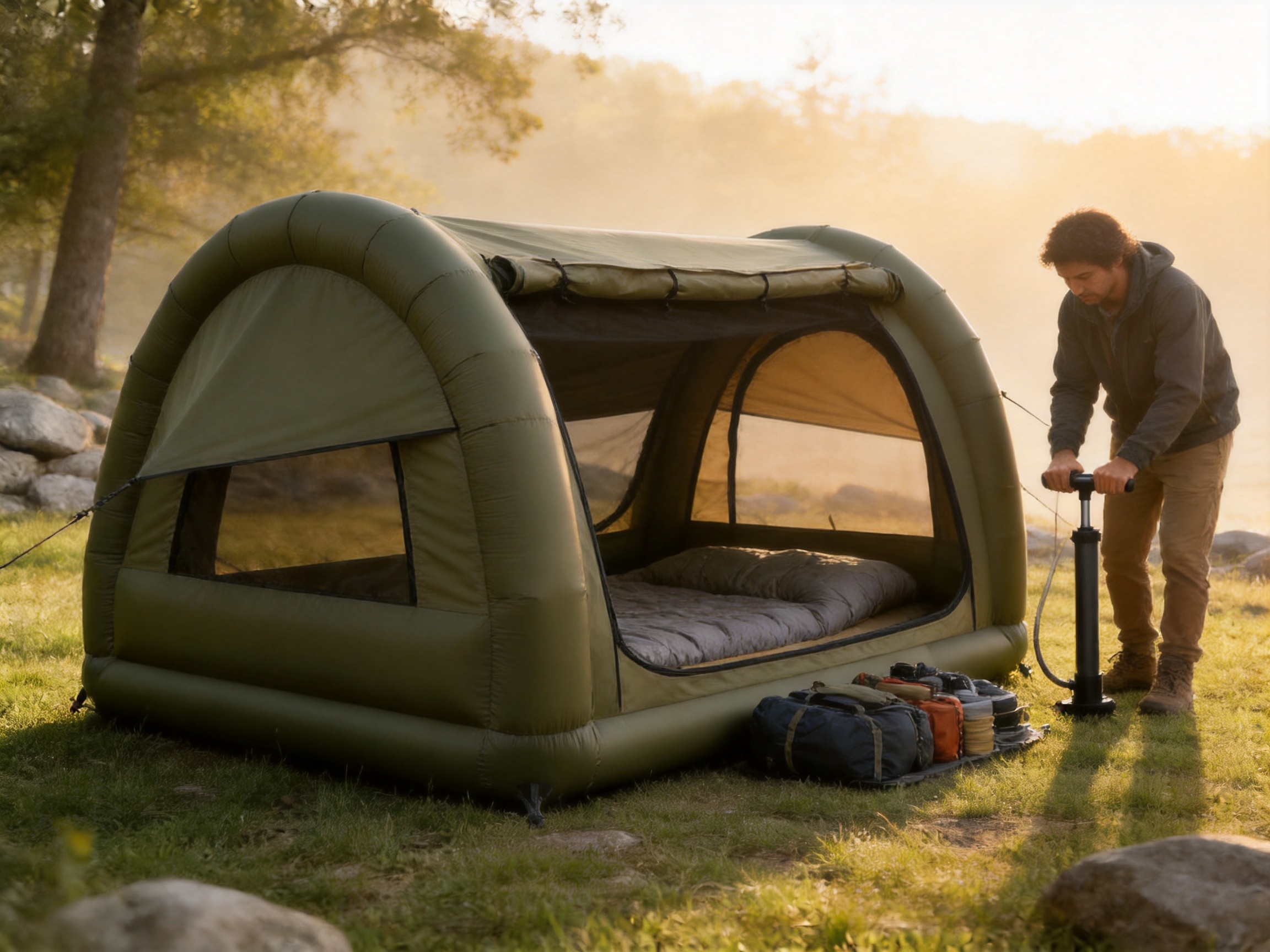
Connect the included pump to the appropriate inflation point and inflate the structural air tubes according to the product instructions. Do not use excessive pressure or an unsuitable inflation method. The frame should become firm and hold the intended shape without forcing connections or seams.
Once inflated, adjust the tent body so that the fabric lies evenly and the sleeping compartment is properly formed. Secure the shelter with the supplied anchors or pegging points when required by the conditions. Even a compact tent benefits from proper stabilization in wind or uneven weather.
Open or adjust the mesh panels according to temperature, humidity, insect activity, and rain conditions. Keep ventilation paths clear of sleeping bags, clothing, and other equipment. In warm weather, effective airflow can significantly improve the internal environment.
After use, remove personal items, release the air carefully, and fold the shelter according to the recommended sequence. Shake away loose dirt, allow moisture to evaporate, and avoid packing the tent while it is heavily wet unless circumstances make this unavoidable. If it must be packed wet, dry it thoroughly as soon as possible after returning home.
Care and Maintenance Recommendations
Regular care helps preserve the tent’s waterproofing, fabric strength, appearance, and inflatable performance. After each trip, inspect the shelter for dirt, mud, moisture, abrasion, and small damage.
Clean the fabric with suitable methods recommended for outdoor canvas. Avoid harsh chemicals, aggressive scrubbing, and unapproved treatments that may affect waterproof or UV-protective finishes. Allow the tent to dry naturally in a ventilated area and keep it away from unnecessary high heat.
Inspect the air tubes and valves for signs of wear, deformation, or leakage. If the shelter does not hold its shape as expected, check the connections and follow the manufacturer’s repair or maintenance guidance. Do not continue using a damaged air structure in conditions where shelter stability is important.
Store the tent in a cool, dry place. Avoid placing heavy equipment on top of the packed shelter, and keep it away from rodents, sharp tools, and prolonged sunlight. Proper storage is especially important between seasons or before long-distance shipment.
Do not cook inside the sleeping compartment. Open flames, stoves, heaters, and hot equipment can create fire, carbon monoxide, and fabric damage risks. Follow general camping safety practices and comply with local campsite rules.
Why the Product Is Attractive to International Buyers
For international buyers, product value includes more than the physical tent. It also includes the manufacturer’s ability to communicate, develop, produce, inspect, pack, and ship consistently.
The company’s factory location in Ningbo provides access to established transportation infrastructure and international logistics channels. Its experience exporting to North America, Europe, Asia, and other markets indicates familiarity with overseas business requirements and cross-border order coordination.
The combination of design resources and manufacturing capacity can help buyers develop products that are differentiated from basic catalog tents. A retailer may want a unique color and packaging system, while an outdoor brand may require a more extensive OEM development project. The manufacturer’s design and production background provides a foundation for discussing these possibilities.
The product itself is also commercially versatile. It can be positioned as an inflatable camping shelter, a premium swag, a compact trekking tent, a solo adventure tent, or a portable outdoor sleeping solution. This allows distributors to present it to several customer segments without changing its fundamental purpose.
Its material and feature combination is easy for consumers to understand. Ripstop canvas communicates durability. Waterproof protection addresses weather concerns. UV protection supports outdoor longevity. Inflatable setup communicates convenience. Mesh panels communicate ventilation and insect control. Together, these features create a clear product story for retail and wholesale marketing.
Limitations and Buying Considerations
No tent is ideal for every type of camping. The inflatable ripstop canvas swag tent is designed as a compact personal shelter, not a replacement for a large family tent, expedition base camp, or permanent accommodation.
Customers should consider the number of occupants, preferred sleeping mattress, equipment volume, seasonal conditions, transportation method, and expected frequency of use. Solo campers and minimalist travelers may find the format particularly suitable, while groups may need several units or a larger companion shelter.
Because the tent uses an inflatable support system, users should understand the importance of protecting the air tubes and following inflation instructions. The campsite should be cleared of sharp objects, and the packed tent should be transported carefully. These precautions are straightforward but essential.
Buyers should also confirm the complete specification before placing a commercial order. Important points may include dimensions, packed size, product weight, fabric composition, color options, accessories, pump type, packaging, labeling, minimum order quantity, sample availability, and delivery schedule.
These details can vary by product version or OEM project. Direct confirmation with the manufacturer ensures that the supplied product matches the buyer’s intended market and use case.
Questions and Answers
What type of tent is this?
It is an inflatable bivvy and swag tent made with ripstop canvas. It is designed as a compact personal camping shelter for sleeping, resting, trekking, road trips, and other outdoor activities.
How does the tent stay upright?
The shelter uses inflatable structural components. When inflated with the included pump, these air-supported elements create the tent’s shape and provide its primary structural support.
Is the tent suitable for rainy conditions?
The tent is designed with waterproof protection to help keep occupants dry during rain when it is correctly set up and maintained. Users should choose suitable ground, secure the shelter properly, and keep entrances and openings appropriately closed during wet weather.
What is the purpose of ripstop canvas?
Ripstop canvas uses a reinforced weave intended to limit the spread of small tears and improve durability. It provides a robust fabric feel while remaining portable enough for camping and travel use.
Does the tent provide ventilation?
Yes. Mesh panels are included to support airflow, reduce condensation, and help keep insects outside. Ventilation should be managed according to weather and temperature conditions.
Is it appropriate for backpacking?
It can be suitable for backpacking and trekking when its packed dimensions and weight fit the user’s load plan. Customers should review the complete specification and consider the pump and other sleeping equipment before beginning a long-distance trip.
Can it be used for family camping?
The swag format is primarily intended as a compact personal shelter. It may complement a family campsite, but families requiring shared sleeping space should consider a larger family tent or use multiple units.
How quickly can it be installed?
The inflatable design is intended for quick setup and can be inflated in minutes under normal conditions. Actual setup time depends on the campsite, user familiarity, inflation method, anchoring requirements, and weather.
What should be checked before commercial purchase?
Buyers should confirm dimensions, packed size, weight, fabric details, color, accessories, pump configuration, packaging, logo requirements, minimum order quantity, sample process, inspection arrangements, and delivery terms.
Can the product be customized?
The manufacturer provides OEM and custom camping tent solutions. Potential customization may include branding, colors, packaging, and selected product details. The available options should be discussed and confirmed for each project.
How should the tent be stored?
Clean and dry the tent before storage whenever possible. Deflate it carefully, fold it without sharp creases or excessive force, and keep it in a cool, dry location away from continuous sunlight, moisture, and heavy pressure.
Who is the product best suited for?
It is well suited to solo campers, backpackers, trekkers, road trippers, outdoor enthusiasts, festival visitors, and retailers seeking a compact, durable, and convenient camping shelter.
Conclusion
The inflatable ripstop canvas swag tent offers a practical alternative to conventional small tents and basic bivvy shelters. Its strongest advantages come from the combination of durable ripstop canvas, waterproof construction, UV protection, inflatable setup, mesh ventilation, and a compact low-profile form.
For campers, the design delivers a balance between traditional material confidence and modern convenience. It is more structured than a simple bivvy bag, easier to pitch than many pole tents, more compact than a large canvas shelter, and more robust in feel than many ultra-minimal synthetic alternatives.
For distributors and outdoor brands, the product provides a clear and versatile market proposition. It can be promoted for backpacking, trekking, weekend camping, road travel, minimalist outdoor recreation, and personal campsite use. Its combination of features is straightforward to communicate and relevant to consumers seeking comfort without excessive setup time.
The manufacturing background of Ningbo Zhenhai Tiansai Leisure Products Co., Ltd. strengthens the product’s commercial potential. With a factory of more than 13,000 square meters, professional product designers, outdoor testing input, patent experience, quality management practices, export experience, and OEM capabilities, the company is positioned to support both standard product supply and customized development.
As outdoor consumers continue to seek equipment that is durable, convenient, portable, and adaptable, the inflatable ripstop canvas swag tent represents a well-balanced shelter solution. It is designed not simply to provide a place to sleep, but to make the entire camping process easier—from packing and transport to setup, overnight comfort, and post-trip storage.
References
1. Product information supplied for the inflatable ripstop canvas swag tent, including construction, use cases, weather protection, ventilation, and setup features.
2. Company information supplied for Ningbo Zhenhai Tiansai Leisure Products Co., Ltd., including factory capacity, product development, export experience, OEM services, and quality management practices.
3. General principles of ripstop fabric construction and tear-resistance design in outdoor equipment.
4. General guidance on tent ventilation, condensation control, moisture management, and outdoor fabric care.
5. General product-development considerations for inflatable outdoor shelters, including air-frame integration, portability, and campsite setup.
6. General outdoor safety practices concerning tent placement, weather exposure, fire prevention, storage, and maintenance.
Product: Inflatable Ripstop Canvas Swag Tent Waterproof UV Protected Portable Camping Shelter

Message Us Right Now!
-
Mp: +86-18858091910
E-mail: sales@tenplaytent.com
ADD: No. 529, Guangyuan Road, Xiepu Town, Zhenhai District, Ningbo City, Zhejiang Province, China
-
Quick Links
Home Products About Us Advantage News Contact Us -
Product
Inflatable & Air Tents Glamping & Resort Tents Backpacking & Trekking Tents Automatic & Pop-Up Tents Family & Camping Tents Specialty Tents & Shelters Kids Tents Pet Tents Humanitarian & Large Tents Hammock -
Get Connected
 Camping Tent Manufacturer in China