

 English
 عربى

Tunnel Tent Door Zippers: What Should Buyers Check on a Sample?
A tent door zipper is easy to overlook in a product photograph. Its practical behaviour becomes clearer when the tent is pitched, the door panel is positioned and a user tries to operate it from both sides. For family tunnel tent buyers, that sample review can reveal questions that a fabric specification alone does not answer.
The review should consider the zipper as part of the complete door arrangement. Panel tension, access and the manufacturer's pitching guidance all influence the observation. The objective is a documented check of the intended product, with separate evidence requested for durability or weather-resistance claims.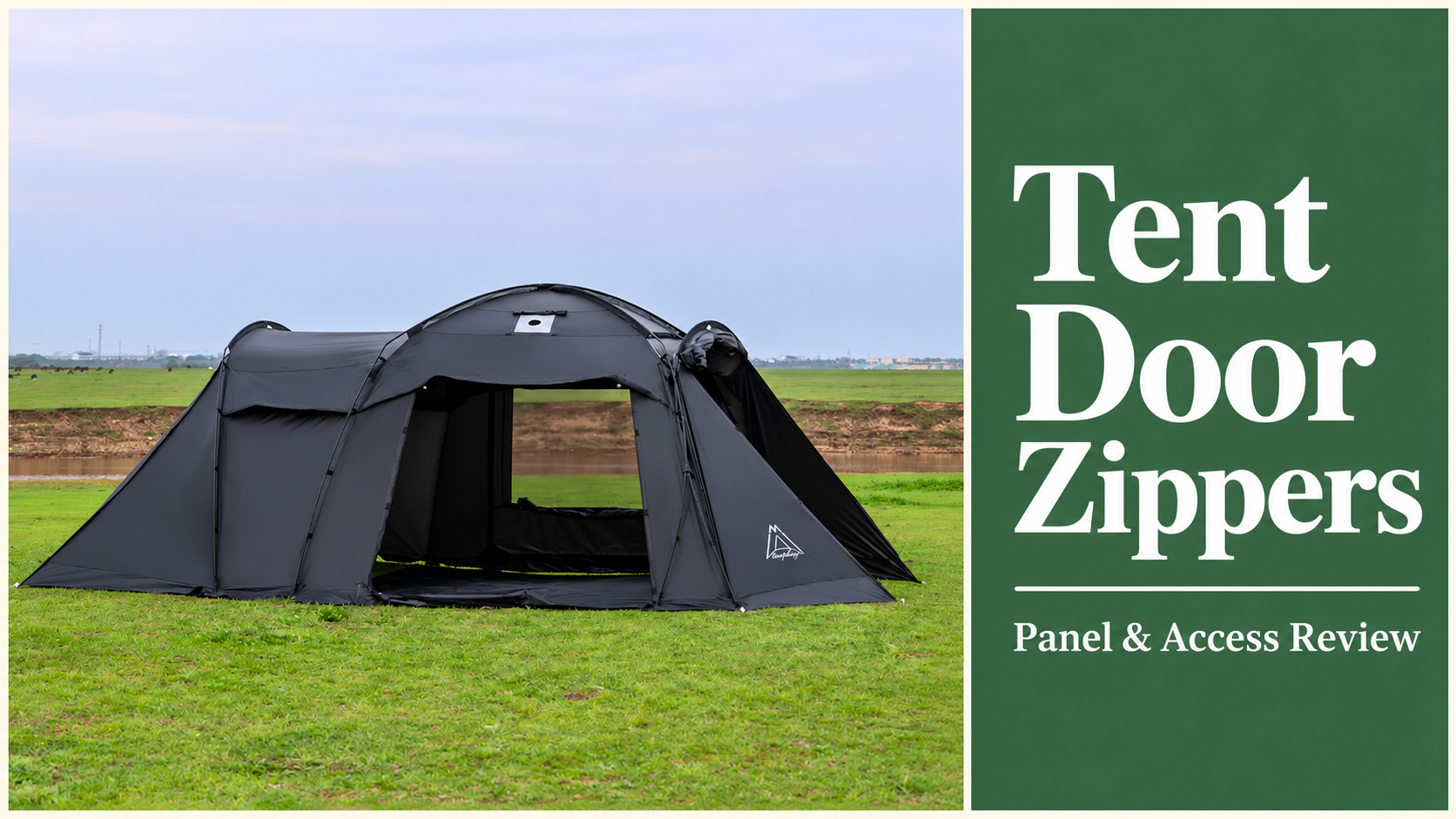
Pitch the selected model as instructed
The family tunnel tents provides the relevant product category. Choose the exact tent version and obtain its applicable pitching instructions before assessing the door. A sample placed loosely over its frame may not represent the panel geometry of a correctly pitched tent.
Record the sample identity and the pitching arrangement used for the review. Follow the manufacturer's guidance for supports, anchoring and tension. If the intended setup is unclear, request clarification rather than changing the geometry until the zipper feels easier. That would conceal a question instead of resolving it.
Note the surfaces and conditions used for the observation. A sample review is more useful when the buyer and supplier know how the tent was set up. It should not be presented as evidence that the product performs the same way in every campsite condition.
Observe the complete door path
Operate the zipper using the method described by the supplier. Look at the full path, including curves and transitions near the lower edge. Record where the operation feels different and what the surrounding panel is doing at that point. A local observation is more useful than a general comment that the zipper is bad.
Check whether fabric, a flap or another component can enter the path during normal handling. Do not force the slider past an obstruction. Photograph the arrangement and ask the supplier to assess the cause. The relevant issue may concern the way a panel is positioned rather than the zipper component alone.
| Review area | Question to answer | Useful record |
|---|---|---|
| Pitched geometry | Was the tent set up to the instructions? | Overall setup photographs |
| Door path | Where does operation change? | Local image and description |
| Pull access | Can the intended pull be reached from each side? | Interior and exterior views |
| Panel management | Where does the open door sit? | Agreed tie-back arrangement |
| User guidance | What handling and care instructions apply? | Model-specific document reference |
Review access from inside and outside
A pull that is obvious from the exterior can be less accessible from inside the tent. Review the intended user positions without assuming that everyone will approach the door in the same way. The guide should make clear which pull and panel are used in each arrangement.
If the product has several door or mesh-panel options, identify them separately. A user may need to understand which panel provides insect screening and which outer arrangement follows the weather guidance. Avoid implying that every panel configuration has the same purpose or performance.
Check how the opened panel is retained according to the instructions. It should be possible to describe the intended arrangement without showing loose fabric in an operating path. Do not add a new tie-back method simply because it photographs well; use the supplied design and manufacturer guidance.
Separate functional observation from test claims
A brief sample check can reveal an obstruction or an unclear operating step. It cannot establish a service life or a guaranteed number of operating cycles. If durability is part of the purchasing claim, request the applicable test method, sample scope and acceptance information separately.
Likewise, a door zipper is only one part of the weather-protection arrangement. Fabric, seams, flaps, ground details and pitching all contribute to the complete product. Do not turn a smooth slider demonstration into a waterproof claim for the tent. Any such claim needs relevant evidence for the intended configuration.
- Use the correct model instructions and identify the sample.
- Record the pitched arrangement before adjusting any panel.
- Review the full zipper path from both operating sides.
- Note obstructions without forcing or modifying the component.
- Keep performance claims tied to separate, relevant evidence.
The supplier should also provide appropriate care guidance. Dirt and misuse can affect zipper operation, but buyers should not invent lubrication or cleaning instructions. Ask for the manufacturer's recommendation for the actual zipper and fabric combination and preserve any restrictions in the final user materials.
Make the sample decision transferable
Write the findings so another reviewer can locate the same point on the tent. Use a door identifier, side description or annotated photograph rather than a vague reference to the front. If the model has multiple entrances, keep their observations separate.
When a supplier revises the panel or zipper arrangement, review the affected area again under the documented setup. Retain the old and new sample identities so the comparison remains clear. A revised drawing should also be checked against the instruction images before retail files are approved.
A good tunnel tent zipper review connects the component with the door panel and the pitched product. It gives the buyer a precise basis for discussing access, handling and instruction quality, while keeping unsupported durability and weather claims out of a simple sample demonstration.
For a multi-model collection, keep a separate instruction reference for each relevant door arrangement. Reusing one attractive setup diagram can hide differences in panel opening direction or pull access. The retail team should be able to identify the correct guide from the model record without guessing from the colour of the tent.
Message Us Right Now!
-
Mp: +86-18858091910
E-mail: sales@tenplaytent.com
ADD: No. 529, Guangyuan Road, Xiepu Town, Zhenhai District, Ningbo City, Zhejiang Province, China
-
Quick Links
Home Products About Us Advantage News Contact Us -
Product
Inflatable & Air Tents Glamping & Resort Tents Backpacking & Trekking Tents Automatic & Pop-Up Tents Family & Camping Tents Specialty Tents & Shelters Kids Tents Pet Tents Humanitarian & Large Tents Hammock -
Get Connected
 Camping Tent Manufacturer in China