


 English
 عربى


8–10 Person Stormproof Hydraulic Inflatable Tunnel Glamping Air Cabin Tent
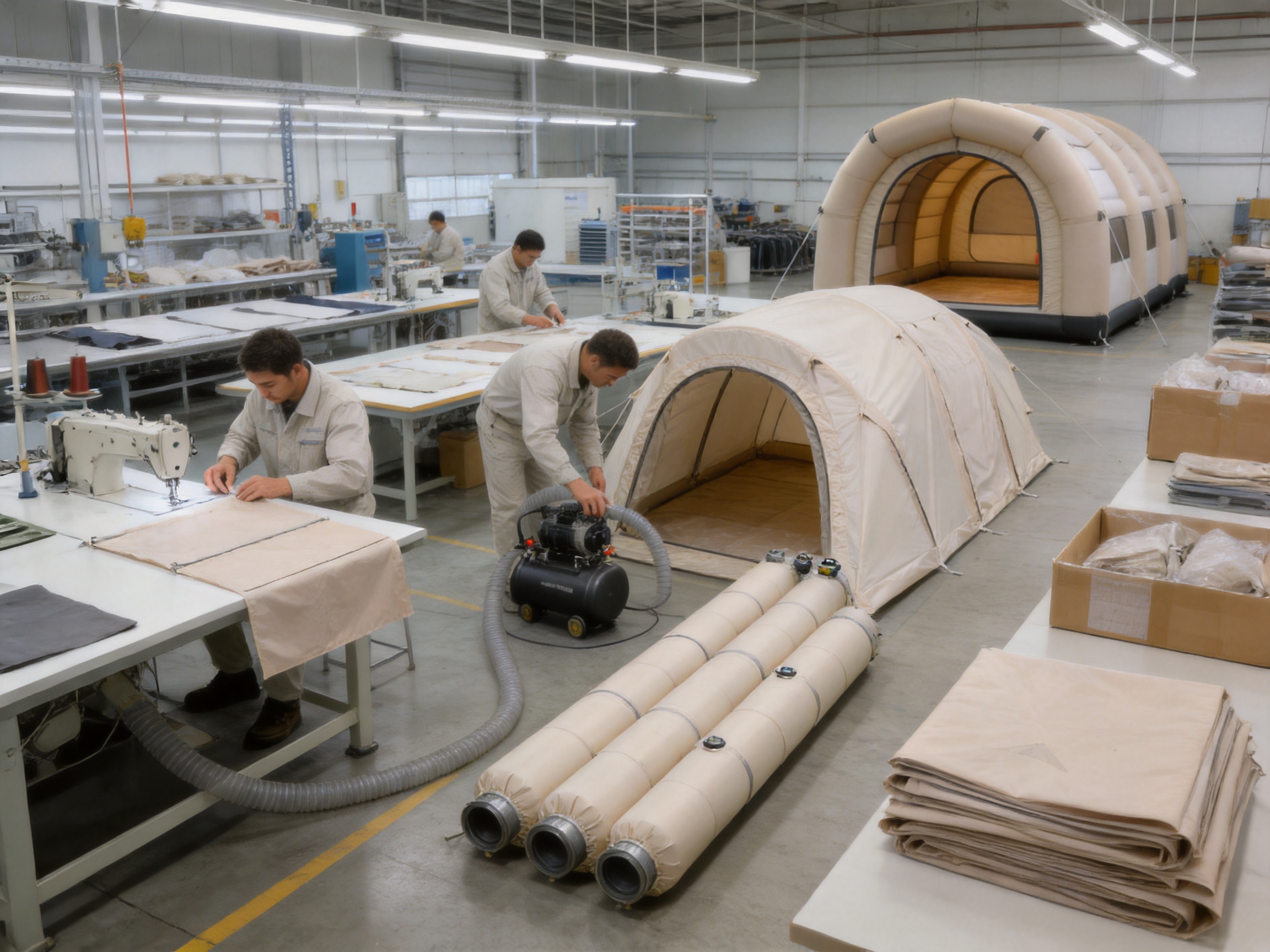
Modern outdoor accommodation demands more than a basic shelter. Glamping resorts, expedition operators, family campgrounds, event organizers, and private outdoor hosts need tents that combine generous living space, rapid installation, dependable weather protection, and a refined residential atmosphere. The 8–10 Person Stormproof Hydraulic Inflatable Tunnel Glamping Air Cabin Tent is designed to answer these requirements with a spacious tunnel configuration, a dual-layer construction, an advanced multi-chamber air tube system, and an integrated layout for sleeping, relaxing, and socializing.
Unlike conventional pole tents, which require a collection of rigid components and a relatively long assembly process, this inflatable air cabin tent uses an air-supported structure to create a stable and comfortable shelter. Its hydraulic automatic inflation concept enables rapid pitching within minutes when used with suitable inflation equipment. Once inflated and properly anchored, the tunnel profile provides a broad interior footprint and an efficient aerodynamic shape that helps the tent perform in demanding outdoor environments.
The tent is positioned within the glamping and resort tent category, but its capabilities extend beyond leisure accommodation. Its heavy-duty, windproof, and rainproof design makes it suitable for mountain retreats, forest camps, lakeside resorts, expedition bases, family camping areas, and other locations where guests expect dependable protection without sacrificing comfort. The interior is organized to create a residential-style outdoor experience rather than a simple sleeping compartment.
Designed for Spacious Outdoor Living
The defining feature of this product is its tunnel structure. A tunnel-shaped shelter uses its length efficiently, allowing designers to create distinct activity zones without requiring a complicated network of internal poles. For a group of approximately eight to ten people, this arrangement can provide a more practical experience than a single open dome or crowded rectangular tent.
The interior can be organized into separate sleeping and social areas. This modular layout allows guests to rest, change clothes, store equipment, dine, read, or gather together without every activity taking place in the same space. For resort operators, this distinction is particularly valuable because it helps the tent feel more like an outdoor cabin or temporary suite. For families, it offers better organization and privacy than a conventional one-room camping tent.
The unobstructed interior is another important advantage. Traditional pole systems can reduce usable space by placing poles through the center of the living area or around the sleeping zones. The inflatable support system moves much of the structural framework into the air tubes around the perimeter and roofline. As a result, users can arrange furnishings, beds, storage units, tables, and decorative elements with greater flexibility.
In a glamping environment, space is not only a matter of capacity. It influences the guest’s entire perception of quality. A tent with clear circulation paths and dedicated activity zones feels more comfortable, more organized, and more premium. The tunnel design supports that impression by creating a visual sense of length and openness while allowing the operator to divide the interior according to the intended use.
The spacious hall is also useful in unstable weather. When rain or strong wind prevents guests from spending time outdoors, the interior becomes an important living area rather than merely a place to sleep. A large common zone gives guests room to sit together, store wet clothing, prepare personal belongings, and continue their activities while remaining protected from the weather.

8–10 Person Stormproof Hydraulic Inflatable Tunnel Glamping Air Cabin Tent
Inflatable Engineering for Fast Installation
The air-supported frame is engineered to simplify the pitching process. Instead of connecting multiple metal or fiberglass poles, users inflate the integrated air tubes and secure the tent to the ground. This approach reduces the number of loose structural parts and helps create a more streamlined setup routine.
The hydraulic automatic inflatable concept is especially suitable for commercial camping operations. Resort staff may need to prepare several accommodation units during a limited installation window. A tent that can be pitched within minutes helps reduce labor pressure and makes it easier to respond to seasonal demand, temporary events, or changes in site layout.
Rapid installation also benefits private users. A family or outdoor group does not need to spend a large portion of its camping trip sorting poles and interpreting complicated assembly steps. Once the site has been selected and the ground has been prepared, the inflation process can establish the primary structure quickly. Final anchoring, adjustment, and weather checks remain important, but the main shelter becomes available far sooner than many large conventional tents.
The inflatable architecture uses a multi-chamber air tube system. Multiple chambers provide an important layer of structural redundancy. If one chamber experiences a problem, the entire structure is not necessarily affected in the same way as a single-volume air beam. The compartmentalized design supports stability and helps improve user confidence during extended outdoor use.
A multi-chamber system can also contribute to better shape retention. Each air tube supports a specific part of the structure, helping the tunnel maintain its intended geometry when correctly inflated. This organized load distribution is useful in a large tent because the roof, sidewalls, entrance areas, and end sections all experience different forces from wind, rain, handling, and internal use.
For operators, the air system can simplify maintenance planning. The tent’s structural elements are integrated into the shelter rather than being dependent on a complete inventory of separate poles. Inflation valves, air tubes, seams, and protective fabric remain important inspection points, but the overall product is designed around a clear, systematic support concept.
As with any inflatable shelter, correct inflation pressure, anchoring, and routine inspection are essential. The product’s design provides the foundation for fast and reliable setup, while responsible operation ensures that the tent continues to perform as intended. Operators should follow the supplied instructions, use compatible inflation equipment, and inspect the air system before every deployment.
Performance in Wind, Rain, and Changing Conditions
Outdoor accommodation must cope with weather that can change quickly. A sunny afternoon may be followed by heavy rain, gusty wind, or a significant drop in temperature after sunset. The 8–10 Person Stormproof Hydraulic Inflatable Tunnel Glamping Air Cabin Tent is designed as a heavy-duty, windproof, and rainproof shelter for precisely these demanding situations.
The tunnel profile contributes to wind performance by presenting a smooth, continuous shape. Compared with shelters that have abrupt corners, numerous exposed attachments, or a tall isolated central peak, a streamlined tunnel can help air flow over and around the structure more efficiently. The design does not eliminate the need for careful orientation and anchoring, but it supports a more wind-conscious shelter configuration.
Proper anchoring remains central to storm performance. Even the strongest fabric and air frame require secure connection to the ground. Site selection, anchor choice, guy-line tension, and regular checks all influence how the tent behaves in wind. Resort operators can improve consistency by establishing standard installation procedures and training staff to inspect the shelter after changes in weather.
The dual-layer construction provides another important performance benefit. Two layers can create a more controlled interior environment by adding a protective separation between the exterior weather layer and the living space. This arrangement can help manage condensation, improve comfort, and reduce the direct impact of wind and rain on the inner sleeping area when the tent is correctly assembled and ventilated.
Rain protection is supported by the high-performance fabric, the shelter’s overall construction, and attention to seams, closures, and protected openings. A rainproof tent must be considered as a complete system rather than as a fabric shell alone. The roof geometry, door design, window protection, seam construction, and ground interface all contribute to the user’s experience during wet conditions.
For glamping resorts, dependable rain protection has a direct business value. Guests are more likely to enjoy and recommend an accommodation unit that remains dry and comfortable during an unexpected shower. Reduced water intrusion can also protect bedding, furniture, flooring, and decorative elements, helping operators preserve the appearance and service quality of each unit.
The shelter is suitable for a range of environments, including mountains, forests, lakeside locations, and established resort grounds. Each site presents its own risks. Mountain locations may experience sudden wind and temperature changes, while forest settings can involve falling branches, uneven ground, and persistent moisture. Lakeside areas may be exposed to open wind and humidity. The tent’s storm-oriented design offers a strong starting point, but careful site management is always necessary.
Fabric Protection and UV Resistance
The exterior fabric is described as tear-resistant and equipped with UPF 50+ protection. These features are important for a tent intended for repeated outdoor use. The fabric must resist handling during installation, packing, transport, and repositioning, while also withstanding contact with natural surfaces and routine commercial operation.
Tear resistance helps reduce the risk that a small abrasion will become a larger failure. In a resort environment, tents may be opened and closed frequently, cleaned between guests, and exposed to equipment, luggage, furniture, and decorative fixtures. A robust fabric supports a longer service life when users and staff operate the shelter correctly.
UPF 50+ protection is valuable in locations with intense sunlight. Ultraviolet exposure can affect both occupant comfort and the long-term condition of outdoor textiles. A fabric with strong UV protection helps limit the amount of ultraviolet radiation reaching the interior and can contribute to a cooler, more pleasant daytime environment. It also supports the durability of the fabric and helps the tent maintain a more consistent appearance over time.
The cooling benefit is particularly relevant to glamping accommodation. Guests often expect a tent to provide a comfortable retreat during the hottest part of the day. The combination of protective fabric, ventilation windows, internal layout, and shade management can help create a more balanced indoor climate without relying entirely on mechanical cooling.
Material performance must always be considered alongside maintenance. Cleaning products should be compatible with the fabric and coating. The tent should be thoroughly dried before long-term storage, and operators should avoid folding or packing it while damp. Regular examination of high-contact areas, seams, zippers, valves, and attachment points can identify minor issues before they become serious.
Ventilation and Interior Comfort
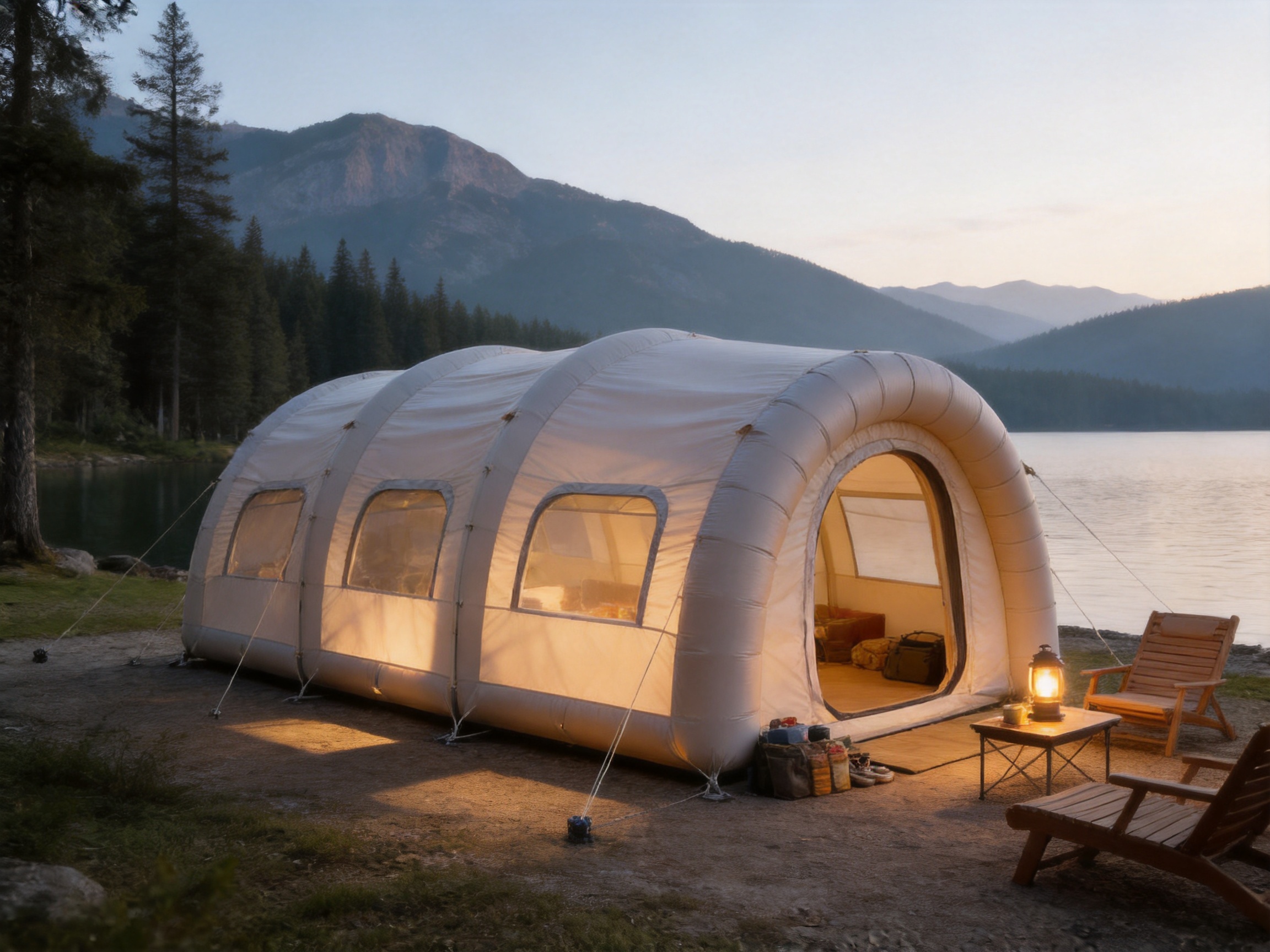
A large tent needs a carefully considered ventilation strategy. Without adequate airflow, occupants may experience heat, condensation, stale air, or discomfort, especially when several people share the space. The tent incorporates ventilation windows to support air circulation and improve the indoor environment.
Ventilation windows allow operators to adapt the tent to changing conditions. On warm days, opening suitable windows can encourage cross-ventilation and help release accumulated heat. During cooler or wetter conditions, openings can be adjusted to balance fresh air with weather protection. This flexibility is important because comfort requirements differ between daytime, nighttime, summer, and shoulder-season use.
Ventilation also supports the performance of the dual-layer system. When people sleep, cook with approved equipment outside the sleeping area, or bring damp clothing into the tent, moisture can accumulate. Controlled airflow helps reduce condensation on interior surfaces. Users should still avoid blocking ventilation points and should follow all safety instructions regarding heating, cooking, and fuel-burning appliances.
The large hall can improve comfort by preventing sleeping areas from becoming the only place where people gather. When guests have room to sit and organize their belongings away from beds, the sleeping zones can remain cleaner, calmer, and less humid. This separation contributes to a more orderly internal climate and a better overall experience.
For resort operators, ventilation is also connected to housekeeping. A tent that can be aired efficiently between stays is easier to refresh and prepare for new guests. Staff can open the appropriate windows, inspect the interior, dry surfaces, and complete cleaning tasks without needing to dismantle the entire shelter.
Residential-Style Modular Layout
The product’s integrated modular layout is one of its strongest advantages over simpler large-capacity tents. Instead of treating the interior as a single undifferentiated volume, the design supports separate sleeping and social areas. This creates a more natural sequence of use and gives users a stronger feeling of privacy and organization.
A sleeping zone can be arranged with beds, sleeping mats, or other accommodation furniture, depending on the application. The social area can support chairs, low tables, storage, lighting, and personal equipment. The exact arrangement is adaptable, which allows the same tent design to serve a resort, family, expedition, or event application.
For glamping resorts, a modular interior makes it easier to create a consistent guest experience. Operators can use similar furniture packages, textile colors, lighting systems, and storage solutions across multiple units. This creates a recognizable accommodation standard while allowing each unit to respond to its location and target market.
For families, the layout helps separate adult and children’s activities without requiring a separate building. Parents can maintain an organized social area while children have space for sleeping or quiet activities. For groups of friends, the design provides a common gathering space and dedicated places to rest.
The residential impression also comes from the combination of structure and finish. A high-capacity tent can feel temporary and uncomfortable if it has low walls, limited headroom, poor airflow, and no clear circulation. By contrast, a tunnel air cabin with a broad living hall, windows, and a modular layout can function as a genuine outdoor room.
Competitive Advantages Compared with Conventional Tents
Several characteristics distinguish this inflatable tunnel air cabin from conventional pole-supported camping tents and basic event shelters.
First, the pitching process is streamlined. A traditional large tent may require several people to identify poles, connect sections, lift the frame, attach the fabric, and make repeated adjustments. The inflatable design concentrates the main structural operation into the inflation of integrated air tubes, followed by anchoring and inspection. This can reduce setup complexity and improve operational efficiency.
Second, the interior is more usable. Conventional pole systems often place structural members across the living area. The air-supported tunnel provides a more open interior, giving users greater freedom to place furniture and organize separate zones.
Third, the design is suitable for premium accommodation. Many basic family tents prioritize low weight and compact packing above all else. This product instead emphasizes space, durability, weather resistance, and a cabin-like experience. That makes it better aligned with resort accommodation and long-stay outdoor use.
Fourth, the multi-chamber system supports structural confidence. A compartmentalized air framework provides a more deliberate safety and stability concept than a single unsupported inflatable volume. It also reflects a design approach intended for large-scale shelter applications.
Fifth, the dual-layer and fabric protection features address practical outdoor conditions. Tear resistance, UPF 50+ protection, rainproof construction, and ventilation are all relevant to the daily performance of a commercial or family shelter. These features are not merely decorative; they help the product remain functional across changing weather and repeated use.
Sixth, the product has broad application potential. A basic tent may be designed for one narrow activity, while this air cabin can serve resorts, expeditions, family campgrounds, forest retreats, lakeside properties, and temporary outdoor accommodation projects. Its modular character enables different furnishing and operating models.
| Design Area | Inflatable Tunnel Air Cabin | Basic Pole Tent | Value for Users and Operators |
|---|---|---|---|
| Primary support system | Integrated multi-chamber air tubes | Multiple separate poles | Streamlined pitching and fewer loose structural components |
| Interior organization | Open tunnel space with modular sleeping and social zones | Often a single shared area | Improved privacy, circulation, and residential comfort |
| Weather-oriented design | Wind-conscious tunnel profile, rainproof construction, and dual layers | Performance varies by model and structure | Better suitability for extended outdoor accommodation |
| Fabric protection | Tear-resistant material with UPF 50+ coating | May use lighter general-purpose fabric | Improved durability and daytime comfort |
| Capacity and use | Designed for approximately 8–10 people and larger living activities | Often optimized for short-term sleeping | More practical for groups, resorts, and family stays |
| Ventilation approach | Ventilation windows integrated into a large cabin layout | May have limited openings | Better airflow management and condensation control |
Applications in Glamping and Resort Operations
The tent is particularly well suited to glamping and resort settings because it combines a generous capacity with a premium shelter concept. A resort can install the units on prepared platforms, landscaped camping areas, forest clearings, or lakeside sites, subject to local planning, safety, and environmental requirements.
As guest accommodation, the tent can be furnished with beds, mattresses, seating, rugs, storage, lighting, and decorative accessories. The air cabin format creates a broad canvas for interior design. Operators can develop a rustic theme, a modern minimalist theme, a family adventure theme, or a nature-focused retreat while retaining the same underlying shelter platform.
The large capacity also supports group-oriented hospitality. A resort may use the tent for family bookings, outdoor education programs, corporate retreats, wellness gatherings, or small-group adventure packages. Because the interior includes both sleeping and social potential, the accommodation can be marketed as an experience rather than simply as a place to spend the night.
For seasonal businesses, fast deployment can support flexible inventory management. Units may be installed before the high season, rearranged as demand changes, or removed for storage during periods of severe weather or low occupancy. The ability to adapt the site layout can be useful for businesses that operate in multiple seasons or host temporary events.
Operators should establish a complete management system around the product. This may include a site assessment procedure, installation checklist, inflation inspection, cleaning schedule, fabric-care plan, ventilation policy, guest instructions, and emergency response process. The tent provides the physical foundation, while disciplined operations protect guests and extend the product’s useful life.
Use in Expeditions, Mountain Areas, and Forest Camps
The shelter’s combination of rapid setup and heavy-duty weather orientation is also relevant to expedition and remote-camp applications. In locations where transport, labor, and time are limited, a tent that can create a large usable living area without a complex pole inventory offers practical value.
Mountain environments require special caution because weather can shift rapidly and ground conditions may be difficult. The tunnel structure can provide an efficient shelter profile, while the inflatable system reduces the number of rigid components that must be transported and assembled. However, operators must still select secure sites away from avalanche paths, unstable slopes, falling-rock zones, and exposed ridgelines.
Forest camps can benefit from the spacious common area, particularly when guests need a protected place for meals, equipment organization, or briefings. The tent can also serve as a base for guided activities, provided the location is carefully cleared of hazards and the structure is protected from branches, sharp vegetation, and standing water.
At lakeside sites, the weather-resistant construction supports accommodation near recreational areas, but wind exposure must be assessed carefully. Open water can produce stronger gusts than sheltered inland locations. Anchoring and orientation should be adjusted to the site, and staff should carry out additional inspections when weather warnings are issued.
Manufacturing Strengths and Quality-Oriented Production
The manufacturer, Ningbo Zhenhai Tiansai Leisure Products Co., Ltd., specializes in the design, production, and sales of tents and outdoor leisure products. Its factory covers more than 13,000 square meters, providing a substantial production base for the development and manufacture of outdoor shelters.
A large manufacturing facility can support more than production volume. It can provide dedicated areas for material inspection, cutting, sewing, assembly, quality control, product testing, packing, and inventory management. For complex inflatable tents, coordinated production stages are important because the final product depends on the relationship between fabric panels, air tubes, valves, windows, doors, seams, and attachment points.
The company’s location in Ningbo provides access to an important international port city. This supports export-oriented operations and facilitates the movement of materials and finished products to customers in different countries and regions. For global buyers, an experienced export supply chain can contribute to more predictable coordination, documentation, packing, and shipment planning.
The company has developed experience in outdoor product design, research and development, production, and overseas operations. Its core team includes professionals with more than ten years of experience in these areas. Such experience is valuable for a product like an inflatable air cabin, where performance depends on both engineering detail and practical knowledge of how tents are used in different markets.
The manufacturer also emphasizes innovation and has designed products associated with appearance patents and utility model patents. Intellectual property activity demonstrates a commitment to developing distinctive structures and practical improvements rather than relying only on standard market designs. For buyers seeking original OEM or wholesale products, this design capability can be an important advantage.
The company has served as the sole global designated supplier for the British company TENTSILE. This background indicates experience with international product expectations, design cooperation, manufacturing coordination, and overseas customer requirements. It also reflects the company’s ability to work within professional supply relationships that require consistency and communication.
Advanced Design and Development Approach
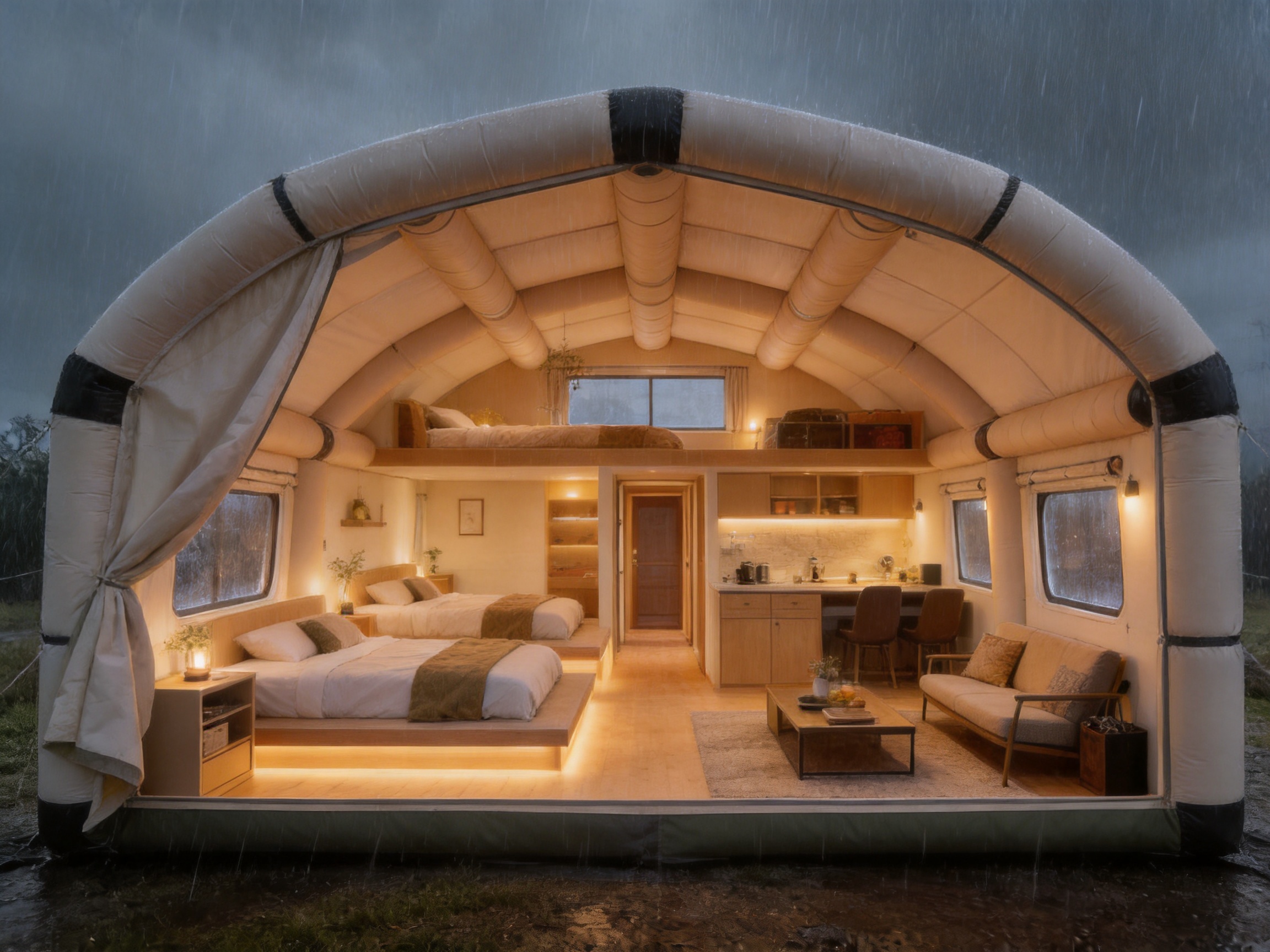
Product development at an experienced outdoor manufacturer should begin with the user’s actual needs. The company describes a professional design team that develops products from the perspectives of practicality and comfort. This approach is particularly relevant to glamping tents, where the product must serve both functional and emotional expectations.
Practicality includes weather performance, setup time, space utilization, durability, ventilation, maintenance, transport, and compatibility with commercial operations. Comfort includes interior height, movement, privacy, airflow, light management, noise perception, and the ability to create a pleasant living environment. A successful air cabin must address both groups of requirements at the same time.
The company’s development process includes collaboration with professionals, testing by outdoor enthusiasts, and continuous optimization based on customer feedback. Field feedback is highly valuable because laboratory evaluation alone cannot reproduce every condition encountered in mountain camps, family camping areas, resorts, or lakeside sites.
Outdoor testers can identify practical issues such as awkward door placement, insufficient storage flexibility, difficult inflation access, inconvenient window operation, or inefficient interior circulation. Feedback from commercial users can reveal different priorities, including housekeeping speed, repeated deployment, staff training, repair access, and guest perception. Integrating these observations helps refine the product beyond its initial concept.
The air cabin’s tunnel structure and modular layout reflect this kind of user-oriented development. A technically strong tent can still perform poorly if its interior is difficult to use. By focusing on spacious living, separate activity zones, ventilation, and fast pitching, the design responds to the way modern outdoor guests actually occupy a tent.
Production Quality and International Standards
The company states that it strictly implements a quality management system and works to ensure that products meet international standards. For buyers, quality management is important because a large tent contains many interdependent components. A defect in a seam, zipper, valve, coating, or attachment point can affect the user’s experience and potentially compromise the whole shelter.
A systematic quality approach may include incoming material checks, production-stage inspections, seam and stitching review, air-system inspection, visual examination, functional setup, and final packing verification. Each stage helps reduce the possibility that an issue will remain hidden until the product reaches the customer or the campsite.
Quality consistency is especially important for wholesale and resort projects. Buyers may order multiple units and expect them to have consistent dimensions, appearance, performance, and accessory compatibility. Repeatable production processes help operators standardize installation, furnishing, staff training, and replacement planning.
For international customers, quality assurance also includes clear product documentation, suitable packaging, protection during transportation, and responsive communication. A factory with overseas operation experience is better positioned to understand that product value includes the entire supply process, not merely the finished tent.
OEM, Wholesale, and Custom Project Potential
The manufacturer positions itself as a one-stop partner for global outdoor brands. This is relevant to companies seeking OEM camping tent wholesale solutions, custom product development, or a reliable supply source for a branded accommodation program.
For wholesale buyers, the 8–10 person air cabin can serve as a core model within a broader product range. Operators may combine it with smaller family tents, backpacking shelters, automatic tents, pet tents, or other specialty structures to address different customer segments. A versatile manufacturing partner can help coordinate product families, materials, packaging, and quality expectations.
For resort projects, customization may involve color selection, branding, interior configurations, window arrangements, accessory packages, or coordinated visual design. Any customization should be evaluated against structural performance, production feasibility, maintenance requirements, and local regulations. The manufacturer’s design and production teams can help balance appearance with practical operation.
OEM cooperation can also support private-label outdoor brands. A brand may develop a distinctive collection around a tunnel air cabin concept while using the factory’s experience in fabric production, inflatable structures, sewing, assembly, and export operations. Clear communication about target markets, quantities, testing expectations, packaging, and delivery schedules is essential for a successful project.
Long-term cooperation can create further benefits. Once a buyer has established a stable model, future orders may become easier to plan. The manufacturer can use feedback from real-world operation to propose improvements, replacement components, revised layouts, or complementary shelters. This turns a single purchase into an ongoing product-development relationship.
Installation and Operational Recommendations
Before installation, select a level and well-drained site that is free from sharp objects, branches, unstable ground, and other hazards. The area should be large enough for the tent, anchoring system, access paths, and safe circulation around the shelter. In a commercial setting, consider emergency access, fire safety, guest privacy, housekeeping movement, and distance from other structures.
Spread the tent carefully and identify the inflation points, doors, windows, anchor points, and air tubes before beginning inflation. Use compatible equipment and follow the manufacturer’s instructions. Inflate the chambers according to the recommended procedure rather than applying uncontrolled pressure.
After inflation, inspect the structure from both inside and outside. Confirm that the air tubes have formed correctly, that the fabric is evenly tensioned, and that doors and windows operate normally. Secure every required anchor and guy line. The tent should not be considered ready for occupancy until the complete installation has been checked.
During use, monitor changes in weather and site conditions. Strong wind, heavy rain, snow, nearby construction, falling branches, or ground saturation may require additional action. Staff should know how to close openings, reinforce anchoring, evacuate guests if necessary, and contact technical support for product questions.
At the end of a stay or season, clean the tent using approved methods and allow all components to dry fully. Inspect fabric, seams, zippers, air tubes, valves, windows, and anchoring points. Small repairs should be addressed promptly. For long-term storage, protect the folded tent from excessive heat, moisture, pests, and sharp objects.
Safety and Responsible Use
The tent is designed as outdoor accommodation, but safe use depends on correct installation and sensible occupancy. Guests should receive clear instructions regarding ventilation, weather response, electrical equipment, cooking, heating, smoking, and emergency exits. Fuel-burning appliances should never be used inside unless specifically approved for that purpose and operated according to all safety requirements.
Capacity should be managed according to the product’s intended configuration and the furniture installed inside. An 8–10 person description refers to accommodation potential, but the practical number may vary depending on sleeping arrangements, social furniture, luggage, and local regulations. Operators should avoid overcrowding access paths or blocking ventilation and emergency openings.
Resort owners should also consider local fire, building, sanitation, accessibility, environmental, and tourism regulations. Requirements vary by region and application. The product’s suitability for a particular site should be reviewed with the relevant authorities and qualified professionals before commercial operation.
Why This Product Fits the Future of Outdoor Hospitality
Outdoor hospitality is moving toward experiences that combine nature with comfort. Guests want access to forests, mountains, lakes, and open landscapes, but many also expect reliable shelter, clean interiors, comfortable sleeping arrangements, and space to socialize. The 8–10 Person Stormproof Hydraulic Inflatable Tunnel Glamping Air Cabin Tent addresses this market by combining the atmosphere of camping with the organization of a temporary cabin.
Its inflatable design supports operational efficiency. Its tunnel profile supports space and wind-conscious performance. Its dual-layer construction and tear-resistant, UPF 50+ fabric address daily outdoor exposure. Its ventilation windows support comfort, while its modular interior helps create a residential environment. Together, these features form a product that is more than a large tent; it is a flexible accommodation platform.
The manufacturing background further strengthens its appeal. A factory with a substantial production area, professional design capability, export experience, patent-related development, quality-management practices, and an established history of outdoor product innovation can provide more than a standard catalog item. It can offer technical cooperation, custom development, and support for buyers building a long-term outdoor business.
For resorts, the product can become a durable and adaptable guest unit. For families, it can provide a generous base for group camping. For expeditions and outdoor programs, it can create a rapid-deployment shelter with meaningful interior capacity. For outdoor brands, it can serve as a foundation for OEM and wholesale development.
Frequently Asked Questions
1. How many people can use the tent?
The tent is designed for approximately eight to ten people. The practical capacity depends on the chosen sleeping arrangement, furniture, luggage, and the amount of social space required. Operators should plan the interior so that entrances, ventilation points, and circulation paths remain clear.
2. What type of tent is this?
It is a glamping and resort tent with an inflatable tunnel air cabin structure. It is intended for spacious outdoor living and can be used for resort accommodation, family camping, expeditions, mountain sites, forest camps, and lakeside locations.
3. How does the inflatable support system work?
The tent uses integrated air tubes rather than relying primarily on a traditional set of rigid poles. A suitable inflation system fills the air chambers, forming the main structural frame. After inflation, the tent must be correctly anchored and inspected before use.
4. What is the advantage of the multi-chamber air tube system?
The multi-chamber design divides the air-supported structure into several sections. This supports a more organized load distribution and provides an additional level of structural redundancy compared with a single-volume air frame. Correct inflation and maintenance are still essential.
5. Is the tent suitable for windy conditions?
The streamlined tunnel structure is designed to offer strong wind resistance, and the product is described as windproof. Performance depends on correct orientation, anchoring, guy-line tension, site selection, and weather management. No tent should be used outside its operating guidance or in unsafe conditions.
6. Is it waterproof?
The tent is described as rainproof and is made for outdoor protection. Users should keep doors and windows properly closed during heavy rain, maintain the fabric and seams, and ensure that the tent is correctly installed. Site drainage and ground conditions also influence interior dryness.
7. Does the tent have separate rooms?
The design includes an integrated modular layout with separate sleeping and social areas. The exact arrangement can be adapted using suitable furniture and internal organization. It is intended to create a residential-style experience rather than a single crowded sleeping compartment.
8. How does the tent stay ventilated?
Ventilation windows are integrated into the design. These openings can support airflow and help manage heat and condensation. Users should operate them according to weather conditions and never block essential ventilation points.
9. What does UPF 50+ protection provide?
UPF 50+ fabric protection helps reduce ultraviolet radiation entering the interior. It can contribute to daytime comfort and support the long-term performance of the exterior material when the tent is properly maintained.
10. Is the fabric durable enough for commercial use?
The product uses high-performance, tear-resistant fabric and is designed as a heavy-duty shelter. Commercial durability also depends on installation, cleaning, storage, guest behavior, weather exposure, and routine inspections. Proper operation is necessary to achieve the best service life.
11. Can the tent be used by resorts and glamping businesses?
Yes. Its spacious interior, fast pitching concept, weather-oriented construction, ventilation, and modular layout make it suitable for glamping resorts and outdoor hospitality projects. Commercial operators should also comply with local planning, safety, fire, and accommodation regulations.
12. Can the manufacturer support OEM or custom orders?
The manufacturer provides outdoor tent design, production, sales, and OEM-oriented cooperation. Buyers can discuss customization requirements such as appearance, layout, branding, materials, packaging, and project quantities with the production and design team.
13. Where is the product manufactured?
The product is manufactured by Ningbo Zhenhai Tiansai Leisure Products Co., Ltd., an outdoor tent enterprise based in Ningbo, Zhejiang Province, China. The company operates a factory covering more than 13,000 square meters and serves customers in international markets.
14. What should buyers check before placing a bulk order?
Buyers should confirm dimensions, capacity, materials, inflation equipment, accessories, packaging, customization, testing requirements, minimum order quantities, lead times, shipping arrangements, warranty terms, spare parts, and after-sales support. A clear technical specification helps prevent misunderstandings.
Conclusion
The 8–10 Person Stormproof Hydraulic Inflatable Tunnel Glamping Air Cabin Tent offers a practical and premium approach to large-capacity outdoor accommodation. Its tunnel form creates a spacious, unobstructed interior, while the inflatable multi-chamber support system enables rapid setup and a streamlined structural design. The dual-layer construction, rainproof and windproof orientation, tear-resistant fabric, UPF 50+ coating, and ventilation windows are suited to changing outdoor conditions.
Its greatest advantage is the way these features work together. The tent is not limited to sleeping; it creates a flexible outdoor living environment with separate social and sleeping potential. That makes it suitable for glamping resorts, family camping, expeditions, mountain retreats, forest camps, lakeside properties, and outdoor events.
The manufacturer strengthens the product proposition through a large production facility, professional design resources, patent-related development, international supply experience, quality-management practices, and a commitment to practical innovation. For distributors, resort operators, outdoor brands, and wholesale buyers, this combination supports both immediate product use and longer-term cooperation.
When installed responsibly and maintained correctly, the air cabin can provide a comfortable, adaptable, and visually distinctive shelter for people who want to experience nature without giving up the space and organization of a cabin-style environment.
References
1. Product information for the 8–10 Person Stormproof Hydraulic Inflatable Tunnel Glamping Air Cabin Tent, including structural features, capacity, materials, ventilation, and intended applications.
2. Company information for Ningbo Zhenhai Tiansai Leisure Products Co., Ltd., including manufacturing background, factory scale, design capability, export experience, and outdoor-product development.
3. General principles of inflatable shelter design, multi-chamber air-frame construction, anchoring, and field maintenance.
4. General guidance on tent ventilation, condensation management, ultraviolet fabric protection, and responsible outdoor accommodation operation.
5. General considerations for glamping resort planning, commercial tent maintenance, guest safety, and seasonal outdoor hospitality management.
Product: 8–10 Person Stormproof Hydraulic Inflatable Tunnel Glamping Air Cabin Tent

Message Us Right Now!
-
Mp: +86-18858091910
E-mail: sales@tenplaytent.com
ADD: No. 529, Guangyuan Road, Xiepu Town, Zhenhai District, Ningbo City, Zhejiang Province, China
-
Quick Links
Home Products About Us Advantage News Contact Us -
Product
Inflatable & Air Tents Glamping & Resort Tents Backpacking & Trekking Tents Automatic & Pop-Up Tents Family & Camping Tents Specialty Tents & Shelters Kids Tents Pet Tents Humanitarian & Large Tents Hammock -
Get Connected
 Camping Tent Manufacturer in China