


 English
 عربى


Why Heavy-Duty Inflatable Canvas Tents Are Redefining Luxury Outdoor Living
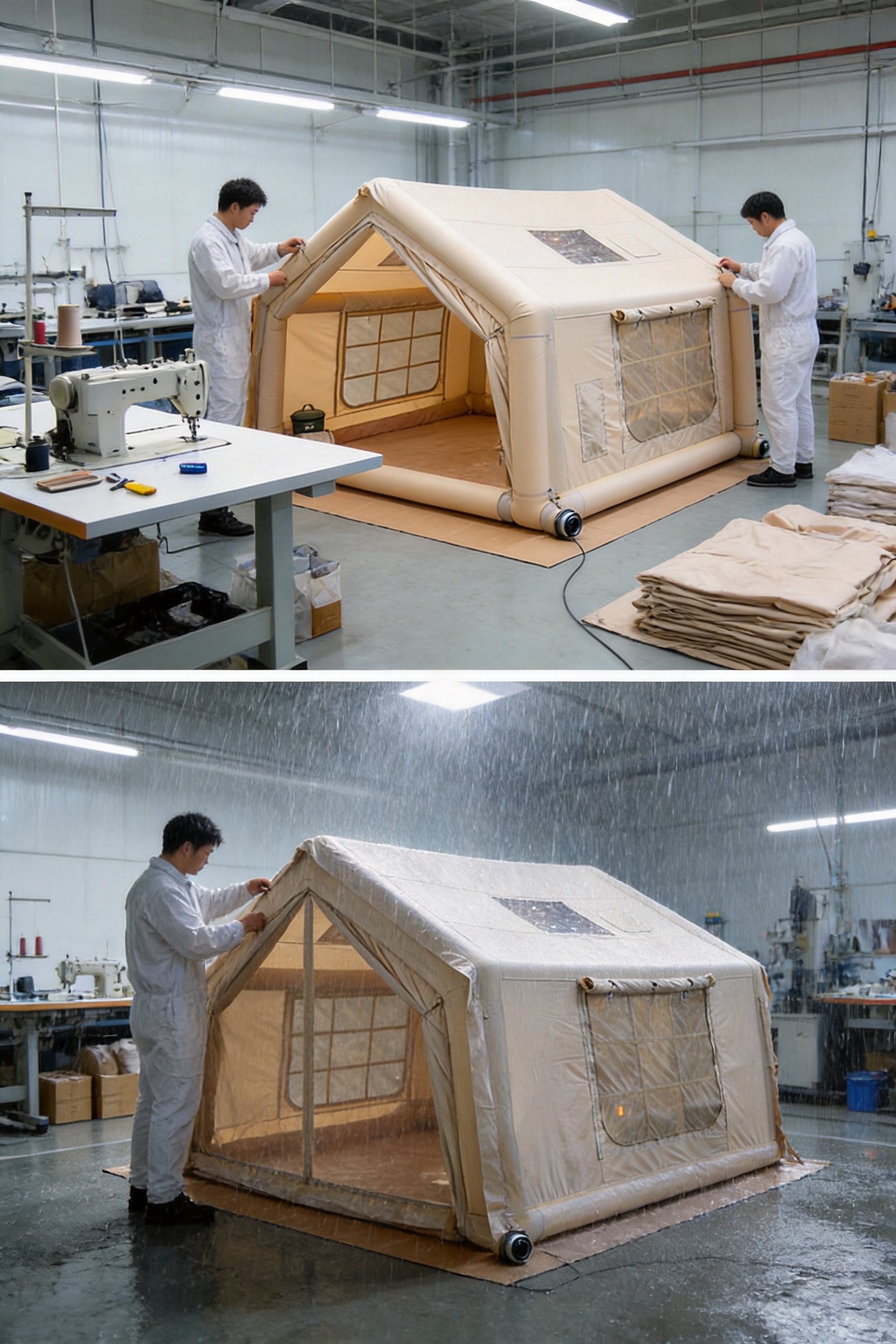
Modern campers increasingly want more than a temporary shelter. They want the freedom to travel into nature while retaining the comfort, space, and atmosphere associated with a well-designed cabin. The Canvas Inflatable Camping Tent Luxury Heavy Duty All Season Cabin responds to this demand by combining traditional canvas aesthetics with contemporary inflatable structural technology. It is intended for families, long-stay campers, glamping operators, outdoor hospitality businesses, and serious enthusiasts who require a spacious shelter capable of supporting extended use in changing weather conditions.
Unlike a basic weekend tent, this inflatable canvas cabin is designed around comfort, durability, and efficient deployment. Its vertical walls create a practical living environment, while its integrated air-column system removes much of the complexity traditionally associated with large tents. The breathable canvas shell contributes to a more pleasant interior climate, and the reinforced floor and stitched construction are intended to provide greater protection against moisture and demanding outdoor conditions.
This combination gives the product a distinctive position within the tent market. It is more substantial and residential than a lightweight backpacking shelter, more adaptable than a fixed cabin, and more visually refined than many synthetic inflatable tents. It also demonstrates how advanced manufacturing can improve the usability of large outdoor structures without abandoning the warm, traditional character that makes canvas camping so appealing.
A New Category of Outdoor Accommodation
Large camping tents have traditionally required a compromise. A shelter may be light and easy to transport but cramped inside, or it may offer generous living space while requiring numerous poles, several people, and significant setup time. Canvas tents often provide excellent comfort and visual appeal, but their weight can make assembly and transportation more demanding. Inflatable tents simplify structural assembly, yet some models use thin synthetic materials that do not provide the atmosphere or long-term feel associated with a premium canvas shelter.
The product described here is designed to bring these benefits together. Its canvas body offers a natural, heritage-inspired appearance and a breathable interior environment. Its pneumatic air columns provide the main structural support, reducing dependence on a complicated framework of rigid poles. Its cabin-style layout gives occupants usable standing height and enough room to arrange beds, chairs, tables, storage, and other camping equipment.
This is not simply a tent with an air pump. It is a shelter concept built around residential comfort. The design treats the campsite as a temporary living environment rather than a place to sleep for a single night. That difference affects nearly every detail, including wall geometry, fabric selection, floor protection, seam construction, ventilation, and deployment procedures.
Core Product Advantages
Breathable Canvas for a More Comfortable Interior
The principal material advantage is the use of specialized water-repellent canvas. Canvas is valued by experienced campers because it can create a softer and more natural interior atmosphere than many lightweight plastic-based fabrics. When properly engineered, woven canvas can help moderate temperature changes and reduce the enclosed, clammy feeling that may occur in smaller synthetic tents.
The material used for this cabin is described as a high-density, breathable fabric with water-repellent properties. This combination is important because weather protection and breathability must work together. A shelter that blocks rain but traps warm, humid air can become uncomfortable, especially when several people are sleeping inside. Breathable fabric allows a portion of internal moisture to migrate outward, helping reduce condensation when the tent is correctly ventilated and pitched.
The canvas construction also contributes to the product’s visual identity. Its texture and weight create a more substantial appearance than thin nylon or polyester. For glamping resorts, event sites, and premium outdoor accommodations, this can be a significant commercial advantage. Guests often evaluate a tent before entering it, and a well-finished canvas exterior communicates permanence, quality, and comfort.
Inflatable Structural Support
The integrated air-column system is one of the product’s clearest functional advantages. Large conventional tents may require multiple poles, connectors, guy lines, and several people to hold sections in place during assembly. An inflatable structure replaces much of this process with a pneumatic framework that can be raised using an appropriate high-pressure pump.
When the air columns are inflated correctly, they create a stable frame with fewer individual rigid components to transport and organize. This can make a major difference for families, hospitality staff, and users who frequently move between campsites. It also reduces the likelihood of losing a small connector or incorrectly joining a pole section.
The air-supported design is especially useful when the tent is large. A large canvas cabin can be difficult to lift and position during setup, but the inflatable frame allows the shell to be progressively supported as the columns rise. The result is a deployment process that is more manageable than assembling an equivalent pole-supported structure, although users must still follow the recommended anchoring, inflation, and weather procedures.
Inflatable support also gives the tent a distinctive profile. Instead of relying on a visible network of rigid poles, the structure can maintain a clean and continuous silhouette. This creates an appearance that is both contemporary and compatible with the classic cabin form.
Vertical Walls and Efficient Use of Space
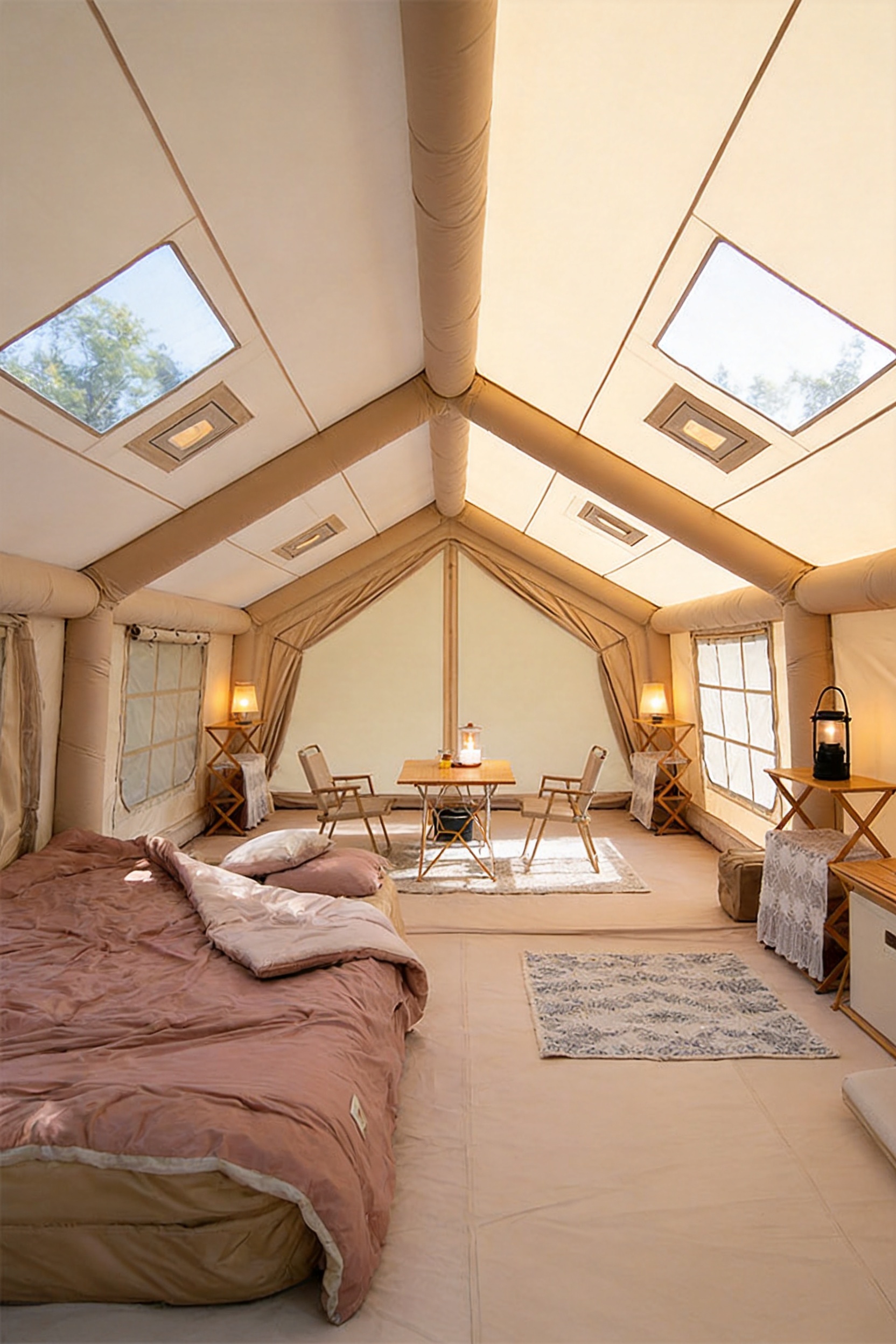
Many camping tents lose usable space because sloping walls push occupants toward the center. The cabin design addresses this issue with a high-volume interior and vertical wall architecture. The practical result is a larger area in which people can stand, move, sit, and organize equipment.
Vertical walls are particularly valuable for long stays. A low, sloping shelter may be suitable for sleeping, but it becomes tiring when occupants must spend hours inside during rain or cold weather. A cabin-style interior can accommodate separate areas for sleeping, dining, storage, and relaxation. Families can create zones for children and adults, while glamping operators can furnish the interior with beds, rugs, chairs, tables, and decorative elements.
The design can also improve accessibility. Standing-height space makes dressing, preparing meals, and organizing luggage easier. Users do not need to crawl across the floor or repeatedly bend under a low roof. This is an important distinction between a premium family shelter and a lightweight touring tent.
All-Season Weather Protection
The tent is designed for use across multiple seasons, with a combination of water-repellent canvas, reinforced flooring, and double-stitched seams. No tent should be considered invulnerable to extreme weather, and correct site selection remains essential, but the construction is intended to provide a strong level of protection for ordinary rain, wind, changing temperatures, and damp ground conditions.
The reinforced PVC groundsheet forms a protective barrier between the interior and the campsite surface. It helps reduce the risk of ground moisture entering through the base and provides a more durable platform for furniture and daily movement. A strong floor is especially important in a large tent because occupants walk across it frequently, place heavier equipment inside, and may remain in the shelter for longer periods.
Double-stitched seams add another layer of reliability. Seams are among the most vulnerable areas of any fabric shelter because they combine separate panels and may be exposed to tension, water, and repeated folding. Reinforced stitching is therefore an important manufacturing feature rather than a purely decorative detail.
The canvas shell is also intended to provide UV protection and a degree of acoustic insulation. By reducing the direct impact of sunlight and softening some exterior noise, the material may contribute to a calmer interior environment. This is valuable at busy campsites, festivals, resorts, and family recreation areas where comfort depends not only on temperature but also on the overall atmosphere.

Canvas Inflatable Camping Tent Luxury Heavy Duty All Season Cabin
How the Product Compares with Other Tent Types
Compared with Lightweight Backpacking Tents
Backpacking tents are designed around low weight and compact packing. They are excellent for hikers who carry all equipment over long distances, but their priorities differ from those of a cabin-style inflatable canvas shelter. Backpacking tents generally provide limited headroom, smaller floor areas, and fewer opportunities for furniture or internal zoning.
The inflatable canvas cabin is not intended to replace an ultralight trekking shelter. Its advantage lies in living comfort, spaciousness, durability, and longer-term use at an established campsite. A family arriving by car, a glamping operator furnishing a guest site, or an expedition team creating a comfortable basecamp may value these characteristics more than minimum packed weight.
Compared with Conventional Pole Tents
Traditional pole tents remain popular because they are familiar and can be highly dependable. However, large pole tents often involve more parts and a more complicated assembly sequence. Poles must be connected, sleeves aligned, and the roof supported while the structure is anchored. In poor weather or limited space, this process can be inconvenient.
The air-column system can reduce setup complexity and make the tent more accessible to users who do not have extensive camping experience. It also minimizes the number of long rigid components that need to be packed and transported. This does not eliminate preparation: the ground must still be selected carefully, guy lines must be secured, and the tent must be inflated to the proper pressure. Nevertheless, the overall workflow is more streamlined.
Compared with Lightweight Synthetic Inflatable Tents
Synthetic inflatable tents may be lighter and quicker to dry than canvas models. They can be suitable for short holidays and frequent touring. The trade-off is that lightweight synthetic fabric may offer a different interior atmosphere and may not provide the same visual sense of permanence or acoustic softness.
The canvas inflatable cabin is positioned toward users who want the convenience of air support without giving up the character of a heavy-duty fabric shelter. It is intended to feel more like a temporary outdoor room than a technical shell. This is a meaningful distinction for glamping projects, seasonal camps, family retreats, and hospitality businesses that depend on a premium guest experience.
Compared with Fixed Cabins and Permanent Structures
A permanent cabin can provide excellent comfort, but it requires land, construction, permits, maintenance, and a fixed location. The inflatable canvas cabin offers a more flexible alternative. It can be installed for a season, moved to another site, or packed away when not in use.
This mobility allows businesses and landowners to test a new campsite layout without committing to permanent construction. It can also support temporary events, outdoor education programs, hunting or fishing bases, emergency accommodation, and seasonal resort expansion. The shelter does not provide all the utilities of a building, but it can deliver a substantial living environment with far less infrastructure.
Manufacturing Strengths Behind the Product
Integrated Design and Product Development
The manufacturer, Ningbo Zhenhai Tiansai Leisure Products Co., Ltd., specializes in the design, production, and sales of tents and outdoor equipment. Its operations are based in Ningbo, Zhejiang Province, an important manufacturing and port region in China. The company reports a factory covering more than 13,000 square meters, giving it a substantial foundation for product development, material handling, assembly, inspection, and export preparation.
A large manufacturing site is valuable when producing complex tents because quality depends on coordinated work across several stages. Fabric inspection, cutting, printing where applicable, stitching, air-column fabrication, component assembly, finished-product checking, and packing must be managed consistently. Large shelters also require sufficient space for partial and complete erection during inspection.
The company’s design approach is centered on practical outdoor use. Products are developed with attention to comfort, usability, and performance rather than appearance alone. Collaboration with outdoor professionals and testing involving users can reveal issues that may not be visible during an initial design review. Feedback concerning ventilation, access, assembly, storage, durability, and interior layout can then inform future revisions.
Advanced Fabric Cutting and Panel Construction
A premium tent begins with accurate pattern development. Large panels must be cut to consistent dimensions so that tension is distributed evenly when the shelter is erected. Inaccurate cutting can lead to wrinkles, uneven loading, poor fit, or unnecessary stress around attachment points.
Modern tent manufacturing combines digital pattern planning with controlled cutting procedures. Efficient nesting of panels reduces material waste, while repeatable cutting improves consistency between production batches. For a cabin tent, the process must account for windows, doors, ventilation panels, floor connections, roof sections, reinforcement patches, and air-column attachment points.
Canvas fabrics also require careful handling. Their weight and woven structure can create different sewing requirements from lightweight polyester. Needles, thread, stitch length, seam allowances, and reinforcement methods must be selected according to the fabric’s thickness and expected loads. Areas exposed to tension, such as corners, guy-line points, door edges, and air-column interfaces, generally require additional reinforcement.
Precision Sewing and Reinforced Seams
Double-stitched seams are a stated feature of the product, but reliable seam construction involves more than simply adding a second row of thread. Stitch alignment, thread tension, panel overlap, reinforcement patches, and finishing quality all influence long-term performance.
Manufacturing teams must maintain consistent tension while sewing large, heavy panels. If the fabric is pulled unevenly, the finished shell may not sit correctly on the frame. Skilled operators and suitable industrial sewing equipment are therefore essential. Quality control may include checking seam straightness, inspecting skipped stitches, confirming reinforcement placement, and examining areas where multiple panels meet.
For outdoor products, seam quality also affects water resistance. The final performance depends on the fabric treatment, thread selection, seam design, and any sealing or finishing process used. A professionally constructed seam reduces the risk of premature leakage and helps the shelter maintain its shape during repeated use.
Air-Column Engineering and Valve Integration
The inflatable frame is a central technical component. Air tubes must be manufactured from materials capable of holding pressure while remaining flexible enough for folding, packing, and deployment. Their attachment to the canvas shell must be strong because the columns transfer structural loads into the fabric body.
The product description emphasizes high-pressure pneumatic construction, military-grade air valves, and puncture-resistant tubes. In practical terms, these features are intended to improve inflation reliability, pressure retention, and resistance to accidental damage during normal use. Valve placement also matters. A well-positioned valve allows users to connect the pump efficiently, monitor the inflation process, and deflate the system without unnecessary handling.
Air-column systems require careful testing because a small defect may not be visible when the tube is uninflated. Manufacturers can inspect tubes for leaks, check valve attachment, and test pressure retention before the product is packed. Testing may be carried out on individual air beams and on the fully assembled shelter, depending on the production procedure.
The use of air support also requires clear user guidance. Inflation pressure, pump compatibility, anchoring, storage, and repair procedures should be explained in the product documentation. A well-designed shelter is supported by a complete user experience that helps customers operate it safely and efficiently.
Floor and Groundsheet Integration
Connecting the reinforced PVC groundsheet to the upper tent structure requires attention to both waterproofing and mechanical strength. The floor is exposed to abrasion, dirt, moisture, furniture legs, footwear, and repeated folding. It must be flexible enough for packing but robust enough for regular occupancy.
Manufacturing controls should include inspection of floor seams, corner transitions, door thresholds, and attachment points. These areas can experience concentrated stress. A smooth transition between wall and floor also helps prevent water from collecting in vulnerable locations.
The groundsheet contributes to comfort as well as protection. It creates a cleaner and more stable interior surface, helps separate occupants from cold or wet ground, and supports the use of beds and furniture. In a large family or glamping tent, this foundation is one of the most important differences between a premium accommodation unit and a basic shelter.
Quality Management and International Supply Capability
The manufacturer reports that it operates a quality management system intended to ensure that products meet international standards. For global buyers, systematic quality control is important because tents may be sold into different climates, markets, and usage environments. Export customers also need reliable documentation, packaging, production scheduling, and communication.
Ningbo’s port infrastructure provides logistical advantages for an export-oriented outdoor products company. Finished tents can be prepared for shipment to customers in North America, Europe, Asia, and other regions. International supply capability is not limited to shipping. It also includes product consistency, packaging protection, export coordination, after-sales communication, and the ability to support wholesale or OEM relationships.
The company’s experience as a designated global supplier for an established British outdoor brand demonstrates its involvement in international manufacturing partnerships. Such relationships generally require attention to product specifications, production schedules, inspection procedures, and brand requirements. They can also strengthen a factory’s understanding of global market expectations.
The company states that it has obtained a number of appearance patents and utility model patents. These intellectual property achievements indicate an emphasis on product development and structural innovation. For buyers, the practical value is that the manufacturer is not limited to copying standard tent formats. It can participate in the development of distinctive products for outdoor brands, distributors, resorts, and other commercial customers.
Performance in Different Outdoor Applications
Family Camping
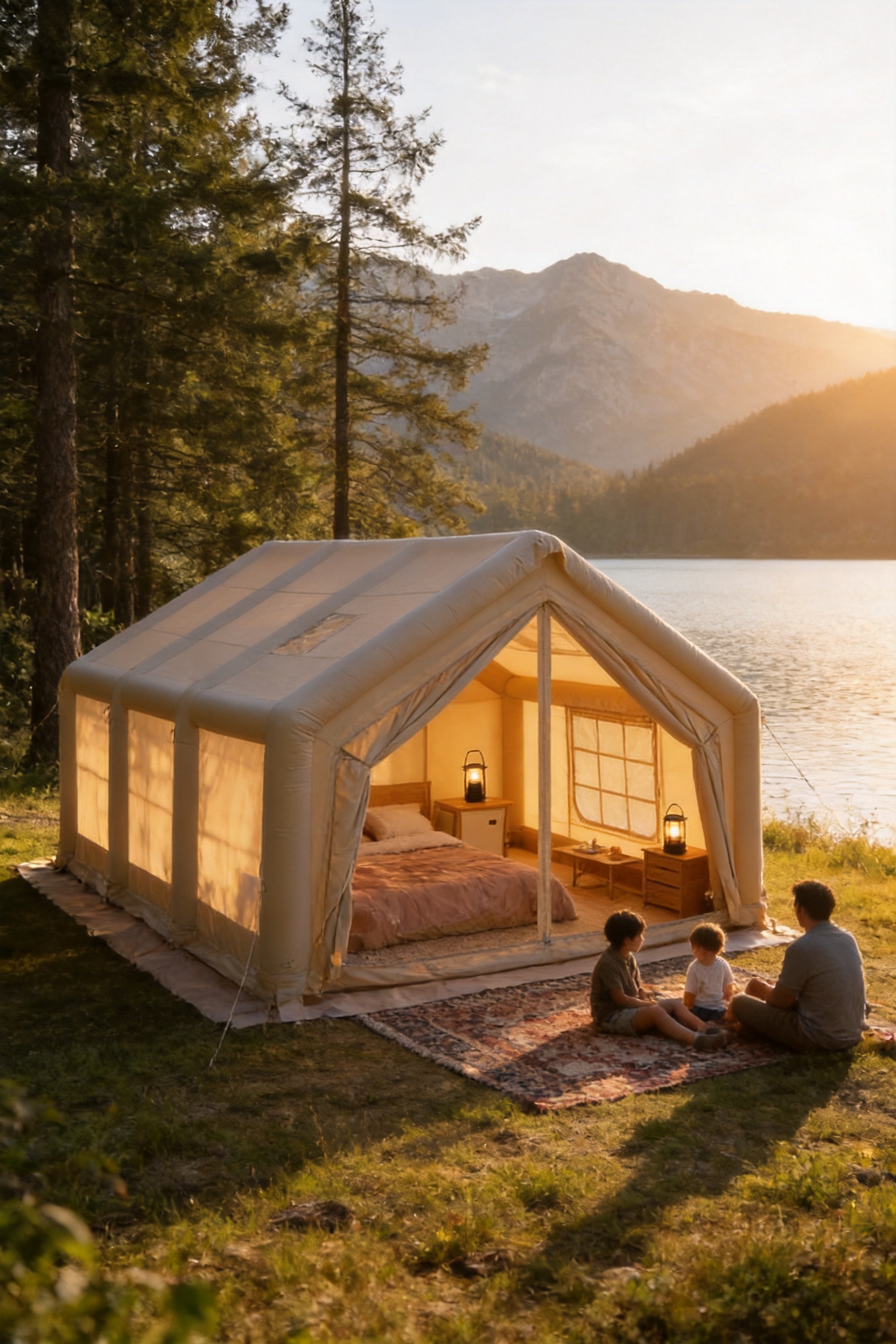
For families, interior space is often more important than the smallest packed size. Children need room to move, adults need a practical area for organizing supplies, and everyone benefits from a dry place to sit during bad weather. The cabin layout supports these needs through standing height, vertical walls, and the possibility of creating separate functional zones.
Parents can organize sleeping areas away from storage or dining equipment. The high-volume interior may also accommodate portable wardrobes, folding tables, chairs, rugs, and lighting. This flexibility can make a multi-day holiday less stressful, particularly when weather prevents outdoor activities.
Glamping and Resort Accommodation
The product is well suited to glamping because its appearance and interior proportions support a more elevated guest experience. Operators can furnish the tent with beds, seating, decorative textiles, lighting, and storage. The breathable canvas creates a warm visual character that appeals to guests seeking an authentic outdoor experience without sacrificing comfort.
For resort operators, the ability to install and relocate units can support seasonal planning. A property may add accommodation during a busy period, test a new site, or rearrange the guest area without constructing permanent buildings. The tent’s appearance can also complement natural landscapes, farms, forests, lakeside properties, and adventure destinations.
Commercial operators should establish their own procedures for foundations, anchoring, inspection, cleaning, fire safety, local regulations, and weather limitations. The product’s heavy-duty construction supports demanding use, but a successful hospitality installation depends on proper site management and maintenance as well.
Expeditions and Basecamps
Expedition users need more than basic sleeping space. A basecamp may serve as a dining area, planning room, equipment store, medical area, or team meeting point. The cabin design provides the volume needed for these activities, while air-supported deployment can simplify installation when time and labor are limited.
The canvas shell can also create a more stable environment for extended occupation. When teams remain in one location for days or weeks, the difference between a cramped shelter and a spacious, breathable cabin becomes significant. The ability to stand, move, dry clothing, and organize equipment can improve both comfort and operational efficiency.
Outdoor Events and Temporary Facilities
Event organizers can use large inflatable canvas structures as temporary hospitality areas, staff rooms, workshop spaces, registration shelters, or private rest areas. Their visual appeal can be an advantage when the shelter forms part of an event’s presentation. The cabin shape feels more finished than a basic canopy, while the inflatable frame can reduce setup labor compared with a large pole structure.
Events require careful planning around crowd flow, emergency access, anchoring, ventilation, electrical equipment, and weather forecasts. However, the product’s flexible interior makes it suitable for a wide range of temporary applications where a weather-protected room is needed.
Humanitarian and Remote Support Use
Large tents are also used in emergency response, field operations, temporary education, medical support, and remote work environments. The combination of rapid deployment, spacious interior, and durable construction can be useful where permanent facilities are unavailable or delayed.
Any humanitarian deployment requires assessment of local climate, fire safety, hygiene, accessibility, transport, anchoring, and maintenance resources. The cabin’s breathable fabric and protected floor may contribute to occupant comfort, while its air-supported structure can reduce the number of rigid components required in transit. Custom configurations may be appropriate for specialized institutional needs.
Practical Deployment and Care
Site Selection
The performance of any large tent begins with the campsite. Users should select level ground free of sharp stones, branches, roots, and objects that could damage the floor or air tubes. Areas with natural drainage are preferable, while low points where water can collect should be avoided.
The tent should be positioned with consideration for prevailing wind, sunlight, access routes, nearby trees, and overhead hazards. A sheltered position can reduce wind loading, but the site should not be placed beneath unstable branches or in a location vulnerable to flash flooding. Proper anchoring is essential even when the air columns feel rigid.
Inflation and Anchoring
Users should lay out the tent carefully before inflation and confirm that doors, windows, and fabric panels are not trapped or twisted. The air columns should be inflated with the recommended pump and checked for correct pressure. Overinflation can place unnecessary stress on components, while insufficient inflation may reduce stability and cause the shell to sag.
Anchoring should be completed according to the instructions before or during deployment, depending on the manufacturer’s procedure and weather conditions. Guy lines should be positioned to distribute forces evenly. In windy environments, additional attention should be given to corner points, high-load areas, and the direction of expected gusts.
Ventilation and Condensation Control
Breathable canvas can help manage internal moisture, but no fabric can eliminate condensation under all conditions. Occupants produce water vapor through breathing, cooking, wet clothing, and normal activities. Ventilation openings should therefore be used appropriately, especially during sleep or when cooking equipment is present.
Keeping wet gear organized and avoiding indoor combustion appliances without proper ventilation can improve air quality and reduce moisture. If condensation appears, users should increase airflow and allow the tent to dry before long-term storage.
Cleaning and Storage
After use, loose dirt should be removed with a soft brush or according to the manufacturer’s cleaning guidance. Harsh chemicals may damage fabric treatments, coatings, stitching, or PVC components. The tent should be completely dry before packing whenever possible. Storing a damp canvas shelter can encourage mildew and unpleasant odors.
Air tubes should be deflated carefully rather than forced into sharply folded positions. The packed tent should be stored in a cool, dry place away from direct sunlight, excessive heat, rodents, and sharp objects. Periodic inspection of seams, valves, guy points, floor edges, and fabric treatments can identify small problems before they become serious.
Repair and Maintenance Planning
One advantage of a serviceable heavy-duty product is that many ordinary issues can be addressed through maintenance rather than complete replacement. A puncture repair kit may be used for suitable air-column damage, while small fabric issues may be repaired with approved patches or professional sewing. Repairs should follow the manufacturer’s instructions, and structural or extensive damage should be assessed by a qualified service provider.
Commercial operators should maintain inspection records. A simple log can record installation dates, weather exposure, cleaning, repairs, valve checks, and storage condition. This is particularly useful for glamping businesses and rental companies that need consistent safety and presentation standards.
Customization and OEM Potential
The manufacturer’s experience in design and international production creates opportunities beyond the standard product. Outdoor brands and distributors may seek custom colors, branding, layouts, windows, doors, ventilation systems, flooring arrangements, packaging, or accessory combinations. A factory with in-house development capabilities can help evaluate whether a requested change is practical and cost-effective.
Customization should begin with a clear definition of use. A family camping model may prioritize simple setup and flexible sleeping space, while a resort model may require enlarged doors, furniture compatibility, improved guest privacy, or enhanced visual branding. A humanitarian model may need different flooring, partitions, or transport packaging.
Material selection is also part of OEM development. Buyers may request alternative canvas weights, color treatments, synthetic reinforcements, PVC specifications, or insulation components. Each change can affect packed weight, durability, drying time, appearance, manufacturing cost, and weather performance. The best development process evaluates the entire system rather than focusing on one feature in isolation.
Prototyping and field testing are especially important for custom products. A design may appear successful on a computer drawing but behave differently when fully inflated, furnished, transported, or exposed to rain and wind. Testing by outdoor professionals and representative users helps identify practical improvements before mass production.
| Evaluation Area | Inflatable Canvas Cabin | Lightweight Backpacking Tent | Conventional Large Pole Tent |
|---|---|---|---|
| Primary Strength | Residential comfort, durable canvas, and simplified structural deployment | Low weight and compact portability | Familiar construction and broad design availability |
| Interior Use | Standing-height living space with room for furniture and separate zones | Primarily sleeping and basic gear storage | Can provide large space but may require more assembly |
| Setup Method | Inflated air columns with anchoring and fabric adjustment | Lightweight poles and compact components | Multiple rigid poles, sleeves, connectors, and guy lines |
| Material Character | Breathable, substantial canvas with a premium heritage appearance | Lightweight technical synthetic fabric | Varies by model, often synthetic or traditional canvas |
| Best-Suited Users | Families, glamping operators, resorts, basecamps, and long-stay campers | Hikers, trekkers, and minimalist travelers | Campers who prefer established pole-based systems |
| Commercial Potential | Strong for premium accommodation, OEM, events, and seasonal facilities | Usually focused on individual retail customers | Suitable for events and accommodation where labor is available |
Why Manufacturing Quality Matters to Buyers
Product descriptions can communicate materials and features, but manufacturing quality determines whether those features remain useful after repeated deployment. A breathable canvas shell must be cut and sewn accurately. An air frame must retain pressure and connect securely to the body. A PVC groundsheet must withstand movement and moisture. Reinforcements must be placed where forces actually occur.
For this reason, buyers should evaluate a supplier’s complete capabilities rather than comparing only the visible retail price. Relevant questions include whether the factory performs fabric inspection, how air tubes are tested, how seams are checked, whether finished products are erected before shipment, and how replacement parts or repairs are supported.
Production experience with international customers can also reduce communication risks. Clear specifications, drawings, sample approvals, inspection stages, packaging requirements, and shipping documentation are vital to successful wholesale orders. A supplier that combines design, manufacturing, quality management, and export experience can provide a more complete solution than a trading business with limited production control.
The company’s stated commitment to research and development, environmentally conscious materials, and product innovation is relevant to the future of outdoor equipment. Customers increasingly expect products to last longer, use materials responsibly, and deliver meaningful improvements rather than superficial changes. Durable shelters that remain useful for many seasons can reduce replacement frequency and support more sustainable purchasing decisions.
Comfort, Durability, and Sustainability
A durable tent can have environmental benefits because its useful life is extended. Replacing a failed shelter after one or two seasons creates additional material consumption, packaging waste, and transport demand. A heavy-duty cabin designed for repeated use can offer better long-term value when maintained properly.
Canvas also has a distinctive aging process. Rather than appearing disposable, a well-cared-for canvas shelter can develop character through use. This quality is especially attractive to glamping operators and outdoor enthusiasts who value authenticity. However, durability should not be confused with neglect. Proper drying, cleaning, storage, and inspection remain necessary to preserve the fabric and structural components.
The manufacturer’s stated focus on lightweight and environmentally friendly materials suggests an ongoing effort to balance performance with resource responsibility. In a large tent, reducing unnecessary material weight can improve transportation efficiency, while selecting durable fabrics can support a longer service life. Product development must consider the full lifecycle, including manufacture, shipment, use, repair, and eventual disposal.
Business Value for Global Buyers
For wholesalers, retailers, and outdoor brands, the product occupies a premium but practical market segment. It can appeal to customers who are willing to invest more than they would for a basic family tent because they expect better comfort, longer use, and a more distinctive experience.
Glamping is one of the clearest commercial applications. Guests often judge value through the combination of atmosphere, space, privacy, furnishings, and weather confidence. A large inflatable canvas tent can form the basis of a memorable accommodation unit, particularly when paired with suitable beds, lighting, furniture, and outdoor amenities.
Resorts can also use the product as a flexible expansion tool. Instead of constructing additional cabins immediately, operators may install seasonal tent units and measure demand. If a location becomes successful, the tents can remain part of the accommodation strategy or be moved to another site as the business evolves.
Retailers may position the shelter toward premium family camping, luxury outdoor living, overlanding, fishing camps, hunting lodges, and event accommodation. Its broad appeal comes from the fact that it is not restricted to one narrow activity. The same structural and material qualities can serve leisure, hospitality, commercial, and institutional users.
For OEM buyers, cooperation with an experienced tent manufacturer can shorten the path from concept to finished product. A supplier that understands fabrics, air structures, sewing, testing, and export logistics can help transform a design idea into a manufacturable product. This can be more efficient than coordinating separate vendors for the shell, air frame, flooring, and packaging.
Q&A
What is the main purpose of this inflatable canvas cabin?
The shelter is designed to provide a spacious, comfortable, and durable outdoor living environment. It is suitable for family camping, glamping, resort accommodation, expeditions, events, seasonal facilities, and other applications where a large temporary room is required.
How does the inflatable frame differ from a pole system?
The inflatable frame uses air columns as structural supports instead of relying primarily on a network of rigid poles. This can simplify setup, reduce the number of separate components, and make the deployment of a large shelter more manageable. The tent must still be anchored correctly and inflated according to the recommended procedure.
Is the tent suitable for year-round use?
The product is designed as an all-season shelter using water-repellent canvas, reinforced flooring, and strong seam construction. Actual suitability depends on local weather, site conditions, anchoring, ventilation, and correct maintenance. Extreme storms, heavy snow, flooding, or hazardous conditions require specific assessment and may exceed the intended operating environment.
Does canvas prevent condensation completely?
No. Breathable canvas can help regulate internal moisture and may reduce the enclosed feeling associated with some synthetic fabrics, but condensation can still occur. Ventilation, occupant behavior, wet clothing, cooking, temperature differences, and local humidity all influence condensation levels.
What makes the interior more comfortable than a small technical tent?
The cabin design provides vertical walls, high-volume space, standing height, and room for separate sleeping, storage, dining, and relaxation zones. These features allow occupants to move more naturally and arrange furniture, making the shelter suitable for longer stays.
Who is the product best suited to?
It is best suited to users who prioritize comfort and durability over minimum packed weight. Typical users include families, glamping businesses, resorts, outdoor event organizers, expedition teams, seasonal camp operators, and premium camping enthusiasts.
Can the tent be customized for a commercial project?
Customization may be possible depending on production requirements. Potential areas include color, branding, layout, doors, windows, ventilation, floor construction, packaging, and accessory combinations. Commercial buyers should discuss drawings, minimum order quantities, sample approval, testing, and production schedules with the manufacturer.
How should the tent be stored after use?
The tent should be cleaned according to the care instructions and dried completely before packing whenever possible. It should be stored in a cool, dry place away from direct sunlight, heat, sharp objects, and pests. Air columns, valves, seams, and floor edges should be inspected regularly.
Is the shelter easy for one person to install?
The air-supported design is intended to simplify deployment compared with a large multi-pole tent, but the shelter’s size and weight may still make two or more people helpful, particularly when positioning the fabric, anchoring the corners, and adjusting guy lines. Users should follow the manufacturer’s setup guidance.
What should buyers evaluate before placing a wholesale order?
Buyers should review fabric specifications, air-column construction, floor materials, seam quality, pressure testing, sample approval procedures, packaging, replacement parts, production capacity, quality controls, inspection options, delivery terms, and after-sales support. They should also confirm that the design is appropriate for the intended climate and application.
Conclusion
The Canvas Inflatable Camping Tent Luxury Heavy Duty All Season Cabin represents a practical evolution in large outdoor shelter design. It combines the warmth and visual appeal of traditional canvas with the deployment advantages of an inflatable structural system. Its vertical walls and generous interior create a genuine living space, while its reinforced floor, water-repellent fabric, and double-stitched construction support demanding outdoor use.
Its advantages become especially clear when compared with conventional alternatives. It offers more comfort than a backpacking tent, a simpler structural concept than many large pole tents, and a more substantial atmosphere than lightweight synthetic inflatables. It cannot replace every type of shelter, but it occupies a valuable position for people who want a movable outdoor cabin rather than a minimal sleeping enclosure.
The manufacturer’s capabilities further strengthen the product proposition. With a large Ningbo production base, experience in tent design and international supply, stated quality management procedures, patent development, professional design resources, and OEM potential, the company is positioned to serve both individual product demand and commercial projects.
For families, it can make extended camping more comfortable. For glamping operators, it can create an attractive accommodation unit. For resorts, event planners, expedition teams, and outdoor brands, it provides a flexible platform that can be adapted to different operational needs. When correctly installed, maintained, and used within suitable weather conditions, this heavy-duty inflatable canvas cabin offers a compelling balance of luxury, mobility, durability, and modern manufacturing efficiency.
References
1. Product information supplied for the Canvas Inflatable Camping Tent Luxury Heavy Duty All Season Cabin.
2. Manufacturer information supplied for Ningbo Zhenhai Tiansai Leisure Products Co., Ltd.
3. General principles of outdoor tent design, fabric performance, seam construction, and inflatable structural systems.
4. General guidance on campsite selection, tent anchoring, ventilation, condensation control, cleaning, and storage.
5. General considerations for glamping accommodation, seasonal outdoor facilities, OEM product development, and international tent manufacturing.
Product: Canvas Inflatable Camping Tent Luxury Heavy Duty All Season Cabin

Message Us Right Now!
-
Mp: +86-18858091910
E-mail: sales@tenplaytent.com
ADD: No. 529, Guangyuan Road, Xiepu Town, Zhenhai District, Ningbo City, Zhejiang Province, China
-
Quick Links
Home Products About Us Advantage News Contact Us -
Product
Inflatable & Air Tents Glamping & Resort Tents Backpacking & Trekking Tents Automatic & Pop-Up Tents Family & Camping Tents Specialty Tents & Shelters Kids Tents Pet Tents Humanitarian & Large Tents Hammock -
Get Connected
 Camping Tent Manufacturer in China