


 English
  عربى
عربى 

How Does a Dome Tent Manufacturer Create Reliable Outdoor Dome Structures
Dome tent structures show up in different outdoor projects where ground conditions and weather are not consistent. Some are used for stay-based environments, others for temporary space setups. What stays consistent is the need for structure that can hold shape without relying on heavy internal support.
In many projects handled by a Dome Tent Manufacturer, the focus is less about appearance alone and more about how the structure behaves once it is placed on site. Wind direction, surface exposure, and even installation method all start to matter at the same time.
What Makes a Dome Tent Structure Suitable for Different Outdoor Environments
The behavior of a dome shape in open space is not random. The curved surface tends to guide airflow instead of stopping it abruptly, which changes how pressure builds up on the structure.
In real use, the environment is never uniform. A site near open land feels different from one surrounded by trees or near water. The structure ends up reacting differently depending on how air moves through the space.
A Dome Tent Manufacturer usually has to look at several practical points rather than theoretical ones:
- how the ground reacts when load is spread across it
- whether wind hits the structure directly or indirectly
- how exposed the site is during long use cycles
- whether the internal space needs to stay stable under movement outside
None of these work alone. They tend to overlap once installation starts.
How Dome Tent Manufacturers Design Frames for Wind and Snow Load Conditions in Real Projects
Frame design is mostly about keeping balance when outside pressure keeps changing. If one side carries more force than expected, the structure starts to shift slightly, even if it is not visible at first.
In practice, engineers adjust frame layout based on how load travels through the shape rather than just strengthening random points.
Typical focus areas used by a Dome Tent Manufacturer include:
- connection points where force tends to gather
- transition zones between curved segments
- material choice depending on long exposure to weather
- how evenly the frame follows dome geometry
There is usually no single adjustment that solves everything. It is more of a combined structure response.
Which Materials Used in Dome Tent Membranes Affect Durability Transparency and Maintenance Needs
Membrane choice changes how the whole structure feels in use. Some surfaces allow more light in, others stay more closed and controlled. The difference is not just visual, it also affects how often the surface needs attention.
| Material Type | Visual Character | Surface Behavior | Maintenance Pattern |
|---|---|---|---|
| Coated fabric | Slightly muted light | Handles general exposure well | Needs periodic surface care |
| Film-based surface | Brighter internal lighting | More sensitive to contact marks | Requires careful handling |
| Composite membrane | Balanced light control | Adjusts better to mixed climates | Inspection at intervals recommended |
A Dome Tent Manufacturer usually selects material based on how the structure will actually be used day to day, not just how it looks when newly installed.
How Dome Tent Manufacturing Processes Influence Long Term Performance and Structural Stability
Small differences in manufacturing often show up later on site. Parts that seem identical during production may behave differently once assembled if tolerances are not consistent.
The production process usually involves shaping structural components, preparing membrane sections, and aligning connection systems so they work together without force imbalance.
Some practical control points include:
- whether frame sections meet cleanly during assembly
- how membrane edges are joined and sealed
- surface treatment consistency on metal components
- how modules fit when combined into full structure
A Dome Tent Manufacturer that controls these steps carefully tends to reduce unexpected adjustments during installation.
Over time, consistency in production matters more than isolated material strength.
What to Consider When Planning Dome Tent Sizes for Commercial Hospitality and Event Spaces
Size planning for dome tent use is usually less about a fixed measurement and more about how the internal space will actually be occupied over time. A layout that works for short events may feel different when the same structure is used for longer stays or mixed functions.
In commercial settings, space tends to shift between sleeping, gathering, and service areas. That means internal flow becomes as important as total area.
A Dome Tent Manufacturer often looks at practical layout logic such as:
- how people move through entry and internal zones
- whether furniture or functional units change over time
- how open the central area needs to remain
- how side spaces are divided without making the structure feel crowded
In many cases, the planning stage is adjusted several times before a final configuration feels stable for real use.
Why Dome Tent Structures Are Widely Used in Glamping Eco Tourism and Remote Experience Projects
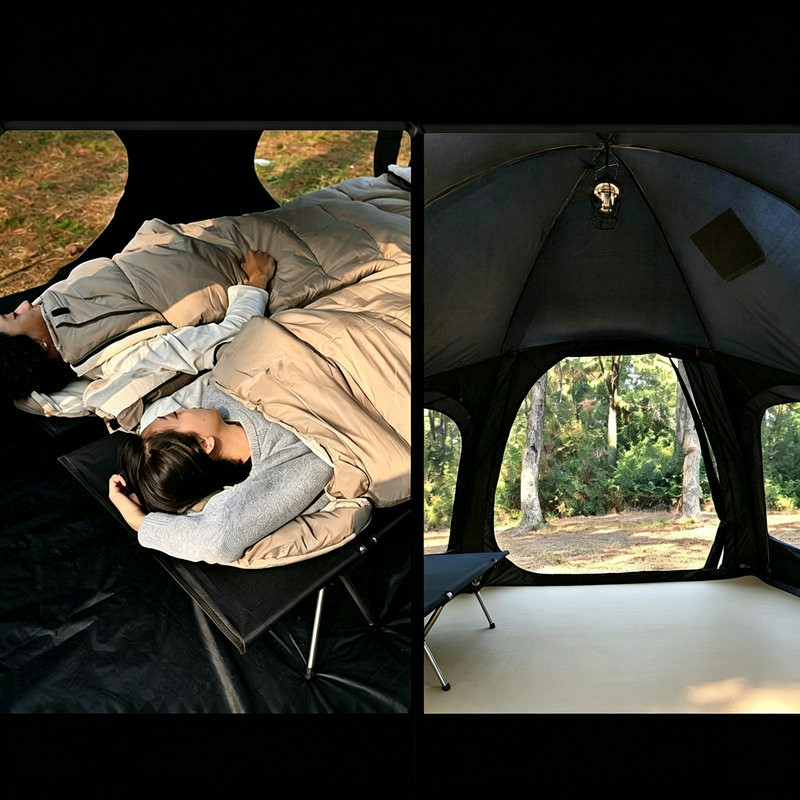
In outdoor hospitality projects, dome structures are often chosen because they sit between shelter and visibility. They do not fully isolate the inside from the surroundings, which changes the overall experience of staying inside.
Some sites rely on this partial openness to keep users connected to the environment while still maintaining a controlled interior space. The balance is not always identical across projects.
A Dome Tent Manufacturer usually considers how the structure behaves under long occupancy rather than short-term setup.
Typical reasons behind usage include:
- natural light entering through surface materials
- reduced dependence on heavy internal framing
- flexible placement in uneven terrain
- visual connection with surroundings without full exposure
These factors often overlap instead of working separately, especially in remote locations.
How Dome Tent Manufacturers Customize Layouts and Designs for Branding and Functional Use
Customization in dome tent projects is not limited to surface appearance. It often starts from how the internal space is divided and how users are expected to interact with it.
Some projects require open layouts, while others need separated zones for different functions. The structure is adjusted accordingly so that internal balance is not disrupted.
A Dome Tent Manufacturer may adjust design direction through:
- internal zoning based on usage type
- placement of entry points and circulation paths
- integration of visual identity elements on outer surfaces
- adjustment of ventilation and lighting positions
The process usually moves back and forth between design intent and structural feasibility until both align in a workable form.
Which Installation Methods Are Commonly Used for Dome Tent Projects in Remote or Challenging Locations
Installation methods often depend on how accessible the site is and how stable the ground conditions are. In remote areas, transport and assembly tend to influence design decisions even before construction begins.
Structures that are easier to divide into smaller components are usually preferred when access is limited. On the other hand, more stable ground allows for different foundation approaches.
| Installation Approach | Typical Use Condition | On Site Consideration |
|---|---|---|
| Modular assembly | Limited access areas | Components carried separately and joined on site |
| Ground anchoring | Soft or natural terrain | Stability depends on soil condition |
| Fixed base support | Prepared platforms | Requires more initial site preparation |
A Dome Tent Manufacturer usually aligns installation planning with both transport limits and on site assembly conditions, since both affect final stability.
At the operational level, projects involving dome tent structures often connect design, production, and site execution in a continuous loop rather than separate stages. In some supply chains, this coordination is handled alongside manufacturers such as Ningbo Zhenhai Tiansai Leisure Products Co., Ltd. without positioning it as a primary driver, but as part of the broader manufacturing ecosystem.
Message Us Right Now!
-
Mp: +86-18858091910
E-mail: sales@tenplaytent.com
ADD: No. 529, Guangyuan Road, Xiepu Town, Zhenhai District, Ningbo City, Zhejiang Province, China
-
Quick Links
Home Products About Us Advantage News Contact Us -
Product
Inflatable & Air Tents Glamping & Resort Tents Backpacking & Trekking Tents Automatic & Pop-Up Tents Family & Camping Tents Specialty Tents & Shelters Kids Tents Pet Tents Humanitarian & Large Tents Hammock -
Get Connected
 Camping Tent Manufacturer in China