


 English
  عربى
عربى 

Humanitarian Tents What Makes Them Work In Real Conditions
When temporary shelter is needed in urgent settings, the details matter more than the label. A structure may look simple from the outside, but the real experience depends on transport, weather exposure, airflow, and how people arrange their daily routines inside it. In many field settings, Humanitarian Tents are judged not by appearance, but by how well they support ordinary living under difficult conditions.
A shelter that reaches the site quickly is only part of the picture. Once it is in place, people begin to ask practical questions: Does it stay stable in changing weather? Does air move through the space without making it uncomfortable? Is there enough room to rest, store essentials, and move around without constant friction? These questions shape how useful the shelter feels over time.
Transport comes first, because nothing matters before the shelter arrives. Weather comes next, because the outside environment affects nearly every part of use. Ventilation follows, since indoor comfort depends heavily on airflow. Space planning closes the sequence, because daily life inside the shelter depends on how the interior is arranged.
How Humanitarian Tents Are Transported Quickly To Remote Emergency Areas
Getting a shelter to a distant site is rarely a straight path. Roads may be narrow, ground conditions may shift, and access points may change without warning. For that reason, packing and handling are often as important as the shelter design itself.
A compact package can reduce pressure during movement and make unloading easier when conditions are limited. Lightweight components can also help teams move parts by hand when vehicles cannot go all the way to the destination. In practical terms, the transport stage is about reducing delay and avoiding unnecessary handling problems.
Several factors usually shape this stage:
- How easily the package can be loaded and unloaded
- Whether the parts stay organized during travel
- How much space the package takes in storage
- How quickly the unit can be checked before deployment
- How well the material handles repeated movement
In remote settings, the last part of the journey often becomes the hardest. Even a shelter that is easy to move on paper can become difficult to deliver if the path includes rough ground, limited access, or scattered delivery points. That is why transport planning and shelter structure are closely connected.
Humanitarian Tents are often expected to move through changing conditions before they are ever used. When the packaging is clear and the components are manageable, the path from storage to field use becomes less demanding.
How Different Weather Conditions Influence Humanitarian Tent Performance
Weather changes the way a shelter feels, behaves, and ages. Heat can make the interior uncomfortable, rain can test the surface and edges, and strong air movement can place stress on the frame and anchoring points. A shelter that works well in one environment may need different support in another.
The effect of weather is not limited to the outside surface. Internal comfort can shift quickly when sunlight builds up inside the space or when moisture collects in enclosed areas. In wet conditions, even small gaps or poor drainage can create daily frustrations. In windy locations, the structure needs to remain steady without becoming difficult to manage.
| Weather condition | What people may notice | Practical design response |
|---|---|---|
| Heat | Indoor space feels closed and tiring | Airflow openings and shade support |
| Rain | Damp surfaces and water entry risk | Clear water runoff and sealed edges |
| Wind | Movement, noise, and pressure on the frame | Stable anchoring and balanced structure |
| Cool nights | Faster heat loss and lower comfort | Better insulation layers and controlled closure |
A shelter that responds calmly to weather changes gives people fewer daily disruptions. That is especially important when the shelter is being used for more than short stays. In those settings, the relationship between outside conditions and inside comfort becomes part of ordinary life.
The performance of Humanitarian Tents in weather exposure is therefore not only a structural issue. It also affects how people sleep, store items, and organize the space around them.
Why Ventilation Design Changes Daily Life Inside Humanitarian Tents
Airflow is one of the clearest differences between a shelter that feels manageable and one that feels tiring. Without enough movement in the air, heat can build up, moisture can remain trapped, and the interior can begin to feel stale. With the right openings and circulation paths, the space can feel more livable throughout the day.
Ventilation is not only about comfort. It also affects the pace of daily routines. When air moves through the shelter, cooking smells clear out more easily, dampness is less likely to stay in one place, and the interior becomes easier to occupy for longer periods. That matters in places where people spend much of the day inside or near the shelter.
Placement is often more important than size alone. Openings placed at thoughtful points can support a steadier flow without creating awkward drafts. Closures and coverings also matter, because airflow sometimes needs to change with the time of day or the weather outside.
Here are a few ways ventilation can shape everyday use:
- It can reduce the feeling of trapped heat
- It can limit condensation on inner surfaces
- It can make sleeping hours feel less heavy
- It can help the space recover after cooking or washing
- It can support a more usable rhythm during the day
For many families, ventilation becomes noticeable only when it is missing. Once it is present, the whole shelter can feel easier to live in. In that sense, Humanitarian Tents are often judged by air movement just as much as by size or fabric choice.
Which Humanitarian Tent Features Help Create More Practical Living Space
The inside of a shelter has to do more than hold people. It also has to make room for movement, rest, storage, and privacy. That is why practical space is not only about square area. It is about how the layout works for real routines.
A narrow entrance may make daily movement awkward. A poorly placed support can block an area that should be used for sleeping or storage. On the other hand, a simple and open arrangement can help people place items where they are easy to reach and keep the main walking area usable.
Useful interior features are often the ones that do not get noticed right away. These may include a sensible entry position, a layout that does not waste corners, and enough flexibility to separate sleeping from storage. In many cases, the shelter becomes more useful when it allows small adjustments without forcing a full rearrangement.
| Interior feature | Daily effect |
|---|---|
| Entry placement | Affects movement in and out of the shelter |
| Open floor area | Gives room for sleeping and basic activity |
| Support layout | Keeps space from feeling blocked |
| Storage options | Helps reduce clutter and loss of small items |
| Divider potential | Supports privacy and different routines |
Practical living space is built through small decisions rather than one large change. A shelter that feels orderly can reduce stress during routine tasks and make the space easier to share. That is one reason Humanitarian Tents are often evaluated by how naturally they fit into daily use rather than by appearance alone.
How Humanitarian Tents Are Adapted By Families For Everyday Living Needs
A shelter rarely stays untouched once people begin living in it. Families usually shape the space around habits that repeat every day. One side may become a sleeping area, another may hold bags, bedding, or cooking items, and the center is often left open so movement stays easy.
The changes are usually small, but they matter. A curtain, a rope, or a folded cloth can create a sense of separation without making the space feel crowded. In many cases, the inside becomes a map of family routines.
A few common adjustments are:
- keeping items near the entrance for quick use
- separating rest areas from storage areas
- using simple fabric to add privacy
- shifting the layout as needs change during the day
That kind of flexibility is one reason Humanitarian Tents are often used as a base that people can reshape in practical ways.
What Makes Humanitarian Tents Feel More Comfortable During Long Term Temporary Living
Comfort changes when the stay becomes longer. A shelter that felt fine at first may begin to feel tiring if the air stays heavy, the space stays closed, or the surface materials become unpleasant to live with over time.
Small details start to matter more. Quietness, airflow, and the feeling of enough personal space can affect how a place is used from morning to night. When those things are handled well, daily life becomes less strained.
| Comfort factor | What people usually notice |
|---|---|
| Air movement | The space feels less closed |
| Surface feel | Resting becomes less difficult |
| Sound control | Outside noise is less noticeable |
| Spatial layout | Movement feels easier |
| Light balance | The interior feels less confined |
Longer use places more pressure on every part of the shelter. That is why Humanitarian Tents are often judged not only by how they stand, but by how they feel after repeated use.
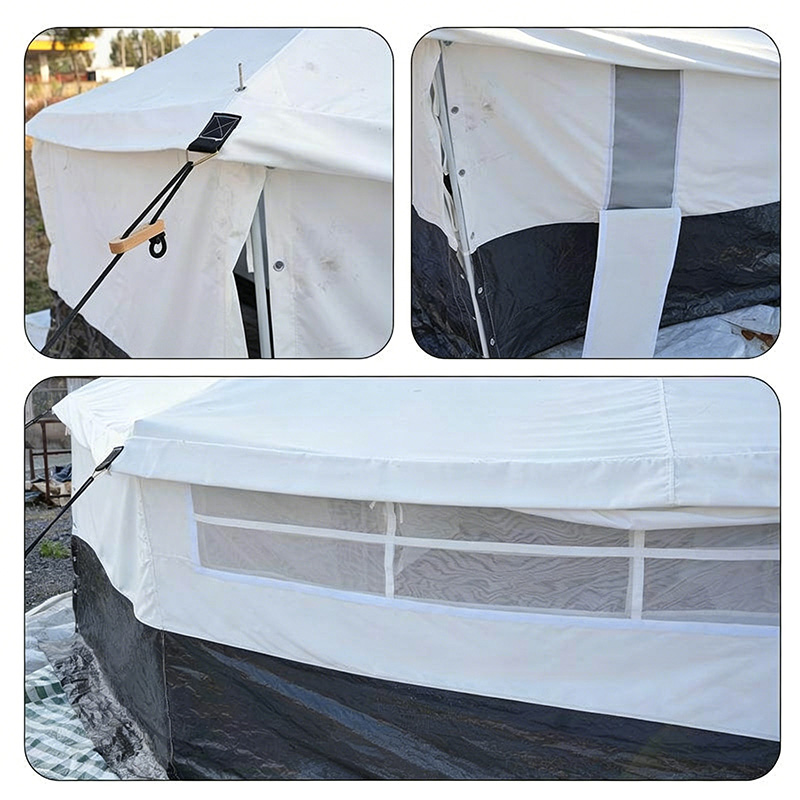
What Buyers Often Want To Know Before Ordering Humanitarian Tents In Bulk
Bulk orders usually begin with practical questions. Buyers want to know whether the shelter can be handled in a steady way across many units, whether it is easy to move, and whether installation will create extra work in the field.
Consistency is often a central concern. If one unit behaves differently from another, planning becomes harder. Buyers also pay attention to packaging, assembly, and the way the shelter performs in different conditions.
What buyers commonly ask:
- Is the setup process simple for field teams?
- Will the units stay consistent across a large shipment?
- How easy are the parts to store and move?
- Can the shelter handle changing outdoor conditions?
- Are repairs or replacements difficult in use?
These are practical questions, not abstract ones. For Humanitarian Tents, the value is usually tied to how predictable they are once they arrive.
What New Design Ideas Are Changing Modern Humanitarian Tents
New shelter ideas often focus on adaptability. Instead of treating the structure as fixed, designers are trying to make it easier to adjust for different routines, spaces, and field conditions.
Some changes are simple. Internal layouts can be made more flexible, so the space can be arranged in different ways without much effort. Other changes involve materials that respond better to weather shifts or repeated use. Setup is also being simplified in many designs so the shelter can be handled with less friction.
| Design direction | Practical effect |
|---|---|
| Modular layout | Space can be rearranged more easily |
| Flexible materials | The shelter responds better to conditions |
| Simple setup | Installation takes less effort |
| Functional add-ons | Daily use becomes more manageable |
These changes do not try to make the shelter into something else. They aim to make Humanitarian Tents easier to use in ordinary field life, where conditions are rarely fixed and needs often change.
Message Us Right Now!
-
Mp: +86-18858091910
E-mail: sales@tenplaytent.com
ADD: No. 529, Guangyuan Road, Xiepu Town, Zhenhai District, Ningbo City, Zhejiang Province, China
-
Quick Links
Home Products About Us Advantage News Contact Us -
Product
Inflatable & Air Tents Glamping & Resort Tents Backpacking & Trekking Tents Automatic & Pop-Up Tents Family & Camping Tents Specialty Tents & Shelters Kids Tents Pet Tents Humanitarian & Large Tents Hammock -
Get Connected
 Camping Tent Manufacturer in China