


 English
  عربى
عربى 

How Does a Water Floating Tent Change Modern Outdoor Camping
Outdoor camping has moved far beyond a simple ground setup. Many people now look for quieter spaces, softer routines, and a closer connection to water, light, and open surroundings. A floating shelter fits that shift because it changes where people rest, how they move through a campsite, and what kind of comfort they expect from an outdoor stay. The idea is not only about novelty. It is also about changing the daily logic of camping itself, from placement and balance to materials, safety habits, and the way the space feels once it is set up.
The growing interest in a Water Floating Tent reflects a wider change in outdoor habits. Some campers want less crowding and a different view. Others care about a setup that can match a lake trip, a slow weekend, or a quiet stay on calm water. For manufacturers, this also raises practical questions about structure, user comfort, and how a product should behave in different water environments. The topics below follow that path in a clear order, from basic use to design choices and buyer concerns.
What Is a Water Floating Tent and How Does It Create a New Outdoor Camping Experience
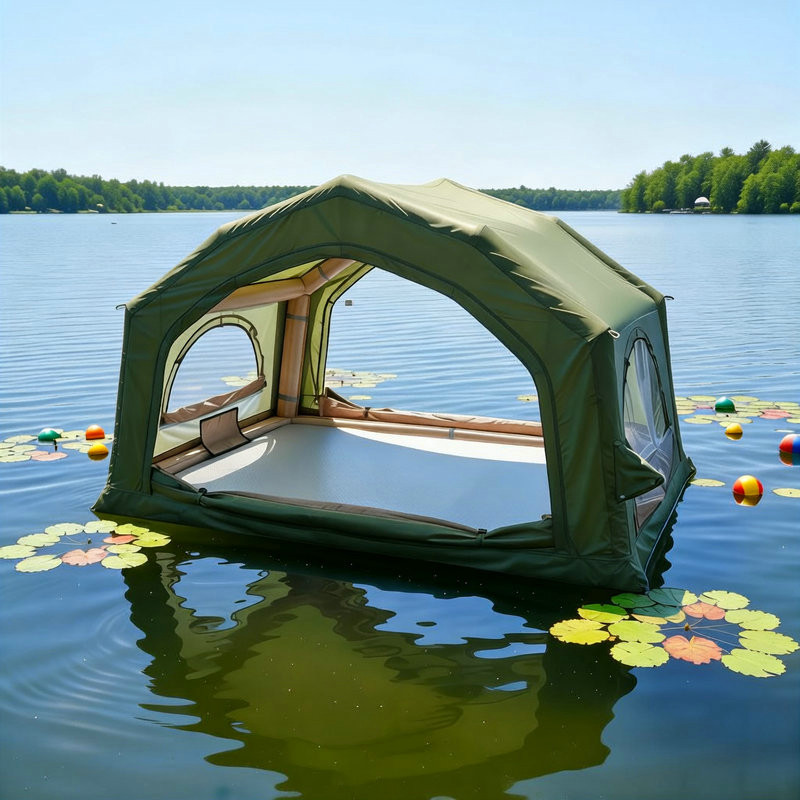
At a basic level, a floating tent is a shelter designed to rest on water rather than on soil or sand. That single change affects the whole camping experience. Instead of choosing a flat patch of land, campers think about shoreline access, water movement, wind direction, and how the space will feel during the day and at night.
This changes the mood of camping in a direct way. The setting becomes quieter in some cases, more open in others, and more closely tied to the natural movement of water. People are not only sleeping outdoors. They are staying in a space that shifts the usual relationship between shelter and environment. That is part of why a Water Floating Tent attracts attention from both casual users and buyers who want something beyond a standard tent format.
A floating setup also changes how people plan the trip itself. The campsite is no longer just a place to arrive and unpack. It becomes part of the water area, which means users think more carefully about access, placement, and timing. That leads to a different kind of camping rhythm, one that feels slower and more deliberate.
How Does a Water Floating Tent Stay Stable While Floating on Different Water Areas
Stability is one of the main concerns people have before they try this kind of shelter. The answer depends on several connected design choices. Shape matters. Balance matters. The way the base contacts the water matters. Even the distribution of weight inside the shelter can affect how steady the setup feels.
A calm lake creates a different condition from a moving river edge or a more open water area. A stable setup is not only about staying upright. It is also about reducing unwanted movement so users can rest, sit, and move inside with less discomfort. The structure needs to work with the water rather than against it.
| Water Condition | Main Concern | What the Setup Needs to Handle |
|---|---|---|
| Calm lake area | Gentle movement | Balance, comfort, and easy placement |
| Lightly moving water | Small shifts in direction | Better stability and anchoring support |
| Open shoreline water | Exposure to wind | Shape control and secure positioning |
| Narrow water edge | Space limits | Compact setup and careful access |
For users, the practical question is whether the shelter stays usable once it is on the water. For manufacturers, the question is how to design a floating base and shelter body that remain steady without making the product hard to move, store, or deploy. That balance shapes the user experience more than any single feature.
What Materials Are Used in a Water Floating Tent and How Do They Affect Daily Use
Materials affect more than appearance. They influence how the shelter handles moisture, how it feels in use, how easily it can be cleaned, and how long it stays functional under outdoor exposure. A floating product needs materials that can tolerate water contact while still remaining practical for storage and transport.
Outer fabrics need to resist damp conditions and repeated outdoor use. Reinforced parts help protect high-stress areas. Seams and connection points matter because those are often the places where wear becomes visible first. The base structure also has a direct effect on comfort, since it influences how much movement reaches the user.
| Material Area | Role in Use | User Impact |
|---|---|---|
| Outer cover | Protection from the environment | Helps keep the shelter usable in wet conditions |
| Base support | Floating and balance | Affects steadiness and movement |
| Connection points | Holding the structure together | Influences durability and maintenance |
| Interior layer | Comfort and usability | Shapes the feeling inside the space |
Material choice also affects the daily routine around the shelter. A surface that dries more easily is easier to manage after use. A stronger support layer can make the setup feel more reliable. In this sense, material selection is not only a production issue. It is also part of the user experience from arrival to pack-up.
How Does a Water Floating Tent Work From Design to Outdoor Use
Design is where the product becomes more than an idea. A floating shelter needs a structure that can carry weight, remain usable on water, and still offer enough comfort for practical camping. That means the designer must think about shape, access, interior layout, and the way users will enter, leave, and move inside the space.
A useful design usually starts with the basic question of balance. The shelter should feel steady enough for resting, sitting, and light movement. Then comes the question of space. There needs to be enough room for users without making the setup bulky or hard to manage. After that, the design has to support real outdoor habits such as packing, cleaning, and storage.
Manufacturing choices follow the same path. A product built for water use cannot rely on looks alone. It needs a structure that matches the conditions it will face outside. That is why the design stage is closely tied to function, and why a Water Floating Tent needs more planning than a simple land-based shelter.
How to Choose a Water Floating Tent Based on Different Camping and Recreation Needs
Not every user wants the same experience. Some are looking for a quiet place to rest near the shore. Others want a shelter for leisure activities or a short outdoor trip with friends or family. Because the uses vary, the choice should be based on real needs rather than appearance alone.
A buyer may begin by asking where the shelter will be used. Calm water, shoreline use, and short recreational stays all create different demands. After that, it helps to think about space, ease of setup, and how much movement the user is willing to accept. A compact setup may suit one type of trip, while a larger one may fit another.
A simple buyer checklist can help keep the decision practical.
- Check whether the shelter suits the expected water setting.
- Look at how much setup effort is involved.
- Review the inner space based on the number of users.
- Pay attention to access, storage, and cleaning needs.
- Confirm whether the structure matches the intended trip style.
The point is not to find a universal answer. It is to match the shelter to the kind of outdoor use it will actually see. That approach is more useful than judging by appearance or assuming one style will fit every setting.
What Safety Tips Should Users Know Before Using a Water Floating Tent Outdoors
Safety is a normal part of any water-based outdoor activity, and a floating shelter is no exception. Before use, people should check the water area, weather conditions, and the overall level of movement at the site. A calm environment usually makes the setup easier to manage, while changing conditions can create extra strain on the structure and on the user experience.
It also helps to think about access. Getting in and out of the shelter should be straightforward and controlled. If the path from shore or platform to the shelter is awkward, the overall experience becomes less practical. Preparation matters because water conditions can shift faster than land conditions, and a good routine can reduce avoidable problems.
Users should also avoid treating floating use as a casual extension of ground camping. The setting is different. The movement is different. The placement rules are different. Those differences shape how the shelter should be used from the start.
How Is a Water Floating Tent Designed and Manufactured for Water Environments
A manufacturer has to think beyond the visible shape of the product. The shelter must respond to water contact, repeated movement, and outdoor storage habits. That means the design process is part engineering, part usability planning, and part production control.
The first concern is structural logic. The shelter needs support where stress is likely to appear, especially around the base and connection areas. The second concern is how the materials behave when exposed to damp conditions. The third is how the user will interact with the product after it leaves the factory. If a product is hard to pack, hard to clean, or awkward to move, the user experience suffers even if the structure looks sound.
Manufacturing for water environments often depends on small decisions that affect the final result. The way seams are handled, the way supports are joined, and the way the shelter is assembled all influence reliability. For a manufacturer, these details are part of the product message just as much as the external design.
What Questions Should Buyers Ask a Water Floating Tent Manufacturer Before Ordering
Before ordering, buyers should ask questions that reveal how the product is built and how it will behave in use. The focus should stay on practical details rather than broad promises. A useful conversation often starts with the water setting, the intended use, and the level of support needed for the trip.
Buyers can ask how the shelter is designed to handle water movement, which materials are used in the main body, and how the structure is assembled. It also helps to ask about cleaning, storage, and any special handling needs after use. These questions make the buying process clearer and reduce the chance of misunderstanding later.
For business buyers, the discussion may also include production consistency, customization needs, and the type of support available after purchase. Those topics matter because they affect how well the product fits a long-term supply plan.
What Makes a Water Floating Tent Part of the Future of Outdoor Camping
The appeal of floating camping is not only visual. It reflects a real shift in how people think about outdoor time. Some campers want a quieter environment. Some want a new setting. Some want a shelter that feels more connected to water-based recreation. That makes the floating format more than a novelty item. It becomes part of a broader change in campsite expectations.
For users, the main value is the altered experience. For manufacturers, the challenge is to create a shelter that remains practical, stable, and comfortable in actual use. That combination is what gives the product its place in modern outdoor camping. A Water Floating Tent works because it answers a new kind of demand: a campsite that moves with the water, rather than standing apart from it.
Message Us Right Now!
-
Mp: +86-18858091910
E-mail: sales@tenplaytent.com
ADD: No. 529, Guangyuan Road, Xiepu Town, Zhenhai District, Ningbo City, Zhejiang Province, China
-
Quick Links
Home Products About Us Advantage News Contact Us -
Product
Inflatable & Air Tents Glamping & Resort Tents Backpacking & Trekking Tents Automatic & Pop-Up Tents Family & Camping Tents Specialty Tents & Shelters Kids Tents Pet Tents Humanitarian & Large Tents Hammock -
Get Connected
 Camping Tent Manufacturer in China