


 English
  عربى
عربى 

What Should You Know About an Inflatable Camping Cabin
Outdoor camping has changed in quiet but noticeable ways. People still want fresh air, open space, and a break from routine, but they also pay more attention to comfort, setup time, and how a shelter fits real use. That is where the idea of an inflatable shelter becomes interesting. It is not only about having a place to sleep. It is about whether the space supports family time, short trips, different weather, and the pace of the trip itself.
An Inflatable Camping Cabin usually attracts attention because it sits between a traditional tent and a more structured outdoor shelter. The layout feels familiar enough for campers who want a room-like space, yet the setup process can be simpler than many rigid-frame options. That balance is part of its appeal. People are not only asking whether it works. They are asking how it fits the way they travel, rest, store gear, and move from one campsite to another.
Before comparing designs, materials, or customization choices, it helps to look at the broader questions people often have. What kind of camping use does it suit. How much comfort can it offer. Which details matter when the weather changes. And what should a buyer check before making a decision for personal use or business supply.
Why Are More Outdoor Enthusiasts Interested in an Inflatable Camping Cabin
Outdoor enthusiasts often look for gear that saves time without feeling fragile or awkward to use. That is one reason inflatable structures have gained attention. They reduce the need for complicated poles and can create a clearer interior layout. For many campers, that means less effort at setup and more time for the trip itself.
Another reason is flexibility. A shelter like this can work for family trips, casual weekend stays, or longer outdoor breaks where comfort matters. Some campers want a place to change clothes easily, keep bags off the ground, or create a private corner for rest. A room-like layout can help with that.
It also matches a broader shift in camping habits. Not everyone wants a bare-bones experience. Many people still enjoy outdoor living, but they prefer a space that feels organized and calm. That is especially true when children, pets, or mixed gear are part of the trip.
| Common reason | What campers usually care about |
|---|---|
| Easier setup | Less time spent assembling shelter parts |
| Clear interior layout | More usable room for sleeping and storage |
| Flexible use | Works for family, leisure, or short stays |
| Familiar feel | A space that feels more like a cabin than a small tent |
What Should You Know Before Choosing an Inflatable Camping Cabin for Family Camping
Family camping changes the way shelter is judged. It is not enough to ask whether it can hold people. The more useful question is how the space behaves once bags, shoes, bedding, and daily routines are inside.
A family may need separate areas for sleeping and general activity. A child may need room to move around safely. Adults may want enough space to sit upright, keep items sorted, and avoid clutter at the entrance. If the shelter feels cramped, the trip can become tiring even in good weather.
Ventilation matters as well. Families often spend more time inside during rest periods or light rain, so airflow is part of comfort. Doors and windows should support a steady exchange of air without making the interior feel exposed. Storage pockets, gear loops, and simple internal organization can also make a difference.
For family use, another point is packability. Even a shelter with a practical floor plan can be difficult to handle if it takes too much effort to transport or store. That is why buyers often look at how the unit folds, how much space it occupies when packed, and whether the carry process feels manageable.
An Inflatable Camping Cabin for family use usually works best when the interior is easy to understand at a glance. People do not want to spend time decoding the space after arrival. They want to settle in quickly and use it in a natural way.
Which Features Make an Inflatable Camping Cabin More Comfortable for Weekend Adventures
Weekend trips usually move quickly. People arrive, set up, eat, rest, and pack out with limited time in between. That means comfort often depends on how smooth the shelter feels in practice, not just how it looks in a product photo.
Some features matter more than others. Entry height can affect how easy it is to step inside with bags or shoes. Window placement can influence airflow and light. Internal ceiling shape can affect whether the space feels open or enclosed. Even small details, like where zippers sit or how the floor edge is finished, can change the experience.
Comfort also comes from the way the space supports simple habits. A place to keep a lamp, a side pocket for small items, and a layout that leaves the center clear can make a short trip feel less crowded. Campers often do not need luxury. They need order, privacy, and enough room to move without bumping into gear.
| Feature | Why it matters |
|---|---|
| Entry design | Helps people enter and leave without hassle |
| Window layout | Supports air flow and daylight |
| Interior shape | Affects the sense of openness |
| Storage details | Keeps the living space cleaner and easier to use |
In short, comfort is often a result of small design choices working together. A shelter can feel more relaxed when the parts that people touch every day have been thought through with care.
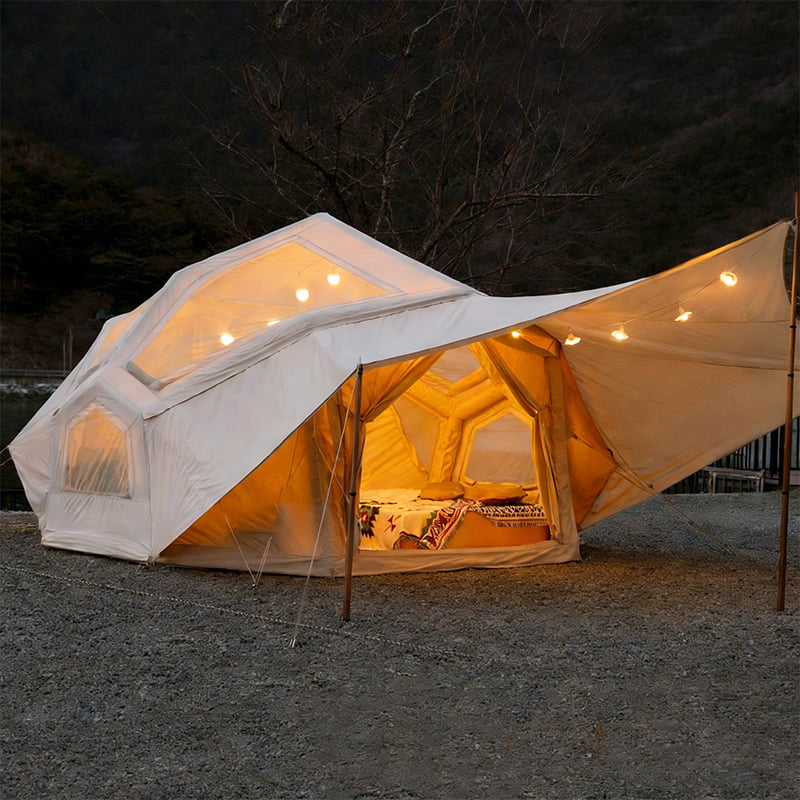
How Can You Choose an Inflatable Camping Cabin That Fits Different Camping Environments
Camping environments vary more than people expect. Grass, sand, gravel, and compact soil all create different demands. A shelter that feels steady on one surface may feel awkward on another. That is why terrain should be part of the decision from the start.
Wind is another factor. A sheltered forest site is not the same as an open field or a coastal area. In exposed places, the anchoring system and overall shape matter more. The structure should sit in a way that feels settled, not loose. Rain also changes the picture, since drainage around the base and roof behavior can affect comfort inside.
Seasonal use can guide the choice too. In warmer periods, airflow may matter more than insulation. In cooler periods, the focus may shift toward warmth retention and reduced drafts. Some campers need a shelter for one kind of trip, while others want a unit that can handle a wider range of settings.
The point is not to make the shelter do everything. The point is to match it with the places where it will actually be used.
| Environment | What to check |
|---|---|
| Grass or soft ground | Anchoring and base stability |
| Sand | Secure fixing and ease of cleanup |
| Gravel | Floor protection and abrasion resistance |
| Open or windy sites | Shape stability and tie-down points |
An Inflatable Camping Cabin that fits the setting will feel easier to live with. It will also place less stress on the user, since less correction is needed after setup.
What Details Matter When Comparing Different Inflatable Camping Cabin Designs
Design comparison is often where buyers move from general interest to serious evaluation. Two shelters may look similar from a distance, but the difference can appear in the fabric feel, seam layout, door design, or floor arrangement.
Fabric choice affects everyday use. Some materials feel lighter and easier to handle, while others give a heavier, steadier impression. The floor needs attention as well, since it faces dirt, moisture, and repeated movement. If the floor layout is awkward, cleaning becomes harder and the interior can feel less tidy.
Air chamber layout is another factor. Some designs distribute support in a way that feels balanced. Others may create areas that seem too narrow or too close to the wall. Doors and vents should also work together rather than compete with each other. A shelter can have many openings and still feel poorly arranged if they are placed without clear intent.
Repair access is worth checking too. People do not usually think about small maintenance until a problem appears. A design that allows easier patching or part replacement can save time and reduce frustration later.
Which Customization Options Can Add More Value to an Inflatable Camping Cabin Project
Customization matters in both consumer and business settings. For some buyers, it is about matching camping habits. For others, it is about brand identity, market fit, or product positioning. Either way, customization should solve a real need rather than add features for their own sake.
Size is one of the clearest options. A family-focused model may need a different interior plan than a version aimed at short leisure stays. Layout changes can also shape the user experience. A single open area feels different from a divided space with separate functional zones.
Exterior color and visible details may also matter, especially for buyers who want the product to feel coherent with a brand line. Accessory choices can add practical value as well. That may include extra vents, storage points, reinforced edges, or simple add-ons that make use easier.
For commercial buyers, packaging and labeling can matter alongside the shelter itself. A product that is easier to present, store, and explain often fits market use more naturally.
How to Find an Inflatable Camping Cabin Manufacturer That Matches Your Business Needs
Choosing a manufacturer is not only a matter of price. It is about whether the supplier can handle communication, consistency, and the practical shape of the order. A reliable partner should be able to discuss materials, design changes, and production details in a clear way.
Quality control is part of that conversation. A business buyer often needs confidence that repeated orders will stay close to the approved sample. That means the process before shipment matters as much as the final item. Sample review, production communication, and packing checks all belong in the evaluation.
It also helps to understand whether the supplier can support different order sizes and project stages. Some buyers may begin with a small test run. Others may need a broader supply plan. In both cases, response time, clarity, and consistency are meaningful signals.
An Inflatable Camping Cabin supplier should feel like a working partner, not only a source of goods. When the relationship is practical and transparent, fewer problems tend to appear later.
How Does an Inflatable Camping Cabin Change the Way People Enjoy Outdoor Camping
The change is not dramatic in the sense of replacing camping itself. It is more subtle. It shifts the experience from basic shelter toward a more organized outdoor living space. That can affect how people pack, how they rest, and how they use their time at camp.
Setup becomes part of the experience instead of a burden. The campsite can feel more settled earlier in the trip. Families may find it easier to manage routines. Leisure campers may feel less pressure to sacrifice comfort in order to stay outdoors. People who camp often begin to notice that a shelter is not just background equipment. It shapes how the whole trip feels.
A well-planned Inflatable Camping Cabin can support that shift by giving the user a space that is simple to understand, practical to use, and adaptable to different trip styles. It does not need to do everything. It only needs to fit the way people actually camp.
That is often what makes the category interesting. It speaks to a more realistic kind of outdoor use, one where comfort, ease, and layout all matter in ordinary situations.
Message Us Right Now!
-
Mp: +86-18858091910
E-mail: sales@tenplaytent.com
ADD: No. 529, Guangyuan Road, Xiepu Town, Zhenhai District, Ningbo City, Zhejiang Province, China
-
Quick Links
Home Products About Us Advantage News Contact Us -
Product
Inflatable & Air Tents Glamping & Resort Tents Backpacking & Trekking Tents Automatic & Pop-Up Tents Family & Camping Tents Specialty Tents & Shelters Kids Tents Pet Tents Humanitarian & Large Tents Hammock -
Get Connected
 Camping Tent Manufacturer in China