


 English
  عربى
عربى 

How to Choose the Right Inflatable Family Camping Tent
Family camping looks simple from the outside. A few bags, a place to stay, and a clear patch of ground can seem enough. In practice, the shelter shape and layout matter much more than many people expect. The wrong choice can make a trip feel cramped, awkward, or harder to manage than it should be. The right one tends to disappear into the background and let the trip feel more relaxed.
An Inflatable Family Camping Tent is often chosen for that reason. It changes the setup process and can create a roomy interior without the usual pole structure. Even so, comfort does not come from the air frame alone. The size, material, openings, and daily use pattern all shape how the tent performs once it is in place. Families usually notice that a shelter works well only when it matches the way they actually camp, not the way it looks in a product photo.
Before narrowing the options, it helps to think about the real purpose of the tent. Some families only need a sleeping area for short weekend trips. Others want a space where children can move around, where bags stay out of the way, and where people can sit inside when the weather turns. That difference changes the choice more than any single feature.
What Should You Know Before Choosing an Inflatable Family Camping Tent
A good starting point is simple: who will use it, and how often. A couple traveling with one child may need a different interior layout from a larger family that brings extra bedding, food storage, and outdoor gear. If the tent will be used mainly for sleeping, the interior can stay fairly simple. If it will also serve as a living space, then standing room, open floor area, and easy movement become more important.
It also helps to think about the ground where the tent will be placed. Soft grass, packed soil, and sandy ground each create different demands. A shelter that feels stable in one place may need extra care in another. Families who camp in changing outdoor settings usually benefit from a design that is easier to secure and easier to adjust.
A few practical questions can narrow the field quickly:
- Will the tent be used for short stays or longer trips?
- Does the family need one open room or separate areas?
- Is easy packing more important than extra interior space?
- Will the tent need to handle changing weather conditions?
The answers shape the purchase more than broad product claims do. A tent that looks spacious can still feel inconvenient if the layout does not fit the camping style.
| Selection Point | What to Check |
|---|---|
| Family use | Sleeping only, or shared indoor time as well |
| Space layout | Open interior, storage corners, or divided zones |
| Travel needs | Easy carrying, simple packing, or larger capacity |
| Outdoor setting | Grass, soil, sand, or mixed ground conditions |
How to Choose an Inflatable Family Camping Tent That Fits Your Family Size and Outdoor Plans
Size is not only about the number of sleepers. It also affects how easy it is to move around inside, where bags are placed, and whether the space feels calm or crowded after a long day outdoors. A family with children may want a bit more room than the sleeping count alone would suggest. That extra space can make it easier to change clothes, store gear, and keep the area from feeling cluttered.
Outdoor plans matter too. A short overnight stay does not ask for the same setup as a multi-day family trip. For a brief outing, some families may prefer a simpler design that packs down easily. For longer use, the internal layout becomes more important because people spend more time inside the shelter. In that case, comfort is often tied to how naturally the space supports everyday routines.
The better question is not only "how many people fit," but "how will the space be used." That framing tends to lead to more practical choices. A tent with a large sleeping area but little usable floor space may not feel as useful as a slightly smaller one with a better layout.
What Features Should You Look for When Buying an Inflatable Family Camping Tent for Outdoor Use
A shelter used outdoors should feel dependable without being complicated. The main features often come down to a few areas that work together rather than one standout detail.
Fabric choice matters because it affects both durability and comfort. A suitable outer layer should handle outdoor conditions while still feeling manageable during setup and storage. The seams and connection points are just as important, since weak joins can create problems after repeated use.
Airflow is another factor that families notice quickly. Warm weather can make a closed tent feel heavy and still. Openings placed in sensible locations help keep the inside more comfortable. Ventilation does not need to be dramatic; it just needs to be planned well enough to support daily use.
A simple way to compare features is to look at what each part helps with:
- Fabric and seams help with outdoor exposure.
- Openings and vents help with airflow.
- Floor design helps with comfort and ground contact.
- Interior shape helps with movement and storage.
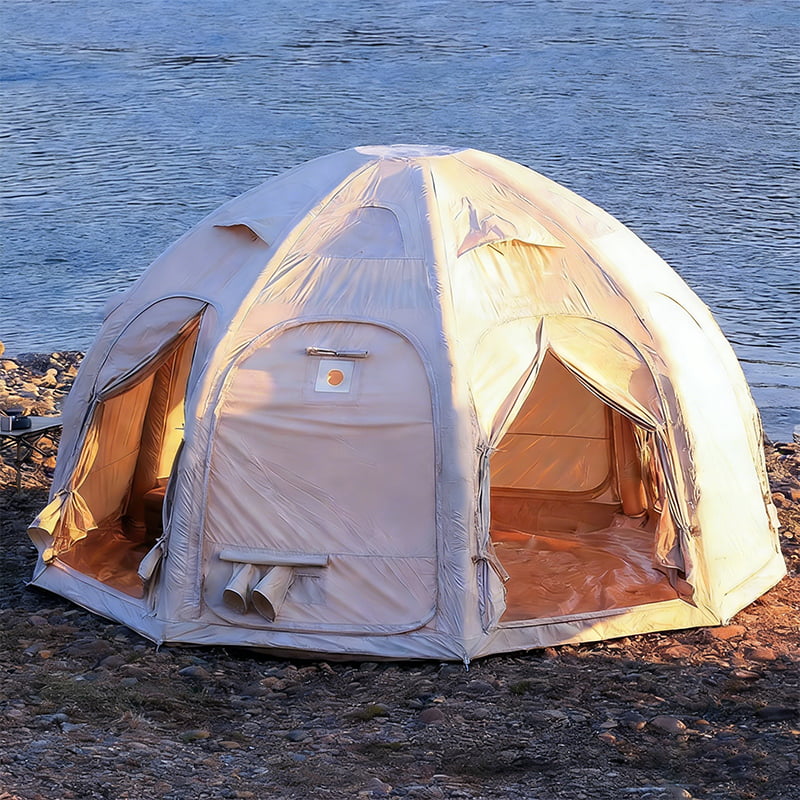
The frame structure also influences ease of use. With an Inflatable Family Camping Tent, many buyers value a setup process that does not feel tiring after travel. If the tent can be inflated and secured without a complicated sequence, it becomes easier to use often rather than only on special occasions.
How Does an Inflatable Family Camping Tent Adapt to Different Weather Conditions
Weather changes the way families use a tent. On a warm day, airflow can matter more than almost anything else. On a wet day, the focus shifts to keeping the interior dry and reducing dampness at ground level. In cooler conditions, the shelter needs to hold together as a calm indoor space rather than feeling open or exposed.
That is why weather handling should be read as part of the overall design, not as a separate feature. A tent can have a spacious layout and still feel uncomfortable if it traps heat or lets moisture collect. It can also appear sturdy while still being awkward to use if the openings are poorly placed.
For families that camp in different seasons or in changing outdoor settings, these points deserve attention:
- How the tent handles rain around seams and entry points
- Whether airflow can be adjusted in warmer weather
- How the structure behaves when conditions change during the day
An Inflatable Family Camping Tent is often chosen because it can feel less rigid and more adaptable than some other outdoor shelters. That flexibility becomes useful only when the rest of the design supports it. Comfort outdoors is usually built from small details that work together rather than one dramatic feature.
How to Set Up and Maintain an Inflatable Family Camping Tent for Outdoor Trips
Setup is often where expectations meet reality. A shelter may look simple on a product page, but the way it is handled outdoors can change the whole experience. Families usually appreciate a tent that does not require a long learning curve, especially when daylight is fading or children are waiting nearby. A clear setup process reduces pressure and makes the trip feel more orderly from the start.
For an Inflatable Family Camping Tent, the main advantage is often the structure itself. Without fixed poles, the tent can feel easier to manage during assembly, but it still needs careful handling. The ground should be checked before inflation, and the tent should be placed where the surface is as even as possible. Small stones, sharp sticks, or uneven patches can affect comfort and stability later on.
Maintenance matters just as much as setup. After each trip, the fabric should be cleaned lightly and left to dry fully before storage. Folding the tent while it is still damp can create problems that are hard to notice at first. It is also useful to check the air structure, zippers, and entry points before packing everything away. These steps do not take much time, but they help the tent stay usable over time.
A practical routine may look like this:
- Place the tent on a clean, even surface.
- Check the ground before inflation.
- Let all parts dry before storage.
- Inspect the fabric and air system after use.
Inflatable Family Camping Tent vs Traditional Tent What Should Families Consider Before Choosing
Comparison often becomes useful when families have already narrowed their options. Traditional tents and inflatable designs serve similar purposes, but they do not always suit the same habits. Some families care most about setup convenience. Others care more about a familiar structure or a lighter packing style. The better choice depends on how the tent will actually be used.
Traditional tents are often associated with a more familiar frame structure. Some users prefer that sense of predictability. Inflatable designs, on the other hand, are often chosen for their different setup method and the feeling of open interior space. Neither approach is right for every family. What matters is whether the tent matches the pace and style of the trip.
| Point of Comparison | Inflatable Design | Traditional Design |
|---|---|---|
| Setup style | Uses air-supported structure | Uses fixed poles and frame parts |
| Interior feel | Often creates a more open layout | May feel more segmented |
| Packing approach | Depends on air structure and fold size | Depends on pole sections and fabric |
| User preference | Often suited to families wanting a different setup process | Often suited to those familiar with pole-based tents |
Families who move between different camping environments may also think about how much time they want to spend on preparation. If a tent is meant to support relaxed weekends or family trips, setup ease may matter more than a familiar frame style. If the trip is usually short and simple, a traditional option may still be enough. The decision becomes clearer when the focus stays on use, not labels.
How Can an Inflatable Family Camping Tent Support Comfortable Family Camping Experiences
Comfort in camping is usually built from small, practical details. A shelter does not need to feel luxurious to be useful. It only needs to support the routines that matter during a trip. People need a place to sleep, a place to store things, and enough room to move without constant adjustment. When those needs are met, the shelter becomes part of the trip rather than a problem to solve.
An Inflatable Family Camping Tent can help create that feeling when the interior is laid out well. Families may use one side for sleeping and another for bags or shoes. Children may need a little more room to move during the day. In that case, the inside space should feel open enough to handle different activities without becoming crowded.
Comfort also depends on how the tent handles daily rhythms. Morning light, evening rest, and changes in weather all affect how the inside space is used. A shelter with well-placed openings and a practical floor plan gives families more control over those moments. The tent does not need to do everything. It only needs to support the way the family spends time outdoors.
Some families also pay attention to the feeling inside the shelter after a long day outside. A space that is easy to settle into often matters more than one that looks impressive from the outside. That is one reason interior flow, storage placement, and simple access points deserve attention during selection.
How to Choose a Reliable Inflatable Family Camping Tent Manufacturer for Custom Orders
For buyers working with a manufacturer, the process is slightly different. The focus is not only on product use but also on whether the supplier can understand practical requirements and turn them into a usable result. Clear communication matters here because custom orders depend on detail. A tent that is made for one use case may not suit another unless those needs are defined early.
A reliable manufacturer should be able to discuss materials, structure, layout, and finishing in clear terms. Buyers should also ask how the product is made, how design changes are handled, and how the final product is checked before shipping. These questions are not about adding complexity. They help reduce confusion later.
Before placing a custom order, it helps to review a few points:
- Whether the manufacturer understands family camping use
- Whether layout changes can be discussed clearly
- Whether the material and structure match the intended setting
- Whether sample review or detail confirmation is part of the process
Custom work is often most useful when the product is meant for a specific market or usage pattern. A family camping shelter may need different interior spacing, entry design, or ventilation placement depending on where it will be used. The more clearly those needs are defined, the easier it is for the manufacturer to produce something practical.
An Inflatable Family Camping Tent made through a custom process should still feel easy to use, easy to store, and suitable for repeated outdoor trips. That is usually the point where manufacturing decisions and end-user needs meet.
Message Us Right Now!
-
Mp: +86-18858091910
E-mail: sales@tenplaytent.com
ADD: No. 529, Guangyuan Road, Xiepu Town, Zhenhai District, Ningbo City, Zhejiang Province, China
-
Quick Links
Home Products About Us Advantage News Contact Us -
Product
Inflatable & Air Tents Glamping & Resort Tents Backpacking & Trekking Tents Automatic & Pop-Up Tents Family & Camping Tents Specialty Tents & Shelters Kids Tents Pet Tents Humanitarian & Large Tents Hammock -
Get Connected
 Camping Tent Manufacturer in China