

 English
  عربى
عربى 
What Can You Learn From a Pop-Up Tent Factory
A folding tent may look simple when it is set up in an open space, but the path from raw material to finished product is much more layered than it seems. Fabric has to be prepared. Metal parts need shaping. Sewing, fitting, checking, and packing all come into play before the final item is ready to leave the workshop. When these steps are seen together, the product starts to make more sense.
Working with a Pop-Up Tent Factory gives buyers a closer view of that process. It shows how material choice affects daily use, how small production details shape the final fit, and how different teams handle their part of the work. For many buyers, that kind of visibility matters more than polished sales language. It helps them ask better questions and compare options with a clearer eye.
What Happens Inside a Pop-Up Tent Factory Before a Tent Reaches the Customer
Before anything is packed for shipping, the work has already moved through several stages. Materials arrive separately, not as a finished tent, and each part follows its own route through the workshop. The fabric, frame pieces, connectors, and accessories all need to be prepared in a way that keeps the full order aligned.
| Stage | What Usually Happens |
|---|---|
| Material check | Fabric and frame parts are reviewed before use |
| Cutting and shaping | Panels and metal pieces are prepared for assembly |
| Sewing and joining | The canopy and related parts are put together |
| Inspection | Function, appearance, and fit are checked |
| Packing | Finished items are arranged for transport |
That order may seem straightforward, but it depends on constant coordination. If one part falls behind, later steps have to wait. If a material is not ready, the team may need to adjust the schedule or shift attention elsewhere. In that sense, production is not only about making a product. It is also about keeping the process steady.
There is also a practical side that buyers often overlook. A clean workflow can reduce confusion later in the order. When each stage is organized, the final product tends to move through the line with fewer interruptions. That does not make every order identical, but it does make the process easier to follow.
How Does a Pop-Up Tent Factory Turn Fabric and Metal Into Ready to Use Tents
The transformation starts with preparation. Fabric is cut into panels that will later form the canopy, walls, or other parts of the structure. Those panels are not treated as loose pieces for long. They are moved into sewing and joining stages where shape and fit start to take form.
Metal parts follow a different path. Tubes, joints, and support sections are shaped and arranged so they can work as a frame. Once the frame is ready, it has to move in a way that suits folding and opening. If the movement feels awkward during testing, the issue usually shows up early enough to correct it.
A few practical points matter here:
- Fabric panels need clean edges and steady dimensions.
- Frame parts should align without forcing the structure.
- Sewing should support the shape instead of pulling it out of balance.
- Accessories must match the model they are attached to.
The two main material groups, fabric and metal, are handled separately for much of the process, but they meet in the assembly stage. That is where the product begins to look complete. A cover that was flat a short time earlier is now attached to a structure that can be opened, folded, moved, and stored. The work is not dramatic, but it is precise.
Which Production Steps in a Pop-Up Tent Factory Have the Biggest Impact on Tent Quality
Quality rarely comes from one step alone. It usually grows from several smaller decisions made across the line. Cutting, stitching, joining, and assembly all matter. If one of those steps is rushed or handled loosely, the effect may show up later in use.
The cutting stage matters because parts that do not match well are harder to bring together later. Sewing matters because seams carry stress during regular handling. Frame preparation matters because repeated opening and folding places pressure on moving parts. Assembly matters because the full product only works properly when all of those separate pieces fit together as a unit.
Sometimes buyers focus too quickly on the finished look. A neat surface is useful, but it does not tell the whole story. A tent can appear orderly at first and still feel awkward in use if the inner fit is not handled carefully. That is why production details deserve attention. They are not visible in the same way as the outer appearance, but they shape how the product behaves after it leaves the workshop.
In a Pop-Up Tent Factory, the strongest signals of quality often come from small habits in the process rather than from one dramatic inspection step. Clean seams, even alignment, smooth movement, and stable attachment points all point in the same direction.
How Does a Pop-Up Tent Factory Check Every Tent Before It Is Packed and Shipped
Inspection is often treated as the final step, but it is really a practical checkpoint. The product is reviewed while there is still room to adjust small problems. That makes the stage useful, not ceremonial.
The team usually checks the following areas:
- Surface condition and visible marks
- Stitching and seam alignment
- Frame movement during opening and folding
- Fit between canopy and structure
- Accessories and packing items
One important part of this stage is repeat use. A frame may be opened, closed, and adjusted more than once before it is packed. That gives workers a chance to notice friction, loose points, or parts that sit unevenly. It also helps them see whether the product behaves in a way that feels consistent.
Packing is part of the same mindset. A well-made tent still needs a careful place in the carton or bag. When the packing step is handled with attention, the product is more likely to arrive in a usable condition.
By the time an order leaves a Pop-Up Tent Factory, the finished tent has already passed through many hands. Some stages are visible, others are not, but each one adds something to the final result. That is what gives the production process its value: not a single moment, but a sequence of ordinary steps done with care.
How Does a Pop-Up Tent Factory Handle Custom Logo Size and Color Requests
Customization usually starts in a less direct way than people expect. A drawing comes in, sometimes clean, sometimes only a rough idea. Before anything reaches fabric, there is usually a stage where proportions are adjusted so the logo does not sit awkwardly once the tent is opened.
Color is another point that does not always behave the same on different materials. A shade on screen can shift slightly once printed on fabric. Not dramatically, but enough that small checks are needed before full production moves forward.
Inside a Pop-Up Tent Factory, this part of the work is usually divided rather than handled in one step. Design, printing, and assembly follow each other, but they also overlap in practice.
| Stage | What Happens in Practice |
|---|---|
| Layout adjustment | Logo position and size are adjusted to structure |
| Color check | Printed sample is compared with fabric tone |
| Small sample run | A limited piece is produced for visual check |
| Production setup | Printing and cutting prepared for order |
| Assembly match | Printed parts integrated into frame structure |
Nothing here is rushed into full output immediately. Even small alignment issues tend to show up only after fabric is stretched over the frame, so adjustments are usually made earlier rather than later.
What Should Buyers Ask Before Choosing a Pop-Up Tent Factory for Bulk Orders
Buyers often start with very direct questions, but the answers usually depend on how the factory organizes its internal work. That is where things become more practical.
Instead of focusing only on the product itself, it helps to understand how changes are handled once production has started. Some workshops allow flexibility during sampling, while others lock details earlier in the process. This difference matters more than it first appears.
Communication flow is another detail. In some cases, updates move through a single contact point. In others, information comes from different teams at different stages, which can feel less linear but more direct.
A Pop-Up Tent Factory that has a clear internal rhythm usually makes these transitions easier to follow, especially when orders involve multiple variations.
Why Do Production Details Matter When Choosing a Pop-Up Tent Factory
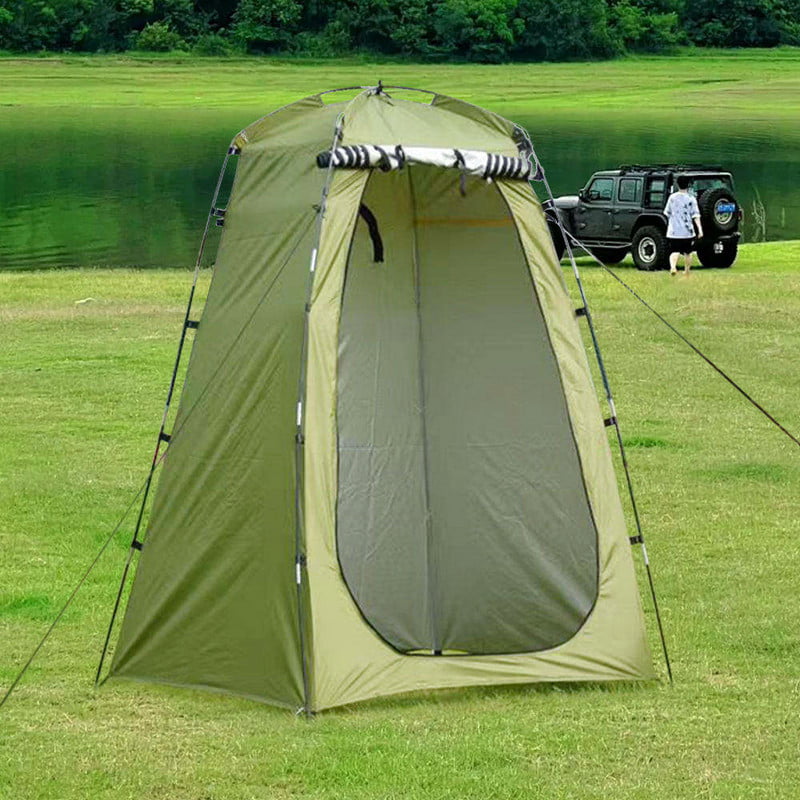
On the surface, many tents appear close to each other in structure. The difference is not always obvious when the tent is standing still. It becomes more noticeable when the product is opened, moved, and folded several times.
Small variations in stitching or frame connection do not usually change the appearance immediately. They show up later in how the structure responds during repeated use. A slight resistance here, a looser corner there, nothing extreme, but still noticeable in practice.
Another point is consistency across multiple units. When several tents are made under the same order, they are expected to behave in a similar way. If production control shifts slightly, small differences can appear between units even if the design is the same.
That is why production details are not just technical notes. They are part of how the product behaves after it leaves a Pop-Up Tent Factory.
What Can Long Term Manufacturing Experience Bring to Pop Up Tent Production
Manufacturing experience is not something visible in one step. It tends to show up in timing, sequence, and how smoothly work moves from one stage to another.
In some workshops, earlier experience helps reduce hesitation during cutting or assembly. People know where tension usually appears in fabric or where frame resistance tends to show up during folding. That knowledge does not remove testing, but it changes how quickly adjustments are made.
Material behavior is another area where repetition matters. Fabric and metal combinations do not behave exactly the same across all designs. Over time, teams start to recognize patterns without needing to overcheck every detail.
A Pop-Up Tent Factory with longer production practice often feels more stable in workflow rather than more complex. Steps are still the same, but transitions between them are less interrupted.
It is less about visible change and more about quiet consistency across repeated production cycles.
Message Us Right Now!
-
Mp: +86-18858091910
E-mail: sales@tenplaytent.com
ADD: No. 529, Guangyuan Road, Xiepu Town, Zhenhai District, Ningbo City, Zhejiang Province, China
-
Quick Links
Home Products About Us Advantage News Contact Us -
Product
Inflatable & Air Tents Glamping & Resort Tents Backpacking & Trekking Tents Automatic & Pop-Up Tents Family & Camping Tents Specialty Tents & Shelters Kids Tents Pet Tents Humanitarian & Large Tents Hammock -
Get Connected
 Camping Tent Manufacturer in China