

 English
  عربى
عربى 
How Does an OEM Inflatable Tent Factory Build Custom Tents
An inflatable tent may look straightforward when it is fully set up, but a custom version usually begins long before fabric is cut or air is added. A buyer may start with a rough sketch, a preferred size, a particular entrance arrangement, or an idea for printed graphics. Turning those requirements into a usable tent involves several connected decisions.
For an Oem Inflatable Tent Factory, the work is not simply about producing a tent from a fixed pattern. Custom production requires the design, fabric arrangement, air system, printed areas, sample, inspection process, quotation details, and shipping preparation to remain consistent with the original request. A change made during one stage can also affect another stage later.
For buyers, this makes the production process worth examining from a practical point of view. Knowing what happens between the initial idea and the finished product can make communication clearer and reduce confusion when custom requirements are discussed.
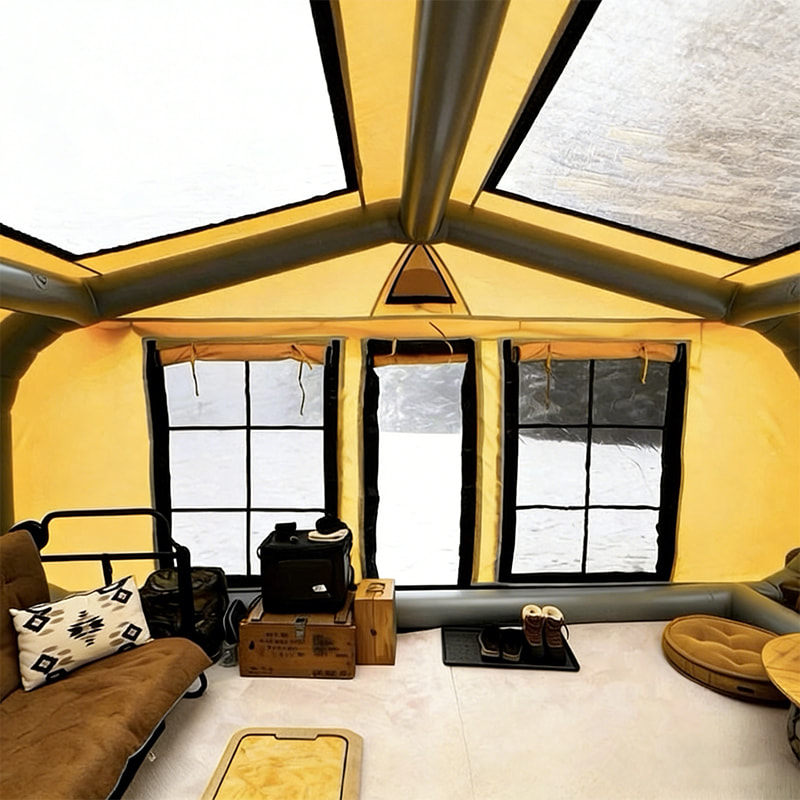
How Does an OEM Inflatable Tent Factory Turn a Sketch Into a Finished Tent
A custom inflatable tent often starts with information that is incomplete. A buyer may send a drawing, reference image, basic dimensions, or a description of how the tent will be used. These materials provide direction, but they do not always explain how every part should be arranged.
The factory needs to translate that initial idea into a design that can actually be produced. This usually involves looking at the overall shape, available interior space, entrances, openings, connection points, and areas where different pieces of fabric will meet.
A simple sketch might show a rectangular structure with an entrance in the center. During design preparation, however, the position of that entrance can affect nearby seams, internal space, and the way the tent is packed later. This is why a drawing should be treated as a starting point rather than a complete production instruction.
A practical design discussion may cover:
- Overall tent shape and dimensions
- Entrance and window positions
- Areas intended for graphics
- Connection points for accessories
- Folding and storage considerations
- Locations of valves and other openings
- At this stage, communication matters more than visual complexity. Clear information about what the tent needs to do gives the factory a better basis for preparing the design.
The design can then move toward a sample. If the sample reveals that an entrance feels too narrow, a graphic sits in an unsuitable area, or an opening interferes with another feature, those details can be adjusted before the production version is prepared.
What Parts of an Inflatable Tent Can Be Customized by an OEM Factory
Customization does not necessarily mean changing every part of a tent. In many cases, buyers have a specific set of requirements and leave other elements relatively unchanged.
The outer shape is one area that can be adjusted. A tent intended for a promotional space may need a different visual arrangement from one intended for a temporary outdoor shelter. Interior space can also influence the design, especially when people need to enter, move around, or place equipment inside.
Fabric appearance is another common area for customization. Color combinations, printed graphics, openings, and entrances can be coordinated with the intended setting.
| Custom Area | Questions to Consider |
|---|---|
| Overall shape | Does the shape suit the available space? |
| Entrance | Where should people enter and exit? |
| Windows | Are openings needed for visibility or airflow? |
| Graphics | Where should printed elements appear? |
| Color | How should different fabric areas be combined? |
| Accessories | Which supporting items need to be supplied with the tent? |
The important point is that these choices are connected. Moving an entrance may change the available printing area. Changing the shape may alter how fabric pieces meet. Adding an opening can also influence nearby construction details.
An Oem Inflatable Tent Factory therefore needs a clear set of confirmed requirements before production moves forward. Buyers can make this stage easier by separating essential requirements from optional preferences.
For example, a buyer might consider the entrance position essential but regard a particular decorative detail as adjustable. Making that distinction early can make later discussions more straightforward.
Why Does Valve Placement Matter in Custom Inflatable Tent Design
The valve is a small part of an inflatable tent, but its position can affect how the finished product is used. It needs to be accessible when the tent is being inflated, while also fitting naturally into the overall structure.
If a valve is placed in an inconvenient location, connecting the air equipment may become awkward. Its position can also affect how the tent is handled during packing and storage. For a custom design, these practical details should be considered alongside appearance.
Valve placement can also be related to the internal arrangement of the tent. A larger structure may have different air sections, while a simpler structure may use a more straightforward arrangement. The exact design depends on the tent itself and the intended use.
When discussing valve placement, buyers can ask:
- Is the valve easy to reach after the tent is positioned?
- Does its location interfere with graphics or entrances?
- Can the area around the valve be checked easily?
- Will the position remain practical when the tent is folded?
- Does the chosen arrangement fit the overall tent structure?
An Oem Inflatable Tent Factory may also consider how the valve area connects with surrounding fabric. The goal is not simply to find an empty place for the valve. Its position should make sense within the complete design.
This is a good example of why custom tent production involves more than appearance. A small structural choice can influence setup, handling, maintenance, and storage.
How Does an OEM Inflatable Tent Factory Handle Custom Graphics on Curved Fabric
Printed graphics can become more complicated when they are placed on curved or irregular sections of fabric. A design that looks balanced on a flat screen may not appear the same once it follows the shape of an inflated surface.
For that reason, graphic placement needs to be considered together with the tent design. Large letters, logos, patterns, or other visual elements should not be positioned without considering seams, entrances, windows, and changes in the fabric shape.
A useful way to approach the process is to divide the tent into visual areas. Some sections may provide a broad surface for graphics, while others may contain structural features that make printing less suitable.
| Tent Area | Graphic Consideration |
|---|---|
| Broad side panel | Suitable space for larger visual elements |
| Entrance area | Keep graphics clear of openings |
| Curved upper section | Check how the design follows the surface |
| Window area | Avoid placing important elements where visibility is interrupted |
| Seam area | Consider how separate fabric pieces meet |
An Oem Inflatable Tent Factory can use the approved artwork together with the physical tent layout when preparing the printed areas. Buyers should also check whether the final graphic arrangement matches the intended appearance rather than reviewing the artwork alone.
Small adjustments can sometimes make a noticeable difference. A word may need to move away from an entrance, or a graphic may need to be repositioned so that it does not cross an uneven section.
The key is coordination. The artwork should be treated as part of the tent design rather than as a separate decoration added at the end.
How Can Buyers Judge an Inflatable Tent Sample From an OEM Factory
A sample provides an opportunity to compare the physical product with the original request. It is easier to identify certain issues when looking at an actual tent than when reviewing drawings or digital images.
Buyers can begin with the overall shape. Does the sample have the expected appearance when inflated? Are the entrance, windows, and other openings positioned as discussed? Does the graphic placement correspond with the approved design?
The next step is to look at details that are easy to overlook.
Check whether:
- The seams appear consistent with the intended construction
- The valve is located where expected
- The entrance operates as planned
- Printed areas match the approved artwork
- Fabric sections are arranged correctly
- Accessories correspond with the agreed requirements
A sample review is also a useful point for recording changes. Instead of giving general comments such as "change the design," buyers can identify a specific area and explain what needs to be different.
An Oem Inflatable Tent Factory can then work from those comments when preparing the next production stage. Clear feedback is especially useful when several custom features are involved.
The sample should therefore be viewed as a communication tool as well as a physical product. It creates a common reference that both sides can use when discussing adjustments.
How Does an OEM Inflatable Tent Factory Check Air Retention Before Shipment
Once the tent has been produced, attention shifts toward whether the structure behaves as expected after inflation. Air retention is particularly relevant because an inflatable tent depends on maintaining its intended shape during use.
A factory can inspect areas where air may escape, including seams, valve connections, and other joining points. The inspection is not limited to one visible location because the tent is made from multiple connected sections.
The condition of the tent after inflation can also provide useful information. If one area changes shape unexpectedly or a connection does not behave as expected, that section may need closer inspection.
For buyers, it is useful to ask what kind of pre-shipment checking is carried out. An Oem Inflatable Tent Factory should be able to explain how the finished product is reviewed before packing.
This stage also connects with the sample review. If a particular feature was changed after the sample stage, that feature should receive appropriate attention during production inspection.
A practical inspection may consider:
- General appearance after inflation
- Condition of seams and joining areas
- Valve connections
- Shape of individual sections
- Printed surfaces
- Accessories and related components
The purpose is not to add unnecessary complexity to production. It is to make sure that the finished tent corresponds with the agreed design and is ready for the next stage.
What Should Be Included in an OEM Inflatable Tent Factory Quotation
A quotation is easier to review when it describes the product rather than presenting a single price without context. For a custom order, several details can influence what is actually being supplied.
The quotation should make the product requirements clear. This can include the tent design, dimensions, material choice, printed graphics, accessories, packaging, and other agreed requirements.
Buyers can compare quotations by looking at whether the same product specifications are being discussed. Two quotations may appear different simply because one includes certain accessories or packaging details while another does not.
A useful quotation discussion can cover:
- Tent design and size
- Material requirements
- Graphic requirements
- Included accessories
- Packaging arrangement
- Sample requirements
- Shipping arrangements
- Any agreed changes to the original design
The role of an Oem Inflatable Tent Factory at this stage is closely connected with communication. If a custom feature changes after the initial discussion, the quotation should reflect the updated requirement.
Buyers should also avoid judging a quotation by one item alone. The contents need to be read as a complete product description. This helps prevent misunderstandings between the quoted product and the product eventually produced.
Clear quotation details can also make later sample checking easier because the buyer has a written reference for what was requested.
How Does an OEM Inflatable Tent Factory Prepare Large Tents for Shipping
After production and inspection, the finished tent needs to be prepared for transport. Inflatable tents can occupy considerable space when fully opened, so they are normally handled in a folded and packed condition.
The folding process needs to take the fabric, valves, seams, printed surfaces, and other components into account. Accessories should also be organized so that they can be identified when the package is opened.
Packaging is not simply about making the product smaller. It should also make handling easier and keep related components together.
Before shipping, the factory can check whether:
- The tent has been inspected and prepared for packing
- Accessories are included as agreed
- Valves and connection areas are protected during handling
- Printed surfaces are packed appropriately
- Packaging information corresponds with the order
- The packed product is ready for transportation
An Oem Inflatable Tent Factory may also communicate packing details with the buyer when the order has particular handling requirements. This can be useful when the tent is part of a larger event setup or when several related components are shipped together.
Once the package arrives, buyers can compare the contents with the confirmed order information before putting the tent into regular use. Checking the tent, accessories, graphics, and visible condition at this point gives both sides a clear reference if any issue needs to be discussed.
From the initial sketch to the final package, custom inflatable tent production is therefore a sequence of connected decisions. Design choices affect customization, structural details influence setup, graphics need to follow the physical shape, samples provide a reference for changes, and inspection prepares the finished product for shipment. Keeping these stages connected helps buyers communicate their requirements more clearly while giving the factory a practical basis for production.
Message Us Right Now!
-
Mp: +86-18858091910
E-mail: sales@tenplaytent.com
ADD: No. 529, Guangyuan Road, Xiepu Town, Zhenhai District, Ningbo City, Zhejiang Province, China
-
Quick Links
Home Products About Us Advantage News Contact Us -
Product
Inflatable & Air Tents Glamping & Resort Tents Backpacking & Trekking Tents Automatic & Pop-Up Tents Family & Camping Tents Specialty Tents & Shelters Kids Tents Pet Tents Humanitarian & Large Tents Hammock -
Get Connected
 Camping Tent Manufacturer in China