


 English
  عربى
عربى 

How Can an Inflatable Tunnel Tent Handle Different Outdoor Events
Outdoor events rarely take place under identical conditions. The available ground, movement of visitors, layout of activity areas, weather, and expected use can all change from one setting to another. A temporary covered passage may need to connect two areas, guide people through a busy space, or provide a sheltered route between outdoor facilities.
An Inflatable Tunnel Tent can be arranged for these different situations, but its use still depends on careful planning. Placement affects how people enter and move through the space. Ground conditions influence anchoring, while changes in temperature and weather can affect the air pressure inside the structure. After an event, cleaning, inspection, and storage also influence how easily it can be prepared for another use.
How Event Layout Affects Inflatable Tunnel Tent Placement
Placement should begin with the movement pattern of the event rather than simply choosing an empty area. A tunnel positioned beside an entrance may serve a different purpose from one connecting two activity zones. Its location should allow people to approach the opening naturally without crossing unrelated areas or creating unnecessary congestion.
The direction of movement matters as well. When people are expected to travel through the passage in one general direction, the entrance and exit should be aligned with the surrounding paths. If people need to move in both directions, enough room should be left around the openings so that people can pause without blocking those coming behind them.
The surrounding area also deserves attention. Furniture, temporary displays, barriers, cables, and other objects can affect access. Keeping the immediate approach clear makes setup easier and reduces obstacles during use.
A simple layout check can include:
- Where people will approach the entrance
- Where they will leave the passage
- Whether the openings remain visible
- Whether nearby objects restrict movement
- Whether the structure connects naturally with the surrounding activity areas
The intended function should therefore be decided before the structure is positioned. A clear route often matters more than placing it in the largest available area.
What Ground Conditions Suit an Inflatable Tunnel Tent
The surface beneath a temporary structure affects both setup and stability. A reasonably firm and even area generally makes positioning easier, while loose soil, standing water, sharp debris, or large surface changes can create practical difficulties.
Grass can provide a suitable setting when the area is firm and reasonably level. Hard surfaces can also work when appropriate anchoring arrangements are available. The important point is not simply whether a surface is indoors or outdoors, but whether it allows the structure to sit securely and whether the surrounding area can accommodate the required fixing points.
Before setup, the ground can be checked for objects that could damage the material or interfere with placement. Small stones, branches, exposed edges, and discarded materials may become problems once the structure is under use.
| Ground condition | What to check | Planning consideration |
|---|---|---|
| Grass | Firmness and surface debris | Check whether fixing points can be used |
| Hard ground | Available fixing options | Confirm that the selected anchoring approach is suitable |
| Uneven ground | Changes in surface level | Look for a more suitable placement area |
| Damp ground | Water and drainage | Avoid areas where moisture may remain around the structure |
Ground inspection should take place before the tunnel is unpacked. Moving a partially installed structure can be inconvenient, particularly when the surrounding event area is already being prepared.
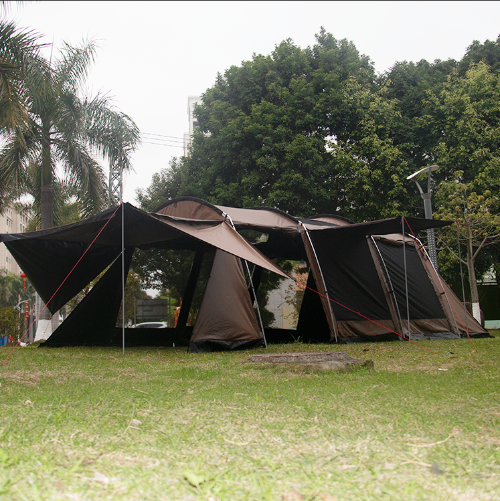
How to Anchor an Inflatable Tunnel Tent Outdoors
Once the ground has been assessed, the next concern is keeping the structure in position. Outdoor conditions can change during use, so anchoring should not be treated as a minor setup step.
The fixing arrangement needs to correspond with the surface. On suitable soil or grass, appropriate ground anchors can provide attachment points. Hard surfaces may require a different approach. Whatever method is used, the attachment points should be checked before inflation is complete and again once the structure has reached its intended shape.
The direction of potential movement is also worth considering. Wind can place pressure on exposed surfaces and may pull against the structure and its fixing points. Anchoring should therefore account for the position of the tunnel rather than relying on a single point of attachment.
It is also useful to inspect the fixing areas after the structure has been positioned. Loose connections, poorly placed anchors, or tension that is distributed unevenly can affect stability.
For temporary outdoor use, the basic sequence is straightforward:
- Assess the surface.
- Position the structure according to the planned layout.
- Install suitable fixing points.
- Inflate and check the shape.
- Inspect the connections and surrounding area.
- Recheck the setup if outdoor conditions change.
This process connects ground preparation with actual use and helps prevent placement decisions from being made after inflation.
How Tent Size Affects Available Event Space
The physical size of a tunnel is only one part of the space calculation. The area immediately outside the entrances also needs to remain usable. People need somewhere to approach, enter, exit, and continue toward the next part of the event.
A longer structure may create a useful connection between separate areas, while a shorter one may suit a more compact layout. Width also affects how people move through the passage. If the surrounding event space is limited, the entrance location can become just as important as the footprint of the structure itself.
Furniture and other temporary facilities should not be positioned so close to the openings that they restrict movement. When several structures are used in the same area, their entrances should also be considered together rather than separately.
| Planning factor | Question to consider | Effect on layout |
|---|---|---|
| Length | How far does the covered route need to extend? | Determines the area occupied between two points |
| Width | How should people move through the passage? | Influences movement space |
| Entrance area | Is there enough room outside the opening? | Helps prevent congestion |
| Surrounding facilities | What objects are nearby? | May affect placement and access |
Thinking about usable space in this way avoids treating the structure's footprint as the only requirement. A compact site can still work when the route and surrounding access are planned together.
How Weather Changes Inflatable Tunnel Tent Air Pressure
Outdoor conditions can change while an event is underway. Temperature is particularly relevant to an air-supported structure because changes in surrounding conditions can affect the pressure inside its air chambers.
A structure that was inflated earlier may not appear exactly the same after the surrounding temperature changes. This does not necessarily indicate a material problem. It means that the condition of the structure should be observed during use rather than checked only during initial setup.
Wind and rain also affect how the surrounding environment feels around the structure. Wet surfaces can change access conditions, while wind may place additional pressure on the outer material and fixing points.
The condition of the structure should therefore be checked when weather changes noticeably. Areas around valves, seams, connections, and anchoring points can receive particular attention.
If the structure appears to have changed shape, it is better to investigate the cause rather than immediately adding air. The surrounding temperature, visible damage, valve condition, and possible air loss should all be considered before making adjustments.
What to Check When an Inflatable Tunnel Tent Loses Air
A gradual change in pressure can have several possible causes. Temperature changes may alter the appearance of the inflated structure, while a damaged section, loose valve, or connection problem can allow air to escape.
The first step is to observe whether the change is occurring throughout the structure or in one particular area. A localized change can provide a useful clue when checking the equipment.
Valves and connection points are practical places to inspect. The surrounding material should also be checked for cuts, abrasions, punctures, or other visible changes. Care should be taken during inspection because repeatedly moving or pulling the material can create additional wear.
A basic inspection can follow this order:
- Check whether the pressure change is gradual or sudden.
- Look for visible damage on the outer material.
- Inspect valves and connection areas.
- Check whether one section appears softer than others.
- Review the surrounding ground for objects that may have caused damage.
- Repair or replace affected components according to the equipment instructions.
The cause should be identified before returning the structure to normal use. This is particularly relevant when the passage will remain in place for an extended outdoor activity.
How to Inspect an Inflatable Tunnel Tent After Use
Inspection should continue after people have left the event area. Dirt, moisture, surface contact, and repeated movement can leave small problems that are easier to deal with before the structure is packed away.
The material can first be cleared of loose dirt and debris. If the surface has become damp, it should be allowed to dry properly before folding. Storing wet fabric can create an environment where unwanted growth and unpleasant odors develop.
Attention can then turn to areas that receive repeated handling. Valves, seams, attachment points, and sections close to the ground can be checked for visible wear.
Cleaning does not need to involve aggressive treatment. A suitable cleaning method should match the material and the manufacturer's care instructions. Harsh handling may create more problems than the dirt being removed.
The inspection process can also record issues noticed during the event. For example, if one area required repeated adjustment, that location can receive additional attention before storage.
This creates a useful connection between one event and the next. Problems identified immediately after use are less likely to be forgotten when the structure is needed again.
How to Store an Inflatable Tunnel Tent Between Events
Storage begins with proper preparation rather than simply placing the folded material into a bag or storage area. The structure should be deflated according to its intended procedure, with loose dirt removed and moisture allowed to leave the material.
Folding should be handled carefully. Sharp objects, rough surfaces, and unnecessary pulling can damage fabric during packing even when the structure was undamaged during the event. Keeping the material reasonably clean and dry makes the next setup easier as well.
The storage area should protect the packed structure from conditions that could affect the material. Excess moisture, direct exposure, and contact with sharp objects can all create avoidable problems.
It is also useful to keep related components together. Valves, fixing equipment, inflation equipment, repair materials, and the main structure should be stored in a way that makes them easy to locate when another outdoor setup is planned.
Before the next use, a brief inspection can check for:
- Moisture or dirt left from the previous setup
- Visible damage to the fabric
- Valve or connection problems
- Missing fixing components
- Changes in the condition of the storage bag or protective packaging
Proper storage closes the practical cycle of outdoor use. When placement, ground preparation, anchoring, space planning, weather awareness, inspection, and storage are considered together, an Inflatable Tunnel Tent can be incorporated into different event layouts without treating every setup as identical.
Message Us Right Now!
-
Mp: +86-18858091910
E-mail: sales@tenplaytent.com
ADD: No. 529, Guangyuan Road, Xiepu Town, Zhenhai District, Ningbo City, Zhejiang Province, China
-
Quick Links
Home Products About Us Advantage News Contact Us -
Product
Inflatable & Air Tents Glamping & Resort Tents Backpacking & Trekking Tents Automatic & Pop-Up Tents Family & Camping Tents Specialty Tents & Shelters Kids Tents Pet Tents Humanitarian & Large Tents Hammock -
Get Connected
 Camping Tent Manufacturer in China