


 English
  عربى
عربى 

A shelter that is easy to carry can be useful for outdoor activities, but low weight alone does not determine how well it works once it is set up. A structure still needs to stay in place, provide usable space, allow air to move through the screened walls, and remain practical on different types of ground. These requirements can sometimes pull the design in different directions.
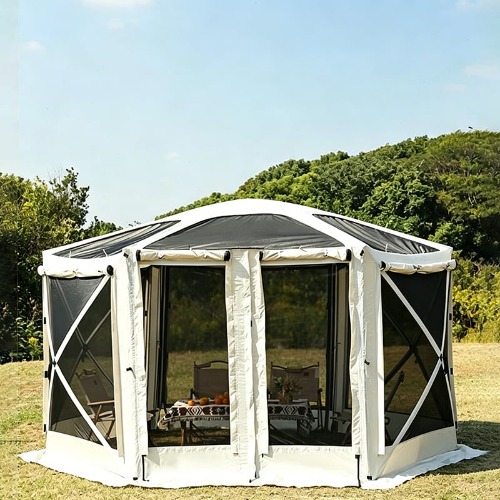
A Lightweight Screen House is therefore shaped by more than the amount of material used in its construction. Frame arrangement, connection points, mesh coverage, anchoring, floor design, and overall shape all influence how the shelter behaves outdoors. The surroundings matter as well. A setup on firm grass can behave differently from one placed on loose soil, an uneven surface, or an exposed area.
Looking at these details together gives a clearer picture of what lightweight outdoor shelter design involves. Instead of treating weight as a separate feature, it is more useful to consider how weight interacts with stability, airflow, anchoring, and the conditions where the shelter will be used.
How Does Frame Weight Affect Screen House Stability
The frame provides the basic shape of a screen house and supports the roof and screened sections. Reducing its weight can make transportation and handling easier, but the frame still needs enough structural support to maintain its shape after assembly.
A very light structure can respond more noticeably to movement around it, particularly when the shelter is placed in an open area. This does not mean that a lighter frame is unsuitable. Rather, its stability depends on how the frame distributes its load and how it connects with the ground.
Several parts of the frame work together:
- Vertical supports help maintain the height and shape of the shelter.
- Upper connections keep the roof section aligned with the side supports.
- Joints allow separate frame sections to work as one structure.
- Lower contact points provide locations for securing the shelter.
The relationship between these parts matters more than the weight of an individual component. A frame that is light but arranged properly can provide a practical structure, while simply removing material without considering the overall arrangement can make the shelter harder to keep in position.
This is why lightweight design should be considered as a balance between portability and structural behavior. The frame has to be light enough to handle without becoming disconnected from the conditions around it.
| Structural area | What it affects | What to consider |
|---|---|---|
| Frame supports | Overall shape | Position and connection between supports |
| Roof support | Upper structure | How the roof load is transferred |
| Joints | Frame continuity | Secure connections between sections |
| Lower points | Ground contact | Compatibility with anchoring methods |
Why Can Wind Affect a Lightweight Screen House So Quickly
Wind is one of the clearest examples of why weight cannot be considered on its own. An open shelter allows air to pass through the mesh, but its roof and frame can still respond to moving air. The effect can become more noticeable when the shelter stands in an open location with little protection around it.
Wind does not always arrive from one direction. Its movement can change around buildings, trees, fences, and nearby objects. A shelter that feels stable in one position may behave differently when placed somewhere more exposed.
The roof also deserves attention. A roof creates a larger surface for moving air to act against, while the screened walls determine how much air can pass through the sides. The relationship between these areas influences how the structure moves.
For outdoor use, the surrounding space should therefore be considered before setup. A sheltered backyard, an open field, and a breezy campsite do not present the same conditions.
A few practical observations can help:
- Look at the direction from which air is moving.
- Avoid placing the shelter where surrounding surfaces create sudden air movement.
- Check whether every frame section is properly connected.
- Secure the structure before spending time inside it.
The purpose is not to make the shelter behave like a permanent structure. A portable screen house is intended to remain relatively easy to move, so its design has to work with temporary anchoring rather than relying on heavy construction.
How Do Stakes and Guy Lines Keep a Screen House in Place
Once wind is considered, anchoring becomes an important part of the setup. Stakes connect the shelter to the ground, while guy lines can transfer movement from the upper structure toward those ground points.
The effectiveness of these components depends on placement. A stake inserted into loose ground may not hold in the same way as one placed into firm soil. A guy line that is attached without maintaining suitable tension may also provide limited support.
The anchoring system should work as part of the complete structure rather than being treated as an accessory added afterward.
For a portable shelter, useful anchoring considerations include:
- Ground contact — The fixing point needs to interact properly with the available surface.
- Line position — Guy lines need enough room to extend without becoming a trip hazard.
- Connection points — The frame and attachment points should remain properly connected.
- Setup tension — Lines should support the structure without pulling it out of alignment.
This relationship explains why two shelters with similar dimensions can behave differently in use. The frame, attachment points, and ground conditions all contribute to how well the structure stays where it was placed.
A Lightweight Screen House can remain portable while still requiring deliberate anchoring. Portability changes how stability is achieved; it does not remove the need for it.
Why Does Ground Type Matter When Setting Up a Screen House
The surface beneath a shelter is easy to overlook because attention naturally goes to the frame and roof. Yet the ground determines how the lower part of the structure can be secured and how evenly the frame sits.
Firm grass can provide a relatively straightforward setup, while loose soil may require more attention to the placement of stakes. Uneven ground creates another issue because the shelter may not sit at the same level at every support point.
A suitable location should provide enough room for the entire structure while allowing the frame to rest without unnecessary twisting. Objects hidden beneath grass or leaves can also interfere with the lower supports.
| Ground condition | Possible setup concern | Useful consideration |
|---|---|---|
| Firm grass | Usually provides clear anchoring points | Check each fixing point |
| Loose soil | Stakes may move more easily | Pay attention to anchoring |
| Uneven ground | Supports may sit at different levels | Position the shelter carefully |
| Hard surface | Conventional stakes may not work | Consider whether the shelter suits the location |
Ground conditions also influence comfort. A stable frame can still feel awkward if the floor area slopes or contains stones and other obstacles. Choosing the location is therefore part of setting up the shelter, rather than a separate task after assembly.
How Does Mesh Coverage Change Wind Resistance
Mesh serves an important purpose in a screen house because it allows air to move through the enclosed area while creating a barrier between people and flying insects. Its coverage and arrangement also influence how the shelter responds to moving air.
A wall that is largely made from mesh does not behave like a solid wall. Air can pass through the openings, reducing the amount of resistance created by a continuous surface. However, the roof and other covered sections can still interact with wind.
The balance between openness and coverage affects the indoor environment as well. More open mesh can support airflow, while additional covered sections may change how air moves through the space.
This becomes particularly relevant during warm outdoor activities. People may want an enclosed area for sitting or eating without creating a stuffy interior. Mesh design helps address that need, but the result depends on how the walls, openings, doors, and roof work together.
The mesh should therefore be considered part of the overall structure. It is not simply a layer added for insect protection. Its position, coverage, and connection with the frame can influence both comfort and the way air moves around the shelter.
Does a Screen House Floor Help Keep Crawling Bugs Out
The bottom of a screen house creates another design choice. Some structures include a floor, while others allow the occupants to stand directly on the ground beneath the roof and screened walls.
A floor can create a more defined boundary between the interior and the surrounding ground. This may help reduce some paths used by crawling insects, while also keeping personal items away from damp or uneven ground.
A floorless arrangement has its own practical characteristics. It can make the shelter easier to position around outdoor furniture and can simplify movement between the sheltered area and the surrounding ground. Cleaning can also involve the surface beneath the shelter rather than the shelter floor itself.
The choice depends on how the space is intended to be used.
For example, a dining setup may benefit from a clear separation between the ground and the seating area, while a casual backyard arrangement may place more importance on quick positioning and access.
The bottom edge also deserves attention even when no floor is present. Gaps between the lower mesh and the ground can provide an opening for crawling insects. The surface beneath the shelter, nearby vegetation, and food left around the area can all affect insect activity.
This is one reason the floor should not be viewed as an isolated feature. It changes the relationship between the shelter and the ground.
Why Does Screen House Shape Matter in Windy Conditions
Shape affects how the structure occupies outdoor space. A shelter with a broad roof and straight sides interacts with moving air differently from one with a different roof profile or support arrangement.
The shape also determines where the frame supports are located. Some layouts distribute supports around the perimeter, while others create different patterns around the interior. These choices influence both structural behavior and usable space.
For wind-exposed locations, the position of the shelter relative to nearby objects matters alongside its shape. A wall, tree, or building can change airflow around the structure, so the same design may experience different conditions depending on where it is placed.
Shape also has a practical effect inside. A shelter needs enough open area for chairs, a table, food, or other outdoor items without making movement around the supports uncomfortable.
This creates several connected considerations:
- The outer shape affects how the shelter occupies the site.
- The roof shape influences the space above occupants.
- Support placement affects movement inside.
- Door placement affects entry and circulation.
- The relationship between roof and walls affects airflow.
For a Lightweight Screen House, shape is therefore part of both structural planning and everyday use. Reducing weight without considering the shape can overlook how the shelter actually interacts with its surroundings.
How Should a Lightweight Screen House Be Used in Windy Weather
A lightweight outdoor shelter is designed for temporary use, so conditions should be considered before and during setup. Wind is particularly relevant because it can change quickly in open outdoor areas.
The surrounding location provides useful clues. A sheltered area may experience different air movement from an exposed space. The condition of the ground also determines whether the available anchoring method can provide a stable connection.
Before setting up, it is useful to check:
- whether the ground can accommodate the fixing points;
- whether the frame is fully connected;
- whether guy lines can be positioned safely;
- whether nearby objects may affect airflow;
- whether the planned location leaves enough space around the shelter.
During use, changes in weather should also be noticed. If the structure begins to move more than expected, occupants should assess the setup rather than assuming that its original position will remain unchanged.
The same principle applies to other outdoor conditions. A screen house may be used around a backyard seating area, beside a picnic table, or at a temporary outdoor gathering, but each location presents different requirements.
The useful question is therefore not simply how light the shelter is. It is whether the combination of frame, anchoring, mesh, floor arrangement, shape, and surroundings suits the intended use.
A Lightweight Screen House has to be light enough to handle while remaining sufficiently connected to the ground and its environment. That balance is what turns lightweight construction from a simple reduction in weight into a practical approach to outdoor shelter design.
