

 English
  عربى
عربى 

How Does a Bell Tent with Stove Hole Improve Cold Weather Camping
Cold-weather camping changes the way a tent needs to be planned. Lower temperatures can make sleeping areas feel less comfortable, while wet weather and limited airflow can create additional concerns inside a fabric shelter. A tent designed with an opening for a stove offers a practical way to bring a small heating appliance into the camping space while keeping the flue outside.
The arrangement is not simply about adding warmth. The position of the opening, the size of the stove, the route taken by the flue, the space around the heater, and the available airflow all affect how the setup works. Rain protection also deserves attention because an opening through the fabric can become a potential entry point for moisture if it is not properly arranged.
For campers comparing different tent designs, these details can make the difference between a convenient setup and one that requires considerable adjustment. Looking at the structure and everyday use together provides a clearer way to assess whether this style of tent suits cold-weather camping.
What Makes a Bell Tent with Stove Hole Different From a Standard Bell Tent
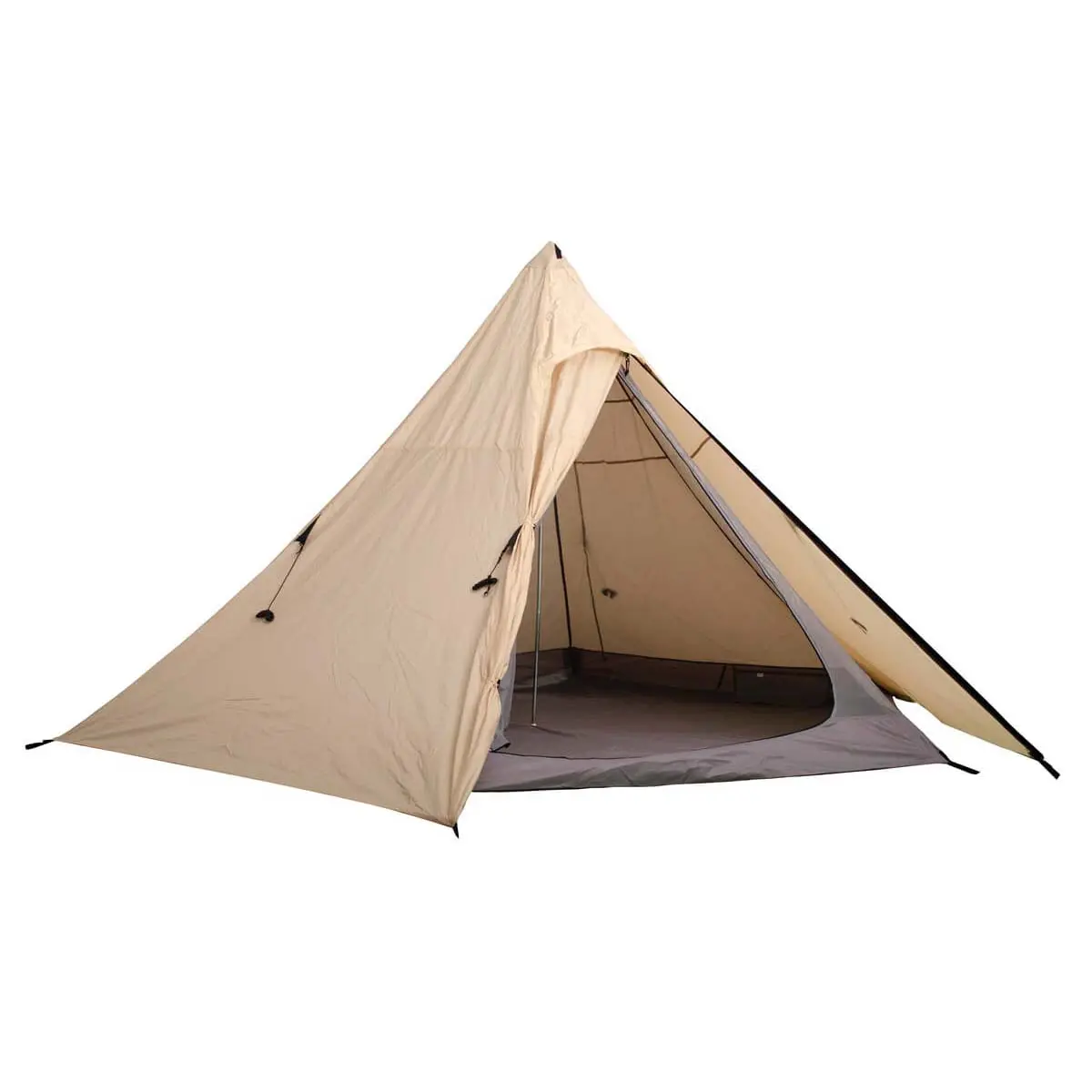
A standard bell tent is generally arranged around an open central living and sleeping area. When a stove opening is added, part of that arrangement changes because a suitable place must be provided for the flue to pass through the fabric.
The opening is usually positioned away from the main central area so that the stove can sit along one side of the tent. This leaves the center available for movement, sleeping equipment, seating, or other camping items. The exact position varies between designs, so it should be checked before deciding where the stove will stand.
Another difference is the way the tent needs to be planned before use. A normal tent can often be arranged around beds and storage without considering heat-producing equipment. A tent intended for stove use requires attention to the heater, its surrounding space, and the path of the flue.
| Feature | Standard bell tent | Tent with stove opening |
|---|---|---|
| Heating arrangement | Separate from the tent | Can accommodate a stove |
| Fabric opening | Not normally required | Provided for the flue |
| Interior planning | Focuses on living space | Includes a stove area |
| Weather considerations | Mainly rain and wind | Rain, wind, heat, and airflow |
The opening itself does not mean that every type of heater is suitable. The tent, stove, and flue need to work together as one arrangement.
How Do You Choose the Right Stove for a Bell Tent with Stove Hole
Choosing a stove should begin with the available space rather than with appearance or heating capacity alone. A heater that takes up too much room can make movement difficult, while a very small unit may not provide the desired level of warmth.
The shape of the stove matters as well. A compact design can leave more usable floor area around it. The position of the flue outlet also needs to correspond with the opening in the tent. If these parts do not align naturally, the setup can become awkward.
The type of fuel is another consideration. Different stoves have different operating requirements, and the user should follow the instructions supplied with the particular stove. The same applies to the flue arrangement.
A useful comparison before purchase can include:
- Available floor space
- Stove dimensions
- Flue position
- Fuel requirements
- Distance from nearby fabric and equipment
- Ease of moving around the stove
The tent size should also be considered. A spacious tent provides more room to position a heater away from sleeping and living areas. In a smaller shelter, every part of the layout becomes more important.
What Should You Know About the Stove Hole and Chimney Pipe
The opening in the fabric provides a route for the flue to leave the tent. It should not be treated as an ordinary hole cut into the material. Its surrounding area needs to accommodate the heat produced by the flue while maintaining the intended structure of the tent.
The flue should pass through the opening without placing unnecessary pressure on the surrounding fabric. Its route should also remain as straight and stable as the design allows. Bending or shifting the pipe can make the setup harder to manage.
Some tents use a dedicated heat-resistant section around the opening. Others may require an additional part to create a suitable connection between the pipe and the tent. These arrangements differ by product, so checking the supplied instructions is important.
| Area to check | Why it matters |
|---|---|
| Opening position | Determines where the stove can be placed |
| Opening size | Needs to suit the flue arrangement |
| Heat-resistant section | Helps separate hot surfaces from ordinary fabric |
| Pipe route | Affects stability and interior layout |
| Exterior connection | Helps manage the point where the pipe leaves the tent |
The key point is that the opening, pipe, and stove should be considered together. Changing one part of the arrangement may affect the others.
How Much Clearance Does a Stove Need Inside a Bell Tent
Space around the stove is not simply unused floor area. It provides room for movement and helps keep heat-producing surfaces away from items that may be damaged by heat.
Beds, sleeping bags, clothing, bags, chairs, and other camping equipment should not be placed directly beside the stove. The exact clearance depends on the stove and the instructions provided for it, so there is no single distance that applies to every setup.
The floor beneath the stove also deserves attention. A suitable heat-resistant surface can help protect the tent floor from heat, sparks, or accidental contact with hot material.
Placement should be considered before the tent is fully furnished. If the stove is installed after beds and storage have been arranged, there may be little practical space left around it.
A simple approach is to mark the intended stove area during setup and then arrange other equipment around that space. This can make movement easier and reduce the temptation to place personal items too close to the heater.
Why Does Ventilation Matter When Using a Stove in a Bell Tent
A heated tent still needs a steady flow of fresh air. Combustion uses oxygen, while the burning process produces gases that must leave the living space through the flue. Closing every opening in an attempt to retain heat can therefore create an unsuitable indoor environment.
Ventilation also affects comfort. Moisture from breathing, wet clothing, cooking, and damp outdoor equipment can accumulate inside a closed tent. Air movement helps remove some of that moisture.
The available doors and vents should be used according to the tent and stove instructions. A carbon monoxide alarm is also an important safety measure when combustion equipment is used in an enclosed camping space.
Rather than viewing ventilation as something that works against heating, it is better to treat the two as connected parts of the setup. The aim is to maintain a reasonable indoor environment while allowing the stove to operate as intended.
If smoke enters the tent, the stove behaves unusually, or the air becomes uncomfortable, the equipment should be checked and the manufacturer's guidance followed.
How Can You Protect a Bell Tent Stove Hole From Rain
Rain can create a problem around any point where the tent fabric has an opening. The area around the flue therefore needs to be arranged so that water has limited opportunity to enter.
A properly designed opening may include a heat-resistant flap or another protective section. Some setups also use an exterior cover around the pipe. These parts help manage the gap between the hot flue and the fabric while also dealing with changing weather conditions.
The pipe should not be positioned in a way that allows water to collect around the opening. During wet conditions, it is worth checking the area from both inside and outside the tent.
Several simple checks can be made during setup:
- Look for visible gaps around the pipe.
- Check whether rain can run directly toward the opening.
- Make sure protective sections sit in their intended position.
- Inspect the area after strong wind or heavy rain.
- Allow damp fabric to dry properly after camping.
The waterproof performance of the main tent fabric does not automatically determine how well the stove opening handles rain. The opening is a separate part of the overall design and should be assessed on its own.
How Does a Bell Tent with Stove Hole Perform During Cold Weather Camping
Cold-weather performance depends on more than the presence of a stove opening. The tent fabric, internal space, ventilation, stove size, weather conditions, and sleeping arrangement all contribute to the experience.
A stove can provide a source of heat inside the shelter, but the warmth will not remain evenly distributed at all times. Heat naturally rises, and areas close to the heater can feel warmer than areas farther away. Furniture and personal equipment can also affect how air moves through the space.
The layout therefore becomes particularly important in colder conditions. Sleeping areas can be kept away from the stove, while frequently used items can remain within easy reach without blocking airflow.
Moisture is another part of cold-weather camping. Wet shoes, coats, and outdoor equipment brought into the tent can add moisture to the indoor air. Ventilation remains necessary even when temperatures are low.
The following factors are useful when assessing the setup:
| Cold-weather factor | Practical consideration |
|---|---|
| Heat distribution | Position sleeping and living areas around the heater |
| Air movement | Keep ventilation available |
| Wet equipment | Provide a place for damp items away from the stove |
| Floor protection | Use a suitable surface beneath the heater |
| Weather exposure | Check the opening and pipe after wet or windy conditions |
The result is a camping environment shaped by several interacting elements rather than by the heater alone.
What Should You Check Before Buying a Bell Tent with Stove Hole
A purchase decision can be easier when the stove opening is treated as one part of the overall tent design. The location of the opening should suit the intended layout, while the fabric and surrounding area should be appropriate for the heat produced by the planned equipment.
Compatibility is another important point. The stove, flue, and opening need to work together without forcing the user to make unsuitable modifications. If additional parts are required, their availability should be checked before purchase.
It is also useful to consider how the tent will be used in different weather. A design that works well during dry camping may require different preparation when rain, wind, or low temperatures are involved.
Before choosing a model, check:
- Stove opening location
- Suitable stove types
- Flue compatibility
- Heat protection around the opening
- Ventilation arrangements
- Floor protection requirements
- Rain protection around the flue
- Care instructions for the tent fabric
A stove-ready tent is therefore not defined by the opening alone. Its practical value depends on how the opening, fabric, internal layout, ventilation, and heating equipment function together during outdoor use.
Message Us Right Now!
-
Mp: +86-18858091910
E-mail: sales@tenplaytent.com
ADD: No. 529, Guangyuan Road, Xiepu Town, Zhenhai District, Ningbo City, Zhejiang Province, China
-
Quick Links
Home Products About Us Advantage News Contact Us -
Product
Inflatable & Air Tents Glamping & Resort Tents Backpacking & Trekking Tents Automatic & Pop-Up Tents Family & Camping Tents Specialty Tents & Shelters Kids Tents Pet Tents Humanitarian & Large Tents Hammock -
Get Connected
 Camping Tent Manufacturer in China