


 English
 عربى


Blog
Home / Blog
News Center
Blog
-
2026-09-23Windproof Dome Tent: A Practical Guide to Quick Setup, Weather Protection, and OEM Performance
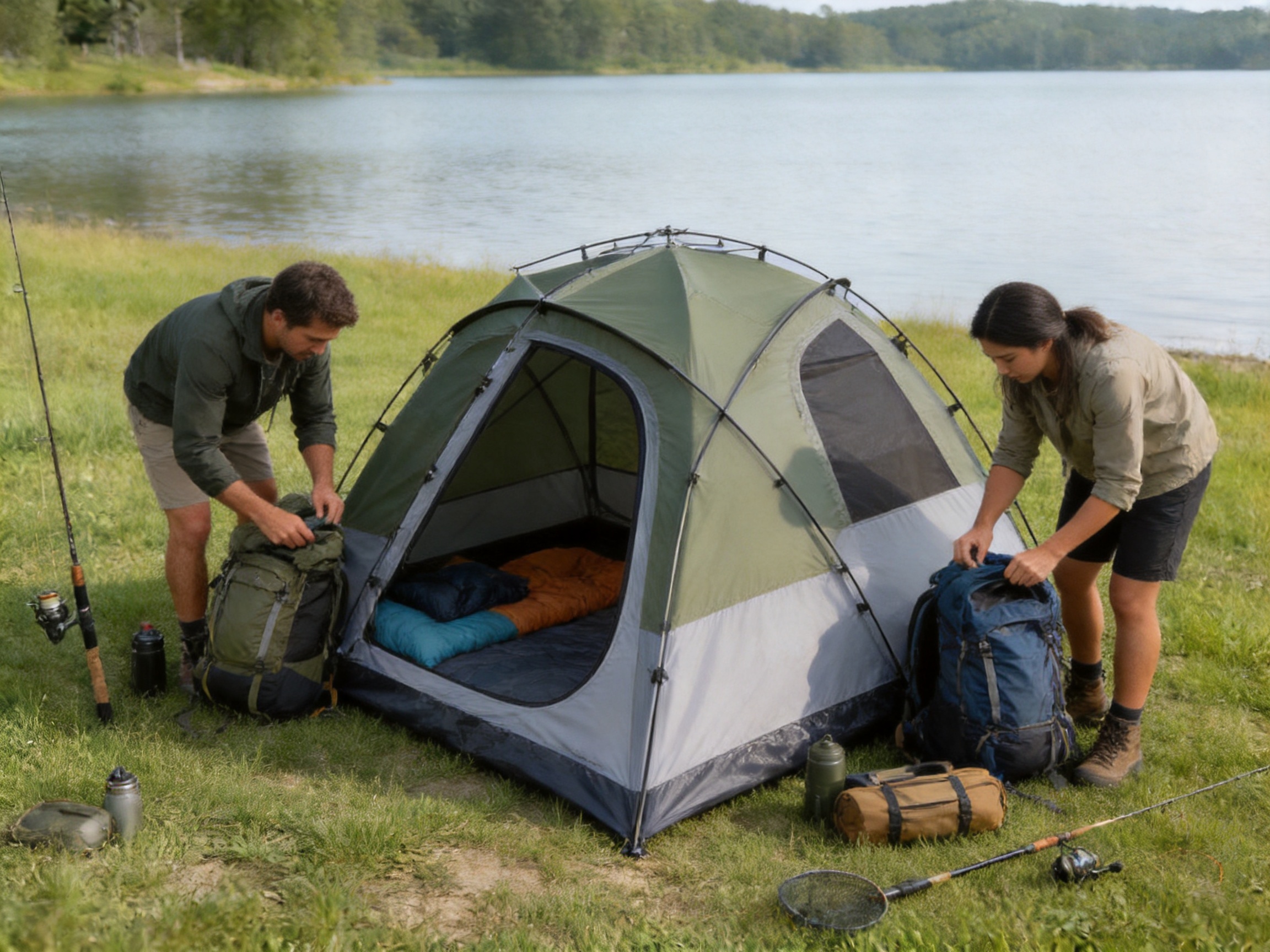 Outdoor shelter design is often a balance between portability, weather resistance, comfort, and manufacturing efficiency. A tent may be light enough to carry, but difficult to pitch. It may offer generous interior space, but perform poorly in exposed wind. It may use durable fabric, but lack sufficient ventilation. The Windproof Dome Camping Tent for two people is designed to address these common compromises through a compact dome structure, a streamlined frame, configurable waterproof materials, and a ventilation layout intended for real outdoor use. This quick-setup shelter is suited to weekend camping, hiking, fishing, festivals, short-stay recreation, and outdoor retail programs. Its two-person format offers a practical middle ground: more comfortable than a single-person shelter while remaining substantially easier to transport and pitch than a large family tent. For outdoor brands, distributors, and project buyers, the design also provides a useful foundation for OEM and ODM development. The tent is produced by Ningbo Zhenhai Tiansai Leisure Products Co., Ltd., a China-based outdoor-product manufacturer with a factory covering more than 13,000 square meters. The company combines product design, material selection, manufacturing, quality management, and export support in one supply chain. This integrated capability allows the product to be adapted for different climates, price levels, brand identities, and end-user requirements. Unlike a basic entry-level dome tent that may focus only on low price, this shelter is developed around the complete camping experience. Wind stability, setup speed, waterproofing, ventilation, reinforcement, packaging, and branding are considered together. That approach gives the tent advantages over competitors that rely on a generic frame or an inflexible standard specification. Windproof Dome Tent Quick Setup 2 Person Outdoor Shelter Understanding the Product Concept The Windproof Dome Camping Tent is a compact outdoor shelter designed for two occupants. Its structure uses a curved dome profile supported by a crossed-pole frame. This geometry creates a balanced shelter with sloping walls, a relatively low wind profile, and a straightforward pitching process. The intended user does not necessarily need a large expedition shelter or a full cabin-style camping system. Many outdoor trips require something faster and simpler. A hiker may arrive at camp after sunset. A festival visitor may have limited space and little time for assembly. An angler may move between lakeside locations. A weekend camper may want reliable overnight protection without carrying a bulky family tent. For these situations, a two-person dome tent is a practical choice. It provides sleeping space for two people, room for essential personal equipment, and an efficient packed size. The curved structure also makes good use of the available fabric and pole length, helping maintain a useful strength-to-weight relationship. The product can be positioned in several market segments. It may serve as an affordable recreational camping tent, a mid-range outdoor shelter, a promotional product for outdoor campaigns, or a private-label model for a camping brand. Through OEM and ODM adjustment, the same basic concept can be developed into different versions for retail, rental, travel, education, event, or field-use applications. Why the Dome Structure Performs Well in Wind Wind is one of the most important variables affecting tent performance. A shelter positioned in an open field, beside a lake, on a coastal campsite, or on elevated terrain may receive wind from changing directions. A structure with broad vertical walls can act like a sail, allowing gusts to place concentrated pressure on the fabric, poles, and anchoring points. The dome form reduces this effect by presenting a curved surface to the airflow. Instead of meeting a large flat wall directly, the wind can move around the rounded profile. The sloping sides also reduce the height of the exposed fabric and lower the center of the structure compared with a tall cabin-style design. The crossed-pole arrangement contributes to the stability of the shelter. When the poles intersect at the top, they form a supportive framework that distributes tension across the tent body. The crossed structure helps prevent the load from being concentrated at one isolated pole or corner. This is especially useful when a gust arrives from an angle rather than directly from the front. It is important to understand that no lightweight recreational tent is completely immune to severe weather. Proper site selection, correct staking, suitable guy lines, and appropriate setup remain essential. However, the dome geometry gives the product a sound structural starting point. Compared with a basic flat-walled shelter, it is better prepared to manage ordinary outdoor wind conditions. Competitor products may use similar dome shapes, but performance depends on the relationship between geometry, pole tension, fabric cut, seam placement, corner reinforcement, and anchoring details. A poorly balanced frame can still flex excessively even when the overall silhouette appears stable. This product concept focuses on those elements as part of one coordinated structure. Wind-Related Design Advantages The low and rounded profile helps reduce direct wind resistance. This makes the shelter appropriate for open grassland, exposed campsites, lakeside locations, and other areas where natural windbreaks may be limited. The crossed-pole frame supports the roof and sidewalls simultaneously. The load is spread through multiple contact points rather than depending on one central support. The extended lower fabric edge helps protect the area where the tent meets the ground. This can reduce the entry of wind-driven splash and improve the connection between the tent body and the campsite surface. Reinforced corners provide stronger attachment areas for the frame, stakes, and tension points. These locations often experience repeated stress during pitching, packing, and windy conditions. Optional structural reinforcement can be developed for buyers who require increased durability. Depending on the project, this may include changes to pole material, frame thickness, webbing, corner construction, or stress distribution. Quick Setup for Real Outdoor Situations A tent’s setup process affects the entire user experience. Complicated pitching can be frustrating after a long hike, during poor weather, or when a campsite is reached late in the day. It can also create incorrect assembly, which may reduce the tent’s stability and waterproof performance. The streamlined pole arrangement of this two-person dome tent is intended to make pitching easier. The frame is compact and logically organized, allowing users to identify the main structural components without dealing with a large number of separate sections. The design is suitable for users who want a practical shelter rather than a time-consuming construction project. A simple setup process also benefits retailers and outdoor program operators. Customers are more likely to enjoy and recommend a tent that is easy to understand. Rental companies and event organizers can reduce training time when the product has a consistent assembly method. For promotional or seasonal products, straightforward use can also reduce customer complaints and returns. Packing the tent away is equally important. A product that is easy to pitch but difficult to fold can become inconvenient during multi-stop trips. The compact dome format, coordinated pole system, and carry-bag configuration allow the product to be developed for practical transport and storage. Setup performance can be improved further through OEM adjustments. Buyers may request color-coded pole sleeves, printed setup instructions, larger carry bags, quick-reference diagrams, or packaging that emphasizes key assembly steps. These details do not necessarily change the overall structure, but they can significantly improve the user experience. Waterproof Protection and Fabric Options Waterproofing is not determined by fabric alone. A tent’s weather resistance depends on the combined performance of the fabric, coating, seams, zippers, corner construction, door design, ground contact area, and rainwater management. The product is therefore available as a configurable platform rather than a single fixed material specification. Coated polyester is suitable for many everyday camping applications. It offers a practical combination of weight, handling, cost, and water resistance. It can be developed in different weights and coating grades to meet the needs of entry-level, mid-range, or more performance-focused product lines. Oxford fabric may be selected when the market places greater emphasis on abrasion resistance and a heavier hand feel. This option can be useful for customers who expect more frequent use, rougher handling, or a stronger visual impression. Fabric selection can be matched to the target retail price and the intended environmental conditions. Custom waterproof treatments can be considered for specific regional requirements. Different markets may prioritize rain resistance, UV performance, fabric durability, low weight, color stability, or ease of cleaning. The manufacturing team can work with customers to identify a suitable combination of material type, coating level, fabric weight, and finishing requirements. Seam construction is another important part of the design. Water may enter through needle holes, poorly finished intersections, or areas where fabric tension is uneven. Reinforced seams and appropriate seam treatment help reduce these risks. Zippers must also be selected and installed with attention to alignment, flap coverage, and repeated operation. The lower perimeter of the tent plays a particularly important role in wet conditions. An extended edge helps shield the base from splash and damp ground. It also provides an additional surface for anchoring and tension control. When combined with suitable site preparation, this design detail can improve the shelter’s protection during ordinary rain. Weather Protection Compared with Basic Competitor Models Low-cost competitor tents often reduce material specifications to achieve the lowest possible purchase price. This may result in thinner fabrics, limited seam reinforcement, less durable zippers, or minimal attention to corner stress. Such products can be acceptable for occasional fair-weather use, but they may offer less confidence when conditions become unpredictable. This dome tent is positioned around a more balanced specification. It can be built with fabric and reinforcement choices appropriate to the customer’s market rather than being restricted to one inexpensive material. The result is a product that can compete on value without relying solely on low manufacturing cost. For brands seeking a distinctive product range, the ability to adjust waterproofing and durability is particularly valuable. A retailer can request a lightweight version for backpacking-oriented customers, a more durable version for general camping, or a branded model for promotional distribution. The manufacturing platform remains recognizable while the specification is adapted to the application. Ventilation and Interior Comfort A waterproof tent must also manage internal moisture. Two people sleeping inside a compact shelter release heat and humidity through normal breathing. If the air cannot move, condensation may collect on the inner surface of the rainfly or tent walls. A shelter that blocks rain but allows excessive moisture to accumulate can feel uncomfortable overnight. The design incorporates mesh ventilation panels to encourage airflow while helping keep insects outside. Mesh areas may be positioned on doors, side sections, or upper portions of the shelter depending on the selected configuration. Their location and size can be adjusted during OEM development. Upper ventilation zones allow warm air to escape. Since warm air naturally rises, high vents can help reduce the buildup of heat near the roof. The effectiveness of ventilation depends on the relationship between low-level air entry and high-level air exit, which is why the design considers multiple airflow points rather than a single opening. The large front entrance adds flexibility. It can remain closed during rain or wind, but it may be opened when conditions are calm to increase airflow and improve access. The entrance also makes it easier for two occupants to enter, exit, organize equipment, and change clothing. Ventilation is a key area where this product can outperform very basic tents. Some inexpensive shelters include only a small mesh door, leaving warm air with few escape routes. By combining mesh panels, upper vent areas, and a larger entrance, this design aims to create a more comfortable interior without sacrificing basic weather protection. Mesh density can be customized according to the expected insect environment, airflow requirement, and market preference. A buyer serving a humid region may place greater emphasis on ventilation. A buyer targeting cooler conditions may request a configuration that balances airflow with warmth. These decisions can be addressed during product development rather than after production begins. Interior Layout for Two People The two-person format is one of the product’s strongest practical advantages. A single-person tent can feel restrictive, while a larger family tent may be unnecessarily heavy and time-consuming for short trips. This shelter provides a compact sleeping space for two people while remaining suitable for transport by car, motorcycle, bicycle, or on foot, depending on the final packed specification. The dome shape creates usable headroom near the center of the tent. Although the sides slope toward the ground, the central area can support sitting, changing clothes, and organizing small equipment. This balance between floor area and overall volume makes the structure efficient for overnight use. A two-person shelter is also attractive to a broad customer group. Couples, friends, parents traveling with one child, fishing partners, and individual campers who prefer additional space can all find a use for the format. Outdoor retailers can position it as an accessible entry point into camping without committing customers to a large shelter system. Interior comfort also depends on the door design and ventilation openings. A sufficiently large entrance reduces the feeling of confinement and makes the tent easier to use in changing weather. With appropriate internal organization, occupants can separate sleeping areas from small personal items and footwear. For OEM projects, the interior can be adjusted through floor dimensions, peak height, vestibule development, door orientation, storage pockets, hanging loops, and other practical features. These changes allow brands to create a model that meets specific customer expectations while retaining the core benefits of the dome structure. Manufacturing Strength and Factory Capability The product is manufactured by Ningbo Zhenhai Tiansai Leisure Products Co., Ltd., an established outdoor-product enterprise based in Zhenhai District, Ningbo, Zhejiang Province. The factory covers more than 13,000 square meters, providing a substantial production base for tent development, material handling, assembly, inspection, and order fulfillment. Ningbo is an important port city with strong connections to international trade and manufacturing. This location supports the efficient movement of raw materials and finished goods for global customers. For importers and outdoor brands, supply-chain access is an important part of supplier selection because reliable production must be supported by dependable export coordination. The company specializes in the design, production, and sales of tents and related outdoor equipment. Its experience includes recreational shelters, camping products, and specialized designs. The business has also served as a designated global supplier for TENTSILE, demonstrating experience in working with an international outdoor brand and meeting demanding product-development expectations. A professional design team supports the transition from concept to finished product. This is important because successful tent development involves more than selecting a fabric and copying a silhouette. The team must consider pattern design, frame geometry, seam placement, fabric behavior, packing requirements, usability, and appearance. The company has developed and obtained appearance patents and utility model patents. These achievements indicate an ongoing focus on product innovation and structural development. For OEM and ODM customers, this design experience can shorten the distance between an initial idea and a manufacturable product. The factory’s manufacturing strength is also supported by a quality management approach intended to ensure consistent product performance. Quality control should be applied throughout the process, including incoming material inspection, cutting, sewing, frame preparation, assembly, functional checking, and final packing. This process-oriented approach is more dependable than relying only on visual inspection at the end of production. Integrated Product Development An integrated manufacturer can evaluate product decisions across multiple departments. When a customer requests a heavier fabric, for example, the change may affect the pole strength, seam construction, packing volume, carton size, and shipping cost. A supplier with design and production experience can identify these relationships early. Similarly, a request for a lighter tent may require more than reducing fabric weight. The frame, reinforcement points, zipper selection, and pattern efficiency may all need review. The product must remain stable and practical rather than simply becoming thinner in every area. The company’s product-development philosophy emphasizes practicality and comfort. Outdoor enthusiasts and professional users can provide valuable feedback about pitching, ventilation, access, durability, and packing. By incorporating testing and customer feedback into development, the manufacturer can refine products for actual use rather than designing only for appearance. OEM and ODM Customization Options The Windproof Dome Camping Tent can serve as a standard product or as the starting point for a customized program. OEM customers may request their own logo, colors, packaging, labels, and selected material specifications. ODM customers may work with the design team to modify the structure and create a more distinctive product. Fabric customization may include polyester or Oxford construction, fabric weight, coating grade, waterproof treatment, UV resistance, color, and surface finish. These options allow the product to target different climates and price levels. Frame customization may include pole material, diameter, section length, joint design, and structural reinforcement. The appropriate choice depends on the required balance between weight, cost, packability, and stability. Ventilation customization can involve mesh density, panel size, vent placement, door configuration, and airflow control. These details are useful when a product is intended for a specific region or season. Branding may include printed logos, woven labels, color matching, branded zipper pulls, interior labels, instruction cards, and retail packaging. Consistent brand presentation can help a tent stand out in a crowded outdoor market. Packaging can be adapted to the customer’s distribution model. Options may include a customized carry bag, retail box, color carton, shipping carton format, multilingual instructions, barcode labels, and protective packaging for international transport. Specification Area Available Development Options Commercial Benefit Fabric and Waterproofing Coated polyester, Oxford fabric, fabric weight, coating grade, UV resistance, custom treatments Supports different climates, durability levels, and retail price positions Frame Pole material, pole diameter, section design, structural reinforcement Balances stability, weight, pack size, and production cost Ventilation Mesh density, vent size, vent placement, entrance configuration Improves airflow and adapts the product to regional conditions Exterior Appearance Color matching, contrast panels, trims, logo placement Strengthens brand identity and shelf recognition Interior Features Storage pockets, hanging loops, floor dimensions, peak height Improves usability and creates product differentiation Packaging Carry bag, instruction sheet, retail carton, outer carton, labeling Supports retail presentation and organized global distribution Manufacturing Process from Concept to Finished Tent A reliable tent begins with a clear product brief. The manufacturer and customer first define the intended market, user group, climate, target price, fabric expectations, packed size, color direction, order volume, and branding requirements. This information provides a practical framework for technical development. The next stage is structural and pattern development. The design team evaluates the dome profile, pole crossing points, door opening, vent locations, floor shape, seam lines, and stress areas. Pattern efficiency is important because it influences fabric consumption and production yield. A well-planned pattern can reduce unnecessary waste while maintaining the required shape. Material selection follows the product brief. Fabric, mesh, webbing, zippers, buckles, pole components, guy lines, and carry-bag materials are reviewed as a complete system. Material compatibility matters because different fabrics may behave differently during cutting, sewing, coating, folding, and packing. Sample production allows the team to evaluate the physical product. A sample can reveal whether the poles assemble smoothly, whether the fabric tension is balanced, whether the entrance is sufficiently large, and whether the packed size is practical. Sample review is also the stage at which branding, colors, labels, and packaging can be checked. Once the specification is confirmed, cutting and sewing can proceed under controlled production requirements. Panels must be cut accurately so the completed tent maintains the intended geometry. Sewing quality is important at seams, corners, pole sleeves, door openings, and webbing attachment points. Frame components are prepared and checked for dimensions, connection quality, and smooth operation. The poles must fit their sleeves or attachment points correctly. A frame that is too tight may be difficult to assemble, while a frame that is too loose may not maintain the desired tension. Assembly and functional inspection bring the separate components together. The tent may be checked for overall appearance, symmetry, zipper operation, mesh condition, stitching, attachment points, and compatibility between the tent body, poles, rainfly, stakes, and carry bag. Final packing should preserve the product and ensure that all components are included. Instructions and accessories must be organized so the customer can identify them quickly. Consistent packing also helps reduce errors during warehouse handling and export shipment. Quality Management and Product Reliability Outdoor equipment is exposed to repeated handling, changing weather, transport vibration, ground contact, and user assembly. Quality management must therefore address both appearance and function. A tent can look attractive in a showroom but still disappoint customers if the zipper jams, a pole sleeve tears, or the carry bag cannot accommodate the packed product. Incoming material checks help verify that fabrics, mesh, poles, webbing, zippers, and accessories meet the approved specification. Material consistency is especially important for OEM programs because color, weight, coating, and texture should remain stable between production batches. In-process inspection helps identify problems before the product reaches final assembly. Sewing operators and quality personnel can monitor seam alignment, thread tension, reinforcement placement, and panel matching. Early correction is usually more efficient than repairing a completed tent. Final inspection can include visual checks, dimensional review, opening and closing tests, pole assembly checks, accessory confirmation, and packaging verification. Where required by the project, customers may also define additional inspection procedures or sampling requirements. The manufacturer’s experience in product design and international supply supports a practical understanding of quality from both technical and commercial perspectives. A successful outdoor product must not only function correctly; it must also arrive consistently, match the approved sample, and be suitable for the customer’s distribution channel. Advantages Over Generic Competitor Tents The first competitive advantage is structural balance. The curved dome shape and crossed-pole frame provide a more considered response to wind than a simple flat-sided shelter. The design does not depend on appearance alone; it uses geometry and tension distribution to support stability. The second advantage is practical setup. Some competing tents introduce unnecessary complexity through multiple poles, large connector systems, or confusing sleeve arrangements. This product focuses on a streamlined frame suitable for fast pitching and straightforward packing. The third advantage is specification flexibility. Many standard tents are offered in one fixed fabric, one color range, and one package format. This product can be configured with different fabrics, coatings, mesh options, colors, logos, and packaging. That flexibility allows outdoor brands to create a product that fits their market instead of accepting a generic solution. The fourth advantage is balanced ventilation. A basic budget tent may provide waterproof fabric but limited airflow. The use of mesh panels, upper vents, and a large entrance gives this design a stronger foundation for managing condensation and interior comfort. The fifth advantage is manufacturer support. Buyers are not limited to placing a repeat order for an existing model. They can work with a professional design and production team to adjust dimensions, materials, frame components, branding, and packaging. This is valuable for brands that want to develop a long-term product line. The sixth advantage is suitability for multiple commercial applications. The same core shelter can be positioned for recreational camping, festivals, hiking, fishing, promotional campaigns, outdoor education, and private-label retail. This broad application range can help buyers reduce the need to source completely different products for related market segments. Applications and Target Markets For weekend camping, the tent offers a compact shelter that can be transported easily and pitched without an extended assembly process. It is suitable for users who want dependable overnight protection without the size of a family cabin tent. For hikers and trekking beginners, the two-person format provides a practical introduction to shared camping. Depending on the final material and frame specification, the product can be adapted toward a lighter pack weight or a more durable general-use configuration. For festival and event use, quick setup and clear branding are important. Custom colors, printed logos, and retail-ready packaging can make the tent more visible and easier to identify. The straightforward structure is also useful when many tents must be assembled within a limited time. For anglers, the dome profile and weather protection are valuable at exposed lakeside locations. A larger entrance can improve access, while stronger fabric and reinforced attachment points can be selected for repeated transport and use. For outdoor retailers, the product can fill a middle category between low-cost temporary shelters and more expensive technical tents. It offers recognizable features such as waterproof fabric, a wind-conscious structure, ventilation, and OEM support without requiring the complexity of a large expedition system. For promotional campaigns, the tent provides a functional product that can carry a brand message beyond a single event. Custom colors, logos, packaging, and printed materials can be coordinated with the campaign identity. Responsible and Practical Product Development Outdoor brands increasingly consider the environmental and practical impact of materials. The company’s development direction includes greater attention to lightweight and environmentally friendly materials. This does not mean that every project must use the same material solution; instead, customers can discuss the balance between durability, weight, longevity, cost, and material preference. A durable tent can support more responsible consumption by remaining useful across multiple seasons. Strengthening high-stress points, selecting suitable fabric, improving zipper reliability, and designing a practical carry system can reduce premature replacement. Efficient pattern development may also help reduce fabric waste. Packaging can be reviewed to avoid unnecessary size and material while still protecting the product during transport. These decisions should be evaluated together because a change intended to reduce packaging may affect protection, warehouse handling, or retail presentation. For buyers seeking a more environmentally focused product, the specification can be discussed during the development stage. Possible considerations may include recycled-content fabrics where suitable, reduced packaging, repairable components, long-life construction, and optimized transport volume. The final choice should be based on verified material availability and the intended product performance. How Buyers Can Define the Right Specification Before requesting a quotation, buyers should identify the primary user and intended environment. A tent for occasional festival use may not require the same reinforcement as a tent for frequent fishing trips or rental operations. The target climate should also be considered. Regions with frequent rain may require a stronger focus on fabric coating, seam treatment, ground protection, and drainage. Hot and humid regions may prioritize mesh area, upper ventilation, and breathable interior design. Cooler climates may require a different balance between airflow and warmth. Buyers should define the expected packed size and transport method. A product intended for backpacking must be evaluated differently from one transported in a car. Pole material, fabric weight, carry-bag dimensions, and carton configuration all influence logistics. The target price range should be established early, but price should not be evaluated without considering expected use. A lower-cost specification may be appropriate for promotional distribution, while a more durable fabric and stronger frame may offer better value for a premium retail line. Branding requirements should include more than a logo. Color standards, label locations, instruction language, packaging format, barcode information, and retail display needs should be discussed before sampling. Clear requirements reduce revisions and help the production team prepare an accurate sample. Q&A: Windproof Dome Camping Tent What type of tent is this? It is a two-person dome camping tent designed for quick setup, waterproof protection, ventilation, and practical wind resistance. It is suitable for camping, hiking, festivals, fishing, and short outdoor stays. Why is the dome shape useful in windy conditions? The curved profile allows wind to move around the shelter more easily than a large flat wall. The crossed-pole frame also helps distribute pressure across the structure. Proper staking and site selection are still necessary, especially in strong weather. How quickly can the tent be assembled? The frame is designed with a streamlined pole structure to simplify pitching. Actual setup time depends on user experience, ground conditions, weather, and the final customized specification. Can the tent be used in rain? Yes. The product is designed as a waterproof dome shelter, with configurable coated polyester, Oxford fabric, and other waterproof treatment options. Seam construction, zipper coverage, correct setup, and suitable site selection all contribute to rain protection. What fabric choices are available? Common options include coated polyester and Oxford fabric. Buyers may also discuss fabric weight, coating grade, UV resistance, color, and customized waterproof treatments according to market requirements. Does the tent have ventilation? Yes. The design includes mesh ventilation panels, upper vent zones, and a large front entrance that can provide additional airflow when conditions permit. Vent placement and mesh density can be adjusted for OEM projects. Can the product be customized with a logo? Yes. Branding options may include logo printing, labels, color matching, branded packaging, instruction cards, and other visual details. The final method depends on the material, logo size, color requirements, and order specification. Can the dimensions be changed? The core model is designed for two people, but selected dimensions and interior features can be reviewed for OEM or ODM development. Changes to dimensions may affect fabric consumption, pole length, packing size, and cost. Can the frame be customized? Yes. Buyers can discuss pole material, structural reinforcement, pole diameter, and related frame requirements. The final frame should be selected according to the desired balance between stability, weight, durability, and price. Is this product suitable for retail brands? Yes. The tent can be developed for private-label and retail programs with customized colors, logo placement, packaging, labels, and instruction materials. Its broad application range makes it suitable for camping, hiking, festival, and general outdoor product lines. What makes the manufacturer suitable for OEM and ODM cooperation? The manufacturer has a factory of more than 13,000 square meters, a professional design team, experience in tent development, international supply experience, patented product development, and support for material, structural, branding, and packaging customization. Can the tent be used for professional field applications? The product can be adapted for selected professional or project-based applications, depending on the required performance. Buyers should define the environmental conditions, duration of use, loading expectations, fire or safety requirements, and inspection standards before confirming a specification. How should the tent be maintained? Users should dry the tent fully before long-term storage, remove dirt with suitable cleaning methods, avoid storing it while damp, inspect poles and seams regularly, and pack the components without forcing them into the carry bag. Maintenance requirements may vary according to the selected materials. Conclusion The Windproof Dome Camping Tent is designed around the practical needs of modern outdoor users. Its curved dome profile helps manage wind from changing directions, while the crossed-pole frame supports a stable and efficient structure. The streamlined setup process makes it useful for hikers, weekend campers, festival visitors, anglers, and other users who value fast deployment. Its waterproof performance can be adapted through coated polyester, Oxford fabric, coating grades, and custom treatments. Reinforced seams, durable zippers, strengthened corners, and an extended lower edge address common areas of wear and water exposure. Mesh panels, upper vents, and a large entrance help improve airflow and reduce condensation inside the two-person shelter. For outdoor brands, the product’s greatest advantage may be its development flexibility. Fabric, frame, ventilation, color, branding, interior layout, and packaging can be adjusted to match different market positions. This makes the tent more adaptable than a fixed generic model and allows buyers to build a product around their own customers. Supported by a factory covering more than 13,000 square meters, a professional design team, international production experience, patented development work, and an integrated OEM/ODM process, Ningbo Zhenhai Tiansai Leisure Products Co., Ltd. provides more than a basic finished tent. It provides a practical manufacturing platform for outdoor brands seeking dependable, customizable, and commercially suitable shelter products. For buyers comparing suppliers, the key value is the combination of product performance and manufacturing support. A well-designed dome structure, quick setup, configurable weather protection, comfortable ventilation, and professional customization create a strong foundation for a versatile two-person camping tent that can compete across multiple outdoor markets. References 1. Outdoor Industry Association. Principles of Outdoor Recreation Product Development. 2. International Organization for Standardization. General Guidance for Textile and Outdoor Product Quality Management. 3. European Committee for Standardization. Principles Relating to the Structural Design and Performance Evaluation of Temporary Outdoor Shelters. 4. American Society for Testing and Materials. Textile Fabric Testing and Water Resistance Evaluation Practices. 5. International Organization for Standardization. Guidelines for Quality Management Systems in Manufacturing. 6. Outdoor Gear Manufacturers Association. Best Practices for Tent Materials, Seams, Frames, and Field Durability. 7. Ningbo Zhenhai Tiansai Leisure Products Co., Ltd. Product Development and Manufacturing Information. Product: Windproof Dome Tent Quick Setup 2 Person Outdoor Shelter .profile-card { display: flex; align-items: flex-start; gap: 2rem; background-color: white; padding: 2rem; border-radius: 12px; box-shadow: 0 2px 10px rgba(0,0,0,0.05); } .profile-avatar { width: 120px; height: 120px; border-radius: 50%; overflow: hidden; flex-shrink: 0; } .profile-avatar img { width: 100%; height: 100%; object-fit: cover; display: block; } .profile-info { flex-grow: 1; } .profile-name { font-size:27px; font-weight: 900; margin-bottom: 1rem; color: #1a1a1a; } .profile-bio { line-height: 1.6; color: #333; } @media (max-width: 600px) { .profile-card { flex-direction: column; align-items: center; text-align: center; gap: 1.5rem; } } Wenqiao Lu — International After-Sales Service Manager With over eight years of experience in outdoor equipment customer support, she manages warranty claims, technical inquiries, replacement parts, and post-delivery service for overseas distributors and camping brands.
-
2026-09-21Luxury Inflatable Camping Tent for Comfortable Family Adventures
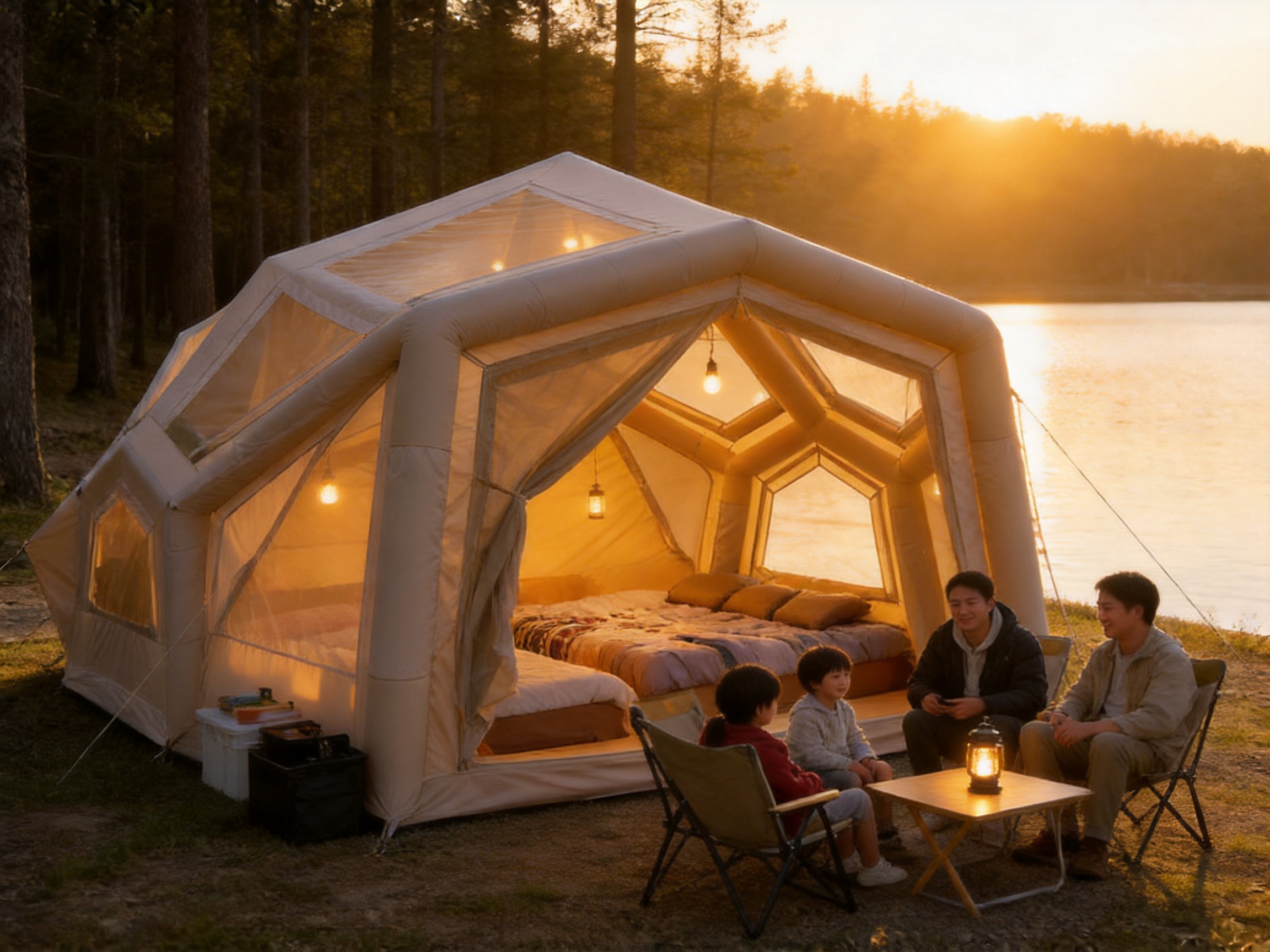 Outdoor travel is changing. Campers increasingly want the freedom of nature without giving up the comfort, space, and convenience associated with home. Traditional camping can be rewarding, but it may also involve complicated assembly, crowded interiors, heavy poles, limited headroom, and long preparation times. The luxury inflatable camping tent described in this article is designed to answer those challenges with a spacious, practical, and visually refined outdoor shelter for families, groups, resorts, events, and leisure applications. As a large family outdoor shelter, this inflatable tent combines quick installation with a comfortable interior environment. Its air-supported structure reduces dependence on rigid frame components while creating an inviting living area for sleeping, relaxing, dining, socializing, or taking shelter from changing weather. The result is a more flexible approach to camping: users can spend less time organizing equipment and more time enjoying their surroundings. The product is manufactured by Ningbo Zhenhai Tiansai Leisure Products Co., Ltd., a China-based tent producer with experience in design, production, export, and outdoor-product development. Operating from a factory of more than 13,000 square meters in Ningbo, Zhejiang Province, the company serves outdoor brands and customers in North America, Europe, Asia, and other international markets. This article examines the product’s main advantages, suitable applications, construction philosophy, manufacturing strengths, quality approach, customization potential, and purchasing considerations. It also explains why an inflatable family tent can be a strong alternative to conventional pole tents, compact backpacking tents, and basic event shelters. Luxury Inflatable Camping Tent Large Family Outdoor Shelter Cabin 1. A New Standard for Comfortable Outdoor Living Camping is often associated with simplicity, but simplicity does not have to mean discomfort. A modern family tent should provide room to move, protection from the elements, a welcoming appearance, and a setup process that does not overwhelm the people using it. The luxury inflatable camping tent is developed around these expectations. Its spacious design is intended to accommodate an entire family or a group of campers. Instead of forcing users to remain in a low, narrow sleeping area, the shelter can function as a broader outdoor room. Campers may use the interior for sleeping at night, relaxing during the day, organizing personal belongings, or gathering together when weather conditions make outdoor activities less convenient. The design is especially suitable for customers who value a higher level of comfort. Families with children can benefit from the additional usable space, while groups of friends can create a shared base for conversation and meals. At commercial sites, the tent can contribute to a more premium guest experience by offering an attractive and comfortable shelter that feels distinct from an ordinary temporary tent. The modern appearance is another important feature. Many conventional camping shelters prioritize basic function but offer limited visual refinement. This product is intended to create a more sophisticated atmosphere, making it suitable not only for private camping but also for glamping grounds, resorts, festivals, outdoor gatherings, and branded hospitality environments. Although appearance is important, the value of the tent comes from the combination of design, materials, inflation technology, usability, and manufacturing control. A visually appealing shelter must also be dependable, practical to transport, and capable of supporting repeated outdoor use. These considerations are central to the product concept. 2. The Advantages of an Inflatable Structure Fast and Convenient Setup One of the most noticeable advantages of an inflatable tent is the simplified installation process. Traditional large tents often rely on numerous poles, connectors, sleeves, and tension points. Assembly can require several people, careful reading of instructions, and considerable time, particularly when the shelter is large or the weather is unfavorable. The inflatable design uses air-supported structural elements. With the appropriate inflation system, the main supporting tubes can be filled quickly, allowing the tent to take shape without the same level of frame assembly required by a conventional pole shelter. The product information describes a one-click inflation system intended to make setup faster and more straightforward. This convenience is valuable for families, older campers, first-time users, event organizers, and commercial operators. A simpler setup can reduce frustration and help users establish their campsite efficiently. It may also allow a smaller team to install a large shelter, which can be particularly useful for hospitality businesses, outdoor activity providers, and temporary event locations. Fewer Rigid Components Rigid poles can be effective, but they add weight, storage requirements, and assembly complexity. They may also be vulnerable to bending or breakage if handled incorrectly. An inflatable structure replaces much of this rigid framework with air beams, creating a different balance between support, portability, and convenience. Reducing the number of separate structural components can make packing and inventory management easier. Users do not need to organize as many long pieces, and commercial operators can simplify equipment handling between locations. This does not eliminate the need for careful packing and maintenance, but it can improve the overall ownership experience. Family-Oriented Interior Space Compact tents are excellent for lightweight travel, but they are not always suitable for family camping. Limited floor area, low ceilings, and insufficient storage space can make longer stays uncomfortable. The large inflatable shelter is designed to provide a more generous interior, making it better suited to users who want a genuine basecamp rather than a minimal sleeping enclosure. A spacious interior can support multiple activities. During the day, it may serve as a lounge or dining area. At night, it can be arranged for sleeping. During rain or strong sunlight, it becomes a protected place where children and adults can rest. This multifunctional character makes the tent more useful than a shelter designed for only one narrow purpose. A More Relaxed Camping Experience Comfort influences how people experience the outdoors. When campers are not constantly struggling with installation, cramped space, or disorganized equipment, they have more energy to explore, communicate, and appreciate the natural environment. The inflatable tent supports this relaxed approach by combining outdoor access with a more comfortable living environment. It is not intended to replace every type of tent. Backpackers who count every gram may prefer a compact trekking shelter, while mountaineers may require specialized expedition equipment. However, for family camping, vehicle-based travel, glamping, leisure sites, and social outdoor activities, comfort and space can be more important than minimum weight. 3. Material and Weather-Protection Considerations The tent is described as using high-quality waterproof and wear-resistant fabric. These characteristics are important for a shelter expected to face outdoor conditions repeatedly. Waterproof fabric helps protect occupants and personal belongings from rain, while wear resistance supports the product’s ability to handle transport, installation, packing, and contact with outdoor surfaces. Outdoor fabrics must perform in more than one environment. A campsite may include soil, grass, sand, gravel, tree branches, moisture, and changing temperatures. The fabric must therefore be selected and processed with practical use in mind. Strong material alone is not enough; seams, attachment points, reinforced areas, zippers, valves, and load-bearing sections must also be handled carefully during production. A weather-resistant tent is not an invitation to ignore safe camping practices. Users should select an appropriate site, avoid standing water, secure the shelter correctly, follow inflation instructions, and inspect the tent before use. Severe storms, flooding, high winds, snow loading, and other extreme conditions may exceed the intended operating environment of any leisure shelter. Waterproof performance is also influenced by construction quality. Accurate cutting helps panels align correctly. Consistent sewing or bonding helps reduce weak points. Proper treatment of seams and stress areas supports the integrity of the finished structure. A manufacturer with an established production system can manage these details more consistently than an informal workshop with limited process control. Durability for Repeated Outdoor Use Families and commercial operators generally expect more than a single-use product. A durable tent should tolerate repeated setup and removal, folding, transportation, and ordinary exposure to outdoor conditions. Wear-resistant fabric contributes to this goal, while careful workmanship helps protect the areas that experience the greatest stress. Durability should be understood as a complete product characteristic. It includes fabric performance, seam quality, air-beam construction, valve reliability, attachment design, accessory compatibility, packaging, and user instructions. These elements must work together. The company’s focus on design, testing, customer feedback, and continuous improvement supports a more complete approach to product durability. 4. Comparing the Tent with Conventional Alternatives Different tent categories serve different customers. A fair comparison should consider the intended application rather than claiming that one shelter is ideal for every situation. The luxury inflatable family tent is most competitive where spaciousness, quick installation, visual appeal, and flexible use are important. Comparison FactorLuxury Inflatable Family TentTraditional Pole Family TentCompact Backpacking TentBasic Event Shelter Primary StrengthComfortable space with simplified inflation-based setupFamiliar structure and broad availabilityLow packed weight and mobilityLarge open coverage for short events Setup ExperienceDesigned for quick inflation and reduced frame assemblyMay require multiple poles and more assembly stepsUsually simple but limited by smaller sizeMay require a frame, anchors, and several installers Interior UseSleeping, relaxing, dining, and family activitiesPrimarily sleeping and basic shelterSleeping and essential storageOften open-sided and less suitable for private sleeping Visual PositioningModern, premium, and suitable for leisure settingsFunctional family camping appearanceTechnical and compactUtility-focused event appearance Best ApplicationsFamily camping, glamping, resorts, festivals, gatheringsGeneral recreational campingTrekking and lightweight travelTemporary shade, markets, and outdoor events Key ConsiderationRequires correct inflation, anchoring, and careRequires pole organization and assemblyOffers less space and comfortMay provide limited privacy and weather protection Compared with Traditional Pole Tents A pole tent may be familiar and widely used, but a large model can involve considerable assembly. Poles must be identified, connected, positioned, and inserted into sleeves or attachment points. When a family arrives late at a campsite or encounters rain during setup, these steps can become inconvenient. The inflatable alternative focuses on reducing this burden. Its structure is formed through inflation rather than by assembling an extensive rigid frame. This can provide a more accessible installation experience, especially for users who prefer practical convenience. It also creates a distinctive product identity for retailers and brands seeking something beyond standard pole-based designs. Compared with Backpacking Tents Backpacking tents are designed around portability and low weight. Their compact size is a major advantage on long-distance trails, but the same compactness limits interior comfort. They are not normally intended to function as a family lounge, dining room, or flexible day shelter. The large inflatable family tent serves a different market. It is better suited to customers traveling by car, staying at established campsites, operating a glamping location, or seeking a comfortable base for several people. Its value lies in usable living space and convenience rather than extreme weight reduction. Compared with Basic Event Shelters Basic event shelters often provide overhead coverage but may be open on several sides. They can be useful for shade, temporary displays, food service, or short outdoor activities. However, they may not provide the same privacy, enclosed comfort, or sleeping capability as a family tent. The inflatable tent offers greater flexibility because it can function as a private resting area, family shelter, festival lounge, or covered social space. Its more refined appearance may also fit better with premium events, resort settings, and hospitality projects where the shelter contributes to the overall atmosphere. 5. Flexible Applications in Different Outdoor Settings Family Camping The primary application is family camping. Parents can use the shelter as a central base for sleeping, changing clothes, organizing supplies, and resting between outdoor activities. Children can benefit from having enough room to move around safely inside rather than remaining confined to a small sleeping compartment. Family trips often involve different schedules and preferences. One person may want to rest while another prepares food or plans the next activity. A larger interior makes it easier to accommodate these routines. It also provides a comfortable fallback area when rain, heat, insects, or tiredness interrupt outdoor plans. Mountain, Forest, and Lakeside Trips The product is suitable for leisure camping in mountains, forests, and lakeside areas when the site and weather conditions are appropriate. Its waterproof and wear-resistant fabric supports outdoor use, while the spacious structure allows campers to enjoy longer stays with more comfort. Site selection remains essential. Users should choose level ground, maintain a safe distance from rivers and unstable slopes, remove sharp objects beneath the tent, and use suitable anchoring equipment. A well-designed tent performs best when installed correctly in a suitable environment. Outdoor Picnics and Sun-Shade Areas The tent can also be used as a sunshade or covered rest area during outdoor picnics. In this role, it provides a more substantial alternative to a small umbrella or open canopy. Families can place seating, coolers, games, and picnic supplies inside while maintaining a comfortable gathering point. A covered structure can be especially useful for multigenerational groups. Older family members may need a place to sit away from direct sun, while children can take breaks between activities. The shelter can help make a picnic more organized and comfortable without requiring a permanent structure. Festivals and Cultural Events Festivals require spaces that are easy to identify, practical to install, and adaptable to changing programs. The inflatable tent can be used as a rest area, hospitality lounge, staff shelter, information space, or small activity zone. Its modern appearance can also support the visual identity of an event. Event organizers should evaluate local regulations, fire-safety requirements, anchoring rules, occupancy limits, and access routes before installation. For commercial events, the operating team should receive clear training on inflation, deflation, storage, and emergency procedures. Friends’ Gatherings and Social Activities A spacious shelter can transform a campsite into a social environment. Friends can gather for meals, conversation, games, or evening relaxation without being fully exposed to wind and sun. The interior can be arranged according to the occasion, allowing users to create a lounge, dining area, or informal meeting space. Glamping and Resort Operations Glamping businesses and resorts often seek accommodation products that combine outdoor atmosphere with comfort and visual appeal. An inflatable tent can contribute to a distinctive guest experience by offering a spacious shelter that feels more like a temporary outdoor room than a basic camping enclosure. For commercial operators, product selection should include more than appearance. Important considerations include repeat-use durability, cleaning procedures, replacement parts, staff training, packing dimensions, maintenance requirements, and the ability to order consistent products over time. A manufacturer with OEM and international supply experience can be valuable in these areas. 6. Manufacturing Strengths and Product Development Experience The product is supported by the manufacturing capabilities of Ningbo Zhenhai Tiansai Leisure Products Co., Ltd. The company operates a factory covering more than 13,000 square meters, providing a production base for tent design, development, manufacturing, inspection, packaging, and export coordination. A large and established factory environment can support better division of responsibilities. Design teams can focus on usability and appearance, production personnel can follow defined manufacturing procedures, and quality staff can check materials and finished products. This structure is particularly important for large tents because their size increases the number of panels, seams, connection points, and structural details that must be controlled. Professional Design Capability The company has established a professional design team that develops products from the perspectives of practicality and comfort. This approach is important because outdoor products must perform in real environments rather than only look attractive in a catalog. Practical design includes considerations such as how easily the product can be installed, how users move inside it, how equipment is stored, how the tent is packed, and how the shelter responds to common outdoor conditions. Comfort involves usable space, atmosphere, privacy, ventilation planning, and the overall experience of staying inside the structure. The company also works with professionals and invites outdoor enthusiasts to participate in testing. Feedback from actual users can reveal details that may not be obvious during computer-aided design or factory inspection. A zipper may need repositioning, a storage feature may need reinforcement, or an inflation point may need to be more accessible. Continuous feedback helps connect product development with real camping behavior. Patents and Innovation Tiansai Leisure has successfully designed and obtained a number of appearance patents and utility model patents. These achievements indicate an ongoing focus on product innovation and design differentiation. For international buyers, original design capability can provide a useful advantage when developing a distinctive product line rather than selling a generic shelter. Innovation in the tent industry does not depend only on adding decorative features. It may involve structural improvements, more efficient assembly, better use of materials, improved comfort, simpler maintenance, or more practical configurations. A product that solves several everyday problems at once can offer stronger long-term value than one that focuses solely on visual novelty. International Market Experience The company’s products are exported to many countries and regions, including North America, Europe, Asia, and other markets. International experience requires awareness of different customer expectations, climate conditions, packaging needs, communication practices, and quality requirements. The company has also become the sole global designated supplier of the British company TENTSILE. This relationship reflects experience in producing outdoor products for an international brand and supporting overseas supply requirements. For buyers seeking a reliable OEM or wholesale partner, experience with established outdoor brands can be an important consideration. Quality Management Approach The company states that it strictly implements a quality management system to ensure that products meet international standards. Quality management is especially relevant to inflatable shelters because the product depends on the interaction of fabric, seams, air-support components, valves, anchoring points, and accessories. A responsible quality process may include incoming material checks, cutting accuracy control, sewing or bonding inspection, structural examination, inflation checks, appearance review, packaging inspection, and documentation. The exact inspection program should be confirmed with the manufacturer for each model and order, but the overall principle is clear: quality must be managed throughout production rather than checked only at the final stage. 7. Production Processes That Support Reliability Although specific factory procedures may vary by model and order, manufacturing an inflatable family tent generally requires a coordinated sequence of operations. Each stage affects the finished product’s performance, appearance, and service life. Material Selection and Incoming Inspection Production begins with the selection of suitable fabric, thread, webbing, valves, fasteners, reinforcement materials, and accessories. Materials should be checked for consistency, visible damage, color variation, thickness, and compatibility with the intended construction method. For an outdoor shelter, the material must balance strength, flexibility, waterproof performance, handling, and appearance. A fabric that is too rigid may be difficult to fold or sew, while one that is too light may not provide the desired durability. Matching the material to the product’s intended use is therefore an essential design and purchasing decision. Pattern Development and Precision Cutting Large tents contain numerous panels, and small cutting errors can become more significant during assembly. Accurate patterns help ensure that panels align correctly and that the structure maintains the intended shape after inflation. Computer-assisted design and controlled cutting can improve repeatability. Consistent panel dimensions are important for both appearance and performance. They also help maintain production consistency across wholesale orders, private-label programs, and replacement components. Sewing, Bonding, and Reinforcement Seams are among the most important areas of a tent. They connect panels, transfer loads, and help prevent water from entering the shelter. Depending on the material and design, manufacturers may use specialized sewing, bonding, seam treatment, or a combination of construction methods. High-stress areas require particular attention. Corners, webbing attachments, guy-line points, air-beam connections, door openings, and valve areas may need additional reinforcement. A strong design distributes forces instead of concentrating them in a single weak point. Air-Beam and Inflation-System Assembly The air-supported structure is central to the product. Air beams must be assembled carefully, connected securely, and integrated with the outer tent body. Inflation valves and related components must be positioned for convenient access and reliable operation. The one-click inflation concept is intended to simplify setup for the user. Before shipment, manufacturers should verify that the inflation system operates correctly and that the air-supported sections maintain their intended shape. Buyers should ask for model-specific instructions concerning inflation time, operating pressure, pump compatibility, inspection, and safe deflation. Functional Testing and Final Inspection Testing may include inflation checks, visual inspections, seam examinations, accessory verification, folding evaluations, and sample-based weather or leakage testing. A completed tent should be inspected for workmanship, cleanliness, labeling, packaging, and completeness of the accessory set. Final inspection is not a substitute for process control, but it provides an important last opportunity to identify issues before shipment. For large orders, buyers may also arrange pre-shipment inspections or agree on approved samples and quality standards in advance. 8. Comfort, Layout, and Everyday Usability A large tent is valuable only when its space is easy to use. Interior layout should support natural movement and allow users to organize equipment without blocking doors or ventilation areas. Families may place sleeping mats, folding chairs, luggage, tables, and personal items inside, so a practical arrangement is important. Users should consider how the tent will be used during different parts of the day. A sleeping layout may require clear floor zones, while daytime use may benefit from central open space. If the tent is used as a resort unit or event lounge, furniture placement should leave accessible walkways and maintain a comfortable sense of openness. Ventilation is another essential consideration. Even a spacious tent needs appropriate airflow, especially when several people are inside. Users should operate available ventilation features according to the instructions and avoid blocking vents with luggage or furniture. In warm weather, shade, airflow, and site selection all contribute to interior comfort. Privacy can also influence the user experience. A fully enclosed shelter offers a more private environment than an open canopy, making it useful for changing clothes, resting children, taking breaks, or creating a quiet area at a busy outdoor event. 9. Sustainability and Responsible Outdoor Use The company states that it plans to increase investment in lightweight and environmentally friendly materials. This direction reflects broader changes in the outdoor industry, where customers increasingly consider material efficiency, product longevity, packaging, repairability, and responsible end-of-life handling. A durable tent can support sustainability by remaining useful for many trips rather than being replaced after limited use. Proper storage is important: the shelter should be clean and fully dry before packing whenever possible. Moisture left inside folded fabric can contribute to odor, mildew, or material deterioration. Users should also avoid unnecessary damage to the campsite. They should follow local regulations, dispose of waste properly, respect vegetation, and minimize disturbance to wildlife. A comfortable shelter should enhance contact with nature, not create additional environmental harm. For commercial operators, sustainability can be incorporated into purchasing decisions. Buyers may evaluate whether the supplier offers repair components, packaging optimization, replacement parts, material information, and long-term product support. These considerations can reduce operating waste and improve the total value of the equipment. 10. Purchasing for Wholesale, OEM, and Resort Projects Businesses considering this product should define their intended application before placing an order. A family retail product may require different colors, packaging, accessories, and instructions than a resort or festival model. Clear requirements help the manufacturer recommend a suitable configuration. Important purchasing questions may include the target capacity, dimensions, fabric specification, color, logo placement, packaging format, inflation equipment, anchoring accessories, order quantity, production schedule, inspection procedure, and shipping method. Buyers should also confirm whether the product is intended for private-label sale, direct hospitality use, rental operations, or event deployment. OEM cooperation can provide opportunities for customization. Depending on the project, customization may involve appearance, branding, interior configuration, fabric selection, accessory combinations, packaging, manuals, and product features. Any custom development should be evaluated carefully because changes to dimensions or materials can affect inflation behavior, structural performance, shipping volume, and production cost. For wholesale buyers, consistency is particularly important. A supplier should be able to reproduce approved specifications across production batches. Color matching, logo placement, stitching quality, accessory compatibility, and packaging details all influence customer satisfaction and brand reputation. The manufacturer’s full-link service philosophy is intended to support customers from product development through production and overseas delivery. A one-stop partner can simplify communication, especially when a project requires design discussion, sample approval, production coordination, inspection, and after-sales support. 11. Care, Maintenance, and Safe Operation Correct use helps preserve the performance of any inflatable tent. Before installation, users should inspect the fabric, air beams, valves, zippers, guy lines, and anchoring points. Sharp objects should be removed from the ground, and the tent should be placed away from hazards such as dead branches, unstable slopes, and areas prone to flooding. The tent should be inflated according to the manufacturer’s instructions. Users should not exceed the recommended inflation level or use incompatible equipment. Once inflated, the structure should be checked for unusual deformation, visible damage, or air loss. If a problem is discovered, the tent should be repaired or assessed before continued use. Anchoring is essential, even when the air structure appears stable. Wind can place significant force on a large shelter. Pegs, guy lines, and attachment points should be installed correctly, and the shelter should be monitored if weather conditions change. After use, the tent should be deflated carefully, cleaned as appropriate, and dried completely before long-term storage. It should be folded according to the recommended method to reduce unnecessary creasing or pressure on valves and seams. Heavy objects should not be placed on the packed tent for extended periods. Repairs should be performed with compatible materials and appropriate procedures. Users should contact the supplier when they need advice about air-beam repair, replacement valves, fabric patches, or other components. Commercial operators should maintain a written inspection and cleaning schedule to support safe, consistent use across multiple guest groups. 12. Why This Product Is a Strong Competitive Choice The product’s competitive value comes from the way several benefits work together. It is not simply a large tent, and it is not only an inflatable structure. It combines generous family-oriented space, a premium appearance, simplified setup, flexible applications, weather-oriented materials, and support from an experienced outdoor-product manufacturer. Compared with a basic pole tent, it can offer a more convenient installation experience and a distinctive visual identity. Compared with a compact backpacking shelter, it provides substantially more room for families and groups. Compared with an open event canopy, it can deliver greater enclosure, privacy, and all-around usability. Compared with a purely decorative glamping structure, it is positioned around practical outdoor use as well as appearance. The manufacturing background further strengthens the product proposition. A factory exceeding 13,000 square meters, an experienced design team, international export capability, patent activity, outdoor testing, and a stated quality management system provide a foundation for stable production and product development. These advantages are particularly relevant to buyers who want more than a one-season novelty. Retailers can offer customers a high-comfort family shelter. Resorts can create attractive accommodation or lounge spaces. Event operators can establish flexible covered areas. Outdoor brands can explore OEM programs with a manufacturer experienced in international cooperation. The right choice still depends on the intended use. Customers who prioritize ultralight trekking should consider specialized backpacking products. Customers who require expedition-grade shelters for extreme environments should seek equipment designed for those conditions. However, for comfortable family camping, leisure travel, glamping, resort operation, festivals, and social outdoor activities, this inflatable shelter offers a compelling balance of convenience, space, and style. 13. Frequently Asked Questions What is the main purpose of this inflatable camping tent? The tent is designed as a spacious outdoor shelter for families and groups. It can be used for camping, leisure, relaxation, picnics, festivals, gatherings, glamping, and resort applications. Its interior can support sleeping, resting, dining, and social activities. How is an inflatable tent different from a traditional pole tent? An inflatable tent uses air-supported structural elements instead of relying primarily on a set of rigid poles. This can reduce the number of assembly steps and make setup more convenient. Users still need to inflate, anchor, inspect, and maintain the tent correctly. Is the tent suitable for family camping? Yes. The spacious design is specifically intended to accommodate an entire family or a group of people. It provides more usable living space than a compact backpacking tent and can function as a central family shelter during a camping trip. Can the tent be used in rainy weather? The product is described as using waterproof fabric and is intended to provide protection in outdoor conditions. However, safe installation, correct anchoring, suitable site selection, closed openings, and proper maintenance are also necessary. Users should follow the model-specific instructions and avoid extreme weather beyond the product’s intended use. Can it be used as a sunshade? Yes. The product can be used as a covered rest area or sunshade for outdoor picnics and similar activities. The exact configuration and ventilation approach should follow the manufacturer’s instructions for the specific model. Is it suitable for festivals and resort projects? It can be used for festival rest areas, event lounges, resort spaces, and other leisure applications. Commercial users should confirm local regulations, fire-safety requirements, occupancy rules, anchoring requirements, cleaning procedures, and operating conditions before deployment. What makes the product suitable for wholesale or OEM cooperation? The manufacturer has a factory exceeding 13,000 square meters, international export experience, a professional design team, patent development experience, and experience serving overseas outdoor brands. Buyers can discuss product specifications, packaging, branding, accessories, and other customization requirements according to their project. What should buyers confirm before ordering? Buyers should confirm dimensions, capacity, material specifications, color, branding, inflation equipment, anchoring accessories, packaging, inspection standards, order quantity, production schedule, shipping terms, warranty arrangements, and after-sales support. A sample approval process is recommended for customized or large-volume orders. How should the tent be stored? The tent should be cleaned and fully dried before storage whenever possible. It should be deflated, folded according to the instructions, protected from sharp objects, and kept in a dry environment away from excessive heat, moisture, and direct sunlight. Does the manufacturer support product development? The company has a professional design team and develops products with attention to practicality and comfort. It also uses feedback from professionals and outdoor enthusiasts to improve product performance. Buyers should discuss the available development and customization scope directly for their specific project. Conclusion The luxury inflatable camping tent provides a practical response to the evolving expectations of outdoor customers. It offers the space families need, the quick setup many users prefer, the weather-oriented materials required for outdoor use, and the modern appearance demanded by glamping, resort, and event applications. Its greatest advantage is versatility. The shelter can serve as a family campsite, a picnic shade area, a festival lounge, a social gathering space, or a commercial outdoor accommodation unit. This ability to support multiple uses increases its value for both individual customers and professional operators. The manufacturing foundation is equally important. Ningbo Zhenhai Tiansai Leisure Products Co., Ltd. combines a substantial factory base, design and development experience, patent activity, international market service, outdoor-product expertise, and a stated commitment to quality management. These strengths support the production of tents intended to deliver comfort, convenience, and dependable outdoor performance. For customers seeking an alternative to crowded traditional tents, complicated pole systems, or basic open shelters, this inflatable family tent presents a more refined way to experience nature. With correct installation, responsible care, and suitable site selection, it can become a durable and flexible centerpiece for memorable outdoor adventures. References 1. Product information supplied for the luxury inflatable camping tent, including its described features, applications, materials, and inflation system. 2. Company information supplied for Ningbo Zhenhai Tiansai Leisure Products Co., Ltd., including factory capacity, design experience, export markets, and quality-management approach. 3. General principles of outdoor tent design, including fabric selection, seam construction, structural reinforcement, anchoring, ventilation, and maintenance. 4. General guidance for safe family camping, outdoor shelter installation, weather awareness, campsite selection, and responsible outdoor recreation. 5. General principles of OEM and wholesale product development, including sample approval, specification control, packaging coordination, inspection, and after-sales support. Product: Luxury Inflatable Camping Tent Large Family Outdoor Shelter Cabin .profile-card { display: flex; align-items: flex-start; gap: 2rem; background-color: white; padding: 2rem; border-radius: 12px; box-shadow: 0 2px 10px rgba(0,0,0,0.05); } .profile-avatar { width: 120px; height: 120px; border-radius: 50%; overflow: hidden; flex-shrink: 0; } .profile-avatar img { width: 100%; height: 100%; object-fit: cover; display: block; } .profile-info { flex-grow: 1; } .profile-name { font-size:27px; font-weight: 900; margin-bottom: 1rem; color: #1a1a1a; } .profile-bio { line-height: 1.6; color: #333; } @media (max-width: 600px) { .profile-card { flex-direction: column; align-items: center; text-align: center; gap: 1.5rem; } } Qiao Ruxin — After-Sales Service Supervisor more than six years of experience handling product inspections, installation guidance, warranty cases, and customer feedback for camping and inflatable tent orders, coordinating closely with production and overseas clients.
-
2026-09-19Heavy-Duty Cotton Canvas Yurt Tent: A Premium Solution for Luxury Glamping and Outdoor Hospitality
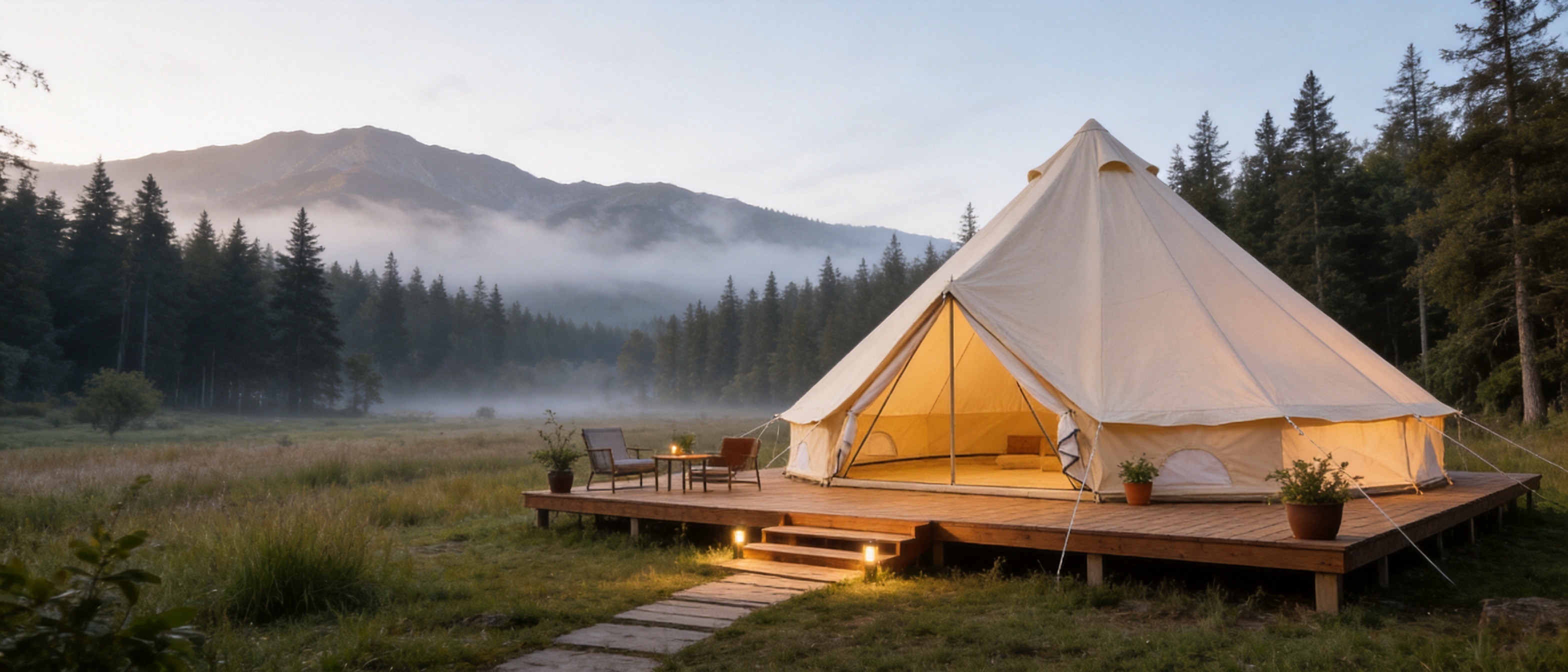 The modern outdoor hospitality market is moving beyond basic camping. Guests increasingly expect spacious accommodation, attractive architecture, reliable weather protection, and a comfortable connection with nature. For resort owners, eco-retreat developers, event organizers, and professional outdoor operators, the tent is no longer simply a temporary shelter. It is a central part of the guest experience, an important element of site design, and a long-term business investment. The heavy-duty cotton canvas yurt glamping tent is designed to meet these expectations. Combining a spacious circular interior with breathable natural canvas, reinforced structural components, an integrated floor, and protective treatments against fire, water, and ultraviolet exposure, this type of yurt offers a practical and visually distinctive accommodation solution. It is suitable for high-end eco-resorts, boutique glamping destinations, luxury basecamps, outdoor events, and carefully planned private retreats. Unlike lightweight recreational tents that prioritize portability above all else, this yurt is developed for comfort, durability, and repeated seasonal use. Its generous interior can be configured as a bedroom, lounge, dining space, wellness room, children’s activity area, or multi-purpose hospitality unit. The circular layout improves the use of interior space while creating a memorable architectural atmosphere for guests. Manufactured by Ningbo Zhenhai Tiansai Leisure Products Co., Ltd., the tent reflects the company’s experience in outdoor product design, material selection, production management, and international supply. With a factory covering more than 13,000 square meters and a product development team experienced in outdoor equipment, the manufacturer is positioned to support both standard orders and professional OEM requirements. A Purpose-Built Yurt for Premium Outdoor Accommodation A yurt tent has a distinctive identity that separates it from conventional rectangular camping tents. Its circular floor plan encourages a natural flow through the interior, while the high central structure creates a greater sense of volume than many standard shelters. This combination of space and character makes it especially appealing in hospitality environments where design contributes directly to customer satisfaction. The heavy-duty cotton canvas yurt is intended for use where guests need more than basic protection from the elements. The breathable fabric helps moderate the indoor atmosphere, while windows, wall vents, and mesh openings support cross-ventilation. The integrated zipped-in floor creates a more complete enclosure, improving cleanliness and reducing the exposure of the interior to damp ground, insects, and dust. For resort operators, the structure can serve as a foundation for a wide range of layouts. A double bed, bedside furniture, storage cabinets, seating, lighting, and decorative features can be arranged within the circular space. Depending on the selected size and configuration, the same basic shelter concept can be adapted for couples, families, small groups, or commercial activity areas. The visual impression is also important. Natural canvas has a warm, textured appearance that harmonizes with forests, mountains, grasslands, beaches, and rural landscapes. Compared with highly synthetic shelters, cotton canvas often creates a more refined and natural atmosphere. This helps operators develop a recognizable site style without relying on excessive decoration. Key Product Advantages Breathable High-Density Cotton Canvas The main body of the yurt is made from high-density cotton canvas selected for strength, comfort, and breathability. Natural canvas allows a measured exchange of air through the fabric structure, helping reduce the heavy, enclosed feeling that can occur inside poorly ventilated synthetic shelters. This characteristic is particularly valuable in warm climates, where indoor comfort affects guest reviews and repeat bookings. Breathability also contributes to condensation management. When warm, moist indoor air meets a cold, non-breathable surface, water droplets can form on the interior walls. Cotton canvas does not eliminate condensation under every condition, but its natural air exchange can help regulate moisture more effectively when combined with appropriate ventilation practices. The fabric’s substantial weight gives the tent a stable and premium feel. It is less likely to flap excessively than lightweight recreational fabric, and its appearance remains appropriate for long-term hospitality installations. The fabric can also be maintained through proper cleaning, drying, inspection, and storage procedures, helping operators extend the useful life of the shelter. Fire-Retardant Treatment for Greater Operational Confidence Fire safety is a critical consideration for any accommodation or event structure. The canvas is treated with fire-retardant properties to reduce the speed at which flames can spread across the fabric. This feature does not make the tent fireproof, and it does not replace local fire regulations, fire extinguishers, safe heating practices, or emergency planning. However, it provides an important additional layer of protection compared with untreated fabric. For professional operators, the fire-retardant treatment can support a more responsible risk-management program. Tents should still be positioned with suitable separation distances, and all heating, cooking, electrical, and lighting equipment should be installed and operated according to local requirements. Clear guest instructions are also recommended, particularly in sites where open flames, fire pits, or portable heaters are present. When evaluating competing tents, buyers should examine whether fire-retardant treatment is included as part of the standard fabric specification or is available only as an optional upgrade. The integrated protection offered by this yurt makes it better suited to commercial environments where safety documentation and consistent material performance are important purchasing criteria. Water-Resistant Protection for Variable Weather Outdoor accommodation must perform in more than ideal weather. The canvas is treated to improve resistance to rain and surface moisture, helping protect guests, bedding, furnishings, and personal belongings during changing conditions. The sloped roof design encourages water to run away from the upper surface, while correct installation and tensioning help prevent water from collecting in low areas. Water resistance is influenced by many factors, including fabric condition, seam quality, tent tension, site drainage, wind exposure, and maintenance. For that reason, the best results are achieved when the tent is installed on a well-drained platform or prepared ground surface. Operators should inspect seams, attachment points, zippers, and roof areas regularly, particularly before a new operating season or after severe weather. Compared with low-cost tents made from thin fabrics, a heavy-duty canvas yurt offers a more substantial barrier against outdoor conditions. Its protective treatment and robust construction make it suitable for repeated use in professional settings, while its breathable nature helps preserve a more comfortable internal environment than many fully coated synthetic alternatives. UV-Resistant Performance Ultraviolet radiation gradually weakens many outdoor fabrics. Prolonged sun exposure can cause fading, fiber degradation, coating failure, and reduced tear strength. The yurt’s UV-resistant treatment is intended to help the canvas withstand regular exposure to sunlight, which is essential for resorts and camps operating throughout the warmer months. UV resistance is particularly valuable in open landscapes where shade is limited. It helps the tent maintain its appearance and functional performance over time, although no fabric should be expected to remain unaffected by continuous exposure. Strategic site planning, natural shade, seasonal rotation, and protective storage during inactive periods can further reduce solar stress. This feature gives the yurt an advantage over basic untreated canvas structures and inexpensive temporary shelters. For commercial customers, maintaining a consistent appearance across multiple accommodation units can strengthen the visual identity of a property and reduce the frequency of premature fabric replacement. Heavy-Duty Cotton Canvas Yurt Glamping Tent with Fire-Retardant Waterproof UV Protection Structural Design for Stability and Comfort Reinforced Center Pole The center pole is one of the most important structural components in a circular yurt tent. It supports the highest part of the roof and helps distribute loads across the frame. This model uses a reinforced heavy-duty center pole designed to provide reliable support during repeated outdoor use. A well-designed center pole contributes to the spacious interior by creating a high central point without requiring a complicated network of internal supports. The result is a room that feels open and comfortable while remaining structurally organized. Furniture can be arranged around the perimeter, and the central area can be preserved for movement or used as a visual focal point. Professional installation remains essential. The pole must be positioned correctly, the roof must be tensioned evenly, and all connections should be checked before occupancy. Operators should also consider regional wind and snow conditions when selecting a site and determining whether additional anchoring or engineering measures are necessary. Integrated Zipped-In Floor The integrated zipped-in floor is a major practical advantage for commercial glamping operations. Rather than treating the floor as a separate loose component, the design connects it to the main tent structure through a zipper system. This creates a more complete enclosure and simplifies the process of preparing the unit for guests. A connected floor helps reduce drafts at ground level and makes it more difficult for insects, leaves, and dust to enter through gaps around the perimeter. It also provides a cleaner transition between the interior and the surrounding site. For operators managing several units, the integrated design can make routine setup, cleaning, inspection, and seasonal maintenance more efficient. The floor should be installed over a suitable surface. A raised wooden platform, compacted gravel base, or another properly drained foundation may be appropriate depending on local conditions. A level base protects the tent from standing water and helps doors, zippers, and structural connections operate smoothly. 360-Degree Wall Ventilation Air circulation is central to the comfort of a yurt. The design incorporates wall vents distributed around the structure, allowing air to enter and leave through multiple points. This supports natural ventilation and can help reduce internal heat buildup in sunny weather. The circular arrangement of the vents is especially useful because it avoids concentrating ventilation in only one area. Operators can adjust openings according to wind direction, temperature, humidity, and occupancy. During cool or rainy weather, vents can be partially closed while still preserving a degree of air exchange. Ventilation also supports the durability of the interior. Better airflow helps reduce the accumulation of moisture that can affect bedding, wood furniture, fabrics, and personal belongings. In hospitality settings, a fresh indoor atmosphere is important not only for comfort but also for housekeeping efficiency and odor control. Mesh Windows and Panoramic Views Mesh windows combine visibility, ventilation, and insect protection. They allow guests to enjoy views of the surrounding environment while reducing the need to keep the entire structure open. This is an important feature for destinations located near forests, wetlands, lakes, or other areas where insects may be active. The windows can also enhance the feeling of connection with nature. Guests can observe changing light, weather, and landscapes without leaving the comfort of the accommodation. For resort operators, this visual relationship can become a central part of the property’s marketing story and guest experience. When privacy is required, curtains or additional window coverings can be incorporated into the interior design. The combination of mesh, canvas, and optional coverings allows operators to balance openness during the day with privacy at night. Why Cotton Canvas Can Outperform Lightweight Synthetic Alternatives Every tent material involves trade-offs. Lightweight synthetic fabrics are often easier to transport and may dry quickly, while heavy-duty cotton canvas is generally chosen for comfort, atmosphere, and long-term outdoor use. The most suitable material depends on the intended application. Evaluation AreaHeavy-Duty Cotton Canvas YurtLightweight Recreational TentCommercial Value Interior comfortBreathable and naturally temperature-regulatingMay require greater dependence on vents and openingsSupports a more comfortable guest stay Visual characterWarm, natural, premium appearanceFunctional and often more utilitarianStrengthens resort design and positioning Space utilizationCircular, open, and suitable for furnitureOften optimized for sleeping equipmentAllows multiple hospitality layouts Weather protectionFire-retardant, water-resistant, and UV-resistant treatmentPerformance varies by fabric and coatingImproves operational confidence Structural designReinforced center pole and integrated floorUsually lightweight poles and detachable floorBetter suited to semi-permanent placement Commercial presentationDesigned for glamping, resorts, and eventsPrimarily designed for personal recreationSupports premium accommodation pricing The comparison does not mean that one fabric is ideal for every activity. Backpackers and mobile campers may prefer low weight and compact packing. However, for resort accommodation, the priorities are different. Space, atmosphere, durability, safety features, and the ability to accommodate real furniture can be more important than minimizing packed weight. The yurt’s advantage is therefore not based on a single material characteristic. It comes from the way the canvas, ventilation, structural design, floor system, and protective treatments work together as a complete hospitality solution. Applications Across the Outdoor Hospitality Industry Luxury Glamping Resorts Luxury glamping resorts require accommodation that feels distinctive without losing the natural appeal of outdoor living. The circular yurt provides an architectural experience that can be enhanced with beds, rugs, lighting, furniture, and carefully selected decorative details. Its spacious interior makes it possible to create a comfortable room while preserving a connection with the surrounding landscape. Operators may use the tents as premium guest rooms, honeymoon accommodations, family units, or seasonal suites. The circular design also offers opportunities for panoramic site orientation. Each unit can be positioned to face a lake, mountain, forest clearing, sunrise, sunset, or another natural feature. Eco-Resorts and Nature Retreats Natural cotton canvas aligns well with the visual language of eco-tourism and low-impact travel. Although responsible operation requires more than material selection, the use of a breathable, natural-looking fabric can support an environmentally conscious brand identity. The shelter can be installed with raised platforms, low-impact foundations, and carefully planned paths to reduce disturbance to the ground. Eco-resorts can use the yurt for accommodation, meditation, yoga, wellness treatments, guided education, or communal activities. The design’s ability to function as both a guest room and a multi-purpose space provides useful flexibility as the business develops. Boutique Basecamps Remote tourism operators often need accommodation that can be transported to a location and assembled with professional support. A heavy-duty yurt is suitable for boutique basecamps serving adventure travelers, photographers, conservation groups, or guided expedition programs. Its stronger construction gives guests a more comfortable base than a standard expedition tent. Because the structure can support furniture and organized interior services, it may be used for dining, reception, equipment storage, staff accommodation, or guest sleeping quarters. A coordinated group of yurts can create a complete temporary hospitality village while retaining a coherent visual identity. Outdoor Events and Seasonal Installations The yurt can also be used for weddings, cultural festivals, private celebrations, workshops, exhibitions, and seasonal markets. A spacious circular interior encourages gathering and can be configured with seating, displays, buffet tables, or activity stations. Event planners can take advantage of the tent’s distinctive appearance to create a memorable setting. The natural canvas works with rustic, luxury, bohemian, and nature-inspired themes. When the event ends, the structure can be cleaned, inspected, and prepared for future use according to the operator’s storage and maintenance plan. Private Retreats and Residential Guest Spaces Private landowners may install the yurt as a guest room, studio, reading space, creative workshop, or seasonal retreat. Its enclosed floor and protective fabric make it more suitable for extended use than an ordinary festival tent, while its circular design creates an intimate and unusual interior environment. As with all outdoor structures, local planning, foundation, fire, electrical, and occupancy requirements should be reviewed before installation. The tent provides the shelter system, but the overall site must be designed responsibly for its intended use. Manufacturing Strengths and Production Capabilities Experience in Outdoor Product Development Ningbo Zhenhai Tiansai Leisure Products Co., Ltd. specializes in the design, production, and sales of tents and outdoor leisure products. The company’s experience covers multiple categories, including camping tents, glamping tents, inflatable tents, backpacking tents, family tents, specialty shelters, and related outdoor structures. This broad product background supports the development of a yurt that addresses both user comfort and manufacturing practicality. Experience across different tent categories helps the design team understand fabric behavior, pole systems, seam construction, ventilation, packaging, installation, and field use. The company states that its core team includes outdoor-product specialists with more than ten years of experience in research and development, production, and overseas operations. Such experience is valuable when adapting a product for different climates, customer requirements, packaging conditions, and international markets. Factory Infrastructure The company operates a factory covering more than 13,000 square meters in Zhenhai District, Ningbo, Zhejiang Province. This scale provides space for material handling, cutting, sewing, assembly, inspection, packing, product development, and order coordination. A dedicated production facility can improve consistency by keeping important processes under organized management. It also allows the manufacturer to coordinate production schedules, carry out quality checks, manage components, and support larger wholesale or OEM orders more effectively than a small workshop with limited capacity. Ningbo’s location as a major port city is another practical advantage for international supply. Efficient access to shipping services can assist with export documentation, container planning, delivery coordination, and communication with overseas customers. For buyers importing commercial quantities, logistics capability is an important part of supplier selection. Material Selection and Cutting Accuracy Heavy-duty canvas requires careful handling during production. The fabric must be inspected for consistency, defects, color variation, and surface condition before cutting. Pattern accuracy is important because large circular structures depend on coordinated panels and balanced tension. Professional cutting processes help reduce waste and improve repeatability. Panels, doors, windows, vents, floor components, and reinforcement sections must be positioned correctly according to the approved design. Accurate cutting also supports better seam alignment during sewing and reduces stress caused by uneven dimensions. Industrial Sewing and Reinforcement The performance of a large tent depends heavily on seam construction. Industrial sewing equipment is used to join heavy fabric sections and reinforce high-stress areas. These areas may include pole contact points, guy attachment locations, door corners, zipper ends, window edges, and floor connections. Reinforcement patches distribute loads over a wider area and help prevent localized tearing. The sewing process must be consistent across long seams, curved sections, openings, and transitions between different fabric components. Strong thread, suitable stitch density, and careful tension control all contribute to product reliability. Zippers are also important. The integrated floor and entrances must operate smoothly despite the weight and stiffness of the canvas. Correct zipper installation helps reduce snagging, alignment problems, and unnecessary stress during daily use. Final inspection should confirm that doors and floor connections open and close properly before packing. Protective Treatment and Process Control Fire-retardant, water-resistant, and UV-resistant performance depends on the quality and consistency of fabric treatment. The manufacturing process should include controlled material sourcing, clear specifications, appropriate treatment procedures, and inspection against agreed requirements. Buyers should communicate their intended market, climate, certification needs, and application before production. Commercial accommodation in one region may require different documentation or testing from an event shelter in another. By discussing these requirements at the quotation and sampling stage, the manufacturer can help align material specifications with the buyer’s operating conditions. Prototype Development and Product Testing Before large-scale production, a professional supplier can develop samples or prototypes for evaluation. A prototype allows the buyer to review dimensions, fabric appearance, window placement, ventilation, pole configuration, floor connection, packaging, and installation instructions. Field testing is especially useful for a yurt because the product combines many interacting elements. The structure should be assembled in realistic conditions so that installers can verify tension, access, airflow, drainage, and user movement. Feedback from outdoor professionals and actual users can then be incorporated into future production improvements. Tiansai Leisure describes a product development approach that includes cooperation with professionals, testing by outdoor enthusiasts, and continuous optimization based on customer feedback. This type of feedback loop can help bridge the gap between a design that looks attractive in a catalog and a product that performs effectively at a working resort. Quality Management for Commercial Buyers Commercial customers should evaluate more than the appearance of a sample. They should consider material specifications, seam construction, structural components, packaging, installation procedures, after-sales support, spare parts, and inspection records. A tent used by paying guests must be reliable, maintainable, and supported by clear operating guidance. The manufacturer states that it implements a quality management system intended to ensure that products meet international standards. Buyers should confirm the specific standards, test reports, certificates, and inspection procedures applicable to their order. Requirements can vary according to destination market, use case, fabric treatment, and local regulations. A practical quality-control program may include incoming material inspection, in-process sewing checks, dimensional review, hardware inspection, finished product assembly, water-resistance evaluation, zipper testing, visual inspection, and packing verification. For larger orders, buyers may also request pre-shipment inspection by an independent inspection company. Documentation is another important element. A professional order file may include approved drawings, material details, color references, packing lists, installation instructions, maintenance recommendations, and replacement-part information. These documents help the buyer maintain consistent standards across multiple sites and future replenishment orders. OEM and Customization Opportunities Outdoor hospitality projects often require customization. The standard yurt may be adapted through changes to size, entrance arrangement, window layout, fabric color, logo application, packaging, interior accessories, or structural details. Customization should be discussed early because changes may affect tooling, testing, production time, minimum order quantity, and shipping volume. For resort groups and outdoor brands, OEM production can support a consistent guest experience across several locations. Custom color combinations may align the tents with a brand identity, while private labeling can help establish a distinctive product range. Buyers should provide clear artwork, technical drawings, logo files, and target specifications when requesting customized production. Customization is most successful when it preserves the structural logic of the tent. Ventilation must remain effective, load-bearing points must not be weakened, and new openings must be properly reinforced. A capable manufacturer can advise which modifications are practical and which may affect weather resistance or durability. Installation and Site Planning Recommendations A high-quality tent can perform poorly if it is installed on an unsuitable site. The ground should be stable, well drained, and free from sharp objects, branches, and depressions that could damage the floor or collect water. The location should also be evaluated for wind exposure, shade, access, emergency routes, and proximity to utilities. The tent should be assembled according to the manufacturer’s instructions. The center pole must be positioned correctly, roof and wall sections should be aligned, and guy lines or anchoring points should be tensioned evenly. Uneven tension may create wrinkles, stress seams, reduce water runoff, or affect zipper operation. For hospitality use, the surrounding site should include safe paths, suitable lighting, drainage management, waste facilities, and emergency access. Platforms and decks should be designed to support the expected loads and should not create sharp edges or trip hazards. Heating and electrical systems deserve special attention. Fire-retardant fabric is an important safety feature, but heaters, stoves, cooking equipment, extension cables, and lighting must still be selected and installed responsibly. Open flames should be kept away from the canvas, and guests should receive clear safety instructions. Maintenance for Long-Term Outdoor Service Routine maintenance protects both the appearance and performance of the yurt. Operators should inspect the canvas, seams, zippers, floor, pole, vents, windows, guy lines, and anchor points on a regular schedule. Inspections should be more frequent after strong wind, heavy rain, unusual snowfall, or accidental contact with equipment. The canvas should be cleaned using methods appropriate for treated cotton fabric. Harsh chemicals, abrasive brushes, and unapproved waterproofing products may damage the fabric or interfere with its protective treatment. Dirt and organic matter should be removed before they become embedded, and the structure should be allowed to dry fully before long-term closure. Mildew prevention depends on ventilation and moisture control. A tent should never be packed or closed for extended storage while damp. If the canvas becomes wet, it should be opened and dried in a well-ventilated area. Interior bedding, mattresses, curtains, and furniture should also be removed or dried as needed during seasonal shutdown. Zippers should be kept free from grit and operated without excessive force. Small problems should be repaired promptly before they develop into larger tears or alignment failures. Replacement components, repair materials, and professional service arrangements should be planned as part of the site’s operating budget. With responsible installation, correct use, regular inspection, and proper storage, a heavy-duty yurt can provide many seasons of service. The manufacturer describes the materials and craftsmanship as suitable for a decade of outdoor service, but actual service life depends on climate, occupancy, maintenance, installation quality, and exposure conditions. Business Benefits for Resort Operators Premium Guest Positioning The yurt’s distinctive architecture can help a property stand out in a crowded accommodation market. Guests are often attracted to experiences that combine comfort with novelty, and a circular canvas room offers a stronger identity than a generic temporary shelter. Operators can position the tent as a premium room, nature suite, wellness unit, or romantic retreat. The final value depends on the site, interior furnishings, services, views, and overall guest journey, but the shelter provides a strong foundation for differentiated accommodation. Flexible Interior Configuration The open interior can be adapted as demand changes. A unit may begin as a bedroom and later be converted into a family room, activity space, dining room, or staff facility. This flexibility can help operators respond to seasonal demand and develop new revenue opportunities. Consistent Visual Identity Multiple yurts arranged across a resort can create a cohesive visual environment. Their natural canvas finish and circular form provide a recognizable design language that can be repeated across accommodation zones, event areas, and communal spaces. Long-Term Asset Value A heavy-duty tent should be evaluated as a long-term operational asset rather than a disposable seasonal product. Its value includes not only the initial purchase price but also guest appeal, usable floor area, maintenance requirements, expected service life, ease of repair, and supplier support. For buyers comparing quotations, a lower-cost tent may not deliver the same value if it requires earlier replacement, offers less space, has weaker weather protection, or creates more maintenance work. Total cost of ownership is therefore a more useful comparison than unit price alone. Frequently Asked Questions Is this yurt suitable for year-round use? The yurt is designed for demanding outdoor use and includes heavy-duty canvas, weather-resistant treatment, ventilation, and a reinforced structure. Year-round operation depends on the local climate, snow and wind loads, foundation, heating system, maintenance program, and compliance with local building or accommodation regulations. Buyers should request climate-specific guidance before permanent installation. Does fire-retardant fabric make the tent fireproof? No. Fire-retardant treatment helps slow flame spread but does not make the canvas fireproof. Safe placement, responsible use of heaters and cooking equipment, fire extinguishers, emergency planning, and compliance with local fire regulations remain essential. How does cotton canvas control condensation? The breathable structure of natural cotton canvas supports air exchange and can help regulate moisture more effectively than some fully coated fabrics. Condensation can still occur in cold, humid, or poorly ventilated conditions. Using the wall vents, mesh windows, and appropriate indoor heating and occupancy practices is important. Can the floor be removed or replaced? The design includes an integrated zipped-in floor. This creates a more complete enclosure and supports easier commercial operation. Replacement or customization options should be confirmed with the manufacturer based on the required size, zipper specification, and production arrangement. Can the yurt be customized with a company logo? OEM customization may be available for logos, colors, dimensions, packaging, and selected components. Buyers should provide artwork and technical requirements before production so that the manufacturer can evaluate feasibility, costs, minimum quantities, and testing needs. What type of foundation is recommended? A stable, level, and well-drained base is recommended. Depending on the site, this may be a raised timber platform, deck, compacted gravel area, or another professionally prepared surface. The foundation should suit local ground conditions and the expected loads. Is the tent easy to install? The structure is designed for organized assembly, but commercial installation should be completed by trained personnel or an experienced installation team. Correct positioning of the center pole, fabric tension, floor connection, windows, vents, and anchoring points is necessary for proper performance. How should the tent be stored during the off-season? The canvas must be completely dry before packing. It should be folded or rolled according to the manufacturer’s instructions and stored in a clean, dry, ventilated location away from rodents, chemicals, direct sunlight, and standing water. Poles, hardware, zippers, and fabric should be inspected before storage. Can it be used in windy locations? The reinforced center pole and heavy-duty construction provide a strong foundation, but wind performance depends on anchoring, site exposure, installation quality, and local weather conditions. In exposed areas, professional site assessment and additional anchoring or engineering measures may be required. What makes this product different from a regular camping tent? This yurt is designed for spacious, semi-permanent, and hospitality-oriented use. It combines a circular layout, breathable heavy-duty canvas, fire-retardant and weather-resistant treatments, an integrated floor, wall ventilation, mesh windows, and a reinforced center pole. A regular camping tent is generally optimized for portability and short-term personal recreation rather than guest accommodation and repeated commercial operation. Why Choose an Experienced Manufacturing Partner? Selecting the right tent is only part of a successful glamping project. The supplier’s ability to understand requirements, produce consistent goods, coordinate logistics, provide technical information, and respond to after-sales needs is equally important. Ningbo Zhenhai Tiansai Leisure Products Co., Ltd. combines product development experience with a substantial manufacturing facility and international export capability. The company has supplied outdoor products to markets in North America, Europe, Asia, and other regions. It also reports experience as a designated global supplier for the British company TENTSILE and has developed multiple appearance and utility model patents. These capabilities indicate an organization familiar with product differentiation, intellectual property, international customer requirements, and outdoor performance. For buyers considering a private-label program or a multi-unit resort project, a supplier with design and production resources can provide more value than a trading company that has limited control over manufacturing. The company’s stated brand concept, “Explore Nature, Enjoy Outdoor,” is consistent with the purpose of this yurt. The product is not intended to separate guests from the environment; instead, it provides a comfortable and protected space from which they can experience nature. That balance between shelter and openness is at the heart of successful glamping design. Conclusion The heavy-duty cotton canvas yurt glamping tent is a premium shelter solution for businesses and individuals seeking greater comfort, visual appeal, and operational reliability in outdoor environments. Its breathable high-density canvas supports a more pleasant interior atmosphere, while fire-retardant, water-resistant, and UV-resistant treatments provide important protection for repeated outdoor use. The reinforced center pole, integrated zipped-in floor, panoramic mesh windows, and 360-degree wall ventilation make the structure practical for commercial accommodation. Its circular layout can support bedrooms, lounges, activity rooms, wellness spaces, event areas, and other hospitality applications. Compared with lightweight recreational tents, it offers a stronger combination of space, atmosphere, durability, and professional presentation. The manufacturing foundation behind the product is equally important. A factory of more than 13,000 square meters, experienced outdoor-product specialists, structured design development, quality management, international logistics access, and OEM capability provide a solid basis for professional purchasing. Buyers can further improve project results by confirming material specifications, testing requirements, installation conditions, local regulations, and maintenance procedures before placing an order. For luxury glamping resorts, eco-retreats, boutique basecamps, seasonal events, and private nature accommodations, this yurt offers a durable and adaptable way to create memorable outdoor spaces. When supported by thoughtful site planning and responsible care, it can become more than a tent: it can serve as a long-term platform for comfortable, distinctive, and commercially valuable outdoor experiences. References 1. International Organization for Standardization. Quality management principles and general quality-management guidance. 2. International Organization for Standardization. Textiles and textile-care guidance relating to performance, testing, and maintenance. 3. National Fire Protection Association. Outdoor event, temporary structure, and fire-safety planning guidance. 4. European Committee for Standardization. Guidance concerning temporary structures, tents, safety, and structural performance. 5. Cotton Incorporated. Technical information on cotton canvas, breathability, moisture behavior, and textile care. 6. Outdoor hospitality and glamping industry publications covering guest comfort, site planning, and resort operations. 7. Manufacturer-provided product information concerning heavy-duty cotton canvas yurt construction, treatments, components, and production capabilities. Product: Heavy-Duty Cotton Canvas Yurt Glamping Tent with Fire-Retardant Waterproof UV Protection .profile-card { display: flex; align-items: flex-start; gap: 2rem; background-color: white; padding: 2rem; border-radius: 12px; box-shadow: 0 2px 10px rgba(0,0,0,0.05); } .profile-avatar { width: 120px; height: 120px; border-radius: 50%; overflow: hidden; flex-shrink: 0; } .profile-avatar img { width: 100%; height: 100%; object-fit: cover; display: block; } .profile-info { flex-grow: 1; } .profile-name { font-size:27px; font-weight: 900; margin-bottom: 1rem; color: #1a1a1a; } .profile-bio { line-height: 1.6; color: #333; } @media (max-width: 600px) { .profile-card { flex-direction: column; align-items: center; text-align: center; gap: 1.5rem; } } Lin Yuxi — International Product Sales Manager With over eight years of experience in outdoor equipment export, she manages wholesale accounts, OEM cooperation, quotations, and distributor relationships for tents and camping products across Europe and North America.
-
2026-09-17Inflatable Car Rear Double-Layer Awning Tent: A Smarter Portable Basecamp for SUV Camping
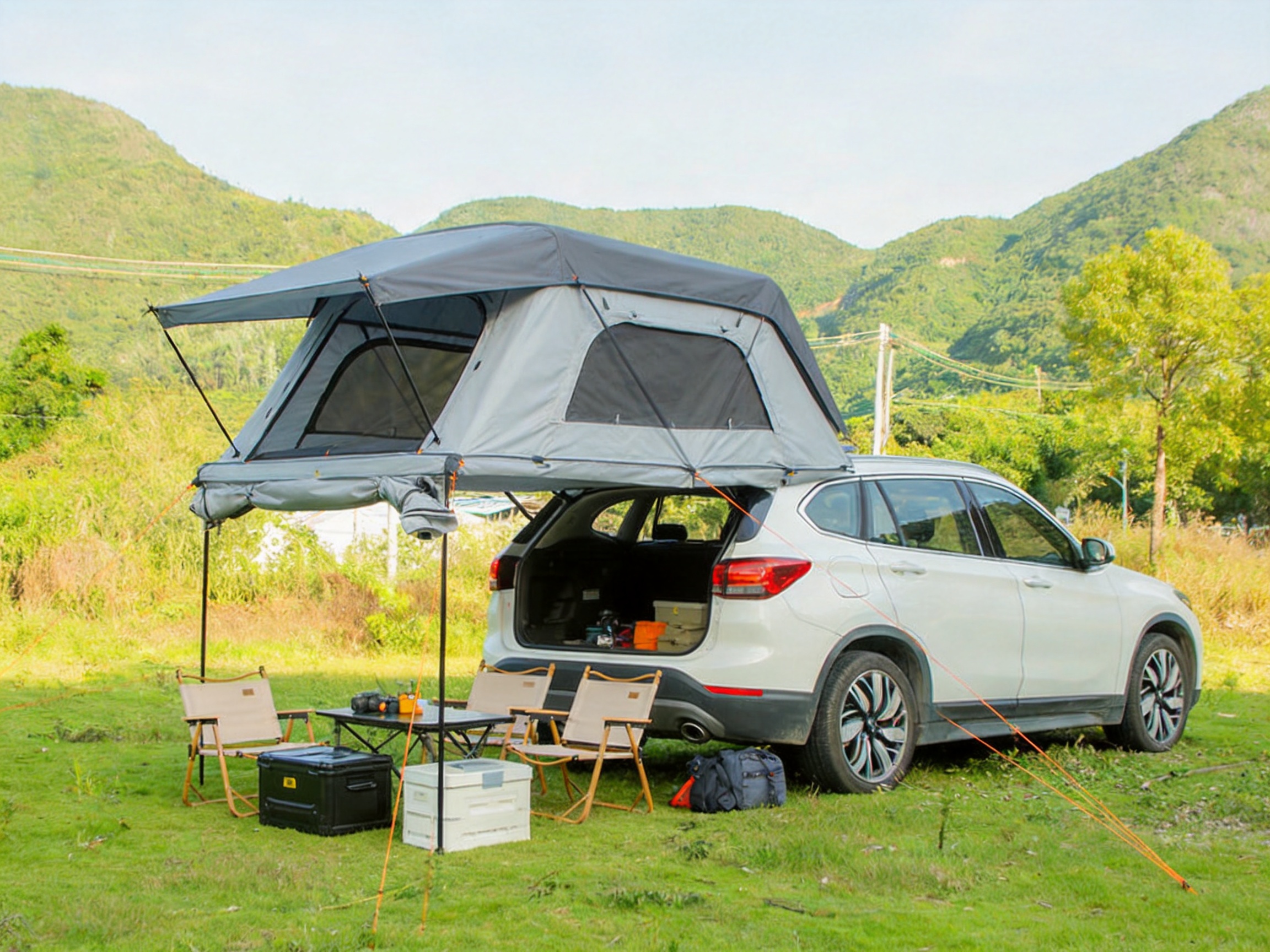 Modern outdoor travel is no longer limited to carrying a conventional freestanding tent and searching for a level campsite. For families, road-trippers, van travelers, and outdoor enthusiasts, the vehicle itself can become the center of a flexible camping system. A rear-mounted vehicle tent creates a sheltered connection between the car and the outdoors, extending usable living space without requiring a large trailer, permanent rooftop structure, or complicated construction process. The inflatable car rear double-layer awning tent is designed for exactly this purpose. It connects with the rear area of an SUV, MPV, hatchback, van, or truck and creates a practical outdoor room for resting, cooking, dining, changing clothes, organizing equipment, and enjoying shade beside the vehicle. Its inflatable beam structure, double-layer protection, built-in awning, and portable design make it particularly suitable for family camping, weekend travel, road trips, festivals, leisure touring, and mobile basecamp applications. Unlike a basic tailgate cover or a simple vehicle awning, this product is designed as a more complete shelter. It combines the protective benefits of an enclosed tent with the open-air comfort of an awning. When attached correctly to a compatible vehicle, it helps transform unused space behind the tailgate into an organized and comfortable extension of the vehicle. Turning the Vehicle into a Practical Outdoor Living Room One of the most important advantages of a vehicle rear tent is the way it uses space that campers already have. The vehicle provides a convenient anchor point, while the tent extends outward to create additional covered area. This arrangement is especially useful when the vehicle is being used as a mobile basecamp and campers need more room than the vehicle interior can provide. The inflatable car rear double-layer awning tent can support a wide range of outdoor activities. Families can use it as a shaded dining area during the day and as a protected sitting area in the evening. Travelers can place chairs, a compact table, coolers, cooking equipment, or storage containers beneath the awning. Campers may also use the enclosed section for changing clothes, relaxing, taking a break from insects, or organizing equipment before continuing a journey. The rear connection also offers a practical transition between the vehicle and the tent. The tailgate area can remain accessible, making it easier to retrieve food, bedding, clothing, or camping equipment. Instead of repeatedly walking between a distant tent and the vehicle, users can keep frequently used items close at hand. This type of setup is particularly valuable at campsites where space is limited. A traditional family tent may require a large footprint and several people to position and tension. A vehicle rear tent can make better use of the area immediately behind the car. It provides shelter while preserving flexibility for parking, cooking, and moving around the campsite. Key Product Features Inflatable Beam Architecture The product uses inflatable beams rather than a conventional collection of rigid poles. This design can simplify installation, reduce the number of separate structural components, and make packing more convenient. Once the beams are inflated, they create the primary framework needed to support the shelter. For users, the main benefit is a more straightforward setup process. Instead of sorting multiple poles and matching each section to a sleeve or connector, campers can focus on positioning the tent, attaching it to the vehicle, and inflating the structural tubes. The inflatable system is also suitable for travelers who want to reduce the amount of loose hardware carried in the vehicle. Inflatable structures can provide useful flexibility in outdoor environments. When properly inflated and secured with appropriate guy lines and anchoring points, the air beams form a stable support system while maintaining a relatively light and compact package when deflated. This is especially beneficial for road travelers who need to manage luggage, sports equipment, children’s gear, and other camping accessories inside the vehicle. Double-Layer Construction The double-layer structure is one of the product’s most important performance features. The outer rainfly is designed to provide the first line of defense against rain, wind, and direct exposure to the elements. The inner layer contributes to the enclosed living environment and helps create additional separation between the occupants and outside conditions. Compared with a single-layer shelter, a double-layer design can offer several practical advantages. It can help improve weather resistance, reduce direct contact between the interior and the outer fabric, and support a more comfortable internal environment. The space between layers can also contribute to improved ventilation and condensation management when the tent is used correctly. Weather protection depends on proper setup, fabric condition, seam construction, anchoring, ventilation, and the severity of the environment. Nevertheless, the double-layer concept gives the product a stronger foundation for all-weather use than a simple fabric canopy or open-sided vehicle awning. Integrated Awning and Sunshade The built-in awning expands the practical value of the shelter beyond the enclosed tent area. It provides a covered outdoor zone where users can sit, prepare food, eat meals, store footwear, or enjoy the view while remaining protected from direct sunlight and light rain. This arrangement is particularly useful for families. Children can play under the shaded area while adults prepare meals or organize equipment. During hot weather, the awning creates a cooler place to sit outside the vehicle. In changeable conditions, it can help campers continue everyday activities without moving entirely inside the vehicle or tent. A built-in awning can also reduce the need to carry a separate canopy. This saves storage space and simplifies the equipment list. Instead of transporting a tent, an independent sunshade, additional poles, and multiple sets of stakes, users can carry one coordinated shelter system. Portable and Space-Conscious Design Although the tent is designed to create a large sheltered area, it remains intended for portable use. Once deflated and packed, the inflatable structure is easier to store and transport than many rigid-frame alternatives. This makes it appropriate for vehicles with limited cargo capacity as well as larger family vehicles. Portability is not only about total weight. It also involves packing efficiency, the number of components, setup organization, and the ability to move from one location to another without excessive effort. A vehicle traveler may set up at a campsite in the afternoon, pack early the next morning, and continue to another destination. A compact inflatable shelter supports this style of travel more effectively than a complex permanent or semi-permanent structure. Advantages over Conventional Camping Solutions Compared with Basic Tarps and Canopies A tarp or open canopy can provide shade, but it normally offers limited protection from wind-driven rain, insects, and changing weather. It may also require several poles, ropes, and carefully selected anchor points. The inflatable car rear double-layer awning tent offers a more integrated solution, combining an enclosed area, a vehicle connection, an outer rainfly, and a covered awning. A canopy is often useful for daytime shade, but it may not provide the same sense of enclosure or privacy. The vehicle rear tent can be configured as a more complete living space while still retaining an open awning area. This combination allows users to select between enclosed comfort and open-air use according to the weather and activity. Compared with Traditional Pole Tents Traditional pole tents remain popular because of their familiar design and broad range of sizes. However, pole-based systems often involve several separate components that must be assembled in the correct order. Long poles may be awkward to transport, and damaged or misplaced poles can make setup difficult. The inflatable beam system reduces dependence on a large collection of rigid poles. It is designed to make setup more approachable for users who want a convenient shelter for road trips and short camping stays. The reduced number of structural parts can also make packing and inventory management easier. Another difference is the direct relationship with the vehicle. A standard tent usually functions as a separate shelter. The rear awning tent is intended to work as an extension of the vehicle, giving travelers a connected basecamp rather than two entirely independent spaces. Compared with Rooftop Tents Rooftop tents offer elevated sleeping platforms and can be useful where ground conditions are difficult. However, they usually require roof compatibility, lifting or folding mechanisms, and additional care when the vehicle is being driven or parked. They may also provide limited standing or living space at ground level. A rear vehicle tent is installed at ground level and focuses on creating a flexible living extension behind the vehicle. It can be more convenient for families with children, campers who prefer ground-level access, and travelers who want an awning area for dining or socializing. It also avoids the need for a roof rack or rooftop load-bearing system. Compared with Independent Family Tents A large independent family tent can provide sleeping capacity, but it may consume substantial campsite space and require more time to pitch. It also separates the shelter from the vehicle, which can make access to stored equipment less convenient. The vehicle rear tent is not intended to replace every type of family tent. Instead, it offers a different form of flexibility. It can function as an extension, changing room, shaded lounge, cooking shelter, or temporary family basecamp. For many road trips, this multifunctional role can be more useful than a shelter designed only for sleeping. Inflatable Car Rear Double-Layer Awning SUV Camping Tent Portable Basecamp Weather Protection and Outdoor Comfort Outdoor comfort depends on more than keeping rain outside. A successful shelter should help users manage sun, wind, moisture, temperature changes, privacy, and everyday movement. The double-layer inflatable rear tent addresses several of these needs in one design. The rainfly creates an external protective surface that takes the first impact of rain and weather exposure. The inner layer provides a more comfortable interior boundary. When the shelter is properly tensioned, the outer fabric can shed water efficiently, while the separation between layers helps reduce the likelihood of the inner surface touching wet outer fabric. The awning adds another layer of climate control. In sunny conditions, it creates a shaded area that can make the space around the vehicle more comfortable. In light rain, it provides a covered zone for preparing food or entering the vehicle without standing directly in the weather. Wind performance depends on correct anchoring and responsible use. Users should deploy all appropriate guy lines, stakes, and attachment points, and they should select a campsite that is reasonably protected from extreme exposure. No portable tent should be treated as a permanent structure or used in conditions beyond its intended design. Ventilation is equally important. Even a weather-resistant shelter needs airflow to reduce condensation and maintain a comfortable atmosphere. Users should make use of the tent’s available openings and ventilation features while keeping them positioned appropriately for current weather conditions. Good campsite selection, controlled cooking practices, and avoiding wet equipment inside the tent can further improve comfort. Setup and Operating Experience Preparing the Campsite Before installation, users should select a relatively level area behind the vehicle and remove sharp stones, branches, and other objects that could damage the fabric or floor area. The vehicle should be parked securely, with enough room behind it for the tent to extend fully. It is helpful to organize the tent, pump, stakes, ropes, and connection components before beginning. A clean and orderly setup area reduces the possibility of losing small parts and helps the user identify whether every necessary component is available. Connecting the Tent to the Vehicle The rear connection should be arranged according to the vehicle’s shape and the tent’s intended attachment method. The upper connection area should be positioned carefully so that the tent sits evenly around the tailgate or rear opening. Users should avoid forcing fabric against sharp edges or placing excessive stress on one attachment point. Vehicle compatibility can vary according to body style, rear height, tailgate design, and available attachment space. The shelter may work with SUVs, MPVs, hatchbacks, vans, and trucks, but customers should confirm dimensions and attachment conditions before purchase, particularly when using unusual vehicle shapes or aftermarket accessories. Inflating the Structural Beams After the tent is positioned and loosely secured, the inflatable beams can be filled using a suitable pump. The beams should be inflated evenly and checked during the process. The objective is to create a firm and stable framework without exceeding the recommended pressure or damaging valves and seams. Inflatable equipment should be treated carefully during setup. Users should keep the pump and valves clean, prevent sand from entering connection points, and avoid dragging the tent over abrasive ground. Once the beams are formed, the shelter can be adjusted so that the fabric is distributed evenly and the awning is properly extended. Securing the Tent Anchoring is essential for safety and performance. Stakes and guy lines should be installed at suitable angles, with enough tension to stabilize the shelter without distorting the fabric. The tent connection to the vehicle should also be checked before occupants enter or equipment is placed inside. A final inspection should include the beam pressure, guy-line tension, vehicle connection, awning position, door operation, ventilation openings, and clearance around the tent. This short inspection can improve stability and help prevent avoidable damage during use. Packing After Use Before packing, the tent should be shaken or brushed free of loose dirt and allowed to dry whenever possible. Packing wet fabric for an extended period can encourage mildew and unpleasant odors. If weather conditions make complete drying impossible, the tent should be unpacked and dried promptly after returning home. The beams should be deflated according to the valve design, and the fabric should be folded or rolled without sharp creases that could place unnecessary stress on coated surfaces. Components should be stored together so that the tent is ready for the next trip. Manufacturing Strengths Behind the Product The performance of an inflatable vehicle tent depends not only on its visible design but also on the manufacturing processes behind it. Ningbo Zhenhai Tiansai Leisure Products Co., Ltd. specializes in the design, production, and sales of tents and outdoor equipment. Its production facility covers more than 13,000 square meters, providing a substantial base for organized manufacturing, quality control, product development, and order coordination. A factory environment of this scale can support multiple stages of product creation, including material preparation, cutting, sewing, assembly, inspection, packing, and shipment. For wholesale and OEM customers, integrated production capabilities can simplify communication and improve consistency between prototypes, samples, and production orders. The company’s location in Ningbo provides access to an important port city and an established manufacturing network. This geographic position supports international logistics and gives the company practical advantages when serving customers in North America, Europe, Asia, and other markets. Product Design and Development Effective tent design requires more than attractive appearance. Designers must consider fabric behavior, load distribution, waterproofing, airflow, usability, packed dimensions, attachment methods, and the real needs of outdoor users. The company maintains a professional design team that develops products from both practical and comfort-oriented perspectives. The design process is strengthened by cooperation with professionals and feedback from outdoor enthusiasts. Product testing and user feedback can reveal details that may not be obvious in a drawing or prototype. These details may include the ease of attaching a vehicle connection, the accessibility of doors, the usefulness of an awning, the arrangement of storage space, or the amount of effort required during packing. Continuous improvement is especially important for inflatable shelters. Beam geometry, valve placement, seam design, fabric tension, and attachment points all influence the final user experience. A factory with experience in outdoor product development can refine these elements through repeated testing and production evaluation. Material and Fabrication Considerations A durable vehicle tent requires materials selected for outdoor exposure and practical handling. The fabric must balance strength, weight, flexibility, coating performance, and packability. The inflatable beams require suitable airtight materials and reliable seams. Attachment points need reinforcement because they transfer forces between the vehicle, the tent, and the ground anchors. Manufacturing quality depends on controlled cutting and sewing. Accurate panels help the tent assemble correctly and distribute tension evenly. Consistent seam work supports durability and helps maintain resistance to water penetration. Reinforced stress points are important at corners, connection sections, beam sleeves, guy-line points, and areas that may be handled repeatedly. Because the product combines textile construction with inflatable structural components, production coordination is particularly important. The fabric shell must fit the beam system, valves must be positioned for access, and the completed shelter must pack efficiently. Quality management therefore needs to consider the entire product rather than isolated parts. Quality Management The company states that it strictly implements a quality management system intended to ensure that products meet international standards. In practical terms, a structured quality approach may include incoming material checks, production process controls, seam and component inspection, finished-product review, packing checks, and documentation management. For professional buyers, quality consistency is as important as individual product performance. Retailers, distributors, outdoor brands, and project purchasers need products that maintain similar appearance, function, and packaging across production batches. A documented quality system helps create repeatable processes and provides a foundation for addressing defects or customer feedback. Quality control for this type of tent should include attention to airtight beam performance, valve function, seam condition, fabric coating, zipper operation, attachment strength, awning stability, and final packed dimensions. These checks help reduce the likelihood of problems appearing after the product reaches the end user. Experience in International Cooperation Ningbo Zhenhai Tiansai Leisure Products Co., Ltd. has developed international experience through export activity and cooperation with overseas outdoor businesses. The company has served as the sole global designated supplier of British company TENTSILE and has designed products that received appearance patents and utility model patents. International cooperation can strengthen a manufacturer’s understanding of different market requirements. Customers in different regions may have distinct expectations regarding packaging, labeling, dimensions, materials, climate performance, documentation, and compliance. Experience across multiple markets helps a factory communicate more effectively with global buyers. The company’s core team includes outdoor-product professionals with more than ten years of experience in research and development, production, and overseas operations. Such experience is valuable when managing the complete product chain, from concept and sampling to manufacturing, inspection, shipment, and after-sales communication. Why This Product Is Suitable for OEM and Wholesale Buyers Retailers and outdoor brands increasingly seek products that offer a clear use case and distinguish themselves from standard camping equipment. A vehicle rear tent with an inflatable structure and integrated awning presents a strong product story: it expands vehicle space, supports family travel, reduces setup complexity, and provides multiple functions in one portable package. For wholesale buyers, the product can fit several market segments. It may appeal to family campers, SUV owners, road-trip travelers, van-life customers, festival users, fishing enthusiasts, leisure-tourism operators, and outdoor rental businesses. Its broad vehicle compatibility also gives retailers an opportunity to market it to more than one vehicle category. OEM cooperation may involve adjustments to color, branding, packaging, labeling, accessory combinations, dimensions, or selected materials, subject to production feasibility and order requirements. A manufacturer with in-house design and production capabilities can help brands evaluate these changes more efficiently than a trading company that depends entirely on unrelated factories. For distributors, the product’s multifunctional positioning can support different sales messages. It can be promoted as a family camping shelter, a tailgate extension, a road-trip awning, an outdoor lounge, or a portable vehicle basecamp. This flexibility may help retailers reach customers with different priorities while using the same core product. Practical Applications Family Camping Families often need more than a sleeping space. They need somewhere to prepare meals, store bags, change clothes, take breaks, and shelter children from sun or light rain. The rear tent and awning create a flexible family zone close to the vehicle, allowing parents to keep essential supplies nearby. Road Trips Road travelers frequently change locations and may not want to spend long periods assembling equipment. An inflatable vehicle tent is appropriate for travelers who value efficient setup and compact storage. It can be used at campsites, rest areas where camping is permitted, and temporary outdoor stops with suitable conditions. Weekend Leisure Travel For short trips, a shelter that serves multiple purposes is especially attractive. Users may not need a large sleeping tent for every outing, but they may still want shade, rain protection, privacy, and a comfortable place to relax. The rear awning tent can provide these functions without requiring a full traditional campsite setup. Outdoor Events and Festivals At outdoor events, the awning can provide a recognizable gathering space and protection from direct sun. The enclosed section can be useful for storing personal items or creating a more private area. Users should always follow event rules concerning vehicle access, anchoring, fire safety, and shelter dimensions. Fishing and Recreational Activities Anglers and recreational travelers often carry equipment that benefits from organized shelter. The tent can provide a protected place for changing clothes, preparing food, taking a break, or storing gear away from light weather exposure. Its connection to the vehicle makes it convenient to access coolers, tackle, clothing, and other supplies. Care, Maintenance, and Long-Term Use Proper maintenance helps preserve the performance of any outdoor shelter. After each trip, users should inspect the fabric, seams, zippers, valves, beams, ropes, stakes, and vehicle connection areas. Small problems are easier to address before they develop into major failures. The fabric should be cleaned using methods suitable for the material and coating. Harsh chemicals, abrasive brushes, and excessive heat may damage protective finishes. Dirt should be removed before storage, especially around zippers, valves, and connection points. Inflatable beams should be stored without unnecessary sharp folds or pressure on the valves. If an air leak is suspected, the affected area should be identified and repaired using an appropriate repair method. Users should follow the product’s care instructions and avoid improvising repairs that could weaken the beam or create an unsafe condition. Storage should take place in a cool, dry environment away from direct sunlight, moisture, rodents, and sharp objects. The tent should not remain compressed while damp. Periodic inspection during long-term storage is advisable, particularly before a major trip. Care also includes responsible use. The shelter should not be exposed to flames, stoves, heaters, or combustible materials without appropriate safety controls. Cooking should be managed carefully, and users should maintain adequate ventilation. Severe storms, lightning, flooding, and dangerous wind conditions require users to prioritize safety and seek a more secure location. Comparison of Product Benefits Product characteristicInflatable rear double-layer awning tentBasic canopyTraditional pole tentRooftop tent Vehicle integrationDesigned to connect with the rear of a vehicleUsually independentUsually independentMounted on the vehicle roof Structural systemInflatable beamsPoles or frameRigid polesRigid folding structure Weather protectionDouble-layer shelter with rainfly and inner layerPrimarily shade and limited rain coverageVaries by model and constructionEnclosed elevated sleeping area Outdoor living areaEnclosed area plus integrated awningOpen covered areaEnclosed area, usually without vehicle connectionOften limited ground-level living space Storage convenienceDeflatable and designed for portable storageGenerally compact, depending on frameRigid poles may require more storage spaceRemains attached or requires roof storage Best suited toRoad trips, families, vehicle-based camping, and flexible basecampsSimple shade and short outdoor stopsIndependent camping and sleepingElevated sleeping and compact rooftop camping How the Product Supports Sustainable Outdoor Habits A portable shelter that serves several functions may help users carry fewer separate products. One integrated system can provide shade, enclosure, vehicle access, and outdoor living space. Reducing duplicate equipment can make travel more efficient and may reduce the material and packaging requirements associated with purchasing multiple independent shelters. Durable products also have the potential to remain in use for longer periods, reducing the frequency of replacement. Longevity depends on material quality, manufacturing consistency, proper care, and responsible use. The manufacturer’s stated focus on lightweight and environmentally friendly materials reflects the importance of improving product performance while considering resource efficiency. Responsible outdoor use remains essential. Campers should follow local regulations, use established campsites when available, avoid damaging vegetation, manage waste properly, and leave the area clean. A convenient vehicle shelter should support low-impact travel rather than encourage careless occupation of sensitive environments. Choosing a Reliable Manufacturing Partner When purchasing vehicle tents for retail, distribution, or private-label programs, buyers should evaluate more than the product photographs. Important questions include whether the factory controls production directly, whether the design can be adapted, how quality is inspected, what materials are available, how samples are approved, and whether the supplier can communicate effectively during production. A manufacturer specializing in tents is generally better positioned to understand the technical requirements of outdoor shelters. Experience with inflatable structures, coated fabrics, seams, rainflies, awnings, and vehicle attachments can help reduce design risks. A company with its own design team can also respond more efficiently when buyers request product improvements or market-specific changes. Production capacity matters as well. The company’s factory area of more than 13,000 square meters indicates a substantial manufacturing base for tent development and production. Buyers should still confirm specific capacity, lead times, minimum order quantities, packaging requirements, inspection procedures, and shipping arrangements for each project. International experience provides additional value. A supplier serving customers across North America, Europe, Asia, and other regions is familiar with the importance of communication, export documentation, packaging protection, and product consistency. Long-term partnerships depend on transparent expectations and reliable execution from the first sample to repeated orders. Positioning the Tent in the Outdoor Market The strongest market position for this product is convenience without sacrificing shelter performance. Customers are not simply purchasing fabric and inflatable beams. They are purchasing additional usable space for a vehicle-based lifestyle. The product answers a practical question: how can travelers gain a comfortable outdoor room without carrying a large collection of separate camping structures? Its competitive distinction comes from the combination of features rather than one isolated component. An inflatable design alone is not enough to define the product. A vehicle connection alone is not enough either. The double-layer construction, built-in awning, portable package, and multifunctional layout create a more complete system for outdoor travel. For online retailers, product education can focus on setup logic, vehicle compatibility, use scenarios, packed portability, and weather protection. For physical stores, the product can be demonstrated as a complete campsite extension. For outdoor brands, it can become part of a broader vehicle-camping collection that includes sleeping systems, storage, lighting, cooking, and travel accessories. Q&A What type of vehicle can use this rear tent? The tent is designed for use with SUVs, MPVs, hatchbacks, vans, and trucks. Compatibility depends on the rear dimensions, tailgate design, vehicle height, and attachment conditions. Buyers should confirm measurements and connection requirements before ordering. Does the tent require traditional poles? The primary structure uses inflatable beams, which reduces reliance on a large set of rigid poles. Users still need to use the supplied anchoring and support components correctly to stabilize the shelter. What is the purpose of the double-layer construction? The outer rainfly provides a weather-resistant barrier, while the inner layer helps create a more comfortable enclosed environment. The two-layer arrangement can improve protection and support better separation between occupants and outside conditions. Can the awning be used separately from the enclosed area? The integrated awning is designed to provide an additional covered outdoor zone connected to the tent. Its exact configuration depends on the setup arrangement, weather, and the user’s vehicle. It is suitable for shade, light rain protection, dining, cooking preparation, and relaxation. Is the tent suitable for family camping? Yes. The spacious extension, covered awning, vehicle access, and multifunctional layout make it suitable for family camping and road trips. Families should select a campsite with enough room for the complete setup and should follow safe practices around cooking, children, weather, and vehicle movement. How long does setup take? Setup time depends on the user’s experience, vehicle type, campsite conditions, anchoring requirements, and pump used. The inflatable structure is intended to simplify the process, but users should still allow enough time to connect the tent, inflate the beams, install anchors, and inspect the completed shelter. Can it be used in heavy rain or strong wind? The double-layer construction and rainfly are intended to provide weather protection, but no portable tent should be considered immune to severe conditions. Correct anchoring, suitable campsite selection, ventilation, and responsible judgment are essential. In dangerous weather, users should move to a safer location. How should the tent be stored? The tent should be cleaned and dried before long-term storage. It should be deflated, packed without unnecessary stress on the fabric or valves, and stored in a cool, dry place away from sharp objects and direct sunlight. Can the product be used for private-label or OEM programs? The manufacturer specializes in tent design and production and can discuss OEM or wholesale requirements with qualified buyers. Possible project elements may include branding, colors, packaging, labeling, dimensions, and accessory configurations, depending on order volume and production feasibility. What makes this product different from a simple car awning? A simple awning generally provides open shade. This product combines a vehicle connection, an enclosed double-layer tent area, an inflatable structural system, and an integrated awning. It therefore offers a broader range of uses, including privacy, changing, equipment organization, and more complete weather protection. Is the inflatable structure durable? The inflatable beams are designed to support the tent when correctly inflated, secured, and maintained. Durability depends on proper handling, avoiding sharp objects, maintaining suitable pressure, protecting valves, and following the manufacturer’s care instructions. Does the tent replace a sleeping tent? It can serve different roles depending on the vehicle, interior arrangement, user preferences, and product configuration. It is primarily a vehicle extension and outdoor living shelter. Buyers should evaluate whether they require a dedicated sleeping compartment for their intended use. Conclusion The inflatable car rear double-layer awning tent offers a practical way to expand a vehicle into a flexible outdoor basecamp. Its design combines inflatable beams, double-layer weather protection, a built-in awning, and portable storage in one coordinated system. These features make it more versatile than a basic canopy and more vehicle-oriented than a conventional independent tent. For families and road travelers, the product provides useful space for dining, relaxing, changing clothes, organizing equipment, and enjoying shade close to the vehicle. For retailers and outdoor brands, it offers a distinctive product category that responds to the growing interest in vehicle-based travel and convenient camping solutions. The product is also supported by the manufacturing strengths of Ningbo Zhenhai Tiansai Leisure Products Co., Ltd., including specialized tent production, a factory covering more than 13,000 square meters, professional design capabilities, international cooperation experience, patented product development, and a quality-focused production system. The company’s experience in research and development, manufacturing, and overseas operations provides a foundation for both standard product supply and customized OEM cooperation. As outdoor consumers continue to seek comfort, portability, and efficient use of vehicle space, a connected rear tent with an integrated awning presents a compelling solution. It allows travelers to spend more time enjoying the journey and less time managing complicated equipment, while giving outdoor brands a practical and adaptable product for the expanding camping market. References 1. Manufacturer-provided product specifications for the inflatable car rear double-layer awning tent. 2. Manufacturer-provided company profile and production information for Ningbo Zhenhai Tiansai Leisure Products Co., Ltd. 3. General principles of outdoor shelter setup, campsite selection, ventilation, anchoring, and fabric care. 4. General product-development practices for inflatable structures, coated textiles, tent seams, and portable outdoor equipment. 5. General guidance for responsible camping, low-impact recreation, outdoor safety, and equipment maintenance. Product: Inflatable Car Rear Double-Layer Awning SUV Camping Tent Portable Basecamp .profile-card { display: flex; align-items: flex-start; gap: 2rem; background-color: white; padding: 2rem; border-radius: 12px; box-shadow: 0 2px 10px rgba(0,0,0,0.05); } .profile-avatar { width: 120px; height: 120px; border-radius: 50%; overflow: hidden; flex-shrink: 0; } .profile-avatar img { width: 100%; height: 100%; object-fit: cover; display: block; } .profile-info { flex-grow: 1; } .profile-name { font-size:27px; font-weight: 900; margin-bottom: 1rem; color: #1a1a1a; } .profile-bio { line-height: 1.6; color: #333; } @media (max-width: 600px) { .profile-card { flex-direction: column; align-items: center; text-align: center; gap: 1.5rem; } } Lin Qian — After-Sales Service Manager over eight years of experience in outdoor equipment customer service and manages warranty claims, product troubleshooting, replacement parts, and technical support for international distributors and camping brands.
-
2026-09-15Why Heavy-Duty Inflatable Canvas Tents Are Redefining Luxury Outdoor Living
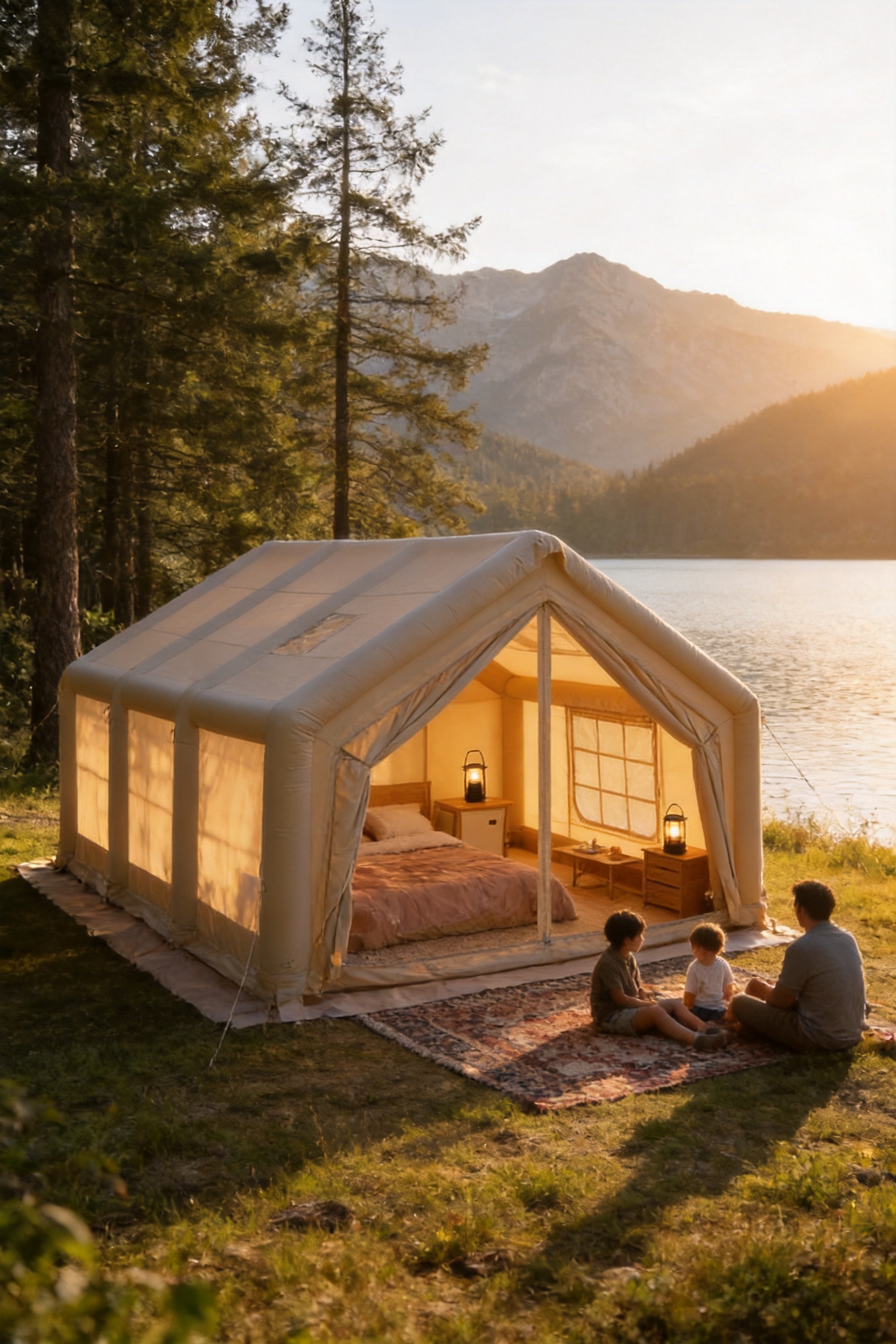 Modern campers increasingly want more than a temporary shelter. They want the freedom to travel into nature while retaining the comfort, space, and atmosphere associated with a well-designed cabin. The Canvas Inflatable Camping Tent Luxury Heavy Duty All Season Cabin responds to this demand by combining traditional canvas aesthetics with contemporary inflatable structural technology. It is intended for families, long-stay campers, glamping operators, outdoor hospitality businesses, and serious enthusiasts who require a spacious shelter capable of supporting extended use in changing weather conditions. Unlike a basic weekend tent, this inflatable canvas cabin is designed around comfort, durability, and efficient deployment. Its vertical walls create a practical living environment, while its integrated air-column system removes much of the complexity traditionally associated with large tents. The breathable canvas shell contributes to a more pleasant interior climate, and the reinforced floor and stitched construction are intended to provide greater protection against moisture and demanding outdoor conditions. This combination gives the product a distinctive position within the tent market. It is more substantial and residential than a lightweight backpacking shelter, more adaptable than a fixed cabin, and more visually refined than many synthetic inflatable tents. It also demonstrates how advanced manufacturing can improve the usability of large outdoor structures without abandoning the warm, traditional character that makes canvas camping so appealing. A New Category of Outdoor Accommodation Large camping tents have traditionally required a compromise. A shelter may be light and easy to transport but cramped inside, or it may offer generous living space while requiring numerous poles, several people, and significant setup time. Canvas tents often provide excellent comfort and visual appeal, but their weight can make assembly and transportation more demanding. Inflatable tents simplify structural assembly, yet some models use thin synthetic materials that do not provide the atmosphere or long-term feel associated with a premium canvas shelter. The product described here is designed to bring these benefits together. Its canvas body offers a natural, heritage-inspired appearance and a breathable interior environment. Its pneumatic air columns provide the main structural support, reducing dependence on a complicated framework of rigid poles. Its cabin-style layout gives occupants usable standing height and enough room to arrange beds, chairs, tables, storage, and other camping equipment. This is not simply a tent with an air pump. It is a shelter concept built around residential comfort. The design treats the campsite as a temporary living environment rather than a place to sleep for a single night. That difference affects nearly every detail, including wall geometry, fabric selection, floor protection, seam construction, ventilation, and deployment procedures. Core Product Advantages Breathable Canvas for a More Comfortable Interior The principal material advantage is the use of specialized water-repellent canvas. Canvas is valued by experienced campers because it can create a softer and more natural interior atmosphere than many lightweight plastic-based fabrics. When properly engineered, woven canvas can help moderate temperature changes and reduce the enclosed, clammy feeling that may occur in smaller synthetic tents. The material used for this cabin is described as a high-density, breathable fabric with water-repellent properties. This combination is important because weather protection and breathability must work together. A shelter that blocks rain but traps warm, humid air can become uncomfortable, especially when several people are sleeping inside. Breathable fabric allows a portion of internal moisture to migrate outward, helping reduce condensation when the tent is correctly ventilated and pitched. The canvas construction also contributes to the product’s visual identity. Its texture and weight create a more substantial appearance than thin nylon or polyester. For glamping resorts, event sites, and premium outdoor accommodations, this can be a significant commercial advantage. Guests often evaluate a tent before entering it, and a well-finished canvas exterior communicates permanence, quality, and comfort. Inflatable Structural Support The integrated air-column system is one of the product’s clearest functional advantages. Large conventional tents may require multiple poles, connectors, guy lines, and several people to hold sections in place during assembly. An inflatable structure replaces much of this process with a pneumatic framework that can be raised using an appropriate high-pressure pump. When the air columns are inflated correctly, they create a stable frame with fewer individual rigid components to transport and organize. This can make a major difference for families, hospitality staff, and users who frequently move between campsites. It also reduces the likelihood of losing a small connector or incorrectly joining a pole section. The air-supported design is especially useful when the tent is large. A large canvas cabin can be difficult to lift and position during setup, but the inflatable frame allows the shell to be progressively supported as the columns rise. The result is a deployment process that is more manageable than assembling an equivalent pole-supported structure, although users must still follow the recommended anchoring, inflation, and weather procedures. Inflatable support also gives the tent a distinctive profile. Instead of relying on a visible network of rigid poles, the structure can maintain a clean and continuous silhouette. This creates an appearance that is both contemporary and compatible with the classic cabin form. Vertical Walls and Efficient Use of Space Many camping tents lose usable space because sloping walls push occupants toward the center. The cabin design addresses this issue with a high-volume interior and vertical wall architecture. The practical result is a larger area in which people can stand, move, sit, and organize equipment. Vertical walls are particularly valuable for long stays. A low, sloping shelter may be suitable for sleeping, but it becomes tiring when occupants must spend hours inside during rain or cold weather. A cabin-style interior can accommodate separate areas for sleeping, dining, storage, and relaxation. Families can create zones for children and adults, while glamping operators can furnish the interior with beds, rugs, chairs, tables, and decorative elements. The design can also improve accessibility. Standing-height space makes dressing, preparing meals, and organizing luggage easier. Users do not need to crawl across the floor or repeatedly bend under a low roof. This is an important distinction between a premium family shelter and a lightweight touring tent. All-Season Weather Protection The tent is designed for use across multiple seasons, with a combination of water-repellent canvas, reinforced flooring, and double-stitched seams. No tent should be considered invulnerable to extreme weather, and correct site selection remains essential, but the construction is intended to provide a strong level of protection for ordinary rain, wind, changing temperatures, and damp ground conditions. The reinforced PVC groundsheet forms a protective barrier between the interior and the campsite surface. It helps reduce the risk of ground moisture entering through the base and provides a more durable platform for furniture and daily movement. A strong floor is especially important in a large tent because occupants walk across it frequently, place heavier equipment inside, and may remain in the shelter for longer periods. Double-stitched seams add another layer of reliability. Seams are among the most vulnerable areas of any fabric shelter because they combine separate panels and may be exposed to tension, water, and repeated folding. Reinforced stitching is therefore an important manufacturing feature rather than a purely decorative detail. The canvas shell is also intended to provide UV protection and a degree of acoustic insulation. By reducing the direct impact of sunlight and softening some exterior noise, the material may contribute to a calmer interior environment. This is valuable at busy campsites, festivals, resorts, and family recreation areas where comfort depends not only on temperature but also on the overall atmosphere. Canvas Inflatable Camping Tent Luxury Heavy Duty All Season Cabin How the Product Compares with Other Tent Types Compared with Lightweight Backpacking Tents Backpacking tents are designed around low weight and compact packing. They are excellent for hikers who carry all equipment over long distances, but their priorities differ from those of a cabin-style inflatable canvas shelter. Backpacking tents generally provide limited headroom, smaller floor areas, and fewer opportunities for furniture or internal zoning. The inflatable canvas cabin is not intended to replace an ultralight trekking shelter. Its advantage lies in living comfort, spaciousness, durability, and longer-term use at an established campsite. A family arriving by car, a glamping operator furnishing a guest site, or an expedition team creating a comfortable basecamp may value these characteristics more than minimum packed weight. Compared with Conventional Pole Tents Traditional pole tents remain popular because they are familiar and can be highly dependable. However, large pole tents often involve more parts and a more complicated assembly sequence. Poles must be connected, sleeves aligned, and the roof supported while the structure is anchored. In poor weather or limited space, this process can be inconvenient. The air-column system can reduce setup complexity and make the tent more accessible to users who do not have extensive camping experience. It also minimizes the number of long rigid components that need to be packed and transported. This does not eliminate preparation: the ground must still be selected carefully, guy lines must be secured, and the tent must be inflated to the proper pressure. Nevertheless, the overall workflow is more streamlined. Compared with Lightweight Synthetic Inflatable Tents Synthetic inflatable tents may be lighter and quicker to dry than canvas models. They can be suitable for short holidays and frequent touring. The trade-off is that lightweight synthetic fabric may offer a different interior atmosphere and may not provide the same visual sense of permanence or acoustic softness. The canvas inflatable cabin is positioned toward users who want the convenience of air support without giving up the character of a heavy-duty fabric shelter. It is intended to feel more like a temporary outdoor room than a technical shell. This is a meaningful distinction for glamping projects, seasonal camps, family retreats, and hospitality businesses that depend on a premium guest experience. Compared with Fixed Cabins and Permanent Structures A permanent cabin can provide excellent comfort, but it requires land, construction, permits, maintenance, and a fixed location. The inflatable canvas cabin offers a more flexible alternative. It can be installed for a season, moved to another site, or packed away when not in use. This mobility allows businesses and landowners to test a new campsite layout without committing to permanent construction. It can also support temporary events, outdoor education programs, hunting or fishing bases, emergency accommodation, and seasonal resort expansion. The shelter does not provide all the utilities of a building, but it can deliver a substantial living environment with far less infrastructure. Manufacturing Strengths Behind the Product Integrated Design and Product Development The manufacturer, Ningbo Zhenhai Tiansai Leisure Products Co., Ltd., specializes in the design, production, and sales of tents and outdoor equipment. Its operations are based in Ningbo, Zhejiang Province, an important manufacturing and port region in China. The company reports a factory covering more than 13,000 square meters, giving it a substantial foundation for product development, material handling, assembly, inspection, and export preparation. A large manufacturing site is valuable when producing complex tents because quality depends on coordinated work across several stages. Fabric inspection, cutting, printing where applicable, stitching, air-column fabrication, component assembly, finished-product checking, and packing must be managed consistently. Large shelters also require sufficient space for partial and complete erection during inspection. The company’s design approach is centered on practical outdoor use. Products are developed with attention to comfort, usability, and performance rather than appearance alone. Collaboration with outdoor professionals and testing involving users can reveal issues that may not be visible during an initial design review. Feedback concerning ventilation, access, assembly, storage, durability, and interior layout can then inform future revisions. Advanced Fabric Cutting and Panel Construction A premium tent begins with accurate pattern development. Large panels must be cut to consistent dimensions so that tension is distributed evenly when the shelter is erected. Inaccurate cutting can lead to wrinkles, uneven loading, poor fit, or unnecessary stress around attachment points. Modern tent manufacturing combines digital pattern planning with controlled cutting procedures. Efficient nesting of panels reduces material waste, while repeatable cutting improves consistency between production batches. For a cabin tent, the process must account for windows, doors, ventilation panels, floor connections, roof sections, reinforcement patches, and air-column attachment points. Canvas fabrics also require careful handling. Their weight and woven structure can create different sewing requirements from lightweight polyester. Needles, thread, stitch length, seam allowances, and reinforcement methods must be selected according to the fabric’s thickness and expected loads. Areas exposed to tension, such as corners, guy-line points, door edges, and air-column interfaces, generally require additional reinforcement. Precision Sewing and Reinforced Seams Double-stitched seams are a stated feature of the product, but reliable seam construction involves more than simply adding a second row of thread. Stitch alignment, thread tension, panel overlap, reinforcement patches, and finishing quality all influence long-term performance. Manufacturing teams must maintain consistent tension while sewing large, heavy panels. If the fabric is pulled unevenly, the finished shell may not sit correctly on the frame. Skilled operators and suitable industrial sewing equipment are therefore essential. Quality control may include checking seam straightness, inspecting skipped stitches, confirming reinforcement placement, and examining areas where multiple panels meet. For outdoor products, seam quality also affects water resistance. The final performance depends on the fabric treatment, thread selection, seam design, and any sealing or finishing process used. A professionally constructed seam reduces the risk of premature leakage and helps the shelter maintain its shape during repeated use. Air-Column Engineering and Valve Integration The inflatable frame is a central technical component. Air tubes must be manufactured from materials capable of holding pressure while remaining flexible enough for folding, packing, and deployment. Their attachment to the canvas shell must be strong because the columns transfer structural loads into the fabric body. The product description emphasizes high-pressure pneumatic construction, military-grade air valves, and puncture-resistant tubes. In practical terms, these features are intended to improve inflation reliability, pressure retention, and resistance to accidental damage during normal use. Valve placement also matters. A well-positioned valve allows users to connect the pump efficiently, monitor the inflation process, and deflate the system without unnecessary handling. Air-column systems require careful testing because a small defect may not be visible when the tube is uninflated. Manufacturers can inspect tubes for leaks, check valve attachment, and test pressure retention before the product is packed. Testing may be carried out on individual air beams and on the fully assembled shelter, depending on the production procedure. The use of air support also requires clear user guidance. Inflation pressure, pump compatibility, anchoring, storage, and repair procedures should be explained in the product documentation. A well-designed shelter is supported by a complete user experience that helps customers operate it safely and efficiently. Floor and Groundsheet Integration Connecting the reinforced PVC groundsheet to the upper tent structure requires attention to both waterproofing and mechanical strength. The floor is exposed to abrasion, dirt, moisture, furniture legs, footwear, and repeated folding. It must be flexible enough for packing but robust enough for regular occupancy. Manufacturing controls should include inspection of floor seams, corner transitions, door thresholds, and attachment points. These areas can experience concentrated stress. A smooth transition between wall and floor also helps prevent water from collecting in vulnerable locations. The groundsheet contributes to comfort as well as protection. It creates a cleaner and more stable interior surface, helps separate occupants from cold or wet ground, and supports the use of beds and furniture. In a large family or glamping tent, this foundation is one of the most important differences between a premium accommodation unit and a basic shelter. Quality Management and International Supply Capability The manufacturer reports that it operates a quality management system intended to ensure that products meet international standards. For global buyers, systematic quality control is important because tents may be sold into different climates, markets, and usage environments. Export customers also need reliable documentation, packaging, production scheduling, and communication. Ningbo’s port infrastructure provides logistical advantages for an export-oriented outdoor products company. Finished tents can be prepared for shipment to customers in North America, Europe, Asia, and other regions. International supply capability is not limited to shipping. It also includes product consistency, packaging protection, export coordination, after-sales communication, and the ability to support wholesale or OEM relationships. The company’s experience as a designated global supplier for an established British outdoor brand demonstrates its involvement in international manufacturing partnerships. Such relationships generally require attention to product specifications, production schedules, inspection procedures, and brand requirements. They can also strengthen a factory’s understanding of global market expectations. The company states that it has obtained a number of appearance patents and utility model patents. These intellectual property achievements indicate an emphasis on product development and structural innovation. For buyers, the practical value is that the manufacturer is not limited to copying standard tent formats. It can participate in the development of distinctive products for outdoor brands, distributors, resorts, and other commercial customers. Performance in Different Outdoor Applications Family Camping For families, interior space is often more important than the smallest packed size. Children need room to move, adults need a practical area for organizing supplies, and everyone benefits from a dry place to sit during bad weather. The cabin layout supports these needs through standing height, vertical walls, and the possibility of creating separate functional zones. Parents can organize sleeping areas away from storage or dining equipment. The high-volume interior may also accommodate portable wardrobes, folding tables, chairs, rugs, and lighting. This flexibility can make a multi-day holiday less stressful, particularly when weather prevents outdoor activities. Glamping and Resort Accommodation The product is well suited to glamping because its appearance and interior proportions support a more elevated guest experience. Operators can furnish the tent with beds, seating, decorative textiles, lighting, and storage. The breathable canvas creates a warm visual character that appeals to guests seeking an authentic outdoor experience without sacrificing comfort. For resort operators, the ability to install and relocate units can support seasonal planning. A property may add accommodation during a busy period, test a new site, or rearrange the guest area without constructing permanent buildings. The tent’s appearance can also complement natural landscapes, farms, forests, lakeside properties, and adventure destinations. Commercial operators should establish their own procedures for foundations, anchoring, inspection, cleaning, fire safety, local regulations, and weather limitations. The product’s heavy-duty construction supports demanding use, but a successful hospitality installation depends on proper site management and maintenance as well. Expeditions and Basecamps Expedition users need more than basic sleeping space. A basecamp may serve as a dining area, planning room, equipment store, medical area, or team meeting point. The cabin design provides the volume needed for these activities, while air-supported deployment can simplify installation when time and labor are limited. The canvas shell can also create a more stable environment for extended occupation. When teams remain in one location for days or weeks, the difference between a cramped shelter and a spacious, breathable cabin becomes significant. The ability to stand, move, dry clothing, and organize equipment can improve both comfort and operational efficiency. Outdoor Events and Temporary Facilities Event organizers can use large inflatable canvas structures as temporary hospitality areas, staff rooms, workshop spaces, registration shelters, or private rest areas. Their visual appeal can be an advantage when the shelter forms part of an event’s presentation. The cabin shape feels more finished than a basic canopy, while the inflatable frame can reduce setup labor compared with a large pole structure. Events require careful planning around crowd flow, emergency access, anchoring, ventilation, electrical equipment, and weather forecasts. However, the product’s flexible interior makes it suitable for a wide range of temporary applications where a weather-protected room is needed. Humanitarian and Remote Support Use Large tents are also used in emergency response, field operations, temporary education, medical support, and remote work environments. The combination of rapid deployment, spacious interior, and durable construction can be useful where permanent facilities are unavailable or delayed. Any humanitarian deployment requires assessment of local climate, fire safety, hygiene, accessibility, transport, anchoring, and maintenance resources. The cabin’s breathable fabric and protected floor may contribute to occupant comfort, while its air-supported structure can reduce the number of rigid components required in transit. Custom configurations may be appropriate for specialized institutional needs. Practical Deployment and Care Site Selection The performance of any large tent begins with the campsite. Users should select level ground free of sharp stones, branches, roots, and objects that could damage the floor or air tubes. Areas with natural drainage are preferable, while low points where water can collect should be avoided. The tent should be positioned with consideration for prevailing wind, sunlight, access routes, nearby trees, and overhead hazards. A sheltered position can reduce wind loading, but the site should not be placed beneath unstable branches or in a location vulnerable to flash flooding. Proper anchoring is essential even when the air columns feel rigid. Inflation and Anchoring Users should lay out the tent carefully before inflation and confirm that doors, windows, and fabric panels are not trapped or twisted. The air columns should be inflated with the recommended pump and checked for correct pressure. Overinflation can place unnecessary stress on components, while insufficient inflation may reduce stability and cause the shell to sag. Anchoring should be completed according to the instructions before or during deployment, depending on the manufacturer’s procedure and weather conditions. Guy lines should be positioned to distribute forces evenly. In windy environments, additional attention should be given to corner points, high-load areas, and the direction of expected gusts. Ventilation and Condensation Control Breathable canvas can help manage internal moisture, but no fabric can eliminate condensation under all conditions. Occupants produce water vapor through breathing, cooking, wet clothing, and normal activities. Ventilation openings should therefore be used appropriately, especially during sleep or when cooking equipment is present. Keeping wet gear organized and avoiding indoor combustion appliances without proper ventilation can improve air quality and reduce moisture. If condensation appears, users should increase airflow and allow the tent to dry before long-term storage. Cleaning and Storage After use, loose dirt should be removed with a soft brush or according to the manufacturer’s cleaning guidance. Harsh chemicals may damage fabric treatments, coatings, stitching, or PVC components. The tent should be completely dry before packing whenever possible. Storing a damp canvas shelter can encourage mildew and unpleasant odors. Air tubes should be deflated carefully rather than forced into sharply folded positions. The packed tent should be stored in a cool, dry place away from direct sunlight, excessive heat, rodents, and sharp objects. Periodic inspection of seams, valves, guy points, floor edges, and fabric treatments can identify small problems before they become serious. Repair and Maintenance Planning One advantage of a serviceable heavy-duty product is that many ordinary issues can be addressed through maintenance rather than complete replacement. A puncture repair kit may be used for suitable air-column damage, while small fabric issues may be repaired with approved patches or professional sewing. Repairs should follow the manufacturer’s instructions, and structural or extensive damage should be assessed by a qualified service provider. Commercial operators should maintain inspection records. A simple log can record installation dates, weather exposure, cleaning, repairs, valve checks, and storage condition. This is particularly useful for glamping businesses and rental companies that need consistent safety and presentation standards. Customization and OEM Potential The manufacturer’s experience in design and international production creates opportunities beyond the standard product. Outdoor brands and distributors may seek custom colors, branding, layouts, windows, doors, ventilation systems, flooring arrangements, packaging, or accessory combinations. A factory with in-house development capabilities can help evaluate whether a requested change is practical and cost-effective. Customization should begin with a clear definition of use. A family camping model may prioritize simple setup and flexible sleeping space, while a resort model may require enlarged doors, furniture compatibility, improved guest privacy, or enhanced visual branding. A humanitarian model may need different flooring, partitions, or transport packaging. Material selection is also part of OEM development. Buyers may request alternative canvas weights, color treatments, synthetic reinforcements, PVC specifications, or insulation components. Each change can affect packed weight, durability, drying time, appearance, manufacturing cost, and weather performance. The best development process evaluates the entire system rather than focusing on one feature in isolation. Prototyping and field testing are especially important for custom products. A design may appear successful on a computer drawing but behave differently when fully inflated, furnished, transported, or exposed to rain and wind. Testing by outdoor professionals and representative users helps identify practical improvements before mass production. Evaluation Area Inflatable Canvas Cabin Lightweight Backpacking Tent Conventional Large Pole Tent Primary Strength Residential comfort, durable canvas, and simplified structural deployment Low weight and compact portability Familiar construction and broad design availability Interior Use Standing-height living space with room for furniture and separate zones Primarily sleeping and basic gear storage Can provide large space but may require more assembly Setup Method Inflated air columns with anchoring and fabric adjustment Lightweight poles and compact components Multiple rigid poles, sleeves, connectors, and guy lines Material Character Breathable, substantial canvas with a premium heritage appearance Lightweight technical synthetic fabric Varies by model, often synthetic or traditional canvas Best-Suited Users Families, glamping operators, resorts, basecamps, and long-stay campers Hikers, trekkers, and minimalist travelers Campers who prefer established pole-based systems Commercial Potential Strong for premium accommodation, OEM, events, and seasonal facilities Usually focused on individual retail customers Suitable for events and accommodation where labor is available Why Manufacturing Quality Matters to Buyers Product descriptions can communicate materials and features, but manufacturing quality determines whether those features remain useful after repeated deployment. A breathable canvas shell must be cut and sewn accurately. An air frame must retain pressure and connect securely to the body. A PVC groundsheet must withstand movement and moisture. Reinforcements must be placed where forces actually occur. For this reason, buyers should evaluate a supplier’s complete capabilities rather than comparing only the visible retail price. Relevant questions include whether the factory performs fabric inspection, how air tubes are tested, how seams are checked, whether finished products are erected before shipment, and how replacement parts or repairs are supported. Production experience with international customers can also reduce communication risks. Clear specifications, drawings, sample approvals, inspection stages, packaging requirements, and shipping documentation are vital to successful wholesale orders. A supplier that combines design, manufacturing, quality management, and export experience can provide a more complete solution than a trading business with limited production control. The company’s stated commitment to research and development, environmentally conscious materials, and product innovation is relevant to the future of outdoor equipment. Customers increasingly expect products to last longer, use materials responsibly, and deliver meaningful improvements rather than superficial changes. Durable shelters that remain useful for many seasons can reduce replacement frequency and support more sustainable purchasing decisions. Comfort, Durability, and Sustainability A durable tent can have environmental benefits because its useful life is extended. Replacing a failed shelter after one or two seasons creates additional material consumption, packaging waste, and transport demand. A heavy-duty cabin designed for repeated use can offer better long-term value when maintained properly. Canvas also has a distinctive aging process. Rather than appearing disposable, a well-cared-for canvas shelter can develop character through use. This quality is especially attractive to glamping operators and outdoor enthusiasts who value authenticity. However, durability should not be confused with neglect. Proper drying, cleaning, storage, and inspection remain necessary to preserve the fabric and structural components. The manufacturer’s stated focus on lightweight and environmentally friendly materials suggests an ongoing effort to balance performance with resource responsibility. In a large tent, reducing unnecessary material weight can improve transportation efficiency, while selecting durable fabrics can support a longer service life. Product development must consider the full lifecycle, including manufacture, shipment, use, repair, and eventual disposal. Business Value for Global Buyers For wholesalers, retailers, and outdoor brands, the product occupies a premium but practical market segment. It can appeal to customers who are willing to invest more than they would for a basic family tent because they expect better comfort, longer use, and a more distinctive experience. Glamping is one of the clearest commercial applications. Guests often judge value through the combination of atmosphere, space, privacy, furnishings, and weather confidence. A large inflatable canvas tent can form the basis of a memorable accommodation unit, particularly when paired with suitable beds, lighting, furniture, and outdoor amenities. Resorts can also use the product as a flexible expansion tool. Instead of constructing additional cabins immediately, operators may install seasonal tent units and measure demand. If a location becomes successful, the tents can remain part of the accommodation strategy or be moved to another site as the business evolves. Retailers may position the shelter toward premium family camping, luxury outdoor living, overlanding, fishing camps, hunting lodges, and event accommodation. Its broad appeal comes from the fact that it is not restricted to one narrow activity. The same structural and material qualities can serve leisure, hospitality, commercial, and institutional users. For OEM buyers, cooperation with an experienced tent manufacturer can shorten the path from concept to finished product. A supplier that understands fabrics, air structures, sewing, testing, and export logistics can help transform a design idea into a manufacturable product. This can be more efficient than coordinating separate vendors for the shell, air frame, flooring, and packaging. Q&A What is the main purpose of this inflatable canvas cabin? The shelter is designed to provide a spacious, comfortable, and durable outdoor living environment. It is suitable for family camping, glamping, resort accommodation, expeditions, events, seasonal facilities, and other applications where a large temporary room is required. How does the inflatable frame differ from a pole system? The inflatable frame uses air columns as structural supports instead of relying primarily on a network of rigid poles. This can simplify setup, reduce the number of separate components, and make the deployment of a large shelter more manageable. The tent must still be anchored correctly and inflated according to the recommended procedure. Is the tent suitable for year-round use? The product is designed as an all-season shelter using water-repellent canvas, reinforced flooring, and strong seam construction. Actual suitability depends on local weather, site conditions, anchoring, ventilation, and correct maintenance. Extreme storms, heavy snow, flooding, or hazardous conditions require specific assessment and may exceed the intended operating environment. Does canvas prevent condensation completely? No. Breathable canvas can help regulate internal moisture and may reduce the enclosed feeling associated with some synthetic fabrics, but condensation can still occur. Ventilation, occupant behavior, wet clothing, cooking, temperature differences, and local humidity all influence condensation levels. What makes the interior more comfortable than a small technical tent? The cabin design provides vertical walls, high-volume space, standing height, and room for separate sleeping, storage, dining, and relaxation zones. These features allow occupants to move more naturally and arrange furniture, making the shelter suitable for longer stays. Who is the product best suited to? It is best suited to users who prioritize comfort and durability over minimum packed weight. Typical users include families, glamping businesses, resorts, outdoor event organizers, expedition teams, seasonal camp operators, and premium camping enthusiasts. Can the tent be customized for a commercial project? Customization may be possible depending on production requirements. Potential areas include color, branding, layout, doors, windows, ventilation, floor construction, packaging, and accessory combinations. Commercial buyers should discuss drawings, minimum order quantities, sample approval, testing, and production schedules with the manufacturer. How should the tent be stored after use? The tent should be cleaned according to the care instructions and dried completely before packing whenever possible. It should be stored in a cool, dry place away from direct sunlight, heat, sharp objects, and pests. Air columns, valves, seams, and floor edges should be inspected regularly. Is the shelter easy for one person to install? The air-supported design is intended to simplify deployment compared with a large multi-pole tent, but the shelter’s size and weight may still make two or more people helpful, particularly when positioning the fabric, anchoring the corners, and adjusting guy lines. Users should follow the manufacturer’s setup guidance. What should buyers evaluate before placing a wholesale order? Buyers should review fabric specifications, air-column construction, floor materials, seam quality, pressure testing, sample approval procedures, packaging, replacement parts, production capacity, quality controls, inspection options, delivery terms, and after-sales support. They should also confirm that the design is appropriate for the intended climate and application. Conclusion The Canvas Inflatable Camping Tent Luxury Heavy Duty All Season Cabin represents a practical evolution in large outdoor shelter design. It combines the warmth and visual appeal of traditional canvas with the deployment advantages of an inflatable structural system. Its vertical walls and generous interior create a genuine living space, while its reinforced floor, water-repellent fabric, and double-stitched construction support demanding outdoor use. Its advantages become especially clear when compared with conventional alternatives. It offers more comfort than a backpacking tent, a simpler structural concept than many large pole tents, and a more substantial atmosphere than lightweight synthetic inflatables. It cannot replace every type of shelter, but it occupies a valuable position for people who want a movable outdoor cabin rather than a minimal sleeping enclosure. The manufacturer’s capabilities further strengthen the product proposition. With a large Ningbo production base, experience in tent design and international supply, stated quality management procedures, patent development, professional design resources, and OEM potential, the company is positioned to serve both individual product demand and commercial projects. For families, it can make extended camping more comfortable. For glamping operators, it can create an attractive accommodation unit. For resorts, event planners, expedition teams, and outdoor brands, it provides a flexible platform that can be adapted to different operational needs. When correctly installed, maintained, and used within suitable weather conditions, this heavy-duty inflatable canvas cabin offers a compelling balance of luxury, mobility, durability, and modern manufacturing efficiency. References 1. Product information supplied for the Canvas Inflatable Camping Tent Luxury Heavy Duty All Season Cabin. 2. Manufacturer information supplied for Ningbo Zhenhai Tiansai Leisure Products Co., Ltd. 3. General principles of outdoor tent design, fabric performance, seam construction, and inflatable structural systems. 4. General guidance on campsite selection, tent anchoring, ventilation, condensation control, cleaning, and storage. 5. General considerations for glamping accommodation, seasonal outdoor facilities, OEM product development, and international tent manufacturing. Product: Canvas Inflatable Camping Tent Luxury Heavy Duty All Season Cabin .profile-card { display: flex; align-items: flex-start; gap: 2rem; background-color: white; padding: 2rem; border-radius: 12px; box-shadow: 0 2px 10px rgba(0,0,0,0.05); } .profile-avatar { width: 120px; height: 120px; border-radius: 50%; overflow: hidden; flex-shrink: 0; } .profile-avatar img { width: 100%; height: 100%; object-fit: cover; display: block; } .profile-info { flex-grow: 1; } .profile-name { font-size:27px; font-weight: 900; margin-bottom: 1rem; color: #1a1a1a; } .profile-bio { line-height: 1.6; color: #333; } @media (max-width: 600px) { .profile-card { flex-direction: column; align-items: center; text-align: center; gap: 1.5rem; } } Wenqiao Lu — International After-Sales Service Manager With over eight years of experience in outdoor equipment customer support, she manages warranty claims, technical inquiries, replacement parts, and post-delivery service for overseas distributors and camping brands.
-
2026-09-1312m² Oxford Fabric Inflatable Tent for 6–8 People: A Practical Guide to High-Capacity Four-Season Outdoor Accommodation
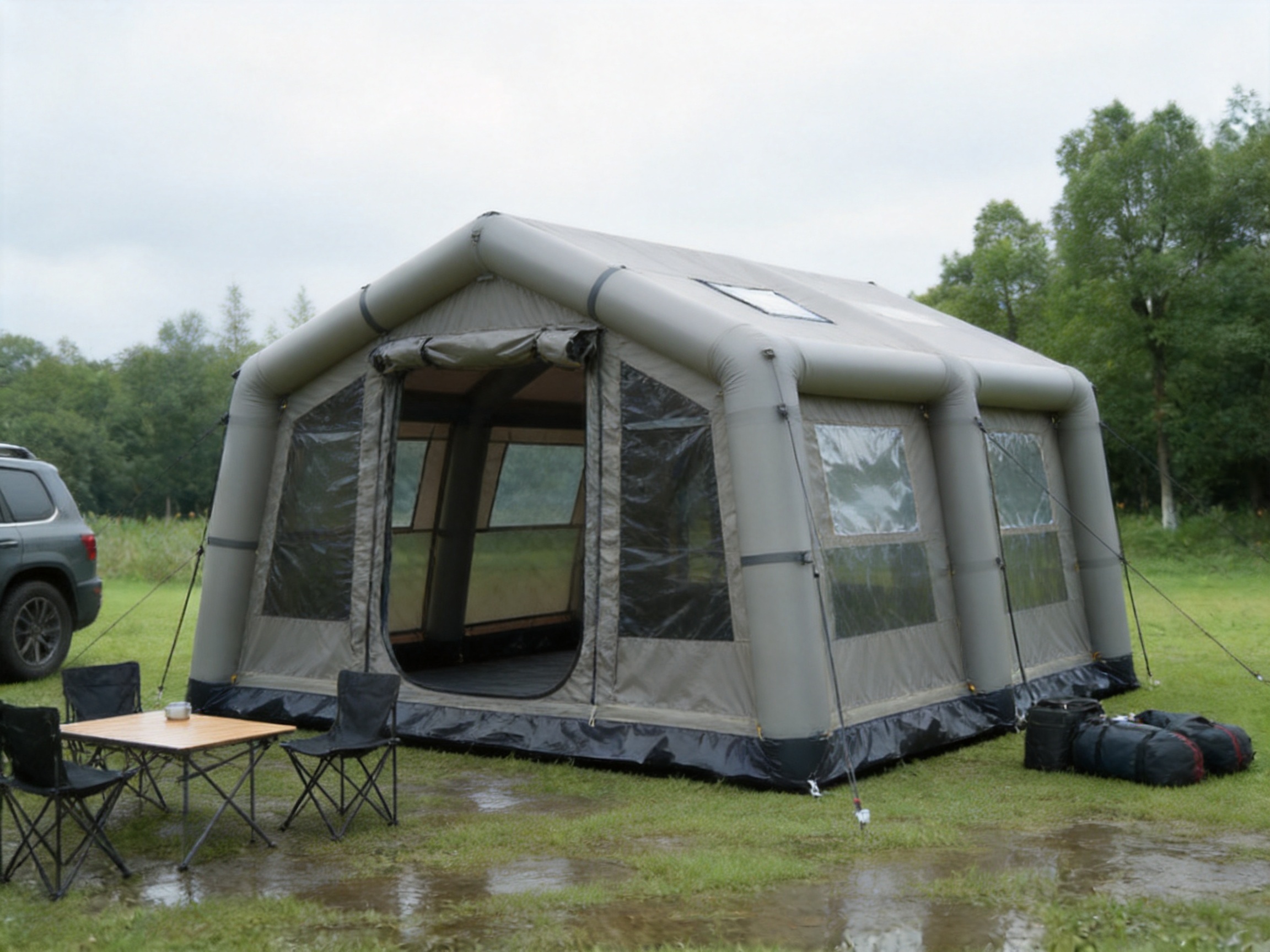 Modern outdoor accommodation needs to combine comfort, portability, durability, and commercial practicality. The 12m² Oxford fabric inflatable tent for 6–8 people is designed to address these requirements in one spacious shelter. With an unfolded size of 400 × 300 × 210 cm, a reinforced PVC air-column frame, a 210D Oxford fabric body, and a 3000 mm waterproof rating, it provides a substantial living area without relying on a conventional metal pole structure. This type of inflatable tent is suitable for family car-camping, glamping resorts, festival accommodation, outdoor fishing, backyard leisure, and tent rental operations. It is also well suited to outdoor brands, hospitality operators, event organizers, and distributors seeking a customizable tent platform for wholesale or private-label programs. Compared with many standard pole tents in the same capacity range, this model offers a different balance of setup convenience, interior volume, structural organization, and transportability. The inflatable architecture reduces the number of rigid components that must be assembled, while the Oxford fabric shell provides a practical combination of abrasion resistance, weather protection, and manageable weight. The product is manufactured by Ningbo Zhenhai Tiansai Leisure Products Co., Ltd., a Chinese tent producer with a factory of more than 13,000 square meters and experience in design, production, export, and OEM and ODM development. The company’s production capabilities support customized colors, dimensions, structures, fabrics, logos, and performance requirements for professional buyers. 12m² Oxford Fabric Inflatable Tent for 6-8 People 1. Product Overview The 12m² inflatable tent is a large-capacity outdoor shelter intended for six to eight people. Its 400 cm length and 300 cm width create a total floor area of approximately 12 square meters, while the 210 cm peak height allows most users to stand and move around comfortably inside. The tent is supplied as one complete set packed into a carton with an outer bag. Its packed dimensions are approximately 80 × 50 × 37 cm, and its listed weight is 25 kg. These specifications make it suitable for organized transport by car, freight shipment, rental inventory logistics, and warehouse storage. The main tent fabric is 210D Oxford fabric with a listed weight of 90 gsm. A matching 210D Oxford groundsheet provides a continuous protective layer between occupants and the ground. The shelter is supported by a PVC air-column frame rather than a full network of steel or fiberglass poles. The tent is rated for four-season use and offers a listed wind-resistance level of 6, a 3000 mm waterproof rating, and UPF 50+ ultraviolet protection. These figures indicate that the tent is designed for demanding outdoor use, although correct anchoring, site selection, ventilation, and weather judgment remain essential for safe operation. SpecificationDetails Product typeInflatable outdoor tent Capacity6–8 people Floor areaApproximately 12m² Unfolded size400 × 300 × 210 cm Packed size80 × 50 × 37 cm Product weight25 kg Main fabric210D Oxford fabric, 90 gsm Groundsheet210D Oxford fabric Support structurePVC air column Waterproof rating3000 mm Ultraviolet protectionUPF 50+ Wind resistanceLevel 6 Season classificationFour season PackagingOuter bag and carton Packing quantityOne set per carton Minimum order quantity100 sets 2. Spacious Interior for Family and Group Camping The largest advantage of a 12m² shelter is usable interior volume. Many tents advertised for six to eight people provide enough sleeping capacity only when occupants use compact sleeping arrangements and store equipment outside. A 400 × 300 cm floor plan provides more flexibility for sleeping mats, inflatable beds, luggage, camping furniture, and personal equipment. For family camping, the interior can be organized into sleeping and living zones. Two or three sleeping areas can be arranged along the sides, leaving a central passage for movement. Families can also use the space for changing clothes, preparing personal items, reading, or relaxing when weather conditions prevent outdoor activities. For glamping applications, the same floor area can accommodate a bed, side tables, lighting, soft furnishings, storage baskets, and decorative accessories. The 210 cm height gives the tent a more open and room-like feeling than low-profile backpacking shelters. This makes it a practical foundation for resort accommodation, seasonal campsites, and outdoor hospitality projects. For festival camping, the capacity allows groups of friends to share one shelter while keeping equipment organized. The high roof reduces the confined feeling associated with many compact dome tents. For fishing and backyard leisure, the large floor plan creates room for chairs, coolers, equipment bags, and other recreational supplies. Capacity figures should always be interpreted according to the intended use. Six to eight people may fit for sleeping with efficient organization, while fewer occupants will have more living space and comfort. Commercial operators can also position the tent as a six-person premium model, a family shelter for four to six people, or a maximum-capacity group tent for eight compact sleepers. Interior Planning Advantages The rectangular floor plan is straightforward to furnish and divide. It avoids some of the unusable corner areas found in highly tapered tent designs. Operators can place beds and furniture against the walls, while the central area remains available for circulation. The height of 210 cm is particularly valuable for glamping and rental applications. Guests can enter, change clothes, and organize belongings without constantly bending. A higher interior also supports the use of standard camping tables, chairs, storage systems, and decorative lighting. For product distributors, the large interior volume broadens the target market. The tent can be presented to families, outdoor clubs, event companies, holiday parks, rental businesses, and hospitality operators instead of being limited to backpackers or minimalist campers. 3. Inflatable Air-Column Construction The reinforced PVC air-column frame is the defining feature of this shelter. Instead of requiring multiple rigid poles to be connected and threaded through sleeves, the tent obtains structural support from air-filled columns integrated into the design. Once inflated to the required pressure, these columns create the main frame that supports the fabric canopy. This construction can simplify setup because users do not need to assemble a large collection of pole sections. The absence of a complex metal framework also makes packing and unpacking more convenient. For families and rental operators, reducing the number of loose structural components can make inventory management easier. An inflatable frame is also useful for commercial applications where tents are repeatedly installed and removed. Staff can learn a consistent inflation process and follow a standard inspection routine. When the air structure is deflated, the tent can be folded into its carry bag and prepared for transport or storage. The PVC air column is reinforced to support repeated outdoor use. However, the frame should still be protected from sharp objects, rough handling, excessive heat, and incorrect inflation pressure. A suitable ground inspection before setup is important because stones, branches, broken glass, and other sharp debris may damage the floor or air system. Setup Efficiency Traditional large tents often require two or more people to sort poles, connect sections, lift the canopy, and attach the fabric to the frame. An inflatable model can reduce these steps. The user generally spreads the tent, connects the inflation system, raises the air columns, secures the guy lines, and completes the anchoring process. The exact setup time depends on the pump, weather conditions, ground type, user experience, and final design configuration. Buyers should follow the supplied operating instructions and use the correct pump and pressure recommendations. The air frame should not be overinflated, and all valves should be checked before the tent is occupied. For rental businesses, a simpler setup process can help reduce labor requirements during turnover between customers. Staff can also inspect valves, air tubes, seams, zippers, anchor points, and fabric surfaces as part of a repeatable service procedure. Storage and Transport Benefits When deflated, the air-column system does not require long rigid poles to remain attached to the package. This contributes to the compact packed size of 80 × 50 × 37 cm. A compact package is easier to load into a vehicle, move through a warehouse, or ship as part of a larger order. The 25 kg product weight is appropriate for a shelter of this capacity and material specification, although it is not intended to compete directly with ultralight backpacking tents. Its design prioritizes space, weather protection, and group use rather than minimum carry weight. The included outer bag supports handling and protects the folded tent during ordinary transport. Carton packaging adds an additional layer of protection for wholesale shipment, distribution, and factory-to-customer logistics. 4. Oxford Fabric Performance The tent uses 210D Oxford fabric with a stated fabric weight of 90 gsm. Oxford fabric is widely used in outdoor products because its woven construction offers a practical balance between flexibility, strength, abrasion resistance, and cost control. For a large family or commercial tent, fabric durability is important because the shelter may be folded, unfolded, moved, and installed repeatedly. The fabric must also withstand contact with equipment, ground conditions, moisture, and regular handling. Oxford fabric is well suited to these requirements when it is properly coated, sewn, reinforced, and maintained. The matching Oxford groundsheet creates a consistent material system across the main shelter and floor. The groundsheet helps reduce contact between occupants and wet soil while providing a protective base for sleeping equipment, furniture, and personal belongings. A 90 gsm fabric specification can help reduce unnecessary bulk while preserving useful coverage for outdoor accommodation. The performance of the finished tent depends not only on fabric weight but also on yarn quality, coating technology, seam construction, stitching density, reinforcement patches, zipper quality, and production inspection. Waterproof Protection The listed waterproof rating is 3000 mm. This rating represents the pressure of water that the fabric coating can withstand under a standardized hydrostatic test. A higher number generally indicates stronger resistance to water penetration through the fabric itself. A 3000 mm rating is appropriate for many family camping, glamping, festival, and rental applications. It can provide protection during sustained rain when the tent is correctly pitched and maintained. The rating does not mean that water can never enter the shelter. Water resistance also depends on seam sealing, zipper design, fabric tension, roof angle, groundsheet layout, drainage, and setup quality. Users should pitch the tent on well-drained ground and avoid depressions where rainwater can collect. The groundsheet should be positioned correctly, and doors and ventilation openings should be closed or adjusted according to weather conditions. After use, the tent should be dried fully before long-term storage. Ultraviolet Protection The UPF 50+ rating helps protect the fabric from ultraviolet exposure and supports more comfortable use in sunny environments. This is particularly relevant to glamping resorts, festival operators, beachside camping, and backyard leisure settings where tents may remain exposed during the day. Ultraviolet protection does not eliminate the effects of long-term sunlight. Any fabric shelter can experience fading, coating degradation, or reduced material performance if it is left outdoors continuously without maintenance. Commercial users should rotate inventory when possible, inspect high-exposure areas, and store the tent in a dry, shaded location when it is not in use. 5. Wind Resistance and Four-Season Positioning The tent is listed with level 6 wind resistance. This indicates a design intended for stronger outdoor conditions than basic recreational shelters, but wind performance depends heavily on correct installation and local conditions. Anchoring is one of the most important factors in wind stability. Every available guy line and ground anchor should be used according to the manufacturer’s instructions. Anchors must be appropriate for the soil, sand, grass, gravel, or other surface where the tent is installed. The tent should be positioned to reduce direct exposure to the strongest wind direction whenever possible. Users should inspect the air columns, anchor points, seams, zippers, and fabric tension before occupation. If severe weather exceeds the product’s intended operating conditions, the tent should be evacuated and taken down when it is safe to do so. No portable tent should be treated as a permanent building or as a substitute for an engineered shelter in extreme weather. The four-season classification indicates that the shelter is intended for use across spring, summer, autumn, and winter conditions when properly managed. It does not necessarily mean that the tent is designed for heavy snow loading, alpine expeditions, or extreme polar environments. Buyers should match use conditions to the specific environment and request additional technical details for specialized deployments. 6. Applications Across Outdoor and Commercial Markets Family Car-Camping The tent provides a comfortable base for families traveling by vehicle. Because the equipment can be transported by car rather than carried over long distances, the 25 kg weight is manageable for this market. The large floor plan provides room for sleeping systems, bags, children’s belongings, and camping furniture. Families can use the central space for meals, games, reading, or relaxing during rain. The tall interior is also useful for changing clothes and organizing equipment. Compared with several smaller tents, one large shelter may simplify group coordination and create a shared living area. Glamping Resorts Glamping operators need accommodation that combines a distinctive outdoor experience with practical deployment and maintenance. The 12m² inflatable structure can serve as a flexible accommodation shell for seasonal camps, garden resorts, event villages, and temporary hospitality sites. Operators may furnish the interior with beds, rugs, lighting, side tables, storage units, and decorative textiles. The 210 cm height supports a more conventional room arrangement than low camping tents. Custom colors and structures also allow a resort to coordinate tent exteriors with its visual identity. For hospitality applications, operators should consider local regulations, fire-safety requirements, electrical safety, emergency access, ventilation, accessibility, and guest protection. The tent can provide the fabric shelter, while the final accommodation system must be planned according to the conditions of the installation site. Festival Camping Festival organizers and attendees often need tents that can accommodate several people while remaining transportable. The compact packed size supports efficient movement to and from the event, and the air-column frame may reduce setup complexity compared with a large pole tent. The interior can support shared sleeping arrangements and personal storage. Custom printing or logo placement may also help event organizers create branded accommodation for staff, performers, sponsors, or VIP guests. Outdoor Fishing and Backyard Leisure Fishing groups can use the tent as a base for equipment, rest, and overnight accommodation. The Oxford floor helps separate equipment from damp ground, while the spacious shape allows users to keep tackle boxes, bags, chairs, and other gear organized. For backyard use, the shelter can function as a seasonal guest room, children’s activity area, relaxation space, or shaded entertainment zone. Its relatively large capacity makes it useful for gatherings where a standard small tent would feel restrictive. Tent Rental Businesses Rental companies often prioritize durability, repeatable setup, easy storage, repairability, and visual appeal. This product addresses these needs through its commercial-scale capacity, inflatable support system, Oxford fabric construction, and customization options. A rental operator can select colors, add logos, modify selected structural features, and develop a product line for family camping, glamping, festivals, or corporate events. The 100-set MOQ is suitable for businesses planning a substantial fleet rather than purchasing a few individual units. 7. Advantages Compared with Conventional Competitor Designs Different tent constructions serve different users, so the most appropriate comparison depends on the application. This inflatable Oxford fabric model offers several advantages over many conventional pole tents and lower-capacity recreational tents. Comparison factorInflatable Oxford tentTypical small pole tentPotential commercial benefit Interior capacityApproximately 12m² for 6–8 peopleOften more limitedSupports families, groups, and furnished glamping layouts Structural systemReinforced PVC air columnsMultiple rigid polesFewer loose frame components and simplified handling Standing heightApproximately 210 cmOften lowerMore comfortable movement and room-style furnishing Water protection3000 mm listed ratingVaries widelySuitable for many wet-weather outdoor applications UV protectionUPF 50+ listedVaries by fabric and coatingUseful for sunny camps and seasonal resort use CustomizationColor, logo, size, structure, and fabric optionsMay be limitedSupports private-label and project-specific programs Commercial order sizeMOQ of 100 setsDepends on supplierSuitable for fleet and wholesale purchasing Compared with ultralight backpacking tents, this model is heavier and larger, but that is a deliberate trade-off. Backpacking shelters prioritize minimum weight and compact carrying dimensions, while this product prioritizes capacity, livability, and group comfort. Compared with rigid-frame accommodation units, the inflatable tent is more portable and easier to store. It may also be more flexible for seasonal or temporary installations. Compared with very low-cost tents, its specifications and customization support are better aligned with professional and repeat-use markets. Compared with some large pole tents, the inflatable system can reduce assembly complexity and eliminate the need to manage long pole sections. This can be particularly valuable for rental staff, festival crews, and family users who prefer a more straightforward setup process. 8. Manufacturing Strengths and Production Capabilities Ningbo Zhenhai Tiansai Leisure Products Co., Ltd. operates from Zhenhai District, Ningbo City, Zhejiang Province, China. The company’s factory covers more than 13,000 square meters and benefits from Ningbo’s position as an important port city. This location supports export logistics and access to international shipping routes. The company specializes in the design, production, and sale of tents and outdoor leisure products. Its experience includes inflatable tents, family tents, glamping products, specialty shelters, and customized outdoor equipment. This product range provides a foundation for serving both standard catalog requirements and project-based product development. The company has worked as the global designated supplier for the British company TENTSILE and has developed products associated with appearance patents and utility model patents. Such experience reflects a focus on product development rather than simple trading or resale. The design team evaluates products from practical and comfort-oriented perspectives and uses feedback from professionals and outdoor enthusiasts to improve product performance. Integrated Design and Development An integrated design process allows the manufacturer to coordinate the fabric shell, air-column structure, floor system, attachment points, packaging, and customization requirements. This is important because a change to one component can affect the dimensions, weight, inflation behavior, production method, or packing process of the entire tent. For OEM and ODM buyers, integrated development can reduce communication gaps between design and production. Buyers may provide a logo, preferred color, target market, required dimensions, structural concept, fabric performance, or reference sample. The manufacturer can then evaluate the feasibility and prepare a development plan. Quality Management The company states that it strictly implements a quality management system to help ensure products meet international standards. For an inflatable tent, quality control should cover incoming fabric inspection, coating consistency, cutting accuracy, sewing quality, air-column welding or assembly, valve installation, seam strength, zipper operation, waterproof performance, visual appearance, and packaging accuracy. Production inspection is particularly important for large inflatable shelters because small defects may affect repeated setup performance. Air columns require careful attention to airtightness, valve security, connection points, and pressure retention. The outer tent requires consistent seam construction and reinforcement in areas subject to stress. Professional buyers should request detailed inspection procedures, sample approval standards, test reports where applicable, and a clear process for handling nonconforming products. These documents help align expectations before mass production begins. Export and International Service Experience The company’s products are exported to multiple countries and regions, including North America, Europe, Asia, and other markets. International experience can support communication about packaging, labeling, shipping documentation, product instructions, and market-specific customization. As an outdoor product manufacturer, the company’s core team includes professionals with more than ten years of experience in research and development, production, and overseas operations. This combination can be valuable to importers seeking a supplier capable of supporting the full product cycle from sampling and production to delivery. 9. OEM and ODM Customization Options The product is available for OEM and ODM programs with a minimum order quantity of 100 sets. The stated production lead time is approximately 30–45 days, while sample development generally requires 2–3 weeks. Actual timing may depend on design complexity, material availability, artwork approval, order quantity, and production scheduling. Logo Customization Buyers can provide logo artwork for application to the tent, carry bag, packaging, labels, or selected accessories. Artwork should be supplied in a suitable professional format and confirmed before production. Logo position, size, color, printing method, and durability requirements should be approved during the sample stage. Color Customization Color can be selected using a Pantone number. This is useful for outdoor brands, resort operators, event organizers, and rental businesses seeking consistent visual identity across multiple products. Buyers should confirm whether the final fabric color can vary slightly because of material composition, coating, lighting, and production batch conditions. Size and Structure Customization The manufacturer can customize dimensions and structures according to buyer requirements. Possible design considerations include floor area, roof height, room division, door placement, window configuration, vestibule design, attachment points, air-column arrangement, and storage features. Any structural modification should be evaluated for stability, manufacturability, packing volume, inflation requirements, and final weight. A larger interior may require additional air columns or reinforcement. A smaller packed size may affect folding methods or fabric tension. Early technical communication helps avoid unexpected changes later in the project. Fabric Customization Fabric specifications can be customized according to desired waterproof and ultraviolet-resistant ratings. Buyers may also request different fabric weights, coatings, textures, colors, or performance targets. The selection should be based on the intended market and environment rather than relying only on a single headline specification. For rental fleets, abrasion resistance and easy maintenance may be priorities. For luxury glamping, appearance, touch, light transmission, and interior atmosphere may be more important. For wet climates, waterproofing, seam treatment, and drainage design require special attention. 10. Manufacturing Process for an Inflatable Tent The manufacturing process begins with product planning and technical confirmation. The design team reviews the required size, capacity, air-column layout, fabric, floor system, entry points, ventilation, packaging, and visual details. For customized orders, artwork, Pantone colors, and structural drawings are approved before production tooling or cutting begins. Material Preparation Fabric rolls are inspected for color consistency, surface defects, coating irregularities, width variation, and other issues that may affect production. The 210D Oxford fabric and floor material must be prepared according to the cutting plan. Any customized fabric specification is checked against the approved sample or technical documentation. Pattern Cutting Accurate pattern cutting is essential for maintaining the intended dimensions and ensuring that panels fit correctly during sewing. Large tent panels require careful handling because small inaccuracies can accumulate across the roof, walls, floor, and air-column sleeves. Cutting plans are also optimized to reduce material waste. Efficient nesting of pattern pieces can improve production efficiency while maintaining the required grain direction, coating orientation, and appearance consistency. Panel Sewing and Reinforcement Fabric panels are assembled according to the approved construction method. Stress areas, corners, guy-line points, handles, zippers, and air-column attachment zones may require additional reinforcement. Stitch quality must be consistent, with attention to thread tension, seam alignment, and edge finishing. The floor is connected to the tent body using a construction method appropriate to the required waterproof and strength performance. Door and window areas are fitted with their relevant closures and ventilation components. The final design must balance weather protection with airflow and occupant comfort. Air-Column Assembly The PVC air-column system is prepared and integrated into the tent structure. Valves and connection points are positioned according to the design. Airtightness and pressure retention are critical inspection points. The air frame must expand evenly and support the fabric shell without excessive stress or distortion. Where welding or specialized bonding is used, process consistency is essential. The air-column material, joining method, temperature, pressure, and dwell time must be controlled according to the production procedure. Each air system should be checked for leakage before packaging. Functional Testing Finished tents should be opened and inspected for overall appearance, dimensional consistency, zipper function, air-column performance, seam quality, floor attachment, and accessory completeness. Depending on the order and customer requirements, testing may include waterproofing, air retention, fabric performance, and load-related checks. Sample approval before mass production allows buyers to verify the appearance, dimensions, color, logo placement, packaging, and functional features. For large orders, production samples and inspection records provide additional quality assurance. Folding and Packaging After inspection, the tent is dried if necessary, folded according to a repeatable method, placed into its outer bag, and packed into a carton. Consistent folding protects the fabric, reduces package variation, and helps customers unpack and repack the product more easily. 11. Buyer Considerations Before Wholesale Purchase Wholesale buyers should first define the intended market. A family camping retailer may prioritize simple setup instructions, attractive colors, and compact packaging. A glamping resort may need customized dimensions, interior features, and coordinated branding. A rental business may require reinforced components, replacement parts, and a standard maintenance procedure. Buyers should confirm the complete product configuration, including pump requirements, inflation valves, guy lines, anchors, repair kits, carry bags, cartons, manuals, and optional accessories. It is also useful to clarify whether the stated 25 kg weight includes all accessories and packaging or refers only to the tent set. Weather ratings should be discussed in relation to the target market. The 3000 mm waterproof rating and UPF 50+ protection are useful specifications, but the complete product performance depends on construction details and use conditions. Importers should request relevant test information when required by local regulations or retail standards. Packaging should be reviewed for shipping efficiency. One set per carton supports inventory counting and handling, while outer-bag packaging protects the folded product. Buyers should confirm carton dimensions, gross weight, palletization, container loading quantity, shipping marks, and barcode or label requirements. For customized orders, the buyer should approve a sample before mass production. The sample should be evaluated for color, logo quality, fabric feel, floor construction, inflation behavior, packed size, setup process, and interior dimensions. Any changes should be documented in writing before the production order is released. 12. Installation, Use, and Maintenance Guidance Choose a level site with good drainage and remove sharp objects before spreading the tent. Avoid areas beneath unstable branches, near rapidly rising water, or in locations exposed to hazards. Lay out the tent carefully and confirm that the air columns, valves, fabric, and accessories are not twisted or trapped. Inflate the air columns using the recommended pump and pressure procedure. Do not use excessive pressure. Once the structure is raised, attach all guy lines and anchors. Check that the fabric is evenly tensioned and that doors and windows operate correctly. During use, maintain ventilation to reduce condensation. Condensation can occur even when the tent is fully waterproof, especially when several people sleep inside, cooking takes place nearby, or the outside temperature changes rapidly. Adequate airflow helps maintain a more comfortable interior. Keep open flames, stoves, heaters, and other ignition sources away from the fabric unless the product has been specifically designed and certified for such use. Follow local fire-safety requirements and never cook in an enclosed tent without suitable ventilation and safety controls. After use, remove dirt with a soft brush or mild cleaning solution. Avoid harsh chemicals that could damage coatings, seams, or printed surfaces. Allow the tent to dry completely before packing it for storage. Store it in a cool, dry place away from direct sunlight, rodents, sharp objects, and excessive pressure. Rental operators should inspect every unit after return. Recommended checks include air-column pressure retention, valve condition, zipper operation, fabric tears, seam separation, floor damage, anchor points, guy lines, carry bags, and included accessories. Minor repairs should be completed before the tent is returned to inventory. 13. Frequently Asked Questions How many people can use this tent? The listed capacity is six to eight people. The actual comfort level depends on sleeping equipment, luggage, furniture, and how much living space users require. For maximum comfort, fewer occupants may be preferable, while six to eight compact sleepers can use the available floor area efficiently. What are the unfolded dimensions? The unfolded dimensions are approximately 400 × 300 × 210 cm. This creates a floor area of about 12 square meters and a maximum height of approximately 210 cm. What are the packed dimensions? The packed dimensions are approximately 80 × 50 × 37 cm. The product is supplied with an outer bag and carton packaging, with one set packed per carton. Is the tent suitable for four-season use? The product is listed as a four-season tent. It is designed for use across a range of seasonal outdoor conditions, but users must consider local weather, snow, wind, temperature, drainage, and anchoring requirements. Extreme conditions may require a specialized shelter. How waterproof is the fabric? The listed waterproof rating is 3000 mm. This provides useful protection for many family camping, glamping, festival, and rental applications. Waterproof performance also depends on seams, zippers, setup, fabric tension, drainage, and maintenance. What type of frame does the tent use? The tent uses a reinforced PVC air-column frame. The air columns are inflated to support the main fabric structure, reducing the need for numerous rigid pole sections. Is a pump included? The supplied product information identifies the PVC air-column structure but does not specify the pump configuration. Buyers should confirm whether a pump is included, which pump type is recommended, and whether pressure-control accessories are supplied before placing an order. Can the color be customized? Yes. Color customization is available by selecting a color according to a Pantone number. Final color approval should be completed through a sample or approved production reference. Can the size and structure be changed? Yes. The manufacturer offers customized sizes and structures according to buyer requirements. Changes should be reviewed for stability, air-column layout, packing size, production feasibility, and final cost. Can logos be added? Yes. Buyers can provide logo artwork for customization. The placement, size, color, printing method, and packaging application should be confirmed before production. What is the minimum order quantity? The minimum order quantity for the listed OEM and ODM programs is 100 sets. How long does production take? The stated production lead time is approximately 30–45 days. Sample development generally takes 2–3 weeks. Timelines can change according to customization, order volume, material availability, and approval speed. What industries can use this product? The tent is suitable for family camping, glamping resorts, outdoor fishing, festival camping, backyard leisure, and tent rental businesses. It can also be developed for outdoor brands, event organizers, hospitality projects, and distributors. What should be checked before long-term storage? The tent should be fully dry and clean before storage. Users should inspect the air columns, valves, seams, floor, zippers, anchors, and carry bag. Store the product in a dry, shaded area away from heat, moisture, chemicals, and sharp objects. 14. Overall Evaluation The 12m² Oxford fabric inflatable tent offers a strong combination of capacity, standing height, weather protection, inflatable convenience, and commercial customization. Its 400 × 300 × 210 cm interior is large enough for six to eight people and flexible enough for family camping, group travel, glamping, festivals, and rental operations. The reinforced PVC air-column structure distinguishes it from conventional pole tents by reducing the number of rigid components and supporting a more streamlined setup process. The 210D Oxford fabric and matching floor provide a practical foundation for repeated outdoor use, while the 3000 mm waterproof rating and UPF 50+ protection support a wide range of seasonal applications. Its advantages are particularly relevant to buyers who need more than a basic recreational tent. The product can be adapted to a brand identity, resort concept, event requirement, or rental fleet through logo, color, size, structure, and fabric customization. The 100-set MOQ and defined sample and production lead times support professional wholesale purchasing. The manufacturing capabilities of Ningbo Zhenhai Tiansai Leisure Products Co., Ltd. strengthen the product’s commercial potential. The company combines product design, factory production, export experience, customization services, and quality-management procedures. Its factory scale, professional design team, patent-related development experience, and international customer base provide a foundation for OEM and ODM cooperation. For buyers seeking a spacious and adaptable shelter rather than an ultralight backpacking tent, this inflatable Oxford fabric model is a practical candidate. With correct setup, responsible weather use, regular inspection, and suitable maintenance, it can serve as a reliable platform for personal outdoor recreation and professional outdoor accommodation projects. References 1. Product technical specifications supplied for the 12m² Oxford fabric inflatable tent. 2. Manufacturer information for Ningbo Zhenhai Tiansai Leisure Products Co., Ltd. 3. General textile testing principles for hydrostatic pressure and waterproof fabric evaluation. 4. General outdoor equipment guidance concerning tent anchoring, ventilation, condensation control, and fabric care. 5. General product development and quality-control practices for inflatable outdoor structures. Product: 12m² Oxford Fabric Inflatable Tent for 6-8 People .profile-card { display: flex; align-items: flex-start; gap: 2rem; background-color: white; padding: 2rem; border-radius: 12px; box-shadow: 0 2px 10px rgba(0,0,0,0.05); } .profile-avatar { width: 120px; height: 120px; border-radius: 50%; overflow: hidden; flex-shrink: 0; } .profile-avatar img { width: 100%; height: 100%; object-fit: cover; display: block; } .profile-info { flex-grow: 1; } .profile-name { font-size:27px; font-weight: 900; margin-bottom: 1rem; color: #1a1a1a; } .profile-bio { line-height: 1.6; color: #333; } @media (max-width: 600px) { .profile-card { flex-direction: column; align-items: center; text-align: center; gap: 1.5rem; } } Wenqiao Lu — International After-Sales Service Manager With over eight years of experience in outdoor equipment customer support, she manages warranty claims, technical inquiries, replacement parts, and post-delivery service for overseas distributors and camping brands.
-
2026-09-11The Complete Guide to an 8–12 Person SUV-Connected Stormproof Cotton Canvas Pyramid Tipi Glamping Tent
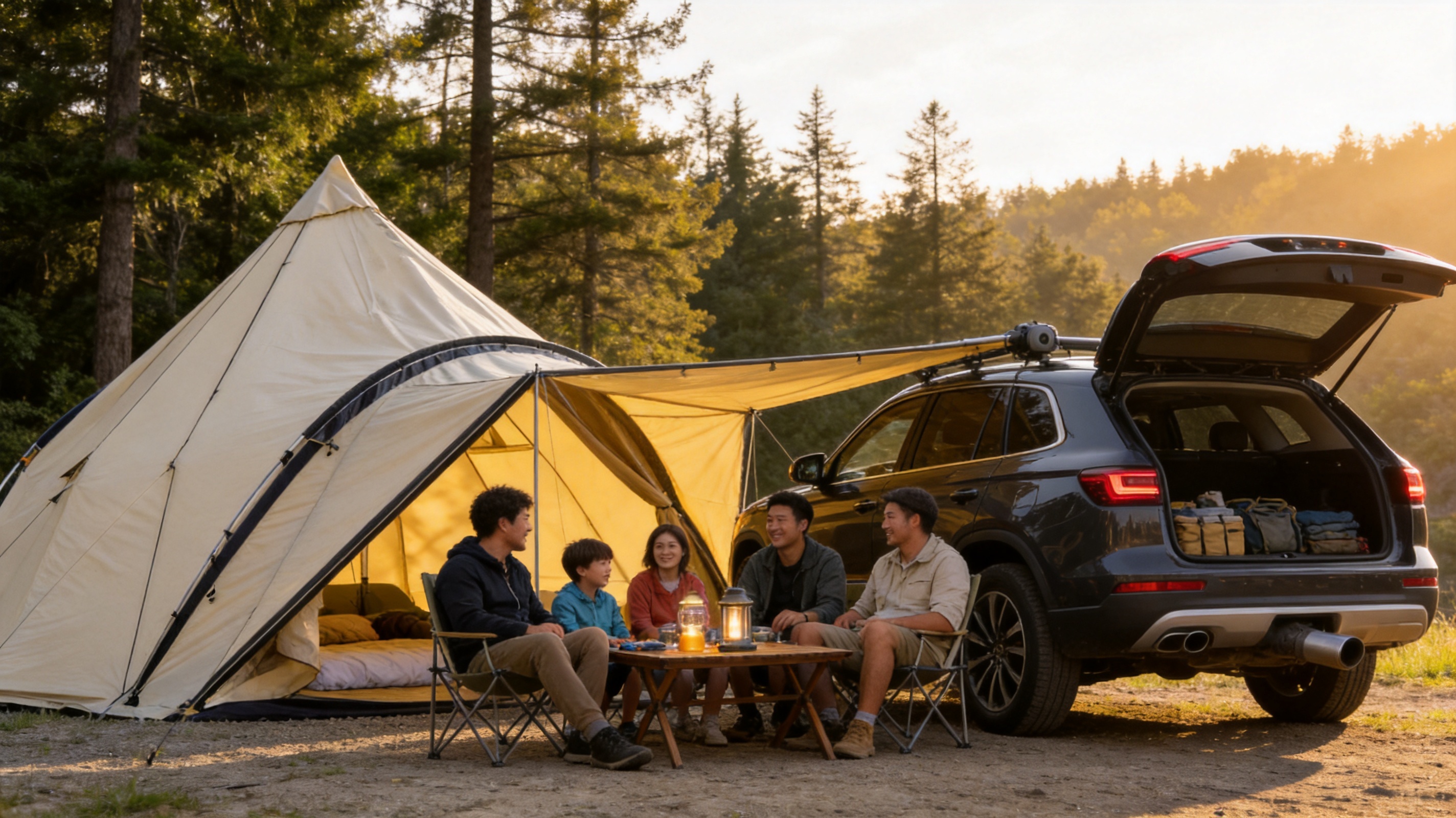 Outdoor accommodation is changing. Campers increasingly want more than a basic sleeping enclosure, yet many do not want to tow a trailer, purchase a recreational vehicle, or carry a complicated cabin system. The ideal solution combines the mobility of a vehicle with the comfort of a spacious tent. The 8–12 Person SUV-Connected Stormproof Cotton Canvas Pyramid Tipi Glamping Tent is designed around precisely that idea: it transforms the rear area of a compatible SUV or MPV into an extension of a large, breathable, weather-resistant outdoor living space. With its tall pyramid profile, heavy-duty technical cotton canvas, vehicle connector, quick-mount frame, and reinforced waterproof seals, this tent is intended for glamping resorts, family adventures, road trips, festivals, expedition travel, and extended backyard use. It is not simply a larger version of a conventional camping tent. Its design combines a freestanding shelter, a vehicle-linked vestibule, and a high-capacity interior into one adaptable outdoor system. This article examines the product in detail, including its construction, layout, weather performance, installation concept, advantages over competing tent categories, commercial potential, and the manufacturing strengths behind its development. It also explains which users can benefit most from the tent and what buyers should consider before ordering. 8-12 Person SUV-Connected Stormproof Cotton Canvas Pyramid Tipi Glamping Tent 1. Product Overview The 8–12 Person SUV-Connected Stormproof Cotton Canvas Pyramid Tipi Glamping Tent is a high-capacity shelter designed for groups that require substantial interior volume without giving up the flexibility of vehicle-based travel. Its conical pyramid or tipi-inspired structure creates a tall central area, broad usable floor space, and a distinctive visual appearance that suits both private camping and hospitality applications. The tent is designed to connect to the rear of many SUVs and MPVs through a universal attachment system. Once attached, the vehicle can serve as an additional sleeping, storage, changing, or utility area, while the tent provides the main communal living space. This arrangement can be especially valuable when users need to separate sleeping zones from cooking, dining, equipment storage, or social areas. The stated capacity is eight to twelve people, making the tent suitable for large families, group travel, outdoor education, event accommodation, and glamping operations. Actual occupancy should depend on the users’ sleeping arrangements, furniture, equipment, and desired comfort level. A group using compact sleeping mats will experience the interior differently from a resort operator furnishing the space with beds, tables, chairs, and decorative elements. The shelter is built around a high-density technical cotton fabric, commonly identified as TC fabric in outdoor product terminology. The material is intended to balance breathability, durability, weather resistance, and comfort. In contrast to thin synthetic tents that prioritize minimum packed weight, a heavy-duty cotton-blend canvas shelter generally emphasizes a more stable interior climate, stronger visual appeal, and a premium long-term camping experience. The main structure uses a quick-mount frame concept. This helps reduce the time and labor required during setup, an important consideration for road trips, festivals, rental fleets, and commercial campgrounds. Reinforced waterproof seals are incorporated into key connection and exposure points to help protect the interior from rain and ground-level moisture. 2. Design Philosophy: A Vehicle and Tent Working as One Space Traditional tents and vehicle camping each have clear strengths. A traditional tent offers a relatively large living area, but it may require users to sleep on the ground and carry all equipment inside the shelter. A vehicle provides a raised, enclosed, secure-feeling space, but its interior volume is limited. This product combines the two concepts by using the vehicle as an integrated extension of the tent. The SUV connection is particularly useful during changing weather. Campers can move between the vehicle and the shelter without walking through open rain or crossing a large exposed gap. Equipment can remain organized in the vehicle, while the tent remains available for sleeping, dining, relaxing, and social activities. The connected configuration can also help create a more unified camp environment for families traveling with children or groups carrying substantial gear. The attachment system is described as universal and intended to fit most SUVs and MPVs. Because vehicle body shapes, rear hatch designs, roof heights, and tailgate dimensions vary, buyers should verify compatibility before purchase. A universal concept improves market coverage, but no attachment system can be assumed to fit every vehicle without checking the specific vehicle profile and installation requirements. Unlike a roof tent, the main shelter remains at ground level. This can provide easier access for children, older campers, pets, and users carrying bulky items. Unlike a conventional awning, it delivers a genuinely enclosed, high-capacity room. Unlike a trailer tent, it does not require a separate towing platform, trailer registration, or trailer maneuvering in many use cases. 3. Pyramid Tipi Structure and Interior Volume The pyramid tipi form is one of the product’s most important design features. A tall central peak produces generous vertical clearance, while the sloping walls help direct rainwater away from the main living area. The conical silhouette also distributes wind loads around the shelter more continuously than a design with large flat vertical wall sections. High headroom changes how a large tent feels. In a low-profile family tent, users may need to crouch or crawl in sections of the interior. In a tall pyramid shelter, people can stand, move around, change clothes, organize equipment, and interact more naturally. This makes the tent better suited to extended stays, not merely overnight sleeping. The central height can also support a more flexible internal layout. Depending on the final configuration, users may arrange sleeping mats around the perimeter and retain an open central area for shared activities. Glamping operators may use beds or low furniture, while expedition groups may prefer clear floor space for gear. The product’s broad footprint allows it to serve both recreational and semi-commercial purposes. The shape is also visually distinctive. Many mass-market tents use familiar tunnel, dome, or cabin forms. A pyramid tipi creates a stronger identity for a resort, event, festival, or rental business. In a competitive hospitality market, a memorable silhouette can improve the guest experience and contribute to a recognizable accommodation theme. However, pyramid structures require careful anchoring. The tall profile can be stable when correctly tensioned, but users must install the frame, guy lines, stakes, and connectors according to the supplied instructions and site conditions. Wind resistance is not a substitute for proper setup. The shelter should not be used in severe weather beyond its design parameters. 4. Technical Cotton Canvas: Comfort and Durability The tent uses high-density technical cotton fabric intended to provide a more comfortable indoor environment than many lightweight synthetic alternatives. Cotton-based or cotton-blend canvas materials are valued in glamping because they offer a soft, natural appearance and a more substantial hand feel. They can also moderate temperature changes by allowing a degree of moisture vapor movement through the fabric. Breathability is important in a large shelter. When several people sleep or spend time inside a closed tent, humidity and condensation can build up. A breathable fabric can help reduce the feeling of stale air, although ventilation openings should still be used. No fabric alone eliminates condensation; local weather, cooking, body heat, wet clothing, ground moisture, and occupancy all affect interior humidity. The high-density construction is designed for repeated outdoor use. Compared with very thin temporary shelters, a heavier canvas structure can offer better resistance to abrasion, handling stress, and routine campsite wear. This is valuable for families who use the same tent regularly, as well as rental companies that need products to withstand frequent setup and packing cycles. The fabric also contributes to UV shielding. Outdoor textiles are exposed to sunlight, and long-term ultraviolet radiation can weaken fibers, fade colors, and reduce coating performance. A dense technical fabric, combined with appropriate finishing and responsible maintenance, can help improve service life. The exact UV rating, fabric weight, waterproof rating, and colorfastness should be confirmed in the product specification for each production batch or model configuration. Canvas tents require appropriate care. They should be fully dried before long-term storage, packed without trapped moisture, and inspected after use. If the fabric is stored wet, mildew and unpleasant odors may develop. Users should also avoid harsh chemicals, open flames, and direct contact between hot equipment and the tent wall. Proper maintenance is central to achieving the long service life expected from a premium canvas shelter. Technical Cotton Compared with Lightweight Synthetic Fabric ConsiderationTechnical Cotton Canvas Pyramid TentLightweight Synthetic Tent Interior atmosphereDesigned to provide a breathable, substantial fabric environmentOften prioritizes lightness and compact packing Visual characterNatural, premium, and well suited to glampingUsually more technical and recreational in appearance Durability focusSuitable for repeated use when correctly maintainedCan be durable, but fabric weight and construction vary widely Pack size and weightGenerally more substantial because of the heavier fabricOften lighter and easier to carry over long distances Climate comfortDesigned to moderate the indoor feel through fabric breathabilityDepends heavily on ventilation and fabric coating MaintenanceRequires careful drying and storageUsually easier to dry, though coatings require their own care The comparison does not mean that one material is universally better. Backpackers carrying equipment over long distances may prioritize minimum weight. Families, glamping operators, and vehicle-based campers may prefer the comfort, appearance, and durability associated with a heavier technical canvas shelter. 5. Stormproof Construction and Weather Protection The product is described as stormproof and incorporates reinforced waterproof seals. These features indicate a design intended for demanding outdoor conditions, including rain, variable temperatures, and exposed campsites. The tent’s protection comes from a combination of fabric, seam construction, frame geometry, ground contact details, doors, vents, connector design, and anchoring—not from one feature in isolation. Waterproof seals are especially important around seams and transition points. Needle holes, panel joins, zippers, attachment areas, and vehicle connectors can become potential paths for water entry if they are not correctly designed and finished. Reinforcing these locations helps maintain protection where different pieces of fabric and structure meet. The pyramid profile supports water shedding by avoiding broad horizontal surfaces where rain can pool. Sloped panels guide water toward the ground, reducing the pressure placed on the fabric. Correct tension is essential: loose fabric can sag, create pockets, and increase the chance of leakage, while excessive tension can place unnecessary stress on seams, webbing, and anchor points. Wind performance benefits from the continuous conical shape and central frame arrangement. The form can reduce the impact of direct wind on large flat walls. Nevertheless, performance depends on site selection, ground conditions, stake quality, guy-line placement, and the direction and strength of the wind. Campers should avoid exposed ridgelines, unstable trees, flood-prone ground, and locations where falling branches may create hazards. The vehicle connector creates another weather-related consideration. The connection must be properly fitted to the rear of the vehicle, and the vehicle should be positioned on reasonably level ground. Users should check that the rear hatch, doors, exhaust outlet, lights, and ventilation systems remain safe and functional. Vehicle engines must never run in an enclosed or poorly ventilated tent area. Practical Weather Guidelines Before setup, inspect the forecast, select well-drained ground, and identify the prevailing wind direction. Use all recommended stakes and guy lines. Check that the frame is fully seated and that the connector is evenly tensioned. After rain, inspect seams and low points rather than assuming that a dry interior confirms perfect installation. During hot weather, use ventilation openings to improve airflow. During cold weather, avoid blocking vents because occupants generate moisture even when the temperature is low. Never use an open flame, charcoal grill, or fuel-burning appliance inside the tent unless the product documentation specifically approves a safe and properly vented system. 6. Quick-Mount Frame and Installation Concept Large tents can be intimidating when they require multiple poles, complicated sleeves, and several stages of adjustment. The quick-mount frame concept is intended to simplify installation and reduce setup time. This is important for private users who may arrive at a campsite after a long journey, and for professional operators who may assemble and disassemble shelters repeatedly. The exact procedure depends on the final product configuration, but a typical installation sequence includes selecting the site, laying out the tent, assembling or positioning the frame, attaching the main fabric, tensioning the base, securing the guy lines, and connecting the rear vehicle section. Users should always follow the supplied manual because frame architecture, pole order, and attachment points can differ between models. For commercial applications, installation efficiency affects operating costs. A resort or rental business may need to prepare multiple units before guests arrive. A frame that is straightforward to understand can reduce staff training time, decrease setup errors, and support more consistent presentation across a property. Clear labeling, durable fittings, and repeatable assembly steps are valuable elements in a commercial tent system. Setup should be practiced at home before the first trip. This allows users to identify the parts, understand the attachment process, and check the fit with their vehicle. Practice also makes it easier to determine how many people are needed for efficient assembly. Although the product is designed for convenient mounting, a shelter of this size is best handled by at least two adults during setup, especially in windy conditions. 7. Advantages over Competing Tent Categories Compared with Standard Family Tents Standard family tents can provide good value and reasonable sleeping capacity, but many have lower ceilings, less robust fabrics, and limited integration with vehicles. The SUV-connected pyramid tipi offers a larger social environment and a more premium presentation. The vehicle connection adds useful storage and transitional space, while the canvas construction is intended for more substantial seasonal use. The product may be especially attractive to families who spend several nights at one campsite. Instead of repeatedly moving between a compact tent and a car, users can create a more organized base. Parents can keep luggage and supplies in the vehicle while children use the tent as a sheltered play or sleeping area, subject to safe supervision. Compared with Roof Tents Roof tents are fast to deploy and keep occupants above wet or uneven ground, but their internal capacity is limited. Access requires a ladder, which may be inconvenient for young children, older adults, pets, and users carrying large items. A ground-level pyramid tent provides a much larger communal room and easier movement in and out. The SUV-connected shelter also avoids placing the entire sleeping load on the vehicle roof. This can be relevant for users whose vehicles are not equipped for a roof tent or who want to preserve roof space for other equipment. It does, however, require a suitable ground area and takes more floor space at the campsite. Compared with Vehicle Awnings A vehicle awning offers quick shade and rain protection, but many awnings remain open-sided or have limited enclosure. They are excellent for short stops, yet they do not provide the same sleeping capacity, privacy, or climate separation as a full tent. The pyramid shelter creates a genuine room that can be used for overnight accommodation and longer stays. Compared with Trailer Tents and Large Modular Shelters Trailer tents can offer substantial space, but they involve additional equipment, towing considerations, storage, and transport logistics. A vehicle-connected ground tent uses the existing SUV or MPV rather than requiring a separate trailer. It can therefore appeal to users seeking a large camp without entering the trailer market. Compared with very large modular event shelters, this product is more focused on flexible camping and vehicle-based travel. Its size is suitable for group accommodation while remaining more approachable for private users. Its quick-mount frame and integrated connector add functionality that a standard event marquee may not offer. Competitive Feature Summary FeatureVehicle-Connected Pyramid TipiBasic Family TentRoof TentOpen Vehicle Awning Large ground-level living areaYesOften, depending on modelLimitedUsually partial Direct vehicle connectionDesigned as a core featureUsually unavailableVehicle-mounted, but not a ground-level roomCommon, but generally open-sided Capacity for large groupsDesigned for 8–12 peopleVaries widelyUsually limitedNot normally intended for sleeping groups Standing-height interiorSupported by the tall pyramid designDepends on modelUsually limitedDepends on support poles Canvas glamping appearanceYesLess commonLess commonVaries Suitable for extended campsite staysYes, with correct maintenanceYes, depending on constructionMore limited in interior spaceUsually supplementary 8. Applications for Glamping and Resort Operations Glamping businesses require accommodation that is visually appealing, comfortable, durable, and practical for staff. This shelter addresses those needs with a recognizable silhouette, large capacity, and the possibility of creating a vehicle-linked guest experience. It can function as a standalone accommodation, a seasonal family unit, or an additional living space beside a guest vehicle. The pyramid form can support themed campsites based on exploration, road travel, nature retreats, family adventures, or festival accommodation. Operators may furnish the interior with beds, rugs, low tables, lighting, and storage, provided all furnishings remain compatible with ventilation and fire-safety requirements. For mobile glamping providers, the SUV connector creates a differentiated package. A guest vehicle can become part of the accommodation concept, allowing the shelter to serve as a flexible extension during road-based holidays. The system may also suit outdoor events where guests arrive in different vehicles and want a private, comfortable base without transporting a permanent cabin. Commercial users should evaluate more than the initial purchase price. Important factors include cleaning time, drying space, replacement-part availability, fabric repair procedures, staff training, packing dimensions, seasonal storage, and expected setup frequency. A premium tent can be commercially valuable when its service life and operating convenience offset the initial investment. Operators should also develop clear guest instructions. These should cover vehicle compatibility, safe use of doors and connectors, ventilation, cooking restrictions, weather limits, drying procedures, and emergency exit access. Consistent instructions protect both guests and the equipment. 9. Applications for Families, Expeditions, and Road Trips Families often need flexible zones. Children may sleep in one part of the tent, adults in another, and luggage or outdoor equipment may stay in the vehicle. The large interior can provide a place to eat or relax when rain prevents outdoor activities. The vehicle connection can make it easier to retrieve food, clothing, medical supplies, or electronics without leaving the shelter completely. For road trips, the tent expands the possibilities of a standard SUV or MPV. Travelers can use the vehicle for transport and secure storage while enjoying the openness of a campsite. This is particularly useful when a trip includes several nights at one location and the group wants more room than the vehicle alone can provide. Expedition users can benefit from the structure’s capacity and weather-oriented design. The tent can accommodate people and equipment in environments where a lightweight backpacking shelter would be too small. It is better suited to vehicle-supported expeditions than to trips that require carrying the shelter over long distances. Festival campers may appreciate the combination of privacy, capacity, and distinctive appearance. A large enclosed room can provide a retreat from crowds and changing weather. The vehicle connection also creates a practical location for equipment, coolers, clothing, and supplies. 10. Manufacturing Strengths Behind the Product The product is manufactured by Ningbo Zhenhai Tiansai Leisure Products Co., Ltd., a tent-focused company based in Ningbo, Zhejiang Province, China. The company operates a factory covering more than 13,000 square meters and specializes in the design, production, and sales of outdoor tents and related leisure products. A dedicated factory environment is important for complex shelters because product quality depends on coordination among fabric cutting, sewing, structural assembly, waterproof treatment, inspection, packing, and logistics. Large tents contain numerous panels, seams, webbing sections, attachment points, poles, fittings, and accessories. Manufacturing consistency is therefore more demanding than producing a simple single-layer cover. The company’s location in Ningbo provides access to an important international port city. This supports export-oriented production and can simplify the movement of finished goods, raw materials, samples, and replacement components. International logistics capability is particularly relevant to wholesale customers, outdoor brands, resort operators, and importers serving multiple markets. The company reports experience in product development, international sales, and outdoor equipment manufacturing. Its core team includes experienced professionals in research and development, production, and overseas operations. This combination can help bridge the gap between technical design and the practical needs of global customers. The manufacturer also reports cooperation as the sole global designated supplier for the British company TENTSILE. In addition, it has designed products associated with appearance patents and utility model patents. These details indicate an emphasis on proprietary product development rather than relying exclusively on generic catalog designs. Design and Research Capability Outdoor products must be developed around real use conditions. A shelter that looks attractive in a studio may be difficult to install, uncomfortable in humid weather, or vulnerable at high-stress connection points. The company describes a design process that considers practicality and comfort and includes collaboration with professionals, outdoor-user testing, and continuous optimization based on customer feedback. For the SUV-connected pyramid tent, this development approach is relevant to the connector, frame, fabric tension, door placement, storage possibilities, ventilation, and user movement. Each of these elements affects the overall experience. A vehicle connection that is difficult to tension, for example, can undermine an otherwise strong shelter design. Product testing should ideally examine repeated setup cycles, seam performance, fabric behavior, connector fit, frame stability, zipper operation, packing, and exposure to rain and ultraviolet light. Buyers seeking private-label or OEM products can request information about applicable testing procedures, inspection points, material records, and acceptance standards. Quality Management and Production Control The company states that it implements a quality management system to help ensure that products meet international standards. In practical manufacturing terms, quality control for a large technical tent may include incoming fabric inspection, color and coating checks, dimensional review, sewing-line inspection, seam-strength monitoring, hardware verification, finished-product examination, and pre-shipment sampling. Quality control is most effective when it begins before sewing. Fabric defects, inconsistent coating, incorrect grain direction, or inaccurate cutting can create problems that are difficult to correct later. A structured process should therefore connect purchasing, warehouse management, cutting, sewing, assembly, inspection, and packing. For wholesale buyers, production transparency can be as important as the finished appearance. Buyers may request approved samples, inspection reports, packaging details, spare-part recommendations, production lead times, and clear tolerances. These discussions help reduce misunderstandings when ordering large quantities or developing a customized version. 11. OEM and Wholesale Potential The product is a strong candidate for OEM and wholesale programs because its design can serve several market segments. Outdoor retailers may position it as a premium family shelter. Glamping operators may purchase multiple units for accommodation or seasonal events. Vehicle-accessory distributors may offer it as an expansion system for SUVs and MPVs. Tourism companies may use it as part of a road-trip package. Customization opportunities may include fabric colors, branding, packaging, accessory kits, connector configurations, internal partitions, flooring solutions, windows, logos, and instruction manuals. The feasibility of each option depends on order quantity, production schedule, material availability, tooling, and product-safety requirements. A reliable OEM partner should provide more than a logo application. The manufacturer should be able to discuss pattern development, sample approval, quality standards, packaging efficiency, carton protection, replacement parts, and after-sales support. For a large tent, the ability to reproduce the approved sample consistently is essential. Wholesale buyers should also consider regional requirements. Different markets may have specific expectations for flame resistance, labeling, consumer instructions, chemical compliance, packaging, and warranty documentation. These requirements should be discussed before production rather than after goods arrive. 12. Installation, Care, and Long-Term Ownership Long-term performance depends on use and maintenance as much as on original construction. After every trip, users should remove dirt, leaves, sand, and standing water. If the tent becomes wet, it should be dried thoroughly before storage. Drying can be completed by setting it up in a clean, ventilated area or following the manufacturer’s approved method. The fabric should be inspected for cuts, abrasion, loose stitching, mildew, damaged zippers, and weakened webbing. Small problems are easier to repair before the next trip. Frame components should be checked for bending, cracks, corrosion, and missing fittings. Stakes and guy lines should be stored together so that the tent is ready for the next installation. Users should avoid dragging the assembled shelter across rough ground. Heavy equipment should not be placed directly against the fabric, and sharp objects should be kept away from the floor and walls. When loading the packed tent into a vehicle, protect the fabric from contact with tools, metal edges, and wet cargo. Cleaning should follow the product instructions. Aggressive detergents, bleach, solvents, and unauthorized waterproofing products may damage technical finishes or alter the fabric’s performance. If re-treatment becomes necessary after extended use, users should select a treatment compatible with the fabric and consult the supplier first. Vehicle Compatibility and Safe Connection Before purchasing, confirm the vehicle’s rear dimensions, hatch movement, tailgate clearance, exhaust position, and surrounding bodywork. The connector must not interfere with lights, license plates, door hinges, or safe access. If the rear hatch cannot remain in the intended position, the connection may not function as designed. The vehicle should be parked on stable, level ground with the parking brake engaged. Users should not rely on the vehicle as the only anchor for the tent. The tent frame, perimeter stakes, and guy lines must all be installed as directed. The connector should be checked after initial tensioning and again after wind or rain. Engine exhaust is a serious safety concern. Vehicles should not be left running with the tent attached or with occupants inside an enclosed shelter unless the arrangement is specifically designed and ventilated for that purpose. Carbon monoxide is odorless and potentially fatal. Safe camping practice requires the engine to remain off when people are inside or near the connected shelter. 13. Buyer Evaluation Checklist Customers comparing this tent with alternative shelters should evaluate the entire use case rather than focusing only on capacity. The following questions can help determine whether the product is appropriate: Is the main use vehicle-based camping rather than long-distance backpacking? Does the group need a large, standing-height living area? Is a breathable canvas-style interior more important than minimum packed weight? Will the tent be used for private recreation, commercial glamping, rental, or events? Is the vehicle compatible with the rear connector? Is there sufficient campsite space for the full footprint and guy lines? Can the buyer provide proper drying and storage after wet use? Are regional safety, labeling, and material requirements understood? Are replacement parts and after-sales support available for the intended market? Buyers should request the complete technical specification before placing an order. Important data may include fabric composition, fabric weight, waterproof performance, packed dimensions, total product weight, frame material, floor construction, ventilation details, door configuration, connector range, recommended occupancy arrangement, wind-use guidance, and included accessories. 14. Frequently Asked Questions Q1: How many people can use the tent? The stated capacity is eight to twelve people. The practical number depends on whether the tent is used for sleeping only or as a furnished living space. Sleeping mats allow greater density, while beds, furniture, luggage, and equipment reduce available floor area. Q2: What vehicles can connect to the tent? The product uses a universal attachment concept intended for most SUVs and MPVs. Compatibility should still be confirmed for the specific vehicle because rear hatch dimensions, body contours, roof height, tailgate movement, and exhaust placement vary between models. Q3: Is the tent suitable for rain? Yes, it is designed as a stormproof, weather-oriented shelter and includes reinforced waterproof seals. Correct setup is essential. The tent must be properly tensioned, anchored, ventilated, and maintained. No tent should be treated as completely immune to extreme weather or flooding. Q4: Is the technical cotton fabric breathable? The high-density technical cotton or TC fabric is designed to provide a more breathable and comfortable indoor environment than many heavily coated lightweight fabrics. Ventilation should still be used, especially when several people are inside or when cooking and wet clothing create additional moisture. Q5: Is this a backpacking tent? No. The product is intended primarily for vehicle-supported camping, glamping, family use, expeditions, festivals, and resort applications. Its large capacity and heavy-duty canvas construction are more important than minimum carrying weight. Q6: Does the tent require professional installation? The quick-mount frame is intended to simplify setup, but users should practice installation and follow the supplied instructions. Because the shelter is large, two or more adults may be helpful, particularly during windy conditions or when connecting it to a vehicle. Q7: Can the tent be used as a glamping accommodation unit? Yes. Its tall pyramid shape, premium canvas appearance, large capacity, and adaptable interior make it suitable for glamping concepts. Commercial operators should confirm local requirements for fire safety, guest accommodation, foundations, sanitation, insurance, and seasonal operation. Q8: How should the tent be stored? It should be completely dry before packing for long-term storage. Store it in a cool, dry, ventilated location away from direct sunlight, pests, sharp objects, and chemicals. Inspect the fabric and frame before storage and again before the next use. Q9: What makes the tent different from a normal SUV awning? An awning normally provides shade or partial rain protection, while this product creates a large enclosed room with sleeping and living capacity. Its vehicle connector is part of a broader shelter system rather than a simple overhead cover. Q10: Can the product be customized for wholesale orders? Customization may be available for qualified OEM and wholesale programs. Possible options can include color, branding, packaging, accessory selection, and selected structural details. Buyers should discuss order quantity, sample approval, production timing, and technical requirements with the manufacturer. 15. Overall Assessment The 8–12 Person SUV-Connected Stormproof Cotton Canvas Pyramid Tipi Glamping Tent is designed for people who want the freedom of vehicle travel and the comfort of a spacious outdoor room. Its most important advantages are its large capacity, tall pyramid interior, breathable technical canvas, vehicle integration, quick-mount frame, reinforced waterproof seals, and distinctive glamping appearance. Compared with a compact synthetic family tent, it offers a more substantial and premium accommodation experience. Compared with a roof tent, it provides far more ground-level living space and easier access. Compared with an open awning, it delivers greater privacy, weather protection, and sleeping capability. Compared with a trailer-based system, it can expand a compatible SUV or MPV without requiring a separate towing platform. The product is particularly well suited to families, road-trip travelers, festival campers, expedition groups, outdoor hospitality businesses, and private-label distributors. It is less suitable for users whose main priority is carrying a shelter long distances on foot or minimizing total packed weight. Its commercial value is strengthened by the manufacturer’s dedicated tent factory, more than 13,000 square meters of production space, design and development experience, international export capability, reported patent-related product development, and focus on quality management. These factors can support buyers seeking a long-term supply partner rather than a one-time generic product source. As with any large outdoor shelter, the best results depend on correct installation, suitable site selection, careful vehicle compatibility checks, regular drying, and responsible storage. When those conditions are met, this pyramid tipi tent can serve as a versatile bridge between camping equipment and mobile outdoor accommodation. References 1. Manufacturer-provided product specifications and product description for the 8–12 Person SUV-Connected Stormproof Cotton Canvas Pyramid Tipi Glamping Tent. 2. Manufacturer-provided company profile for Ningbo Zhenhai Tiansai Leisure Products Co., Ltd., including factory capacity, product development, export activity, and quality-management information. 3. General principles of outdoor tent design, including fabric breathability, seam protection, structural tension, ventilation, and campsite anchoring. 4. General textile-care guidance for cotton canvas and cotton-blend outdoor fabrics, including drying, storage, cleaning, and mildew prevention. 5. General vehicle-camping safety guidance concerning exhaust emissions, carbon monoxide prevention, ventilation, stable parking, and safe use of vehicle-connected shelters. Product: 8-12 Person SUV-Connected Stormproof Cotton Canvas Pyramid Tipi Glamping Tent .profile-card { display: flex; align-items: flex-start; gap: 2rem; background-color: white; padding: 2rem; border-radius: 12px; box-shadow: 0 2px 10px rgba(0,0,0,0.05); } .profile-avatar { width: 120px; height: 120px; border-radius: 50%; overflow: hidden; flex-shrink: 0; } .profile-avatar img { width: 100%; height: 100%; object-fit: cover; display: block; } .profile-info { flex-grow: 1; } .profile-name { font-size:27px; font-weight: 900; margin-bottom: 1rem; color: #1a1a1a; } .profile-bio { line-height: 1.6; color: #333; } @media (max-width: 600px) { .profile-card { flex-direction: column; align-items: center; text-align: center; gap: 1.5rem; } } Lin Qian — After-Sales Service Manager over eight years of experience in outdoor equipment customer service and manages warranty claims, product troubleshooting, replacement parts, and technical support for international distributors and camping brands.
-
2026-09-09Spreader Bar Hammock with Stand-Style Flat-Lay Comfort for Outdoor Relaxation
 A hammock should be more than a place to sit for a few minutes. It should provide a comfortable, stable, and inviting space where people can read, nap, rest, or enjoy the outdoors without feeling restricted. The spreader bar hammock described in this article is designed around that idea. Its defining feature is a pair of solid spreader bars positioned at both ends of the fabric bed. These bars hold the hammock open, creating a broad, flat, and stable surface that feels closer to a suspended daybed than to a narrow, deeply curved traditional hammock. With breathable fabric, reinforced stitching, heavy-duty tree straps, carabiners, a 500-pound stated weight capacity, and a compact carry bag, the product is intended to combine everyday comfort with practical portability. It can be used in a garden, patio, campsite, vacation property, or suitable indoor location. Its open structure also gives it an elegant appearance that works well in leisure environments where appearance matters as much as function. Behind this product is Ningbo Zhenhai Tiansai Leisure Products Co., Ltd., an established Chinese outdoor-product manufacturer with a factory covering more than 13,000 square meters. The company specializes in the design, production, and sales of tents and related outdoor leisure equipment. Its experience in fabric products, suspension-oriented outdoor designs, product development, and international supply gives this hammock a manufacturing foundation that smaller trading-only suppliers may not be able to offer. This article examines the hammock’s design, user benefits, construction, setup, portability, manufacturing strengths, quality considerations, customization potential, and suitability for different markets. It also compares the product’s practical advantages with common weaknesses found in basic hammocks, while explaining how buyers can evaluate the item responsibly for residential, hospitality, retail, and outdoor-use applications. Spreader Bar Hammock with Stand Style Flat Lay Design for Outdoor Relaxation 1. The Core Idea: A Hammock Designed Like a Floating Bed Traditional gathered-end hammocks are usually suspended from two points and allowed to form a deep curve. That shape can be relaxing, but it often creates several limitations. The fabric may bunch around the user’s shoulders and legs, the sleeping surface may feel narrow, and getting in or out can require careful movement. When one person shifts position, the entire hammock may rotate or fold inward. A spreader bar hammock takes a different approach. The bars at both ends pull the fabric outward, maintaining a more open rectangular sleeping area. Instead of wrapping around the user, the fabric presents a wider and flatter platform. This arrangement is particularly appealing to users who prefer to lie on their back, stretch their legs, turn from side to side, or share the hammock with another person within the stated load limit. The “stand-style” appearance comes from the hammock’s open, structured presentation. Even when it is suspended between trees or other appropriate anchor points, it looks more like a compact outdoor lounger than a loosely gathered sling. This makes it suitable for residential patios, resort gardens, poolside relaxation zones, and visually coordinated outdoor spaces. The flat-lay concept also improves accessibility. A user does not have to climb deeply into a pocket of fabric. The open surface is easier to approach, and the spreader bars make the edges more visible. This can be helpful for adults who want a simpler entry and exit experience, although all users should still mount and dismount slowly and ensure that the hammock is securely installed before use. Why the Flat Surface Matters A hammock’s comfort depends on more than softness. Body position, fabric tension, width, stability, and the way the product distributes weight all affect the experience. A flat-lay surface reduces the sensation of being squeezed by gathered fabric. It also gives users more freedom to find a natural posture. For reading, a broad surface creates room to support the upper body with a pillow or folded blanket. For napping, the user can lie in a more familiar position. For social use, the open design provides an inviting place where two people can relax together, provided that the total combined load remains within the product’s stated 500-pound capacity and the suspension system is installed correctly. The spreader bars also help prevent the fabric from collapsing toward the middle. This does not make the hammock rigid; it remains a suspended leisure product with natural movement. However, it gives the fabric a more consistent shape than many low-cost gathered hammocks, making the experience feel more controlled and supportive. 2. Product Advantages Compared with Basic Hammocks The market includes many simple rope, net, and fabric hammocks. Some are inexpensive and suitable for occasional use, but they may lack the features needed for long-term comfort or premium presentation. This spreader bar model offers several meaningful advantages over those basic alternatives. FeatureBasic Gathered HammockSpreader Bar HammockUser Benefit Sleeping surfaceOften narrow and deeply curvedWide and more openGreater freedom to stretch, turn, and relax Fabric behaviorMay bunch around the bodyHeld open by bars at both endsMore consistent support and less crowding Visual appearanceCasual and loosely formedStructured, neat, and lounge-likeBetter fit for patios, resorts, and styled outdoor areas Entry and exitCan require climbing into a deep pocketOpen edges are easier to see and approachMore convenient everyday use Weight supportVaries widely by constructionStated capacity of up to 500 poundsSuitable for individual or shared relaxation within the limit InstallationMay require separately purchased hardwareIncludes tree straps and carabinersMore convenient setup from the beginning StorageDepends on modelDesigned to pack into a carry bagSimple storage and transport One of the most important advantages is the combination of comfort and visual order. A basic hammock can be comfortable when positioned correctly, but its fabric may sag unevenly or twist during use. The spreader bars keep the body of the hammock visually and physically open. This makes the product more attractive in a garden or hospitality setting where outdoor furniture is expected to contribute to the overall appearance of the space. Another advantage is versatility. The product is not limited to camping. It can be used for backyard relaxation, patio lounging, indoor seasonal use, weekend travel, resort amenities, and gift markets. The design speaks to customers who want both a practical outdoor item and a decorative leisure product. The included tree straps and carabiners further distinguish the product from hammock bodies sold without suspension equipment. Customers can receive a more complete solution rather than having to research compatible straps or improvise with unsuitable rope. Appropriate installation remains essential, but the inclusion of hardware reduces the number of additional purchases required. A More Stable Experience Without Eliminating Natural Movement Stability is a relative term in hammock design. No suspended hammock behaves exactly like a fixed bed. It will move, respond to weight shifts, and require secure anchoring. The benefit of the spreader bars is that they stabilize the fabric’s open shape. They reduce uncomfortable bunching and help the user maintain a broad surface while resting. This balance is valuable. A completely rigid platform would lose much of the gentle floating sensation that makes hammocks appealing. The spreader bar construction preserves the relaxed suspension experience while offering more structure than a simple gathered sling. Users should install the hammock with adequate clearance from the ground and surrounding obstacles. The anchor points must be strong enough for the combined user weight and dynamic movement. Tree straps should be wrapped around suitable trunks according to the installation instructions, and carabiners must be fully closed before use. 3. Materials and Construction Features The hammock is made with high-quality, breathable fabric intended to support comfort during extended outdoor use. Breathability is particularly important in warm climates. A dense, non-breathable surface can trap heat and moisture, whereas an air-permeable textile allows greater airflow around the body. Breathable fabric can also improve the general perception of comfort. When a user lies still for an extended period, ventilation beneath the back and legs becomes noticeable. The material should feel soft enough for relaxation while retaining sufficient strength to carry the intended load. These needs require a balance between hand feel, tensile performance, seam construction, color stability, and resistance to ordinary outdoor conditions. Reinforced stitching is another essential feature. The main fabric may be strong, but stress is concentrated around the suspension ends, connection loops, and areas where the spreader bars interact with the fabric. Reinforced seams distribute the load over a broader area and reduce the likelihood that a single line of stitching will carry excessive force. A well-made hammock should use consistent seam lines, secure thread tension, neat edge finishing, and strong attachment points. Manufacturing inspection should look for skipped stitches, loose threads, uneven reinforcement, fabric damage, and alignment problems around the spreader bars. These details have a direct effect on product confidence and service life. The Role of the Spreader Bars The spreader bars are not merely decorative. They are functional structural components that define the hammock’s flat-lay form. Positioned at the head and foot ends, they maintain lateral width and help prevent the fabric from folding inward. Because the bars remain under tension during use, their material, surface finish, dimensions, and connection design must be selected carefully. The ends should be smooth and properly finished so that they do not abrade the fabric or create sharp contact points. The connection between the bars and the hammock body should be checked for even loading and secure retention. The bar length influences the visual width and the degree to which the hammock remains open. A wider bar can create a more spacious appearance, while a compact bar may make the product easier to transport. The final design represents a balance between relaxation space, packability, weight, and manufacturing efficiency. For buyers considering private-label or wholesale production, spreader bar specifications should be discussed at the development stage. Important questions include the selected material, surface treatment, bar diameter or profile, end protection, attachment method, and packaging arrangement. These specifications can influence both perceived quality and shipping costs. Suspension Hardware and Load Distribution The supplied heavy-duty tree straps are intended to make setup more practical while helping protect suitable trees from the concentrated pressure that can result from thin cordage. Wide webbing generally distributes contact over a broader section of bark than narrow rope. Users should still choose appropriate trees and avoid damaging fragile or protected vegetation. Carabiners provide the connection between the suspension straps and the hammock attachment points. Their gate should close completely, and the hardware should be inspected before each use. Hardware should never be substituted with decorative clips or non-load-bearing accessories. The stated capacity of up to 500 pounds is a significant selling point, especially for a double relaxation product. Capacity, however, should not be interpreted as permission to exceed the manufacturer’s instructions or to use the hammock in unsafe conditions. Dynamic movement, uneven loading, sharp contact, improper anchoring, and worn components can all affect real-world performance. 4. Comfort for Different Types of Users The product is designed for people who want a generous relaxation surface rather than a minimalist sleeping sling. Its wide profile can accommodate several recreational activities without requiring the user to remain in one position. Reading and Leisure For reading, the flat surface makes it easier to position a book, tablet, or e-reader at a comfortable angle. Users can sit diagonally or recline with support beneath the shoulders and legs. The open design also makes it easier to place a small cushion or blanket on the hammock. Users should avoid placing hard objects beneath the fabric or near the suspension points. A smooth, uncluttered surface improves comfort and reduces the possibility of abrasion. Electronic devices should also be protected from falls, moisture, and excessive heat. Afternoon Naps The hammock’s primary appeal may be its ability to create a calm napping space. The fabric gently supports the body, while the spreader bars provide a flatter posture than a deeply curved hammock. The breathable material can be helpful during warm-weather rest, and the open form allows a light breeze to pass around the user. For napping, location matters. A shaded area is usually preferable to direct midday sun. The hammock should be placed away from sprinklers, high-traffic paths, sharp branches, cooking equipment, and areas where children or pets may interfere with the suspension system. Shared Relaxation The stated 500-pound capacity makes the hammock suitable for shared relaxation when the total weight is within the limit. Two people should enter slowly and distribute their weight carefully. Sudden loading by one person can cause unexpected movement, especially when the second person is already lying on the fabric. Couples, parents and children, or friends may enjoy the open surface for conversation. Nevertheless, users should follow the stated capacity and supervise children. The hammock is a leisure product, not playground equipment, and should never be used for jumping, swinging aggressively, or climbing on the spreader bars. Indoor and Seasonal Use The product can also be installed indoors where suitable structural anchor points are available. Indoor installation requires particular caution because ordinary walls, ceiling trim, decorative beams, or unverified furniture are not necessarily capable of supporting a suspended load. An indoor user should consult qualified installation guidance and confirm that the anchor system is appropriate for the building structure. The hammock should not be attached to weak partitions, unstable railings, or temporary fixtures. When correctly installed, indoor use can extend the product’s seasonal value and make it useful in reading rooms, enclosed porches, sunrooms, or recreation spaces. 5. Portability and Everyday Practicality Portability is one of the product’s strongest practical benefits. Although the spreader bars give the hammock a structured form, it is designed to pack down into a compact carry bag. This allows users to store it during bad weather, transport it for weekend trips, or move it between different areas of a property. A carry bag also improves retail presentation. It keeps the product components together and provides a clear storage solution after use. For wholesale buyers, a properly designed bag can support branding, instruction labeling, barcode placement, and organized packaging. When packing the hammock, the fabric should be clean and completely dry. Storing damp fabric for extended periods can produce unpleasant odors, mildew, discoloration, or material deterioration. The spreader bars and metal hardware should be checked for moisture before storage, particularly after use near a pool, beach, or humid environment. The compact format is useful for customers who do not have room for permanent outdoor furniture. A conventional lounge chair may occupy a fixed area throughout the season, whereas this hammock can be installed when needed and stored when the space is required for another activity. Travel and Weekend Use For weekend getaways, the hammock can serve as a flexible leisure accessory at a campsite, vacation home, or suitable private outdoor location. Its usefulness is greatest where there are strong, appropriately spaced anchor points. Travelers should not assume that every tree, post, or structure is suitable. The product is best transported in the supplied bag rather than loose in a vehicle, where hardware could rub against the fabric. Packing the straps separately inside the bag or in a protected compartment can help prevent tangling and reduce wear on the textile. 6. Manufacturing Strengths Behind the Product The performance of an outdoor leisure product depends heavily on the manufacturer’s ability to control materials, processes, inspection, and communication. Ningbo Zhenhai Tiansai Leisure Products Co., Ltd. operates from a factory of more than 13,000 square meters in Zhenhai District, Ningbo, Zhejiang Province, China. Ningbo’s position as an important port city supports international logistics and export operations. The company specializes in tents and outdoor products, giving it relevant experience with technical fabrics, stitched assemblies, load-bearing structures, packaging, and products designed for use in changing outdoor conditions. A manufacturer with this product background can approach a hammock as part of a wider outdoor-equipment system rather than as an isolated textile item. The company’s reported design and engineering capabilities include the development of products with appearance patents and utility model patents. This indicates an emphasis on product development and functional design. For customers seeking differentiated merchandise, design capability can be valuable because it supports the creation of products that do not look identical to standard catalog items. Professional Design and Product Testing According to the company information provided, Tiansai Leisure maintains a professional design team and develops products with attention to practicality and comfort. The company also collaborates with professionals and invites outdoor enthusiasts to participate in testing. Feedback from actual users can reveal issues that may not be obvious from drawings or factory prototypes. For a spreader bar hammock, practical testing may examine entry and exit, fabric tension, body comfort, bar alignment, attachment strength, packaging durability, and the clarity of setup instructions. Repeated testing can help identify whether users understand how to install and adjust the product without unnecessary difficulty. Testing should also consider different body sizes and use positions. A hammock that feels comfortable only when one person lies perfectly centered may not perform as well in real household conditions. User feedback can support improvements to width, fabric feel, strap length, hardware selection, and carry-bag design. Quality Management The company states that it strictly implements a quality management system and aims to ensure that products meet international standards. Buyers should request the specific quality documents, test reports, and inspection records relevant to their target market and product configuration. General statements about quality should be supported by product-specific evidence when required for commercial distribution. A strong quality process for this hammock may include incoming-material inspection, fabric shade and defect checks, dimensional verification, seam inspection, hardware checks, load testing, packaging inspection, and final random sampling. Each stage helps prevent a defect from reaching the customer. Production traceability is also important. Batch identification can help a manufacturer and buyer investigate complaints, isolate affected stock, and manage improvements. For wholesale orders, clear communication about sampling procedures, acceptable quality limits, carton packing, labeling, and inspection responsibilities can reduce misunderstandings. Experience in International Supply Tiansai Leisure exports products to countries and regions in North America, Europe, Asia, and other markets. International supply experience can strengthen a manufacturer’s understanding of packaging requirements, labeling expectations, communication across time zones, shipping coordination, and the different preferences of outdoor consumers. International experience is particularly useful for products such as hammocks because the product may be sold through online stores, outdoor retailers, garden centers, resort suppliers, gift channels, and private-label catalogs. Each channel can require different packaging, photography, instructions, carton quantities, and product positioning. 7. Advanced Manufacturing Process for a High-Quality Hammock A reliable hammock is produced through a sequence of controlled operations rather than a single sewing step. The following process describes the principal manufacturing considerations for this type of product. Exact machinery, materials, and inspection standards may vary according to the final specification and customer requirements. Material Selection and Incoming Inspection Production begins with the selection of fabric, webbing, thread, spreader bar components, metal hardware, labels, and packaging materials. The fabric should be evaluated for weight, width, color consistency, hand feel, tensile performance, and resistance to common forms of wear. Webbing must be checked for width, thickness, weave consistency, edge quality, and strength. Thread should be compatible with the fabric and intended outdoor conditions. Metal components should be inspected for surface finish, dimensions, gate operation where applicable, and visible defects. Incoming inspection helps ensure that inconsistent raw materials do not create avoidable production variation. Materials that fail specification can be isolated before they enter the cutting or assembly process. Computer-Aided Pattern Development The hammock body can be developed using measured patterns that define the final length, width, attachment zones, seam allowances, and reinforcement positions. Computer-aided pattern work can improve consistency across production batches and simplify modifications during product development. Pattern development should account for fabric stretch, seam behavior, bar placement, and the way the hammock folds for packaging. The final dimensions must support the intended flat-lay experience without creating excessive tension that could damage seams or hardware. Precision Cutting Fabric cutting should produce clean, repeatable panels with accurate dimensions. Depending on the material, cutting may be performed with industrial blades or other suitable equipment. Operators should control fraying, distortion, and alignment during the cutting process. Accurate cutting is important because small dimensional differences can affect the final symmetry of the hammock. If one side is longer or wider than the other, the spreader bars may sit unevenly and the load may not distribute as intended. Reinforcement and Sewing Reinforcement areas receive special attention because suspension loads are concentrated at the ends and connection points. Additional layers of fabric, webbing, or carefully designed seam structures may be used to distribute stress. Industrial sewing machines should be configured for the selected fabric thickness and thread. Stitch density, seam type, back-tacking, edge finishing, and thread tension should be controlled. Operators should follow standardized work instructions rather than relying solely on visual judgment. After sewing, inspectors can examine seam straightness, reinforcement placement, loose threads, skipped stitches, puckering, and evidence of needle damage. These checks are simple but valuable. A neat appearance often reflects better process control, while hidden defects can become more serious during loading. Spreader Bar Assembly The spreader bars should be fitted in a way that maintains consistent spacing and avoids sharp contact with the textile. End components, protective caps, sleeves, or attachment elements should be installed according to the approved design. Assembly workers should verify that both bars are aligned and that the fabric is not twisted. A twist may not be obvious when the product is packed, but it can affect comfort and stability when the hammock is suspended. Hardware Attachment and Inspection Tree straps and carabiners should be matched to the intended suspension points and packed with the correct hammock body. Hardware verification can include dimensional checks, visual inspection, operation of gates, and confirmation that the supplied components correspond to the approved sample. Hardware should not be mixed between product versions without authorization. A change in carabiner design, strap width, or connection loop can affect installation instructions and the product’s overall performance. Load and Durability Testing Load testing is an important part of validating the stated capacity. A manufacturer may use controlled static loading, repeated loading, seam testing, and suspension-point evaluations. The test method should be appropriate to the product and market requirements. Testing does not eliminate the need for safe use. Instead, it provides evidence that the design and construction have been evaluated under controlled conditions. Production samples should be compared against approved standards so that the quality of mass-produced units remains consistent with the tested configuration. Final Inspection and Packaging Before packing, each unit should be checked for fabric defects, stitching quality, bar alignment, hardware completeness, carry-bag condition, and instruction materials. The hammock should be folded in a way that protects the fabric and prevents unnecessary pressure on the spreader bars. Packaging should protect the product during handling and international transportation. Cartons should be sized to balance protection with shipping efficiency. For retail customers, packaging may also include product features, safety guidance, care instructions, barcode labels, and multilingual content. 8. OEM, Wholesale, and Customization Opportunities The manufacturer’s design and factory capabilities create opportunities beyond the standard product. Retailers, distributors, resorts, online brands, and outdoor-equipment companies may request private-label or OEM versions of the hammock. Potential customization areas include fabric color, logo labels, woven tags, carry-bag graphics, instruction sheets, packaging design, strap color, hardware finish, carton markings, and order quantities. Buyers may also discuss adjustments to dimensions, provided that any change is evaluated for comfort, stability, load performance, and packaging impact. Color customization can help the product fit different sales channels. Neutral tones may appeal to minimalist home and garden retailers, while brighter colors may be suitable for family-oriented outdoor stores. Resort customers may request coordinated colors that match existing furniture, umbrellas, or poolside branding. Packaging is especially important for e-commerce. The product should be compact enough to control shipping costs while still communicating quality when it reaches the customer. Clear product photography, concise feature explanations, safety information, and accurate dimensions can reduce returns caused by misunderstandings. What Wholesale Buyers Should Confirm Before placing an order, buyers should confirm the product dimensions, fabric composition, weight, packed size, gross carton weight, included components, load rating, care instructions, warranty policy, lead time, sample procedure, and inspection arrangement. They should also clarify whether the product is intended for private residential use, commercial hospitality use, or general outdoor retail. Commercial use may involve higher frequency, more users, and stricter maintenance requirements. A resort or rental operator may need spare straps, replacement hardware, and a documented inspection routine. Buyers should request current photographs or samples rather than relying on an old catalog image. Any approved changes should be recorded in a specification sheet. This protects both the buyer and manufacturer by ensuring that production, inspection, and packaging refer to the same agreed version. 9. Care, Safety, and Service Life Proper care supports the service life of the hammock. The fabric should be kept clean and allowed to dry fully before storage. Mild cleaning methods are generally preferable to aggressive chemicals, abrasive brushes, or procedures that may damage the textile and protective finishes. The hammock should be inspected regularly, especially before use after long storage. Look for frayed webbing, damaged stitching, stretched or torn fabric, bent spreader bars, corrosion, cracks, or carabiners that do not close correctly. Any component showing significant damage should be replaced or evaluated before the hammock is used again. Users should avoid dragging the hammock across rough ground, placing it against sharp edges, or leaving it exposed to severe weather for prolonged periods. Although the product is intended for outdoor relaxation, outdoor use does not mean that it should remain permanently exposed to rain, intense ultraviolet radiation, snow, or strong winds. The hammock should never be used as a swing, trampoline, climbing structure, or substitute for playground equipment. Pets may damage fabric or suspension components with claws and teeth, so pet access should be supervised. Children should use the product only under responsible adult supervision. The 500-pound stated capacity includes the combined weight of all users and should not be exceeded. A user should not add heavy equipment, rigid furniture, or suspended accessories unless they have been specifically approved. Safe installation requires suitable anchor points, appropriate clearance, properly attached straps, and careful movement. 10. Suitability for Retail and Hospitality Markets The hammock’s appearance and functionality make it suitable for several commercial channels. Outdoor retailers can present it as a premium alternative to basic gathered hammocks. Garden centers can position it as a seasonal relaxation product. Home and lifestyle stores can emphasize the flat-lay design, elegant appearance, and patio suitability. Resorts, boutique hotels, vacation rentals, and wellness facilities may use the hammock in gardens, private terraces, poolside areas, or relaxation zones. Its visual structure can help create an intentional atmosphere rather than the informal appearance associated with low-cost recreational gear. For hospitality use, operators should establish a routine inspection and cleaning schedule. The product may experience more frequent use than a household hammock, so staff should inspect attachment points and fabric condition regularly. Operators should also display or communicate safe-use instructions to guests. Online sellers can emphasize several clear benefits: a wide flat surface, spreader bars that reduce bunching, breathable fabric, reinforced stitching, a high stated weight capacity, included suspension components, compact storage, and suitability for outdoor or indoor relaxation where safe anchor points exist. Marketing should remain accurate. The hammock should not be described as a permanent bed, a guaranteed weatherproof structure, or a replacement for certified climbing equipment. Clear claims build customer confidence and reduce the risk of improper use. 11. Why Manufacturer Capability Matters to Product Performance A hammock may look simple, but its quality depends on the interaction of textile engineering, sewing precision, hardware selection, structural design, testing, and packaging. A manufacturer with experience in outdoor products is better positioned to manage these interactions than a supplier focused only on low-cost assembly. Tiansai Leisure’s background in tent design and production is relevant because tents and hammocks share several manufacturing challenges. Both rely on technical textiles, reinforced seams, portable structures, outdoor use considerations, compact packing, and international distribution. Experience in one category can support disciplined development in another, although each finished product still requires its own testing and quality control. The company’s reported investment in product innovation and lightweight, environmentally considerate materials also aligns with current market expectations. Outdoor consumers increasingly seek products that are comfortable to carry, efficient to package, durable in use, and thoughtfully designed. Material decisions should nevertheless be evaluated through actual product testing rather than marketing language alone. Its location in Ningbo provides access to a major manufacturing and export environment. This can support component sourcing, factory coordination, container loading, and international shipping. For global brands, a capable factory partner can simplify communication across development, production, quality inspection, and delivery. 12. Q&A Q1: What makes this hammock different from a traditional hammock? The primary difference is the pair of spreader bars at both ends. They hold the fabric open, producing a wider and flatter surface. A traditional gathered hammock usually forms a deeper curve and may bunch around the user. The spreader bar design provides a more bed-like relaxation experience while retaining the gentle movement of a suspended hammock. Q2: How much weight can the hammock support? The stated capacity is up to 500 pounds. This refers to the combined weight of users and should be respected together with all installation and safety instructions. The hammock should be used only with suitable anchor points and properly connected suspension hardware. Q3: Are straps and carabiners included? Yes. The product description identifies heavy-duty tree straps and carabiners as included setup components. Buyers should confirm the exact quantity, dimensions, and hardware configuration when ordering a specific product version or customized package. Q4: Can two people use the hammock at the same time? It is designed as a spacious relaxation hammock and can accommodate shared use when the combined weight remains within the stated 500-pound capacity. Both users should enter slowly, avoid sudden movements, and distribute their weight carefully. Q5: Can the hammock be used indoors? It can be used indoors if appropriate structural anchor points are available and installed correctly. Ordinary walls, ceilings, railings, and furniture should not be assumed to support a suspended load. Professional installation guidance may be necessary. Q6: Is the hammock permanently weatherproof? The hammock is intended for outdoor relaxation and uses breathable fabric, but it should not be treated as permanently weatherproof. Prolonged exposure to rain, intense sunlight, snow, and high winds can shorten product life. The hammock should be dried and stored in its carry bag when not in use for extended periods. Q7: How does the carry bag improve usability? The carry bag keeps the hammock, straps, carabiners, and related components together. It simplifies storage, protects the product during transport, and makes the hammock more suitable for weekend trips, seasonal storage, and retail presentation. Q8: What should users inspect before hanging the hammock? Users should examine the fabric, reinforced stitching, suspension loops, tree straps, carabiners, and spreader bars. They should check for tears, fraying, corrosion, bent components, loose stitching, and gates that do not close fully. Damaged components should not be used. Q9: Is the hammock suitable for commercial resorts? Its structured appearance, portable design, and broad relaxation surface make it suitable for resorts, vacation rentals, and outdoor hospitality areas. Commercial operators should create a regular inspection and cleaning routine because frequent guest use can increase wear. Q10: Can the product be customized for private-label sales? Potential customization may include fabric colors, labels, carry-bag graphics, packaging, instruction sheets, straps, and selected product dimensions. Buyers should discuss technical limits, minimum order quantities, sample approval, testing, and packaging requirements with the manufacturer before production. Q11: What should a buyer request from the factory? A buyer should request a current sample, complete product specifications, packed dimensions, component details, load-test information, inspection standards, lead time, packaging information, and applicable compliance documents for the destination market. Q12: Why is reinforced stitching important? Suspension loads are concentrated around the ends and attachment points. Reinforced stitching helps distribute those forces through the fabric and connection areas. It is one of the most important construction features for safety, durability, and long-term user confidence. Conclusion The spreader bar hammock offers a distinctive combination of comfort, stability, appearance, and portability. Its wide flat-lay design addresses several common limitations of basic gathered hammocks, including narrow sleeping areas, excessive fabric bunching, difficult entry, and an informal appearance. The solid bars at both ends help maintain an open surface, while breathable fabric and reinforced stitching support comfortable and durable use. The included tree straps and carabiners simplify setup, and the compact carry bag makes the product easy to store or transport. With a stated capacity of up to 500 pounds, it can serve individual users or shared relaxation within the specified limit. It is appropriate for gardens, patios, campsites, vacation settings, hospitality spaces, and safe indoor installations with suitable structural support. From a manufacturing perspective, Ningbo Zhenhai Tiansai Leisure Products Co., Ltd. brings factory capacity, outdoor-product experience, design resources, international export experience, and a reported quality-management approach to the product-development process. Its more than 13,000-square-meter factory and focus on product innovation provide a strong foundation for standard production, wholesale supply, and private-label development. For consumers, the product represents a more spacious and refined way to enjoy hammock relaxation. For retailers and global outdoor brands, it offers a differentiated item with clear selling points and opportunities for customization. As with any suspended product, safe installation, responsible loading, regular inspection, and proper storage remain essential. Used and maintained correctly, this spreader bar hammock can become a comfortable, attractive, and versatile addition to outdoor leisure collections. References 1. Product specification and descriptive materials supplied for the spreader bar hammock with stand-style flat-lay design. 2. Company profile and manufacturing information supplied for Ningbo Zhenhai Tiansai Leisure Products Co., Ltd. 3. General outdoor textile product-design principles concerning breathable fabrics, reinforced stitching, load distribution, and portable construction. 4. General hammock installation and maintenance practices concerning anchor selection, suspension hardware, inspection, storage, and responsible use. 5. General quality-control principles for sewn outdoor products, including incoming-material inspection, process control, load testing, final inspection, and packaging verification. Product: Spreader Bar Hammock with Stand Style Flat Lay Design for Outdoor Relaxation .profile-card { display: flex; align-items: flex-start; gap: 2rem; background-color: white; padding: 2rem; border-radius: 12px; box-shadow: 0 2px 10px rgba(0,0,0,0.05); } .profile-avatar { width: 120px; height: 120px; border-radius: 50%; overflow: hidden; flex-shrink: 0; } .profile-avatar img { width: 100%; height: 100%; object-fit: cover; display: block; } .profile-info { flex-grow: 1; } .profile-name { font-size:27px; font-weight: 900; margin-bottom: 1rem; color: #1a1a1a; } .profile-bio { line-height: 1.6; color: #333; } @media (max-width: 600px) { .profile-card { flex-direction: column; align-items: center; text-align: center; gap: 1.5rem; } } Wenqiao Lu — International After-Sales Service Manager With over eight years of experience in outdoor equipment customer support, she manages warranty claims, technical inquiries, replacement parts, and post-delivery service for overseas distributors and camping brands.
-
2026-09-07Large 12-Person Instant Pop-Up Glamping Tent with Two Separate Bedrooms
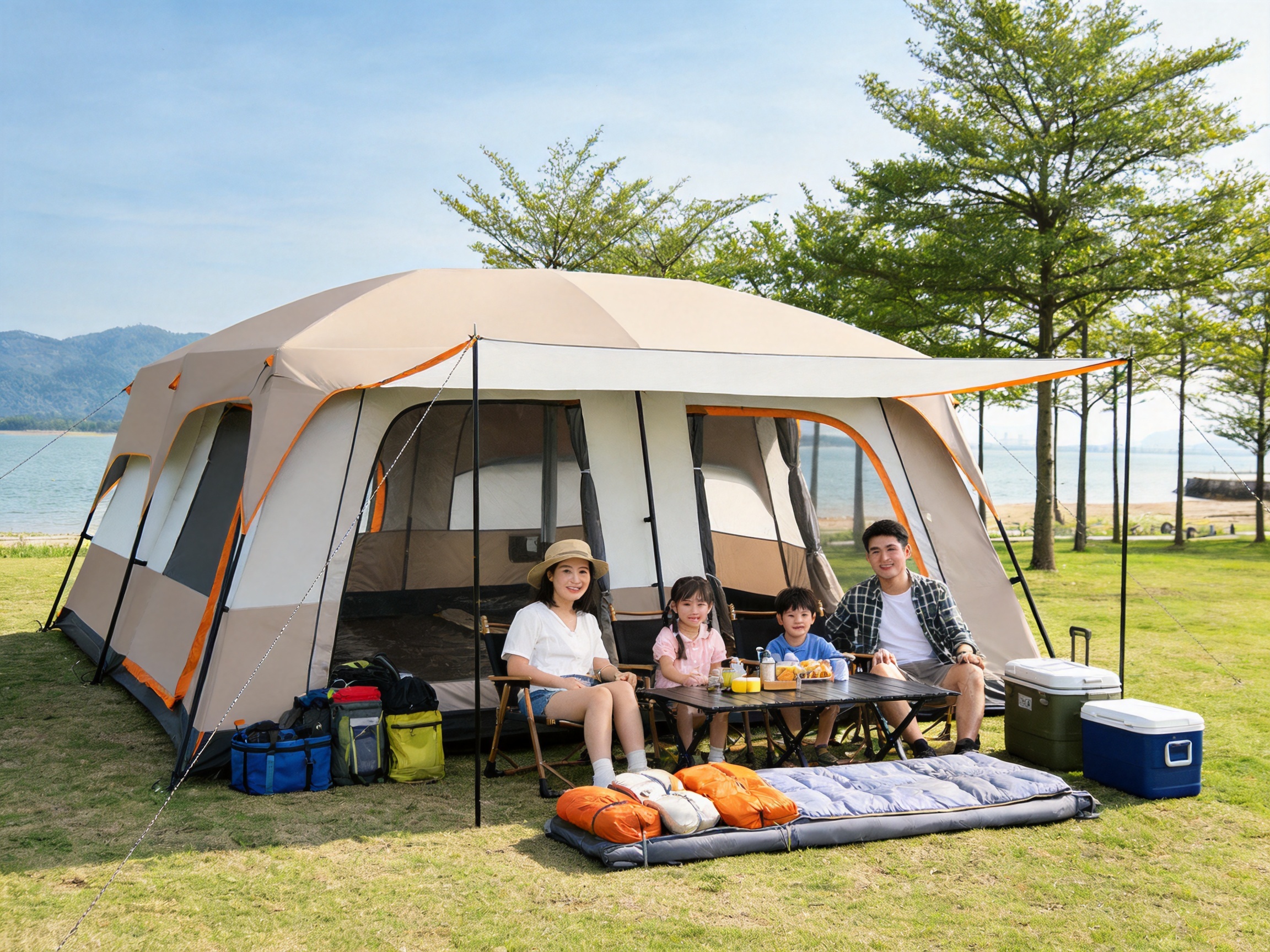 Modern outdoor travelers increasingly expect more from a tent than simple weather protection. Families, organized groups, glamping operators, event planners, and outdoor retailers are looking for shelters that combine generous interior space, practical privacy, fast installation, reliable weather resistance, and convenient transportation. The large 12-person instant pop-up glamping tent with two separate bedrooms has been designed to answer these needs in one spacious cabin-style structure. With a recommended capacity of approximately four to twelve people, this oversized family tent creates a flexible outdoor living environment rather than a single sleeping compartment. Its two separate bedrooms provide privacy, while the central living room gives families and groups room to sit, organize equipment, change clothes, share meals, or enjoy indoor activities during poor weather. The automatic pop-up design further reduces the effort normally associated with erecting a large shelter. This product is manufactured by Ningbo Zhenhai Tiansai Leisure Products Co., Ltd., a China-based tent manufacturer with experience in product design, production, export, and OEM cooperation. The company operates a factory of more than 13,000 square meters in Ningbo, Zhejiang Province, an important Chinese port area with convenient access to international logistics networks. Its manufacturing capabilities support the production of family camping tents, glamping tents, backpacking tents, inflatable tents, specialty shelters, and other outdoor products. A Spacious Shelter for Families and Groups The defining advantage of this tent is its capacity. Many conventional instant tents are designed for two to six people and provide only one undivided sleeping area. Although they may be convenient for short trips, they can become crowded when used by larger families or groups. A 12-person cabin tent offers a different experience by treating the shelter as a temporary outdoor residence. The interior is organized into three practical zones: two separate bedrooms and one large central living room. This arrangement makes the tent suitable for families with children, groups of friends, camping clubs, fishing teams, and glamping guests who value both social space and personal privacy. The two bedrooms can be used for sleeping, changing clothes, or storing personal belongings. Families may assign one room to adults and the other to children. Groups can divide the sleeping areas by gender or by individual travel parties. In a commercial glamping setting, the rooms can also provide a more comfortable and organized guest experience than a single-room tent. The central living room serves as a multipurpose area. During the day, it can accommodate folding chairs, a low table, luggage, coolers, cooking accessories, and recreational equipment. In bad weather, it gives occupants a sheltered place to talk, read, play games, or plan activities. This extra shared space helps prevent the feeling of congestion that is common in basic family tents. FeaturePractical BenefitTypical Use Two separate bedroomsImproved privacy and sleeping organizationFamilies, couples, children, and group camping Large central living roomAdditional space for relaxing, storing equipment, and socializingRainy-day activities, meals, and indoor recreation Capacity for approximately 4–12 peopleFlexible use for different group sizesFamily trips, events, fishing outings, and glamping Automatic pop-up structureFaster installation with less manual assemblyWeekend camping, frequent travel, and rental operations Folding carry-bag designMore convenient storage and transportationRoad trips, seasonal storage, and wholesale distribution Automatic Pop-Up Setup for Faster Camping Large tents can be challenging to install because they usually require multiple poles, lengthy sleeve assembly, and several people working together. The automatic instant pop-up system is intended to simplify this process. Instead of constructing the entire frame piece by piece, users can unfold the packed tent, position it, pull the setup cord or activate the opening mechanism, and allow the structure to expand. This system is particularly valuable for families who do not want to spend the first part of a trip struggling with complicated instructions. It is also useful for older campers, occasional outdoor users, event staff, and commercial operators who may need to establish several shelters in a limited time. Faster setup means more time for enjoying the destination and less time spent on campsite preparation. The instant mechanism does not eliminate the need for proper anchoring. A large shelter should always be secured with suitable stakes, guy lines, and tie-down points according to the ground conditions and weather. However, by reducing the amount of frame assembly, the design makes the most demanding part of installation more manageable. Quick deployment is an advantage over many traditional large cabin tents. Conventional structures may require two or more people to connect poles, feed them through sleeves, and lift the roof into position. The instant pop-up configuration is designed to reduce these steps, making the tent more practical for spontaneous trips, short stays, and repeated commercial use. After use, the folding system allows the tent to be compressed into a carry bag. Users should follow the folding sequence carefully, because large automatic frames may require the structure to be collapsed in a specific direction. Correct folding protects the frame, fabric, and hinges while also making future setup easier. Large 12-Person Instant Pop-Up Glamping Tent with 2 Separate Bedrooms Cabin-Style Interior Design The cabin-style profile gives the tent a more usable interior than many low-slope dome tents. A taller central structure creates a greater sense of openness and makes it easier for occupants to move around, sit upright, organize belongings, and use the living area comfortably. This is especially important during extended stays, when people spend more time inside the tent. Traditional small tents often force occupants to keep sleeping bags, clothing, food containers, and outdoor equipment beside them on the ground. With a large central area and separate rooms, this model provides more opportunities to organize gear. Sleeping spaces can remain dedicated to rest, while the living room can accommodate luggage and shared equipment. The room separation also supports better daily routines. Parents can prepare children for sleep without disturbing adults. Early risers can use the central living room while other occupants remain in their bedrooms. Glamping guests can enjoy a more residential layout, and groups can establish clear areas for sleeping, relaxing, and storing personal items. Although the tent is spacious, users should avoid overloading the interior with heavy furniture or equipment. The most comfortable arrangement normally leaves circulation space between the bedrooms, living room, and entrance. Lightweight folding furniture is generally better suited to the structure than bulky household items. Weather Protection for Extended Outdoor Use A family tent must provide more than visual comfort. Rain, wind, damp ground, and changing temperatures can quickly affect the outdoor experience. This model uses thickened, high-strength waterproof fabric and reinforced seams to provide dependable protection in wet conditions when the shelter is correctly installed and maintained. The rainproof construction helps create a dry interior during ordinary camping conditions and heavy rainfall. The roof and walls are designed to direct water away from the living area, while reinforced seam construction helps reduce the risk of leakage at stitched connections. Users should still choose elevated or well-drained ground and avoid placing the tent in natural depressions where water may collect. Water resistance depends on several factors, including fabric condition, seam treatment, correct tension, zipper closure, and installation angle. No fabric shelter should be regarded as completely immune to extreme weather. The tent is intended to deliver reliable protection during appropriate outdoor use, but campers should monitor weather forecasts and evacuate or relocate when severe storms, flooding, lightning, or dangerous winds are expected. The thickened material also contributes to durability. Compared with very lightweight summer tents, a heavier family shelter can offer a stronger and more substantial feel. This makes it suitable for longer family stays, beach camping, fishing weekends, and glamping applications in which comfort and robust construction are more important than ultralight backpacking weight. Reinforced Seams and Fabric Performance Seams are among the most important areas in any waterproof tent. They join separate fabric panels and therefore require careful stitching and reinforcement. The manufacturing approach for this tent focuses on high-strength materials and reinforced seam construction to improve resistance to water penetration and everyday stress. During normal use, occupants should avoid pulling aggressively on fabric panels, leaning heavy objects against walls, or storing wet equipment against the interior. After a trip, the tent should be dried completely before long-term storage. These simple practices preserve waterproof performance and reduce the risk of mildew, odor, and material deterioration. Wind-Resistant Structural Design The combination of thickened fabric and a sturdy frame system supports wind resistance in normal camping environments. The cabin structure is designed to remain stable when properly erected and anchored. Its broad footprint and multiple support points help distribute tension across the shelter rather than placing all stress on one central pole. Wind performance depends heavily on installation. All available guy lines should be used in breezy locations, and stakes should be selected according to the soil. Soft sand, loose gravel, hard ground, and forest soil require different anchoring approaches. Doors and windows should be closed when wind increases, and users should remove loose objects from around the tent. The tent is best understood as a durable recreational shelter, not as an emergency shelter for hurricanes, typhoons, tornadoes, or extreme alpine storms. Responsible site selection and weather awareness remain essential regardless of the quality of the materials. Advantages over Conventional Competitor Designs The large instant glamping tent competes in a market that includes traditional family tents, simple pop-up tents, cabin tents, inflatable shelters, and large event structures. Each type has advantages, but this model combines several benefits that are not always available in one product. More Privacy than Single-Room Tents A single-room family tent can accommodate several people, but everyone shares the same sleeping area. This arrangement may be acceptable for short trips, yet it offers limited privacy and can make movement difficult. Two enclosed bedrooms provide a clearer separation between occupants and allow families to organize the interior more effectively. More Living Space than Compact Pop-Up Tents Small automatic tents are easy to install, but their compact design limits storage, standing room, and group comfort. This large model preserves the convenience of instant setup while adding a central living room and two bedrooms. It is therefore better suited to extended stays and larger groups than a basic two-person or four-person pop-up shelter. Less Assembly Work than Traditional Cabin Tents Traditional cabin tents can provide spacious interiors, but their pole systems may require considerable assembly. The automatic frame reduces setup complexity and can lower the labor required at campsites, events, and glamping locations. This advantage is especially meaningful for buyers who value repeatable deployment. More Flexible than Dedicated Glamping Structures Permanent glamping cabins and fixed canvas structures can offer excellent comfort, but they are difficult to move and usually require a prepared site. A folding family glamping tent provides a more mobile alternative. It can be transported for seasonal events, moved between campsites, or stored when not in use. More Comfortable than Ultralight Backpacking Tents Ultralight backpacking tents are optimized for low weight and compact packing. They are not intended to provide multiple bedrooms, a large living room, or extensive group comfort. This model serves a different purpose: family camping and spacious outdoor living. Its value comes from capacity, structure, privacy, and convenience rather than minimal pack weight. Competing Tent TypeTypical StrengthPotential Limitation Compared with This Model Small pop-up tentVery quick setup and low storage volumeLimited sleeping capacity and little living space Traditional cabin tentSpacious layout and tall wallsUsually requires more manual frame assembly Single-room family tentSimple interior organizationLess privacy and more crowding Ultralight trekking tentLow weight for long-distance carryingNot designed for large groups or extended living Inflatable tentFlexible air-beam setup and comfortable structureRequires an inflation system and may have different maintenance needs Permanent glamping cabinHigh residential comfort at a fixed locationLimited portability and greater site investment Large instant glamping tentCapacity, room separation, fast setup, and portabilityRequires careful anchoring, folding, and storage Suitable Applications and Market Opportunities The product is suitable for a wide range of personal, commercial, and institutional applications. Its large capacity and room layout make it more versatile than a tent designed for only one type of user. Family Camping Families can use the tent for weekend camps, school holidays, road trips, and extended outdoor vacations. The separate bedrooms offer parents and children a practical sleeping arrangement, while the central room supports meals, games, and relaxation. Glamping Resorts Glamping operators can use the tent as a portable accommodation unit or seasonal shelter. Its cabin-style interior provides a more organized guest environment than a basic camping tent. Operators may equip the living room with suitable low-profile furniture, lighting, storage baskets, and soft furnishings while maintaining appropriate fire and electrical safety standards. Outdoor Events and Parties The spacious interior can provide cover for small outdoor gatherings, family celebrations, recreational activities, and informal parties. The tent can function as a sheltered lounge, changing room, rest area, or temporary hospitality space. Event organizers should consider local regulations, fire safety, emergency exits, and weather conditions before using it for public events. Fishing and Hunting Basecamps Fishing groups and outdoor teams often need a dependable basecamp where equipment can be organized and people can rest between activities. The living room provides a shared planning and storage area, while the bedrooms create dedicated sleeping zones. Beach and Lakeside Camping The tent is appropriate for beach and lakeside trips when it is properly anchored. Sand-specific stakes, strong guy lines, and protection from direct water exposure are important in these environments. Users should also remove sand before folding the tent to reduce abrasion and protect zippers and moving components. Retail and Wholesale Distribution For outdoor retailers, the product offers a clear selling proposition: a large-capacity family tent with instant setup and two bedrooms. Its combination of visual scale, privacy, and convenience can appeal to customers who have outgrown smaller tents but do not want the complexity of a traditional large shelter. Wholesale buyers can position the product within family camping, premium outdoor equipment, glamping, seasonal travel, and recreational hospitality categories. The manufacturer’s OEM and product development capabilities may also support market-specific packaging, color selection, labeling, and product configuration discussions, subject to project requirements and production confirmation. Manufacturing Strengths of the Factory The performance of an outdoor tent depends not only on its design but also on the consistency of the manufacturing process. A spacious structure includes a large amount of fabric, multiple stitched panels, frame components, zippers, webbing, reinforcements, and packaging materials. Each part must work together accurately for the finished product to perform as intended. Ningbo Zhenhai Tiansai Leisure Products Co., Ltd. operates a factory covering more than 13,000 square meters. This scale provides a foundation for organized material handling, production planning, quality inspection, sample development, and finished-goods preparation. A dedicated manufacturing environment is important for maintaining consistency across wholesale orders and repeat production. The company specializes in the design, production, and sales of tents and related outdoor products. Its product range includes outdoor tents, backpacking tents, glamping tents, inflatable tents, family tents, and custom OEM camping tent solutions. This broad category experience helps the factory understand the different requirements of lightweight trekking products, large family shelters, and specialized commercial structures. Professional Product Design The company maintains a professional design team that develops products from the perspectives of practicality and comfort. For a large family tent, product design involves more than choosing attractive colors. Designers must consider room proportions, entrance placement, frame movement, packed dimensions, user circulation, fabric tension, storage requirements, and the relationship between privacy and ventilation. Product development also benefits from cooperation with outdoor professionals and feedback from outdoor enthusiasts. Field testing can reveal issues that are difficult to identify from drawings alone, such as the ease of opening a door with full hands, the convenience of organizing sleeping rooms, the stability of the frame during changing wind, or the amount of time required for folding. Continuous optimization based on customer feedback supports practical improvements. For international markets, feedback may also concern packaging instructions, translation requirements, product photography, replacement parts, retail presentation, and compatibility with local camping habits. Material Selection and Component Coordination A large shelter requires coordinated selection of fabric, thread, webbing, zippers, poles, joints, stakes, carry bags, and reinforcement patches. Material selection influences waterproofing, tear resistance, folding behavior, color stability, packed size, and overall product weight. The fabric must be strong enough for repeated handling while remaining flexible enough to fold. Frame elements must provide support without making deployment unnecessarily difficult. Zippers should operate smoothly under fabric tension, and high-stress points should receive appropriate reinforcement. Carry bags must be large enough to accept the folded product without forcing users to compress it excessively. Because the product is intended for family and glamping use, the design balances durability and comfort rather than pursuing the lowest possible weight. This positioning differentiates it from ultralight trekking shelters and allows the structure to use a more substantial fabric and frame system. Production Process and Quality Control Manufacturing a large tent commonly involves several controlled stages. These may include incoming material inspection, fabric cutting, panel preparation, sewing, reinforcement installation, frame integration, functional assembly, appearance inspection, packing, and shipment preparation. Consistent process control helps reduce variation between units. Incoming inspection can identify issues in fabric color, coating, thickness, width, hardware, and frame components before they enter production. Accurate cutting is important because even small dimensional differences can affect panel alignment and fabric tension. Sewing quality must be monitored at seams, corners, doors, windows, attachment points, and stress areas. Assembly inspection confirms that the automatic opening mechanism, frame, fabric body, room dividers, zippers, and carry bag work together correctly. A finished tent should be examined for loose threads, misaligned panels, damaged hardware, incomplete stitching, and visible defects. Packaging inspection helps ensure that the correct accessories, instructions, labels, and components are included. The company states that it strictly implements a quality management system and works to ensure that products meet international standards. Specific testing requirements can vary by destination market, product configuration, and customer contract, so wholesale buyers should confirm applicable compliance documents and testing arrangements before placing an order. Patents and Product Development Experience Tiansai Leisure has designed products covered by a number of appearance patents and utility model patents. Design protection and technical development experience can help a manufacturer create products with distinctive visual features and practical structural solutions. For buyers, this may provide access to original product concepts rather than relying entirely on generic market designs. The company has also become the sole global designated supplier of the British company TENTSILE. This relationship indicates experience in serving an international outdoor brand and working within the expectations of overseas product development and supply chains. It also reflects the company’s specialization in outdoor equipment and its ability to support professional customers. OEM and Wholesale Cooperation Outdoor brands and distributors often require more than an off-the-shelf product. They may need customized colors, private labels, packaging formats, instruction manuals, carton markings, fabric specifications, or regional product variations. A manufacturer with in-house design and production experience can help buyers evaluate which changes are practical and which may affect cost, lead time, durability, or minimum order quantity. For this two-bedroom family tent, wholesale discussions may include the preferred capacity description, retail packaging, logo placement, fabric color, accessory combinations, carry-bag design, spare parts, and instruction language. Buyers should provide detailed technical requirements at the quotation stage so that the factory can assess feasibility accurately. A professional wholesale process should also cover sample approval, pre-production confirmation, production scheduling, inspection standards, packaging approval, shipping documents, and after-sales procedures. Clear communication at every stage reduces misunderstandings and supports consistent delivery. The factory’s location in Ningbo is advantageous for export-oriented business. Ningbo is an important port city with established logistics infrastructure and access to international shipping services. This can help coordinate container loading, export documentation, and delivery to overseas markets, although actual shipping schedules and costs depend on the destination, season, order volume, and transportation conditions. Practical Installation Guidelines Before setup, select a level campsite that is free of sharp stones, branches, standing water, and unstable ground. Avoid locations beneath dead trees, near river channels, or in exposed areas where water may accumulate. Check the weather forecast and identify a safe evacuation route when camping in areas with rapidly changing conditions. Remove the tent from its carry bag and place it on the ground in the intended orientation. Identify the entrance, bedrooms, and central living area before fully expanding the structure. Follow the supplied setup instructions for the automatic mechanism, because the correct sequence may vary according to the frame design. Once the tent has opened, inspect the frame joints and fabric panels. Secure the corners with suitable stakes, attach the guy lines, and adjust the tension evenly. Do not rely solely on the weight of luggage inside the tent to hold it in place. Proper anchoring is especially important for large high-profile shelters. Keep ventilation openings available when weather permits. Good airflow reduces condensation caused by breathing, wet clothing, temperature changes, and damp ground. During heavy rain, close openings as needed while maintaining safe ventilation whenever possible. Do not use open flames, charcoal stoves, fuel-burning heaters, or other combustion devices inside the tent. Fabric shelters can ignite quickly, and combustion can also produce dangerous carbon monoxide. Cooking should take place outside in a safe, well-ventilated area and in accordance with local regulations. Care, Storage, and Long-Term Durability Proper care has a direct effect on the useful life of a large tent. After every trip, remove soil, sand, leaves, and debris from the fabric and frame. If the tent becomes wet, set it up or spread it out in a ventilated location until completely dry. Packing a damp tent can encourage mold, mildew, unpleasant odors, and coating damage. Inspect the tent before storage. Check seams, zippers, webbing, guy lines, stakes, frame joints, and the automatic opening mechanism. Small issues are easier to repair before the next trip than after the tent is already deployed in bad weather. Fold the structure according to the recommended procedure. Avoid forcing the frame or sharply bending components in an unintended direction. Keep the packed tent in a dry, cool location away from direct sunlight, chemicals, rodents, and excessive heat. Do not place heavy objects on top of the carry bag for long periods. During transport, protect the bag from sharp tools, fuel containers, and equipment that could puncture the fabric. In beach environments, remove sand from zippers and joints before folding. In coastal areas, salt residue should be cleaned away because it can contribute to corrosion of metal components over time. Who Should Choose This Tent? This product is a strong fit for customers who prioritize space, comfort, privacy, and setup convenience. It is especially suitable for families who camp several times each year, groups that want a shared indoor area, and glamping businesses seeking a portable multi-room accommodation product. It is less suitable for hikers who carry all equipment over long distances and require the lightest possible shelter. It may also be more capacity than necessary for solo travelers or couples who prefer a compact two-person tent. Choosing the correct tent depends on the balance between group size, transport method, camping duration, expected weather, and desired comfort. Retailers should present the tent honestly as a large recreational shelter requiring suitable anchoring and responsible weather use. Clear product education can improve customer satisfaction. Buyers should understand that the stated capacity is flexible and depends on sleeping arrangements, furniture, luggage, and personal comfort preferences. Frequently Asked Questions How many people can use the tent? The tent is designed to accommodate approximately four to twelve people, depending on sleeping arrangements and how much furniture or equipment is placed inside. Twelve people represent the upper capacity range, while smaller groups will have more generous personal and living space. Does the tent have separate bedrooms? Yes. The layout includes two separate bedrooms and a large central living room. This arrangement provides more privacy and organization than a single-room family tent. How quickly can it be installed? The automatic pop-up system is designed for rapid deployment with minimal manual assembly. Actual setup time depends on user familiarity, ground conditions, anchoring requirements, and the number of people assisting. The tent should always be fully secured after it expands. Is the tent waterproof? The tent uses thickened waterproof fabric and reinforced seams for rainproof performance during appropriate outdoor use. Waterproofing also depends on correct installation, closed zippers, fabric condition, seam maintenance, site selection, and weather intensity. Can it withstand strong wind? The sturdy frame and thickened materials provide wind resistance when the tent is properly installed and anchored. It is not intended for hurricanes, tornadoes, typhoons, extreme storms, or other dangerous weather. Users should follow local safety guidance and leave the area when severe conditions are expected. Is it suitable for glamping businesses? Yes. Its large floor plan, two-bedroom layout, central living area, folding design, and visual presence make it suitable for seasonal glamping, outdoor hospitality, and rental applications. Commercial operators should confirm local requirements for fire safety, sanitation, electrical equipment, occupancy, and emergency access. Can the tent be customized? The manufacturer provides OEM camping tent wholesale solutions and may discuss customization options such as colors, labels, packaging, and product specifications. Customization depends on technical feasibility, order quantity, materials, tooling, and production scheduling. Is it suitable for backpacking? The tent is designed primarily for family camping, glamping, road trips, fishing, beach outings, and group use. Because of its large capacity and robust construction, it is not intended to compete with ultralight backpacking tents carried over long distances. How should the tent be stored? Dry the tent completely, remove dirt and sand, inspect the frame and fabric, fold it according to the supplied instructions, and store it inside the carry bag in a cool, dry place. Avoid long-term exposure to sunlight, moisture, chemicals, and excessive heat. What makes this design different from a traditional large tent? Its main differentiators are the automatic pop-up setup system, two separate bedrooms, spacious central living room, heavy-duty waterproof construction, wind-resistant frame design, and portable folding format. These features combine convenience and capacity in one structure. Conclusion The large 12-person instant pop-up glamping tent with two separate bedrooms is designed for outdoor users who want the comfort of a spacious cabin shelter without the complexity of a traditional large-tent assembly process. Its multi-room layout provides privacy and organization, while the central living room creates a practical shared environment for relaxing, storing equipment, and spending time indoors. Its thickened waterproof materials, reinforced seams, sturdy frame, and folding carry-bag design support use in family camping, glamping, fishing trips, beach outings, group travel, and outdoor events. Compared with smaller pop-up tents, it offers substantially more living space. Compared with traditional cabin tents, it aims to reduce setup effort. Compared with permanent glamping structures, it provides greater portability and deployment flexibility. The product is supported by the manufacturing capabilities of Ningbo Zhenhai Tiansai Leisure Products Co., Ltd., a specialized Chinese tent manufacturer with a factory exceeding 13,000 square meters, professional design resources, international export experience, product development expertise, and OEM cooperation capabilities. Its quality-focused manufacturing approach, material coordination, testing practices, and attention to outdoor usability make it a practical sourcing option for retailers, distributors, glamping operators, and outdoor brands. For personal campers, the tent can serve as a comfortable basecamp for family memories. For commercial buyers, it offers a clear combination of capacity, privacy, convenience, and market versatility. When properly installed, cared for, and used within suitable weather conditions, it can become a dependable and comfortable shelter for extended outdoor experiences. References 1. Ningbo Zhenhai Tiansai Leisure Products Co., Ltd. Product information for the large automatic family glamping tent with two separate bedrooms. 2. Ningbo Zhenhai Tiansai Leisure Products Co., Ltd. Corporate information concerning factory capacity, product development, quality management, OEM services, and international distribution. 3. General outdoor equipment practices for tent site selection, anchoring, ventilation, waterproofing, maintenance, and safe weather use. 4. General principles of textile product manufacturing, stitched-seam reinforcement, frame integration, material inspection, and finished-goods quality control. Product: Large 12-Person Instant Pop-Up Glamping Tent with 2 Separate Bedrooms .profile-card { display: flex; align-items: flex-start; gap: 2rem; background-color: white; padding: 2rem; border-radius: 12px; box-shadow: 0 2px 10px rgba(0,0,0,0.05); } .profile-avatar { width: 120px; height: 120px; border-radius: 50%; overflow: hidden; flex-shrink: 0; } .profile-avatar img { width: 100%; height: 100%; object-fit: cover; display: block; } .profile-info { flex-grow: 1; } .profile-name { font-size:27px; font-weight: 900; margin-bottom: 1rem; color: #1a1a1a; } .profile-bio { line-height: 1.6; color: #333; } @media (max-width: 600px) { .profile-card { flex-direction: column; align-items: center; text-align: center; gap: 1.5rem; } } Qiao Ruxin — After-Sales Service Supervisor more than six years of experience handling product inspections, installation guidance, warranty cases, and customer feedback for camping and inflatable tent orders, coordinating closely with production and overseas clients.
-
2026-09-05Freestanding 2-Person Ultralight Hiking Tent for Mountaineering and Trekking
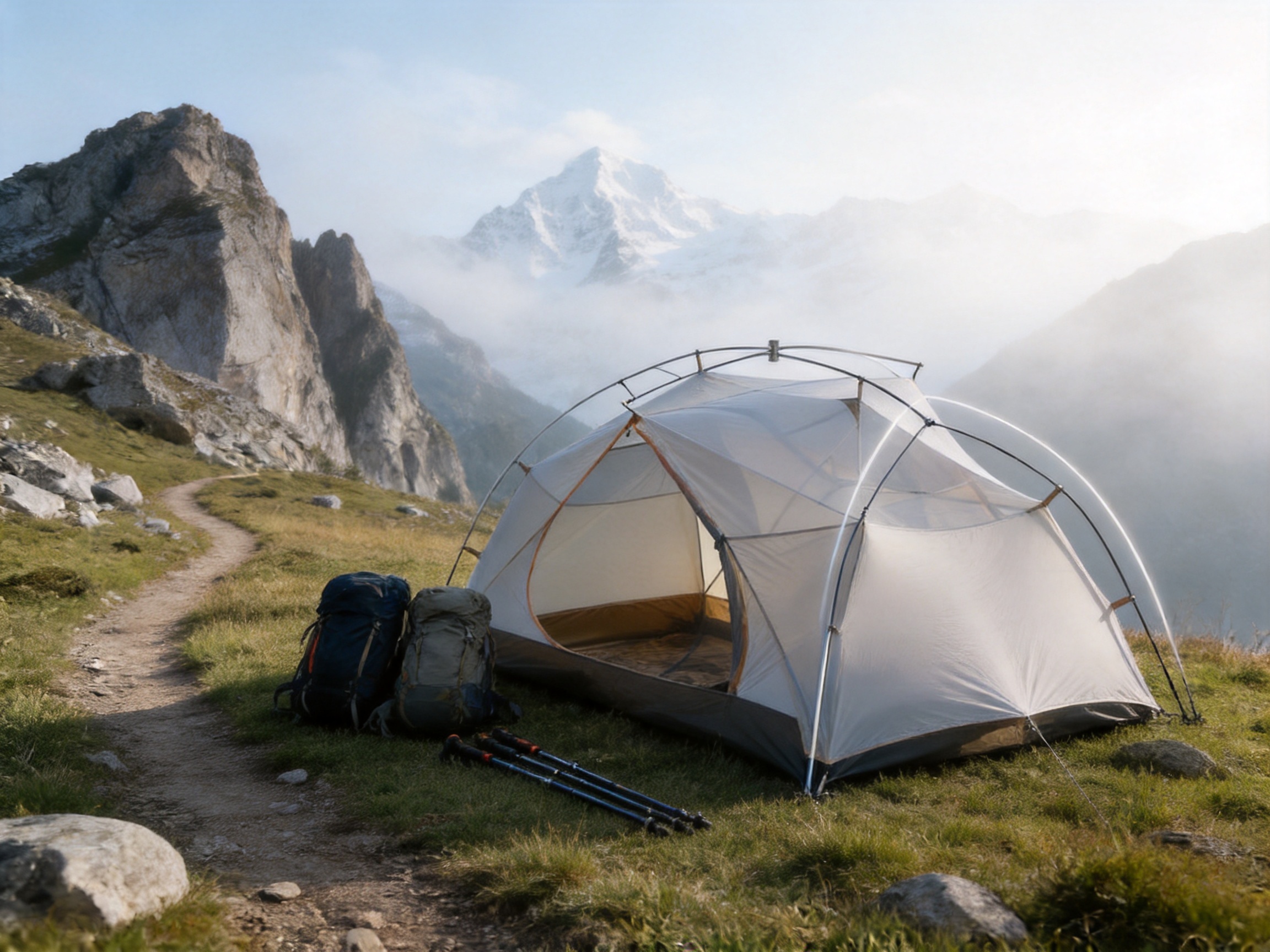 For hikers, trekkers, mountaineers, and outdoor travelers, choosing a tent is a decision about far more than sleeping space. A shelter must protect its occupants from rain, wind, damp ground, condensation, and changing temperatures while remaining light enough to carry over long distances. It must also be practical to pitch, sufficiently durable for repeated use, and compact enough to fit comfortably inside a backpack. The freestanding 2-person ultralight hiking tent described in this article is designed around those demands. It combines a double-layer construction, 20D nylon ripstop fabric, a full silicone-coated rainfly, high-density mesh, aluminum poles, two doors, and a compact packable structure. The result is a versatile shelter for multi-day hiking, trekking, mountaineering, wilderness travel, and weekend camping. Its design also reflects the experience of Ningbo Zhenhai Tiansai Leisure Products Co., Ltd., a China-based tent manufacturer with a factory covering more than 13,000 square meters. Through product development, material selection, practical testing, production management, and overseas supply experience, the company has built capabilities that support both finished outdoor products and OEM cooperation for global brands. A Shelter Designed for Efficient Backcountry Travel Every gram matters when a traveler must carry food, water, clothing, navigation equipment, and emergency supplies. Traditional camping tents can offer generous space, but their heavier fabrics, larger frames, and bulky packed dimensions may become a burden on long approaches or multi-day routes. At the other extreme, some minimalist shelters reduce weight by sacrificing protection, convenience, or internal comfort. This 2-person ultralight hiking tent is positioned between those two extremes. It is designed to provide the practical features expected from a modern backpacking shelter without introducing unnecessary weight or complexity. Its freestanding frame, double-layer structure, dual entrances, mesh ventilation, and compact design address the most common challenges faced by people who spend nights outdoors. The tent is suitable for two occupants who value portability and access. It can be used by trekking partners, hiking companions, or solo travelers who prefer additional sleeping room and storage space. Although the tent is primarily intended for outdoor accommodation, its adaptable design also makes it suitable for scenic travel, remote exploration, outdoor photography trips, and short recreational getaways. The central design philosophy is simple: reduce carrying demands while preserving the essential qualities of a dependable shelter. This means choosing lightweight but functional materials, making the structure easy to assemble, allowing air to circulate efficiently, and using a rainfly that provides a protective outer barrier in changing weather. Freestanding 2-Person Ultralight Hiking Tent for Mountaineering and Trekking Key Product Features at a Glance Feature Design or Material Practical Benefit Occupancy Two-person layout Provides shared sleeping space while remaining suitable for solo users seeking extra room Structure Freestanding frame Allows flexible pitching on different outdoor surfaces and simplifies setup Outer protection Full silicone-coated rainfly Helps shed rain and supports weather protection in wet conditions Fabric 20D nylon ripstop Balances low weight, packability, and resistance to ordinary outdoor wear Inner tent High-density mesh panels Improves airflow, limits insects, and helps reduce condensation Poles Lightweight aluminum poles Creates a practical balance between structural support and carrying efficiency Access Two doors Improves entry, exit, ventilation, and convenience for two occupants Intended uses Hiking, trekking, mountaineering, and camping Supports a broad range of outdoor travel applications Lightweight 20D Nylon Ripstop Construction The choice of fabric is one of the most important factors in an ultralight tent. A fabric that is too heavy increases the load carried by the user. A fabric that is too thin or poorly engineered may be less suitable for repeated pitching, transport, and exposure to outdoor conditions. The 20D nylon ripstop material used in this tent is selected to provide a practical balance among weight, flexibility, packability, and everyday durability. Ripstop construction incorporates a reinforced grid within the textile. This structure is intended to help limit the growth of small tears if the fabric is accidentally snagged. It does not make the material indestructible, and careful handling remains important, but it gives the tent fabric a useful level of resistance for backpacking and trekking applications. Nylon is also valued for its low weight and compact folding characteristics. When compressed into a stuff sack or storage bag, it can occupy significantly less room than many heavier tent fabrics. This makes it easier to organize a backpack and leaves more capacity for clothing, cooking equipment, safety gear, and other essentials. The fabric’s light character is particularly valuable on routes that include steep climbs, long traverses, or frequent changes of camp. A tent that is easy to carry can help reduce fatigue over the course of a journey. It can also make the shelter more practical for travelers who need to move quickly or who prefer a minimalist equipment system. At the same time, lightweight materials require responsible use. Users should clear sharp stones, branches, and abrasive objects from the pitching area. They should avoid dragging the tent across rough surfaces and should store it dry whenever possible. These habits help preserve the performance of any ultralight shelter. Silicone-Coated Rainfly for Wet-Weather Protection The rainfly forms the primary external barrier between the sleeping area and the weather. This tent uses a full silicone-coated rainfly to help water bead and run away from the surface instead of quickly soaking into the fabric. In practical use, this coating supports the tent’s ability to shed rainfall and maintain a more comfortable interior during wet conditions. A full rainfly is also useful beyond simple rain protection. It helps create a separation between the inner mesh body and the exterior environment. This double-layer arrangement can improve the overall livability of the shelter by creating a controlled space between the occupants and changing weather conditions. During heavy rain, the rainfly should be pitched correctly and tensioned evenly. Seams, attachment points, and contact areas should be checked before a trip. The performance of a rainfly depends not only on its coating but also on the quality of the pitch, the direction of the wind, the condition of the ground, and the way the fabric is maintained. The silicone coating contributes to the tent’s lightweight positioning while supporting weather resistance. Compared with a shelter that relies on a heavier outer fabric, a silicone-coated nylon rainfly can offer a more efficient relationship between protective coverage and packed weight. This is one of the main reasons silicone-treated nylon is widely used in modern trekking and mountaineering equipment. No compact backpacking tent should be treated as a substitute for a permanent building or an extreme storm shelter. However, for normal hiking, trekking, camping, and mountaineering use, the rainfly provides an important layer of protection against rain and wind. The design is especially useful for travelers who need a dependable shelter without carrying a large, heavy camping structure. Double-Layer Design for Comfort and Condensation Management Condensation is a common issue in tents. Warm, humid air produced by breathing, wet clothing, damp ground, and changing outdoor temperatures can cause moisture to collect on cool surfaces. A tent with no separation between the occupants and the exterior may feel damp and uncomfortable, particularly in humid environments or during still nights. The double-layer construction of this tent addresses that challenge through the combination of an inner tent and an outer rainfly. The inner body provides the sleeping enclosure, while the rainfly creates an external weather barrier. This separation allows air to move through the shelter more effectively than it might in a single-layer design. The inner tent includes high-density mesh panels. These panels allow air to circulate while helping prevent insects from entering the sleeping area. On warm nights, the mesh can make the interior feel less enclosed. On cooler or wetter nights, the rainfly can be adjusted to provide greater protection while the available ventilation continues to support a fresher interior environment. Ventilation cannot eliminate condensation in every situation. Air temperature, humidity, ground moisture, occupant breathing, and wind conditions all influence the amount of moisture inside a tent. Nevertheless, a breathable inner structure and properly positioned outer layer can significantly improve comfort when compared with an enclosed shelter that has limited airflow. Users can further improve ventilation by selecting a well-drained campsite, avoiding depressions where cold air and moisture collect, keeping wet clothing organized, and opening or adjusting the doors when weather permits. Correct pitching is equally important because a rainfly that is pressed tightly against the inner tent may reduce the air gap intended by the double-layer system. Freestanding Architecture for Flexible Pitching A freestanding tent is supported by its pole structure rather than relying entirely on stakes to create its basic shape. This design makes setup more convenient and gives users greater flexibility when selecting a campsite. Once the poles are assembled and connected to the tent body, the shelter can stand in place while the user adjusts its position and completes the final staking and guyline work. This is particularly useful on rocky, compacted, or uneven terrain where driving stakes may be difficult. A freestanding structure can also be lifted and moved short distances during setup, helping the user find a better orientation or avoid an uncomfortable stone beneath the sleeping area. The aluminum poles are selected for their combination of low weight and structural usefulness. Aluminum has long been used in backpacking tent frames because it can provide dependable support without the bulk associated with heavier frame materials. The pole system also helps the tent maintain its shape when the rainfly is fitted correctly. Freestanding does not mean that stakes and guylines are unnecessary. In windy or wet conditions, the tent should be fully secured. Stakes help prevent movement, and guylines can improve stability by distributing wind forces away from the main frame. A responsible setup includes checking pole connections, securing the corners, tensioning the rainfly, and orienting the narrower end toward prevailing wind where appropriate. Compared with many trekking-pole shelters, the freestanding design does not require the user to carry or use trekking poles as structural components. That distinction may be important for travelers who do not use trekking poles, for people who prefer a conventional tent frame, or for situations where trekking poles are needed for walking rather than shelter construction. Dual Doors for Shared Convenience Two doors are a valuable feature in a two-person tent. In a single-entry design, one occupant may need to climb over the other to leave the tent, especially when equipment is stored near the entrance. A dual-door structure gives each person a more direct route outside and reduces disruption when one occupant wakes earlier or needs to access equipment. The doors also offer additional ventilation options. Depending on weather, wind direction, and privacy requirements, one or both entrances can be opened partially to promote airflow. This flexibility is useful during warm evenings, humid conditions, and mornings when condensation needs to disperse. Two vestibule areas may also be created when the rainfly design and pitching arrangement allow space outside each door. These areas can be used for footwear, backpacks, or other equipment that should remain outside the sleeping compartment. The specific usable space depends on the pitch, terrain, and configuration, so users should organize gear carefully and keep exits clear. For solo travelers, two doors can make the tent feel especially convenient. One entrance may serve as the primary access point while the second side is used for ventilation, equipment organization, or an alternative exit. The additional access can improve the sense of space without requiring a much larger tent. Advantages Compared with Heavier Traditional Tents The most direct advantage of this tent over many traditional camping tents is carrying efficiency. Larger family tents often use heavier fabrics, multiple rooms, thicker poles, and more extensive floor areas. Those features can be appropriate for vehicle camping or stationary campsites, but they are unnecessary for a traveler who must carry the shelter over a mountain trail. This model focuses its materials and features on two-person backcountry use. The 20D ripstop nylon, lightweight aluminum poles, compact structure, and double-layer design help reduce the overall burden while preserving the basic qualities expected from a protective shelter. Its smaller packed form also improves storage efficiency. Backpack compartments are limited, and a compact tent can be easier to place alongside a sleeping bag, cooking system, clothing, and food. Efficient packing can help distribute the load more evenly and reduce the need for oversized external attachments. Another advantage is setup flexibility. A large family tent may require a broad, level area and several people to assemble. The freestanding two-person design is better suited to narrow campsites, mountain platforms, forest clearings, and other locations where available space is limited. These advantages do not mean that the tent replaces a family shelter. A family camping tent generally offers more headroom, larger living areas, and greater capacity for children and equipment. Instead, the ultralight hiking tent is designed for a different purpose: efficient, mobile shelter for people who prioritize low carrying weight and practical backcountry performance. Advantages Compared with Single-Layer Minimalist Shelters Minimalist single-layer shelters can be extremely light, but some users may find that their limited separation between occupant and weather creates compromises in comfort. Moisture from breathing can collect directly on the interior surface, and insects may be more difficult to exclude depending on the design. The double-layer construction of this tent provides a more traditional sleeping environment. The inner mesh body supports airflow and insect protection, while the full rainfly adds a separate layer against rain. This arrangement gives the traveler greater control over ventilation and weather protection. The two-door configuration also adds convenience that is not always available in the lightest one-person or single-entry shelters. For two occupants, independent access can make a significant difference during daily use. It reduces disturbance and provides more options for managing gear and airflow. The freestanding frame is another distinction. A minimalist shelter may depend heavily on precise stake placement, tension, or trekking poles. This model is designed to be more straightforward for users who prefer a conventional frame that can stand during setup before final stabilization. These features may result in a different weight or packed profile than the most extreme minimalist shelters. However, the design aims to provide a more balanced ownership experience, combining portability with convenience, ventilation, structural independence, and weather protection. Advantages Compared with Basic Entry-Level Tents Basic entry-level tents can be suitable for occasional fair-weather camping, but they may not always be optimized for long-distance travel. Their fabrics may be heavier, their frames less refined, and their ventilation systems less effective. Some also provide only one entrance, which can be inconvenient for two people. This ultralight backpacking model is developed specifically around active outdoor use. Its material selection, ripstop fabric, silicone-coated rainfly, aluminum poles, mesh ventilation, and two-door structure reflect the requirements of hikers and trekkers who may use a shelter repeatedly across different locations. The product also benefits from a manufacturer whose business is focused on outdoor tents and related equipment rather than general-purpose temporary shelters alone. Product specialization can support better attention to construction details, fabric behavior, pole integration, packing, and the practical needs of outdoor users. For buyers, the distinction is important. A tent intended for occasional backyard use may prioritize low purchase cost, while a backpacking tent must also consider packed size, transport weight, ventilation, setup time, and performance in changing weather. This model is aimed at the latter requirements. Suitable Applications for the Tent Multi-Day Hiking On multi-day hikes, the shelter is carried every day and repeatedly pitched at the end of each stage. Low weight and compact packing can reduce fatigue, while the freestanding frame and simple two-person layout support efficient camp routines. Long-Distance Trekking Long-distance trekking often involves changing terrain, variable weather, and limited opportunities to resupply. A compact tent that combines weather protection with a manageable carrying profile can help travelers maintain a consistent equipment system across the route. Mountaineering Approaches During a mountaineering approach, every item must justify its place in the pack. The tent’s low-weight materials, aluminum poles, double-layer structure, and practical access make it suitable as a base shelter for less technical camps and mountain travel where a compact freestanding tent is preferred. Weekend Camping The tent is also appropriate for weekend trips. Its performance-oriented design does not require a long expedition to be useful. Hikers can use it for overnight forest trips, regional camping, scenic travel, and short escapes where portability remains important. Solo Travel with Extra Space A solo traveler may select a two-person tent to gain more room for sleeping, clothing, equipment organization, and changing clothes. The additional space may be especially valuable when weather forces the traveler to spend more time inside the shelter. Outdoor Travel and Remote Exploration Because the tent packs compactly and uses a practical freestanding structure, it can support outdoor photography, nature observation, remote travel, and other activities where the user may need a reliable shelter away from established campgrounds. Manufacturing Expertise Behind the Product The performance of a tent is influenced by its design, but dependable production is equally important. Even a well-conceived product requires consistent fabric cutting, accurate sewing, reliable component integration, careful inspection, and appropriate packaging. Ningbo Zhenhai Tiansai Leisure Products Co., Ltd. operates as a specialized tent enterprise with a factory covering more than 13,000 square meters. The company’s location in Ningbo provides access to an important port city and supports international product movement. Its products are exported to multiple countries and regions, giving the business experience with the requirements of overseas customers, distributors, and outdoor brands. International supply experience can support more disciplined production planning. Export-oriented manufacturing commonly requires attention to product consistency, packaging protection, documentation, delivery coordination, and communication across different markets. These capabilities are important for buyers seeking repeat orders rather than a single prototype. The company also develops and sells a broad range of tent products. Its stated product categories include inflatable and air tents, glamping and resort tents, backpacking and trekking tents, automatic and pop-up tents, family and camping tents, kids’ tents, pet tents, humanitarian and large tents, specialty tents and shelters, and hammocks. This product breadth provides a foundation for understanding different shelter formats. A manufacturer working across lightweight backpacking tents and larger structures can develop experience with various fabrics, frame systems, sewing patterns, load requirements, packaging formats, and end-user expectations. Product Development and Design Capabilities Tiansai Leisure has established a professional design team that develops outdoor products from the perspectives of practicality and comfort. For a backpacking tent, those two priorities must work together. A product can be light but inconvenient, or comfortable but too heavy. Effective design seeks a useful balance. The company states that it collaborates with professionals and invites outdoor enthusiasts to participate in product testing. This type of feedback can reveal practical issues that may not be obvious in a drawing or factory sample. Test users can comment on setup, access, ventilation, storage, fabric handling, packing, and comfort during actual outdoor use. Continuous optimization based on customer feedback is particularly valuable for tents because their performance depends on real-world interaction. A zipper may function differently when the fabric is tensioned. A pole connection may feel different in cold conditions. An entrance that looks adequate in a technical drawing may become inconvenient when two users are wearing bulky clothing. By considering these practical details during development, a manufacturer can move beyond appearance and focus on the complete experience of pitching, living in, packing, transporting, and maintaining the product. The company has also successfully designed products and obtained a number of appearance patents and utility model patents. Such intellectual property reflects attention to original product development and structural solutions. Patents alone do not guarantee that a tent will meet every user’s needs, but they indicate an established interest in creating differentiated outdoor products rather than relying only on generic designs. Production Process for a Technical Backpacking Tent Material Planning and Inspection Production begins with selecting and preparing the required materials. For this tent, the principal materials include 20D nylon ripstop fabric, silicone-coated rainfly fabric, high-density mesh, aluminum pole components, webbing, cords, hardware, zippers, and related accessories. Material inspection helps identify issues before cutting and sewing. Depending on the production program, inspection may include checking fabric appearance, color consistency, width, coating condition, mesh integrity, accessory specifications, and packaging requirements. Early control is important because a defect discovered after assembly can create greater waste and delay. Pattern Development and Cutting The tent body and rainfly are made from multiple panels that must be cut according to carefully prepared patterns. Accurate cutting supports proper alignment during sewing and helps the finished structure maintain the intended geometry. Efficient pattern planning also reduces fabric waste. This is especially important for lightweight technical textiles, where material cost and performance requirements must be balanced. Consistent cutting helps ensure that repeated production units have similar dimensions and that attachment points align correctly. Sewing and Component Integration Sewing is central to tent manufacturing. The inner tent, mesh panels, doors, sleeves, loops, webbing, and reinforcement areas must be assembled in the correct sequence. Operators need to control stitch quality and fabric handling so that seams remain neat and functional without unnecessary damage to the material. Rainfly construction requires particular attention to panel alignment, pole attachment points, corner reinforcements, guyline loops, and areas exposed to tension. The silicone-coated fabric must be handled appropriately during production because its surface characteristics differ from those of untreated textile. Doors and zippers must be positioned accurately so they open and close smoothly. Mesh panels must be securely joined to the surrounding fabric. Reinforcement patches and webbing can distribute loads at corners and attachment points, supporting the tent during normal pitching and use. Pole and Hardware Matching The aluminum pole system must match the tent body and rainfly geometry. The correct pole length, segment connection, end fitting, and attachment method help the shelter achieve its intended form. Hardware such as buckles, clips, toggles, rings, and cord locks must be compatible with the fabric and assembly sequence. Component matching is also important for packing. Pole segments should be organized in a way that allows efficient storage, while accessories should be packed so that they are easy for the user to locate during setup. Assembly Inspection After sewing and component integration, the finished tent can be checked for visual and functional consistency. Inspection may include verifying dimensions, checking seams and attachment points, opening and closing doors, connecting poles, fitting the rainfly, and confirming that accessories are included. For an export-oriented manufacturer, inspection is also connected to order requirements. Different customers may specify colors, labels, packaging, carton markings, instruction materials, or accessory combinations. A controlled inspection process helps ensure that finished goods correspond to the approved sample and production order. Folding, Packing, and Shipment Preparation Ultralight tents must be folded and packed carefully. The tent, rainfly, poles, stakes, guylines, and storage components should be organized to protect the fabric and keep the complete set together. Proper packing also affects the product’s final retail presentation and shipping efficiency. The company’s location near the port infrastructure of Ningbo supports the movement of finished products to international customers. Efficient shipment preparation is important for wholesale and OEM orders, where large quantities must be packed consistently and delivered according to schedule. Quality Management and Outdoor Reliability The company states that it strictly implements a quality management system to help ensure that products meet international standards. For tent manufacturing, quality management should cover more than final appearance. It should include material control, production procedures, sample approval, process inspection, finished-product checks, packaging, and recordkeeping. Outdoor reliability is a system rather than a single feature. The rainfly coating contributes to water shedding, but correct seams and attachment points are also necessary. Lightweight fabric supports portability, but accurate cutting and careful sewing help maintain the intended shape. Aluminum poles provide structural support, but proper connection and fitting are equally important. A mature quality approach recognizes these relationships. It seeks to reduce variation between production units and identify problems before products reach the customer. This is especially important for international buyers who may reorder the same model or use a product as part of their own brand portfolio. Quality also includes communication. Clear product specifications, approved samples, packaging instructions, inspection criteria, and delivery expectations help align the factory and buyer. For OEM customers, communication is essential when adapting colors, labels, materials, dimensions, accessories, or packaging. OEM and Wholesale Cooperation Strengths Global outdoor brands often require more than a ready-made product. They may need custom branding, packaging, colorways, product adjustments, or coordinated production schedules. A manufacturer with design, production, testing, and export experience can provide a more complete service than a company that only resells generic products. Tiansai Leisure presents itself as a one-stop partner for global outdoor brands. Its capabilities include product design, production, sales, and overseas operations. This integrated structure can simplify cooperation by allowing customers to communicate with a manufacturer that understands both technical construction and commercial requirements. The company’s broad tent portfolio can also support product-line development. A buyer may begin with a lightweight backpacking tent and later explore family tents, glamping structures, inflatable shelters, specialty tents, or related outdoor equipment. Working with one experienced supplier can help maintain consistency across materials, color systems, packaging approaches, and brand presentation. For wholesale buyers, the two-person ultralight tent offers a clear category position. It is suitable for outdoor retailers, trekking equipment distributors, mountaineering suppliers, travel brands, camping marketplaces, and organizations seeking compact shelters for outdoor programs. For OEM buyers, the existing design provides a starting point for discussion. Depending on project requirements, customers may evaluate material options, visual details, branding elements, packaging, accessories, and order quantities. Any changes should be confirmed through technical specifications and samples before mass production. Responsible Use and Maintenance Even a well-made ultralight tent requires proper care. Before pitching, users should inspect the campsite and remove sharp branches, stones, thorns, and other objects that could damage the floor or fabric. A footprint or groundsheet may be used when appropriate, provided it does not extend beyond the tent floor and collect rainwater underneath the shelter. The poles should be assembled carefully rather than forced. Pole segments should be fully seated, and shock-corded sections should not be allowed to snap together violently. When inserting poles into sleeves or clips, users should avoid pulling aggressively against the fabric. The rainfly should be tensioned enough to maintain its shape but not so tightly that seams or attachment points are placed under unnecessary strain. In windy weather, all available stakes and guylines should be used. The tent should be oriented thoughtfully in relation to wind and drainage. After use, the tent should be dried before long-term storage. If it must be packed while wet during a trip, it should be unpacked and dried as soon as conditions allow. Long-term storage in a damp state can encourage mildew and unpleasant odors and may reduce the service life of fabric and coatings. Cleaning should be gentle. Loose dirt can usually be removed by shaking or brushing carefully. Strong detergents, harsh solvents, abrasive scrubbing, and uncontrolled heat may damage coatings or fabric. Users should follow the care instructions supplied with the specific product. With careful handling, appropriate pitching, and regular inspection, an ultralight tent can remain a dependable part of an outdoor equipment system for many seasons. How to Choose This Tent for a Specific Outdoor Program Travelers should first consider the number of occupants, expected weather, route length, available campsite size, and personal packing preferences. This tent is designed for two people, but sleeping comfort depends on body size, equipment volume, and how much time occupants expect to spend inside during poor weather. For warm-weather trips, the mesh inner tent and dual doors provide useful airflow options. For wet conditions, the rainfly should be fitted correctly and the site should be selected to avoid standing water. For mountain use, travelers should assess the forecast, elevation, exposure, and season before deciding whether this type of lightweight shelter is appropriate. Buyers should also distinguish between packed weight and the weight of individual components. When comparing models, it is useful to confirm what is included in the stated product package, such as poles, rainfly, stakes, guylines, storage bags, and repair materials. For retailers and distributors, the product’s strongest commercial features are its clear two-person positioning, lightweight construction, conventional freestanding structure, dual doors, double-layer protection, and broad outdoor application. These qualities make it straightforward to present to hikers and trekkers who want a compact shelter with more convenience than an extreme minimalist design. Q&A Who is this tent designed for? It is designed for hikers, trekkers, mountaineers, backpackers, outdoor travelers, and campers who want a lightweight two-person shelter with practical weather protection and convenient access. Can one person use the tent? Yes. Although it is designed for two occupants, a solo traveler can use it for additional sleeping space, equipment storage, or greater comfort during extended trips. What makes the tent ultralight? The lightweight positioning comes from the use of 20D nylon ripstop fabric, a silicone-coated nylon rainfly, lightweight aluminum poles, and a compact two-person structure. The exact packaged weight should be confirmed from the product specification for the intended production version. What is the advantage of a double-layer tent? A double-layer tent separates the inner sleeping area from the external rainfly. This arrangement supports weather protection, insect control, airflow, and condensation management while providing a more comfortable interior than many simple single-layer shelters. Does the silicone-coated rainfly make the tent completely waterproof? The silicone-coated rainfly is designed to shed rain and support wet-weather protection. However, real performance depends on correct pitching, seam construction, site selection, wind, rain intensity, maintenance, and the condition of the fabric. No lightweight shelter should be considered completely immune to all weather conditions. Why are two doors useful? Two doors allow each occupant to enter or exit independently. They also provide more ventilation choices and can make it easier to organize footwear, backpacks, and other equipment near separate entrances. What does freestanding mean? Freestanding means that the pole structure can support the basic tent shape without requiring every part of the shelter to be staked before it stands. Stakes and guylines remain important for stability, especially in wind and rain. How does the mesh help with condensation? The high-density mesh allows air to move through the inner tent while keeping insects outside. Better airflow can help reduce the buildup of humid air, although condensation also depends on temperature, humidity, ventilation behavior, and campsite conditions. Are aluminum poles suitable for mountain travel? Lightweight aluminum poles are widely used in backpacking and trekking tents because they offer a useful balance between low weight and structural support. Users should still select equipment according to the season, forecast, exposure, and specific demands of the route. How should the tent be maintained? Users should dry the tent before storage, keep it away from sharp objects, handle poles and zippers carefully, avoid harsh cleaning chemicals, and inspect seams, fabric, poles, and attachment points regularly. Does the manufacturer offer other types of tents? Yes. The company’s product categories include inflatable and air tents, glamping and resort tents, backpacking and trekking tents, automatic and pop-up tents, family and camping tents, kids’ tents, pet tents, humanitarian and large tents, specialty tents and shelters, and hammocks. Can the tent be developed for OEM or wholesale projects? The manufacturer provides design, production, sales, and overseas support for outdoor brands. Potential OEM or wholesale customers should discuss required materials, colors, branding, packaging, accessories, specifications, order quantities, sampling, inspection, and delivery schedules directly with the production team. Conclusion The freestanding 2-person ultralight hiking tent is designed to meet the practical needs of modern outdoor travel. Its 20D nylon ripstop construction, full silicone-coated rainfly, double-layer structure, high-density mesh, aluminum poles, compact form, and two-door layout create a balanced shelter for people who value both portability and comfort. Compared with heavier traditional camping tents, it is more appropriate for carrying over long distances and pitching in compact backcountry locations. Compared with minimalist single-layer shelters, it offers greater separation from weather, improved insect protection, and more flexible ventilation. Compared with basic entry-level tents, it provides a feature set more closely aligned with hiking, trekking, and repeated outdoor use. The product is supported by the manufacturing capabilities of Ningbo Zhenhai Tiansai Leisure Products Co., Ltd. The company’s more than 13,000-square-meter factory, professional design team, outdoor testing approach, patent experience, quality management system, export background, and broad tent portfolio provide a foundation for product consistency and OEM cooperation. For individual adventurers, the tent offers a compact home on the trail. For retailers and outdoor brands, it represents a clearly positioned backpacking product that combines low-weight design, practical access, ventilation, and weather protection. Its value lies not in one isolated feature, but in the way materials, structure, manufacturing knowledge, and real-world usability come together in a single shelter. References 1. Product specification and descriptive materials for the freestanding 2-person ultralight hiking tent. 2. Manufacturer information for Ningbo Zhenhai Tiansai Leisure Products Co., Ltd. 3. General technical principles of nylon ripstop fabrics used in outdoor equipment. 4. General outdoor equipment guidance concerning tent ventilation and condensation management. 5. General principles of aluminum pole construction for backpacking and trekking shelters. 6. General quality-management practices for textile, sewing, and outdoor-product manufacturing. Product: Freestanding 2-Person Ultralight Hiking Tent for Mountaineering and Trekking .profile-card { display: flex; align-items: flex-start; gap: 2rem; background-color: white; padding: 2rem; border-radius: 12px; box-shadow: 0 2px 10px rgba(0,0,0,0.05); } .profile-avatar { width: 120px; height: 120px; border-radius: 50%; overflow: hidden; flex-shrink: 0; } .profile-avatar img { width: 100%; height: 100%; object-fit: cover; display: block; } .profile-info { flex-grow: 1; } .profile-name { font-size:27px; font-weight: 900; margin-bottom: 1rem; color: #1a1a1a; } .profile-bio { line-height: 1.6; color: #333; } @media (max-width: 600px) { .profile-card { flex-direction: column; align-items: center; text-align: center; gap: 1.5rem; } } Lin Yuxi — International Product Sales Manager With over eight years of experience in outdoor equipment export, she manages wholesale accounts, OEM cooperation, quotations, and distributor relationships for tents and camping products across Europe and North America.
-
2026-09-03Why a 2-Person A-Frame Technical Cotton Tent Excels in Camping and Emergency Shelter Applications
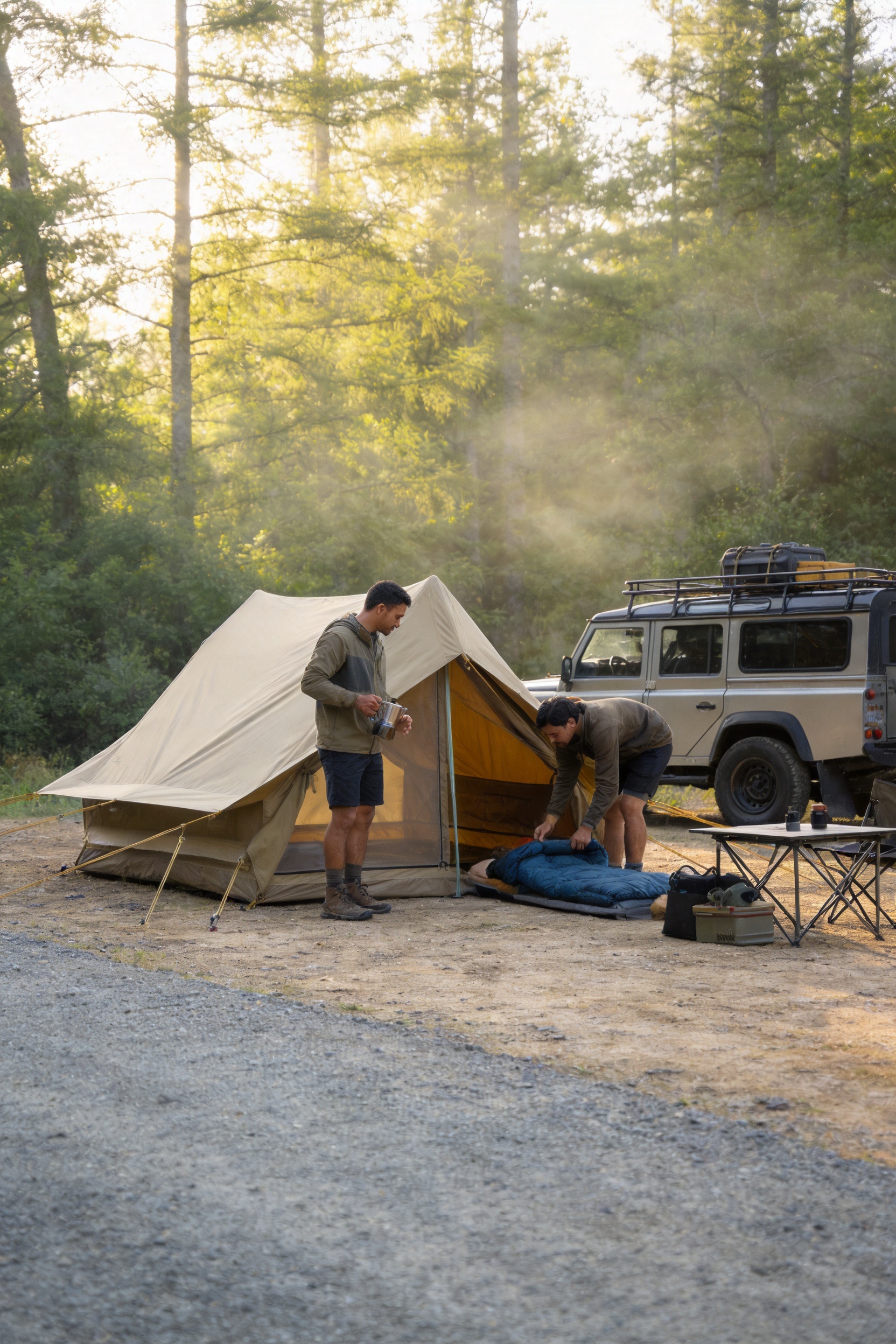 Choosing the right tent involves more than comparing floor area, packed size, or retail price. A reliable shelter must create a comfortable interior environment, withstand changing weather, deploy without unnecessary difficulty, and remain dependable after repeated use. For travelers, outdoor retailers, hospitality operators, relief organizations, and private-label brands, the 2-Person A-Frame TC Cotton Cabin Tent offers a balanced solution that combines traditional shelter design with modern technical-cotton construction. Designed for two people, this tent is suitable for self-driving trips, nature retreats, seasonal camps, and selected emergency-relief applications. Its A-frame profile gives it a recognizable cabin-tent appearance while supporting efficient water runoff and a stable structural layout. Its technical cotton fabric is intended to provide a more comfortable balance between breathability, weather resistance, and durability than many basic synthetic camping tents. The product is manufactured by Ningbo Zhenhai Tiansai Leisure Products Co., Ltd., a China-based tent producer with a factory covering more than 13,000 square meters. The manufacturer specializes in the design, production, and sales of outdoor tents and related camping equipment. Its experience includes product development, international supply, patent design, outdoor testing, and OEM cooperation for global customers. This article examines the tent’s construction, performance advantages, practical applications, manufacturing strengths, quality considerations, and suitability for wholesale or customized projects. It also explains where a technical-cotton A-frame shelter can offer meaningful advantages over ordinary pop-up tents, lightweight backpacking tents, and low-cost polyester camping models. 2-Person A-Frame TC Cotton Cabin Tent Rapid Deploy Emergency Shelter Product Overview The 2-Person A-Frame TC Cotton Cabin Tent is a compact shelter designed around a classic A-shaped structure. The term “TC” generally refers to a technical cotton or cotton-blend fabric developed to combine the natural comfort characteristics of cotton with improved outdoor performance. In this product, the fabric is positioned as a breathable, UV-resistant, and rainproof material for extended outdoor use. The tent is intended for two occupants and is particularly appropriate for self-driving campers who can transport a shelter without the severe weight restrictions associated with long-distance backpacking. It can also be considered for glamping properties, small resort accommodations, outdoor events, temporary field use, and emergency shelter deployments where rapid pitching and a more comfortable indoor climate are important. Unlike a highly compact trekking tent, the product emphasizes livability and material comfort. Unlike a large family tent, it remains focused on manageable capacity and relatively straightforward setup. Unlike a disposable emergency cover, it is designed with repeat outdoor use and a stronger overall build in mind. Product characteristicPractical value Two-person capacitySuitable for couples, individual travelers seeking extra room, or compact temporary accommodation A-frame cabin structureProvides a familiar layout, effective roof drainage, and a stable geometric form Technical cotton fabricSupports breathability, reduced condensation, seasonal comfort, and weather resistance Rapid deployment designHelps users pitch the shelter efficiently during camping or urgent field operations UV-resistant and rainproof constructionSupports longer service life in exposed outdoor environments Emergency-shelter potentialCan serve selected relief and temporary accommodation needs when used according to deployment requirements Because the product is positioned between recreational camping equipment and emergency shelter equipment, buyers should evaluate the intended use carefully. For ordinary camping, the tent offers a combination of comfort and practicality. For humanitarian or disaster-response projects, procurement teams should confirm fabric specifications, fire performance, wind ratings, packing requirements, sanitation standards, and relevant local regulations before placing a large order. How the A-Frame Structure Supports Outdoor Performance The A-frame is one of the most recognizable shelter configurations in outdoor equipment. Its two sloping sides meet at a ridge, producing a triangular cross-section. This geometry has remained popular because it is simple, efficient, and relatively easy to understand during setup. One of the primary advantages of a sloped roof is water management. Rain is encouraged to run down the fabric rather than collect in broad, nearly horizontal areas. This does not eliminate the need for correct pitching, tensioning, seam care, or drainage planning, but it can reduce the risk of standing water on the roof. A well-pitched A-frame also presents a clear profile to changing weather conditions. The shape provides usable sleeping space while maintaining a compact footprint. Two occupants can position sleeping equipment along the length of the shelter, while personal bags and smaller equipment can be organized around the side or end areas. The design is especially suitable for travelers who need a comfortable base but do not require multiple rooms or a tall standing interior. The cabin-tent character also contributes to visual appeal. Many campers and resort operators prefer shelters that feel warmer and more distinctive than standard dome tents. The technical cotton exterior, combined with an A-shaped silhouette, creates a vintage-inspired appearance without relying entirely on traditional materials or outdated construction methods. Structural simplicity is also valuable in urgent situations. A shelter that uses a familiar configuration can be easier to explain to new users, field staff, or temporary installation teams. Rapid deployment does not mean that every installation can be completed without instructions; correct anchoring, pole placement, tensioning, and site selection remain important. However, the A-frame layout can reduce the learning curve compared with more complex multi-room or mechanically elaborate shelter systems. Weather Management Through Geometry A tent’s weather performance depends on more than its fabric. Roof angle, seam construction, floor design, ventilation, guy points, stakes, and installation quality all influence the final result. The A-frame profile contributes by directing rain away from the ridge and side panels when the tent is properly tensioned. The sloping walls can also reduce the exposure of large vertical fabric sections to wind. This is not a guarantee of severe-weather safety, and the shelter should not be used beyond its tested conditions. Nevertheless, the geometry offers a practical starting point for a stable camping shelter, particularly when supported by appropriate anchoring and a carefully selected campsite. Users should avoid low-lying areas that may collect water, exposed ridges that receive excessive wind, and locations beneath dead branches or unstable trees. In flood-related situations, the tent should only be deployed in areas assessed as safe by responsible authorities or relief professionals. A water-resistant shelter cannot protect occupants from fast-moving floodwater, contaminated ground, landslides, or other major hazards. Technical Cotton: Comfort Beyond Basic Synthetic Fabric Fabric selection is one of the most important distinctions between a basic camping tent and a more comfort-oriented cabin shelter. Many entry-level tents use lightweight polyester because it is affordable, easy to process, and relatively compact. Polyester remains useful for backpacking and budget products, but it may provide a different interior climate from a breathable technical-cotton shelter. Technical cotton fabric is intended to combine the natural feel and breathability associated with cotton with enhanced outdoor performance. The material used in a tent must be engineered or treated to cope with moisture, sunlight, abrasion, and repeated handling. The result is a fabric suited to users who value a less enclosed and less plastic-like interior atmosphere. Breathability and Condensation Control Condensation occurs when warm, moisture-laden air inside a tent encounters a cooler surface. Sleeping, cooking, wet clothing, damp ground, and large changes in outdoor temperature can all increase interior humidity. No fabric can completely eliminate condensation under every condition, but breathable materials can help manage moisture when combined with ventilation and suitable use practices. The technical cotton construction of this tent is designed to support a more balanced interior climate. Compared with a simple impermeable fabric system, a breathable textile can help reduce the feeling of trapped humidity. This is especially beneficial during overnight camping, when two occupants naturally release moisture into a small interior volume. The product description emphasizes the ability to remain cooler in summer and warmer in winter. This should be understood as a comfort advantage rather than a replacement for insulation, heating, or climate-control equipment. Actual performance depends on outdoor temperature, wind, sunlight, ventilation, sleeping gear, ground conditions, and the number of occupants. For glamping operators, breathability can be particularly valuable. Guests often expect a tent interior to feel comfortable for extended periods, not merely to provide a place to sleep. A material that offers a softer visual and tactile environment can support a more premium experience than a thin, highly reflective synthetic shell. Rainproof and UV-Resistant Performance Outdoor fabric must manage two competing demands: it should allow a degree of air exchange and comfort, while also resisting rain. The technical cotton fabric used for this shelter is promoted as rainproof and UV-resistant. These properties help the tent perform during normal camping exposure, seasonal accommodation, and repeated outdoor operation. Rainproof performance depends on the complete product system. Fabric treatment is important, but seams, zippers, floor-to-wall connections, roof tension, and installation all contribute to water protection. A tent pitched loosely may develop folds where water can remain. A tent placed on poorly drained ground may experience water entry from below even when the roof performs correctly. Ultraviolet exposure can weaken textiles over time, especially when a shelter is left outdoors for long periods. UV resistance helps slow the effects of sunlight, but it does not make the tent immune to aging. Operators should dry the shelter fully before storage, avoid unnecessary permanent exposure, and follow the manufacturer’s maintenance instructions. Comfort Compared with Lightweight Backpacking Fabrics Lightweight backpacking tents are designed primarily around portability. Their fabrics are often selected to minimize packed weight and bulk, which is ideal for hikers carrying equipment over long distances. A technical-cotton cabin tent follows a different design priority: it offers a more substantial shelter experience for users who can transport equipment by vehicle or use it at a fixed site. The comparison is therefore not simply about which product is better. A trekking tent may be preferable for a long mountain route, while the A-frame TC tent may be preferable for a weekend road trip, glamping site, family campsite, or temporary field station. Matching the product to the use case is central to obtaining value from the purchase. Rapid Deployment for Camping and Urgent Shelter Needs Rapid deployment is a key feature of the product. For recreational users, quick pitching means less time spent on setup and more time available for travel, cooking, exploration, or rest. For organizations, fast installation can improve the efficiency of temporary accommodation projects, event operations, and selected emergency-relief activities. A rapid-deployment tent should be evaluated through the entire workflow rather than by setup time alone. The process includes unpacking, identifying components, selecting a safe site, assembling the support structure, attaching or tensioning the fabric, securing the base, and inspecting the final installation. Clear instructions and organized components can make a substantial difference, particularly when several shelters must be deployed at once. The A-frame configuration provides a logical assembly sequence. Users can establish the main support line, position the sloping sides, tension the shelter, and secure the base. In a professional deployment, teams may assign one person to prepare the site and components while others handle the structure and anchoring. This approach can improve consistency and reduce avoidable setup errors. For emergency use, transport and storage are as important as pitching speed. Relief organizations may require compact packaging, clear identification, manageable unit weight, and standardized packing procedures. They may also need to coordinate the tent with flooring, blankets, lighting, sanitation equipment, heating, and other field supplies. The shelter is one component of a larger response system. Rapid deployment should never be confused with unrestricted deployment. Flood zones, unstable ground, strong winds, extreme heat, and contaminated environments may require specialized shelters or professional installation. Before using the tent in a disaster scenario, organizations should conduct site assessments and confirm whether the product meets their operational and regulatory requirements. Advantages Over Common Competing Tent Types Compared with Basic Pop-Up Tents Pop-up tents are popular because they are convenient and easy for casual users. Their automatic frames can shorten setup time, making them suitable for festivals, beach visits, short daytime activities, and occasional recreational use. However, many pop-up tents prioritize speed and low cost over fabric comfort, long-term durability, and a distinctive accommodation experience. The A-frame TC cabin tent offers a more substantial material profile and a more traditional shelter feel. Its technical-cotton fabric can provide improved breathability compared with thin, highly enclosed synthetic pop-up designs. The cabin appearance may also be more attractive for resort operators and private-label brands seeking a premium outdoor image. Pop-up mechanisms can include moving joints and integrated frame components that require careful handling. The A-frame concept is more visibly structured and can be easier to inspect, repair, or explain during organized deployment. The appropriate choice depends on whether the buyer values automatic opening above all else or wants a more durable, comfortable, and serviceable shelter format. Compared with Lightweight Backpacking Tents Backpacking tents are optimized for carrying. They generally use lighter fabrics, smaller packed dimensions, and designs that minimize every unnecessary gram. This makes them highly suitable for trekking, cycling tours, and remote travel on foot. The 2-person TC cabin tent competes in a different category. Its strengths are breathable comfort, visual character, robust outdoor construction, and suitability for vehicle-supported travel. A self-driving traveler can accept a larger packed volume in exchange for a more pleasant basecamp environment and a fabric that feels more substantial over repeated use. The technical-cotton shelter can also appeal to glamping businesses that do not need guests or staff to carry the tent over long distances. In such settings, interior atmosphere, appearance, weather protection, and service life may matter more than ultralight weight. Compared with Large Family Tents Large family tents can provide multiple rooms and generous floor area, but their size may increase setup time, storage demands, and transport requirements. A two-person shelter avoids the complexity of a large multi-room layout while retaining a comfortable cabin-style identity. For couples, solo users who want extra living space, or resort operators creating small private units, a two-person format can be easier to allocate and manage. It may also reduce unused capacity. Buyers can deploy several small shelters across a site rather than relying on one large structure, allowing greater flexibility in layout and occupancy planning. Compared with Low-Cost Polyester Tents Low-cost polyester tents are accessible and practical for occasional users, but they may be more limited in breathability, tactile comfort, durability, or perceived value. The TC cotton construction gives this product a stronger differentiation in a crowded marketplace. For wholesalers and retailers, material differentiation can support a clearer product story. Customers can understand why a technical-cotton cabin shelter occupies a different price and performance position from a simple entry-level tent. The vintage-inspired A-frame form further supports a premium presentation for outdoor lifestyle channels. Comparison pointTC cotton A-frame tentBasic pop-up tentLightweight trekking tentLarge family tent Main priorityComfort, durability, appearance, and practical deploymentFast casual setupLow carrying weightMaximum capacity and separate living areas Typical userVehicle-based campers, glamping operators, field users, and private-label buyersOccasional leisure usersHikers and long-distance travelersFamilies or larger groups Interior atmosphereBreathable and cabin-likeFunctional but often more enclosedCompact and performance-orientedVaries by fabric and ventilation design Transport expectationVehicle or managed-site transportShort-distance transportCarried by the userUsually vehicle transport Visual positioningPremium, vintage-inspired, and resort-friendlyCasual and convenience-orientedTechnical and minimalistFamily-oriented and spacious Applications in Camping, Glamping, and Resort Operations The product is well suited to self-driving trips, where users can bring a more comfortable shelter without the severe space restrictions of backpacking. It can serve as a sleeping cabin during road travel, a private retreat at a campsite, or a compact guest unit at a seasonal outdoor property. For glamping and resort operators, the tent’s appearance is an important commercial advantage. Guests often select outdoor accommodation based on atmosphere as well as basic shelter performance. An A-frame profile and natural-looking technical textile can help create a warm, nostalgic, and visually consistent site design. Operators may use the tents as individual accommodation units, staff shelters, activity bases, or seasonal overflow capacity. Their two-person size supports a more private arrangement than a large shared tent. The units can be spaced to provide privacy, circulation paths, and scenic orientation. Before commercial installation, operators should consider local planning requirements, fire-safety rules, accessibility, drainage, electrical systems, guest protection, and seasonal wind conditions. The tent should be integrated into a professionally managed site rather than treated as a standalone substitute for all building or hospitality requirements. Outdoor education providers can also use the shelters for camps, workshops, and nature programs. The recognizable structure is useful for teaching basic shelter principles, while the more substantial fabric can create a comfortable environment for short-term programs. Event organizers may deploy them as rest areas, staff stations, information points, or small private spaces. Potential Use in Humanitarian and Emergency Relief Projects The product description identifies the tent as suitable for emergency relief and flood or disaster scenarios. This positioning reflects its rapid deployment, weather-resistant fabric, and two-person capacity. In a relief context, a compact shelter can support temporary privacy, sleeping, storage, first-aid administration, or family accommodation, depending on the operational plan. However, emergency procurement requires a higher level of verification than ordinary retail camping. Relief organizations should request detailed technical documentation covering fabric composition, waterproof testing, seam performance, flame behavior, wind resistance, UV exposure, floor construction, repair procedures, packaging, and expected service life. They should also check whether the product complies with the standards required in the destination country or by the contracting organization. A two-person shelter can be valuable when response teams need modular capacity. Rather than moving a single large shelter, teams may distribute several units across a site, providing flexibility for different household sizes or functional uses. The smaller footprint can help when land availability is limited, although spacing, fire lanes, drainage, and access routes must be planned carefully. For flood-related deployment, location is critical. A tent must not be pitched in active floodwater, on saturated unstable soil, or in an area likely to experience renewed flooding. The shelter can provide temporary protection only after the site is judged safe. Ground sheets, raised platforms, drainage channels, and sanitation measures may be needed depending on conditions. The product may be more appropriate for organized temporary accommodation than for immediate high-risk rescue operations. Search-and-rescue teams working in severe weather, snow, high winds, chemical exposure, or extreme temperatures may require specialized technical shelters. The A-frame TC tent should be selected according to a documented risk assessment. Manufacturing Strengths and Product Development Capabilities Ningbo Zhenhai Tiansai Leisure Products Co., Ltd. operates from Zhenhai District in Ningbo, Zhejiang Province, China. The company’s factory covers more than 13,000 square meters, providing a substantial production base for tent development and manufacturing. Ningbo’s position as an important port city also supports international logistics and export operations. The manufacturer specializes in tents, including outdoor camping tents, backpacking tents, glamping tents, inflatable tents, and other shelter categories. This product range gives the company exposure to different design requirements, material systems, assembly methods, and customer expectations. Its manufacturing strength is supported by a combination of product design, production management, quality control, and overseas business experience. Rather than treating a tent as a simple fabric item, the company approaches shelter development through practical use, comfort, testing, and feedback. This broader process is important because tent performance depends on the relationship between textiles, poles, seams, hardware, packaging, and instructions. Design-Led Development The company has established a professional design team that develops products from the perspectives of practicality and comfort. Outdoor enthusiasts and professionals are involved in testing and evaluation, while customer feedback is used to improve later designs. This approach is relevant to the TC cotton A-frame tent because fabric comfort and structural usability must work together. A breathable fabric cannot compensate for poor ventilation planning, and an attractive structure cannot succeed if it is difficult to pitch. Design-led development helps align appearance, function, installation, and user experience. The manufacturer has also designed products that have received appearance patents and utility model patents. Patents do not automatically prove that every product is superior, but they demonstrate an emphasis on original development and formal protection of design concepts. For OEM customers, this can provide a foundation for discussing differentiated product configurations instead of relying only on generic catalog designs. Quality Management The company states that it strictly implements a quality management system to help ensure products meet international standards. In practical manufacturing, quality management should extend across incoming materials, cutting, sewing, treatment, assembly, inspection, packaging, and shipment. For a technical-cotton tent, important quality checkpoints may include fabric weight and consistency, coating or treatment uniformity, color stability, seam alignment, reinforcement strength, zipper operation, pole fit, webbing attachment, stake points, and final packing. Small defects in any of these areas can affect water resistance, durability, or ease of use. International buyers can strengthen quality assurance by agreeing on approved samples, inspection criteria, tolerance levels, packaging requirements, labeling, carton marks, and pre-shipment inspection procedures. A clear technical specification helps both the factory and buyer evaluate the same product standard. Experience with International Customers The company’s products are exported to many countries and regions, including markets in North America, Europe, and Asia. International supply experience requires attention to communication, documentation, packaging, shipping schedules, destination requirements, and after-sales support. For wholesalers and private-label companies, a manufacturer with export experience can be valuable because the project may involve more than production alone. Product images, instruction manuals, carton information, barcode placement, color references, inspection coordination, and shipment consolidation may all affect a successful launch. The company has also served as the sole global designated supplier for the British company TENTSILE. This relationship indicates experience working with an international outdoor brand and supporting requirements associated with specialized product supply. Buyers should still conduct their own due diligence for every project, but established international cooperation can be a positive indicator of manufacturing capability. OEM and Wholesale Advantages Outdoor product businesses increasingly seek differentiated shelters rather than generic products that compete only on price. A technical-cotton A-frame tent gives distributors an opportunity to build a clearer product position around comfort, natural aesthetics, seasonal use, and premium outdoor living. As an OEM or wholesale supplier, the manufacturer can potentially support projects involving custom branding, packaging, colors, labels, product assortments, and market-specific configurations. Exact customization options, minimum order quantities, lead times, and tooling requirements should be confirmed during the quotation process. The product can fit several sales channels. Outdoor retailers may present it as a comfortable two-person cabin shelter. Glamping suppliers may position it as a compact guest or staff unit. Relief distributors may assess it for modular temporary accommodation. Vehicle and camping lifestyle brands may include it in a broader travel equipment collection. Wholesale buyers should define their target market before requesting modifications. A European resort customer may prioritize appearance, fire-related documentation, and seasonal weather performance. A North American retailer may focus on packaging, customer instructions, and warranty expectations. A humanitarian buyer may prioritize field repairability, pallet efficiency, standardized components, and testing documentation. The factory’s product development background can help customers move from a general idea to a manufacturable product. Early discussions should cover occupancy, footprint, fabric preference, seasonality, climate, transport method, installation labor, color, branding, accessories, and expected annual volume. Manufacturing Process Considerations A high-quality tent begins with controlled material selection. Technical cotton fabric must be reviewed for its intended weight, weave, treatment, color, moisture behavior, and compatibility with the product’s construction. Other materials, including floor fabrics, webbing, mesh, zippers, buckles, ropes, poles, and stakes, must be selected as part of a complete system. Pattern development determines how the fabric panels fit together. Accurate digital or physical patterns can reduce waste and improve consistency between production batches. For an A-frame shelter, the ridge line, side panels, end panels, door openings, floor connections, and reinforcement points require careful coordination. Cutting quality affects both appearance and performance. Misaligned panels can lead to uneven tension, while inconsistent cutting can create difficulties during sewing. Production teams should maintain clear cutting instructions and verify the dimensions of key components before assembly. Sewing is another critical stage. Seams must be strong enough to withstand normal tension and repeated handling. High-stress areas, such as guy-point attachments, pole sleeves, door corners, and base connections, may require reinforcement. Thread selection and stitch consistency influence the long-term integrity of the shelter. After sewing, the tent may require seam treatment or other water-resistance procedures depending on the design. Inspection should include visual checks, dimensional review, hardware operation, and, where specified, water-resistance testing. The final product should be folded and packed in a way that protects the fabric and makes future setup easier. Manufacturing stageKey objectiveWhy it matters to buyers Material selectionChoose suitable technical textiles and structural componentsInfluences comfort, durability, weather resistance, and product positioning Pattern developmentCoordinate panel shapes, openings, seams, and reinforcement zonesSupports accurate assembly and consistent appearance CuttingProduce correctly sized and aligned fabric componentsReduces fitting problems and material waste Sewing and reinforcementCreate durable seams and strengthen high-stress areasImproves service life and reliability during setup and use Inspection and testingReview dimensions, workmanship, hardware, and weather-related performanceHelps maintain batch consistency and reduce customer complaints PackagingProtect the product and organize components for transportSupports efficient warehousing, shipping, and end-user setup Installation and Use Recommendations Users should select level ground with adequate drainage before pitching the tent. Remove sharp stones, branches, and other objects that could damage the floor or create discomfort. In hot conditions, natural shade can reduce interior heat, but the tent should not be placed beneath hazardous trees or unstable branches. Lay out the components before assembly and identify the fabric body, support elements, ropes, stakes, and accessories. Following the supplied instructions can reduce mistakes and help users understand the intended tension points. If the tent is being deployed by a team, assigning clear roles can improve speed and consistency. Once the main structure is standing, secure the base and adjust the fabric evenly. Uneven tension can create wrinkles that collect water or place unnecessary stress on particular seams. Guy lines should be used when supplied or recommended, especially in exposed locations. Ventilation should be maintained whenever conditions allow. Opening designated vents or doors can improve air circulation and help manage interior moisture. Users should not block ventilation with luggage, bedding, or hanging materials. Cooking inside a tent is generally unsafe because of fire, carbon monoxide, heat, and fabric damage risks. Heating equipment should only be used when specifically approved for the shelter and installed according to safety instructions. Open flames should be kept away from the fabric and all combustible materials. After use, the tent should be dried completely before storage. Folding and packing damp fabric can encourage mildew and unpleasant odors. If the shelter becomes dirty, use appropriate cleaning methods and avoid harsh chemicals that may affect fabric treatments. Inspect poles, ropes, seams, zippers, and anchor points before the next trip. Maintenance and Service-Life Protection Technical cotton can provide a comfortable and durable shelter, but maintenance remains essential. Repeated exposure to rain, dirt, ultraviolet radiation, abrasion, and improper storage can reduce performance over time. A basic maintenance routine protects the investment and improves reliability. Routine inspection should focus on areas exposed to repeated tension. Check the ridge and support interfaces, door corners, guy attachments, floor edges, and any points where hardware contacts fabric. Loose stitching or small tears should be addressed promptly before they become larger problems. When cleaning, users should follow the manufacturer’s care instructions. Aggressive scrubbing, unsuitable detergents, or high-temperature drying may damage the textile or reduce its water-repellent properties. The safest approach is usually gentle cleaning, thorough rinsing when appropriate, and complete air drying in a controlled environment. Long-term storage should take place in a dry, ventilated area away from direct sunlight, chemicals, rodents, and excessive heat. Do not store the shelter compressed while wet. If the product is used in a commercial or relief fleet, maintain a simple inspection record for each unit, including deployment dates, repairs, cleaning, and storage status. How Buyers Can Evaluate the Product Before Ordering Wholesale and institutional buyers should request a complete specification sheet before confirming a purchase. The document should identify the fabric composition, dimensions, packed size, product weight, included components, color options, treatment information, and available tests. If the tent will be marketed for emergency use, buyers should also identify any required humanitarian or local compliance documents. Sample evaluation is strongly recommended. A buyer should pitch the sample, assess the quality of the instructions, inspect interior comfort, operate all openings, review the fabric surface, test the packed configuration, and observe how quickly a trained and untrained user can complete setup. For commercial applications, buyers should consider the total cost of ownership rather than only the initial unit price. A product that is easier to clean, simpler to repair, more attractive to guests, and less likely to generate complaints may provide better long-term value. Questions about customization should be discussed early. Changing fabric color, adding logos, modifying doors, adjusting windows, altering packaging, or creating a special accessory kit may affect pattern work, materials, production scheduling, and minimum order quantities. Early technical communication helps prevent misunderstandings during mass production. Why the Product Is Competitive in the Outdoor Shelter Market The strongest competitive advantage of this tent is its combination of characteristics. Many products specialize in only one benefit: a pop-up tent emphasizes convenience, a backpacking tent emphasizes low weight, a family tent emphasizes capacity, and a traditional canvas shelter emphasizes natural material comfort. The TC cotton A-frame tent brings several of these market values together in a two-person format. Its breathable technical fabric supports a more comfortable interior than many low-cost synthetic alternatives. Its A-frame form provides a recognizable and commercially attractive appearance. Its rainproof and UV-resistant construction supports regular outdoor use. Its rapid-deployment concept makes it practical for both recreational and organized applications. Its compact two-person capacity helps buyers create flexible accommodation plans. The product also benefits from being manufactured by a company with a broad outdoor-product background. Design capability, factory scale, international export experience, quality management, patent development, and outdoor testing all support a stronger supply proposition than an unverified trading source. For retailers, the tent offers a story that can be communicated clearly: a comfortable cabin-style shelter for people who want more than a basic overnight cover. For resorts, it provides a visually distinctive unit that can support a natural, premium guest experience. For organizations, it offers a modular shelter concept that may be adapted to planned temporary accommodation after technical verification. Q&A What type of tent is this product? It is a two-person A-frame cabin tent made with technical cotton fabric. It belongs to the glamping and resort tent category but is also suitable for vehicle-based camping, outdoor events, and selected temporary shelter applications. Is the tent suitable for backpacking? The tent is designed more for self-driving and managed-site use than for long-distance backpacking. Buyers who must carry every item over long distances should compare its packed weight and volume with dedicated trekking tents before making a decision. What does TC cotton mean? TC generally refers to a technical cotton or cotton-blend textile used to balance breathability, comfort, and outdoor resistance. The exact composition and treatment should be confirmed in the manufacturer’s technical specification for the selected model. Can the tent be used in winter? The breathable fabric is promoted as helping the tent remain more comfortable in different seasons, including cooler weather. However, the shelter is not automatically a four-season or extreme-winter tent. Snow load, freezing temperatures, strong winds, heating, insulation, and ventilation requirements should be evaluated separately. Does the fabric eliminate condensation? No tent can guarantee zero condensation in every environment. The technical cotton fabric can help manage interior moisture, but condensation also depends on ventilation, outdoor humidity, occupant breathing, wet equipment, ground moisture, and temperature differences. Can it be used as an emergency shelter? It can serve as a potential temporary shelter for selected emergency-relief situations because it is designed for rapid deployment and weather-resistant outdoor use. Institutional buyers must verify its technical performance, safety characteristics, and compliance with project requirements before using it in a formal disaster-response program. Is it appropriate for flood areas? It may be used in an organized response after a site has been assessed as safe and outside active floodwater. The tent must never be treated as protection against fast-moving water, contaminated floodwater, unstable ground, or renewed flooding. What makes it different from a pop-up tent? The product emphasizes technical-cotton comfort, a more substantial cabin-style structure, weather resistance, and longer-term outdoor use. A pop-up tent may still be preferable when the primary requirement is automatic opening and minimal setup for occasional casual use. What makes it different from a lightweight trekking tent? A trekking tent is optimized for low carrying weight and compact packing. The TC cotton A-frame tent is optimized more for comfort, visual appeal, durability, and vehicle-supported or fixed-site use. Can the product be customized? The manufacturer provides OEM and outdoor-product development services, so customization may be possible depending on the project. Buyers should discuss branding, colors, fabric options, dimensions, packaging, accessories, minimum order quantities, and lead times directly with the factory. What should a wholesale buyer request? A buyer should request product specifications, component lists, available testing information, packaging details, sample approval procedures, quality standards, inspection arrangements, production schedules, and warranty or after-sales policies. How should the tent be stored? It should be completely dry before packing and stored in a cool, dry, ventilated location. Periodic inspections are recommended, especially for commercial or emergency fleets that may remain in storage between deployments. Who manufactures the tent? The product is manufactured by Ningbo Zhenhai Tiansai Leisure Products Co., Ltd., an outdoor shelter producer based in Ningbo, Zhejiang Province, China. The company operates a factory of more than 13,000 square meters and supplies products to international markets. Conclusion The 2-Person A-Frame TC Cotton Cabin Tent occupies a useful position between lightweight recreational shelters, traditional canvas accommodation, and temporary field tents. Its technical cotton construction is intended to improve breathability and seasonal comfort, while its rainproof and UV-resistant properties support regular outdoor use. The A-frame profile adds structural simplicity, efficient roof drainage, and a distinctive cabin appearance. For self-driving campers, the product offers a comfortable basecamp without the complexity of a large family tent. For glamping and resort operators, it provides a visually appealing shelter format that can enhance an outdoor guest experience. For wholesale and OEM customers, it offers a differentiated product story supported by a manufacturer with design, production, testing, export, and quality-management experience. Its emergency-shelter potential is also meaningful, provided that organizations conduct proper technical verification and site-risk assessment. It should be considered one element of a complete relief solution rather than a universal substitute for specialized disaster-response shelters. The manufacturer’s factory scale, professional design team, patent development, international cooperation, and focus on material innovation provide a strong foundation for product reliability and customization. When matched with the correct market and maintained properly, this A-frame technical-cotton tent can deliver a compelling combination of comfort, appearance, deployment efficiency, and outdoor practicality. References 1. Product information supplied for the 2-Person A-Frame TC Cotton Cabin Tent Rapid Deploy Emergency Shelter. 2. Company information supplied for Ningbo Zhenhai Tiansai Leisure Products Co., Ltd., including manufacturing capacity, export experience, design activities, and quality-management statements. 3. General principles of tent fabric breathability, condensation management, waterproof construction, and ultraviolet exposure in outdoor shelters. 4. General outdoor-camping guidance concerning site selection, ventilation, anchoring, storage, cleaning, and safe use of temporary shelters. 5. General humanitarian-shelter procurement principles concerning technical verification, deployment planning, site safety, documentation, and local compliance. Product: 2-Person A-Frame TC Cotton Cabin Tent Rapid Deploy Emergency Shelter .profile-card { display: flex; align-items: flex-start; gap: 2rem; background-color: white; padding: 2rem; border-radius: 12px; box-shadow: 0 2px 10px rgba(0,0,0,0.05); } .profile-avatar { width: 120px; height: 120px; border-radius: 50%; overflow: hidden; flex-shrink: 0; } .profile-avatar img { width: 100%; height: 100%; object-fit: cover; display: block; } .profile-info { flex-grow: 1; } .profile-name { font-size:27px; font-weight: 900; margin-bottom: 1rem; color: #1a1a1a; } .profile-bio { line-height: 1.6; color: #333; } @media (max-width: 600px) { .profile-card { flex-direction: column; align-items: center; text-align: center; gap: 1.5rem; } } Qiao Ruxin — After-Sales Service Supervisor more than six years of experience handling product inspections, installation guidance, warranty cases, and customer feedback for camping and inflatable tent orders, coordinating closely with production and overseas clients.
-
2026-09-01Large Inflatable Family Camping Tent Heavy Duty All Season Cabin
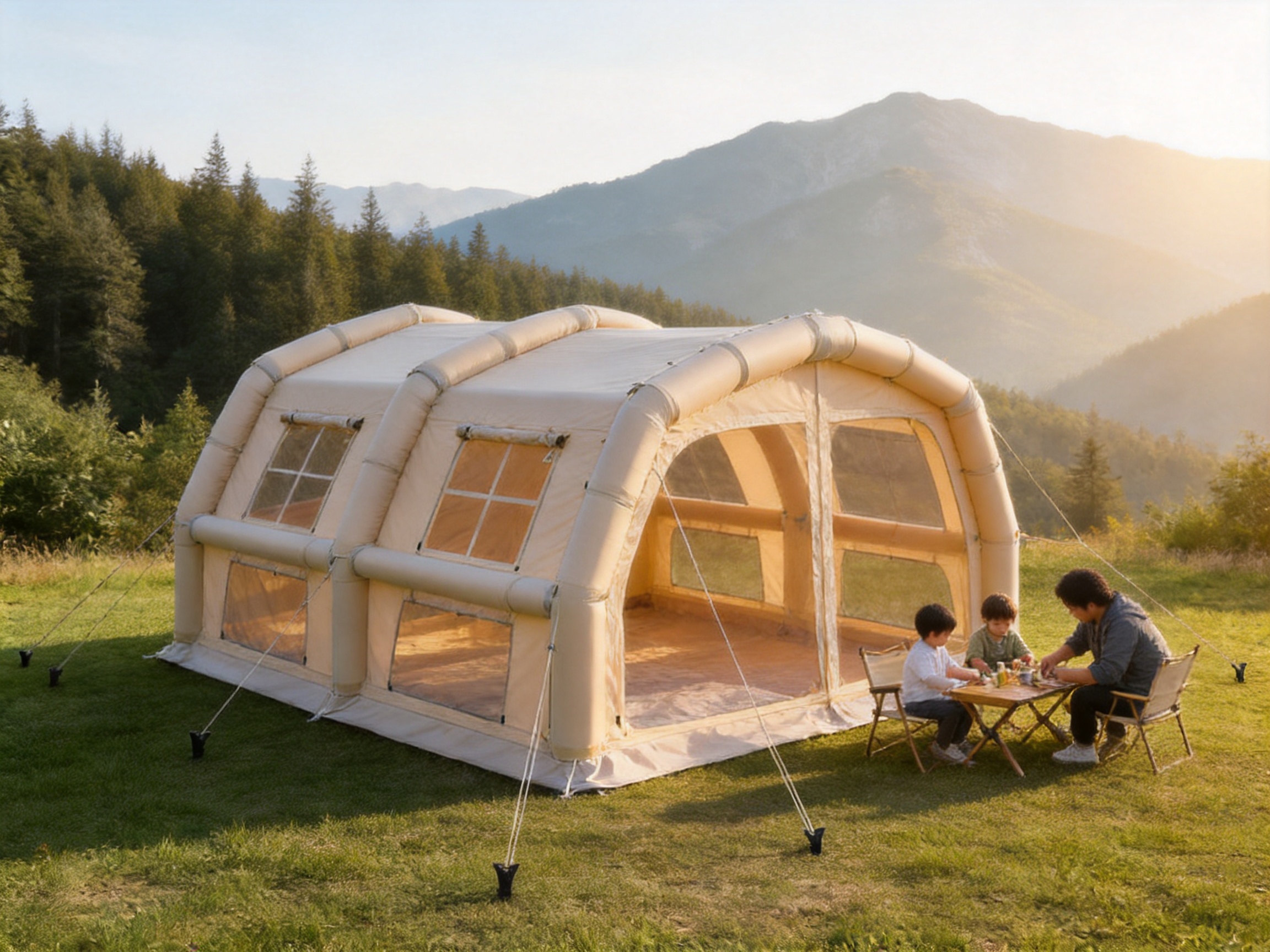 Modern family camping is no longer limited to short weekend trips in compact tents. More outdoor travelers now want a dependable basecamp that combines weather protection, generous living space, privacy, storage, and the everyday comfort needed for extended stays. The Large Inflatable Family Camping Tent Heavy Duty All Season Cabin is designed for exactly this purpose. It creates a spacious outdoor living environment with two sleeping areas and one shared living room, while its inflatable structural system simplifies setup compared with conventional large tents that rely on numerous rigid poles. With a choice of practical family-oriented layouts, waterproof materials, reinforced air columns, integrated ventilation, and a full partition system, this cabin-style shelter is suitable for family camping, glamping, resort accommodation, outdoor events, and long-stay recreational use. Its design emphasizes strength and comfort without overlooking portability. When packed, the tent is prepared as a single package, while the air-beam structure helps reduce the complexity normally associated with erecting a large cabin tent. The product is manufactured by Ningbo Zhenhai Tiansai Leisure Products Co., Ltd., a professional Chinese outdoor equipment manufacturer with a factory covering more than 13,000 square meters. The company combines product development, material selection, production, quality control, and export service to support outdoor brands, wholesalers, distributors, and OEM customers around the world. Built as a Complete Outdoor Living Space The primary advantage of this inflatable cabin is that it is designed as a livable environment rather than merely a sleeping shelter. A large central room can be used for dining, relaxing, organizing equipment, or spending time indoors during poor weather. Separate bedrooms provide privacy and help divide the interior into practical zones. This arrangement is especially useful for families with children, groups of friends, and campers who plan to remain at one site for several days. The available product information identifies the structure as two bedrooms and one living room. Additional product configurations are described as one room and one hall or as a larger partitioned family layout. The listed sizes include approximately 410 × 270 × 200 centimeters and 400 × 300 × 220 centimeters. These variations provide flexibility for different market requirements, campsite sizes, and customer preferences. Compared with a single-compartment dome tent, a cabin-style layout provides a more organized experience. Sleeping bags, luggage, cooking equipment, clothing, and outdoor accessories can be assigned to separate areas. The living room can remain open for shared activities instead of becoming crowded with personal belongings. This zoning also allows occupants to maintain a degree of privacy while still enjoying a shared family basecamp. The generous interior height further improves usability. A standing-height design reduces the inconvenience of crouching or crawling, especially when changing clothes, preparing meals, arranging beds, or assisting children. For longer camping holidays, this additional interior comfort can make a significant difference in the overall experience. Large Inflatable Family Camping Tent Heavy Duty All Season Cabin Inflatable Structural Technology for Faster Setup Large family tents traditionally depend on multiple steel, aluminum, or fiberglass poles. Although pole systems can provide reliable support, they may require several people to assemble correctly. Long poles can be difficult to transport, and connecting, lifting, and tensioning a large frame can take considerable time. The inflatable cabin replaces much of this rigid framework with high-performance PVC air columns. The air-beam structure is designed to be inflated with a suitable pump, allowing the main frame to rise progressively into position. This approach reduces the number of separate structural components and simplifies the setup process. Once the air columns are properly inflated and the tent is anchored, the shelter forms a stable cabin-like structure suitable for family camping and extended outdoor use. An inflatable frame also offers practical advantages during transport and storage. Air beams can be deflated and folded, allowing the packed tent to fit into a manageable single package. The provided packaging information lists a package size of approximately 85 × 40 × 45 centimeters. The source material also lists a gross weight of 37,000 kilograms, which appears inconsistent with a portable camping product and is likely a catalog formatting or unit-entry error. Buyers should confirm the final packed weight with the manufacturer before ordering or planning freight. The air-column construction is not intended to eliminate the need for proper anchoring. Every large tent must be positioned on suitable ground and secured with appropriate guy lines, pegs, and tension points. Correct inflation pressure, anchoring, and routine inspection are essential for safe operation. The listed safety-related features include pressure-relief valves and reinforced seams, which help support controlled inflation and long-term structural reliability. For commercial users, the inflatable design can also improve operational efficiency. A campsite operator, event organizer, or resort team can develop a repeatable installation procedure without managing a large collection of poles for every unit. Training can focus on pump operation, anchoring, inflation inspection, and fabric tension, helping reduce setup variation between different staff members. Advantages of an Air-Beam Frame Compared with many conventional large tents, an air-beam structure offers several notable benefits: • Simplified assembly with fewer rigid components to connect. • Reduced risk of bent or misplaced poles during transport. • A flexible frame that can be deflated for compact storage. • Convenient deployment for family users who may not have extensive camping experience. • A practical solution for larger shelters used in glamping and hospitality settings. • A clean interior layout without a dense network of poles occupying living space. These benefits make the inflatable cabin especially attractive to customers who want a large shelter but do not want the setup complexity associated with traditional expedition or event tents. Heavy-Duty Materials for Four-Season Protection The tent is specified as a four-season shelter and is designed for use in spring, summer, autumn, and winter. Its material package includes waterproof fabric, a full PVC waterproof bottom cloth, and reinforced PVC air columns with netting. The design also incorporates an integrated waterproof groundsheet, helping protect the interior from damp ground, rainwater, and surface moisture. The outer fabric is described as high-tensile ripstop material. Ripstop construction is valued in outdoor equipment because its reinforced grid structure helps limit the spread of small tears. No fabric is completely immune to abrasion or puncture, but a properly manufactured ripstop shell can provide a useful balance of durability, weight, flexibility, and packability. Waterproof performance depends on more than the fabric itself. Seams, zippers, floor connections, doors, air-column sleeves, and attachment points must all be carefully constructed. For this reason, reinforced seams are an important part of the product design. Correct site selection and setup also remain essential. The tent should be pitched away from depressions where water may collect, and the groundsheet should be positioned smoothly without sharp stones or branches underneath. The full PVC waterproof bottom offers a strong barrier between the interior and the ground. It can help reduce water seepage during wet conditions and makes the cabin more suitable for longer stays than many lightweight recreational tents. A connected or integrated floor also helps reduce drafts at ground level and limits the entry of insects and surface debris. For hot weather, the tent includes UV-reflective properties intended to reduce heat buildup. High-density mesh windows encourage cross-ventilation while helping keep insects outside. Ventilation is particularly important in a large family shelter because several occupants can produce substantial heat and moisture overnight. Properly positioned windows and mesh panels help the interior remain more comfortable during warm conditions. Although the shelter is described as all-season, “four-season” should be understood as a design category rather than a guarantee for every extreme environment. Heavy snow accumulation, hurricanes, severe thunderstorms, freezing rain, and exposed high-altitude conditions require specialized planning and may exceed the intended operating range. Users should follow the manufacturer’s recommendations for weather limits, inflation pressure, anchoring, and maintenance. Privacy Through Modular Interior Zoning One of the strongest differentiators of the cabin layout is its use of internal partitions. In many large family tents, a single open floor plan provides space but little privacy. The partitioned design allows the interior to be divided into separate sleeping rooms and a central living area. This arrangement supports more comfortable family routines, particularly when adults and children share the same shelter. Two bedrooms can accommodate different sleeping arrangements. One room may be used by parents while the second is assigned to children, guests, or equipment. Depending on the selected configuration, the rooms can also be used as private changing areas, storage zones, or quiet spaces for rest. The central room remains available for meals, conversation, reading, and indoor activities. Modular zoning is also valuable for glamping operators. A large air cabin can be furnished with beds, chairs, tables, rugs, storage units, and decorative lighting to create a more premium guest experience. The division between sleeping and living areas helps the shelter feel more like a compact lodge than a basic tent. This makes the design suitable for resort environments, seasonal accommodation, nature retreats, and private outdoor hospitality projects. The interior architecture also improves organization. Campers can establish designated locations for footwear, cooking accessories, clothing, and personal bags. Keeping equipment out of sleeping rooms can reduce clutter and support better hygiene. In changing weather, the living room can provide a transition area where wet jackets, muddy shoes, and outdoor gear are managed before entering the sleeping spaces. Ventilation, Light, and Interior Comfort Comfort inside a family tent depends on air movement, humidity management, light control, and usable space. The cabin addresses these requirements through mesh windows, ventilation openings, and a layout that provides separation between occupied areas. High-density mesh supports airflow while helping prevent mosquitoes and other insects from entering the living space. Cross-ventilation is most effective when openings on different sides of the structure can be used together. On warm days, users can open selected doors and windows to encourage natural air movement. During rain, vents and protected openings can continue to support airflow while the main shell remains closed. Ventilation should never be blocked by luggage, furniture, or bedding. The cabin’s height and open living room create a greater sense of volume than a low-profile backpacking tent. This is important for families spending extended periods indoors. Natural light entering through windows can also make the interior feel brighter during the day, reducing the need for artificial lighting. Cable entry points support the organized use of electronic devices, portable lamps, and other campsite accessories. Interior gear lofts provide elevated storage for lightweight items such as headlamps, books, small clothing pieces, maps, and personal accessories. Using overhead storage helps keep the floor clear for movement and furniture. Because gear lofts should not be overloaded, heavier equipment should remain on the ground or in dedicated storage containers. Practical Dimensions and Configuration Options The product data presents more than one size and layout, reflecting the adaptable nature of the range. One listed configuration measures approximately 410 × 270 × 200 centimeters. Another measures approximately 400 × 300 × 220 centimeters. The first option may suit customers who prioritize a compact footprint, while the second offers additional width and height for a more open family living environment. Buyers should confirm the exact layout, floor plan, room divider arrangement, door position, window configuration, and included accessories before placing an order. Product catalogs may combine multiple related configurations under one listing, especially when the manufacturer supports custom OEM and ODM development. Confirming these details is particularly important for wholesalers and project purchasers who need consistent specifications across multiple units. The model number associated with the product information is DYI-068. The keyword description identifies it as a two-room inflatable tent, while the structure field specifies two bedrooms and one living room. These details indicate that the product is intended to provide multiple interior zones rather than a single open sleeping chamber. ItemProvided SpecificationPractical BenefitProduct categoryInflatable and air tentFast, flexible setup with a deflatable frameSeason ratingFour-season tentDesigned for use across spring, summer, autumn, and winterStructureTwo bedrooms and one living roomPrivacy, organized storage, and shared family spaceModel numberDYI-068Useful for quotation, sampling, and order identificationApproximate size option one410 × 270 × 200 cmFamily-scale floor plan with standing-height interiorApproximate size option two400 × 300 × 220 cmBroader and taller configuration for increased comfortMain materialsWaterproof fabric, PVC waterproof floor, PVC air columnsMoisture resistance and structural supportVentilationHigh-density mesh windows and netted air-column designAirflow and insect protectionSpecial featuresGear lofts, cable entry points, reinforced seams, pressure-relief valvesOrganization, convenience, and controlled inflationOEM and ODMCustom development acceptedSuitable for private-label and project requirements Why It Outperforms Basic Family Tents The product competes in a segment that includes traditional family tents, cabin tents, large tunnel tents, canvas shelters, and premium glamping structures. Its principal advantage is the combination of size, comfort, and inflatable convenience. Many entry-level family tents provide adequate sleeping capacity but offer limited standing room, minimal privacy, and less robust flooring. This air cabin is designed with a more complete living concept. Compared with small dome tents, the cabin provides substantially more interior volume and a more practical floor plan. Dome tents are often excellent for portability and short trips, but their sloping walls can reduce usable standing and storage space. The cabin’s straighter profile and central living room make it better suited to families who plan to spend time inside the shelter. Compared with large pole tents, the inflatable frame can reduce assembly complexity and eliminate the need to carry a long set of rigid poles. This is particularly helpful for customers who travel in standard family vehicles or who want to establish a campsite without a large team. The air-beam system also leaves the interior less obstructed than some multi-pole designs. Compared with lightweight backpacking tents, this product prioritizes roominess, durability, and residential comfort rather than minimum packed weight. It is not intended to replace an ultralight shelter for long-distance trekking. Instead, it is designed for car camping, family holidays, resort use, outdoor events, and semi-permanent recreational setups where usable space is more important than carrying weight. Compared with some canvas glamping tents, the inflatable cabin may offer faster deployment and easier seasonal handling. Canvas can provide excellent atmosphere and durability, but it may require more drying time, heavier transport equipment, and more involved installation. The inflatable format offers a different balance: a spacious premium-style shelter that can be packed down when not in use. No tent is ideal for every customer. The best choice depends on transport capacity, climate, site conditions, required permanence, and the desired level of interior comfort. The strength of this model lies in its balanced positioning between a basic recreational tent and a large, fully equipped accommodation structure. Manufacturing Capabilities and Quality Focus The manufacturer behind this product operates a factory of more than 13,000 square meters in Ningbo, Zhejiang Province. Ningbo is a major Chinese port city, which provides logistical advantages for exporting bulky outdoor products to international markets. For overseas buyers, factory location can influence shipping coordination, container planning, sample delivery, and replenishment efficiency. The company specializes in the design, production, and sales of tents and related outdoor equipment. Its product range includes outdoor tents, backpacking tents, glamping tents, inflatable tents, and other shelter solutions. This breadth of experience supports the development of products for different use cases, from lightweight recreational camping to larger commercial accommodation. Manufacturing an inflatable family cabin requires coordinated control of multiple processes. Fabric must be selected for tensile performance, coating consistency, abrasion resistance, and waterproof behavior. PVC air columns require accurate cutting, sealing, welding, and pressure testing. Floor materials must be joined securely to the upper shell. Mesh panels, zippers, doors, webbing, guy points, and reinforcement patches must be positioned according to the intended load paths. Quality assurance is especially important for inflatable products because the air frame is a functional structural component. A reliable production process should include inspection of raw materials, verification of welded seams, inflation tests, leak checks, dimensional checks, and evaluation of finished products before packing. Pressure-relief valves must also be correctly installed and tested so the air system can operate within the intended range. Reinforced seams and stress points deserve particular attention. Doors, corners, guy-line attachments, air-column intersections, and floor connections can experience repeated loading during setup, wind, and packing. Reinforcement helps distribute these forces and can improve service life when the product is used and maintained correctly. The company reports experience in product innovation, professional design, outdoor testing, and continuous improvement based on customer feedback. It has also developed appearance patents and utility model patents. These capabilities are relevant for wholesale buyers seeking more than a generic catalog item. A supplier with in-house design experience can help refine layouts, materials, branding elements, packaging, and accessories for a particular market. OEM and ODM Support The product information states that OEM and ODM customization is acceptable. This allows importers, distributors, camping brands, resorts, and event companies to explore modifications based on their business requirements. Possible development areas may include fabric colors, printed logos, private-label packaging, room configurations, window placement, accessory kits, and branding details. Customization should be treated as an engineering and production project rather than a simple visual change. Altering the floor plan can affect air-column placement, load distribution, ventilation, sewing patterns, packaging volume, and setup instructions. A professional supplier should therefore review the complete specification before producing samples or approving mass production. For commercial orders, buyers should request a clear technical specification covering dimensions, fabric composition, waterproof treatment, air-column construction, pump compatibility, included repair parts, packaging, labeling, testing procedures, and warranty conditions. Sample approval is strongly recommended before bulk production. Designed for Multiple Commercial Applications Although the product is suitable for private family camping, its cabin format also supports several commercial applications. Glamping resorts can furnish the interior with beds and living-room furniture to create a comfortable guest unit. Outdoor education providers can use partitioned tents for group accommodation, instructor areas, or equipment storage. Event organizers can deploy them as hospitality rooms, backstage spaces, temporary offices, or sheltered activity areas. Holiday parks and campgrounds may use the tent as a seasonal accommodation option. Its living room and separate bedrooms can make it more appealing to guests who want an outdoor experience without giving up familiar domestic arrangements. The air-beam design can also support efficient installation and removal when sites change according to the season. Retailers and wholesalers can position the product as a premium family camping solution. Its selling points are easy to communicate: large floor plan, two-bedroom zoning, inflatable setup, waterproof construction, four-season usability, storage features, and standing-height comfort. The product can be displayed as an upgrade for customers who have outgrown smaller tents or want a more comfortable basecamp. For humanitarian and emergency applications, suitability must be evaluated against specific procurement standards and environmental requirements. The spacious floor plan and rapid deployment concept may be useful in certain temporary shelter projects, but institutional buyers should conduct detailed assessments of fire performance, wind resistance, sanitation, accessibility, local regulations, and deployment procedures before making a commitment. Setup Recommendations for Best Performance A reliable setup begins with site selection. Choose level ground that is free from sharp rocks, branches, standing water, and low areas where runoff may collect. Consider wind direction, tree hazards, drainage, access routes, and the space required for guy lines. The tent should not be placed directly beneath dead branches or in areas exposed to sudden water flow. Lay out the groundsheet and inspect the fabric before inflation. Confirm that doors and partitions are not twisted and that air-column sleeves are correctly positioned. Connect the recommended pump and inflate the air frame according to the manufacturer’s instructions. Do not exceed the specified pressure. Pressure-relief valves are a safety feature, but they should not replace careful monitoring. Once the structure reaches its recommended pressure, secure the tent using the supplied anchoring points. Guy lines should be evenly tensioned without distorting the frame or pulling excessively on the fabric. In windy conditions, inspect the anchors regularly and add suitable ground reinforcement if necessary. The tent should never be left unsecured simply because the air columns appear rigid. After setup, check the main seams, floor perimeter, doors, windows, valves, and attachment points. Confirm that ventilation panels are available and that interior partitions are correctly attached. Arrange furniture and equipment so that air circulation remains unobstructed and no sharp objects press against the floor or walls. Maintenance, Storage, and Service Life Regular care can significantly extend the useful life of any large outdoor shelter. After each trip, remove soil, leaves, food residue, and moisture. If the tent has been exposed to rain, it should be dried completely before long-term storage. Packing a damp tent can encourage mildew, unpleasant odors, coating damage, and fabric deterioration. Clean the outer fabric with a soft cloth, clean water, and a mild cleaning solution when necessary. Avoid aggressive chemicals, abrasive brushes, and high-pressure cleaning methods that could damage coatings or seams. Zippers should be kept free from sand and grit. Mesh panels should be handled carefully because they can be damaged by rough objects or excessive pulling. Air columns should be inspected for visible abrasion, valve damage, and unusual pressure loss. If a leak is suspected, isolate the relevant air chamber and use an approved leak-detection method. Small punctures may be repairable with the supplied repair kit, but larger damage or seam failure should be assessed by a qualified service provider. Before deflation, remove furniture and personal items from the tent. Open the valves according to the instructions and allow air to escape naturally or with the approved deflation method. Fold the fabric without forcing sharp creases into valves, windows, or reinforced connection areas. Store the packed tent in a cool, dry place away from direct sunlight, chemicals, rodents, and sources of heat. When used in a commercial setting, operators should maintain a service log. The log can record installation dates, pressure checks, repairs, cleaning, fabric inspections, and replacement of consumable parts. This simple procedure helps identify repeated problems and supports consistent guest safety. Important Purchasing Considerations Before purchasing, buyers should confirm which of the listed configurations is being quoted. The two documented size options are similar but not identical, and the interior partition design may vary. Ask for a floor plan or technical drawing showing the number of bedrooms, living-room dimensions, door locations, window openings, and the position of the air beams. Clarify whether the package includes an air pump, repair kit, pegs, guy lines, storage bag, partition curtains, and installation instructions. Accessories can vary by market and order quantity. For wholesale orders, packaging labels and user manuals should be reviewed for language, safety information, and compliance requirements. Material information should also be confirmed in writing. Buyers may request fabric weight, coating type, waterproof rating, floor thickness, PVC air-column specifications, seam construction, UV treatment, mesh density, and zipper quality. These details help compare suppliers on a meaningful basis rather than relying only on photographs or general descriptions. For four-season positioning, ask the manufacturer to define the recommended operating conditions. Snow, wind, cold temperatures, and prolonged ultraviolet exposure can affect performance. The final marketing language should match verified test results and local regulatory expectations. Commercial customers should review production lead times, minimum order quantities, sample policies, inspection procedures, warranty terms, spare-part availability, and after-sales support. A dependable supplier relationship is especially important for large tents because shipping, replacement, and field repairs can be more complex than for small camping accessories. Safety Guidance Always use the tent according to the supplied instructions. Keep flames, stoves, heaters, lanterns, and other heat sources away from the fabric and air columns unless the manufacturer specifically approves their use and provides appropriate safety guidance. Indoor cooking can create fire, carbon monoxide, and condensation hazards, so cooking should normally be carried out in a properly ventilated area outside the sleeping compartments. Do not modify air valves, pressure-relief devices, structural sleeves, or load-bearing attachment points without professional approval. Avoid hanging heavy objects from the ceiling, air columns, or gear lofts. Keep children away from pumps, valves, guy lines, and open zippers during installation. During severe weather, inspect the shelter frequently and follow local safety advice. If conditions become unsafe, evacuate the tent and move to a suitable permanent structure. A four-season tent can provide broad weather protection, but it is not a substitute for judgment, proper anchoring, or an emergency plan. Company Strength and Supply-Chain Reliability Ningbo Zhenhai Tiansai Leisure Products Co., Ltd. has built its business around the design, manufacture, and export of tents and outdoor products. Its location in Ningbo supports international logistics, while its factory scale provides a foundation for organized production and product development. The company states that it has supplied international customers across North America, Europe, Asia, and other regions. It also reports cooperation as a designated global supplier for the British company TENTSILE. This experience indicates familiarity with international product expectations, export documentation, quality requirements, and communication with overseas customers. A professional design team supports product improvement from the perspectives of practicality and comfort. The company describes a development process that includes collaboration with professionals, outdoor-user testing, and design adjustments based on customer feedback. For inflatable family tents, this user-focused approach is valuable because real-world performance depends on setup convenience, ventilation, storage, room access, cleaning, and repairability as much as on basic appearance. The company also emphasizes quality management, product innovation, lightweight and environmentally conscious material development, and full-link service. Its core team is described as having more than ten years of experience in outdoor product research and development, production, and overseas operations. These capabilities can benefit customers seeking a long-term manufacturing partner rather than a one-time trading transaction. Q&A What type of tent is this? It is a large inflatable family camping tent in a cabin-style format. The listed structure includes two bedrooms and one living room, with additional related configurations described as one room and one hall or a partitioned family layout. Is the tent suitable for four seasons? The product is listed as a four-season tent and is designed for spring, summer, autumn, and winter use. It includes waterproof fabric, a waterproof PVC floor, air columns, reinforced seams, and ventilation features. Users should still follow the manufacturer’s weather guidance and should not assume that the tent is suitable for every extreme climate. How is the tent supported? The main structure uses inflatable PVC air columns rather than a conventional network of rigid poles. The frame is inflated with a suitable pump and then secured with anchors and guy lines. How many rooms does it have? The key attributes identify the structure as two bedrooms and one living room. Because the listing includes more than one related configuration, buyers should confirm the exact floor plan before ordering. What are the available dimensions? The product information lists approximately 410 × 270 × 200 centimeters and 400 × 300 × 220 centimeters for different configurations. Final dimensions should be confirmed on the quotation, technical drawing, or approved sample. What materials are used? The listed materials include waterproof fabric, a full PVC waterproof bottom cloth, and upgraded PVC air columns with netting. The design also refers to high-tensile ripstop fabric, reinforced seams, mesh windows, and an integrated waterproof groundsheet. Does it have separate sleeping areas? Yes. The cabin concept includes internal partitions that create separate sleeping rooms and a shared living room. This arrangement offers greater privacy and organization than a single open-compartment tent. Is it suitable for glamping resorts? Yes. Its large interior, standing height, room partitions, inflatable setup, and residential-style layout make it suitable for glamping, resort accommodation, nature retreats, and seasonal outdoor hospitality projects. Commercial users should verify local regulations and required performance standards. What ventilation features are included? The product includes high-density mesh windows and netted ventilation areas. These features support airflow and help limit insect entry. Ventilation openings should be used according to weather conditions and should not be blocked by luggage or furniture. Does the tent include storage features? The design includes internal gear lofts and cable entry points. Gear lofts are suitable for lightweight personal items, while cable entries help organize power or lighting cables. Heavy equipment should not be suspended from the ceiling or lofts. Can the product be customized? The manufacturer states that OEM and ODM customization is acceptable. Potential projects may involve branding, colors, packaging, layouts, accessories, or other specifications. Custom changes should be reviewed through drawings, samples, and written technical approval. What should be checked before a bulk order? Buyers should confirm dimensions, room layout, fabric specifications, waterproof performance, air-column construction, included accessories, packaging, labeling, inspection procedures, warranty terms, production time, and spare-part support. A pre-production sample is recommended for customized or large-volume orders. How should the tent be stored? Dry the tent completely before packing it for long-term storage. Remove dirt and debris, inspect the air columns and valves, fold the shelter carefully, and store it in a cool, dry location away from sunlight, chemicals, sharp objects, and excessive heat. Is this tent suitable for backpacking? It is designed primarily for family camping, car camping, glamping, resorts, and other applications where spacious living capacity is important. It is not intended as an ultralight backpacking tent for long-distance trekking. Conclusion The Large Inflatable Family Camping Tent Heavy Duty All Season Cabin provides a strong combination of comfort, space, privacy, weather protection, and setup convenience. Its two-bedroom-and-living-room concept transforms the traditional tent into a functional outdoor residence. The inflatable air-beam frame reduces pole-related complexity, while the waterproof shell, PVC floor, reinforced construction, mesh ventilation, storage lofts, and cable entry points support practical family use. Its advantages over basic family tents are most apparent during extended stays. Users gain standing height, separate sleeping zones, a shared living area, improved organization, and a more comfortable environment in changing weather. For glamping and commercial operators, the same characteristics support a premium guest experience and a flexible accommodation format. The manufacturer adds value through factory capacity, design expertise, outdoor product experience, quality management, export knowledge, and OEM/ODM support. With appropriate configuration verification, careful setup, regular maintenance, and responsible weather planning, this inflatable cabin can serve as a dependable platform for family adventures, resort projects, outdoor events, and customized camping programs. References 1. Product specification sheet for the Large Inflatable Family Camping Tent, model DYI-068. 2. Manufacturer-provided material and packaging information for inflatable family camping tent configurations. 3. General principles of waterproof textile construction, ripstop fabric design, and outdoor shelter maintenance. 4. General guidance on inflatable air-beam tent setup, anchoring, pressure management, and storage. 5. Manufacturer profile and company information supplied for Ningbo Zhenhai Tiansai Leisure Products Co., Ltd. Product: Large Inflatable Family Camping Tent Heavy Duty All Season Cabin .profile-card { display: flex; align-items: flex-start; gap: 2rem; background-color: white; padding: 2rem; border-radius: 12px; box-shadow: 0 2px 10px rgba(0,0,0,0.05); } .profile-avatar { width: 120px; height: 120px; border-radius: 50%; overflow: hidden; flex-shrink: 0; } .profile-avatar img { width: 100%; height: 100%; object-fit: cover; display: block; } .profile-info { flex-grow: 1; } .profile-name { font-size:27px; font-weight: 900; margin-bottom: 1rem; color: #1a1a1a; } .profile-bio { line-height: 1.6; color: #333; } @media (max-width: 600px) { .profile-card { flex-direction: column; align-items: center; text-align: center; gap: 1.5rem; } } Wenqiao Lu — International After-Sales Service Manager With over eight years of experience in outdoor equipment customer support, she manages warranty claims, technical inquiries, replacement parts, and post-delivery service for overseas distributors and camping brands.
Message Us Right Now!
-
Mp: +86-18858091910
E-mail: sales@tenplaytent.com
ADD: No. 529, Guangyuan Road, Xiepu Town, Zhenhai District, Ningbo City, Zhejiang Province, China
-
Quick Links
Home Products About Us Advantage News Contact Us -
Product
Inflatable & Air Tents Glamping & Resort Tents Backpacking & Trekking Tents Automatic & Pop-Up Tents Family & Camping Tents Specialty Tents & Shelters Kids Tents Pet Tents Humanitarian & Large Tents Hammock -
Get Connected
Copyright © Ningbo Zhenhai Tiansai Leisure Products Co., Ltd. All Rights Reserved.
 Camping Tent Manufacturer in China