

 English
  عربى
عربى 

News
Home / News
News Center
News
-
2026-06-26What Does a Car Rear Awning Tent Manufacturer Really Offer
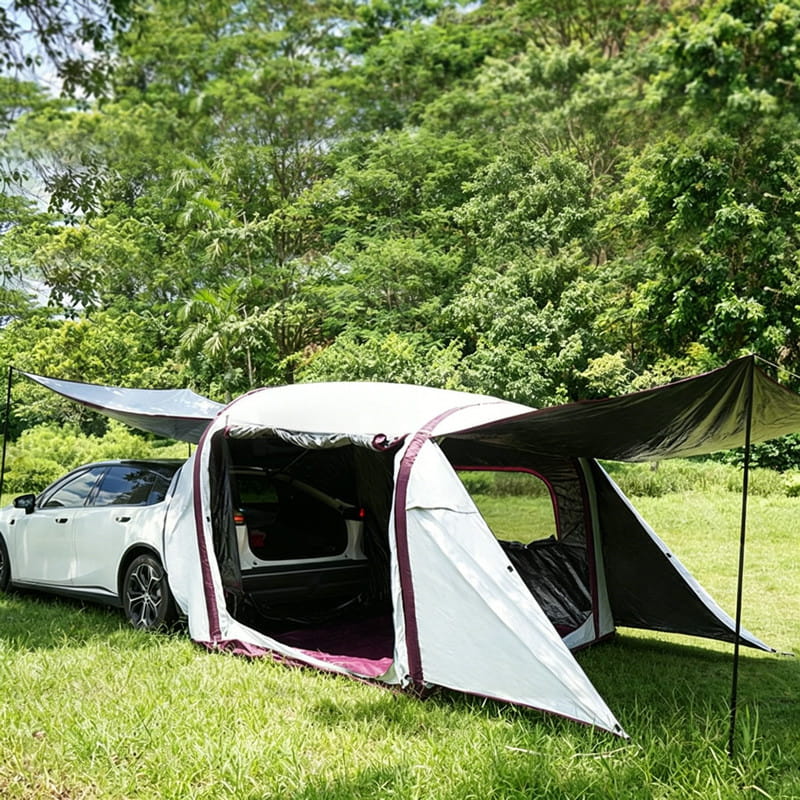 Outdoor buyers usually look at a rear awning setup from a simple angle: how it fits, how it holds up, how it feels to use, and how much effort it asks from the person setting it up. For a Car Rear Awning Tent Manufacturer, those points shape the product from the start. The focus is not only shelter, but also compatibility, handling, and the way the structure behaves beside a vehicle in everyday use. What Car Rear Awning Tent Manufacturer Means and How These Systems Are Designed A rear awning system is built around the back section of a vehicle, so the shape of the opening and the way the door moves both matter. The design has to support easy access, stable coverage, and a layout that does not feel awkward during travel stops or outdoor rest breaks. A Car Rear Awning Tent Manufacturer usually works with a few core ideas at the same time: The connection must stay secure without making the vehicle hard to use. The canopy should create usable shade or cover without feeling bulky. The layout should support quick handling for one person or two people. The folded form should stay manageable for storage and transport. The structure is often planned in layers rather than as one fixed piece. There may be a rear connection area, a main cover section, support parts, and optional side coverage. Each part affects the way the whole unit behaves once it is opened. If one part feels awkward, the user experience changes fast. A useful way to think about this design process is through function rather than appearance. Design Element What It Changes Why It Matters Rear connection area How the unit attaches to the vehicle Affects fit and daily handling Main cover section How much sheltered space is created Shapes comfort during stops Support parts How stable the structure feels Helps the setup stay usable Side coverage How much privacy or shade is added Extends the use of the space Folded form How easy it is to store Matters for travel and packing This is why the same product type can look simple from the outside while still having several design choices behind it. A Car Rear Awning Tent Manufacturer has to make those choices with both the vehicle and the user in mind. How Car Rear Awning Tent Manufacturer Solutions Adapt to Different Vehicle Types and Camping Needs Not every vehicle creates the same kind of rear space. Some have a taller back opening, some have a narrower tail area, and some leave more room for standing or moving around. That is where adaptation becomes important. The rear awning has to match the shape and behavior of the vehicle instead of forcing the same layout onto every use case. A Car Rear Awning Tent Manufacturer may adjust the design in several ways: The connection point can be changed to suit a higher or lower rear opening. The cover depth can be adjusted for small or larger outdoor spaces. The side drop can be shaped for privacy, shade, or simple weather cover. The overall profile can be made lighter or more enclosed depending on use. The goal is not only a fit that works on paper. It is a fit that feels natural when someone opens the back, reaches into storage, or uses the space during a short stop. For different vehicle shapes, the design focus shifts in a noticeable way. Vehicle Shape Common Design Focus What Users Usually Care About Taller rear opening Balanced height and easier entry Standing room and access Narrower rear opening Clean edge fit and stable attachment Secure coverage without loose fabric Wider rear opening Broader shaded area Shared use and easier movement Lower rear opening Compact structure and simple setup Less bulk and easier handling Camping needs also shape the product. A person using the setup for a quiet stop has different priorities from someone who wants a covered space for gear, food prep, or resting beside the vehicle. The same rear awning can feel suitable in one setting and less useful in another if the structure does not match the purpose. That is why the product is often designed as a flexible outdoor companion rather than a fixed shelter. The better the adaptation, the more naturally the structure fits daily use. Which Materials Car Rear Awning Tent Manufacturer Uses to Balance Durability and Outdoor Performance Material choice affects more than appearance. It influences handling, weather response, foldability, and how the product feels after repeated use. In this kind of outdoor item, the material mix has to support both comfort and resilience without making the unit hard to manage. A Car Rear Awning Tent Manufacturer usually looks at several material layers: The outer cover needs to handle sun, moisture, and regular packing. The support pieces need to hold shape without feeling heavy. The connectors need to stay dependable through repeated setup. The seams and edge areas need to keep their form during use. The right material choice is often a balance between a firm feel and a manageable weight. If the product feels too light, users may worry about stability. If it feels too heavy, setup and storage may become inconvenient. That balance is part of the design logic, not an afterthought. Material Group Main Role User Impact Outer cover Shelter from weather and sun Comfort and daily usability Support pieces Shape and holding power Stability during use Connectors Secure joining points Easier setup and fewer loose parts Edge finishing Clean structure and wear control Helps the product age more evenly Outdoor performance is not only about standing up to weather. It also includes how the surface folds, how the fabric behaves after repeated packing, and whether the item still feels easy to use after regular travel. The product has to do several jobs at once, which is why material selection is rarely a single-choice decision. A good material balance helps the rear awning feel steady without becoming difficult to carry or store. That matters to buyers who need a product that works across different trips, not only in a narrow set of conditions. How Car Rear Awning Tent Manufacturer Designs Improve Installation Speed and User Experience Installation speed matters because outdoor users often deal with changing conditions, limited space, and short pauses during travel. If a rear awning takes too many steps, the product may be left unused even when it would have been helpful. A Car Rear Awning Tent Manufacturer may improve the design by reducing awkward steps and keeping the assembly order clear. That can mean fewer loose parts, a more natural fold pattern, or connection points that are easier to recognize by touch and position. The user experience often depends on small design choices rather than one large feature. For example: A clearer attachment shape can reduce confusion during setup. A simpler support layout can make the structure feel more manageable. A folded form that opens in a predictable way can save time and effort. Better alignment between parts can reduce repeated adjustments. The real value shows up when the user can move from storage to use without dealing with unnecessary friction. That is especially important when the space is used in a travel stop, a parking area, or a changing outdoor setting. The following points show where design details often affect use the most: Setup order Part handling Folded storage Rear access while in use Comfort around the covered area A well-placed design decision can change the entire feel of the product. Not by making it flashy, but by making it easier to live with. That is where the work of a Car Rear Awning Tent Manufacturer becomes visible to the user, even if the individual parts are not noticed directly. Why Waterproof and Wind Resistance Testing Matters in Rear Awning Design Rear awning structures sit outside the vehicle line, so weather exposure is not occasional. It is part of normal use. Wind and moisture behave differently depending on surroundings. Open areas feel completely different from narrow parking spaces or tree-covered ground. Because of that, designers usually do not treat testing as a single condition check. Instead, they look at how the structure reacts over time. Small things matter here. Fabric tension can shift slightly after repeated folding. Seams may behave differently when humidity stays high for a while. None of these changes are dramatic on their own, but together they affect how stable the setup feels. Wind behavior is similar. It does not always push evenly. Sometimes it comes in short bursts, sometimes it moves around edges of the vehicle. That is where structure response becomes noticeable. Fabric tension consistency Seam response after repeated use Airflow movement around open sides Stability of connection points Water resistance is less about "blocking water completely" and more about how long the surface keeps performing without weakening. What Custom Options Are Typically Available in OEM and ODM Production Customization is rarely about appearance alone. In most cases, it starts from how the product will actually be used beside a vehicle. Some users want more open space, others prefer a more enclosed feel. That difference changes structure decisions more than it changes design language. Adjustments usually happen in layers rather than one fixed change. Connection style adapted to different rear layouts Coverage depth adjusted for space preference Fabric treatment adjusted for climate exposure Folding behavior adjusted for storage limits Optional side components added when needed These changes often influence each other. A deeper cover may require stronger support. A simpler fold may reduce extension options. Nothing is fully independent here. How Rear Awning Products Are Used Across Different Outdoor Scenarios Usage depends more on situation than on product design alone. A short stop near a road feels different from a long stay near open land. Even the same setup can be used in slightly different ways. In quick stops, the structure is often half-open, just enough to create shade or cover. In longer stays, it becomes part of the space around the vehicle, not just an attachment. Quick stops tend to focus on speed of use Longer stays rely more on stability and comfort Tight spaces make compact setup more important Open areas shift attention to coverage and shade control The interesting part is that usage often changes during the same trip. One setup can shift roles without being reconfigured. What Influences Cost and Production Planning in Manufacturing Production planning is shaped by structure, materials, and how many steps are needed before the product is ready. More parts usually mean more handling. But fewer parts can sometimes make use less flexible. So the balance is not simple. Fabric choice also changes how production flows. Some materials require more careful processing, while others are easier to fold and assemble but may not offer the same feel in use. Structure complexity and number of components Fabric layering and treatment process Assembly sequence during production Storage and packaging form after completion There is always a trade off between simplicity and flexibility. One affects the other. In practical manufacturing coordination, design decisions are often aligned with production feasibility, and in real supply chain communication, companies such as Ningbo Zhenhai Tiansai Leisure Products Co., Ltd. are sometimes involved in connecting product structure ideas with actual manufacturing execution in a controlled way.
 -
2026-06-19Why Choose an Oem Kid Tent Factory for Custom Kids Tent Production
 Children tent products sit in a fairly specific niche of manufacturing where expectations are not only about appearance but also how the structure behaves after repeated use. In many cases, buyers are not just evaluating a finished item, but trying to understand how a product is actually formed from material choice to final folding behavior. An Oem Kid Tent Factory usually operates within this kind of layered requirement. The process is not purely linear. It shifts between design interpretation, material matching, and repeated adjustment during sampling. What looks simple from the outside often involves several small decisions that affect stability, assembly feel, and storage convenience. There is also a practical side that tends to matter more than design discussion. For example, how fast a structure can be set up without losing shape accuracy, or how fabric tension behaves after repeated folding. These are details that usually define whether a product feels consistent or not in real use. What Materials Are Commonly Chosen in OEM Kid Tent Factory Production and How They Affect Product Performance Material choice is usually one of the earliest decisions, but it continues to influence almost every later step. In an Oem Kid Tent Factory, material selection is rarely treated as a single fixed choice. It tends to be adjusted based on structure type and expected usage. Common material groups include fabric layers, frame elements, connectors, and surface treatments. Each one plays a different role, and their combination is what shapes the final feel of the product. Fabric selection, for instance, is often a balance between softness and structural hold. If it is too light, the shape may not remain stable after setup. If it is too thick, folding becomes less convenient. Frame material choices follow a similar logic, usually balancing flexibility with resistance rather than aiming for rigidity. Material Area Practical Role Typical Consideration Fabric body Covers main structure Folding behavior and touch feel Frame parts Shape support Balance between flexibility and hold Connectors Join structure points Stability after repeated assembly Surface layer Visual and light protection Texture and handling comfort In practice, these elements are not selected independently. One change in fabric type can affect stitching tension or even frame pressure distribution. That is why adjustments are often made step by step rather than all at once. How OEM Kid Tent Factory Manages Custom Design From Concept Submission to Sample Approval Custom design work usually begins in a relatively open form. Clients may provide a theme, a rough sketch, or sometimes only a general idea. From there, an Oem Kid Tent Factory translates it into something that can actually be produced within structural limits. The early stage is mostly about interpretation rather than execution. A concept might look straightforward, but once it is broken down into structure lines and folding behavior, several adjustments usually appear. These adjustments are not always design-related; sometimes they are purely technical constraints. A typical progression looks like this: Initial idea review and structural feasibility check Basic shape planning with simplified dimensions Material pairing based on intended use Sample creation for physical confirmation During sampling, changes are common. It might be a corner angle adjustment or a shift in frame tension. These are usually small, but they affect how the tent behaves when assembled and stored. Communication at this stage tends to be practical and direct. Instead of focusing on visual expectation alone, feedback often comes from how the structure feels during setup or how stable it remains after repeated folding. What Customization Options Are Available in OEM Kid Tent Factory Projects for Brand Development Customization in this type of product goes beyond surface design. In many cases, it is a combination of visual identity, structural variation, and packaging alignment. An Oem Kid Tent Factory typically handles these as connected parts rather than isolated requests. Common customization directions include external patterns, structural shape adjustments, branding placement, and packaging format. However, these are not always independent. For example, changing a pattern layout might slightly affect cutting efficiency, while packaging changes can influence folding size. Instead of treating customization as a fixed menu, it is often more like adjusting multiple small elements at once. A design with stronger visual identity may require simplified structural lines to keep production stable. This is also where branding decisions usually connect with physical limitations. Not everything can be changed freely, so adjustments tend to happen in layers rather than a single step. Which Safety Requirements Are Applied in OEM Kid Tent Factory Production Across Different Markets Safety requirements in children tent manufacturing are less about one fixed rule and more about general expectations that influence material and structure choices. In an Oem Kid Tent Factory, these considerations are usually embedded into early production planning rather than checked only at the end. The main focus areas tend to be quite practical: Material composition control to avoid unwanted residues Structural balance to reduce sudden collapse during use Edge treatment to avoid sharp contact points Fixing of small parts to prevent detachment during handling These elements are not treated as separate inspection items alone. They are often built into the design stage so that later production does not require heavy correction. Different markets may have slightly different expectations, but the general direction remains similar. The goal is to reduce risk during normal use without making the structure difficult to assemble or store. In practice, safety checks appear at multiple points, not just final inspection. Material arrival, stitching process, and final folding test all contribute to the overall consistency of the product behavior. How OEM Kid Tent Factory Ensures Consistency in Bulk Production for Large Quantity Orders When production starts to scale up, the real issue is rarely about making one good sample. It is more about whether the same feel can be repeated across different batches without drifting. In an Oem Kid Tent Factory, this is usually handled through a mix of reference control and on-site adjustment rather than a single fixed rule. One common practice is to keep a physical sample on the production line. Workers do not rely only on drawings. They compare stitching tightness, frame resistance, and fabric behavior directly against that sample. Even small differences in tension or cutting can show up later in folding or assembly. Material handling also plays a role. If fabric batches are slightly different in thickness or coating feel, the assembly response changes as well. That is why incoming material checks are not treated as formal paperwork but more as a practical comparison step. A few control points often appear during production: sample reference is kept visible during assembly material batches are grouped to reduce variation small corrections are made during stitching instead of waiting folding behavior is checked before packing starts The intention is not to force everything into identical output, but to keep the final product behavior within a stable and predictable range. How OEM Kid Tent Factory Handles Quality Control During Production and Packaging Stages Quality control in this type of production is not concentrated at the end. It tends to appear in several smaller moments that are embedded in the workflow. In an Oem Kid Tent Factory, inspection is often closer to "continuous checking" rather than a separate department activity. During assembly, attention is usually on how the structure behaves while it is being formed. A frame that looks fine visually might still feel uneven when opened or folded. That kind of issue is easier to catch during mid-stage handling than at the final step. Packaging adds another layer that is slightly different. At this point, the product is already complete, so the focus shifts toward whether everything fits together as expected and whether nothing is missing or misaligned. Typical points of attention include: stitching lines checked during handling instead of static inspection frame joints tested while opening and closing the structure fold alignment confirmed before inserting into packaging accessory count verified during packing stage Packaging also sometimes reveals issues that were not obvious earlier. A slightly uneven fold, for example, may not affect use, but it can change how the product sits inside its bag or carton. That is why packaging is treated as part of the control flow rather than a final cleanup step. Why Packaging Design Matters in OEM Kid Tent Factory Products for Retail and Online Sales Packaging often gets underestimated because it is seen as something external. In practice, it affects how the product is handled long before it is used. In an Oem Kid Tent Factory, packaging decisions are usually tied closely to folding logic and product structure. A tent that folds loosely or in multiple ways can create variation in packaging fit. This is why packaging design is often adjusted after structural confirmation rather than in advance. It has to follow the physical behavior of the product. There is also a communication side. Since buyers usually do not see the product assembled before purchase, packaging becomes the first moment of understanding. If it is too unclear or overloaded, it can create confusion before the product is even opened. Key considerations usually include: protection during transport without overcomplicating structure folding pattern that matches internal space simple visual layout for quick recognition instruction placement that aligns with actual assembly steps Sometimes even small changes in folding direction can affect packaging size. These adjustments are usually made quietly during sampling, not as separate redesign steps. How OEM Kid Tent Factory Adjusts Production Plans Based on Order Volume and Delivery Time Requirements Production planning is rarely static. It tends to shift depending on how many orders come in, what kind of structure is involved, and how material preparation is moving at that moment. In an Oem Kid Tent Factory, planning is more like a moving schedule than a fixed timetable. When order volume increases, the first change is usually in material staging. Instead of preparing everything at once, materials are often grouped so that assembly can continue without interruption. Smaller orders tend to move faster through setup but may require more frequent switching between styles. Structure type also matters. Some designs take longer to assemble because of folding steps or frame arrangement. That affects how production lines are organized, sometimes even more than order size itself. Stage Point What changes in practice What is usually adjusted Material preparation grouped handling instead of single flow fabric and frame readiness Assembly flow sequence changes depending on structure line arrangement and worker allocation Packaging stage timing shifts based on folding method carton fit and packing speed Final handling batch coordination before shipment inspection timing In real operation, these parts are not separated cleanly. They overlap, especially when multiple designs are produced at the same time. The main challenge is keeping flow steady without creating bottlenecks between steps.
 -
2026-06-12How Does an Ultralight Tent Manufacturer Create Reliable Lightweight Gear
 Lightweight shelter systems are usually discussed in terms of weight, but in production environments the conversation is less clean than that. An Ultralight Tent Manufacturer deals with material limits, stitching behavior, and structural tension that do not always align neatly. In many cases, design adjustments happen because one property improves while another becomes harder to control. A lighter fabric might reduce carry load, but it also changes how seams behave after repeated folding. These trade-offs shape most decisions before a product reaches field testing. What follows is a closer look at how these factors interact during production and design stages. What Defines an Ultralight Tent Manufacturer in Modern Outdoor Gear Production In practice, the definition is not fixed. It tends to shift depending on what part of the process is being discussed. In production environments, the focus is usually on how far structural elements can be reduced without creating instability during use. Some teams prioritize simplified frame layouts, while others spend more time refining fabric tension behavior. Rather than a single direction, several tendencies can be observed: Structural layers are often reduced to only what supports load distribution Connection points are designed to carry multiple roles instead of single functions Setup steps are kept minimal, but not always identical across models Material selection is adjusted based on expected folding frequency What stands out is that the same product category can look very different depending on which constraint is being prioritized at the design stage. How Material Selection Shapes the Balance Between Low Weight and Long Term Use in Ultralight Tent Manufacturing Material behavior is rarely uniform once it enters production use. A fabric that feels stable during initial cutting may react differently after repeated tension cycles. One common observation is that lighter materials tend to shift shape more noticeably after repeated packing. Heavier reinforced options hold form better, but they introduce handling limitations during transport. Material Behavior Type Production Observation Field Handling Note Low mass composite sheet Changes tension response after folding cycles Needs careful packing alignment Coated woven fabric More stable under repeated bending Slightly heavier during transport Reinforced hybrid structure Holds shape under uneven stress Less flexible during tight storage In many cases, selection is not about choosing a "better" option, but about deciding which limitation is more acceptable for the intended use pattern. Why Seam Construction and Waterproof Processing Matter in Ultralight Tent Manufacturer Design Seam behavior often becomes noticeable only after repeated use, not during initial inspection. Small differences in stitching direction or sealing method can gradually influence how a shelter responds to moisture and movement. During production, seam lines are not treated as simple joints. They behave more like stress channels that redistribute force across the fabric. Practical observations often include: Seam alignment affects how tension spreads across panels Some sealing methods behave differently under repeated folding pressure Stitch density can influence flexibility more than expected Water resistance is not only about surface coating. In many designs, seams become the first point where environmental exposure shows its effect. For an Ultralight Tent Manufacturer, these areas are often adjusted repeatedly before final approval. How Ultralight Tent Manufacturers Design Structures to Handle Wind and Field Conditions Wind interaction is rarely a simple resistance problem. It is more about how force moves across a surface and where it accumulates. In structural design, geometry plays a major role, but not always in a straightforward way. Small changes in angle or tension distribution can shift how the entire frame behaves. Some design approaches seen in practice: Angled surfaces are used to redirect airflow rather than block it Tension points are placed to limit localized movement Large flat areas are reduced where possible, but not eliminated completely Anchoring points are positioned based on expected load direction, not symmetry A structure that bends slightly under pressure is sometimes preferred over one that remains rigid, depending on how stress is distributed. Which Manufacturing Processes Influence the Final Weight Accuracy of Ultralight Tent Products Weight in production does not stay fixed in one place. It shifts a little from one step to another, sometimes without anyone noticing at first. The final number only becomes clear when everything is already assembled and packed. Cutting is usually where the first small differences start. Fabric is laid across the table, then cut into panels. Even when patterns are the same, alignment on the table can drift slightly depending on handling. It is not a large change, but it stays in the material. Stitching adds another layer that is harder to control. One operator may leave a slightly wider seam than another. Not intentional, just how the line moves during work. Over multiple panels, it starts to accumulate. There are also small adjustments made later in production. Reinforcement patches sometimes appear after internal checks. Hardware may change if supply shifts mid-process. None of these are large changes alone, but they affect final weight together. Where variation usually comes from: Fabric alignment shifts before cutting starts Seam width differences during stitching runs Extra reinforcement added after inspection points Hardware substitution when batches change Trimming differences during final finishing What matters here is not one step. It is how small variations stack without being noticed immediately. How Ultralight Tent Manufacturer Choices Affect Setup Time and Field Usability Setup behavior is mostly decided before the product reaches any field condition. Once the structure is fixed, users tend to follow the same movement pattern even if conditions are not ideal. Some designs reduce the number of actions required, but that does not always mean the process feels easier. If alignment is strict, a small mismatch in ground level can slow everything down. Other designs include more adjustment points, which take longer at the start but give more tolerance during uneven use. There is also a detail that is often overlooked. Some structures hold shape loosely before full tension is applied. Others require immediate correction. That difference changes how the setup feels in real use. Things that usually affect usability: Order of steps during assembly Whether parts guide position or need manual correction Behavior before full tension is applied Visibility of connection points in low light or wind Stability of partial setup before final tightening It is less about speed alone. More about how the structure reacts during the middle stage of assembly, where most confusion happens. Why Fabric Aging and Environmental Exposure Are Key Considerations in Ultralight Tent Manufacturing Fabric changes slowly over time. Not evenly. Some areas stay close to original condition, while others shift earlier depending on where stress is concentrated. Corners and tension zones usually show differences first. These are the areas that move every time the structure is set up or packed down. Flat sections in the middle behave differently and usually change more slowly. Moisture plays its own role. If drying is uneven, the surface feel can vary from one section to another. It does not fail suddenly, but it becomes less uniform. Environmental influences often include: Repeated sunlight exposure during outdoor use Compression during storage cycles Local wear at corners and load points Moisture retention after wet conditions Surface rubbing during movement or packing Factor Material Response Field Behavior Folding cycles Flexibility changes gradually Shape recovery becomes less uniform Sun exposure Surface texture shifts slightly Differences appear across panels Stress points Local stiffness variation Noticeable near seams or corners Moisture cycles Uneven drying behavior Slight variation after repeated use These changes do not happen in a single moment. They build slowly and often become visible only after repeated handling. How OEM and Custom Production Models Support Ultralight Tent Manufacturer Growth and Product Variation Custom production is usually not about rebuilding the whole structure. It is more about adjusting selected parts while keeping the main framework stable enough for production to continue smoothly. In most cases, changes happen within a controlled range. Fabric may be swapped, but only within what the structure can handle. Layout adjustments are made, but core geometry usually stays close to the original version so assembly does not need to restart from zero. This keeps production flexible but not chaotic. Typical adjustment areas: Fabric choice depending on usage conditions Small structural layout shifts within fixed geometry Accessory changes depending on handling needs Packing adjustments for transport behavior Reinforcement placement tuned from feedback In real manufacturing environments, these changes are usually gradual. In production contexts such as those associated with Ningbo Zhenhai Tiansai Leisure Products Co., Ltd., adjustments tend to come through repeated coordination between sampling feedback, material selection, and assembly flow, instead of large structural redesigns.
 -
2026-06-05Humanitarian Tents What Makes Them Work In Real Conditions
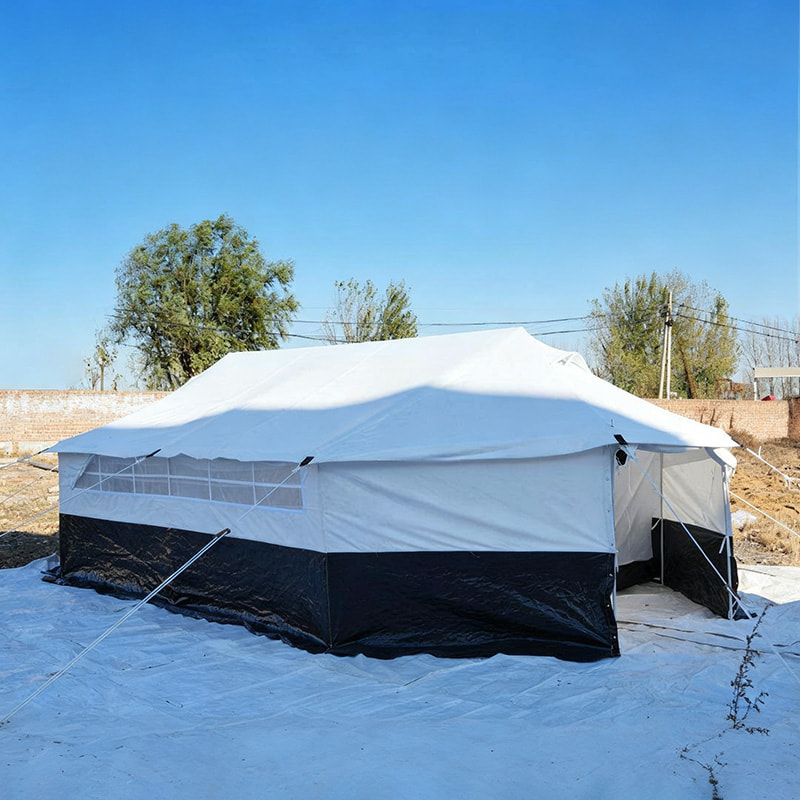 When temporary shelter is needed in urgent settings, the details matter more than the label. A structure may look simple from the outside, but the real experience depends on transport, weather exposure, airflow, and how people arrange their daily routines inside it. In many field settings, Humanitarian Tents are judged not by appearance, but by how well they support ordinary living under difficult conditions. A shelter that reaches the site quickly is only part of the picture. Once it is in place, people begin to ask practical questions: Does it stay stable in changing weather? Does air move through the space without making it uncomfortable? Is there enough room to rest, store essentials, and move around without constant friction? These questions shape how useful the shelter feels over time. Transport comes first, because nothing matters before the shelter arrives. Weather comes next, because the outside environment affects nearly every part of use. Ventilation follows, since indoor comfort depends heavily on airflow. Space planning closes the sequence, because daily life inside the shelter depends on how the interior is arranged. How Humanitarian Tents Are Transported Quickly To Remote Emergency Areas Getting a shelter to a distant site is rarely a straight path. Roads may be narrow, ground conditions may shift, and access points may change without warning. For that reason, packing and handling are often as important as the shelter design itself. A compact package can reduce pressure during movement and make unloading easier when conditions are limited. Lightweight components can also help teams move parts by hand when vehicles cannot go all the way to the destination. In practical terms, the transport stage is about reducing delay and avoiding unnecessary handling problems. Several factors usually shape this stage: How easily the package can be loaded and unloaded Whether the parts stay organized during travel How much space the package takes in storage How quickly the unit can be checked before deployment How well the material handles repeated movement In remote settings, the last part of the journey often becomes the hardest. Even a shelter that is easy to move on paper can become difficult to deliver if the path includes rough ground, limited access, or scattered delivery points. That is why transport planning and shelter structure are closely connected. Humanitarian Tents are often expected to move through changing conditions before they are ever used. When the packaging is clear and the components are manageable, the path from storage to field use becomes less demanding. How Different Weather Conditions Influence Humanitarian Tent Performance Weather changes the way a shelter feels, behaves, and ages. Heat can make the interior uncomfortable, rain can test the surface and edges, and strong air movement can place stress on the frame and anchoring points. A shelter that works well in one environment may need different support in another. The effect of weather is not limited to the outside surface. Internal comfort can shift quickly when sunlight builds up inside the space or when moisture collects in enclosed areas. In wet conditions, even small gaps or poor drainage can create daily frustrations. In windy locations, the structure needs to remain steady without becoming difficult to manage. Weather condition What people may notice Practical design response Heat Indoor space feels closed and tiring Airflow openings and shade support Rain Damp surfaces and water entry risk Clear water runoff and sealed edges Wind Movement, noise, and pressure on the frame Stable anchoring and balanced structure Cool nights Faster heat loss and lower comfort Better insulation layers and controlled closure A shelter that responds calmly to weather changes gives people fewer daily disruptions. That is especially important when the shelter is being used for more than short stays. In those settings, the relationship between outside conditions and inside comfort becomes part of ordinary life. The performance of Humanitarian Tents in weather exposure is therefore not only a structural issue. It also affects how people sleep, store items, and organize the space around them. Why Ventilation Design Changes Daily Life Inside Humanitarian Tents Airflow is one of the clearest differences between a shelter that feels manageable and one that feels tiring. Without enough movement in the air, heat can build up, moisture can remain trapped, and the interior can begin to feel stale. With the right openings and circulation paths, the space can feel more livable throughout the day. Ventilation is not only about comfort. It also affects the pace of daily routines. When air moves through the shelter, cooking smells clear out more easily, dampness is less likely to stay in one place, and the interior becomes easier to occupy for longer periods. That matters in places where people spend much of the day inside or near the shelter. Placement is often more important than size alone. Openings placed at thoughtful points can support a steadier flow without creating awkward drafts. Closures and coverings also matter, because airflow sometimes needs to change with the time of day or the weather outside. Here are a few ways ventilation can shape everyday use: It can reduce the feeling of trapped heat It can limit condensation on inner surfaces It can make sleeping hours feel less heavy It can help the space recover after cooking or washing It can support a more usable rhythm during the day For many families, ventilation becomes noticeable only when it is missing. Once it is present, the whole shelter can feel easier to live in. In that sense, Humanitarian Tents are often judged by air movement just as much as by size or fabric choice. Which Humanitarian Tent Features Help Create More Practical Living Space The inside of a shelter has to do more than hold people. It also has to make room for movement, rest, storage, and privacy. That is why practical space is not only about square area. It is about how the layout works for real routines. A narrow entrance may make daily movement awkward. A poorly placed support can block an area that should be used for sleeping or storage. On the other hand, a simple and open arrangement can help people place items where they are easy to reach and keep the main walking area usable. Useful interior features are often the ones that do not get noticed right away. These may include a sensible entry position, a layout that does not waste corners, and enough flexibility to separate sleeping from storage. In many cases, the shelter becomes more useful when it allows small adjustments without forcing a full rearrangement. Interior feature Daily effect Entry placement Affects movement in and out of the shelter Open floor area Gives room for sleeping and basic activity Support layout Keeps space from feeling blocked Storage options Helps reduce clutter and loss of small items Divider potential Supports privacy and different routines Practical living space is built through small decisions rather than one large change. A shelter that feels orderly can reduce stress during routine tasks and make the space easier to share. That is one reason Humanitarian Tents are often evaluated by how naturally they fit into daily use rather than by appearance alone. How Humanitarian Tents Are Adapted By Families For Everyday Living Needs A shelter rarely stays untouched once people begin living in it. Families usually shape the space around habits that repeat every day. One side may become a sleeping area, another may hold bags, bedding, or cooking items, and the center is often left open so movement stays easy. The changes are usually small, but they matter. A curtain, a rope, or a folded cloth can create a sense of separation without making the space feel crowded. In many cases, the inside becomes a map of family routines. A few common adjustments are: keeping items near the entrance for quick use separating rest areas from storage areas using simple fabric to add privacy shifting the layout as needs change during the day That kind of flexibility is one reason Humanitarian Tents are often used as a base that people can reshape in practical ways. What Makes Humanitarian Tents Feel More Comfortable During Long Term Temporary Living Comfort changes when the stay becomes longer. A shelter that felt fine at first may begin to feel tiring if the air stays heavy, the space stays closed, or the surface materials become unpleasant to live with over time. Small details start to matter more. Quietness, airflow, and the feeling of enough personal space can affect how a place is used from morning to night. When those things are handled well, daily life becomes less strained. Comfort factor What people usually notice Air movement The space feels less closed Surface feel Resting becomes less difficult Sound control Outside noise is less noticeable Spatial layout Movement feels easier Light balance The interior feels less confined Longer use places more pressure on every part of the shelter. That is why Humanitarian Tents are often judged not only by how they stand, but by how they feel after repeated use. What Buyers Often Want To Know Before Ordering Humanitarian Tents In Bulk Bulk orders usually begin with practical questions. Buyers want to know whether the shelter can be handled in a steady way across many units, whether it is easy to move, and whether installation will create extra work in the field. Consistency is often a central concern. If one unit behaves differently from another, planning becomes harder. Buyers also pay attention to packaging, assembly, and the way the shelter performs in different conditions. What buyers commonly ask: Is the setup process simple for field teams? Will the units stay consistent across a large shipment? How easy are the parts to store and move? Can the shelter handle changing outdoor conditions? Are repairs or replacements difficult in use? These are practical questions, not abstract ones. For Humanitarian Tents, the value is usually tied to how predictable they are once they arrive. What New Design Ideas Are Changing Modern Humanitarian Tents New shelter ideas often focus on adaptability. Instead of treating the structure as fixed, designers are trying to make it easier to adjust for different routines, spaces, and field conditions. Some changes are simple. Internal layouts can be made more flexible, so the space can be arranged in different ways without much effort. Other changes involve materials that respond better to weather shifts or repeated use. Setup is also being simplified in many designs so the shelter can be handled with less friction. Design direction Practical effect Modular layout Space can be rearranged more easily Flexible materials The shelter responds better to conditions Simple setup Installation takes less effort Functional add-ons Daily use becomes more manageable These changes do not try to make the shelter into something else. They aim to make Humanitarian Tents easier to use in ordinary field life, where conditions are rarely fixed and needs often change.
 -
2026-05-29How Does a Dome Tent Manufacturer Create Reliable Outdoor Dome Structures
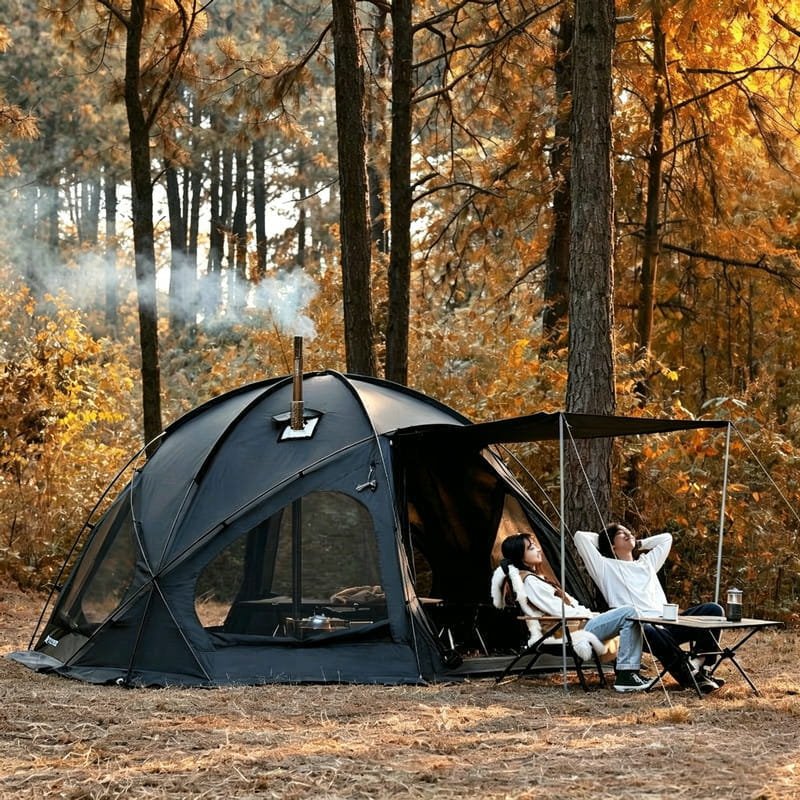 Dome tent structures show up in different outdoor projects where ground conditions and weather are not consistent. Some are used for stay-based environments, others for temporary space setups. What stays consistent is the need for structure that can hold shape without relying on heavy internal support. In many projects handled by a Dome Tent Manufacturer, the focus is less about appearance alone and more about how the structure behaves once it is placed on site. Wind direction, surface exposure, and even installation method all start to matter at the same time. What Makes a Dome Tent Structure Suitable for Different Outdoor Environments The behavior of a dome shape in open space is not random. The curved surface tends to guide airflow instead of stopping it abruptly, which changes how pressure builds up on the structure. In real use, the environment is never uniform. A site near open land feels different from one surrounded by trees or near water. The structure ends up reacting differently depending on how air moves through the space. A Dome Tent Manufacturer usually has to look at several practical points rather than theoretical ones: how the ground reacts when load is spread across it whether wind hits the structure directly or indirectly how exposed the site is during long use cycles whether the internal space needs to stay stable under movement outside None of these work alone. They tend to overlap once installation starts. How Dome Tent Manufacturers Design Frames for Wind and Snow Load Conditions in Real Projects Frame design is mostly about keeping balance when outside pressure keeps changing. If one side carries more force than expected, the structure starts to shift slightly, even if it is not visible at first. In practice, engineers adjust frame layout based on how load travels through the shape rather than just strengthening random points. Typical focus areas used by a Dome Tent Manufacturer include: connection points where force tends to gather transition zones between curved segments material choice depending on long exposure to weather how evenly the frame follows dome geometry There is usually no single adjustment that solves everything. It is more of a combined structure response. Which Materials Used in Dome Tent Membranes Affect Durability Transparency and Maintenance Needs Membrane choice changes how the whole structure feels in use. Some surfaces allow more light in, others stay more closed and controlled. The difference is not just visual, it also affects how often the surface needs attention. Material Type Visual Character Surface Behavior Maintenance Pattern Coated fabric Slightly muted light Handles general exposure well Needs periodic surface care Film-based surface Brighter internal lighting More sensitive to contact marks Requires careful handling Composite membrane Balanced light control Adjusts better to mixed climates Inspection at intervals recommended A Dome Tent Manufacturer usually selects material based on how the structure will actually be used day to day, not just how it looks when newly installed. How Dome Tent Manufacturing Processes Influence Long Term Performance and Structural Stability Small differences in manufacturing often show up later on site. Parts that seem identical during production may behave differently once assembled if tolerances are not consistent. The production process usually involves shaping structural components, preparing membrane sections, and aligning connection systems so they work together without force imbalance. Some practical control points include: whether frame sections meet cleanly during assembly how membrane edges are joined and sealed surface treatment consistency on metal components how modules fit when combined into full structure A Dome Tent Manufacturer that controls these steps carefully tends to reduce unexpected adjustments during installation. Over time, consistency in production matters more than isolated material strength. What to Consider When Planning Dome Tent Sizes for Commercial Hospitality and Event Spaces Size planning for dome tent use is usually less about a fixed measurement and more about how the internal space will actually be occupied over time. A layout that works for short events may feel different when the same structure is used for longer stays or mixed functions. In commercial settings, space tends to shift between sleeping, gathering, and service areas. That means internal flow becomes as important as total area. A Dome Tent Manufacturer often looks at practical layout logic such as: how people move through entry and internal zones whether furniture or functional units change over time how open the central area needs to remain how side spaces are divided without making the structure feel crowded In many cases, the planning stage is adjusted several times before a final configuration feels stable for real use. Why Dome Tent Structures Are Widely Used in Glamping Eco Tourism and Remote Experience Projects In outdoor hospitality projects, dome structures are often chosen because they sit between shelter and visibility. They do not fully isolate the inside from the surroundings, which changes the overall experience of staying inside. Some sites rely on this partial openness to keep users connected to the environment while still maintaining a controlled interior space. The balance is not always identical across projects. A Dome Tent Manufacturer usually considers how the structure behaves under long occupancy rather than short-term setup. Typical reasons behind usage include: natural light entering through surface materials reduced dependence on heavy internal framing flexible placement in uneven terrain visual connection with surroundings without full exposure These factors often overlap instead of working separately, especially in remote locations. How Dome Tent Manufacturers Customize Layouts and Designs for Branding and Functional Use Customization in dome tent projects is not limited to surface appearance. It often starts from how the internal space is divided and how users are expected to interact with it. Some projects require open layouts, while others need separated zones for different functions. The structure is adjusted accordingly so that internal balance is not disrupted. A Dome Tent Manufacturer may adjust design direction through: internal zoning based on usage type placement of entry points and circulation paths integration of visual identity elements on outer surfaces adjustment of ventilation and lighting positions The process usually moves back and forth between design intent and structural feasibility until both align in a workable form. Which Installation Methods Are Commonly Used for Dome Tent Projects in Remote or Challenging Locations Installation methods often depend on how accessible the site is and how stable the ground conditions are. In remote areas, transport and assembly tend to influence design decisions even before construction begins. Structures that are easier to divide into smaller components are usually preferred when access is limited. On the other hand, more stable ground allows for different foundation approaches. Installation Approach Typical Use Condition On Site Consideration Modular assembly Limited access areas Components carried separately and joined on site Ground anchoring Soft or natural terrain Stability depends on soil condition Fixed base support Prepared platforms Requires more initial site preparation A Dome Tent Manufacturer usually aligns installation planning with both transport limits and on site assembly conditions, since both affect final stability. At the operational level, projects involving dome tent structures often connect design, production, and site execution in a continuous loop rather than separate stages. In some supply chains, this coordination is handled alongside manufacturers such as Ningbo Zhenhai Tiansai Leisure Products Co., Ltd. without positioning it as a primary driver, but as part of the broader manufacturing ecosystem.
Message Us Right Now!
-
Mp: +86-18858091910
E-mail: sales@tenplaytent.com
ADD: No. 529, Guangyuan Road, Xiepu Town, Zhenhai District, Ningbo City, Zhejiang Province, China
-
Quick Links
Home Products About Us Advantage News Contact Us -
Product
Inflatable & Air Tents Glamping & Resort Tents Backpacking & Trekking Tents Automatic & Pop-Up Tents Family & Camping Tents Specialty Tents & Shelters Kids Tents Pet Tents Humanitarian & Large Tents Hammock -
Get Connected
Copyright © Ningbo Zhenhai Tiansai Leisure Products Co., Ltd. All Rights Reserved.
 Camping Tent Manufacturer in China
Camping Tent Manufacturer in China